
No products in the cart.

In the world of electric mobility and maintenance, few scenarios cause as much confusion as mismatched voltages. If you own an older golf cart, you are likely operating a 36-volt (36V) system. When that system dies completely, the factory onboard charger often refuses to turn on because it requires a minimum baseline voltage to detect the batteries. Left with a completely dead cart and a standard automotive charger sitting in the garage, you naturally ask: can you charge a 36V golf cart with a 12V charger?
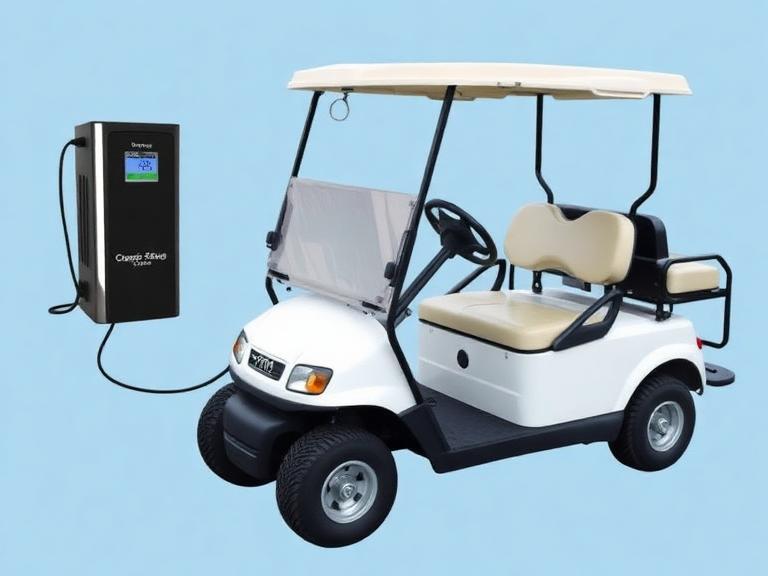
At OHRIJA, we engineer professional charging solutions for everything from industrial equipment to recreational vehicles. Write this down: electrical current only flows from a higher voltage to a lower voltage. Attempting to force a 12V output into a 36V circuit is physically impossible and fundamentally dangerous. However, there is a complex, manual workaround if your golf cart uses multiple lead-acid batteries wired in series. From our experience, while this manual method can revive a dead battery pack, doing it incorrectly will destroy your batteries or start a fire. In this comprehensive guide, we will answer this search intent directly, explain the severe limitations of using automotive chargers on deep-cycle systems, and show you exactly how professionals handle dead 36V systems.
Quick Answer
No, you cannot plug a 12V charger directly into the main charging port of a 36V golf cart. A 12V charger does not have enough voltage to overcome a 36V battery pack. However, if your 36V golf cart is powered by six 6V lead-acid batteries or three 12V lead-acid batteries, you can manually isolate them and charge them in 12V pairs (or single 12V units) one at a time using an automotive 12V charger. This is strictly a temporary emergency procedure to bring the voltage high enough so your primary 36V golf cart charger will recognize the pack and turn on. If you have a modern 36V Lithium (LiFePO4) single-pack battery, you absolutely cannot use a 12V charger under any circumstances.
Table of Contents
- What It Is: Understanding 36V Systems and 12V Chargers
- How It Works: The 12V Isolation Workaround
- Benefits of Knowing the 12V Workaround
- Limitations and Dangers
- Who Should Use It & Who Does Not Need It
- Common Mistakes to Avoid
- Quick Summary Table
- Comparison Table: Automotive Charger vs. Smart Charger
- Commercial Buying Considerations
- Expert Recommendation: The OHRIJA HRH120
- Pros and Cons Table
- The Bottom Line
- Frequently Asked Questions
What It Is: Understanding 36V Systems and 12V Chargers
To understand why this process is difficult, you must understand battery architecture. A traditional 36-volt golf cart does not contain a single 36-volt battery. Instead, it contains a “pack” or “bank” made up of multiple smaller deep-cycle batteries wired in series. Wiring batteries in series (connecting the positive terminal of one battery to the negative terminal of the next) adds their voltages together. Therefore, six 6V batteries wired in series equal 36 volts.
A standard 12V automotive charger is designed to output roughly 13.8V to 14.4V to charge a single 12V car battery. If you plug a 12V charger into a 36V series pack, the charger’s output is vastly lower than the pack’s total voltage. The charger will either blow an internal fuse, display an error, or simply do nothing. To charge deep-cycle batteries effectively, you need equipment specifically engineered for the task. If you are exploring upgrades, we frequently review the best 12V LiFePO4 battery chargers 2026 to highlight the difference between cheap trickle chargers and advanced smart chargers.
How It Works: The 12V Isolation Workaround
If your golf cart is completely dead, the onboard 36V charger will not activate. Smart chargers require a minimum voltage (usually around 25V to 28V on a 36V system) to close their internal relays and begin charging. If your pack has drained down to 15V from sitting in storage, you are locked out. Here is how professionals use a 12V charger to wake the system up.
Step 1: Identify Your Battery Pairs. Look at your six 6V batteries. You need to mentally group them into three pairs. Two 6V batteries wired together equal 12V. You do not need to disconnect the main cables, but you must isolate your charging clamps to just one pair at a time.
Step 2: Connect the Charger to Pair One. Take your 12V automotive charger. Place the positive (red) clamp on the positive post of the first battery in the pair. Place the negative (black) clamp on the negative post of the second battery in that same pair. You are now bridging a 12V circuit.
Step 3: Charge for 30 Minutes. Turn the 12V charger on to a low-amp setting (10 amps or less). Do not use an engine start or high-boost mode, as deep-cycle batteries will boil and warp under high heat. Charge this pair for exactly 30 minutes, then turn the charger off.
Step 4: Rotate. Move your clamps to the second pair of 6V batteries and repeat the 30-minute charge. Then move to the third pair.
Once you have pushed a little bit of surface charge into all three pairs, the overall pack voltage should rise above 28V. At this point, you disconnect the 12V charger entirely, plug your factory 36V charger into the cart’s main receptacle, and let it perform a full, balanced 10-hour charge cycle.
Benefits of Knowing the 12V Workaround
In most professional situations, knowledge is your best diagnostic tool. The primary benefit of knowing this workaround is saving yourself a massive towing fee or an expensive service call from a golf cart mechanic. When lead-acid batteries sit over the winter, they self-discharge. By using a 12V automotive charger to strictly “wake up” the deep cycle bank, you can restore functionality using tools you likely already own in your garage.
Limitations and Dangers
We must be absolutely clear: you cannot use this method as your primary way of charging a golf cart. Using an automotive charger on deep-cycle batteries comes with severe limitations.
Automotive chargers are designed for starter batteries (thin lead plates that need quick bursts of energy). Golf carts use deep-cycle batteries (thick lead plates requiring long, slow, multi-stage charging). If you leave a 12V automotive charger hooked up to your golf cart batteries overnight, you risk boiling the electrolyte dry, permanently warping the lead plates, and causing a catastrophic thermal runaway. Furthermore, this method only works on lead-acid batteries. If you are dealing with modern chemistry, you need to be looking at the best lithium iron phosphate battery chargers instead.
Who Should Use It & Who Does Not Need It
For commercial users and fleet managers: You should never rely on 12V workarounds. Your operation demands efficiency. You should invest in commercial-grade multi-voltage smart chargers that can recover dead batteries automatically using specialized recovery modes.
For beginners and residential owners: You should use this 12V pair method only if your cart has been sitting dormant, the batteries are completely flat, and your main charger refuses to click on. It is a one-time rescue mission.
Who does not need it: Owners of lithium-ion golf carts. Lithium golf cart packs are typically single, sealed 36V or 48V units governed by a Battery Management System (BMS). A 12V charger will not penetrate the BMS and could permanently damage the internal balancing circuits. If you have a lithium cart, you must use a dedicated lithium charger, similar to how eBike owners require the best eBike battery chargers 2026 to manage their power cells safely.
Common Mistakes to Avoid
In our testing, the most common mistake consumers make is failing to check the water levels in flooded lead-acid batteries before applying the 12V charger. If the lead plates are exposed to air, charging them will cause immediate sulfation and potential sparking inside the battery casing. Always fill the batteries with distilled water to just above the lead plates before attempting a rescue charge.
Another catastrophic error is crossing polarities. Because golf cart wiring is a maze of series cables, it is very easy to place your negative clamp on the wrong terminal, creating a dead short. We recommend taking a photo of the wiring setup before touching any clamps, or tracing the cables with your finger to confirm you are isolating exactly 12 volts.
Quick Summary Table
| Battery Chemistry | Can I use a 12V Charger? | Required Method | Safety Risk Level |
|---|---|---|---|
| Flooded Lead-Acid (6V series) | Yes (Emergency Only) | Charge in pairs (12V total) for 30 mins each. | Moderate (Monitor for heat/boiling) |
| AGM Lead-Acid (12V series) | Yes (Emergency Only) | Charge individual 12V batteries one at a time. | High (AGM is sensitive to overcharging) |
| Lithium-Ion (Single 36V Pack) | No | Must use dedicated 36V Lithium Charger. | Extreme (BMS damage / Fire hazard) |
Comparison Table: Automotive Charger vs. Smart Charger
Why is your golf cart charger so heavy and expensive compared to the plastic 12V charger you bought at an auto parts store? It comes down to charging algorithms. Whether you are looking for the best 48V eBike battery chargers or a golf cart solution, proper voltage regulation is key.
| Feature | Standard 12V Automotive Charger | Dedicated 36V Golf Cart Smart Charger |
|---|---|---|
| Output Voltage | 13.8V – 14.4V | 40V – 45V (Multi-stage absorption) |
| Amperage Curve | Linear or bulk output. | Multi-stage (Bulk, Absorption, Float). |
| Pack Balancing | Cannot balance a series pack. | Equalization modes to balance all 6 batteries. |
| Long-Term Connection | Will boil batteries if left unattended. | Auto-shutoff and maintenance float modes. |
Commercial Buying Considerations
For heavy-duty applications, relying on a patchwork of 12V chargers is an operational failure. If your facility manages mobility scooters, utility carts, or golf carts, you need universal hardware. When evaluating chargers, you must verify the unit supports multiple chemistries. Many legacy chargers only support lead-acid. If you intend to upgrade your fleet to lithium in the future, purchasing a chemistry-locked charger today is a waste of capital. Consider solutions that overlap with the best mobility scooter battery chargers, which often feature multi-voltage and multi-chemistry toggle switches.
Expert Recommendation: The OHRIJA HRH120
Why We Recommend the OHRIJA HRH120
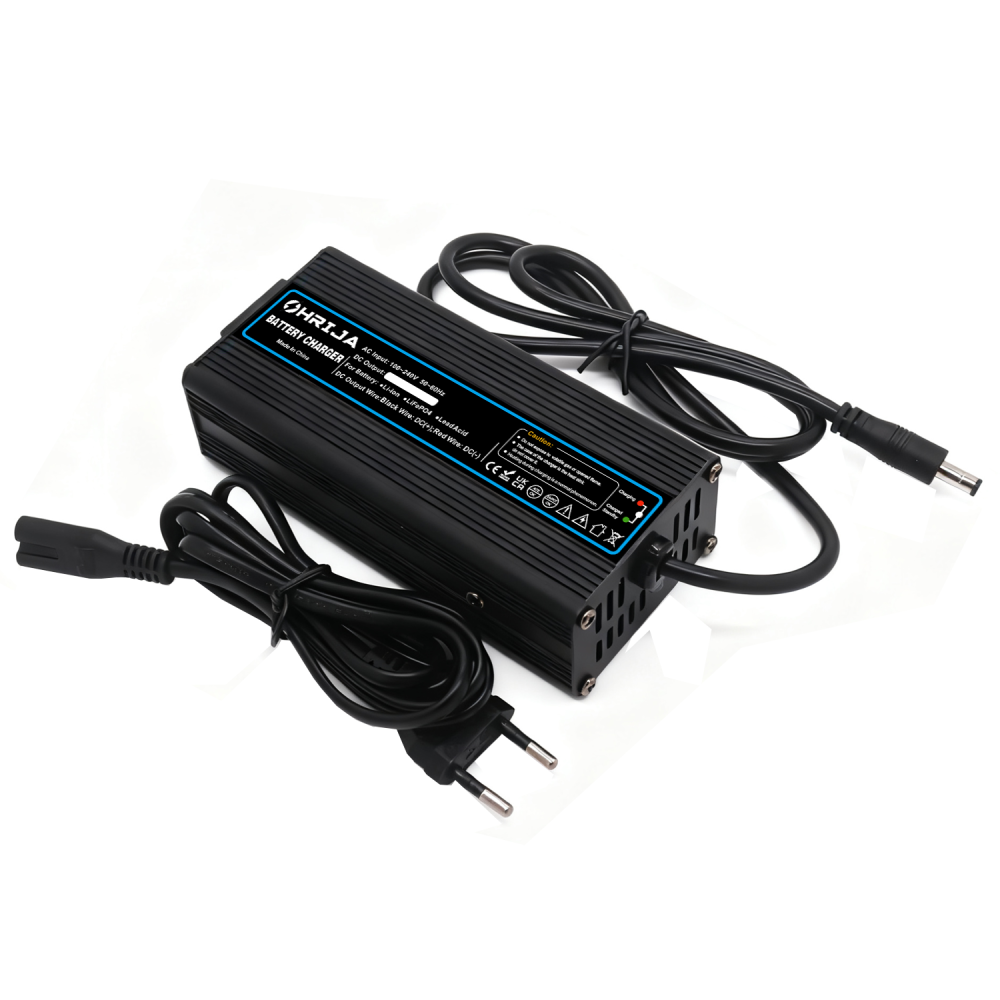
Rather than struggling with dangerous 12V workarounds or buying multiple chargers for different voltages, we recommend deploying a professional, adaptive solution. The OHRIJA HRH120 is a professional 120W battery charger designed for 12V, 24V, 36V, and 48V lithium-ion, lithium-iron-phosphate (LiFePO4), and lead-acid battery packs, requiring no manual maintenance.
It is widely used in electric tools, mobile transportation equipment, solar energy storage systems, medical carts, and industrial equipment. It adopts a multi-stage charging algorithm and a comprehensive protection circuit, effectively prolonging battery life and ensuring safe operation in harsh environments. With wide battery compatibility, it seamlessly supports AGM, gel, and flooded lead-acid batteries. Because the charger dynamically outputs 12V 5A, 24V 3A, 36V 2A, or 48V 2A, you simply select the appropriate parameters based on your battery type. It eliminates the guesswork entirely.
If your fleet utilizes varying voltages, having a versatile unit like the HRH120 is just as critical as having the best lithium ion battery charger 48V for your heavy utility vehicles.
Pros and Cons Table
| Pros of the 12V Workaround Method | Cons of the 12V Workaround Method |
|---|---|
| Can “wake up” a dead battery bank without professional help. | Highly tedious, requiring you to manually switch clamps every 30 minutes. |
| Utilizes cheap, common automotive chargers you already own. | Extreme risk of acid boiling if the charger is left on too long. |
| Saves money on towing or service mechanic fees. | Cannot fully charge the pack; only acts as a temporary rescue. |
| Helps identify if a single 6V battery has a dead cell. | Will permanently destroy a modern lithium golf cart battery pack. |
The Bottom Line
Stop Fighting Voltage Mismatches
Can you charge a 36V golf cart with a 12V charger? Technically, yes, by isolating lead-acid batteries into 12V pairs. But from a professional standpoint, doing so is an emergency bandage, not a maintenance strategy. Lead-acid golf cart batteries require intense, high-voltage equalization to prevent sulfation—something a 12V car charger can never provide. If you want your expensive deep-cycle batteries to last the full 5 to 7 years they are rated for, you must use a dedicated multi-stage smart charger that matches your pack’s exact voltage and chemistry. Invest in professional hardware like the OHRIJA HRH120, and stop risking thousands of dollars of batteries to save a few bucks on a proper charger.
For more insights on upgrading your power systems safely, review our technical breakdown of the best LiFePO4 battery chargers 2025 and ensure your hardware is ready for the next generation of energy storage.
Frequently Asked Questions
Can I use a 48V charger on a 36V golf cart?
Absolutely not. Connecting a 48V charger to a 36V battery pack will subject the batteries to severe overvoltage. This will cause the battery acid to violently boil, permanently warping the lead plates, and posing a severe risk of explosion. Always match the charger voltage exactly to the pack voltage. If you have a 48V cart, you must seek out the best golf cart battery chargers 48V.
Why won’t my 36V golf cart charger turn on?
Modern golf cart chargers have an internal safety relay that requires a minimum “sensing voltage” from the battery pack to turn on (usually around 25 to 28 volts for a 36V system). If your golf cart has been sitting unused for months and the batteries have drained below this threshold, the charger assumes it is not connected to anything and will not activate. You must use the 12V jump-start workaround to raise the voltage above the sensing threshold.
Can I jump-start my 36V golf cart with my car?
No. A car’s alternator puts out 14 volts. Connecting jumper cables from your car directly to the main positive and negative terminals of a 36V golf cart pack will create a massive electrical mismatch. You could fry your car’s alternator, melt the jumper cables, or cause the golf cart batteries to rupture. If portability is a concern, look into the best portable scooter battery chargers rather than risking automotive jump starts.
Authoritative Industry References
- U.S. Department of Energy (DOE) – Standards and best practices regarding deep-cycle battery charging efficiency, chemistry limitations, and grid safety protocols.
- Battery Council International (BCI) – The leading trade association for the North American battery industry, providing standardized safety procedures for handling, charging, and recovering lead-acid battery arrays.
- Institute of Electrical and Electronics Engineers (IEEE) – Peer-reviewed academic standards detailing the thermal runaway risks and internal resistance failures associated with charging mismatched battery voltages.