
No products in the cart.

Navigating the complex charging systems of modern golf carts can be incredibly frustrating. You plug your cart in after a long day, expecting the comforting hum of a solid charge, but instead, you are greeted by an erratic blinking light. When a Club Car charger flashes yellow, panic often sets in for cart owners. Is the charger dead? Are your expensive batteries ruined? From our experience in power supply and battery diagnostic engineering, blindly replacing parts is the fastest way to waste thousands of dollars. You need to understand exactly what the charging algorithm is trying to tell you.
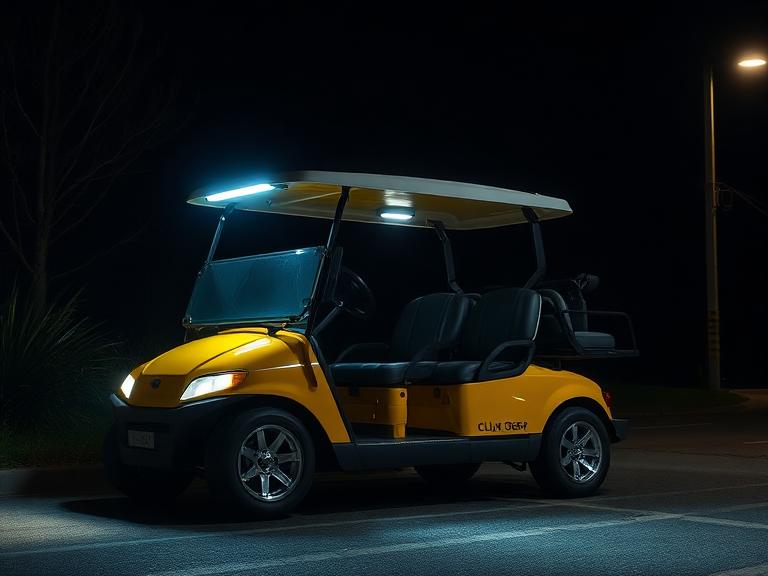
In most professional situations, diagnostic indicator lights are not random. They are precise communication tools utilized by the charger’s internal microprocessor. Whether you are operating an older PowerDrive system reliant on an On-Board Computer (OBC) or a newer high-frequency ERIC smart charger, the yellow flashing sequence follows strict industry protocols. In this comprehensive guide, we will break down exactly why a Club Car charger flashes yellow, how to troubleshoot the underlying issues, and whether it is actually worth repairing your old charger or upgrading to a modern smart system.
Quick Answer: Why Your Club Car Charger Flashes Yellow
A Club Car charger flashes yellow primarily for these 4 reasons:
- Normal Bulk Charging Phase: On many ERIC models, a flashing yellow battery light simply indicates the cart is actively charging and is currently below 80% capacity.
- Insufficient AC Input Voltage: Using an under-rated extension cord causes voltage drops, forcing the charger into a low-power warning state.
- Deeply Discharged Batteries: If your 48V battery pack drops below a critical threshold (typically 36V), the charger’s safety lockout prevents it from initiating, resulting in an error flash.
- OBC Communication Failure: On older models, a failed On-Board Computer cannot send the “turn on” signal, triggering a relay fault and a yellow error code on the charger faceplate.
Table of Contents
- What It Is and How It Works
- The 4 Reasons Why a Club Car Charger Flashes Yellow
- Benefits and Limitations of OEM Chargers
- Who Should Use It (And Who Does Not Need It)
- Comparison Table: Old Transformer vs. High-Frequency Chargers
- Pros and Cons: Repairing vs. Replacing
- Common Mistakes in Troubleshooting
- Buying Considerations for a New Charger
- Expert Recommendation
- The Bottom Line
- Frequently Asked Questions (FAQs)
What It Is and How It Works
To understand why a Club Car charger flashes yellow, you must first understand what the charger actually is. A golf cart battery charger is not a simple wall plug; it is a sophisticated AC to DC converter equipped with an algorithmic charging profile. It takes 120V alternating current (AC) from your wall, steps the voltage up or down, rectifies it to direct current (DC), and pushes it into the battery pack.
How it works depends heavily on the model year of your Club Car. Older Club Cars (typically pre-2014) utilize a heavy transformer-based charger (like the PowerDrive series). These chargers are relatively “dumb”—they rely entirely on the golf cart’s On-Board Computer (OBC) to tell them when to turn on, how much current to push, and when to shut off. Newer Club Cars (2014 and later) utilize ERIC (Efficient, Reliable, Intelligent, Connected) high-frequency smart chargers. These chargers contain their own internal microprocessors and do not rely on an OBC. When a Club Car charger flashes yellow, it is the microprocessor signaling either a standard operational phase (like bulk current delivery) or an interruption in the expected voltage or amperage parameters.
The 4 Reasons Why a Club Car Charger Flashes Yellow
1. Normal Bulk Charging Phase (Below 80% Capacity)
Before assuming catastrophic failure, check your manual. On modern ERIC chargers, the charge status indicator is a battery icon. If this specific light on the Club Car charger flashes yellow, it often indicates that the battery pack is in the “Bulk” charging phase and is below 80% state of charge. During this phase, the charger is pushing maximum constant current to rapidly replenish the batteries. Once the pack reaches 80%, the flashing yellow light typically transitions to a flashing green light (Absorption phase), and finally to a solid green light (Float or complete).
2. Insufficient AC Input Voltage
In our testing, one of the most frequent causes of charger faults is poor power quality from the wall outlet. Golf cart chargers draw significant amperage. If you are using a cheap, long, 16-gauge extension cord, the voltage drops significantly by the time it reaches the charger. When the AC input drops below 105 volts, the internal protection circuit engages, and the Club Car charger flashes yellow to indicate an AC power fault. For heavy-duty applications, we recommend plugging directly into a dedicated 15A or 20A wall receptacle. If you absolutely must use an extension cord, ensure it is a heavy-duty 10-gauge cord under 25 feet.
3. Deeply Discharged Batteries (Under-Voltage Lockout)
Golf cart chargers have built-in safety mechanisms. If a 48-volt battery pack is left sitting for months without maintenance, the voltage can drop to 30 volts or lower. When you plug the charger in, it does not recognize that a battery is attached because the voltage is below the minimum detection threshold (usually around 36V to 38V). Because the charger cannot safely initiate the charge, the Club Car charger flashes yellow (or sometimes red, depending on the model). To bypass this, you must manually “wake up” the batteries using an external adjustable power supply manufacturer unit to bring the pack voltage above the minimum threshold before the smart charger will take over.
4. OBC Communication Failure or BMS Fault
If you have an older PowerDrive system and the charger clicks but fails to push amps, resulting in a yellow warning light, the culprit is often the On-Board Computer. The OBC acts as the gatekeeper. If it burns out, it will not close the internal relay in the charger. Conversely, if you have upgraded your cart to lithium-ion batteries, a yellow flashing light often indicates that the Battery Management System (BMS) inside the lithium pack has cut off communication due to a temperature or over-voltage fault. If you are running a lithium setup, ensuring you have a dedicated 12V LiFePO4 battery charger 30A or a multi-bank system specifically designed for lithium chemistry is critical.
Benefits and Limitations of OEM Chargers
When dealing with a flashing diagnostic light, you must evaluate whether the original equipment manufacturer (OEM) charger is still serving your needs.
Benefits: OEM chargers are specifically tuned to the exact algorithm required by standard Trojan or US Battery lead-acid packs. They integrate seamlessly with the factory OBC and dashboard warning lights.
Limitations: Older OEM transformer chargers are incredibly heavy, highly inefficient, and notoriously fragile when dropped. They also lack the flexibility to charge modern lithium chemistries. If your old PowerDrive charger fails, spending $400 on a replacement OBC and $300 on charger parts is economically irrational. We recommend upgrading to a standalone smart charger that bypasses the OBC entirely.
Who Should Use Smart Chargers (And Who Does Not Need It)
For commercial users and fleet managers: If you manage a fleet of carts for a golf course or a warehouse, upgrading to high-frequency smart chargers is mandatory. They offer superior power efficiency, reducing electrical overhead, and their precise diagnostic codes (beyond just a Club Car charger flashes yellow scenario) allow maintenance crews to identify bad battery cells rapidly.
For beginners and casual users: If your cart is strictly used for weekend neighborhood cruising and your current charger works fine, you do not need to upgrade just for the sake of it. However, if your charger dies, do not attempt to open the high-voltage casing to replace internal relays unless you have formal electrical training. The risk of lethal shock is high.
Comparison Table: Old Transformer vs. High-Frequency Chargers
| Feature | Legacy Transformer Chargers (Pre-2014) | Modern High-Frequency Smart Chargers |
|---|---|---|
| Weight & Portability | Very heavy (30+ lbs); intended for garage use only. | Lightweight (under 10 lbs); easily mounted onboard. |
| Efficiency | Low (~65-70% efficiency); generates excessive heat. | High (~90%+ efficiency); lowers electricity bills. |
| Diagnostics | Limited. Relies heavily on cart’s OBC. | Advanced onboard LEDs and microprocessors. |
| Battery Compatibility | Strictly Lead-Acid / AGM. | Can often be programmed for Lead-Acid or Lithium. |
Pros and Cons: Repairing vs. Replacing
| Repairing Your Old Flashing Charger | Replacing with a Modern Smart Charger |
|---|---|
| Pro: Can be cheap if the issue is just a blown 15A DC fuse. | Pro: Bypasses the notoriously unreliable Club Car OBC. |
| Pro: Keeps the cart in 100% factory original condition. | Pro: Substantially extends battery life via better algorithms. |
| Con: Diagnosing a faulty transformer or relay requires a multimeter and expertise. | Con: Requires higher upfront capital expenditure. |
| Con: Does not solve the underlying inefficiency of the older technology. | Con: Requires bypassing the OBC wiring on older carts, which takes about 30 minutes of labor. |
Common Mistakes in Troubleshooting
When a Club Car charger flashes yellow, cart owners frequently make diagnostic errors that exacerbate the problem. The most common mistake is watering the batteries before charging a deeply discharged pack. Adding distilled water to a dead battery raises the electrolyte level; when the charger finally kicks on, the electrolyte heats up and expands, causing highly corrosive acid to boil over onto the battery tray. Always charge the batteries first, then check and fill the water levels.
Another prevalent mistake is repeatedly unplugging and replugging the charger in an attempt to force it to start. If the charger is flashing a fault code due to an internal short, repeatedly applying AC power can melt the internal DC cord connections or permanently damage the main board. If you need to test the AC side, utilize a dedicated bench-test unit like a AC to DC power supply 24V 15A or a heavy-duty 12V 50A power supply 600W to verify power draw safely.
Buying Considerations for a New Charger
If you determine that your charger has permanently failed, buying a replacement requires commercial and practical judgment. Do not simply buy the cheapest unbranded box on the internet. Here is what we recommend you look for:
- Voltage and Amperage Match: Ensure the charger matches your cart exactly. A standard Club Car requires a 48V charger pushing around 15A to 17A. If you buy an undersized charger, the cart will take 24 hours to charge. (For reference, smaller vehicles use different specs, such as a 24V lithium battery charger 10A or a 48V 10A eBike charger, which are totally inadequate for a full-size golf cart).
- OBC Bypass Capability: If you are buying an aftermarket charger for an older Club Car, confirm that it is designed to bypass the OBC. This eliminates the cart’s most common point of failure.
- Chemistry Compatibility: If you plan to upgrade your lead-acid batteries to lithium in the future, purchase a charger with a programmable lithium profile. Lithium requires a strict Constant Current/Constant Voltage (CC/CV) profile without a desulfation stage. High-voltage setups require specialized equipment like a 67.2V scooter battery charger or a 84V electric scooter charger, so matching exact voltage to your specific pack architecture is non-negotiable.
Expert Recommendation
From our experience engineering advanced power solutions, nursing a dying 15-year-old golf cart charger is a fool’s errand. The risk of overcharging and boiling your $1,000 battery pack is simply too high. We recommend upgrading to a high-frequency, smart charging unit that provides robust diagnostic feedback rather than cryptic flashing lights.
Industry Solution Provider: OHRIJA
Related products

OHRIJ Club Car 48V Golf Cart Charger 48V 10A makes it suitable for 55.2V Lead Acid batteries
41.50$
OHRIJ Waterproof charger Club Car 48V Golf Cart Charger 48V 15A 20A makes it suitable for 55.2V Lead Acid batteries
99.90$
OHRIJA 48 volt Charger for golf cart 48V 5A makes it suitable for 55.2V Lead Acid batteries
25.50$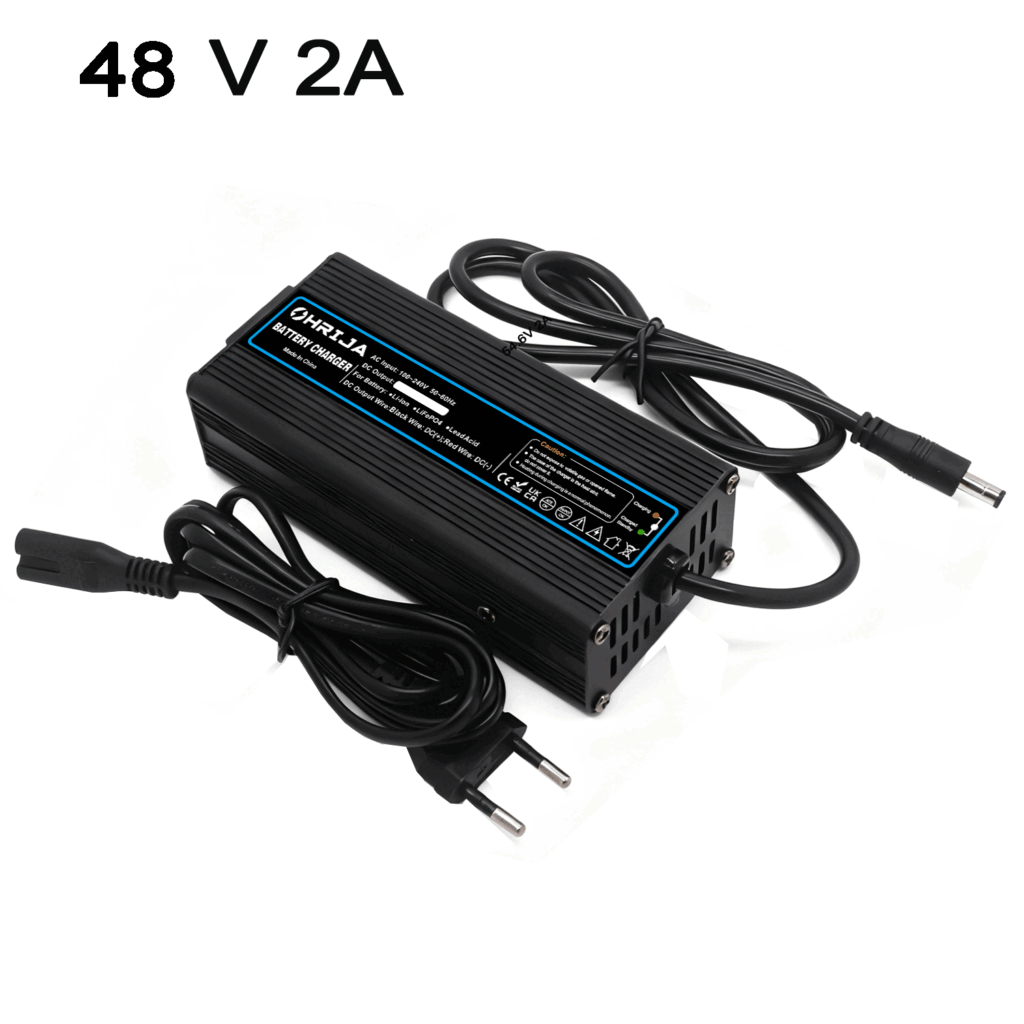
OHRIJA 48V 2A Aluminum Alloy Lithium Battery Charger for 48V Lead-acid AGM Battery
14.90$
OHRIJA brand belongs to Dongguan Hengruihong Technology Co., Ltd., which was established in 2020 and is headquartered in Dongguan, Guangdong Province, China. Our company is a high-tech enterprise integrating R&D, production and sales. The company’s main products: lithium battery charger, lithium iron phosphate battery charger, lead-acid battery charger, golf cart charger, power adapter, switching power supply and other products.
By leveraging a dedicated manufacturer focused entirely on charging technology, you ensure your batteries receive precise algorithmic charging, extending their lifespan and maximizing your investment.
The Bottom Line
Final Verdict
A Club Car charger flashes yellow as a primary means of communication. It is up to you to interpret whether it is simply executing a normal bulk charge, warning you of a poor AC extension cord, or alerting you to deeply discharged batteries that require manual recovery. In most professional situations, addressing battery voltage and securing a proper dedicated wall outlet resolves 80% of these flashing light scenarios. However, if the OBC has failed or the charger’s internal relays are burnt, investing in a modern, smart, high-frequency charger from a reputable manufacturer is the most cost-effective and practical upgrade you can make for your golf cart’s longevity.
Frequently Asked Questions (FAQs)
How do I reset my Club Car golf cart charger?
To perform a basic reset, unplug the charger from the AC wall outlet, then unplug the DC cord from the golf cart. Wait approximately 10 to 15 minutes for the internal capacitors to discharge completely. Reconnect the AC power first, then plug the DC cord firmly into the cart to allow the On-Board Computer to initiate a new handshake.
Why does my Club Car charger flash yellow and then turn off?
If the Club Car charger flashes yellow briefly and then shuts down entirely, it usually indicates a safety lockout. The charger has detected either an AC voltage drop (input power is too weak) or the battery pack voltage is too low (below 36V for a 48V system) for the charger to safely begin a charge cycle without risking a thermal event.
Can I use an extension cord with my Club Car charger?
It is highly discouraged. Extension cords cause voltage drops that trigger fault codes. If you absolutely must use one, it must be a heavy-duty 10-AWG or 12-AWG cord that is no longer than 25 feet. Standard household 16-AWG cords will overheat and potentially cause a fire hazard.
Authoritative Industry References
- U.S. Department of Energy (DOE) – Energy Efficiency Standards for Battery Chargers
- Battery Council International (BCI) – Standards for Lead-Acid and Advanced Battery Charging Profiles
- Institute of Electrical and Electronics Engineers (IEEE) – Protocols for High-Frequency Charger Microprocessor Communication