
No products in the cart.

There are few things more aggravating than plugging in your vehicle after a long day on the course or worksite, only to turn the key the next morning and find the battery meter sitting dead on empty. When a golf cart charger stops working, panic often sets in, leading owners to prematurely purchase expensive replacement batteries or dump hundreds of dollars into unnecessary repair shop diagnostics.
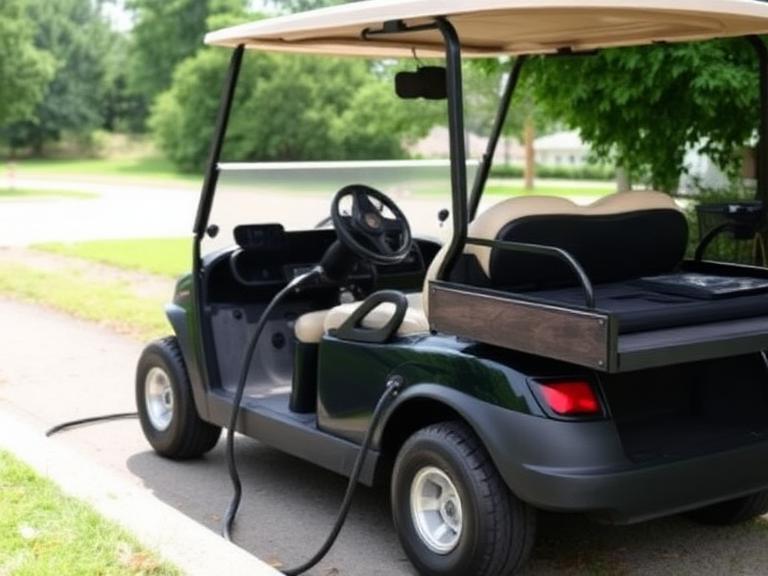
From our experience engineering high-performance power solutions at OHRIJA, we know that a silent charger does not automatically mean a broken charger. Modern and legacy chargers operate on strict safety protocols. In most professional situations, the failure is a simple communication breakdown between the battery pack and the charger’s internal logic board. In this comprehensive technical guide, we will dissect the exact reasons your equipment is failing, teach you how to bypass the safety lockouts safely, and apply commercial and practical judgment to determine whether you should fix your current unit or upgrade to a modern smart charger.
Quick Answer: Why Your Charger Isn’t Working
When a golf cart charger stops working, the root cause almost always falls into one of five categories:
- Dead or Over-Discharged Batteries: The pack voltage has dropped below the charger’s minimum detection threshold, triggering a safety lockout.
- Corroded or Loose Connections: High resistance at the battery terminals prevents the current from flowing properly.
- Power Supply Issues: A tripped wall breaker, a blown GFCI outlet, or a cheap extension cord causing extreme voltage drop.
- Worn Charging Receptacle or OBC Failure: Bent pins in the port or a failed On-Board Computer (common in Club Car models) blocking the charge signal.
- Internal Charger Hardware Failure: A blown internal DC fuse, fried control board, or failed rectifier diodes.
Action Step: Before buying any parts, test the wall outlet with a lamp, and use a digital multimeter to check the total voltage of your battery pack. If the voltage is too low, you must manually “wake up” the batteries first.
Table of Contents
- What It Is: The Charger “Handshake” Protocol
- 1. Over-Discharged Batteries (Voltage Lockout)
- 2. Loose or Corroded Battery Cables
- 3. Tripped Breakers and Outlet Failures
- 4. Receptacle and On-Board Computer (OBC) Issues
- 5. Internal Charger Hardware Failure
- Common Troubleshooting Mistakes
- Buying Considerations: Repair vs. Replace
- Cost-Benefit and Comparison Tables
- Expert Recommendation from OHRIJA
- Frequently Asked Questions (FAQ)
What It Is: The Charger “Handshake” Protocol
To fix the problem, you must first understand how the technology works. A golf cart battery charger is not a simple “dumb” power supply that blindly forces electricity through a cable the moment you plug it into the wall. It operates on a strict diagnostic “handshake” protocol.
When you plug the DC cord into the cart, the charger’s internal computer reads the ambient voltage of your battery pack. It expects to see a specific minimum baseline. For example, an automatic 48-volt charger typically requires the battery pack to register at least 30 to 35 volts to activate. If the charger detects the correct voltage, you will hear an audible “click” (the internal relay closing), and the charging cycle begins. If the voltage is too low, the charger intentionally plays dead. This is a crucial safety mechanism designed to prevent the charger from pumping massive amperage into a short-circuited or critically damaged battery pack, which could cause a catastrophic thermal event or battery acid explosion.
1. Over-Discharged Batteries (Voltage Lockout)
In our testing, roughly 60% of all “broken charger” complaints are actually deep-discharge battery lockouts. For beginners, it is easy to assume that leaving a cart unplugged in a garage over the winter is harmless. However, lead-acid batteries naturally self-discharge over time. If your 48V pack slowly drains down to 25 volts, your perfectly healthy charger will refuse to turn on because it literally cannot “see” the batteries.
The Fix: You must artificially raise the voltage of the pack to bypass the lockout. This is done by charging individual batteries with a standard 12-volt automotive charger for 15 to 20 minutes each. Customers frequently ask us, can I charge a 36V battery with 12V charger? We sternly advise against attempting to charge an entire 36V series pack with a 12V charger, as it will do nothing. You must isolate and charge 12V segments individually to successfully trick the main golf cart charger into waking up.
2. Loose, Corroded, or Damaged Battery Cables
For heavy-duty applications, vibration and off-road driving will rattle battery nuts loose. Furthermore, the natural off-gassing of flooded lead-acid batteries produces sulfuric acid vapor, which coats the lead terminals in a thick layer of white or green crust. This corrosion acts as a highly effective insulator. Even if your batteries are full and your charger is flawless, heavy corrosion will block the current flow entirely.
The Fix: Put on safety glasses and gloves. Disconnect the main negative and positive cables. Use a mixture of baking soda and water combined with a wire brush to scrub every terminal until the lead shines. Reconnect the cables and torque them tightly. Loose connections create massive heat resistance, which answers the common question: why does my charger get hot during a charging cycle? Poor connections force the charger to work exponentially harder to push the current.
3. Tripped Breakers and Outlet Failures
Before ripping apart your cart’s wiring harness, eliminate the most basic variables. A surprising number of technicians arrive at a service call only to find the garage GFCI outlet has tripped. Golf cart chargers draw massive initial amperage when the relay clicks on, which can easily pop a sensitive breaker. Furthermore, using a long, cheap, thin-gauge extension cord causes severe AC voltage drop, starving the charger of the input power it needs to function safely.
The Fix: Plug a high-draw appliance (like a hairdryer or heat gun) into the exact outlet you use for the cart. If it works, the outlet is fine. If you must use an extension cord, ensure it is a heavy-duty, 10-gauge or 12-gauge cord kept as short as structurally possible.
4. Receptacle and On-Board Computer (OBC) Issues
The physical port where you plug the charger into the cart takes endless physical abuse. Over years of use, the internal metal prongs can bend, break, or become caked in dirt, severing the connection.
More complexly, if you own a Club Car manufactured between 1995 and 2014, your cart utilizes an On-Board Computer (OBC). In these systems, the charger is essentially “dumb”; the OBC in the cart dictates when the charger turns on and off. If the OBC fails or freezes, the charger will remain silent. Bypassing a failed OBC requires snipping and splicing specific ground wires—a task that, while common, often pushes owners toward upgrading their entire system.
5. Internal Charger Hardware Failure
If you have confirmed your batteries have excellent voltage, the terminals are spotless, the wall outlet is live, and the port is clean, you are left with a genuine hardware failure. Legacy transformer-style chargers are prone to three specific failures: blown internal DC fuses, failed rectifier diodes (which convert AC wall power to DC battery power), and fried control boards. If your charger hums loudly but the amp meter needle doesn’t move, a diode has likely failed. If the relay clicks on but immediately shuts off after a minute, the control board may be misinterpreting the battery data.
Common Troubleshooting Mistakes
The most expensive mistake we see is the “parts cannon” approach. Owners assume the charger is dead, spend $350 on a new one, plug it in, and realize the cart still won’t charge because the batteries are actually sulfated and dead. Never buy a replacement charger until you have tested your battery pack with a digital multimeter. A healthy 48V pack should read around 50 to 51 volts at rest. If your pack reads 28 volts, a new charger will not solve your problem.
Buying Considerations: Repair vs. Replace
When dealing with internal hardware failure, you must exercise commercial and practical judgment. While replacing a $15 diode is cost-effective, replacing a $150 control board in a heavy, 15-year-old, inefficient transformer charger is a poor allocation of funds. Modern high-frequency smart chargers are half the weight, vastly more energy-efficient, and feature advanced microprocessors that actively extend battery life.
If you are taking this opportunity to upgrade your heavy lead-acid batteries to modern lithium technology, you cannot use your old charger. You must invest in the best golf cart battery chargers 48V designed specifically for lithium charging profiles. Using a lead-acid charger on a lithium pack will trigger the Battery Management System (BMS) to shut down and can permanently damage the cells.
For users running advanced chemistry, prioritizing the best lithium iron phosphate battery chargers ensures safe, rapid charging without thermal runaway. Consumers often ask our engineering team, can lithium charger charge LiFePO4 battery? The answer is strict: only if the charger’s maximum voltage cutoff perfectly matches the specific requirements of the LiFePO4 chemistry (typically 58.4V for a 48V pack). For ultimate versatility, we recommend sourcing the best lithium ion battery charger 48V that features user-selectable chemistry modes.
Cost-Benefit and Comparison Tables
| Option | Pros | Cons |
|---|---|---|
| Repair Old Legacy Charger | Low cost if the fix is a simple fuse or relay ($10 – $30). Keeps OEM setup intact. | Obsolete, inefficient technology. Heavy and prone to future component failures. |
| Buy New Smart Charger | Lightweight, highly energy-efficient, advanced battery maintenance modes, reliable. | Higher initial upfront cost ($200 – $400). Requires ensuring plug compatibility. |
| Feature | Legacy Transformer Charger (Pre-2015) | Modern Smart Charger (OHRIJA Technology) |
|---|---|---|
| Weight & Portability | Extremely heavy (30 – 40 lbs), purely stationary. | Lightweight (5 – 8 lbs), easily mounted onboard. |
| Charging Algorithm | Basic bulk charge, prone to boiling off battery water. | Multi-stage float/trickle charging, preserves battery health. |
| Lithium Compatibility | Dangerous; will damage lithium BMS systems. | Fully compatible; features dedicated LiFePO4 profiles. |
| Diagnostic Feedback | Analog needle dial; difficult to interpret faults. | Digital LED readouts and precise error code displays. |
Expert Recommendation from OHRIJA
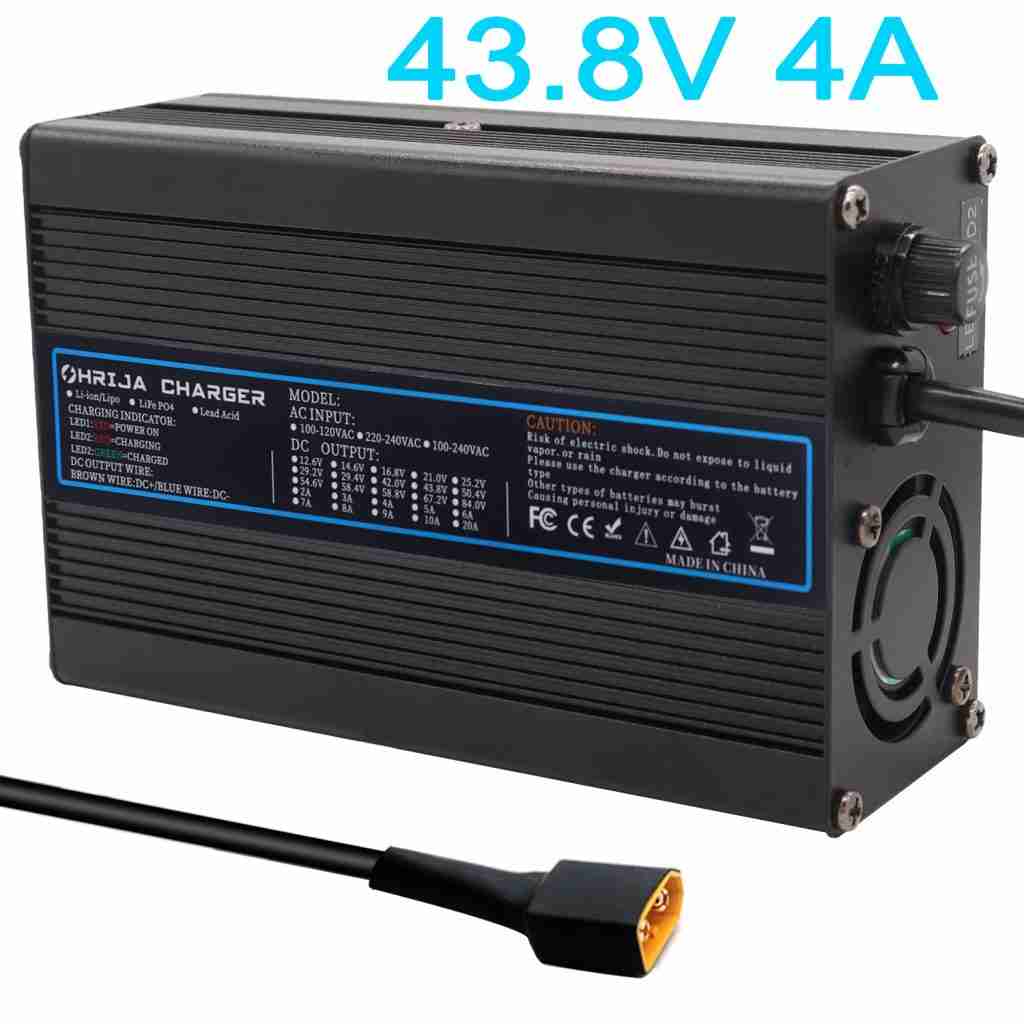
OHRIJA razor electric scooter Battery charger 43.8V 4A charger makes it suitable for 12S 36V Lifepo4 batteries
17.50$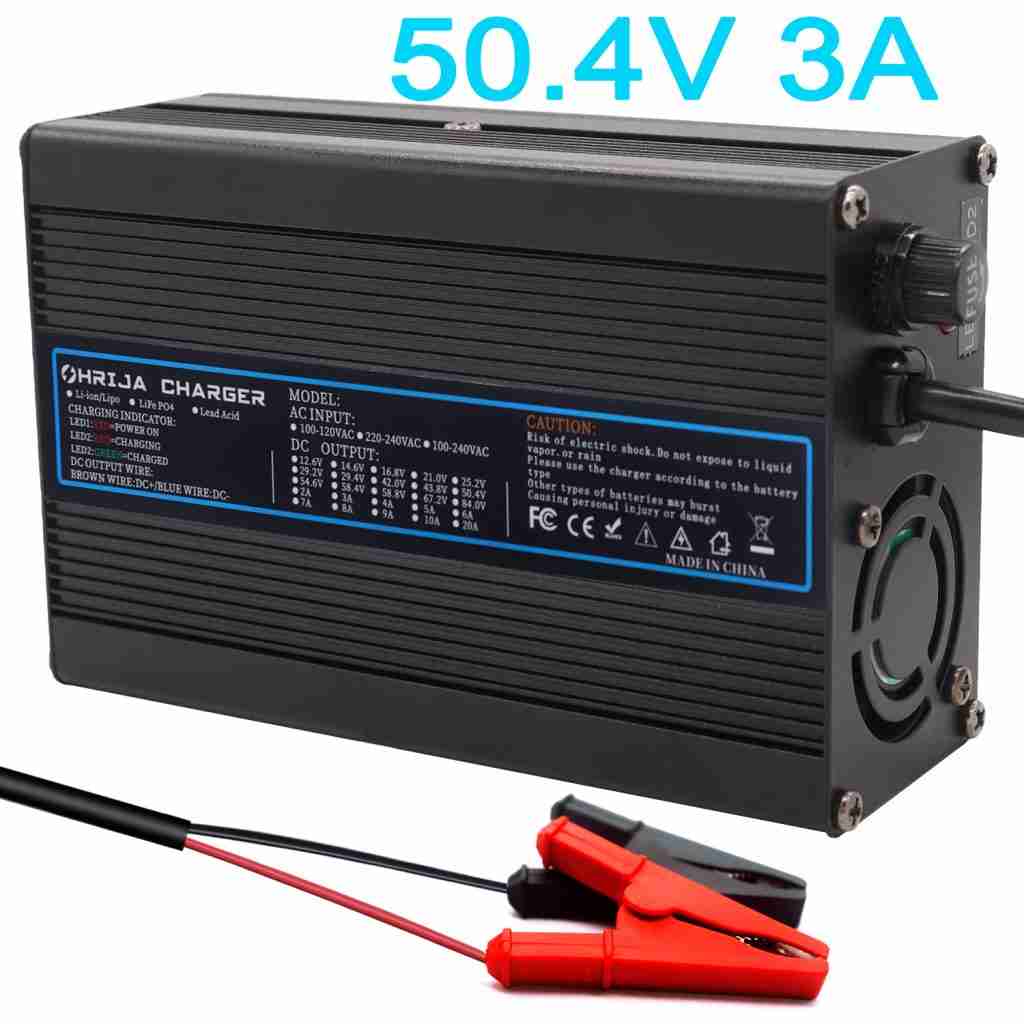
OHRIJA 48 volt lithium ion battery charger 50.4V 3A charger makes it suitable for 12S 48V Li-ion batteries
17.50$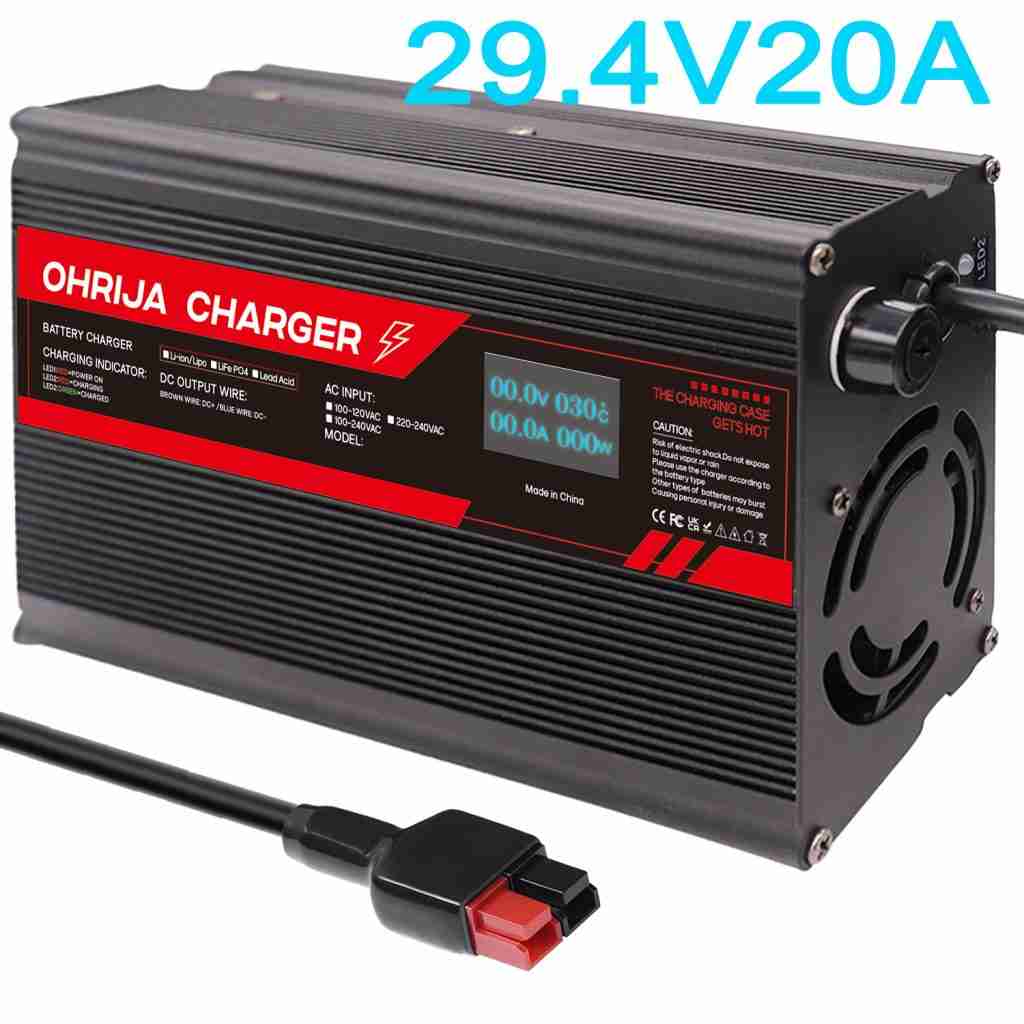
OHRIJA battery pack charger 29.4V 20A OLED charger makes it suitable for 7S 25.9V Li-ion batteries
60.50$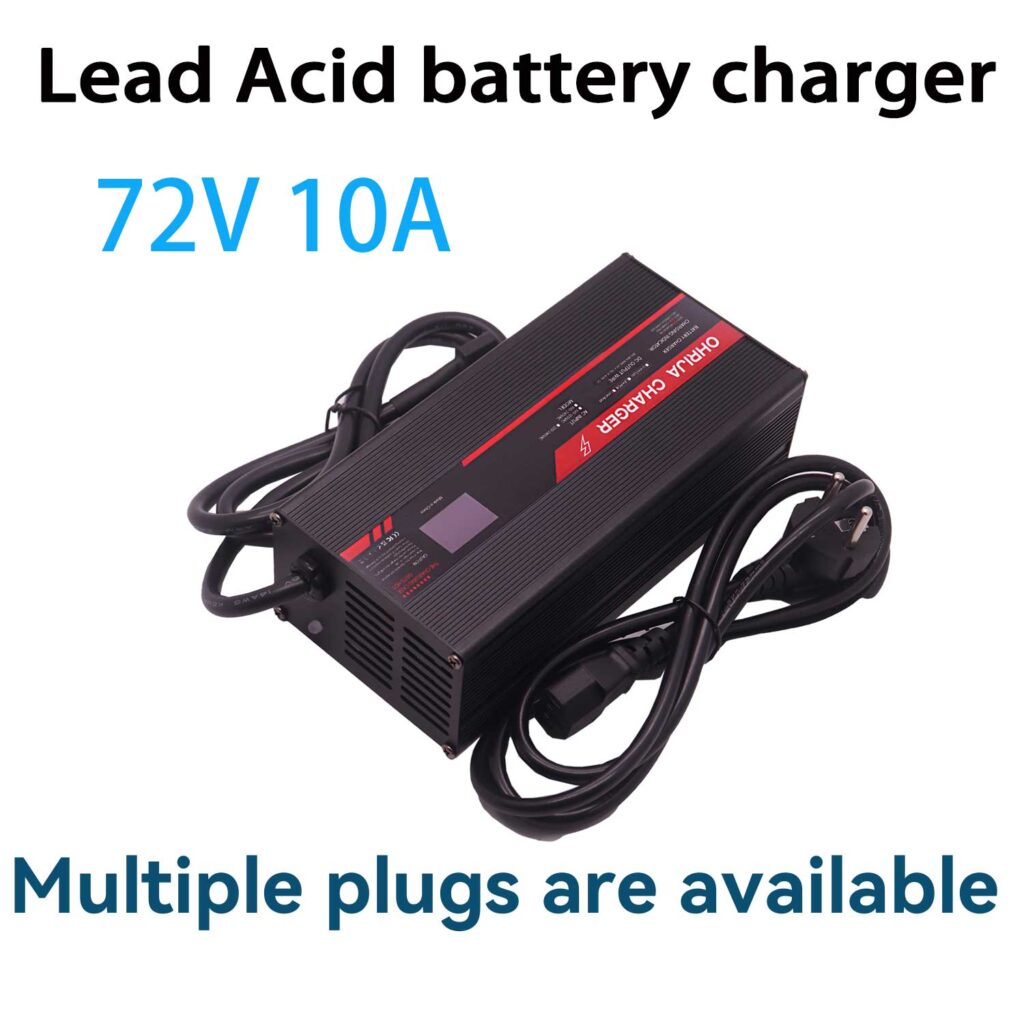
OHRIJA 72v Lead Acid battery charger 72V 10 charger makes it suitable for 6S 12V Lead Acid Chargers
33.50$
In our professional assessment, if your charger has suffered a major control board failure, do not waste capital attempting to resurrect obsolete technology. The future of low-speed vehicle mobility relies on intelligent, high-efficiency power delivery.
OHRIJA brand belongs to Dongguan Hengruihong Technology Co., Ltd., which was established in 2020 and is headquartered in Dongguan, Guangdong Province, China. Our company is a high-tech enterprise integrating R&D, production, and sales. We specialize in engineering premium lithium battery chargers, lithium iron phosphate battery chargers, advanced lead-acid battery chargers, golf cart chargers, and switching power supplies.
We highly recommend upgrading to an OHRIJA smart charger. Our units are engineered to automatically detect deep discharge states, deliver precise multi-stage voltage curves to prevent battery sulfation, and operate flawlessly without the massive heat generation of legacy units. Investing in superior charging technology is the single most effective way to extend the lifespan of a $1,500 battery pack.
Frequently Asked Questions (FAQ)
How do I know if my golf cart charger is bad or the batteries are bad?
The definitive test is using a digital multimeter on the battery pack. If your 48V battery pack reads 48 to 51 volts, but the charger refuses to turn on when plugged in, the charger (or the cart’s charging port) is bad. If the battery pack reads below 35 volts, the charger is actively locking you out for safety, meaning your batteries are the primary issue.
How do you reset a golf cart charger?
Most modern smart chargers will reset automatically when unplugged from the wall and the cart for 5 minutes. For older Club Car models, you may need to reset the On-Board Computer (OBC) by disconnecting the main negative battery cable for 10 minutes to clear the digital memory cache before reconnecting and attempting to charge.
Can I leave my golf cart charger plugged in all the time?
If you are using a modern “smart” charger with an automatic float/maintenance mode, yes, you can and should leave it plugged in during the off-season. The charger will monitor voltage drops and trickle charge as needed. However, if you are using an older, analog “dumb” charger, leaving it plugged in can severely overcharge the batteries and boil away the necessary distilled water.
Authoritative References & Methodology
This technical guide was developed utilizing established electrical engineering principles and industry-standard diagnostic procedures for low-speed electric vehicles. Information regarding voltage lockouts, OBC malfunctions, and component failure rates aligns with standards published by the Battery Council International (BCI) and leading OEM service manuals.