
No products in the cart.

For millions of people, a mobility scooter is not just a vehicle; it is a lifeline to independence. Whether you are navigating the aisles of a grocery store, visiting family, or enjoying a day at the park, the reliability of your scooter depends entirely on the health of its power source. At the heart of this reliability lies one crucial component: the charger. Finding the right battery chargers for mobility scooters is essential to ensuring your device is ready to go whenever you are.

In 2026, the market for chargers has evolved significantly. We are seeing a shift from heavy, inefficient transformers to smart, microprocessor-controlled units that can extend battery life by years. Furthermore, with the rise of lithium-ion (Li-ion) and Lithium Iron Phosphate (LiFePO4) batteries upgrading older Sealed Lead Acid (SLA) models, selecting the correct charger chemistry has never been more important. Using the wrong charger can not only damage your expensive battery but also pose safety risks.
This comprehensive guide will walk you through the top 9 chargers available today, covering options for standard SLA batteries as well as high-performance lithium upgrades. We will explore voltage matching, amperage selection, and the smart features that distinguish a mediocre charger from a great one.
Table of Contents
- 1. Critical Selection Guide: Chemistry, Voltage, and Amps
- 2. The 9 Best Battery Chargers for Mobility Scooters
- 2.1 NOCO Genius10 Smart Charger
- 2.2 OHRIJA 67.2V 4A OLED Mobility Scooter Charger
- 2.3 Mighty Max 24V 5A XLR Charger
- 2.4 OHRIJA 29.4V 10A OLED E-Scooter Charger
- 2.5 Pride Mobility 5 Amp Off-Board Charger
- 2.6 OHRIJA 29.2V 15A LiFePO4 Charger
- 2.7 MK Battery 24V 8A High-Capacity Charger
- 2.8 Battery Tender 24V 5A Power Plus
- 2.9 Schauer JAC0524 Intelligent Charger
- 3. Battery Maintenance Tips for Longevity
- 4. Troubleshooting Common Charging Issues
- 5. Summary Comparison Table
- 6. Frequently Asked Questions (FAQs)
- 7. References
1. Critical Selection Guide: Chemistry, Voltage, and Amps
Before buying a replacement charger, you must understand the specifications of your mobility scooter. Plugging in the wrong device is the most common cause of battery failure.
Battery Chemistry Matters
Most traditional mobility scooters use Sealed Lead Acid (SLA) batteries, often in the form of Gel or AGM (Absorbent Glass Mat). These require a specific 3-stage charging profile (Bulk, Absorption, Float). However, many modern users are upgrading to Lithium-ion (Li-ion) or LiFePO4 for lighter weight and longer range. Lithium batteries require a Constant Current/Constant Voltage (CC/CV) charge profile and generally do not use a “float” stage in the same way lead-acid does. Never use a lead-acid charger on a lithium battery unless it is specifically multi-chemistry compatible.
Voltage Matching
The voltage must match exactly. For a standard 24V mobility scooter system (two 12V batteries in series), you need a 24V charger. However, note that the output voltage of a 24V charger is actually higher (usually around 29.4V for charging) to push energy into the battery. For lithium upgrades, a “24V” battery might actually be a 7S (25.9V nominal) or 8S (25.6V nominal) pack, requiring 29.4V or 29.2V chargers respectively.
Amperage and Speed
Amperage (Amps) dictates how fast the battery charges. A 2A charger is slow but gentle. A 5A or 8A charger is faster. As a rule of thumb, your charger’s amp rating should be roughly 10-20% of your battery’s Amp Hour (Ah) rating. For example, a 35Ah battery pairs well with a 4A to 7A charger.
2. The 9 Best Battery Chargers for Mobility Scooters
We have curated this list to include options for every type of user, from those with standard OEM setups to those with high-performance lithium modifications.
1. NOCO Genius10 Smart Charger
The NOCO Genius10 is widely considered one of the most versatile chargers on the market. While not a dedicated “mobility” charger out of the box (you may need an XLR adapter), its intelligent circuitry is unmatched. It is a 6V and 12V charger, but can be used in maintenance scenarios for individual batteries. For 24V systems, you would typically charge the 12V batteries individually to balance them, or use their industrial 24V line. Its primary strength is its ability to desulfate old lead-acid batteries, potentially reviving a scooter that has been sitting too long.
2. OHRIJA 67.2V 4A OLED Mobility Scooter Charger
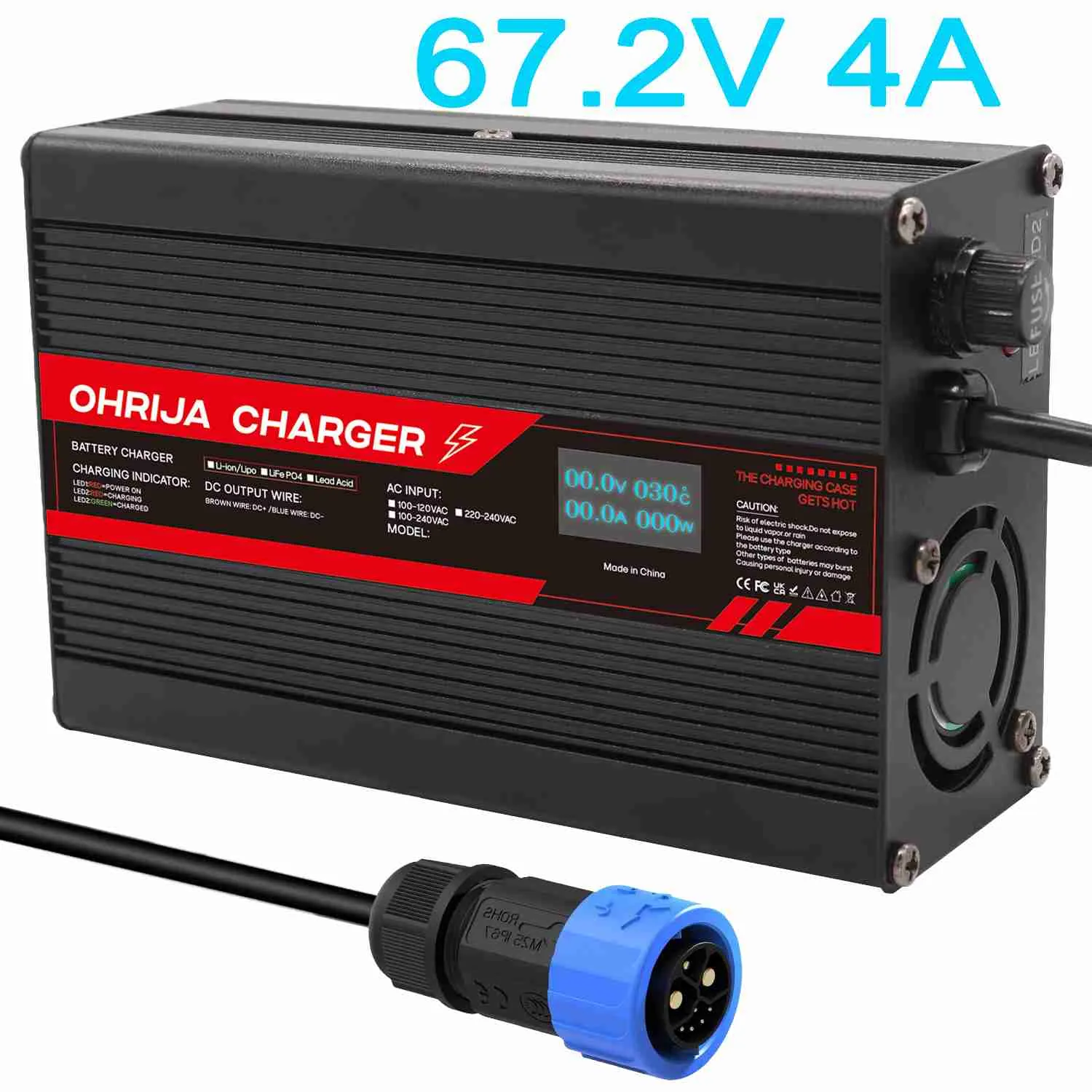
For high-performance mobility scooters that have been upgraded to high-voltage lithium systems, standard chargers simply won’t suffice. The OHRIJA mobility scooter battery charger 67.2V 4A OLED charger is a specialized unit designed for 60V (16S) Li-ion battery packs. It features an OLED display that provides real-time data on voltage and current, giving enthusiasts complete visibility into their charging status.
Product Parameters:
Product model: HRH300
Product material: aluminum alloy shell
Output voltage: maximum 67.2V ±0.2v
Output current: maximum 4Amp ±0.2a
Product size: 135*90*50MM 0.9kg
Applicable battery type: 16S 59.2V lithium-ion battery
Working power: maximum 295W
Color: black, red optional
Input plug: US, EU.UK.AU (select the correct plug according to local standards)
Output connector: XT60 | XT90 | Crocodile Clip | Anderson 50A | Wire Nose | DC5.5*2.5 | GX16 1+3- | XLR | IEC C13 | 45A (select the correct connector according to the battery port)
Package: charger*1, DC 1m output cable*1, input cable 1m*1, instruction manual*1
Product model: HRH300
Product material: aluminum alloy shell
Output voltage: maximum 67.2V ±0.2v
Output current: maximum 4Amp ±0.2a
Product size: 135*90*50MM 0.9kg
Applicable battery type: 16S 59.2V lithium-ion battery
Working power: maximum 295W
Color: black, red optional
Input plug: US, EU.UK.AU (select the correct plug according to local standards)
Output connector: XT60 | XT90 | Crocodile Clip | Anderson 50A | Wire Nose | DC5.5*2.5 | GX16 1+3- | XLR | IEC C13 | 45A (select the correct connector according to the battery port)
Package: charger*1, DC 1m output cable*1, input cable 1m*1, instruction manual*1
This charger stands out for its robust aluminum alloy shell and wide range of connector options, including the standard XLR often found on mobility devices.
3. Mighty Max 24V 5A XLR Charger
When you need a reliable, no-nonsense replacement for a standard mobility scooter, the Mighty Max 24V 5A is a top contender. It comes with the industry-standard 3-pin XLR connector that fits 90% of scooters (Pride, Drive, Golden Technologies, etc.). It uses a 3-stage charging method to ensure the SLA batteries are fully charged without overcooking them. The 5-amp output is a sweet spot, offering faster charging than the typical 2-amp “in the box” chargers provided by manufacturers, making it ideal for daily users who need a quick turnaround.
4. OHRIJA 29.4V 10A OLED E-Scooter Charger
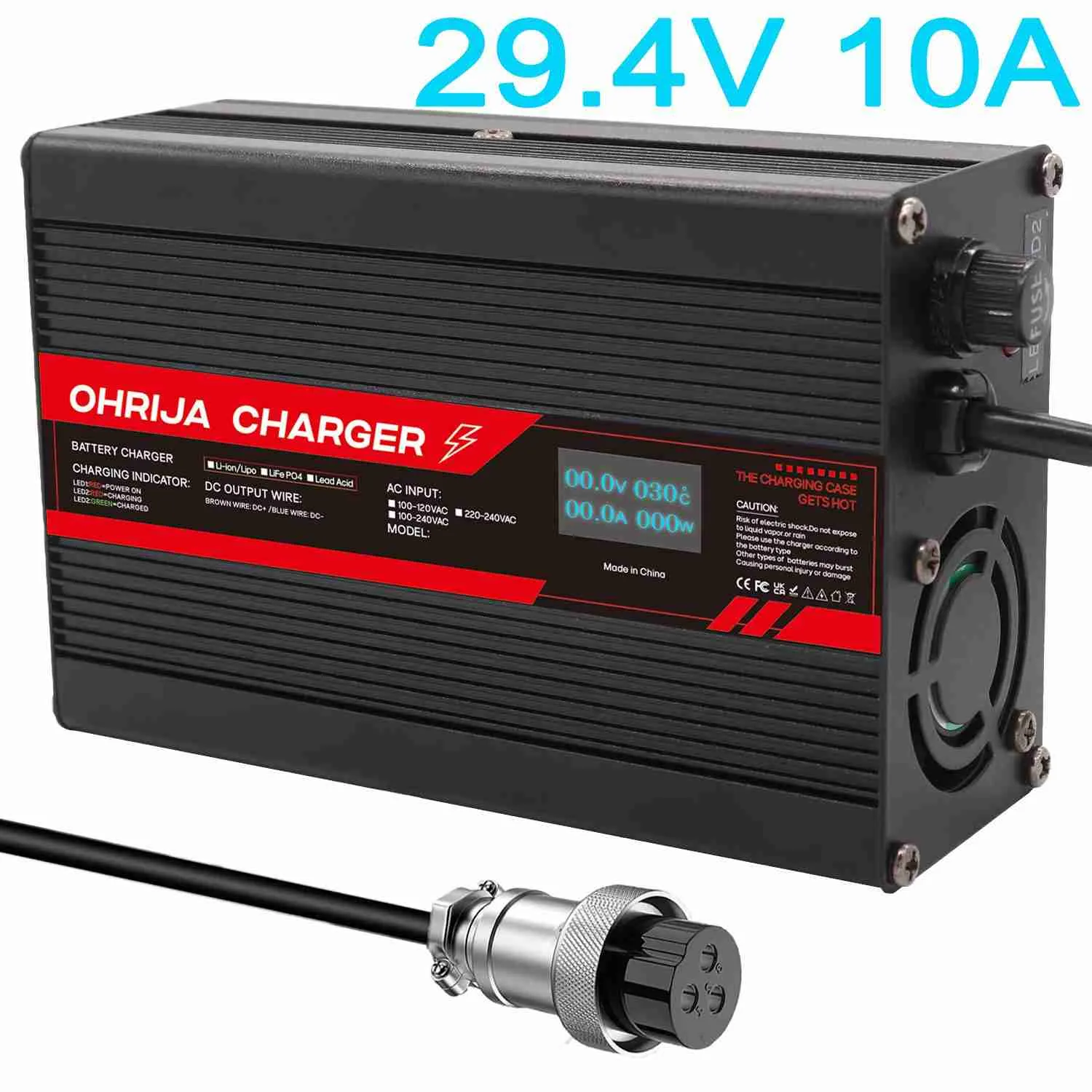
Lithium conversions for mobility scooters are becoming increasingly popular to reduce weight. If you are running a 24V Lithium-ion setup (specifically a 7S configuration), the OHRIJA e scooter charger 29.4V 10A OLED charger is an exceptional choice. With a massive 10A output, this charger can replenish large capacity batteries incredibly fast, minimizing downtime.
Product parameters:
Product model: HRH300
Product material: aluminum alloy shell
Output voltage: maximum 29.4V ±0.2v
Output current: maximum 10Amp ±0.2a
Product size: 135*90*50MM 0.9kg
Applicable battery type: 7S 25.9V lithium-ion battery
Working power: maximum 290W
Color: black, red optional
Input plug: US, EU.UK.AU (select the correct plug according to local standards)
Output connector:XT60 | XT90 | Crocodile Clip | Anderson 50A | DC5.5*2.5 | GX16 1+3- | XLR(select the correct connector according to the battery port)
Package: charger * 1, DC 1m output cable * 1, input cable 1m * 1, instruction manual * 1
Product model: HRH300
Product material: aluminum alloy shell
Output voltage: maximum 29.4V ±0.2v
Output current: maximum 10Amp ±0.2a
Product size: 135*90*50MM 0.9kg
Applicable battery type: 7S 25.9V lithium-ion battery
Working power: maximum 290W
Color: black, red optional
Input plug: US, EU.UK.AU (select the correct plug according to local standards)
Output connector:XT60 | XT90 | Crocodile Clip | Anderson 50A | DC5.5*2.5 | GX16 1+3- | XLR(select the correct connector according to the battery port)
Package: charger * 1, DC 1m output cable * 1, input cable 1m * 1, instruction manual * 1
The OLED screen is a standout feature, allowing users to verify that the CC/CV charging phases are executing correctly, ensuring safety for volatile lithium chemistries.
5. Pride Mobility 5 Amp Off-Board Charger
For those who prefer sticking to Original Equipment Manufacturer (OEM) parts, the Pride Mobility 5 Amp charger is the gold standard. Designed specifically for Pride scooters (like the Victory and Celebrity lines), it ensures perfect compatibility. While it is pricier than aftermarket options, it offers peace of mind with its robust build quality and specific tuning for the AGM/Gel batteries Pride uses. It features a simple LED readout (Red/Green) and includes thermal protection to prevent overheating during long charge cycles.
6. OHRIJA 29.2V 15A LiFePO4 Charger

LiFePO4 (Lithium Iron Phosphate) is the safest lithium chemistry and is an excellent upgrade for mobility scooters due to its long cycle life. The OHRIJA ninebot scooter charger 29.2V 15A charger is engineered specifically for 8S 24V LiFePO4 configurations. Its high 15A output makes it a heavyweight performer for large battery banks.
Product parameters:
Product model: HRH500
Product material: aluminum alloy shell
Output voltage: maximum 29.2V ±0.2v
Output current: maximum 15Amp ±0.2a
Product size: 170*90*50MM 1.1kg
Applicable battery type:8S 25.6V Lifepo4 battery
Working power: maximum 490W
Color: black, silver,red optional
Input plug: US, EU.UK.AU (select the correct plug according to local standards)
Output connector: XT60 | XT90 | Crocodile Clip | Anderson 50A | Anderson 45A | XLR (select the correct connector according to the battery port)
Package: charger * 1, DC 1m output cable * 1, input cable 1m * 1, instruction manual * 1
Product model: HRH500
Product material: aluminum alloy shell
Output voltage: maximum 29.2V ±0.2v
Output current: maximum 15Amp ±0.2a
Product size: 170*90*50MM 1.1kg
Applicable battery type:8S 25.6V Lifepo4 battery
Working power: maximum 490W
Color: black, silver,red optional
Input plug: US, EU.UK.AU (select the correct plug according to local standards)
Output connector: XT60 | XT90 | Crocodile Clip | Anderson 50A | Anderson 45A | XLR (select the correct connector according to the battery port)
Package: charger * 1, DC 1m output cable * 1, input cable 1m * 1, instruction manual * 1
This unit is perfect for users who have retrofitted their scooters with high-capacity LiFePO4 packs and need a charger that can handle the specific voltage requirements (29.2V cutoff) safely.
7. MK Battery 24V 8A High-Capacity Charger
MK Battery is one of the most respected names in the mobility battery space. Their 8 Amp charger is designed for heavy-duty scooters with large battery capacities (50Ah and above). Putting a small 2A charger on a large 75Ah battery can take over 24 hours to charge; this 8A unit cuts that time significantly. It is a smart charger that switches to a maintenance float mode once the cycle is complete, making it safe to leave plugged in overnight. If you have a large outdoor terrain scooter, this is the upgrade you need.
8. Battery Tender 24V 5A Power Plus
Battery Tender is famous for their “maintainers.” If you use your scooter seasonally or infrequently, sulfation is your enemy. The Battery Tender 24V 5A charger is designed not just to charge, but to maintain. It uses a 4-step program (Initialization, Bulk, Absorption, Float) that is extremely gentle on battery plates. It is fully encapsulated and vibration resistant, making it durable for travel. While it charges at a respectable 5 Amps, its real strength is keeping your batteries healthy during months of storage.
9. Schauer JAC0524 Intelligent Charger
The Schauer JAC0524 is an industrial-grade unit often used in commercial settings. It is compatible with standard, AGM, and Gel cell type batteries. It features an auto-sensing wide voltage input (100-240VAC), making it an excellent choice for travelers who might take their scooter abroad. The aluminum case acts as a heat sink, meaning it runs cooler and quieter than plastic-cased fan-cooled models. It is a rugged, reliable choice for anyone who demands durability.
3. Battery Maintenance Tips for Longevity
Even the best battery chargers for mobility scooters cannot save a battery that is mistreated. To get the most out of your investment, follow these golden rules:
- Charge Daily: For lead-acid batteries, frequent charging is beneficial. Do not wait for the battery to die completely (“deep discharge”) as this damages the plates. Charge it after every significant use.
- Keep it Cool: Heat kills batteries. Never charge your scooter in direct sunlight or a hot garage. Room temperature is ideal.
- Use the Right Profile: If you switch to Lithium, you must switch your charger. Lead-acid chargers have a desulfation mode that can spike voltage high enough to trigger the BMS (Battery Management System) protection on a lithium battery, or worse, cause a fire.
- Storage: If storing the scooter for winter, fully charge the batteries and disconnect them to prevent parasitic drain. Use a maintainer like the Battery Tender if possible.
4. Troubleshooting Common Charging Issues
Is your scooter not charging? Before buying a new charger, check these common issues:
- The Fuse: Many scooters have a charging fuse near the battery pack. If this blows, the charger cannot reach the batteries.
- Voltage Too Low: Smart chargers need to detect some voltage to start. If your 24V battery bank reads 10V (deeply discharged), the charger might think it is disconnected. You may need to “wake up” the batteries by charging them individually with a 12V car charger for a short period.
- Port Connection: The XLR port pins can get bent or corroded. Check the connector on the scooter for debris.
5. Summary Comparison Table
| Model | Chemistry | Voltage/Amps | Best For |
|---|---|---|---|
| NOCO Genius10 | Multi (SLA/Li/AGM) | 6V/12V 10A | Maintenance & Revival |
| OHRIJA 67.2V 4A OLED | Li-ion (16S) | 67.2V 4A | 60V High-Performance Mods |
| Mighty Max XLR | SLA / Gel / AGM | 24V 5A | Budget Replacement |
| OHRIJA 29.4V 10A OLED | Li-ion (7S) | 29.4V 10A | Fast Charge 24V Lithium |
| Pride Mobility OEM | SLA / Gel / AGM | 24V 5A | OEM Compatibility |
| OHRIJA 29.2V 15A | LiFePO4 (8S) | 29.2V 15A | LiFePO4 Heavy Duty |
| MK Battery | SLA / Gel / AGM | 24V 8A | Large Capacity Batteries |
| Battery Tender | SLA / Gel / AGM | 24V 5A | Long Term Storage |
| Schauer JAC0524 | SLA / Gel / AGM | 24V 5A | Durability & Travel |
6. Frequently Asked Questions (FAQs)
Q: Can I use a higher amp charger on my mobility scooter?
A: Generally, yes, provided the amperage isn’t excessively high relative to the battery capacity. A 5A charger is fine for 18Ah batteries and up. An 8A charger is best for 35Ah batteries and up. Charging too fast generates heat, which can degrade battery life.
Q: How do I know if my charger is bad or my batteries are bad?
A: If the charger light stays green immediately upon plugging in a drained scooter, the batteries likely have high internal resistance (sulfation) and need replacing. If the charger light never comes on, or the fuse blows instantly, the charger is likely faulty.
Q: Can I leave my mobility scooter plugged in all the time?
A: With a modern smart charger (like the Battery Tender or OHRIJA models), yes. They will switch to a “float” mode. However, with older, heavy transformer-based chargers, it is recommended to unplug them after 12-24 hours to prevent electrolyte boil-off.
Q: Why does the OHRIJA 24V charger list 29.4V output?
A: A 24V lithium battery typically consists of 7 cells in series (7S). Each cell charges to 4.2V max. 7 x 4.2 = 29.4V. This is the correct fully charged voltage for a “24V” Lithium-ion pack.