
No products in the cart.

Installing a premium Lithium Iron Phosphate (LiFePO4) battery bank without a dedicated, high-quality solar charge controller is a catastrophic waste of capital. LiFePO4 chemistry demands absolute precision. Unlike forgiving lead-acid batteries that absorb sloppy voltage regulation, a lithium battery requires a strict Constant Current/Constant Voltage (CC/CV) profile and zero equalization charging. Feed a lithium battery the wrong voltage, and the internal Battery Management System (BMS) will aggressively shut down your entire off-grid network.
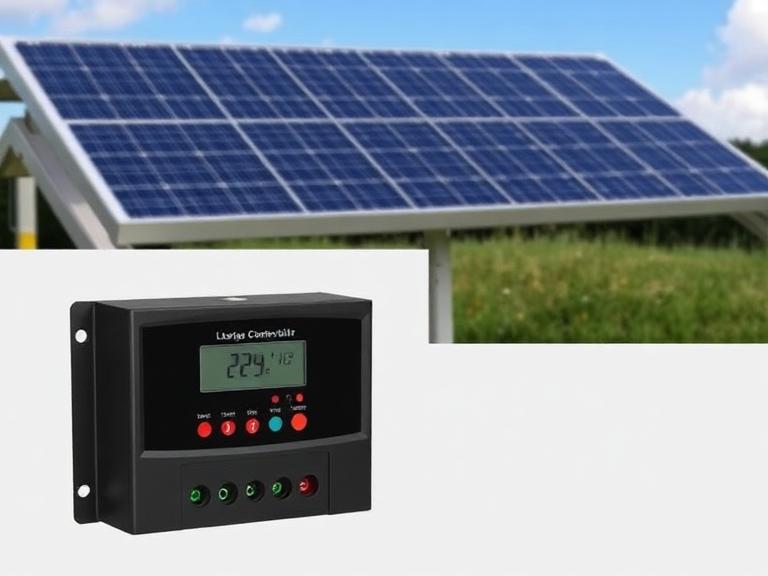
From our experience engineering advanced charging solutions at OHRIJA, the market is currently flooded with generic white-label controllers masquerading as “lithium compatible.” In most professional situations, these cheap Pulse Width Modulation (PWM) units actively destroy solar yield and compromise battery lifespans. If you are investing in solar, you need a Maximum Power Point Tracking (MPPT) controller designed specifically to harvest peak energy while respecting lithium voltage thresholds.
In this guide, we take a definitive, highly opinionated look at the best LiFePO4 solar charge controllers available today. We are not here to offer neutral summaries; we are here to tell you exactly what is worth buying, what belongs in a landfill, and how to scale your off-grid architecture properly.
Direct Answer
If you need the absolute best LiFePO4 solar charge controller and budget is not a constraint, buy the Victron SmartSolar MPPT. It offers 99% tracking efficiency, flawless Bluetooth networking, and a bulletproof lithium charging profile. If you are building a commercial or heavy-duty system, the Morningstar TriStar MPPT is the industrial standard. For budget-conscious DIY builders who still demand reliable MPPT capabilities, the EPEver Tracer AN Series is the most viable cost-effective alternative.
Table of Contents
- What It Is and How It Works
- Benefits and Limitations
- Who Should Use It (And Who Should Not)
- Common Mistakes and Buying Considerations
- The 15 Best LiFePO4 Solar Charge Controllers
- Pros and Cons Table: MPPT vs PWM
- Comparison Table: Top 5 Controllers
- Expert Recommendation from OHRIJA
- The Bottom Line
- Frequently Asked Questions (FAQ)
What It Is and How It Works
A LiFePO4 solar charge controller acts as the central brain between your solar array and your battery bank. Its primary job is to regulate the raw, fluctuating DC voltage coming from the solar panels and convert it into the precise voltage and current required to charge a lithium battery safely.
How it works depends on the underlying technology. Modern professional controllers utilize Maximum Power Point Tracking (MPPT). An MPPT controller continuously calculates the exact voltage and current at which the solar panels produce maximum power. It then takes that high-voltage DC power and electronically steps it down to match the battery’s required charge voltage, converting the excess voltage into additional charging current. This process is vastly superior to older PWM technology, which simply clips the solar panel voltage down to the battery voltage, throwing away up to 30% of your potential solar yield in the process.
Benefits and Limitations
The Benefits: Upgrading to a premium MPPT controller yields an immediate 20% to 30% increase in energy harvest, especially during cloudy days or cold weather when panel voltage spikes. More importantly, these controllers offer programmable lithium profiles that prevent overvoltage scenarios, completely eliminating the battery-destroying equalization phases common in lead-acid controllers.
The Limitations: Cost and complexity. High-end MPPT controllers are expensive, frequently costing three to four times more than basic PWM units. Additionally, stepping down high voltages generates substantial heat. In our testing, inadequate ventilation is the primary cause of hardware failure. If you notice thermal throttling, you might ask why does my charger get hot; usually, it is because the controller’s passive heat sink is overwhelmed by sustained maximum current.
Who Should Use It (And Who Should Not)
For commercial users and heavy-duty applications: If you are running an off-grid cabin, a telecom repeater station, or a full-time residential RV setup, an MPPT LiFePO4 controller is mandatory. You cannot afford to lose 30% of your array’s potential efficiency to cheap hardware.
For beginners and small applications: Who does not need an MPPT controller? If you simply have a single 50W panel trickle-charging a small battery to keep LED lights running in a weekend shed, an expensive MPPT controller is overkill. A $20 PWM controller with a lithium setting will suffice. Do not overbuild a system that does not require scale.
Common Mistakes and Buying Considerations
The most common mistake we see is ignoring the Maximum Input Voltage (Voc) limit. When solar panels get cold, their voltage rises. If your array produces 95V on a freezing morning and your controller is only rated for 100V, you risk instantly frying the internal circuitry. Always leave a 20% safety margin for cold-weather voltage spikes.
Another frequent issue is mixing chemistries without proper parameter configuration. When managing various chemistries, users often wonder can lithium charger charge LiFePO4 battery. While standard Li-ion and LiFePO4 are both lithium-based, their peak voltage thresholds are drastically different (4.2V per cell vs 3.65V per cell). A controller must have a specific, customizable LiFePO4 setting.
When evaluating what to buy, prioritize amperage capacity, maximum input voltage, and remote networking capabilities. If a brand refuses to publish their tracking efficiency or lacks custom parameter programming, do not buy it.
The 15 Best LiFePO4 Solar Charge Controllers
Below is our ruthlessly practical ranking of the best LiFePO4 solar charge controllers on the market in 2026. We evaluate them not just on specifications, but on actual reliability and long-term value.
1. Victron SmartSolar MPPT (Various Sizes)
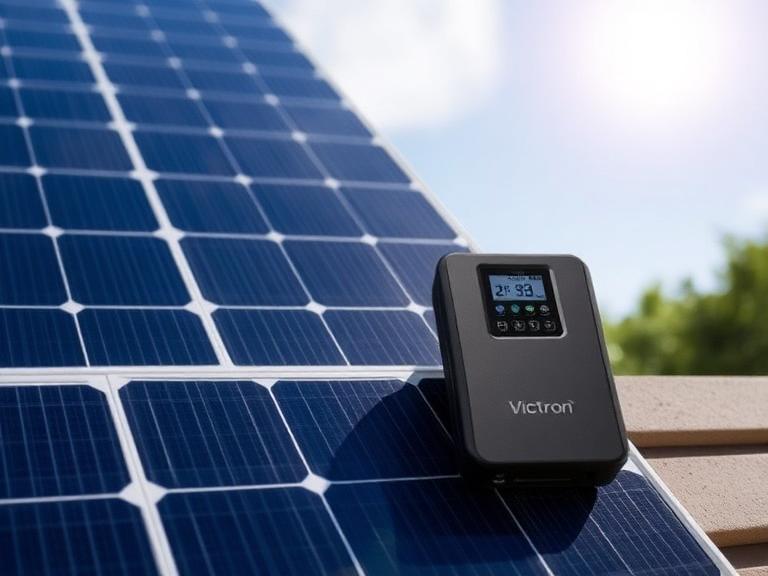
Best Overall. Victron is the undisputed king of off-grid solar. The SmartSolar line features built-in Bluetooth, allowing you to configure exacting LiFePO4 parameters directly from your smartphone. The tracking algorithm is blindingly fast, adapting to passing clouds instantly. Yes, it carries a premium price tag, but the reliability is unparalleled. If you want a system you can install and forget about for a decade, this is the only choice.
2. Morningstar TriStar MPPT (60A to 600V)
Best for Industrial / Commercial Applications. Morningstar controllers are built like tanks. They lack the flashy Bluetooth interfaces of Victron, but they make up for it with extreme temperature tolerance (-40°C to +60°C) and heavy-duty conformal coating. If you are powering a remote communications tower where hardware failure means flying in a technician via helicopter, you buy a Morningstar.
3. EPEver Tracer AN Series (Up to 100A)
Best Budget High-Capacity Controller. EPEver dominates the value segment. The Tracer AN series delivers legitimate 98% MPPT tracking efficiency at a fraction of Victron’s cost. The user interface on the external MT50 meter is archaic and frustrating to navigate, but underneath the clunky software lies a highly robust hardware architecture capable of handling massive LiFePO4 banks.
4. OptiSolex SolexBrick S1
Best for Partial Shading Conditions. This is a newer player utilizing a distributed MPPT architecture. Instead of one massive controller, you use smaller units per panel or panel group. If you are building an RV system where roof vents and AC units cast shadows across your panels, the SolexBrick prevents a single shaded panel from crashing your entire array’s output.
5. OutBack Power FLEXmax 80
Best Legacy Off-Grid Controller. OutBack was pioneering MPPT technology before many current brands existed. The FLEXmax 80 is massive, heavy, and incredibly durable. While its screen looks like an old calculator, it boasts an active cooling system that allows it to output its full 80 amps continuously in blisteringly hot environments without thermal throttling.
6. MidNite Solar Classic 150
Best for Advanced Tinkerers. Built in the USA, the MidNite Classic is highly respected for its granular programmability. It includes built-in arc fault protection, which is rare in this price bracket. However, the company’s software development is highly static. It is a fantastic controller, but the interface feels trapped in 2012.
7. Renogy Rover Elite MPPT
Best for Entry-Level RVs (Buy on Sale). Renogy has exceptional marketing but inconsistent customer support. The Rover Elite is a decent piece of hardware that handles LiFePO4 batteries well out of the box. We only recommend it if you can find it heavily discounted; at full retail price, you are better off buying an EPEver.
8. Growatt SPF 5000 ES
Best All-in-One Solution. This is technically a hybrid inverter with a massive integrated MPPT solar charge controller. For residential off-grid setups, combining the MPPT and inverter into one box drastically reduces wiring complexity. The limitation? It represents a single point of failure. If the MPPT board dies, your inverter is compromised.
9. Power Queen MPPT 30A
Best Dedicated LiFePO4 Controller. Power Queen is known for aggressive pricing on lithium batteries, and their matching MPPT controller is programmed for LiFePO4 by default. It saves beginners the headache of manual programming. It lacks advanced networking, but for a simple plug-and-play lithium setup, it is highly practical.
10. Rich Solar 40A MPPT
Best Mid-Range Alternative. Rich Solar often uses the same OEM hardware architectures as Renogy but tends to offer slightly better quality control and pricing. It features a solid aluminum heatsink and a straightforward LCD display. A reliable workhorse for mid-sized van conversions.
11. LNEX Waterproof MPPT
Best for Marine Environments. Most charge controllers must be kept strictly dry. LNEX offers a super-thin, fully waterproof (IP67) controller. It is ideal for small boat setups where saltwater spray is inevitable. Its capacity is limited, but its environmental durability is unmatched in its class.
12. Victron BlueSolar MPPT
Best for Centralized Monitoring. The BlueSolar is exactly the same hardware as the SmartSolar, but without built-in Bluetooth. You have to buy a separate dongle to connect to it. In most professional situations today, there is no reason to buy the BlueSolar unless you are integrating it via a VE.Direct cable into a centralized Cerbo GX hub.
13. BougeRV 40A MPPT
Best Budget Backup. BougeRV focuses on entry-level off-grid gear. Their 40A MPPT is remarkably cheap. In our testing, it occasionally struggles with rapid tracking during volatile cloud cover, but it accurately respects LiFePO4 voltage cut-offs. Keep it as a spare backup unit.
14. Morningstar ProStar MPPT
Best Mid-Size Industrial. The smaller sibling to the TriStar, the ProStar offers the same bulletproof reliability in a smaller footprint (up to 40A). It is excellent for remote telemetry stations. However, for the average consumer, it is severely overpriced for what it offers.
15. Betaria Power Sunrock 20 Pro
Best Ultra-Compact Unit. This is a highly portable 20A MPPT unit suitable for small overland camping setups or portable solar generators. It handles 12V and 24V lithium systems automatically. While it lacks the pedigree of major brands, its tiny form factor serves a specific niche brilliantly.
Pros and Cons Table: MPPT vs PWM for LiFePO4
| Controller Type | Pros for LiFePO4 Batteries | Cons for LiFePO4 Batteries |
|---|---|---|
| MPPT (Maximum Power Point Tracking) | Yields up to 30% more energy; Handles high-voltage panel arrays; Highly customizable lithium charging profiles; Excellent cold-weather performance. | High initial cost; Generates significant heat requiring good ventilation; Larger physical footprint. |
| PWM (Pulse Width Modulation) | Extremely cheap; Very small and lightweight; Adequate for tiny systems (under 100W). | Drastically reduces solar efficiency; Often lacks specific lithium profiles (risking overvoltage); Cannot step down high-voltage grid-tie panels. |
Comparison Table: Top 5 Controllers
| Brand & Model | Max Amperage | Max Input Voltage (Voc) | Networking | Best Commercial Use Case |
|---|---|---|---|---|
| Victron SmartSolar | Up to 100A | Up to 250V | Built-in Bluetooth & VE.Direct | Premium RVs & Off-grid Homes |
| Morningstar TriStar | Up to 60A | Up to 600V | Ethernet & Modbus | Industrial & Telecom |
| EPEver Tracer AN | Up to 100A | Up to 200V | RS485 | Budget Large-Scale Solar |
| OutBack FLEXmax | Up to 80A | 150V | Proprietary Hub | Legacy Professional Off-grid |
| Renogy Rover | Up to 60A | 150V | Bluetooth (via external module) | Entry-level Van Conversions |
Expert Recommendation from OHRIJA
Powering Your System with Precision
At OHRIJA, we operate as a leading electric bicycle charger supplier and manufacturer of advanced charging solutions. The OHRIJA brand belongs to Dongguan Hengruihong Technology Co., Ltd., established in 2020. As a high-tech enterprise integrating R&D, production, and sales, we inherently understand the delicate chemistry of lithium iron phosphate. We recommend pairing top-tier MPPT solar controllers with robust AC-to-DC charging solutions for periods of prolonged overcast weather. When the sun fails, you must rely on grid or generator power. We invite you to explore our dedicated LiFePO4 battery charger category for high-efficiency shore-power charging, or browse our Li-ion battery charger category for standard lithium applications.
The Bottom Line
Purchasing an expensive LiFePO4 battery bank and pairing it with a cheap, unverified charge controller is a critical architectural failure. In most professional situations, the upfront cost of a Victron SmartSolar or a Morningstar TriStar is rapidly offset by the 30% increase in solar harvest and the guaranteed longevity of your battery cells. Avoid generic PWM controllers entirely for serious builds, calculate your cold-weather voltage spikes accurately, and always program your controller specifically for LiFePO4 chemistry.
Frequently Asked Questions (FAQ)
Can I use a lead-acid solar charge controller on a LiFePO4 battery?
Absolutely not, unless the controller allows you to completely disable the equalization stage and manually set the absorption voltage to 14.2V – 14.4V. Standard lead-acid controllers will apply high-voltage equalization charges (15V+) that will trigger your LiFePO4 BMS to shut down, or worse, permanently damage the lithium cells. Before replacing a unit, learn how to troubleshoot a 12V battery charger to see if your parameters are simply misconfigured.
What happens if my solar panels produce higher voltage than my MPPT controller can handle?
Exceeding the Maximum Input Voltage (Voc) limit of an MPPT controller will instantly and permanently destroy the internal circuitry. This damage is never covered under warranty. Always calculate your array’s maximum voltage based on the lowest recorded winter temperatures in your area, as solar panels generate significantly higher voltage in freezing conditions.
Can I use a 12V MPPT controller for a 36V or 48V battery system?
No. The charge controller must support your battery bank’s nominal voltage. While many modern MPPT controllers automatically detect 12V, 24V, 36V, or 48V systems, you cannot force a strictly 12V-rated controller to charge a higher voltage bank. In our testing, we frequently get asked whether can I charge a 36V battery with 12V charger; the physics simply do not allow a lower voltage output to overcome a higher voltage battery resting state. For micromobility enthusiasts looking at solar, knowing how to charge eBike battery safely requires matching the controller output exactly to the pack voltage.
Authoritative Industry References
- National Renewable Energy Laboratory (NREL) – Leading U.S. government research facility providing exhaustive data on photovoltaic array efficiency, MPPT tracking algorithms, and system architecture optimization.
- IEEE Standards Association – The world’s largest technical professional organization offering peer-reviewed standards on power electronics, DC-DC converter topologies, and battery management system integrations.
- International Electrotechnical Commission (IEC) – The global organization that prepares and publishes international standards for all electrical and electronic technologies, including photovoltaic charge controllers and lithium-ion safety protocols.