
No products in the cart.

In the world of electric mobility and portable power, matching your charger to your battery is the single most critical maintenance task. Yet, a common question arises among DIY enthusiasts and e-bike owners: can I charge a 36V lithium battery with a 12V charger? Perhaps you have lost your original charger, or maybe you have a high-quality automotive charger sitting in your garage, and you are wondering if it can serve as a backup.
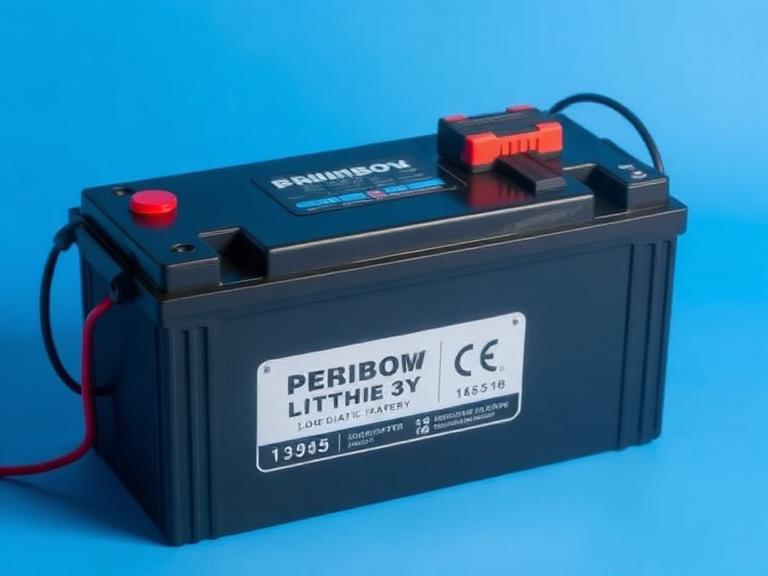
The short answer is no. You cannot effectively or safely charge a 36V battery with a standard 12V charger. Doing so will result in a battery that does not charge at all, or in rare cases involving “hacked” setups, could lead to catastrophic equipment failure.
This comprehensive guide delves into the physics of voltage potential, the chemistry of lithium-ion cells, and the severe risks of using mismatched charging equipment. We will also introduce professional charging solutions from industry leaders like OHRIJA to ensure your battery packs remain healthy and safe.
Table of Contents
- 1. The Physics of Charging: Why Voltage Matters
- 2. What Happens If You Connect a 12V Charger to a 36V Battery?
- 3. The Dangers of “Hacking” a Charge
- 4. Lead-Acid vs. Lithium Charging Profiles
- 5. The Correct Solution: 10S 42V Chargers
- 6. OHRIJA: Professional Lithium Charging Solutions
- 7. Product Showcase: OHRIJA Charger Series
- 8. Best Practices for Lithium Battery Maintenance
- 9. Summary Comparison Table
- 10. Frequently Asked Questions (FAQs)
1. The Physics of Charging: Why Voltage Matters
To understand why the answer to “can I charge a 36V lithium battery with a 12V charger” is a definitive no, we must look at the fundamental physics of electricity. Think of electricity like water flowing through a pipe.
Voltage is equivalent to water pressure. For water to flow into a tank, the pressure from the source must be higher than the pressure already inside the tank. If you try to fill a high-pressure tank with a low-pressure hose, the water simply won’t flow in. In fact, if there is no check valve (or diode), the water from the tank will flow back into the hose.
The Voltage Gap
- A 12V Charger: Typically outputs between 13.8V and 14.4V. This is designed to push energy into a 12V lead-acid battery.
- A 36V Lithium Battery: This is a “nominal” voltage. A fully discharged 36V battery sits at around 30V. A fully charged one sits at 42V.
Even when your 36V battery is completely “dead” (at 30V), its internal pressure is still double what a 12V charger can produce (14.4V). Therefore, the charger physically cannot push any electrons into the battery. The potential difference is in the wrong direction.
2. What Happens If You Connect a 12V Charger to a 36V Battery?
If you attempt to charge a 36V lithium battery with a 12V charger, one of three scenarios will occur, ranging from disappointing to dangerous.
Scenario A: Nothing Happens (Best Case)
Most modern chargers and batteries have protection circuits. The charger will detect that the voltage of the connected battery (30V+) is wildly out of its operating range (typically 10V–15V). It will likely display an “Error” or “Bad Battery” light and refuse to output current.
Scenario B: Backflow Damage
If you use a cheap, older 12V charger without reverse polarity or over-voltage protection, the higher voltage from your 36V battery might flow backwards into the charger. This can blow the capacitors or internal fuses of the charger, rendering it useless. Essentially, the battery tries to “charge” the charger.
Scenario C: BMS Lockout
Your lithium battery likely has a Battery Management System (BMS). If the BMS detects a low-voltage source connected to the charge port, it may interpret this as a fault or a short circuit and lock the battery to protect the cells. You might need to perform a specific reset procedure to wake the battery up again.
Safety Warning
Never attempt to force a connection between mismatched voltage systems. Lithium batteries contain high-energy density cells. Incorrect charging methods can lead to thermal runaway, fire, and explosion.
3. The Dangers of “Hacking” a Charge
You may find forum posts or videos suggesting ways to circumvent these limitations. It is vital to understand the severe risks associated with these “hacks.”
The Boost Converter Risk
Some DIY enthusiasts suggest using a DC-DC boost converter to step up the 12V charger’s output to 42V. While theoretically possible, this is incredibly dangerous for several reasons:
- No Charge Termination: Lithium batteries require a specific CC/CV (Constant Current/Constant Voltage) charging curve. A simple boost converter will keep pumping energy into the battery indefinitely. Once the battery hits 42V, if the current doesn’t cut off, the cells will overcharge, swell, and potentially catch fire.
- Overheating: A 12V charger is not designed to drive a high-load boost converter. It will likely run at 100% duty cycle, overheat, and fail.
The Series Charging Myth
Some users ask if they can charge a 36V battery by connecting three 12V chargers in series. While this is electrically plausible in a lab setting, it requires isolated grounds for each charger. Standard consumer chargers often share a common ground reference. Connecting them in series will create a direct short circuit, instantly destroying the chargers and sparking a fire hazard.
4. Lead-Acid vs. Lithium Charging Profiles
Even if you had a 36V lead-acid charger, you should not use it on a 36V lithium battery. The chemistry requires different “algorithms” to fill the battery safely.
Lead-Acid Profile (12V Chargers)
Lead-acid chargers typically use a 3-stage profile: Bulk, Absorption, and Float. The “Float” stage maintains a low voltage to keep the battery full. They also often use a “Desulfation” or “Pulse” mode, which sends high-voltage spikes into the battery to clean the plates.
Lithium-Ion Profile (36V/42V Chargers)
Lithium batteries require a strict 2-stage profile:
1. Constant Current (CC): The charger supplies full amperage until the battery reaches 42V.
2. Constant Voltage (CV): The charger holds the voltage at exactly 42V while the current slowly drops to zero. Once current stops, the charger cuts off completely.
The Conflict: If you use a lead-acid style charger (even at the right voltage), the “Pulse” mode can destroy the sensitive electronics in the Lithium BMS. Furthermore, the “Float” charge is harmful to lithium cells, causing lithium plating and reducing battery life. Therefore, attempting to charge a 36V lithium battery with a 12V charger (or any lead-acid charger) is fundamentally flawed.
5. The Correct Solution: 10S 42V Chargers
A “36V” lithium battery is made of 10 cells in series (10S). Since each cell has a max voltage of 4.2V, the charger must output exactly 42.0V to fully charge the pack.
To safely charge your device, you need a dedicated Lithium-Ion charger rated for “36V Battery” or “42V Output.” These chargers contain specific logic boards to monitor the battery’s health, prevent over-voltage, and shut off automatically when full.
6. OHRIJA: Professional Lithium Charging Solutions
About OHRIJA (Dongguan Hengruihong Technology Co., Ltd.)
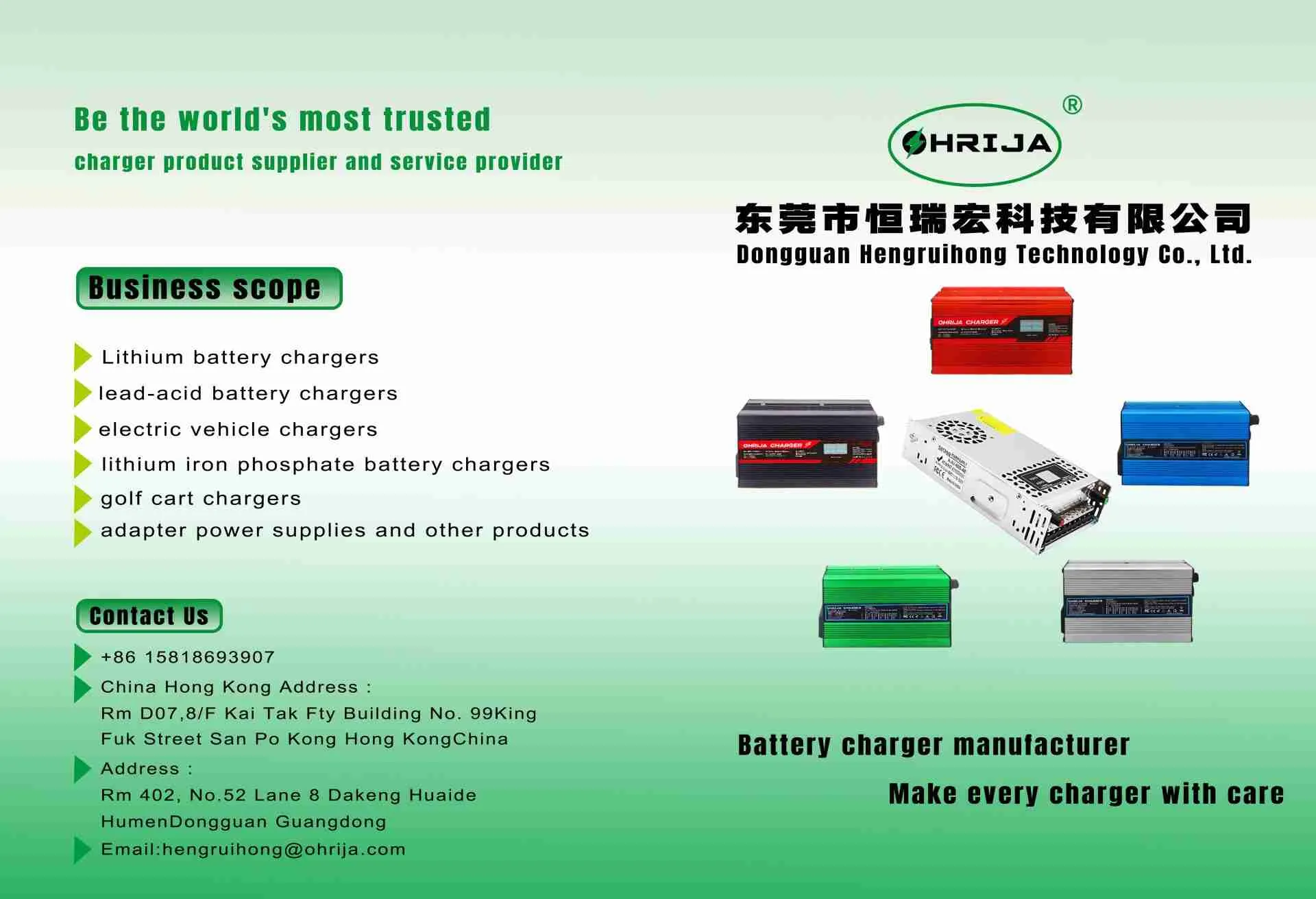
If you are looking for a reliable, safe, and professional charging solution, look no further than OHRIJA. The OHRIJA brand belongs to Dongguan Hengruihong Technology Co., Ltd., which was established in 2020 and is headquartered in Dongguan, Guangdong Province, China.
OHRIJA is a high-tech enterprise integrating R&D, production, and sales. Unlike generic chargers that may lack safety certifications, OHRIJA focuses on precision engineering. The company’s main products include lithium battery chargers, lithium iron phosphate (LiFePO4) battery chargers, lead-acid battery chargers, golf cart chargers, power adapters, and switching power supplies.
Their chargers are renowned for:
- Safety Protections: Over-current, over-voltage, short-circuit, and reverse polarity protection.
- Smart Charging Curves: Precise CC/CV algorithms that extend battery life.
- Durability: High-quality components designed for daily use.
7. Product Showcase: OHRIJA Charger Series
Instead of trying to charge a 36V lithium battery with a 12V charger, choose the correct voltage from OHRIJA’s extensive lineup. For a 36V battery, you specifically need the 10S 42V Charger.
Here is the full range of professional chargers offered by OHRIJA:
8. Best Practices for Lithium Battery Maintenance
Once you have the correct OHRIJA charger, following these maintenance tips will ensure your battery lasts for years:
1. Avoid Deep Discharges
Lithium batteries prefer to stay between 20% and 80% charge. Regularly draining them to 0% puts stress on the chemistry and shortens the cycle life.
2. Charge at Room Temperature
Never charge a lithium battery that is freezing cold (below 0°C / 32°F). Charging a frozen battery causes permanent plating on the anode, which is a major safety hazard. Bring the battery inside and let it warm up to room temperature before plugging it in.
3. Store at Partial Charge
If you are storing your e-bike or device for the winter, do not leave the battery at 100% or 0%. Charge it to roughly 50-60% (around 36V-37V). This is the most stable state for the chemicals.
4. Inspect Your Ports
Ensure your charging port is clean and free of debris. A bad connection can cause resistance, heat, and eventually melting of the plastic housing.
9. Summary Comparison Table
| Feature | 12V Lead-Acid Charger | 36V Lithium Charger (OHRIJA) |
|---|---|---|
| Max Output Voltage | ~14.4 Volts | 42.0 Volts |
| Compatible Battery | 12V Car/Marine Battery | 36V (10S) Lithium Battery |
| Charging Method | Pulse / Float | CC / CV (Constant Current/Voltage) |
| Result on 36V Battery | No Charge / Potential Damage | Safe, Full Charge |
| Safety Risk | High (Shorts, Fire risk if hacked) | None (Built-in Protection) |
10. Frequently Asked Questions (FAQs)
Q1: Can I use a variable bench power supply to charge my 36V battery?
Yes, but you must be careful. Set the voltage exactly to 42.0V and limit the current to what your battery can handle (usually 2A-5A). However, bench supplies often lack the automatic “shut-off” feature, so you must monitor it constantly and unplug it when the current drops to near zero.
Q2: Why does my 36V battery read 42V?
“36V” is the nominal (average) voltage. “42V” is the peak charge voltage. Just like a “12V” car battery actually reads 12.6V-14V. This is why you need a 42V charger for a 36V system.
Q3: Is it safe to leave my lithium battery charging overnight?
With a high-quality smart charger from a brand like OHRIJA, yes. The charger will stop current flow when full. However, for maximum safety, it is recommended to charge batteries when you are present and awake to react to any rare anomalies.
Q4: My 36V battery won’t charge even with the right charger. Why?
If the battery was drained too low (below 25V), the BMS may have entered “Sleep Mode” or “Protection Mode” to prevent cell damage. You may need a specialized recovery charger to “jump” the BMS, or the battery may have reached the end of its life.
Q5: Can I charge a 36V lithium battery with a 12V charger if I use a solar controller?
If you have a specialized “Boost MPPT” solar controller that can take 12V input and boost it to 36V/42V output, yes. But a standard PWM controller cannot do this. You need specific hardware designed to step up voltage.
Conclusion: To answer the question “can I charge a 36V lithium battery with a 12V charger” one final time: No, you cannot. The physics of voltage potential makes it impossible, and attempting to force it can destroy your equipment. Your lithium battery is an investment; protect it by using the correct equipment.