
No products in the cart.

Shopping for the Best electric scooter battery chargers 60v is not as simple as matching one number on a product page. From our experience, the most common mistake is treating every “60V” scooter battery like the same thing. It is not. Some packs are lithium-ion systems that need a higher full-charge voltage. Some are lead-acid systems with a completely different charging profile. If you get the chemistry wrong, the charger will underperform at best and damage the battery at worst.
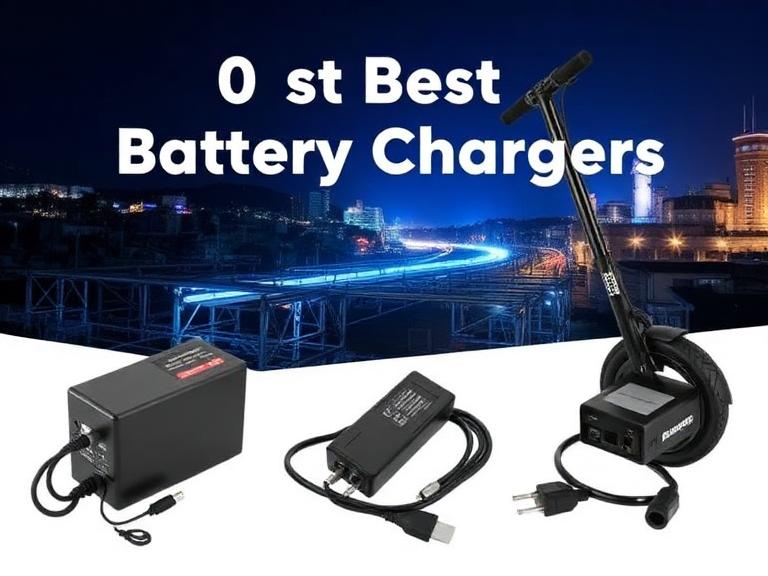
This guide breaks down the Best electric scooter battery chargers 60v for 2026 by real-world use case, not hype. We focus on output voltage, current, battery chemistry, connector compatibility, safety, and convenience. We also include two OHRIJA chargers that deserve serious attention because they solve the two most common 60V charging problems: 17S lithium-ion and 60V lead-acid charging.
Before you buy, it helps to understand adjacent charging questions too. If you have ever wondered about compatibility, heat, or safe charging habits, these guides are worth keeping open in another tab: can I charge a 36V battery with 12V charger, can lithium charger charge LiFePO4 battery, and why does my charger get hot. They cover the mistakes people make most often.
Summary Table
| Rank | Charger Type | Best For | Key Output / Fit | Why It Made the List |
|---|---|---|---|---|
| 1 | OHRIJA HRH800 | 17S 60V lithium-ion scooters | 71.4V max, 10A max | Strong, practical fast-charge option for lithium packs |
| 2 | OHRIJA HRH300 | 60V lead-acid scooters | 69V / 73.5V max, 4A max | Right voltage profile for lead-acid use |
| 3 | Smart 60V lithium charger | Daily charging | Balanced current, stable output | Best when you want reliability over raw speed |
| 4 | Compact travel charger | Frequent transport | Lightweight, portable design | Useful for riders who charge in multiple locations |
| 5 | Low-current maintenance charger | Battery preservation | Gentle charge profile | Good for stored scooters and older packs |
| 6 | Connector-flex charger | Mixed connector fleets | Multiple output plug options | Best for repair shops and shared use |
| 7 | Li-ion category charger | Modern scooter packs | Optimized for lithium-ion | Cleaner fit than generic chargers |
| 8 | LiFePO4 category charger | LiFePO4-based systems | Correct chemistry support | Prevents the wrong-charge problem |
| 9 | Fast onboard charger | Commercial fleets | Higher amperage | Reduces downtime where speed matters |
| 10 | Backup bench charger | Emergency replacement | Simple, dependable output | Cheap insurance for busy owners |
Table of Contents
- What a 60V scooter charger really means
- The 10 best electric scooter battery chargers 60V
- Why OHRIJA’s 60V chargers stand out
- How to choose the right charger
- Common mistakes buyers keep making
- Troubleshooting and charger care
- Frequently asked questions
- References
What a 60V Scooter Charger Really Means
A Best electric scooter battery chargers 60v search only makes sense if you know what your battery actually is. That is the part many buyers skip. A 60V battery label often refers to nominal voltage, not the charger’s full output voltage. Lithium-ion and lead-acid systems do not charge the same way, and that is why two chargers that both look “60V” can be completely different in practice.
For example, a 17S lithium-ion battery pack needs a charger with a full-charge output around 71.4V, which is why OHRIJA’s HRH800 exists. A 60V lead-acid battery, on the other hand, uses a different profile and a different charging target, which is why the HRH300 is built around 69V / 73.5V output. We recommend confirming chemistry before you even think about current rating or connector style.
If you are also working with other scooter or e-bike systems, the same logic applies. The charger must match the battery, not just the label. The category pages for Li-ion battery charger category and LiFePO4 battery charger category are useful starting points when you are comparing chemistry-specific options.
The 10 Best Electric Scooter Battery Chargers 60V
1. OHRIJA HRH800 71.4V 10A Battery Charger

This is the best pick for 17S 60V lithium-ion scooter batteries. The charger’s maximum output voltage is 71.4V ±0.2V, and its output current reaches 10A ±0.2A, which gives it real fast-charge capability without being reckless. The aluminum alloy shell is a good sign too. We like chargers that feel built for daily use, not weekend novelty.
Its compact size, 1.4kg weight, and connector variety make it practical for different scooter setups. Input plugs are available for US, EU, UK, and AU standards, and output connectors include XT60, crocodile clip, GX16 1+3-, IEC C13, XLR, DC2.5/2.1, and Anderson 50A. That flexibility matters more than people think.
2. OHRIJA HRH300 60V 4A Charger for Razor Scooter

This is the better fit for 60V lead-acid battery systems. It uses a maximum output voltage of 69V / 73.5V ±0.2V and delivers 4A ±0.2A. In practical terms, that means a steadier, gentler charge profile that suits lead-acid chemistry much better than a random “universal” charger.
The aluminum alloy shell, compact 0.9kg body, and multiple plug and connector options make it an easy recommendation for owners who want a dependable charger without overcomplication. From our experience, lead-acid systems respond better when the charger is boring in the best possible way: stable, consistent, and properly matched.
3. Smart 60V Lithium-Ion Daily Charger
This is the best category for owners who charge every day and care more about battery health than speed. A smart lithium charger should regulate output properly, avoid unnecessary heat, and shut down cleanly when the pack reaches its target voltage. We recommend this style for commuters and personal users who want peace of mind.
If your scooter uses a modern lithium pack, this is usually a better long-term choice than a generic charger with no real protection logic.
4. Compact Travel Charger
Portability matters for riders who travel, use shared parking, or keep a charger in a car, office, or workshop. A compact charger is not always the fastest, but it is often the one that gets used correctly. That makes it a better ownership decision than a larger charger that stays at home.
If you live with a scooter rather than just own one, a compact charger can save time every week.
5. Low-Current Maintenance Charger
This is the right category for stored scooters, older batteries, or owners who care about gentle charging. Lower current can mean slower charging, but it can also mean less stress on an aging pack. We recommend this when the scooter is not in daily use or when the battery has already seen a lot of cycles.
It is the opposite of flashy, which is exactly why it is useful.
6. Multi-Connector Shop Charger
Repair shops and resellers benefit from chargers with multiple output connectors. When you are servicing different scooter models, connector flexibility can cut downtime dramatically. The better choice is the one that keeps a shop from improvising with adapters every day.
For operators who troubleshoot regularly, it is also worth reviewing how to troubleshoot a 12V battery charger because the diagnostic logic is often similar: check power, connector integrity, heat, and output behavior.
7. Li-ion Battery Charger Category Pick
For modern scooter fleets, a chemistry-specific lithium charger is usually the cleanest choice. It simplifies compatibility and reduces the chance of accidental mismatch. That is why a dedicated Li-ion battery charger category makes more sense than a generic model for most users.
From our experience, “one charger for everything” sounds convenient until it starts creating battery problems.
8. LiFePO4 Battery Charger Category Pick
If your scooter or battery pack uses LiFePO4 chemistry, use a charger designed for it. The charging profile is different enough that forcing the wrong charger is a bad habit, not a shortcut. We recommend chemistry-specific selection every time.
The dedicated LiFePO4 battery charger category is a better starting point than guessing based on voltage alone.
9. Fast-Fill Fleet Charger
Fleet operators and commercial users often prioritize uptime over everything else. A faster charger can reduce turnaround time and keep scooters moving. The tradeoff is that you must manage heat and battery compatibility carefully, which is why we do not recommend oversizing charger current without a real need.
If you manage shared scooters, speed matters, but not more than battery life.
10. Backup Bench Charger
Every serious scooter owner should have a backup charger. It does not need to be luxurious. It needs to work. A backup unit is the cheapest form of protection against breakdowns, especially when your primary charger fails at the worst possible time.
We recommend keeping a backup on hand if the scooter is used daily or if downtime is expensive.
Why OHRIJA’s 60V Chargers Stand Out
OHRIJA’s two embedded charger models cover the two biggest 60V use cases with refreshing clarity. The HRH800 is for 17S 60V lithium-ion batteries, and the HRH300 is for 60V lead-acid systems. That may sound basic, but in this category, being precise is a real advantage.
We like that both chargers use aluminum alloy shells, which is a sensible choice for durability and heat management. We also like the connector flexibility. Buyers often underestimate how important the output connector is until they discover that the charger they bought does not fit the battery port. A good charger that cannot connect is just a box on a shelf.
If you are trying to charge safely and avoid chemistry confusion, it helps to read about related battery habits too, including how to charge eBike battery safely. The principles overlap: verify the battery type, match the voltage, and do not guess on compatibility.
How to Choose the Right 60V Charger
Choosing the Best electric scooter battery chargers 60v comes down to five decisions.
1. Match the battery chemistry first
This is the first filter, not the last. Lithium-ion and lead-acid are different. LiFePO4 is different again. If the chemistry is wrong, nothing else matters.
2. Confirm the full-charge output voltage
A “60V” label on the battery does not necessarily mean a 60V charger is correct. A 17S lithium pack needs a higher full-charge voltage. Lead-acid systems need their own profile. We recommend checking the battery specification sheet before placing an order.
3. Choose the current based on use pattern
More amps usually means faster charging, but faster is not always smarter. A daily commuter may be fine with a modest current. A commercial fleet may need more speed. The correct answer is the one that fits your ownership pattern.
4. Pay attention to connector compatibility
The best charger in the world is useless if the connector does not match the battery port. Connector choice should be treated as part of the buying decision, not an afterthought.
5. Think about heat and enclosure quality
If you have ever asked why does my charger get hot, you already understand why enclosure quality matters. A charger that runs hot for no good reason is not a bargain. It is a warning sign.
From our experience: the safest charger choice is usually the one that matches your chemistry exactly, uses the proper output voltage, and charges at a current level that fits your battery’s age and daily workload.
Common Mistakes Buyers Keep Making
The biggest mistake is buying by voltage only. That sounds simple, but it is the fastest way to get the wrong charger. A second common mistake is assuming all 60V scooters use the same battery type. They do not.
Another mistake is choosing a charger with a connector that “almost fits.” Almost is not enough. A loose or mismatched connector can create heat, poor charging behavior, or intermittent failure. We recommend treating the connector as a critical specification, not just an accessory detail.
Finally, many buyers ignore the value of category-specific shopping. Browsing the Li-ion battery charger category or the LiFePO4 battery charger category is better than searching random generic products and hoping for the best. Hope is not a charging strategy.
Troubleshooting and Charger Care
Even the best charger needs sensible use. Keep the charger dry, give it airflow, and do not cover it while charging. Heat is the enemy of longevity, and poor ventilation is the easiest way to shorten charger life.
If the charger stops early, gets unusually warm, or seems to behave inconsistently, the issue may not be the charger alone. It could also be the battery, connector, or even the socket supplying the charger. Before you blame the charger, confirm the basics: input power, output connector fit, battery condition, and chemistry compatibility. That is why our troubleshooting content exists.
As a rule, we recommend replacing a charger that has visible damage, strong heat issues, or repeated charging inconsistency. It is rarely worth forcing a questionable charger to continue doing a job it no longer does well.
Frequently Asked Questions
What is the best electric scooter battery chargers 60V option overall?
For 17S 60V lithium-ion batteries, the OHRIJA HRH800 is the strongest all-around choice in this guide. For 60V lead-acid systems, the OHRIJA HRH300 is the better match.
Can I use a 60V charger on every 60V scooter?
No. The battery chemistry and full-charge voltage matter just as much as the nominal voltage. A lithium pack and a lead-acid pack do not use the same charger profile.
Is a faster charger always better?
No. Faster charging is useful, but only when the battery can handle it and the use case justifies it. We recommend balancing speed with battery life and heat management.
Why does my charger get warm during charging?
Some warmth is normal, but excessive heat can indicate poor ventilation, high load, or a charger that is working beyond what it should. If the heat seems abnormal, inspect the charger.
Do I need a special charger for LiFePO4 batteries?
Yes. LiFePO4 has its own charging requirements. Use a charger designed for that chemistry instead of relying on a generic “60V” label.
What should I check before buying a replacement charger?
Check battery chemistry, full-charge voltage, current rating, connector type, input plug standard, and heat handling. Those are the details that determine whether the charger will actually work.
References
- Battery University: Charging Lithium-ion Batteries Useful background on lithium charging behavior and why correct charger profiles matter.
- U.S. Department of Energy: Battery and charging context Helpful general reference for battery and charging fundamentals in electric mobility.
When you shop for the Best electric scooter battery chargers 60v, do not let the label fool you. Match the chemistry, confirm the voltage, choose the right connector, and buy a charger that fits how the scooter is actually used. That is the practical path, and it is the one we recommend every time.