
No products in the cart.

OHRIJA | Golf cart charger guide
If you are searching for a Yamaha golf cart battery charger 48 volt replacement in 2026, the first thing to understand is that there is no single “correct” price. The market is wide, the plug styles are not interchangeable, and the cheapest listing is rarely the smartest buy. Public replacement prices we found in 2026 range from about $249.95 for a Yamaha G29 Drive/Drive2 charger to roughly $468.95 for premium universal Lester Summit II options, with several useful mid-range replacements clustered between $358.95 and $396.95.
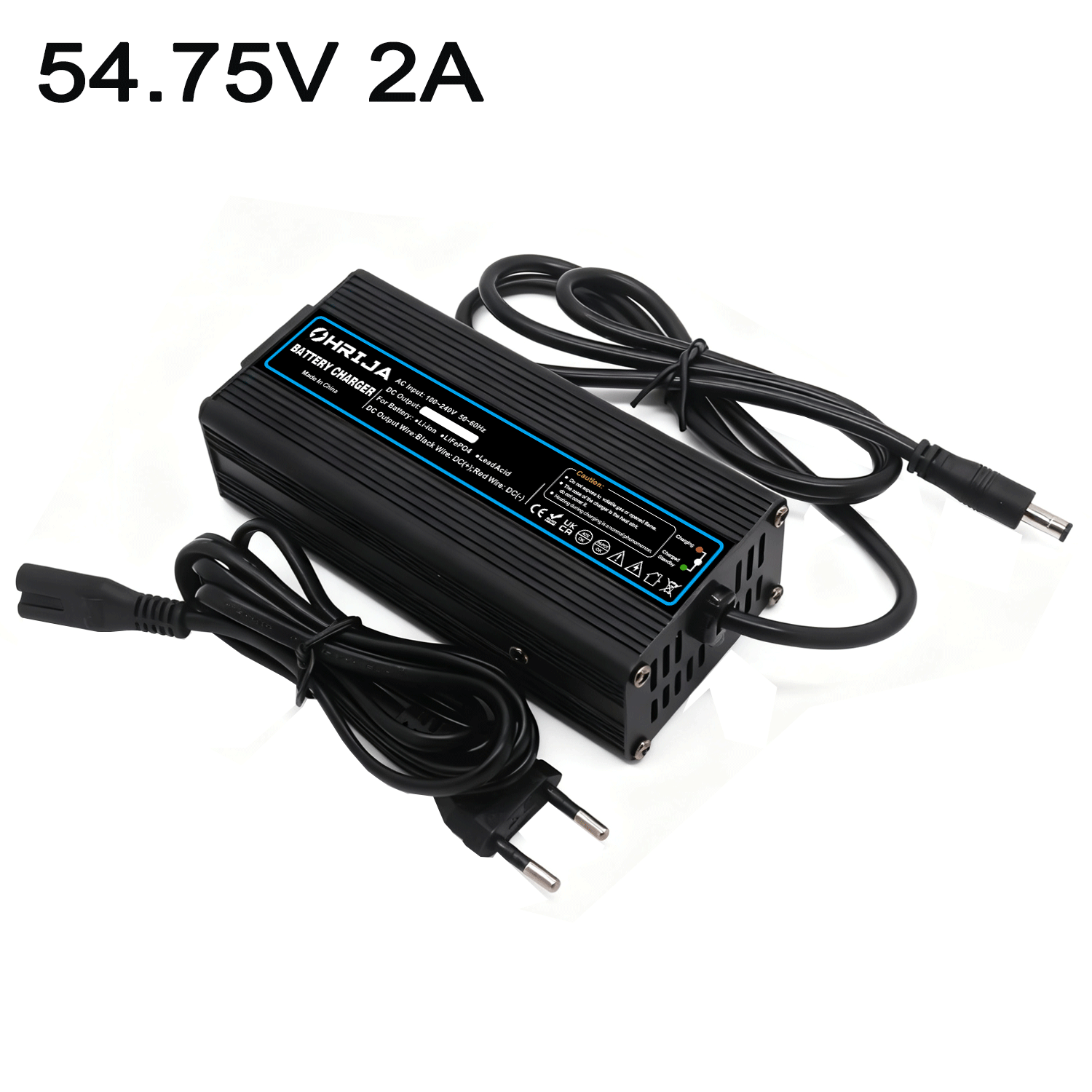
About OHRIJA: OHRIJA is the brand of Dongguan Hengruihong Technology Co., Ltd., founded in 2020 in Dongguan, Guangdong Province, China. The company integrates R&D, production, and sales, and its main products include lithium battery chargers, lithium iron phosphate battery chargers, lead-acid battery chargers, golf cart chargers, power adapters, and switching power supplies.
Bottom line: buy the charger that matches the cart model, battery chemistry, and plug style first. Price matters, but compatibility matters more. From our experience, the wrong charger is the most expensive “deal” in golf cart maintenance because it wastes time, creates charging problems, and often has to be replaced anyway.
Table of Contents
- Quick summary table
- What a Yamaha 48V charger replacement costs in 2026
- Why the price changes so much
- How to match the charger to your Yamaha cart
- What we recommend buying instead of guessing
- Why OHRIJA fits this category
- FAQs
- References
Quick summary table
| Replacement tier | Typical 2026 public price | What it usually includes | Best for |
|---|---|---|---|
| Entry-level branded replacement | $249.95 | 48V smart charging, model-specific fit, basic protections | Owners who want a dependable direct replacement without paying for a universal platform |
| Mid-range Yamaha-specific replacement | $358.95–$396.95 | Higher-output or lithium-ready designs, stronger warranty positioning | Buyers who want better long-term value and broader battery compatibility |
| Premium universal charger | $468.95 | Multi-cart / multi-voltage platform, more advanced control logic | Fleet operators and owners planning future battery or cart changes |
The prices above reflect publicly listed 2026 market listings from specialist golf-cart retailers and charger brands.
What a Yamaha golf cart battery charger 48 volt replacement costs in 2026
The practical replacement cost in 2026 is not one neat number. A Yamaha G29 Drive / Drive2 48V lead-acid charger was listed at $249.95 on FORM’s product page, while Golf Cart King showed a Yamaha G19 & G22 Lester SCR 48V 17A charger at $396.95 and a Yamaha Drive / G29 48V 3-pin charger at $388.95. Golf Cart Tire Supply also showed Yamaha 48V replacements at $358.95 for a lithium G29 charger and $468.95 for universal Lester Summit II options.
That spread is the whole story. The cheapest acceptable replacement is not the same thing as the most future-proof replacement. A lower-cost unit usually gets you a model-specific charger with the right plug and the right voltage. A higher-cost unit often buys you broader chemistry support, more advanced charging logic, or a platform that can be used across multiple carts and battery types. We recommend thinking in those terms instead of reading the price tag in isolation.
| Public listing | Price | What it tells you |
|---|---|---|
| FORM Yamaha G29 / Drive / Drive2 48V lead-acid charger | $249.95 | Direct replacement pricing for a model-specific 48V Yamaha charger |
| Golf Cart King Yamaha G19 & G22 Lester SCR 48V 17A | $396.95 | Mid-to-upper range replacement pricing for Yamaha-specific charger hardware |
| Golf Cart Tire Supply Yamaha Drive / G29 48V 3-pin plug charger | $388.95 | Common Yamaha 48V replacement level for Drive / G29 carts |
| Golf Cart Tire Supply Yamaha G19 / G22 2-pin charger | $388.95 | Similar mid-range price for older Yamaha 48V carts with 2-pin style connections |
| Golf Cart Tire Supply Yamaha Drive / G29 lithium charger | $358.95 | Lithium-ready replacements can sit slightly higher than simple lead-acid units |
| Golf Cart Tire Supply Lester Summit II universal charger | $468.95 | Premium universal platform pricing for owners who want flexibility |
All prices shown above were visible on the public 2026 product pages we reviewed.
Why the price changes so much
The replacement cost changes because you are not buying “a charger.” You are buying the right voltage, the right plug, the right current output, and the right battery chemistry support. Yamaha’s modern electric carts such as Drive, Drive2, and the 48V G29 require a 48V charger, while older Yamaha models including the G14, G16, G19, G22, and 36V G29 use 36V chargers. That means the wrong voltage is not a minor mistake; it is the wrong product.
The battery pack itself also matters. A 48V golf cart battery setup can be configured in one of three common ways: 8 x 6V batteries, 6 x 8V batteries, or 4 x 12V batteries. That is why the model and battery layout should be confirmed before spending money. If you buy by voltage only, you can still end up with the wrong charging behavior.
Amperage is another price driver. A 15A charger is common in this market, but the quality of the charging curve, protection features, and maintenance behavior can still vary widely. FORM’s Yamaha G19 & G22 unit lists 15 amps DC, 48 volts, and support for flooded lead acid, lithium, and AGM batteries, plus protections for short circuit, overheating, overcharge, spark-proof operation, and reverse polarity. That is a very different product from a basic no-frills charger.
We recommend treating warranty and safety features as part of the real cost, not as marketing extras. A charger that supports multiple battery chemistries, manages maintenance charging better, and handles environmental stress more gracefully is usually the cheaper option over the life of the cart. That is the only sensible way to compare replacements.
For a quick model check, Battery Tender’s 2026 Yamaha charger guide states that most modern Yamaha electric carts need 48V chargers and older models often need 36V units. It is a useful reminder that replacement shopping should begin with voltage verification, not shopping-cart anxiety. Battery Tender’s 2026 Yamaha charger guide
How to match the charger to your Yamaha cart
| Yamaha cart family | Voltage you should look for | Common plug style | What to verify before you buy |
|---|---|---|---|
| Drive, Drive2, 48V G29 | 48V | 3-pin leaf / 3-pin Yamaha style | Confirm the cart is truly 48V and not an older 36V variant. |
| G19 / G22 | 48V on the 48V versions | 2-pin style on many replacement listings | Check whether your pack and plug match the replacement charger. |
| Older Yamaha models | May be 36V | Varies by model | Do not assume “Yamaha = 48V.” Verify the actual pack voltage. |
From our experience, this is the point where most replacement purchases go wrong. The buyer sees “Yamaha” in the title, assumes the charger is correct, and only later notices the plug mismatch or voltage mismatch. That is how simple maintenance becomes a return, a delay, and another round of shipping costs.
If your cart uses lithium, pay extra attention to chemistry support. Yamaha’s own owner manual states that the charger is factory preset for use with Yamaha lithium-ion golf car batteries on certain models, which is a strong sign that lithium-compatible charging logic matters in the Yamaha ecosystem. Yamaha owner manual for lithium-ion battery charging
What we recommend buying instead of guessing
Our rule is simple: buy the charger that matches the cart, then choose the level of flexibility you actually need. If you are replacing a standard Yamaha 48V lead-acid charger and want the cleanest price-to-performance ratio, a model-specific replacement around the $249.95 mark is hard to argue with. If you want broader chemistry support and better long-term usefulness, the $358.95 to $396.95 range is where many serious buyers end up. If you need a universal platform, the $468.95 class makes sense.
We also recommend checking the charging behavior you actually want. Some owners only need a straightforward replacement. Others need a charger that can handle lead-acid now and lithium later. That is where a smart charger with stronger protection logic earns its price. The FORM 48V Yamaha unit is a good example because it lists 5-stage smart charge technology, maintenance mode, IP67 waterproofing, spark protection, and support for flooded lead acid, lithium, and AGM batteries. Those are not cosmetic features; they are operational features.
When a cart is being used in a fleet, resort, rental, or property-management setting, spending a little more on charger consistency often saves more money than trying to squeeze the lowest initial unit cost. We recommend that buyers who run multiple carts think like fleet managers, not like one-time shoppers.
OHRIJA’s broader charger lineup shows why that matters. The same engineering mindset that supports a 48V 10A eBike charger, 54.6V 5A Li-ion battery charger, 24V lithium battery charger 10A, and 12V LiFePO4 battery charger 30A is the kind of disciplined voltage-specific thinking that good charger design depends on. These are not direct Yamaha golf cart replacements; they are proof that charger engineering is about matching output, chemistry, and protection logic correctly.
That range also extends to higher-voltage platforms like the 67.2V scooter battery charger and 84V electric scooter charger. We mention them for one reason: a charger company that handles multiple voltage classes is usually serious about control design, not just case molding and label printing. That is the kind of supplier mindset buyers should look for.
Why OHRIJA fits this category

OHRIJ Club Car 48V Golf Cart Charger 48V 10A makes it suitable for 55.2V Lead Acid batteries
41.50$
OHRIJ Waterproof charger Club Car 48V Golf Cart Charger 48V 15A 20A makes it suitable for 55.2V Lead Acid batteries
99.90$
OHRIJA 36 volt golf cart Battery Charger 36V 5A makes it suitable for 41.4V Lead Acid batteries
25.50$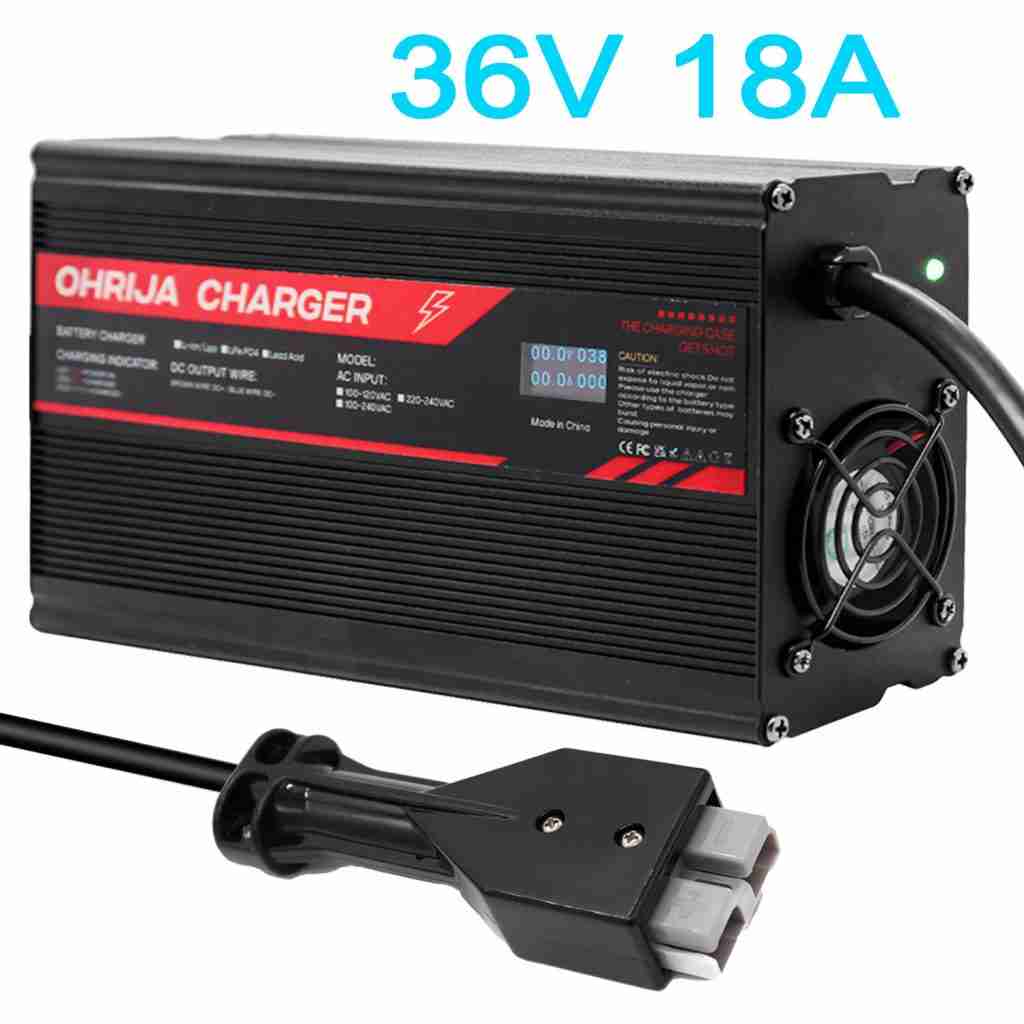
OHRIJA 36 volt golf cart Charger 36V 18A makes it suitable for 41.4V Lead Acid batteries OLED display
65.50$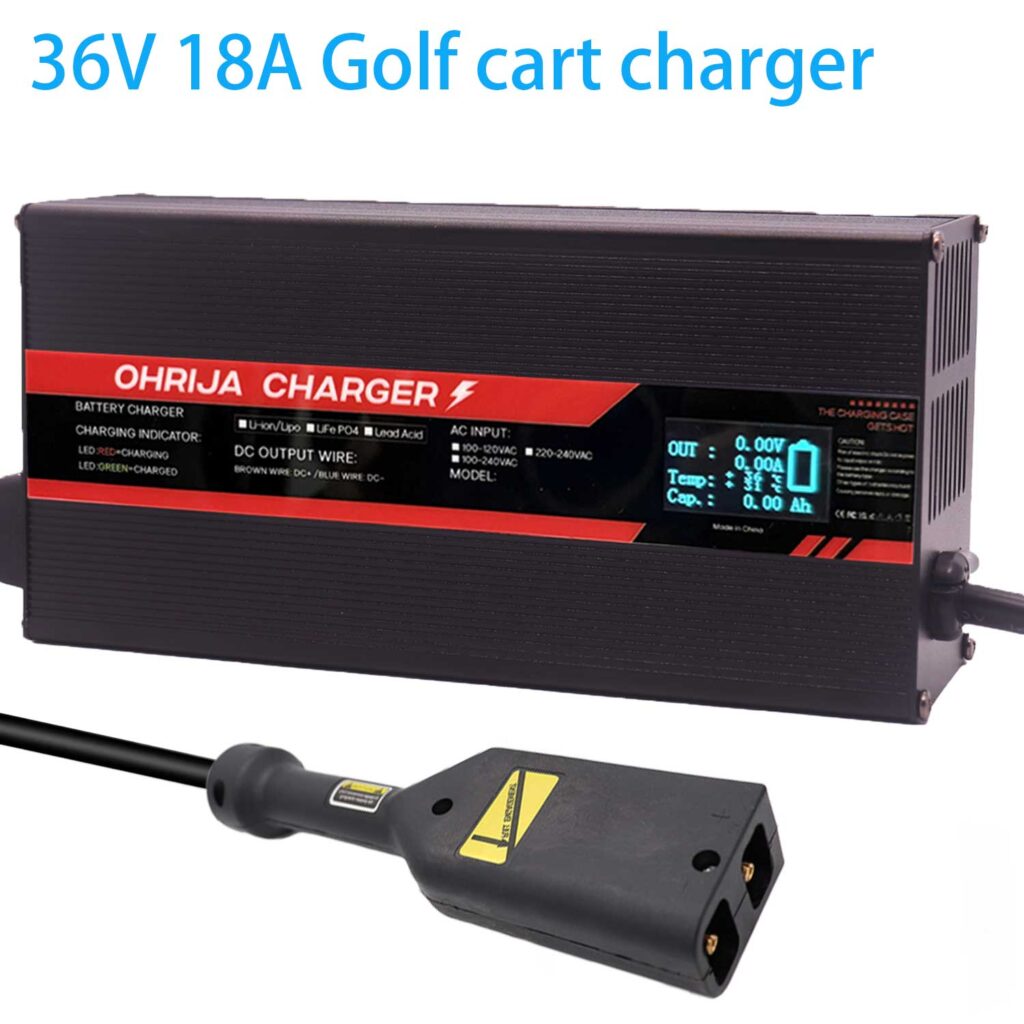
OHRIJA 36v Lead Acid battery charger 36V 18A Golf cart charger makes it suitable for 3S 12V Lead Acid Chargers
39.90$
OHRIJA 48 volt Charger for golf cart 48V 5A makes it suitable for 55.2V Lead Acid batteries
25.50$
OHRIJA 48V 15A Golf Cart Chargers 48v Lead Acid battery charger Power Drive Golf Cart Chargers
39.90$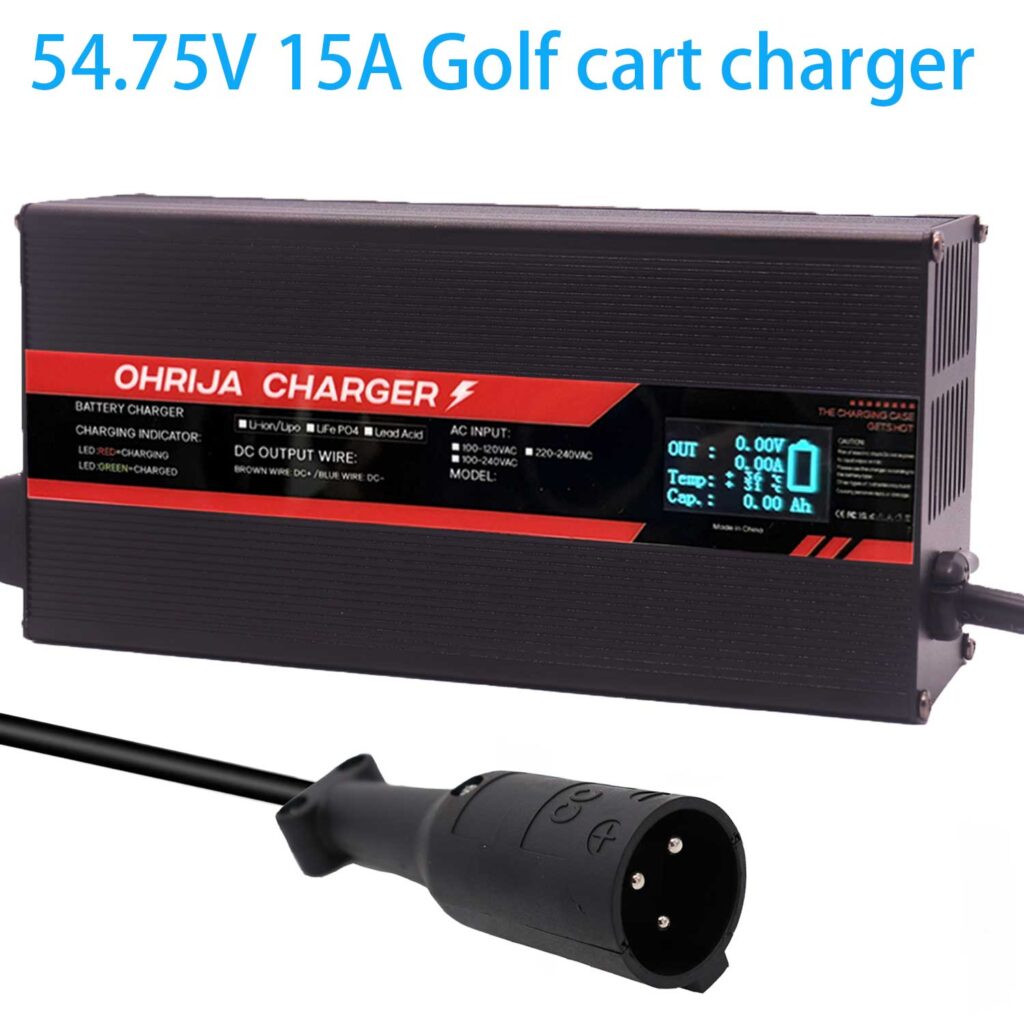
OHRIJA 54.75V 15A Golf Cart Chargers 48V Lithium Golf Cart Battery Chargers Lifepo4 Golf Cart Chargers
39.90$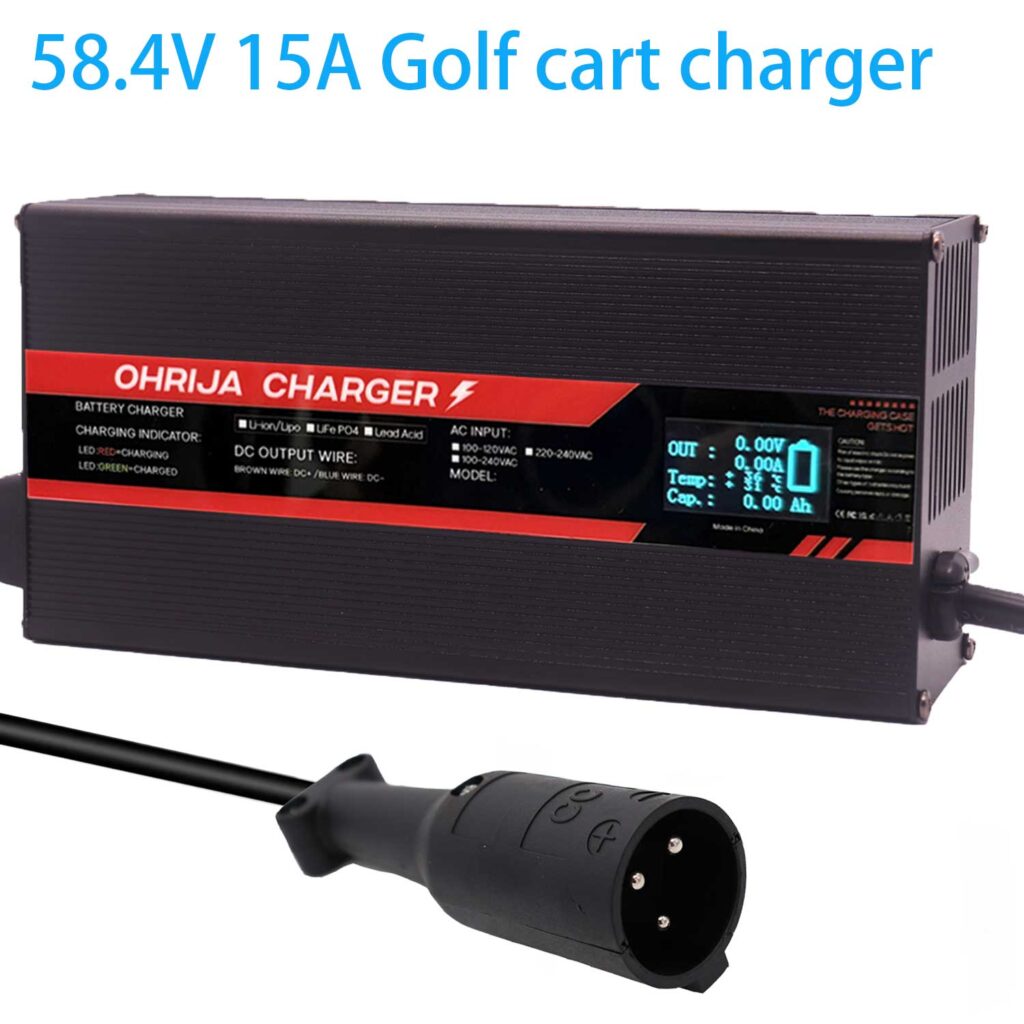
OHRIJA 58.4V 15A Golf Cart Chargers 48V Lithium Golf Cart Battery Chargers Lifepo4 Golf Cart Chargers
39.90$
OHRIJA belongs to Dongguan Hengruihong Technology Co., Ltd., a company established in 2020 and headquartered in Dongguan, Guangdong, China. The business integrates R&D, production, and sales, and its product line spans lithium chargers, LiFePO4 chargers, lead-acid chargers, golf cart chargers, power adapters, and switching power supplies. That is exactly the kind of manufacturing base that should make a buyer take charger design seriously.
We recommend looking at charger brands that understand multiple chemistries and voltage bands, because that usually translates into better thermal control, better protection logic, and fewer compatibility mistakes. In other words, a good charger company should be able to explain why one product supports one chemistry while another product supports a different one. A seller that cannot explain that difference is usually not the seller you want to trust with a golf cart battery pack.
If you are building a purchasing standard for a fleet or an e-commerce catalog, the lesson is the same: price is only useful after you know what the charger is actually designed to do. A Yamaha golf cart battery charger 48 volt replacement should be selected by voltage, plug, chemistry, and use case in that order. Everything else is noise.
Our buying stance: do not chase the cheapest “48V Yamaha” label and hope it fits. Verify the cart family, confirm the pack voltage, check the plug, then decide whether you want a direct replacement or a more flexible smart charger. That sequence prevents the most common buying mistakes and usually saves money, not just time.
FAQs
How much does a Yamaha golf cart battery charger 48 volt replacement cost in 2026?
Public 2026 listings we reviewed show a practical replacement range from about $249.95 for a Yamaha-specific lead-acid charger up to about $468.95 for premium universal Lester Summit II units, with several useful mid-range choices around $358.95 to $396.95. Do all Yamaha golf carts use 48V chargers?
No. Battery Tender’s 2026 Yamaha guide says most modern Yamaha electric carts such as Drive, Drive2, and 48V G29 require 48V chargers, while older models including G14, G16, G19, G22, and 36V G29 require 36V chargers. What should I check before buying a replacement charger?
Check the cart model, actual pack voltage, battery chemistry, and plug style. A 48V charger is only correct if the cart is truly a 48V Yamaha model. Are lithium-compatible chargers worth paying more for?
Often yes. FORM’s Yamaha charger listing shows support for flooded lead acid, lithium, and AGM, along with smart charging and maintenance features. That kind of flexibility can justify a higher price if your battery plans may change. Can I use a 48V charger on an older Yamaha cart?
Only if the cart is actually a 48V model. Yamaha’s older models can use 36V systems, and using the wrong voltage charger is not a safe shortcut. What is the smartest replacement if I just want a dependable direct fit?
A model-specific 48V replacement in the lower-to-mid range is usually the cleanest purchase. If you want more flexibility, move up to a lithium-ready or universal smart charger. The right answer depends on whether you value simplicity or future-proofing more.