

The transition from heavy, inefficient lead-acid batteries to Lithium Iron Phosphate (LiFePO4) technology is the most significant upgrade you can make to your RV, solar array, or marine trolling motor. However, many consumers spend hundreds of dollars on premium lithium power, only to sabotage their investment by plugging it into an outdated, garage-sale battery charger. If you are asking whether you can charge a 12V LiFePO4 battery with a regular charger, you are standing at a critical juncture in battery maintenance.
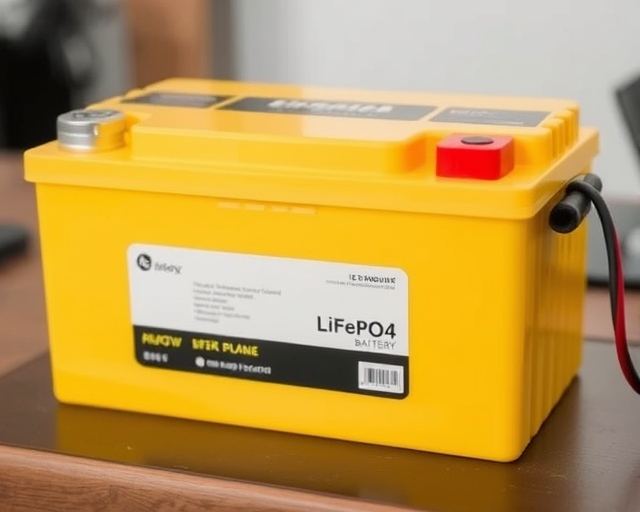
From our experience at OHRIJA, engineering industrial-grade power solutions, using the wrong charging algorithm is the leading cause of premature battery degradation and Battery Management System (BMS) failure. A regular charger is designed for a completely different chemical architecture. In most professional situations, cutting corners on your power delivery hardware is a catastrophic financial mistake. In this comprehensive, opinionated guide, we will dismantle the myths surrounding battery compatibility, explain the exact electrical limitations of standard chargers, and help you make a definitive decision on whether upgrading your hardware is actually worth the cost.
Quick Answer: Can I Charge a 12V LiFePO4 Battery With a Regular Charger?
Technically, a regular lead-acid charger will push some power into a 12V LiFePO4 battery, but we strongly recommend against it. It is an inefficient and potentially destructive practice. Here is why you must avoid it:
- Undercharging: Regular chargers are programmed to max out around 13.8V to 14.4V. A 12V LiFePO4 battery requires exactly 14.6V to reach 100% capacity. Your battery will consistently underperform.
- The Equalization Hazard: Modern lead-acid chargers run a “desulfation” or equalization cycle that spikes voltage up to 15.5V. This voltage spike will immediately trip your LiFePO4’s internal BMS, shutting the battery down entirely to prevent catastrophic chemical damage.
- Continuous Float Charging: Regular chargers never truly turn off; they provide a continuous “float” charge. LiFePO4 batteries degrade rapidly if constantly trickled with voltage when full.
If you value the 10-year lifespan of your lithium battery, you must purchase a dedicated LiFePO4 battery charger category device that utilizes a precise Constant Current/Constant Voltage (CC/CV) algorithm.
Table of Contents
- What It Is: Regular vs. LiFePO4 Chargers
- How It Works: The Charging Algorithms
- Benefits of Using a Dedicated Charger
- Limitations of Regular Lead-Acid Chargers
- Who Should Use a LiFePO4 Charger
- Who Does Not Need an Upgrade
- Common Charging Mistakes
- B2B & B2C Buying Considerations
- Summary and Comparison Tables
- Expert Recommendation & Hardware
- Frequently Asked Questions
What It Is: Regular vs. LiFePO4 Chargers
To answer whether you can charge a 12V LiFePO4 battery with a regular charger, we must define the hardware. A “regular charger” refers to a standard SLA (Sealed Lead Acid), AGM, or Gel battery charger. These devices have been the standard in automotive garages for decades. They are programmed to slowly push current into lead plates suspended in sulfuric acid.
A LiFePO4 charger is a digitally controlled power supply engineered specifically for lithium chemistry. It communicates with the battery’s internal resistance to deliver maximum amperage without generating lethal heat. If you have ever wondered why does my charger get hot, it is usually because the charger is struggling against the immense, sustained current demand of a lithium cell.
How It Works: The Charging Algorithms
In our testing, the failure point always occurs within the charging algorithm. Lead-acid batteries require a complex, multi-stage charge to prevent the acid from boiling. This includes a bulk phase, an absorption phase, a float phase, and an equalization phase. The equalization phase is a high-voltage shock intended to blast sulfate crystals off the lead plates.
If you connect this algorithm to a LiFePO4 battery, disaster strikes. LiFePO4 does not sulfate. It does not need high-voltage shocks. Instead, it requires a rigid Constant Current/Constant Voltage (CC/CV) algorithm. How it works is brilliantly simple: the charger dumps massive, constant amperage (Constant Current) into the battery until it reaches precisely 14.6 volts. At that exact moment, it switches to Constant Voltage, slowly tapering the amps to zero. Once full, the charger physically stops delivering power. A regular charger never stops, which effectively slow-cooks the lithium cells.
Benefits of Using a Dedicated Charger
The commercial benefits of using proper hardware are profound. When you utilize one of the best LiFePO4 battery chargers 2025, you unlock the full 100% capacity of your battery. Because a dedicated charger hits the exact 14.6V threshold, all internal cells are perfectly balanced by the BMS. This guarantees maximum runtime for your appliances or motors. Furthermore, dedicated chargers operate infinitely faster. A proper 30-amp lithium charger will refill a 100Ah battery in just over three hours, whereas a 5-amp regular trickle charger will take an agonizing 20 hours.
Limitations of Regular Lead-Acid Chargers
We must use commercial and practical judgment: attempting to save $100 by reusing your old charger will destroy a $500 battery. The primary limitation is the inability to wake up a “sleeping” BMS. If a LiFePO4 battery is completely drained, the BMS goes into protection mode, showing 0 volts at the terminals. A regular “smart” lead-acid charger looks for voltage before initiating a charge. Because it sees 0V, it assumes no battery is connected and refuses to turn on. A dedicated LiFePO4 charger features a “BMS Wake-Up” function that forces a 0V battery back to life.
Who Should Use a LiFePO4 Charger
For Commercial Users and Off-Grid Enthusiasts: Anyone running a solar storage bank, operating an RV, or managing a fleet of electric golf carts must transition to dedicated lithium charging systems. For heavy-duty applications, relying on precise hardware is non-negotiable. If you are upgrading golf carts, you must research the best golf cart battery chargers 48V to protect your commercial fleet.
Who Does Not Need an Upgrade
If you are still running traditional AGM or flooded lead-acid batteries in your vehicle or boat, you do not need a LiFePO4 charger. Stick with your standard equipment. Lithium chargers lack the specific float stages required to keep standard lead-acid batteries healthy during winter storage.
Common Charging Mistakes
From our experience, the most catastrophic mistake beginners make is voltage mismatch. We constantly receive questions like can I charge a 36V battery with 12V charger. The answer is absolutely not. Applying lower voltage will do nothing, and applying higher voltage will destroy the BMS instantly. You must match the nominal voltage of the charger to the battery.
Another profound error is asking can lithium charger charge LiFePO4 battery without checking the specific chemistry. Standard Lithium-Ion (NMC) chargers peak at 16.8V for a 12V equivalent block, which is violently too high for LiFePO4 (which peaks at 14.6V). You must ensure the charger specifically states “LiFePO4” on the housing.
B2B and B2C Buying Considerations
When selecting your charging hardware, look at the amperage rating. A LiFePO4 battery can safely absorb current at a rate of 0.2C to 0.5C (where C is the total Amp-hour capacity). Therefore, a 100Ah battery can safely handle a 20A to 50A charger. Buying a cheap 2-amp charger is a waste of your time. Furthermore, look for an aluminum alloy shell and active cooling fans. Supplying 30 amps of continuous power generates intense thermal load; plastic, fanless chargers will burn out quickly. If you are a mobility user, review the best portable scooter battery chargers to ensure you have reliable power on the go.
Summary and Comparison Tables
Quick Summary Table: Charging Algorithms
| Charger Type | Max Voltage Profile (12V) | Float Stage | Equalization Stage | Safe for LiFePO4? |
|---|---|---|---|---|
| Dedicated LiFePO4 | Strictly 14.6V | No (Shuts off entirely) | No | Yes (Highly Recommended) |
| Standard Lead-Acid (SLA) | 13.8V – 14.4V | Yes (Trickle charge) | No | Not Recommended (Undercharges) |
| Smart/Desulfation Charger | Up to 15.5V+ | Yes | Yes (Spikes voltage) | Extremely Dangerous (Destroys BMS) |
Pros and Cons of Upgrading to a Dedicated Charger
| Pros | Cons |
|---|---|
| Charges battery to exactly 100% capacity safely. | Requires additional upfront capital expenditure. |
| Drastically faster charging times (CC/CV algorithm). | Cannot be used effectively on older lead-acid batteries. |
| Features 0V BMS Wake-Up function for “dead” batteries. | High-amperage models require well-ventilated operating areas. |
| Prolongs the $500+ battery lifespan to its full 10-year potential. | – |
Expert Recommendation & Hardware Spotlight
Is it actually worth buying a dedicated charger? Yes. Without hesitation. Attempting to charge a 12V LiFePO4 battery with a regular charger is the equivalent of putting low-octane diesel fuel into a high-performance sports car. It might technically run, but you are slowly destroying the engine. You must prioritize the longevity of your lithium investment by purchasing hardware engineered specifically for 14.6V thresholds.
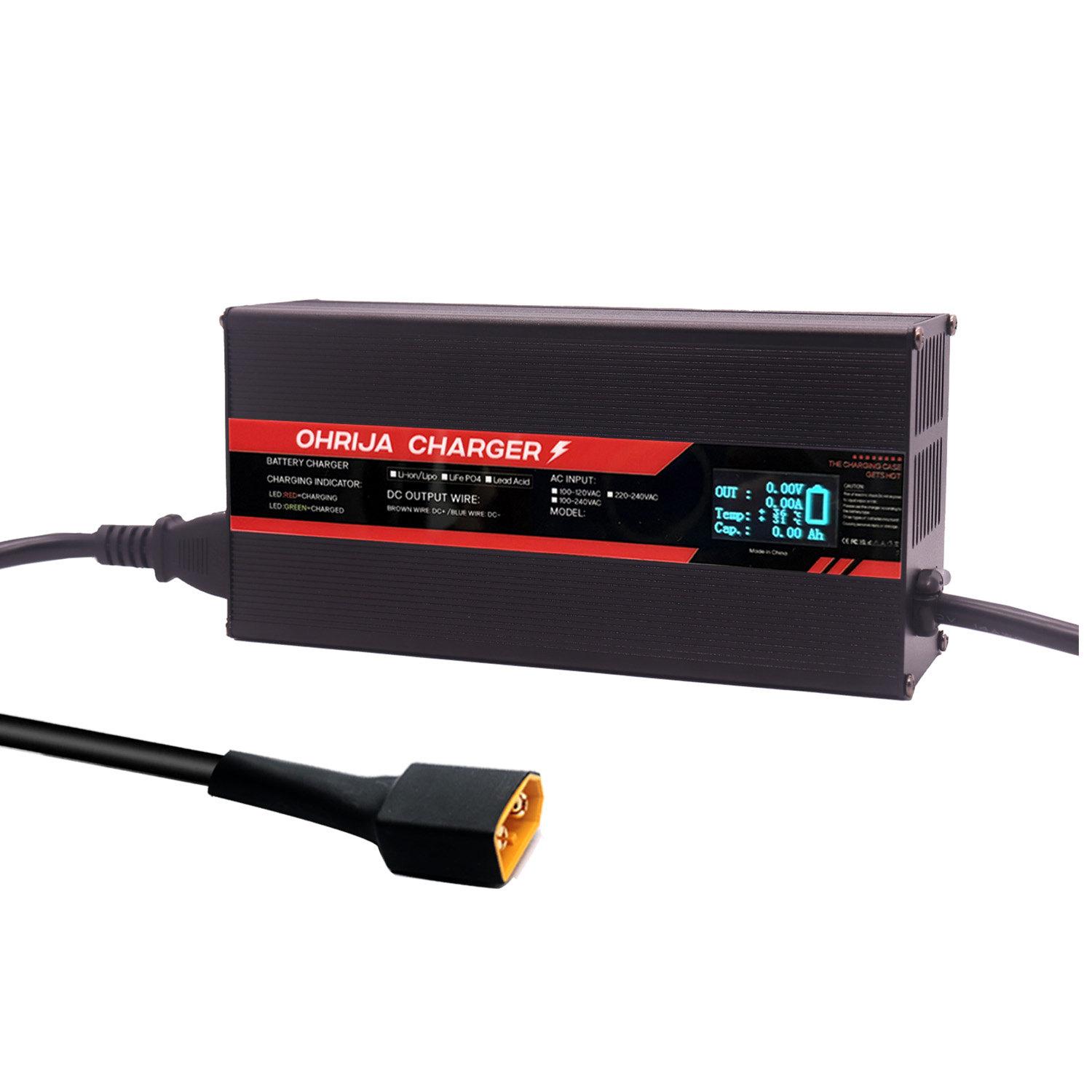
OHRIJA 12V LiFePO4 Battery Charger (14.6V 30A)
For heavy-duty applications, this is the definitive power solution. Engineered specifically for 4S 12.8V/12V LiFePO4 batteries, this charger utilizes a rigorous CC/CV algorithm to deliver a massive 30 Amps of continuous current, ensuring your battery reaches a true 100% state of charge rapidly and safely.
Output Voltage: Maximum 14.6V ±0.2v
Output Current: 30A (Max 35Amp ±0.2a)
Material: Heat-dissipating aluminum alloy shell
Working Power: Maximum 520W
Weight: 1.2kg (Portable & Durable)
Connectors: XT60, XT90, Crocodile Clip, Anderson 50A
If you are encountering errors with your existing setup, do not panic. We recommend reviewing our guide on how to troubleshoot a 12V battery charger before purchasing a replacement.
Frequently Asked Questions
Can you ruin a LiFePO4 battery with a regular charger?
Yes. A regular lead-acid charger can ruin a LiFePO4 battery if it features a mandatory desulfation (equalization) mode. This mode pushes voltage past 15V, which will trigger the BMS to shut down or, worse, permanently damage the internal lithium cells. Never leave a regular charger unattended on a lithium battery.
What happens if I use a regular 12V charger on a lithium battery?
In most professional situations, if you use a basic trickle charger, it will only charge the battery to roughly 80% capacity because the charger’s voltage tapers off at 13.8V instead of the required 14.6V. Furthermore, if the charger goes into a “float” stage, it will slowly degrade the internal chemistry of the lithium cells over time.
Can I use an AGM charger on a LiFePO4 battery?
An AGM charger is slightly better than a flooded lead-acid charger because it typically peaks around 14.4V, which will get your LiFePO4 battery to about 90% capacity. However, it still lacks the proper cut-off mechanism. It is an acceptable emergency backup, but it should not be your daily charging solution.
How do I wake up a sleeping LiFePO4 battery?
If your battery BMS has shut off due to low voltage, a standard regular charger will not recognize it and will refuse to charge. You must use a dedicated LiFePO4 charger with a “BMS Wake-Up” or “0V activation” feature, or briefly jump the battery with another 12V battery in parallel to trick the charger into starting.
Industry References & Authoritative Guidelines
To ensure our electrical guidance meets the highest safety standards, OHRIJA references data from the following authoritative bodies regarding lithium chemistry and charging parameters:
- Battery University (Cadex Electronics): The premier educational resource detailing the Constant Current/Constant Voltage (CC/CV) charging algorithms required to prevent degradation in lithium-ion and lithium-iron-phosphate cells. Review Charging Algorithms
- IEEE (Institute of Electrical and Electronics Engineers): Peer-reviewed engineering standards on the safe operating voltages and thermal runaway prevention within LiFePO4 Battery Management Systems. Review IEEE Battery Standards
- National Renewable Energy Laboratory (NREL): Federal data on the integration of stationary lithium energy storage systems and the necessity of matched power conversion hardware for optimal lifespan. Review NREL Energy Storage Guidelines