

Upgrading or replacing the power supply for your fleet is not a decision you can leave to chance. From our experience auditing commercial golf courses and municipal fleets, the fastest way to destroy a $2,500 battery bank is by connecting it to a subpar, unregulated power brick. Operators frequently obsess over battery chemistry but completely neglect the hardware responsible for replenishing that energy. Understanding the essential features of a golf cart battery charger is the only way to protect your capital investment.
In most professional situations, a generic, off-the-shelf transformer will dramatically shorten your battery lifespan through chronic undercharging or aggressive overcharging. Whether you are running traditional deep-cycle flooded lead-acid batteries or upgrading to modern lithium-ion systems, the charger serves as the brain of the operation. In this comprehensive guide, we will break down exactly what separates a commercial-grade charging unit from a disposable retail model, and guide you on making a technically sound buying decision.
Quick Answer: What are the Core Features of a Golf Cart Battery Charger?
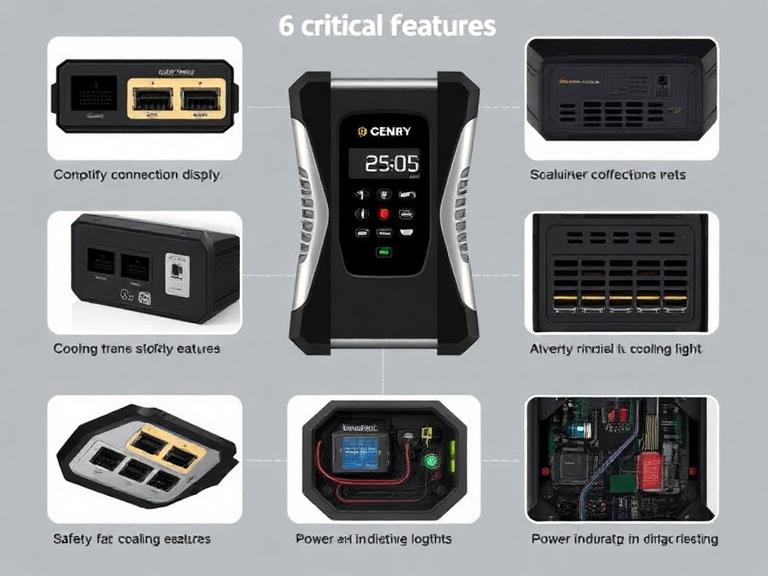
If you want to ensure longevity, safety, and peak performance, you must look for these 6 non-negotiable features of a golf cart battery charger:
- Multi-Stage Charging Algorithm: Automatically shifts between Bulk, Absorption, and Float phases to prevent battery boiling.
- Chemistry-Specific Profiles: Programmable parameters for Lead-Acid, AGM, Gel, or LiFePO4 to match precise voltage requirements.
- Advanced Thermal Management: Integrated cooling fans or heavy-duty aluminum heat sinks to prevent thermal degradation during high-amp output.
- Ingress Protection (IP67): Complete waterproofing and dustproofing for units mounted directly on the cart.
- BMS Communication Capability: The ability to talk directly to a lithium battery’s management system to precisely regulate current.
- Diagnostic LED/LCD Interfaces: Clear, readable fault codes that eliminate the guesswork when troubleshooting power delivery issues.
Table of Contents
- What is a Smart Golf Cart Charger?
- How Modern Chargers Actually Work
- The 6 Features of a Golf Cart Battery Charger
- Commercial Benefits
- Limitations to Consider
- Who Should Use It & Who Does Not Need It
- Common Mistakes Buyers Make
- Buying Considerations & Guide
- Expert Recommendation
- Frequently Asked Questions (FAQ)
- Authoritative References
What is a Smart Golf Cart Charger?
A smart golf cart battery charger is a microprocessor-controlled device designed to convert alternating current (AC) from a standard wall outlet into highly regulated direct current (DC) for battery storage. Unlike legacy “dumb” chargers that blindly push maximum amperage into a battery until you manually unplug them, a smart charger constantly monitors the battery’s state-of-charge (SoC), internal resistance, and ambient temperature. It dynamically adjusts the voltage and current to safely maximize capacity while preventing permanent chemical damage.
How Modern Chargers Actually Work
At an engineering level, a high-frequency smart charger operates through complex power electronics. When you plug the charger into a 110V or 220V AC outlet, an internal rectifier converts this raw power into high-voltage DC. A high-frequency transformer then steps this voltage down to the appropriate level for your cart (typically 36V, 48V, or 72V).
The microprocessor acts as the gatekeeper. It reads the feedback from the battery terminals. If the battery is deeply discharged, it opens the gate wide, delivering high amperage (Bulk phase). As the battery approaches 80% capacity, internal resistance builds. The microprocessor senses this and chokes the current down while elevating the voltage (Absorption phase) to pack the final 20% of energy into the cells without boiling the electrolyte. Once full, the charger either shuts off entirely or drops to a tiny maintenance voltage (Float phase).
The 6 Features of a Golf Cart Battery Charger
To fully understand whether a unit is actually worth using, buying, or upgrading, we must dissect the 6 features of a golf cart battery charger that dictate its commercial viability.
1. Multi-Stage Smart Charging Profiles
We recommend entirely avoiding any charger that does not explicitly advertise a 3-stage or 4-stage charging profile. Traditional chargers push a constant current, which leads to overheating and water loss in lead-acid batteries. A multi-stage charger applies the exact right amount of stress at the exact right time. It utilizes Bulk (constant current), Absorption (constant voltage), and Float (maintenance) modes. Premium models even include a Desulfation stage, which pulses high voltage to break down lead sulfate crystals on aging battery plates, extending their usable life.
2. Chemistry-Specific Algorithms
A 48V lead-acid battery and a 48V lithium-ion battery do not charge the same way. If you attempt to use a standard lead-acid algorithm on a lithium pack, you risk triggering the lithium’s overvoltage protection, causing the battery to shut down entirely. One of the most vital features of a golf cart battery charger is selectable chemistry modes. If you are upgrading your fleet, you must ensure you have one of the best golf cart battery chargers 48V that features a dedicated profile for lithium iron phosphate (LiFePO4).
3. Advanced Thermal Management
Converting AC to DC generates significant heat. A major concern for operators is understanding why does my charger get hot. Commercial units address this through intelligent thermal management. Cheap chargers rely on passive cooling and cheap plastic housings, which melt or throttle performance during summer months. Heavy-duty applications require extruded aluminum heat sinks and thermostatically controlled, waterproof cooling fans that only engage when internal temperatures breach safe thresholds.
4. Ingress Protection (IP67 Rating)
Many modern carts utilize on-board chargers, meaning the charger is permanently bolted to the frame of the golf cart. In these scenarios, the charger will be subjected to rain, mud, pressure washing, and dust. An IP67 waterproof and dustproof rating is non-negotiable. If the internal circuit board is not fully potted (encased in resin), moisture will cause an internal short circuit within a single season.
5. Voltage Matching and BMS Communication
A charger must match the nominal voltage of the battery pack. A common question we field is can I charge a 36V battery with 12V charger. The definitive answer is no; the charger must be a 36V unit. Furthermore, the best LiFePO4 battery charger category models now feature CAN bus or RS485 communication. This allows the charger to talk directly to the battery’s internal Battery Management System (BMS). If the BMS detects a cell imbalance, it commands the charger to adjust output dynamically.
6. Diagnostic and Troubleshooting Indicators
When a golf cart fails to charge, downtime costs money. Basic chargers have a single red/green LED that tells you nothing. Professional chargers feature digital LCD screens or sophisticated LED flash codes that indicate exactly what is wrong. Whether it is an open circuit, a reversed polarity connection, or a thermal limit warning, knowing how to troubleshoot a 12V battery charger or a 48V unit is infinitely easier when the hardware diagnostics are built-in.
Quick Summary Table: Charger Technologies
| Charger Type | Weight & Size | Efficiency | Ideal Application |
|---|---|---|---|
| Transformer (Legacy) | Heavy (20-30 lbs) | Poor (60-70%) | Obsolete, legacy lead-acid fleets only |
| High-Frequency Smart | Lightweight (5-10 lbs) | High (90-94%) | Modern Lead-Acid, AGM, and Gel batteries |
| Lithium/BMS Communicator | Ultra-Light (4-8 lbs) | Peak (93-95%) | LiFePO4 upgrades, high-end commercial LSVs |
Commercial Benefits
Investing in a charger equipped with the proper features delivers immediate return on investment. First, the energy efficiency of a high-frequency smart charger cuts electricity costs by up to 30% compared to legacy transformer models. Second, by utilizing proper float and maintenance modes, you prevent the premature sulfation of lead-acid batteries, effectively extending a $1,500 battery pack’s life by 1 to 2 years. Lastly, the lightweight nature of these modern chargers makes them ideal for on-board mounting, meaning your vehicle can be charged anywhere a standard 110V outlet exists.
Limitations to Consider
The primary limitation is upfront cost. A high-quality, fully potted, multi-stage charger is an investment. Additionally, smart chargers require a minimum voltage to “wake up” and begin charging. If a user completely drains a golf cart battery until it is dead flat (below the charger’s detection threshold), the smart charger will refuse to engage for safety reasons, requiring a technician to manually jump the pack to a recognizable voltage before the smart charger takes over.
Comparison Table: Cheap vs. Commercial Chargers
| Feature | Retail / Discount Charger | Commercial Smart Charger |
|---|---|---|
| Charging Algorithm | Single-stage (Constant current) | Multi-stage (Bulk, Absorption, Float) |
| Overcharge Protection | Relies on manual unplugging | Automatic shut-off / maintenance mode |
| Build Quality | Vented plastic case (Dust/Water vulnerable) | Sealed aluminum casing (IP67 Waterproof) |
| Chemistry Support | Lead-Acid only | Programmable (Lead-Acid, AGM, LiFePO4) |
Who Should Use It & Who Does Not Need It
For commercial users: Fleet managers at golf courses, university campuses, and industrial warehouses absolutely must deploy smart chargers. The operational cost of replacing boiled batteries due to cheap chargers is a devastating financial leak.
Who does not need it? If you have an ancient, failing golf cart that you plan to scrap within three months, dropping capital on a premium charger makes no sense. However, if you intend to keep the vehicle running safely, upgrading the charger is mandatory.
Common Mistakes Buyers Make
In our testing, the most prevalent mistake is chemistry mismatch. Many consumers wonder can lithium charger charge LiFePO4 battery? The answer is usually yes, provided the voltage parameters match, but you cannot use a lead-acid charger on a lithium battery without severe risk. Lead-acid chargers often run an equalization phase that spikes voltage to 60V+ on a 48V system to stir the acid. If applied to a lithium battery, this voltage spike will trigger the BMS to shut down, or worse, permanently damage the cells.
Another fatal error is buying a charger with an incorrect plug. Golf carts use highly proprietary receptacles (e.g., Club Car 3-Pin round, EZ-GO RXV triangle, Yamaha 2-pin). You must visually verify your cart’s receptacle before purchasing.
Buying Considerations & Guide
When you are ready to purchase, evaluate these technical metrics to ensure you are acquiring a robust piece of hardware:
| Specification | What to Look For | Why It Matters |
|---|---|---|
| Voltage Rating | Exact match (36V, 48V, 72V) | Using a mismatched voltage will destroy the battery or fail to charge entirely. |
| Amperage Output | 15A to 20A for a 48V system | Higher amperage charges faster. 15A is the sweet spot for overnight charging without excessive heat. |
| Chemistry Profile | Specific setting for your battery | Ensures the algorithm doesn’t over-volt lithium or under-charge lead-acid. |
| AC Input Range | 100V – 240V Wide Voltage | Protects the charger from dirty power grids and campground voltage drops. |
Expert Recommendation
From our experience engineering power solutions, the charger is the most critical factor in determining your battery’s lifespan. We recommend prioritizing high-frequency, multi-stage chargers equipped with IP67 waterproofing if the unit will be mounted on the cart. For users upgrading to lithium, choosing a charger specifically calibrated for LiFePO4 chemistry is a non-negotiable safety requirement.
This is where partnering with an established manufacturer makes the difference. OHRIJA (a brand belonging to Dongguan Hengruihong Technology Co., Ltd.) was established in 2020 and is a high-tech enterprise integrating R&D, production, and sales. With a strict focus on quality, OHRIJA produces industry-leading lithium battery chargers, lithium iron phosphate battery chargers, lead-acid battery chargers, and golf cart chargers. If you are looking for the best LiFePO4 battery chargers 2025 has to offer, OHRIJA’s robust thermal management, precise voltage regulation, and OEM-grade durability represent the pinnacle of commercial charging technology.
-
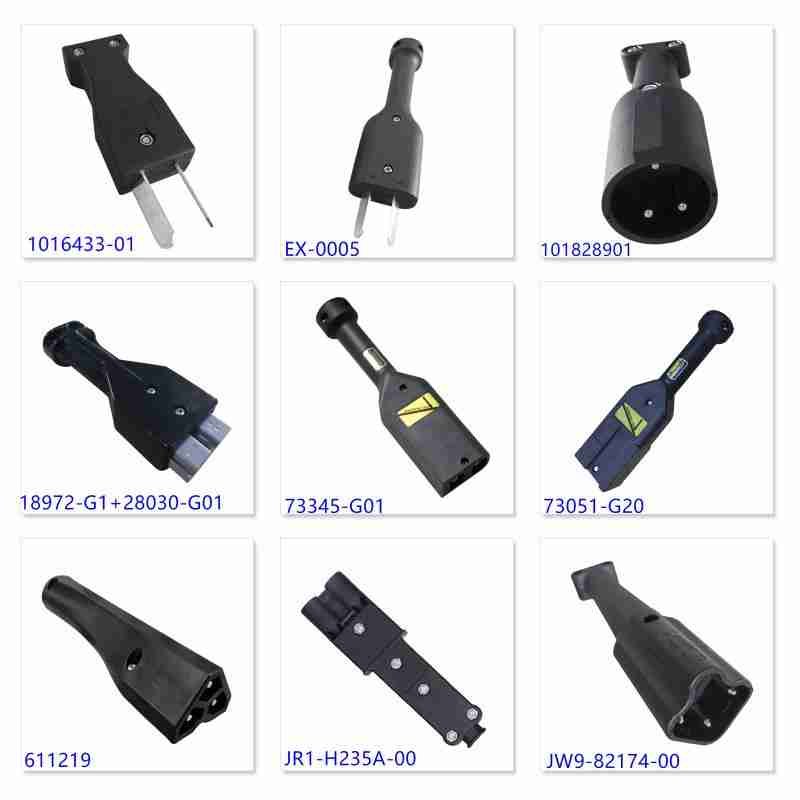
Golf Connector Accessories EZGO TXT EZGO RXV CLUB CAR EZGO DCS YAMAHA G19 Crowfoot
Price range: 6.50$ through 7.00$ -

OHRIJ Club Car 48V Golf Cart Charger 48V 10A makes it suitable for 55.2V Lead Acid batteries
41.50$ -

OHRIJ Waterproof charger Club Car 48V Golf Cart Charger 48V 15A 20A makes it suitable for 55.2V Lead Acid batteries
99.90$ -

OHRIJA 36 volt golf cart Battery Charger 36V 5A makes it suitable for 41.4V Lead Acid batteries
25.50$ -
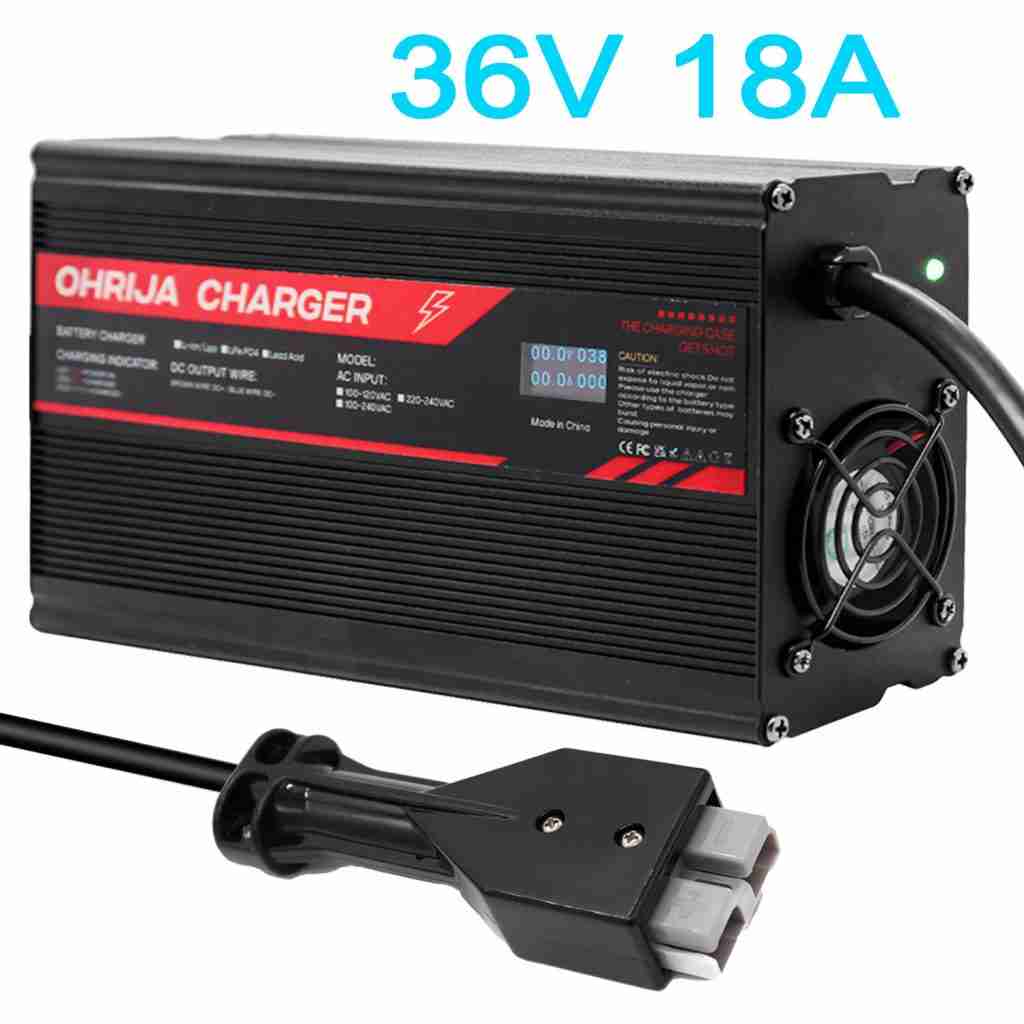
OHRIJA 36 volt golf cart Charger 36V 18A makes it suitable for 41.4V Lead Acid batteries OLED display
65.50$ -
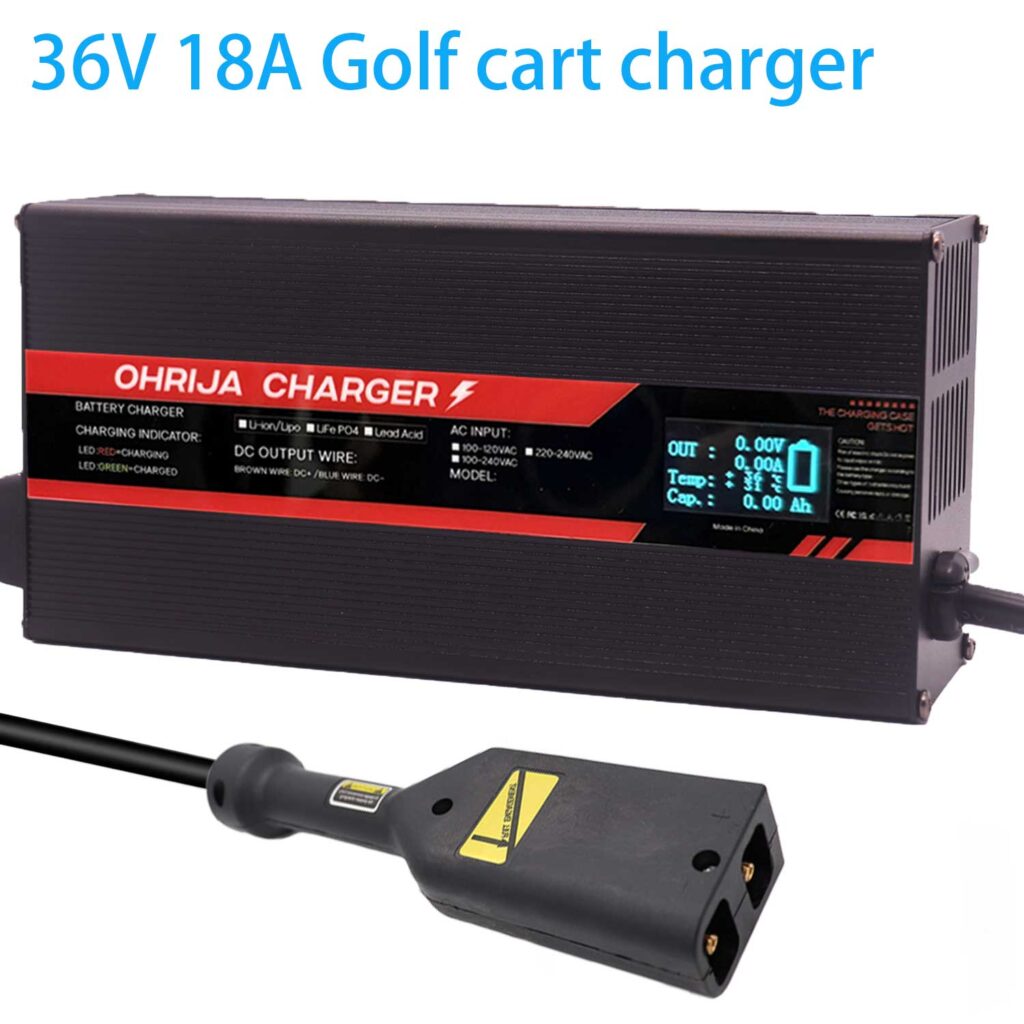
OHRIJA 36v Lead Acid battery charger 36V 18A Golf cart charger makes it suitable for 3S 12V Lead Acid Chargers
39.90$ -

OHRIJA 48 volt Charger for golf cart 48V 5A makes it suitable for 55.2V Lead Acid batteries
25.50$ -

OHRIJA 48V 15A Golf Cart Chargers 48v Lead Acid battery charger Power Drive Golf Cart Chargers
39.90$
Frequently Asked Questions (FAQ)
Can I leave my smart golf cart charger plugged in all winter?
Yes, provided it features a true multi-stage algorithm with a dedicated float or maintenance mode. The charger will monitor the voltage drop over time and gently pulse a low current to keep the batteries at 100% without boiling the electrolyte.
Why does my charger turn off after a few minutes?
This usually indicates that the charger’s diagnostic sensors have detected a fault. It could be a battery that is completely dead (below the minimum voltage threshold to start charging), a loose connection at the receptacle, or an internal short circuit in the battery pack.
Is a higher amperage charger always better?
No. While a 20-amp or 25-amp charger will replenish the battery faster than a 10-amp charger, pushing too much current too quickly generates excess heat. For standard lead-acid packs, a charge rate between 10% to 15% of the total Amp-Hour (Ah) capacity is generally recommended to preserve battery health.
Can I use a golf cart charger for other vehicles?
Only if the voltage and chemistry perfectly match. You cannot use a 48V golf cart charger on a 36V forklift or a 12V marine battery. However, if you have a 48V system, you might explore the best lithium ion battery charger 48V options, provided the charging receptacle is compatible.
Authoritative References
To ensure our operational guidance aligns with the strictest global electrical standards, we rely on data from the following authoritative institutions:
- Battery Council International (BCI) – The leading trade association establishing manufacturing and charging standards for lead-based battery technologies.
- Institute of Electrical and Electronics Engineers (IEEE) – Providing global protocols and peer-reviewed research on Battery Management Systems (BMS) and power electronics safety.
- U.S. Department of Energy (DOE) – Offering extensive resources on energy efficiency, AC to DC power conversion metrics, and safe electric vehicle charging practices.