
No products in the cart.

Urban mobility has been completely transformed by e-bikes, but for apartment dwellers, the logistics of keeping a battery topped up can be an absolute nightmare. Landlords are imposing stricter regulations, hallways are narrow, and hauling a heavy bicycle up multiple flights of stairs is often physically impossible. If you need to figure out how to charge an electric bike in an apartment without violating your lease or creating a massive fire hazard, you are in the right place.
From our experience manufacturing high-end battery chargers at OHRIJA, we see riders making critical safety and operational errors every single day. Using cheap aftermarket chargers in enclosed residential spaces is a recipe for disaster. In this comprehensive guide, we will break down the exact methods to keep your e-bike powered safely, explain the underlying battery technology, and provide commercial-grade recommendations to protect your investment and your home.
Quick Answer
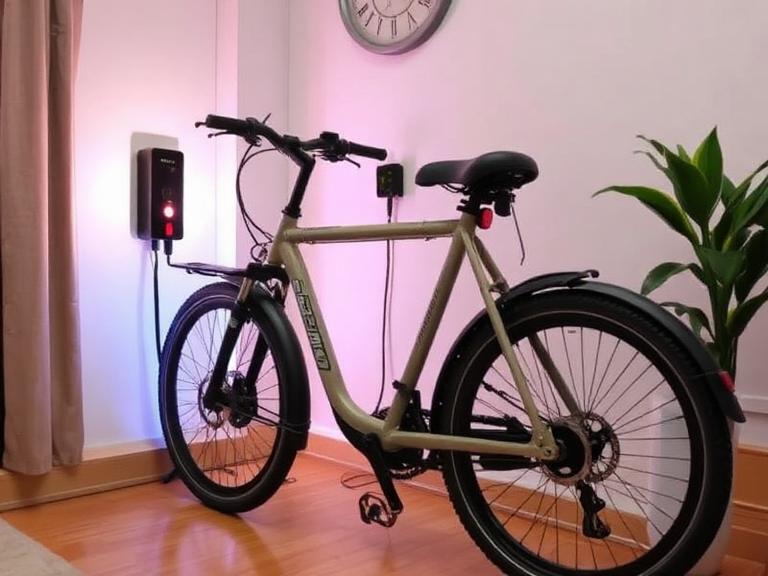
If you need to charge an electric bike in an apartment, you generally have four options: 1) Remove the battery and charge it inside using a fireproof bag; 2) Bring the entire e-bike inside if ground-floor or elevator access permits; 3) Utilize a designated apartment bike room or communal garage with outlets; or 4) Charge on a balcony using weather-rated extension cords (least recommended). The safest and most practical method is removing the battery and pairing it with a high-quality, smart OLED charger on a hard, non-flammable surface.
Table of Contents
- Method 1: Removing the Battery (The Gold Standard)
- Method 2: Rolling the Entire Bike Inside
- Method 3: Designated Building Bike Rooms
- Method 4: Balcony or Patio Charging
- How Lithium-Ion E-Bike Charging Works
- Benefits of Apartment Charging
- Limitations and Risks
- Who Should Use Which Method
- Common Mistakes to Avoid
- Essential Comparison Tables
- Expert Recommendation & Buying Advice
- The Bottom Line
- Frequently Asked Questions (FAQs)
Method 1: Removing the Battery (The Gold Standard)
In most professional situations, we consider a removable battery to be a non-negotiable feature for apartment residents. Instead of wrestling a 65-pound bicycle into a tiny elevator, you simply unlock the battery pack, carry it inside like a briefcase, and plug it in on your kitchen counter.
However, you cannot just drop a massive lithium-ion battery on your carpet and plug it into the wall. We recommend placing the battery on a hard, non-flammable surface (like tile, stone, or a concrete floor) and utilizing a certified fireproof LiPo safe bag. Understanding how to charge eBike battery safely indoors prevents catastrophic thermal runaway events. Never leave the battery charging unattended while you sleep or leave the apartment.
Method 2: Rolling the Entire Bike Inside
If your e-bike features a fully integrated (non-removable) battery, you have no choice but to bring the entire frame indoors. For beginners living on the ground floor or in buildings with massive freight elevators, this is a viable option. For anyone else, it is incredibly cumbersome.
When bringing the bike inside, ensure the tires are clean to avoid damaging your security deposit. Park the bike near a grounded wall outlet—avoid using cheap indoor power strips to bridge the gap. You must also ensure the bike is entirely dry before plugging it in. Water ingress into the charging port is a fast track to a short circuit.
Method 3: Designated Building Bike Rooms
Many modern residential complexes are adapting to the micro-mobility boom by outfitting communal bike rooms with charging lockers or designated power strips. If your building offers this, it is highly convenient, keeping the heavy lifting out of your personal living space.
The downside? Security. If you charge your battery in a communal space, it is vulnerable to theft. Furthermore, you have no control over what other residents are doing. If your neighbor is using a faulty charger, it puts your property at risk. Always lock your battery to the frame if you are charging in a shared basement.
Method 4: Balcony or Patio Charging
Some users run heavy-duty extension cords to their balcony to charge an electric bike in an apartment outdoor space. We strongly advise against this unless absolutely necessary. Lithium-ion batteries are highly sensitive to temperature extremes. Charging a battery in direct summer sunlight or in freezing winter temperatures permanently degrades the cell chemistry.
If you must use this method, you need to monitor the charger temperature closely. If you have ever wondered why does my charger get hot, it is because power conversion generates thermal energy. Trapping that heat in direct sunlight or insulating it on a balcony floor will cause the charger components to melt or fail.
How Lithium-Ion E-Bike Charging Works
To charge an electric bike in an apartment effectively, you must understand what is happening inside the battery casing. E-bike batteries utilize a Battery Management System (BMS) that communicates with the charger. The charging process happens in two distinct phases: Constant Current (CC) and Constant Voltage (CV).
During the CC phase, the charger pushes a steady flow of amperage (e.g., 5 Amps) into the depleted cells, rapidly bringing the battery up to about 80% capacity. Once it hits this threshold, the charger switches to the CV phase, slowly trickling current in while holding the maximum voltage steady (e.g., 54.6V for a 48V battery) to balance the internal cells without overcharging them. Finding the best 48V eBike battery chargers means finding units that execute this CC/CV transition flawlessly.
Benefits of Apartment Charging
Despite the logistical hurdles, keeping your battery indoors has distinct advantages. Climate-controlled environments (typically around 68-72°F or 20-22°C) are the absolute optimal conditions for lithium-ion charging. By charging inside, you avoid the extreme temperature swings that ruin battery longevity in unheated outdoor garages.
Furthermore, indoor charging allows you to closely monitor the charging cycle. You can unplug the charger the moment it turns green, rather than leaving it connected to the grid for days in a basement rack.
Limitations and Risks
The limitations are primarily physical and legal. Many New York and London apartment buildings have outright banned e-bikes due to the severe fire risks associated with unregulated, uncertified battery packs. If a lithium-ion battery enters thermal runaway in a small apartment, the toxic gas and intense flames are nearly impossible to extinguish with standard fire extinguishers.
Who Should Use Which Method
For commercial users (like delivery riders) who require rapid turnaround times in small apartments, removing the battery and utilizing a fast 5A charger is the only way to minimize downtime. If you run a fleet, sourcing the best lithium ion battery charger 48V for multiple battery packs is a mandatory operational expense.
For beginners who ride casually on weekends, leaving the bike in a designated apartment bike room and charging it slowly overnight is perfectly adequate, provided the space is secure.
Common Mistakes to Avoid
In our testing, we see countless batteries destroyed by user error. Avoid these traps:
- Mixing Voltages: Customers often ask, can I charge a 36V battery with 12V charger? The answer is absolutely not. Mismatching voltage will either fail to charge the battery entirely or result in a dangerous overvoltage scenario if a higher voltage charger is used on a lower voltage battery.
- Charging Immediately After a Ride: When you finish riding, your battery cells are hot. Plugging them in immediately stresses the chemistry. Let the battery cool to room temperature for 30 minutes before initiating a charge.
- Buying Uncertified Replacements: When the stock charger breaks, many riders buy the cheapest replacement online. These lack basic overvoltage and short-circuit protections.
Essential Comparison Tables
| Charging Method | Convenience Level | Safety Level | Best For |
|---|---|---|---|
| Remove Battery & Charge Inside | High | High (if supervised) | Removable battery models, small apartments |
| Bring Entire Bike Inside | Low | Medium | Integrated batteries, ground floor units |
| Building Bike Room | Medium | Low (due to theft) | Buildings with modern smart-lockers |
| Balcony Charging | Low | Low (weather risks) | Absolute emergencies only |
| Feature | Generic Stock Charger (2A) | OHRIJA 5A OLED Charger |
|---|---|---|
| Charge Time (15Ah Battery) | 7.5 Hours | 3 Hours |
| Display | Basic Red/Green LED | OLED Screen (Real-time Voltage/Amperage) |
| Heat Dissipation | Plastic shell, passive cooling | Aluminum alloy shell, active cooling |
| Safety Protections | Minimal | Overvoltage, Overcurrent, Short-circuit |
| Pros | Cons |
|---|---|
| Temperature-controlled environment extends battery lifespan. | Severe fire hazard if using damaged or uncertified batteries. |
| Protects the battery and charger from theft. | Can violate specific lease agreements or building bylaws. |
| Eliminates the risk of rain/moisture damage during charging. | Bringing a dirty bike indoors tracks mud and debris into living spaces. |
| Consideration | What to Look For | Why It Matters |
|---|---|---|
| Output Current | 3A to 5A maximum | Speeds up charging time without damaging standard 18650/21700 lithium cells. |
| Casing Material | Aluminum Alloy | Prevents the charger from melting; plastic chargers are dangerous in confined spaces. |
| Connector Type | XT60, Anderson, or XLR | Must match your battery exactly to prevent arcing and port damage. |
Expert Recommendation & Buying Advice
For heavy-duty applications, daily commuters, and anyone looking to charge an electric bike in an apartment efficiently, the standard 2-amp plastic charger included with most e-bikes is woefully inadequate. They take all night to charge and get alarmingly hot to the touch.
We recommend upgrading your charging hardware immediately to ensure safety and speed inside your residential space. Below is our flagship solution engineered specifically to solve the slow-charging crisis safely.
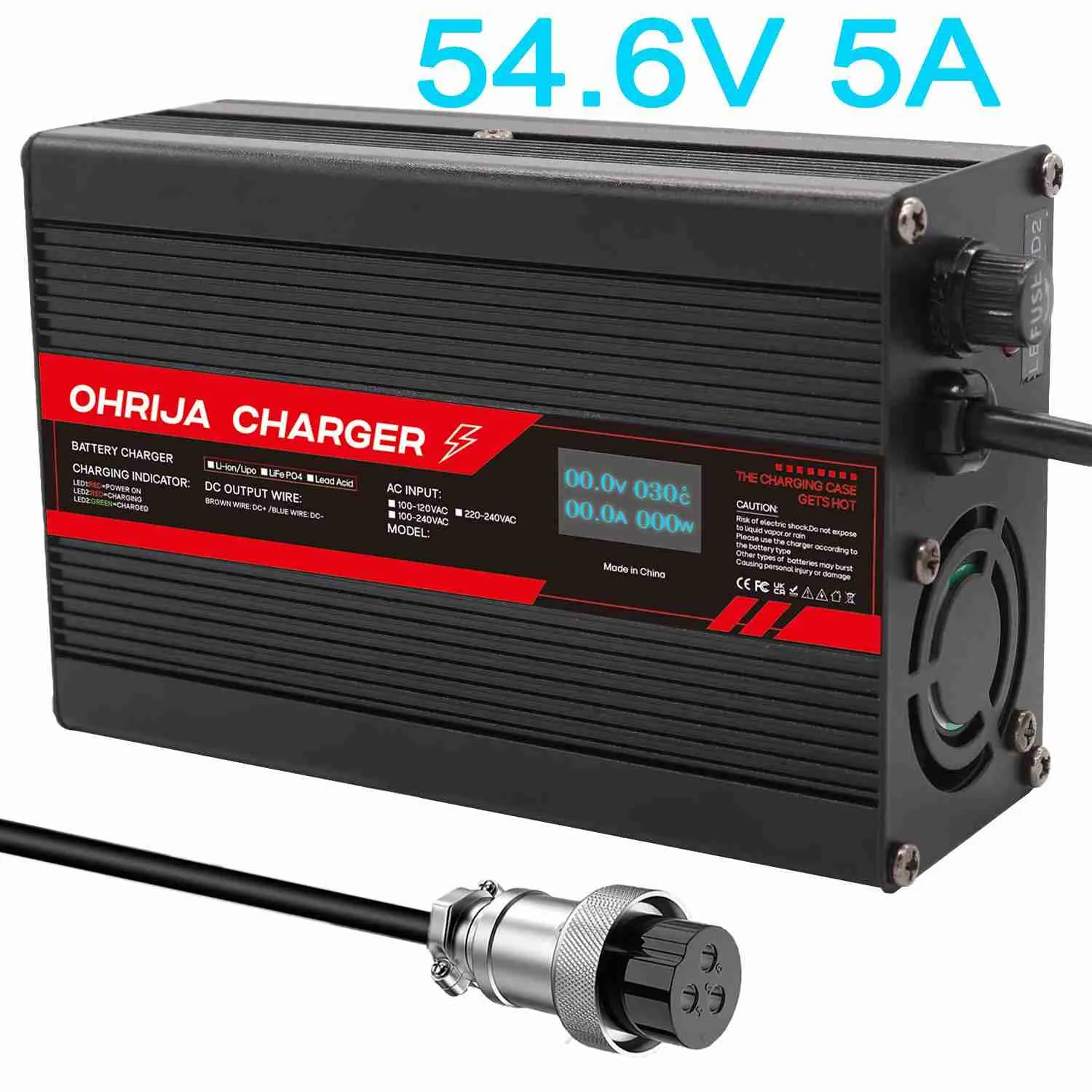
OHRIJA 48 volt battery charger for electric bike 54.6V 5A OLED charger
This premium smart charger is designed specifically for 13S 48.1V Li-ion batteries, featuring an aluminum alloy shell for superior heat dissipation—crucial for apartment environments.
- Output Voltage: Maximum 54.6V ±0.2V
- Output Current: Fast 5Amp ±0.2A
- Material: Fire-resistant Aluminum Alloy Shell
- Working Power: Maximum 295W
- Connectors Available: XT60, XT90, Crocodile Clip, Anderson 50A, XLR, and more to fit your specific battery.
- Visual Interface: OLED display to monitor real-time charging metrics.
The Bottom Line
You can absolutely charge an electric bike in an apartment, provided you prioritize safety over sheer convenience. Removing the battery and charging it on a non-combustible surface under a watchful eye is the definitive best practice. Never charge your battery while sleeping, never block your primary fire exit with a charging bike, and most importantly, discard the cheap plastic chargers. By investing in a high-quality aluminum-cased smart charger, you protect your battery’s lifespan, your apartment, and yourself.
Frequently Asked Questions (FAQs)
Is it legal to charge an electric bike in an apartment?
In most jurisdictions, yes, it is legal. However, private landlords and Homeowner Associations (HOAs) have the right to ban e-bike batteries from their premises due to fire risks. Always check your specific lease agreement and local municipal codes before bringing a battery indoors.
Should I charge my e-bike battery to 100% every time?
To maximize the lifespan of lithium-ion cells, it is generally recommended to charge the battery to 80-90% for daily use. However, you should charge it to 100% occasionally (once a month) to allow the Battery Management System (BMS) to balance the internal cells properly.
What should I do if my charger gets dangerously hot?
While it is normal for chargers to get warm, a charger that is too hot to touch is a severe hazard. Unplug it immediately from the wall outlet, let it cool down, and replace it with a high-quality aluminum alloy charger equipped with active cooling fans.
Authoritative References
- National Fire Protection Association (NFPA): Guidelines on safety protocols and fire prevention strategies regarding lithium-ion batteries and micromobility devices. NFPA E-Bike Safety
- UL Solutions: Standards for evaluating the electrical safety of e-bikes, specifically UL 2849, which covers the battery, motor, and charger systems. UL 2849 Certification
- U.S. Consumer Product Safety Commission (CPSC): Federal warnings and safety alerts regarding the hazards of charging micromobility devices indoors. CPSC Micromobility Safety