
No products in the cart.

Electric scooters have revolutionized urban mobility and last-mile delivery, but the electrical infrastructure powering them remains dangerously misunderstood by the average consumer. From our experience engineering battery management solutions at OHRIJA, we see countless riders spend thousands of dollars on high-performance scooters, only to destroy their lithium battery packs by purchasing uncertified, generic chargers online. The battery is the absolute heart of your micromobility device. If you utilize a substandard power brick, you are not saving money; you are actively accelerating cell degradation, permanently reducing your driving range, and introducing severe thermal hazards to your home.
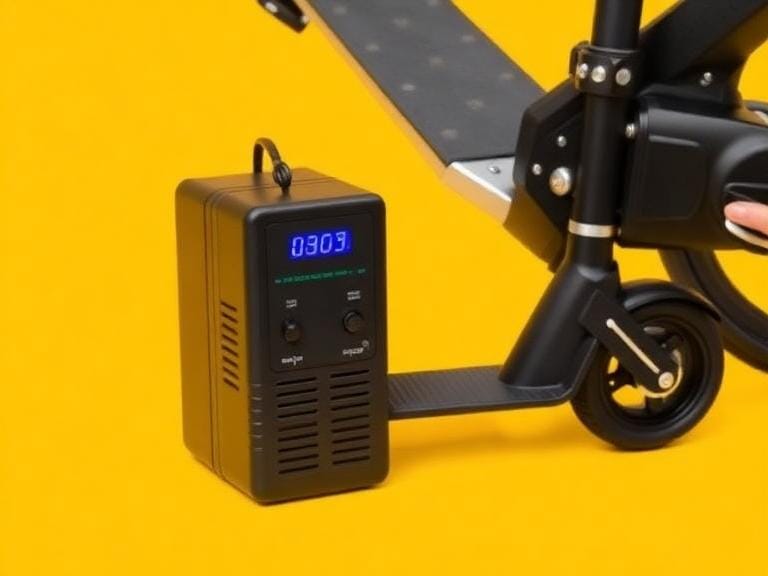
When you set out to procure a reliable 48 volt charger for an electric scooter, you are investing in the thermal stability and longevity of your lithium cells. In this uncompromising guide, we will cut through the marketing noise, explain the exact electrical parameters you must evaluate, and outline the 8 good 48 volt charger for an electric scooter options available in 2026 to maximize your battery’s lifespan and overall performance.
Quick Answer: What Charger Do You Actually Need?
When searching for a 48 volt charger for an electric scooter, you must first verify your battery’s exact chemistry and cell series configuration, because “48V” is merely a nominal label.
- For a standard 13-series (13S) Lithium-Ion battery, you strictly require a charger with a 54.6V cutoff.
- For a 16-series (16S) LiFePO4 battery, you require a 58.4V cutoff.
- For older Sealed Lead Acid (SLA) systems, you require a 55.2V cutoff.
Do not cross-contaminate chargers between chemistries. In most professional situations, we recommend purchasing an intelligent charger that utilizes a true Constant Current / Constant Voltage (CC/CV) algorithm, delivers between 2A and 5A depending on your battery capacity, and includes active cooling fans to manage heat dissipation safely.
Table of Contents
- What is a 48 Volt Charger for an Electric Scooter?
- How It Works: The CC/CV Charging Protocol
- The Commercial Benefits of Upgrading
- Limitations and Fast-Charging Realities
- Who Should Use It & Who Does Not Need It
- Common Mistakes that Destroy Batteries
- Critical Buying Considerations
- Expert Recommendation: The 8 Best Options
- Summary and Comparison Tables
- Frequently Asked Questions (FAQ)
What is a 48 Volt Charger for an Electric Scooter?
A 48 volt charger for an electric scooter is a specialized external power supply designed to convert alternating current (AC) from your wall outlet into the highly stabilized direct current (DC) required to replenish your scooter’s battery pack. However, a high-quality unit is much more than a simple transformer. It operates as an intelligent communication node working in tandem with your scooter’s internal Battery Management System (BMS).
When you plug in a premium 48 volt charger for an electric scooter, it actively reads the resistance and current voltage of the battery pack before initiating a carefully calculated electrical curve. It also contains internal filtering capacitors that smooth out AC ripple currents—microscopic power fluctuations that would otherwise degrade sensitive lithium cells over time.
How It Works: The CC/CV Charging Protocol
To truly understand your equipment and make an informed buying decision, you must understand the CC/CV charging phases. In our testing, the only safe and effective way to charge a high-density lithium pack is through this distinct two-step algorithmic process.
Phase 1: Constant Current (CC). The charger delivers its maximum rated amperage (for example, 5 amps) steadily into the battery. During this rapid-fill phase, the battery voltage rises sharply. This is the heavy-lifting portion of the cycle where the vast majority of internal heat is generated. If you frequently wonder why does my charger get hot, it is during this high-load CC phase. High-quality chargers utilize extruded aluminum heat sinks and active cooling fans to survive this thermal stress without melting their internal components.
Phase 2: Constant Voltage (CV). As the battery hits its precise peak voltage—exactly 54.6V for a 13S Li-ion pack—the 48 volt charger for an electric scooter locks the voltage in place and slowly tapers the current down. This allows the internal BMS to balance the individual cell groups within the pack, ensuring no single cell is overcharged. Once the current drops below a specific threshold (often 0.2A), the charger shuts off completely, preventing dangerous overcharging and potential thermal runaway.
The Commercial Benefits of Upgrading
If you are still using the cheap, lightweight plastic brick that came free in the box with your scooter, upgrading to a commercial-grade 48 volt charger for an electric scooter offers transformative benefits.
First, consider the charging speed. Upgrading from a standard 2A charger to a 5A fast charger reduces your vehicle downtime by roughly 60%. For delivery couriers and urban commuters relying on their vehicles daily, this rapid turnaround is commercially vital.
Second is thermal stability and safety. Premium units are built with robust over-voltage protection, short-circuit protection, and reverse polarity safeguards. They are engineered to meet stringent standards like UL 2272 (which covers the entire electrical system of personal e-mobility devices) and UL 2271 (which covers the lithium battery packs specifically). Keeping the internal components of the charger cool through active fan management ensures a steady, clean output voltage, which directly extends the lifecycle of your scooter’s battery.
Limitations and Fast-Charging Realities
We must deploy commercial and practical judgment here: fast charging is not a magical solution without drawbacks. The fundamental limitation of any high-output 48 volt charger for an electric scooter (such as an 8A or 10A unit) is the C-rate stress placed on the battery cells.
The C-rate is the measure of charge current relative to the battery’s total capacity. If you have a small 10 Amp-hour (Ah) scooter battery, charging it at 5A equates to a 0.5C rate, which is perfectly healthy. But pushing 10A into that same 10Ah battery (a 1.0C rate) generates excessive internal resistance, heating up the lithium cells and causing accelerated capacity degradation. Furthermore, high-amperage chargers are physically larger, heavier, and louder due to the necessary high-RPM cooling fans.
Who Should Use It & Who Does Not Need It
For commercial users: E-scooter rental fleet operators, food delivery couriers, and high-mileage daily commuters absolutely must invest in a heavy-duty, fast 48 volt charger for an electric scooter. Time spent plugged into a wall is lost revenue. Upgrading to a fan-cooled 5A or 8A unit is mandatory for operational efficiency.
For heavy-duty applications: If you own a massive dual-motor off-road scooter boasting a 20Ah to 40Ah battery bank, you need a high-end charger. Using a basic 2A charger on a 30Ah battery will result in a frustrating 15-hour charge time.
Who does not need it: For beginners or casual weekend riders who store their scooters indoors and only ride short distances, a standard 2A fanless charger is entirely sufficient. Leaving a scooter to trickle charge overnight on a slow 2A curve is actually very gentle on the lithium cells, provided the charger has a reliable, verified automatic cutoff mechanism.
Common Mistakes that Destroy Batteries
The most dangerous and expensive mistake consumers make is ignoring battery chemistry. We are frequently asked by customers, can lithium charger charge LiFePO4 battery? The definitive answer is no. A standard Li-ion 48 volt charger for an electric scooter stops at exactly 54.6V. A 48V LiFePO4 battery (16S configuration) requires exactly 58.4V. Using a standard lithium charger on a LiFePO4 battery will chronically undercharge it, severely disrupting the BMS cell balancing process and drastically reducing your range.
Another fatal error is voltage mismatch. If you have multiple scooters in your garage, never mix the chargers without checking the labels. A common query is can I charge a 36V battery with 12V charger—absolutely not, as the voltage is far too low to overcome the battery’s internal potential. Conversely, plugging a 48V charger into a 36V scooter will force the BMS into critical over-voltage failure, likely destroying the battery pack and risking a catastrophic thermal runaway fire.
Critical Buying Considerations
Before executing a purchase for a 48 volt charger for an electric scooter, verify these three technical parameters:
- Exact Voltage Output: Check the label on your original charger or battery. Does it specify 54.6V (13S Li-ion), 58.8V (14S Li-ion), 58.4V (16S LiFePO4), or 55.2V (SLA)? You must match this output exactly.
- Connector Style: The e-mobility industry lacks a standardized plug. You must visually match your scooter’s charge port. Common types include GX16 (3-pin aviation), XLR (3-pin), DC 5.5×2.1mm coaxial, and RCA connectors. Always verify the pin polarity (e.g., Pin 1 Positive, Pin 2 Negative).
- Amperage (Charge Rate): Select 2A for slow/overnight charging, 3A for standard daily use, and 5A to 8A for fast charging on high-capacity (15Ah+) batteries.
Expert Recommendation: The 8 Best Options
Why OHRIJA is the Industry Standard
Finding a good 48 volt charger for an electric scooter requires navigating a sea of dangerous, uncertified imports. We recommend OHRIJA’s industrial-grade lineup. Our chargers are engineered with precision CC/CV algorithms, robust aluminum heat sinks, active cooling, and exacting voltage cutoffs. Here are the 8 good 48 volt charger for an electric scooter options tailored to specific chemistries and use cases.
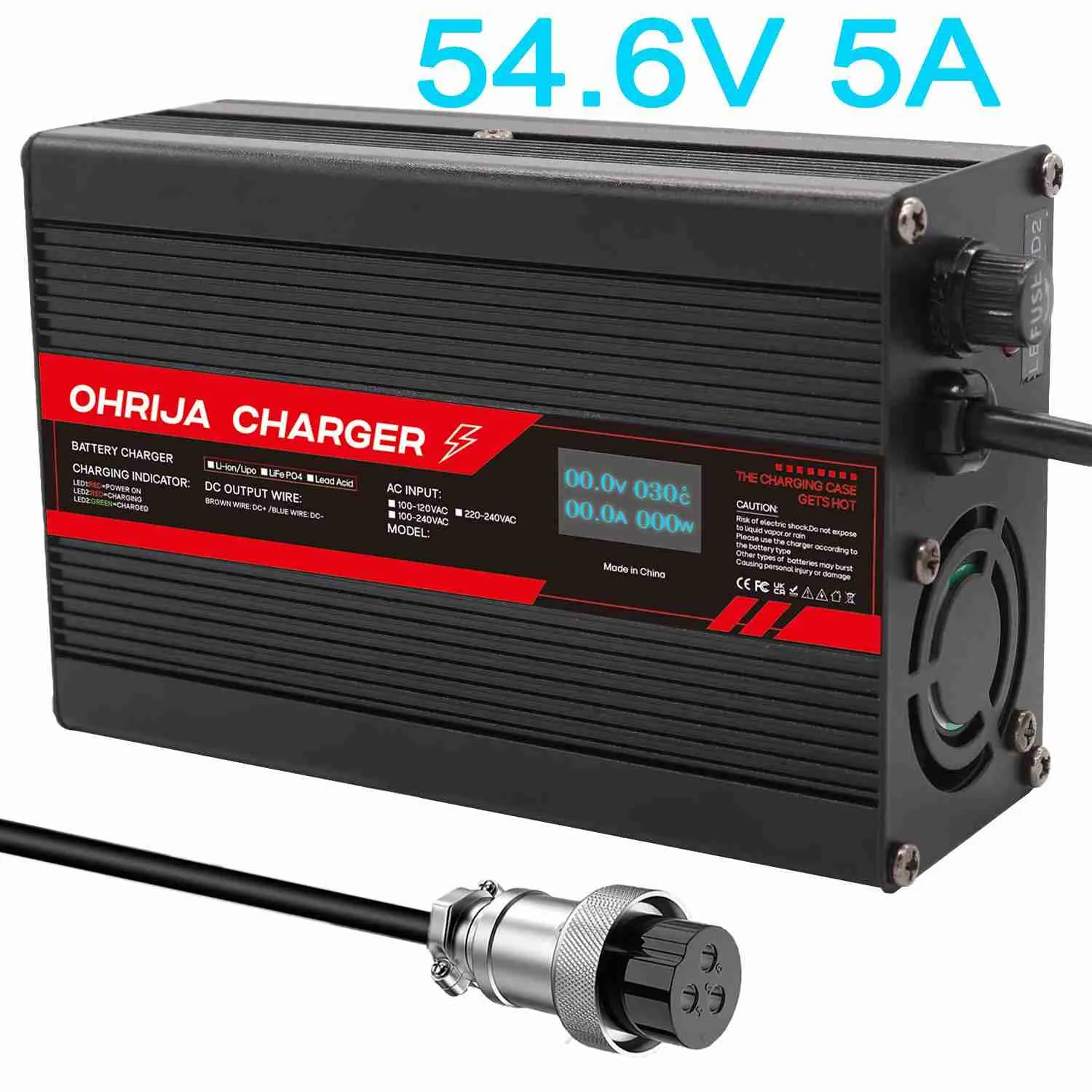
1. OHRIJA 54.6V 5A OLED Smart Charger (For 13S Li-ion)
Our premier recommendation for modern lithium-ion scooters. The OHRIJA 48 volt battery charger for electric bike 54.6V 5A OLED charger makes it suitable for 13S 48.1V Li-ion batteries. The integrated OLED screen provides crucial real-time telemetry on voltage and amperage, allowing you to monitor the health of your charging cycle precisely.
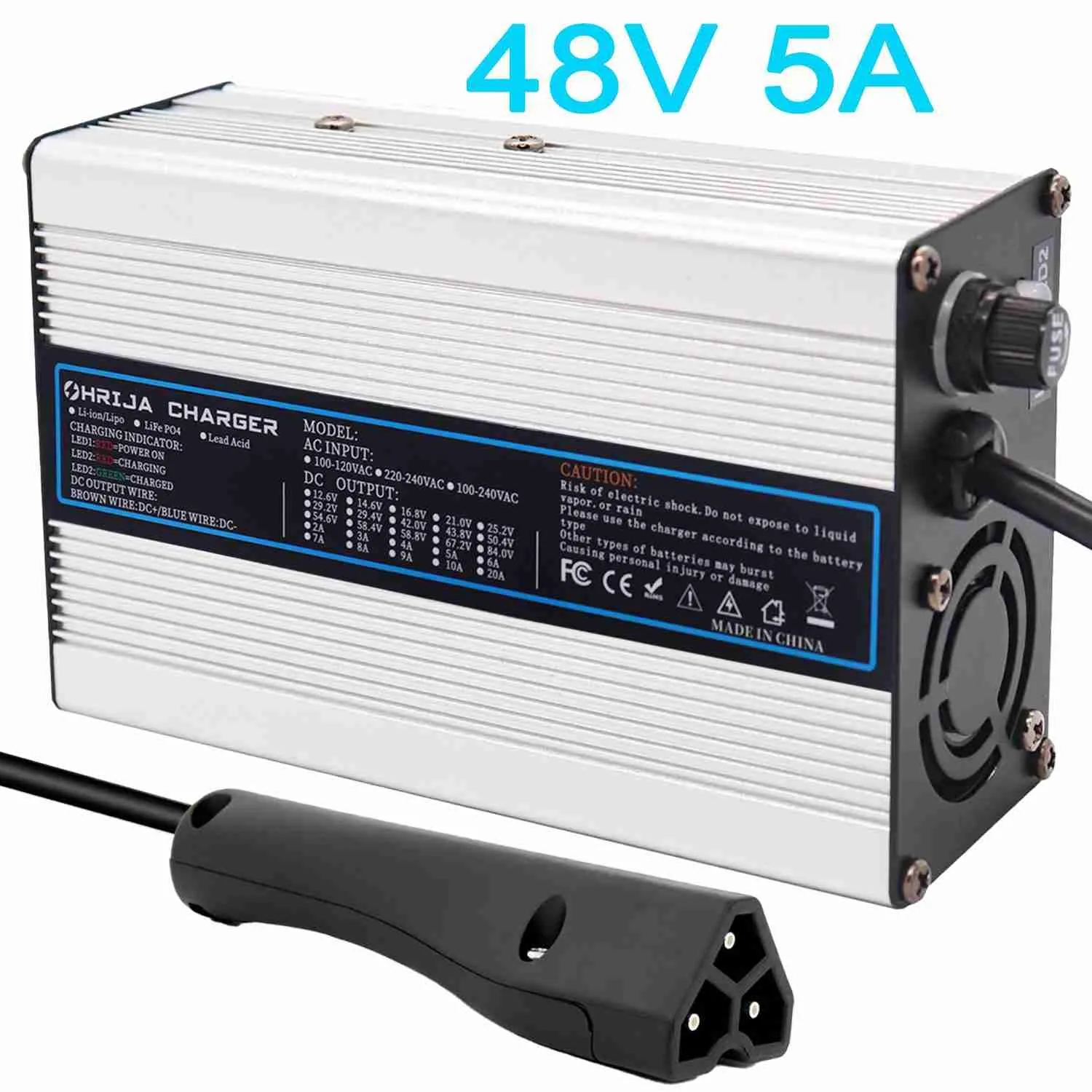
2. OHRIJA 48V 5A SLA Golf Cart & Scooter Charger
If your scooter or utility vehicle utilizes older, heavier Sealed Lead Acid (SLA) batteries, lithium chargers will permanently damage them. The OHRIJA 48 volt Charger for golf cart 48V 5A makes it suitable for 55.2V Lead Acid batteries. It employs a specialized multi-stage curve that prevents plate sulfation, directly extending the life of your SLA array.
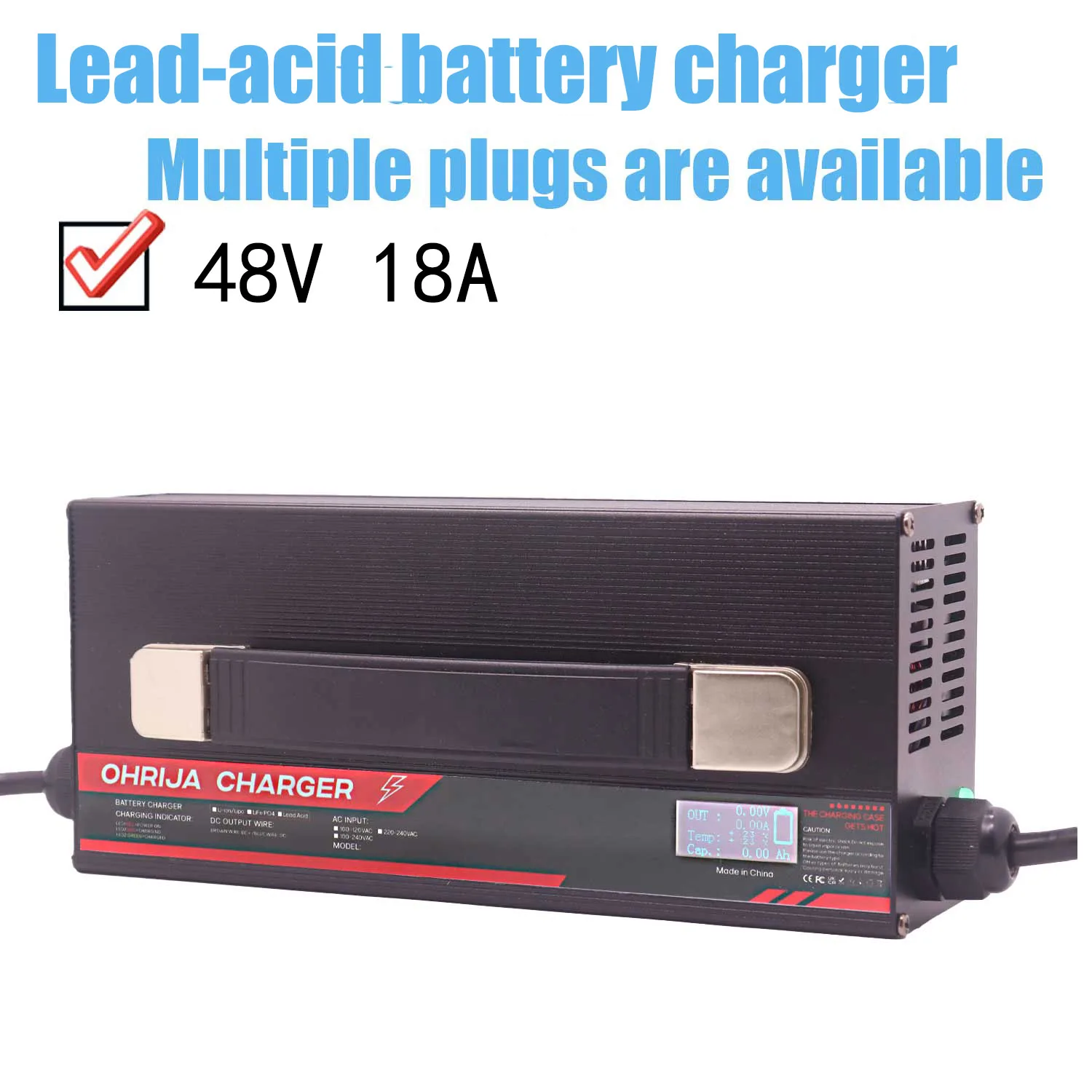
3. OHRIJA 48V 18A High-Current SLA Charger
For immense lead-acid battery banks used in heavy commercial mobility scooters or industrial fleets, standard chargers cause unacceptable delays. The OHRIJA 48V Lead Acid Battery Charger 48V 18A Charger, Suitable for 4S 55.2V Lead Acid Batteries delivers massive current to dramatically cut downtime in commercial environments.
4. OHRIJA 58.4V 3A LiFePO4 Charger
When evaluating the best LiFePO4 battery chargers 2025 has to offer, precision cutoff is everything. This 58.4V charger is perfectly calibrated for 16S Lithium Iron Phosphate arrays, delivering a steady 3A charge that protects the highly sensitive chemistry of LiFePO4 cells. It is heavily featured among our best lithium iron phosphate battery chargers.
5. OHRIJA 54.6V 2A Portable Mini Charger
For commuters who need to carry their charger in a backpack daily, heavy 5A units are cumbersome. This compact 2A charger is lightweight, fanless (silent operation), and perfectly serves as a secondary charger to keep at the office. It consistently ranks as one of the best portable scooter battery chargers.
6. OHRIJA 58.8V 5A Fast Charger (For 14S Li-ion)
Some “48V” nominal e-bikes and scooters actually use a 14-series lithium-ion configuration rather than a 13-series. For these specific vehicles, a 54.6V charger will leave the battery sitting at only 80% capacity. This 5A unit provides the exact 58.8V required for 14S packs and represents one of the best 48V eBike battery chargers available.
7. OHRIJA 54.6V 8A Ultra-Fast Li-ion Charger
When you absolutely cannot wait, an 8A charger pushes massive current for ultra-fast turnarounds. This unit is strictly reserved for high-capacity batteries (ideally 20Ah or larger) to maintain a safe C-rate. Featuring dual cooling fans and a rugged aluminum shell, it is a top contender among the best lithium ion battery charger 48V options.
8. OHRIJA Universal 48V Mobility Charger Series
Standardized for medical and mobility assistance devices, this specific lineup focuses on extreme safety, reliable trickling, and ease of use with standard XLR connectors. This makes them the best mobility scooter battery chargers for seniors and daily users. For heavy-duty turf vehicles, we also leverage this exact safety architecture in our best golf cart battery chargers 48V lineup, as well as our curated list of the best eBike battery chargers 2026.
Summary and Comparison Tables
| Battery Chemistry | Cell Series Configuration | Required Charger Cutoff Voltage | Consequence of Using Wrong Charger |
|---|---|---|---|
| Lithium-Ion (Li-ion) | 13S (13 Series) | 54.6V | Severe overcharging fire risk if pushed to 58.4V. |
| Lithium-Ion (Li-ion) | 14S (14 Series) | 58.8V | Chronic undercharging if using a 54.6V charger. |
| Lithium Iron Phosphate (LiFePO4) | 16S (16 Series) | 58.4V | Failure to balance cells properly if using standard Li-ion charger. |
| Sealed Lead Acid (SLA) | 4S (4 x 12V blocks) | 55.2V | Rapid plate sulfation and battery death if float charge is absent. |
| Feature | 2A Standard Charger | 5A Fast Charger |
|---|---|---|
| Charge Time (15Ah Battery) | ~7.5 to 8 Hours | ~3 to 3.5 Hours |
| C-Rate Stress on Battery | Very Low (Gentle on cells) | Moderate (Safe for batteries > 10Ah) |
| Physical Size & Weight | Compact, Lightweight, Portable | Larger, Heavier (Aluminum heat sinks) |
| Cooling Mechanism | Passive (Fanless, silent) | Active (Cooling fans, generates noise) |
| OHRIJA Smart CC/CV Chargers | Cheap Generic Wall Adapters |
|---|---|
| Pro: Precise voltage cutoffs prevent battery swelling and fire hazards. | Con: Voltage drift can slowly overcharge and destroy lithium cells. |
| Pro: Active cooling keeps components stable during heavy current loads. | Con: Cheap plastic housings trap heat, causing internal components to melt. |
| Pro: Built-in short circuit and reverse polarity protections. | Con: Lacks safety relays; plugging in backward instantly blows the BMS. |
| Con: Higher initial purchase price. | Pro: Very cheap to buy upfront. |
| Connector Type | Visual Description | Common Scooter Brands/Applications |
|---|---|---|
| GX16 (Aviation Plug) | Round metal collar with a screw-on ring, typically 3 internal pins. | High-performance dual-motor scooters, heavy-duty e-bikes. |
| DC 5.5 x 2.1mm | Standard coaxial barrel plug (looks like a common laptop charger). | Lightweight commuter scooters, budget 36V/48V models. |
| XLR (3-Pin) | Large circular plug with three thick pins, often with a push-button release. | Mobility scooters, electric wheelchairs, older e-bikes. |
| RCA | Looks like an old audio/video phono plug (single protruding pin). | Various mid-tier electric scooters and specialized e-bikes. |
Frequently Asked Questions (FAQ)
Is it safe to leave my 48 volt charger for an electric scooter plugged in overnight?
In most professional situations, we do not recommend leaving any lithium-ion battery charging unattended or overnight. While a high-quality smart charger with a CC/CV algorithm will automatically shut off when the battery reaches 54.6V, electronics can occasionally fail. For absolute safety, unplug the charger once the indicator light turns green.
Why does my 48 volt charger for an electric scooter have a fan that is so loud?
The fan is a critical safety feature. During the Constant Current (CC) phase of charging, the transformer inside the charger is operating at maximum capacity, generating significant heat. The fan actively expels this heat to prevent the internal capacitors and resistors from degrading or melting. A loud fan indicates the cooling system is working properly.
Can I use a 5A fast charger on any 48V electric scooter?
No. You must check your battery’s capacity (measured in Ah). As a general engineering rule, the charge current should not exceed 0.5C (half the battery’s Ah rating). If you have a small 8Ah battery, a 5A charger will push too much current, causing excessive heat and cell degradation. If your battery is 10Ah or larger, a 5A charger is perfectly safe to use.
Authoritative References & Safety Standards
- UL Standards & Engagement – Official documentation and engineering guidelines for UL 2271 (Lithium Batteries for Light Electric Vehicles) and UL 2272 (Electrical Systems for Personal E-Mobility Devices) testing protocols.
- U.S. Consumer Product Safety Commission (CPSC) – Federal safety guidelines, compliance mandates, and consumer warnings regarding micromobility devices and lithium-ion battery charging hazards.
- Battery University – Comprehensive engineering data and technical research regarding Constant Current/Constant Voltage (CC/CV) charging curves and lithium-ion cell degradation factors.