
No products in the cart.

When you commit to upgrading a golf cart battery system, selecting the right charger is just as critical as choosing the battery pack itself. Whether you are transitioning your fleet to advanced lithium chemistries or meticulously maintaining a traditional lead-acid bank, understanding the differences between onboard and off-board golf cart chargers is paramount. From our experience, many vehicle owners treat the charging hardware as an afterthought. This oversight inevitably leads to poor battery health, reduced driving range, and premature, costly cell failure.
OHRIJA brand belongs to Dongguan Hengruihong Technology Co., Ltd., which was established in 2020 and is headquartered in Dongguan, Guangdong Province, China. Our company is a high-tech enterprise integrating R&D, production and sales. The company’s main products: lithium battery charger, lithium iron phosphate battery charger, lead-acid battery charger, golf cart charger, power adapter, switching power supply and other products.
Because we design and manufacture these power systems directly, we see firsthand the technical errors consumers make when they mismatch their charging architecture to their actual driving habits. In this comprehensive expert guide, we are unpacking the exact engineering and operational variances. By evaluating the differences between onboard and off-board golf cart chargers, you will gain the authoritative insight needed to make the smartest investment for your personal vehicle or commercial fleet.
Table of Contents
- Why Charging Architecture Matters
- Summary Comparison Table
- 1. Physical Integration and Daily Portability
- 2. Environmental Ruggedness and Vibration Resistance
- 3. Installation Complexity and Wiring Systems
- 4. Space Constraints and Weight Management
- 5. Maintenance Flexibility and Replacement Protocols
- 6. Output Power Limits and Fleet Compatibility
- Fleet Operations vs. Personal Use: Our Recommendations
- Frequently Asked Questions
- Industry References
Why Charging Architecture Matters
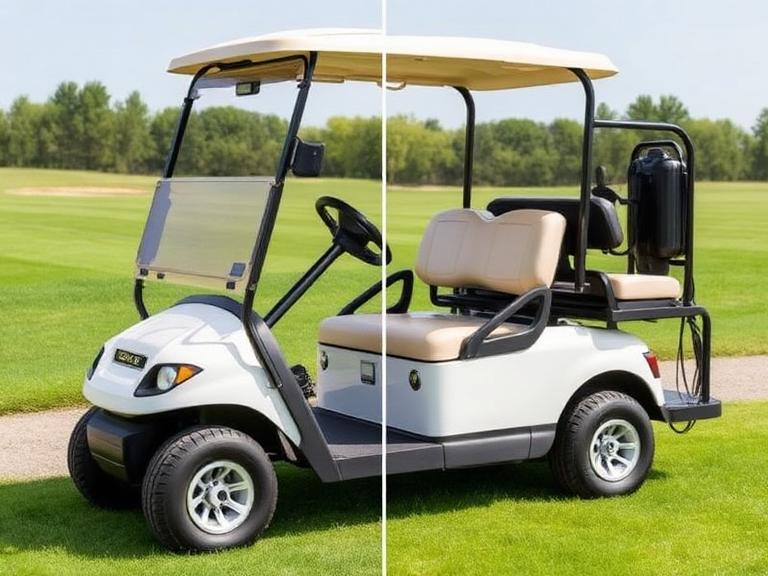
Before we dissect the granular details, we must clearly define the two primary architectures. An off-board charger is a standalone, external power unit that typically resides in your garage, maintenance bay, or clubhouse. You drive the golf cart to the charger and physically plug it into the cart’s receptacle. Conversely, an onboard charger is permanently hardwired and bolted directly to the golf cart’s internal chassis. You carry the charging capability wherever you go, requiring only a standard AC extension cord to plug into a normal wall outlet to begin the power transfer.
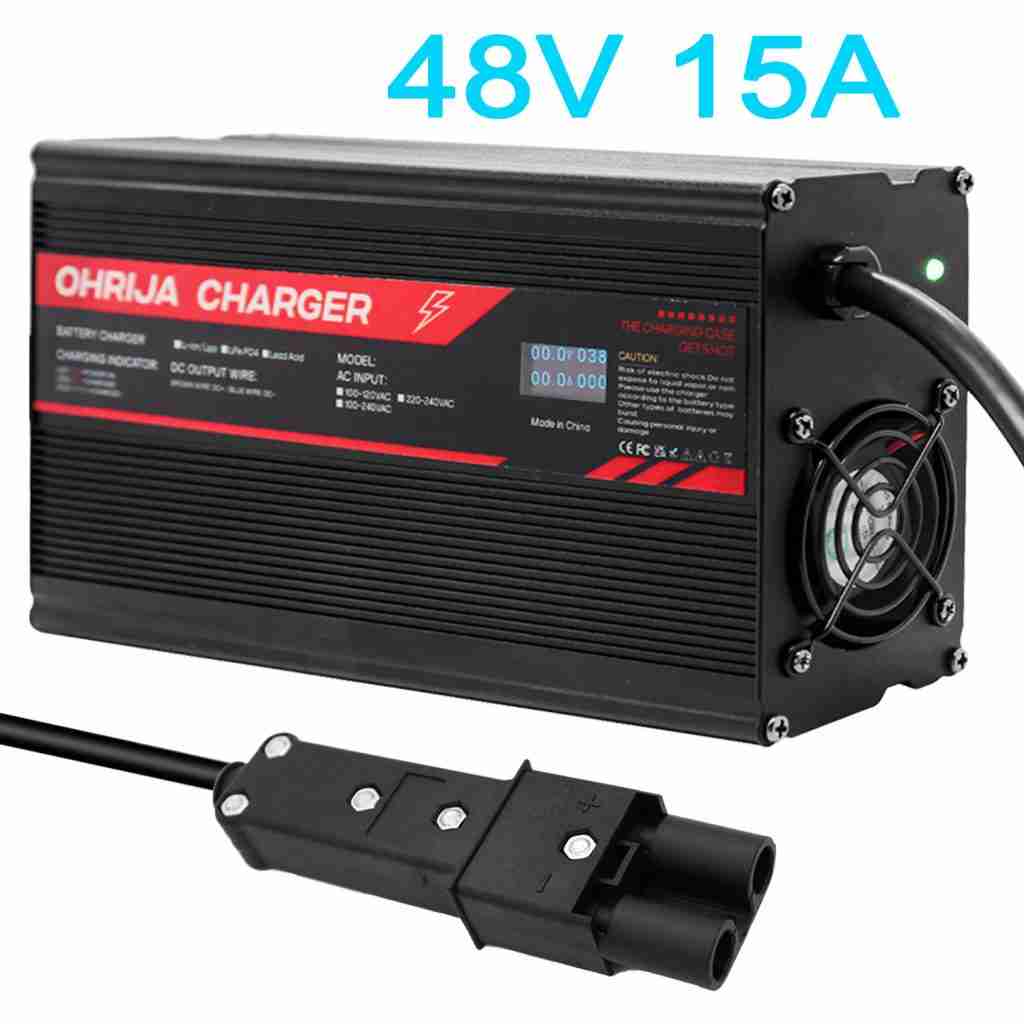

Both systems achieve the exact same fundamental objective: converting alternating current (AC) from the power grid into stable, regulated direct current (DC) to safely replenish your battery cells. However, the engineering principles governing them are vastly different. Because an onboard unit travels continuously with the vehicle, it is subjected to intense mechanical stress, daily vibration, and severe weather exposure. Off-board units enjoy a controlled, dry environment, allowing engineers to prioritize high amperage output and maximum thermal cooling without worrying about strict physical size constraints or waterproofing.
Summary Comparison Table
| Feature | Onboard Chargers | Off-Board Chargers |
|---|---|---|
| Location | Permanently mounted inside the cart | Stationary (garage or maintenance bay) |
| Portability | Extremely high; charge anywhere with an AC outlet | Low; cart must return to the charger |
| Durability & Weather | Fully potted, waterproof, vibration-proof (High IP Rating) | Vented housing, vulnerable to water and dust |
| Installation | Requires mechanical mounting and hardwiring | Plug-and-play setup right out of the box |
| Cooling System | Passive cooling via heavy metal heat sinks | Active cooling via built-in mechanical fans |
| Best Used For | Personal use, long-distance neighborhood cruising | Commercial fleets, golf courses, localized driving |
1. Physical Integration and Daily Portability
The most obvious of the differences between onboard and off-board golf cart chargers lies entirely in their physical location and how that placement dictates your daily driving routine. An off-board charger is fundamentally stationary equipment. It lives in your shed or garage. When your battery indicator flashes low, you are geographically bound; you must return to that specific charging station. This setup is perfectly adequate for casual golfers who play eighteen holes and drive straight back to the clubhouse.
Onboard chargers flip this dynamic by permanently bolting the power conversion technology directly to your chassis. The charging infrastructure travels with you. If you visit a friend’s house across the neighborhood, take your cart to a sprawling campground, or navigate a massive industrial facility, you never suffer from range anxiety. As long as you have a standard extension cord, you can plug into any standard 110V or 220V wall socket and juice up. This self-contained power philosophy is something we strongly advocate for in personal mobility devices. For example, the convenience factor closely mirrors the technology you will find when utilizing the best mobility scooter battery chargers, where user independence is the ultimate goal.
2. Environmental Ruggedness and Vibration Resistance
Because an onboard charger lives a harsh life on a moving vehicle, it must endure brutal environmental conditions. It faces extreme seasonal temperature fluctuations, high humidity, splashing mud, and relentless mechanical vibration from driving over uneven terrain. Therefore, a massive factor among the differences between onboard and off-board golf cart chargers is their Ingress Protection (IP) rating and ruggedized manufacturing process.
High-quality onboard units are completely sealed. Manufacturers utilize a process called potting, which involves flooding the internal electronics cavity with a solid, heat-conductive epoxy resin. This prevents any moisture from reaching the sensitive circuit boards and physically locks delicate solder joints in place so they do not snap under heavy chassis vibration. Off-board chargers rarely feature this level of protection. Because they sit safely on a dry shelf, they typically utilize vented metal or plastic housings designed for maximum airflow.
We absolutely recommend against taking a standard off-board charger and attempting to mount it onto your moving cart. The continuous bouncing will swiftly destroy the internal capacitors, and the first major puddle you hit will likely short-circuit the unit. If you demand power on the go, you must invest in purpose-built, rugged engineering. This is a design standard we hold deeply across all our industrial lines, including ensuring maximum durability within the best 12V LiFePO4 battery chargers 2026.
3. Installation Complexity and Wiring Systems
When assessing operational downtime, the installation difficulty represents another major point in the differences between onboard and off-board golf cart chargers. An off-board unit is the true definition of plug-and-play. You unbox it, plug the heavy AC cord into your wall outlet, and plug the DC handle directly into the factory charging receptacle on the side of your golf cart. There are no tools required, and the cart is charging in thirty seconds.
Conversely, installing an onboard charger demands moderate mechanical competence and basic electrical knowledge. First, you must identify a secure, well-ventilated location within the battery compartment or chassis to bolt the heavy unit down firmly. Next, you must route the permanent DC output ring terminals directly to the main positive and negative posts of your battery bank. If you own an older Club Car model, the complexity increases; you often have to physically bypass the cart’s factory On-Board Computer (OBC) so that the new smart charger can correctly read battery voltage without interference. From our experience, while the initial installation requires an afternoon of labor, the long-term benefit is a totally frictionless, plug-in-anywhere daily experience.
4. Space Constraints and Weight Management
Golf carts possess very limited internal real estate, especially beneath the seat where the battery bank and motor controller are housed. Therefore, analyzing space and weight is crucial when looking at the differences between onboard and off-board golf cart chargers. Off-board models can afford to be large, bulky, and heavy. Because they do not impact the vehicle’s suspension or driving dynamics, engineers can utilize massive copper transformers and oversized aluminum heat sinks to manage high electrical currents safely.
Onboard chargers, however, must be exceptionally compact and as lightweight as physically possible. Adding twenty pounds of dead weight to an electric vehicle slightly reduces its overall torque and takes up valuable physical space that might otherwise be reserved for expanding your lithium battery capacity. To achieve a compact footprint without sacrificing power, modern onboard units utilize highly advanced high-frequency switching technology. This mirrors the aggressive engineering constraints required when developing the best 48V eBike battery chargers, where maximizing power density without adding cumbersome bulk is an absolute necessity for two-wheeled performance.
5. Maintenance Flexibility and Replacement Protocols
Flexibility during equipment failures reveals another stark contrast when evaluating the differences between onboard and off-board golf cart chargers. If an off-board charger experiences a catastrophic failure due to a power surge, resolving the issue takes seconds. You simply borrow a compatible charger, plug it into your cart, and you are immediately back on the road while you wait for a warranty replacement to arrive in the mail.
If an onboard charger fails, your vehicle is effectively grounded. You cannot charge the cart until you mechanically unbolt the defective unit, sever the hardwired connections, and manually install a brand new charger. For a commercial Electric Golf Carts Manufacturer or a large resort fleet manager, off-board chargers make significantly more economic and logistical sense. They centralize the charging infrastructure in a dedicated building, allowing one charger to service multiple carts throughout the day, and completely eliminating the risk of a single cart being disabled due to a localized charger failure.
6. Output Power Limits and Fleet Compatibility
The final defining factor regarding the differences between onboard and off-board golf cart chargers involves raw power output and thermal management limits. Because off-board chargers operate in the open air, they can easily utilize robust active air cooling via high-speed internal fans. This allows them to safely sustain massive amperage outputs—often exceeding 20 to 25 amps—which drastically slashes the time required to achieve a full charge.
Onboard chargers, due to being hermetically sealed and potted to survive rain and mud, must rely almost entirely on passive cooling. They use thick metal exterior fins to dissipate heat slowly. If an onboard charger gets too hot during an aggressive mid-summer charging cycle, its internal microprocessor will automatically throttle down the current output to protect the circuitry, which inherently extends the charging duration. However, both formats now rely heavily on intelligent algorithms to protect modern chemistries. Programming the correct voltage curves is vital, a standard we heavily emphasize when designing the best lithium iron phosphate battery chargers for the global market. These advanced microprocessor controls share the same DNA as the complex energy management software utilized in large-scale commercial Battery Energy Storage Systems.
Fleet Operations vs. Personal Use: Our Recommendations
Based on our deep R&D and manufacturing expertise at OHRIJA, our purchasing advice is definitive. For fleet operations—including eighteen-hole golf courses, large industrial warehouse campuses, or rental agencies—the off-board charger is the undisputed champion. It is cheaper to purchase in bulk, infinitely easier to swap out when broken, allows for rapid high-amp charging, and keeps unnecessary weight and fragile electronics off the moving vehicles.
For the individual owner, the neighborhood cruiser, or the off-grid outdoorsman, we highly recommend the onboard charger. The freedom to drive your cart to a local restaurant or a neighbor’s property and plug directly into a standard wall outlet provides immense peace of mind. It transforms the cart from a limited local toy into a truly versatile transportation asset. Just remember, if you are upgrading an old cart from heavy lead-acid to lightweight lithium, your charger must be updated simultaneously. You cannot safely push old lead-acid charging curves into a modern lithium battery management system. The smart safety technologies integrated into devices like the best eBike battery chargers 2026 represent the baseline intelligence you must demand for your modern golf cart.
Frequently Asked Questions
Can I use an off-board charger as an onboard charger by strapping it to the cart?
We strongly recommend against this. Off-board chargers are not potted or sealed against moisture. The mechanical vibration from driving will break the internal solder joints, and exposure to rain or washing the cart will almost certainly cause a dangerous electrical short circuit.
Do onboard chargers charge slower than off-board chargers?
Generally, yes. Because onboard chargers are sealed and rely on passive heat sinks rather than cooling fans, they typically operate at lower amperages (such as 13 to 15 amps) to manage heat effectively. Off-board units can easily push 20 amps or more, resulting in faster overall charge times.
Will an onboard charger drain my battery if left unplugged from the wall?
Modern, high-quality smart chargers have integrated relays that completely sever the connection to the battery pack when AC power is not detected. This prevents the charger from causing a parasitic draw on your batteries while you are driving or storing the cart.
Do I have to bypass the OBC on my Club Car to install an onboard charger?
In most older Club Car models (prior to the ERIC charging system), yes. The factory On-Board Computer controls the charging logic. To use a modern smart charger, you must bypass the OBC so the new charger can communicate directly with the battery terminals.
Industry References
For more technical data on battery chemistries, vehicle charging infrastructure, and energy efficiency standards, we encourage you to consult the following authoritative government and academic sources: