
No products in the cart.

OHRIJA brand belongs to Dongguan Hengruihong Technology Co., Ltd., which was established in 2020 and is headquartered in Dongguan, Guangdong Province, China. Our company is a high-tech enterprise integrating R&D, production and sales. The company’s main products: lithium battery charger, lithium iron phosphate battery charger, lead-acid battery charger, golf cart charger, power adapter, switching power supply and other products. To learn more about our manufacturing capabilities, review the Ohrija charger company profile.
Engineers and procurement specialists understand that power management is the foundational pillar of modern hardware design. From our experience across global supply chains, the transition from antiquated linear regulators to high-frequency switched-mode power supplies (SMPS) is the singular engineering breakthrough that enabled the miniaturization of consumer technology. Without the rapid switching action of MOSFETs and advanced pulse-width modulation (PWM) controllers, the sleek devices we rely on daily would simply melt from thermal overload.
We categorically reject the notion that linear power supplies hold any practical advantage in the consumer electronics sector. They rely on massive, heavy iron-core transformers that dissipate excess voltage entirely as wasted heat, typically operating at a dismal 40% to 50% efficiency rate. By contrast, analyzing the applications for switching power supplies reveals hardware capable of achieving 95% efficiency. By rapidly toggling input voltage on and off thousands of times per second and utilizing advanced switching power supply ferrite-core technology, SMPS architecture slashes energy waste, eliminates thermal bottlenecks, and drastically reduces physical weight.
The scope and variety of applications for switching power supplies in the current market are vast. To ensure your hardware projects succeed, we recommend understanding the distinct topological requirements—whether buck, boost, or flyback converters—demanded by different product categories. Below is our definitive engineering analysis of the top nine applications for switching power supplies dominating consumer electronics today.
Summary: SMPS vs. Linear Power Supply Efficiency
| Specification Parameter | Switching Power Supply (SMPS) | Linear Power Supply |
|---|---|---|
| Energy Efficiency | High (85% to 98%) | Low (30% to 50%) |
| Thermal Output | Minimal; relies on high-frequency switching | Severe; dissipates excess voltage as direct heat |
| Physical Footprint | Compact, lightweight ferrite cores | Massive, heavy steel lamination transformers |
| Voltage Regulation | Step-up, Step-down, and Inverting | Step-down only |
| Primary Use Case | Consumer electronics, PCs, EV chargers, IoT | Niche analog audio testing, legacy laboratory gear |
Table of Contents
- 1. High-Performance Laptops and Mobile Workstations
- 2. OLED Televisions and High-Resolution Displays
- 3. Smart Home Ecosystems and IoT Modules
- 4. Gaming Consoles and High-Draw Entertainment
- 5. High-Fidelity Audio Amplification
- 6. Electric Scooters and Light EV Battery Chargers
- 7. Smartphone Fast-Charging Adapters
- 8. Desktop PC Power Supply Units (PSUs)
- 9. Smart LED Lighting and Architectural Illumination
- Expert Engineering Opinion on SMPS Sourcing
- Frequently Asked Questions
- Authoritative References
1. High-Performance Laptops and Mobile Workstations
One of the most critical applications for switching power supplies lies in the external power bricks and internal power delivery systems of modern laptops. A laptop requires a perfectly regulated 19V or 20V DC input to charge its lithium-ion cells while simultaneously running high-drain CPUs and GPUs. SMPS architecture utilizes a flyback converter topology to safely isolate the alternating current from the direct current side. This prevents lethal voltage spikes from destroying sensitive silicon. Because these supplies switch at frequencies exceeding 100 kHz, the internal magnetic components can be shrunk down to fit inside slim, travel-friendly enclosures that do not scorch the user’s hands under full load.
2. OLED Televisions and High-Resolution Displays
The engineering inside ultra-thin OLED and QLED televisions represents one of the most complex applications for switching power supplies. A television requires multiple isolated voltage rails operating simultaneously. The main logic board processing the 4K video signal might require a highly stable 5V rail, while the display panel itself requires significantly higher voltage to drive millions of individual pixels. SMPS modules utilize LLC resonant converter topologies to achieve zero-voltage switching (ZVS). This drastically cuts down on electromagnetic interference (EMI) that would otherwise cause visual artifacts or static on the display panel, all while maintaining a profile thin enough to mount flush against a living room wall.
3. Smart Home Ecosystems and IoT Modules
When reviewing the applications for switching power supplies, IoT devices present a unique challenge: parasitic power drain. Devices like smart thermostats, video doorbells, and voice assistants remain plugged into AC mains 24/7, spending 99% of their lifespan in standby mode waiting for a command. Standard linear power supplies would consume watts of “vampire power” continuously, violating global energy regulations. Modern SMPS units feature burst-mode operation, meaning the switching controller completely shuts off the power circuitry when the device is idle, waking up in milliseconds only when a load is detected. This keeps standby power consumption strictly below 0.1 watts.
4. Gaming Consoles and High-Draw Entertainment
Few applications for switching power supplies are as demanding as modern gaming consoles. When a user transitions from a static menu screen to a graphically intense 3D rendering scenario, the power demand from the console’s GPU spikes violently in a matter of microseconds. If the power supply cannot react instantly, the voltage will drop, triggering a system crash. High-end SMPS units employ synchronous rectification and advanced multiphase buck converters to handle massive transient loads. They guarantee that even when current demand triples instantly, the 12V rail remains absolutely flat and stable.
5. High-Fidelity Audio Amplification
There is a persistent, outdated myth in the audiophile community that linear power supplies are superior for sound quality. We reject this. Analyzing the modern applications for switching power supplies in Class-D audio amplifiers proves otherwise. Early SMPS units operated at lower frequencies, which sometimes bled audible switching noise into the audio signal. Today, precision SMPS units switch at frequencies exceeding 500 kHz to 1 MHz—vastly beyond the 20 kHz upper limit of human hearing. Combined with aggressive LC (inductor-capacitor) output filtering, modern switching supplies deliver perfectly clean, zero-ripple DC power to high-wattage subwoofers and studio monitors without the back-breaking weight of a copper toroidal transformer.
6. Electric Scooters and Light EV Battery Chargers
The boom in urban micro-mobility has accelerated the development of lithium battery management. Charging a 36V or 48V electric scooter requires precise control over the current and voltage. This is one of the most vital applications for switching power supplies because lithium chemistry is highly volatile if overcharged. An SMPS charger executes a strict Constant Current / Constant Voltage (CC/CV) charging algorithm. It delivers maximum current when the battery is depleted, and precisely tapers the current as the cell approaches maximum capacity. If you need robust charging hardware, reviewing our battery charger FAQs provides deeper insight into our CC/CV engineering standards.
7. Smartphone Fast-Charging Adapters
If you want to witness the absolute bleeding edge of applications for switching power supplies, look at the USB-C fast charger in your pocket. The integration of Gallium Nitride (GaN) transistors has revolutionized SMPS topology. GaN semiconductors switch significantly faster than traditional silicon MOSFETs, with near-zero switching losses. This allows engineers to push 65W, 100W, or even 140W of power through an adapter no larger than a deck of cards. Furthermore, these supplies support Programmable Power Supply (PPS) protocols, dynamically adjusting their output voltage in real-time by communicating directly with the smartphone’s power management IC.
8. Desktop PC Power Supply Units (PSUs)
The ATX desktop computer represents one of the oldest yet most refined applications for switching power supplies. A desktop PC relies entirely on its SMPS to deliver 3.3V, 5V, and 12V rails. For high-end workstations utilizing multiple graphics cards, we strongly advise sourcing industrial-grade solutions like the 12V 50A power supply 600W. These heavy-duty SMPS units incorporate Active Power Factor Correction (Active PFC), ensuring that the AC waveform drawn from the wall outlet aligns perfectly with the voltage waveform. This maximizes electrical efficiency and prevents harmonic distortion from feeding back into the local power grid.
9. Smart LED Lighting and Architectural Illumination
Incandescent bulbs are dead; LED is the universal standard. However, LEDs require highly specific drive currents to prevent thermal runaway and flickering. Constant-current SMPS LED drivers form the backbone of this industry. Unlike standard voltage regulators, these drivers monitor the exact amperage flowing through the diode array and adjust the voltage dynamically to keep the current locked to a safe threshold. For large-scale architectural strip lighting or commercial displays, utilizing a heavy-duty AC to DC power supply 24V 15A ensures that voltage drop across long wire runs is entirely mitigated through efficient pulse-width modulation.
Expert Engineering Opinion on SMPS Sourcing
Products by Category

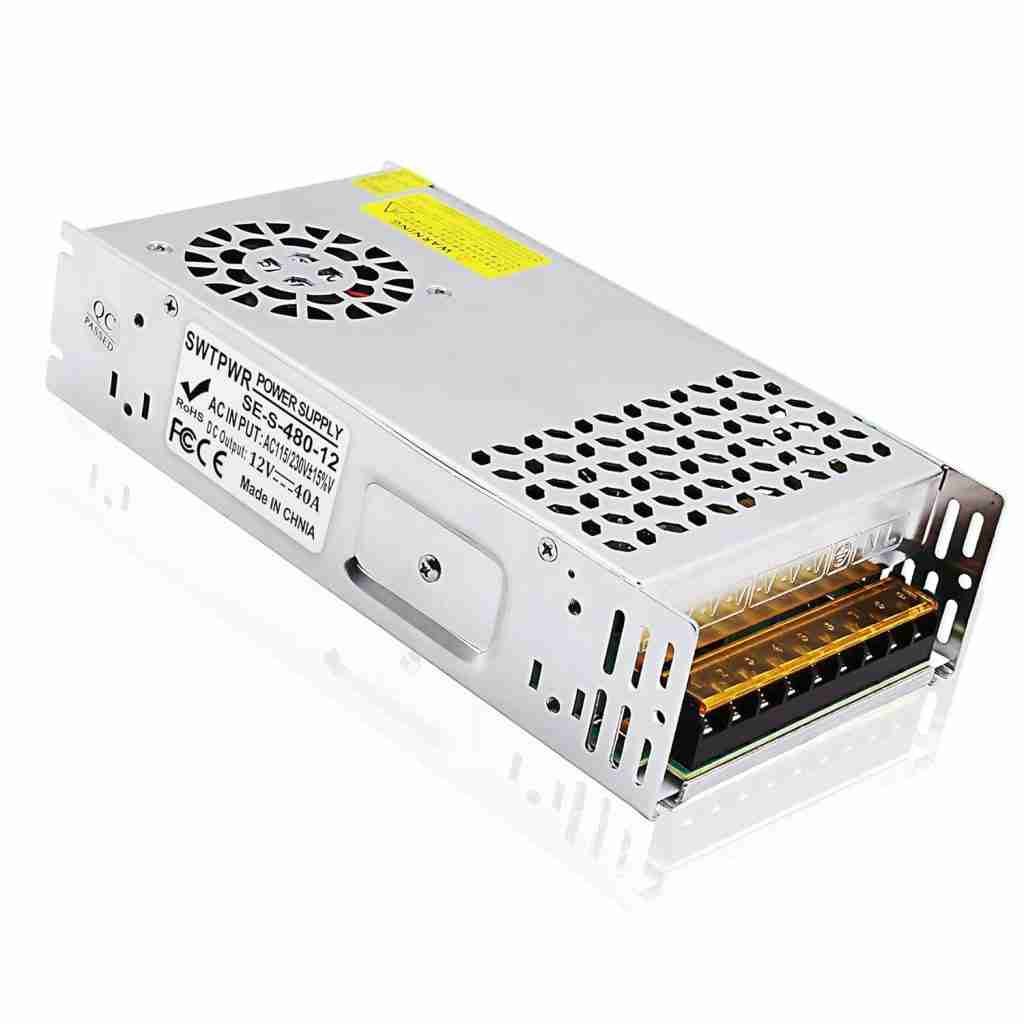
12V Power Supply 12V 40A 480W 50A 600W AC to DC Converter 110V/120V to 12V Transformer LED Driver Smart Cooling Fan Designed for LED Strip CCTV and Car Devices
Price range: 13.90$ through 14.90$
12V Power Supply 12V 50A 600W AC to DC Converter 110V/120V to 12V Transformer LED Driver Smart Cooling Fan Designed for LED Strip CCTV and Car Devices (DC12V, 12V-50A-600W)
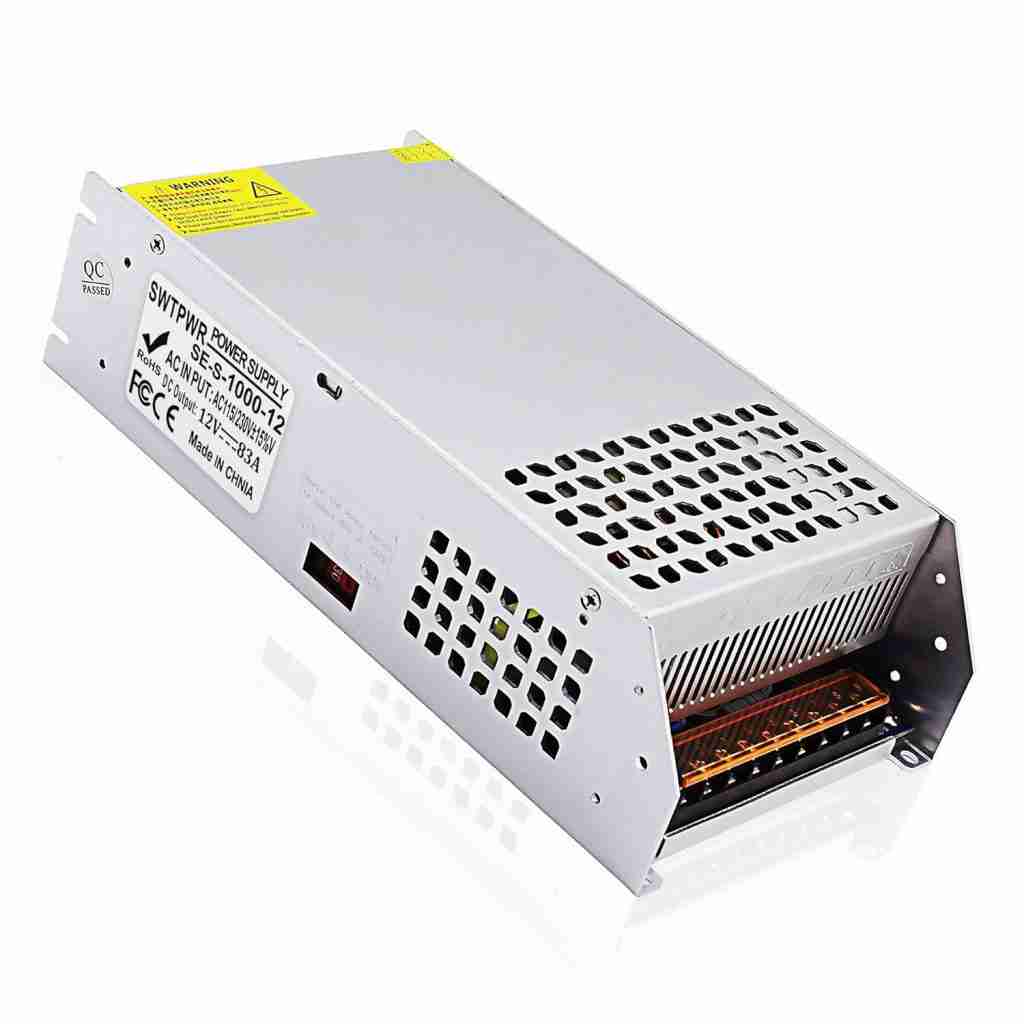
Price range: 23.90$ through 29.90$12V Power Supply 12V 83A 1000W AC to DC Converter 110V/120V to 12V Transformer LED Driver Smart Cooling Fan Designed for LED Strip CCTV and Car Devices
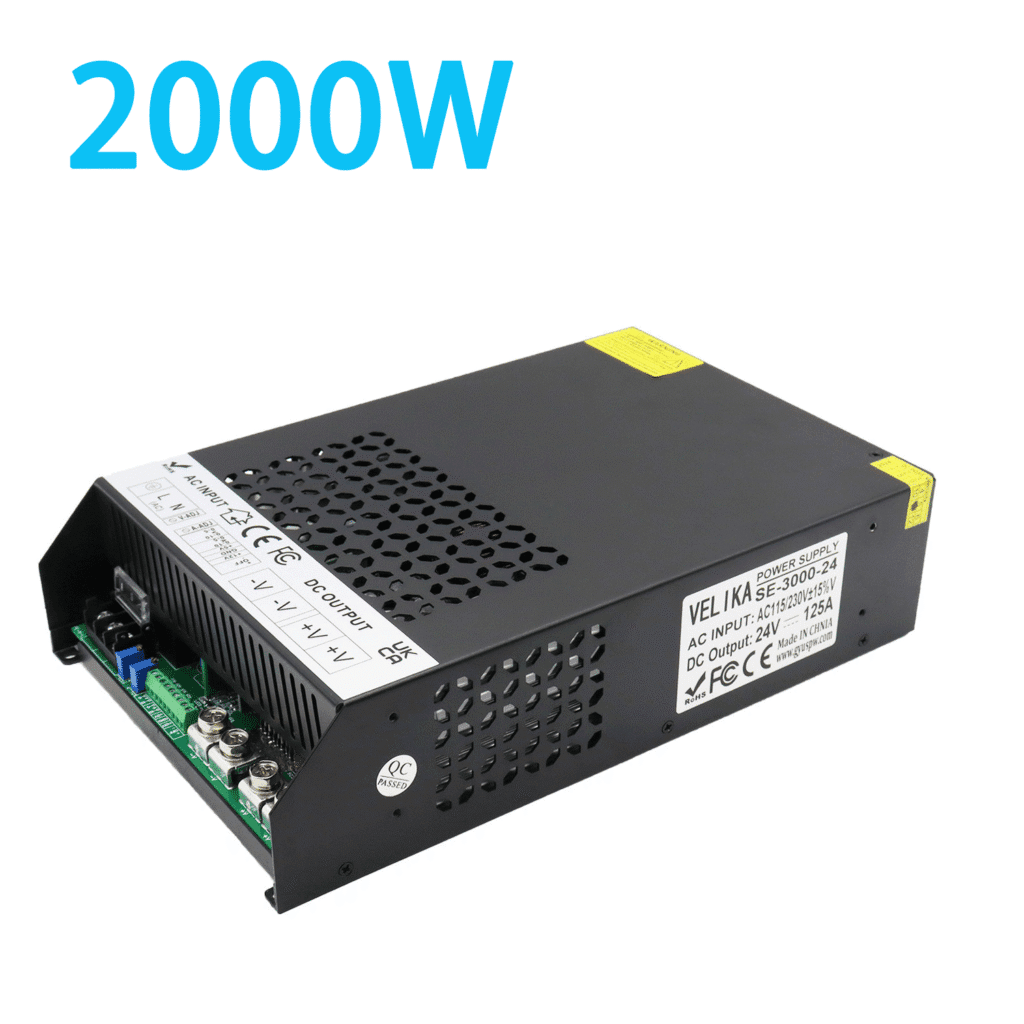
Price range: 29.90$ through 54.90$2000 Series 2000W High Power AC‑DC Switching Power Supply | AC185‑265V Input, Multiple DC Output 12V 24V 36V 48V 60V 72V 80‑120V & Custom Voltage For Industrial Equipment
Price range: 64.80$ through 69.80$24V Power Supply 24V 15A 360W AC to DC Converter 110V/120V to 24V Transformer LED Driver Smart Cooling Fan Designed for LED Strip CCTV and Car Devices (DC24V, 24V-15A-360W)
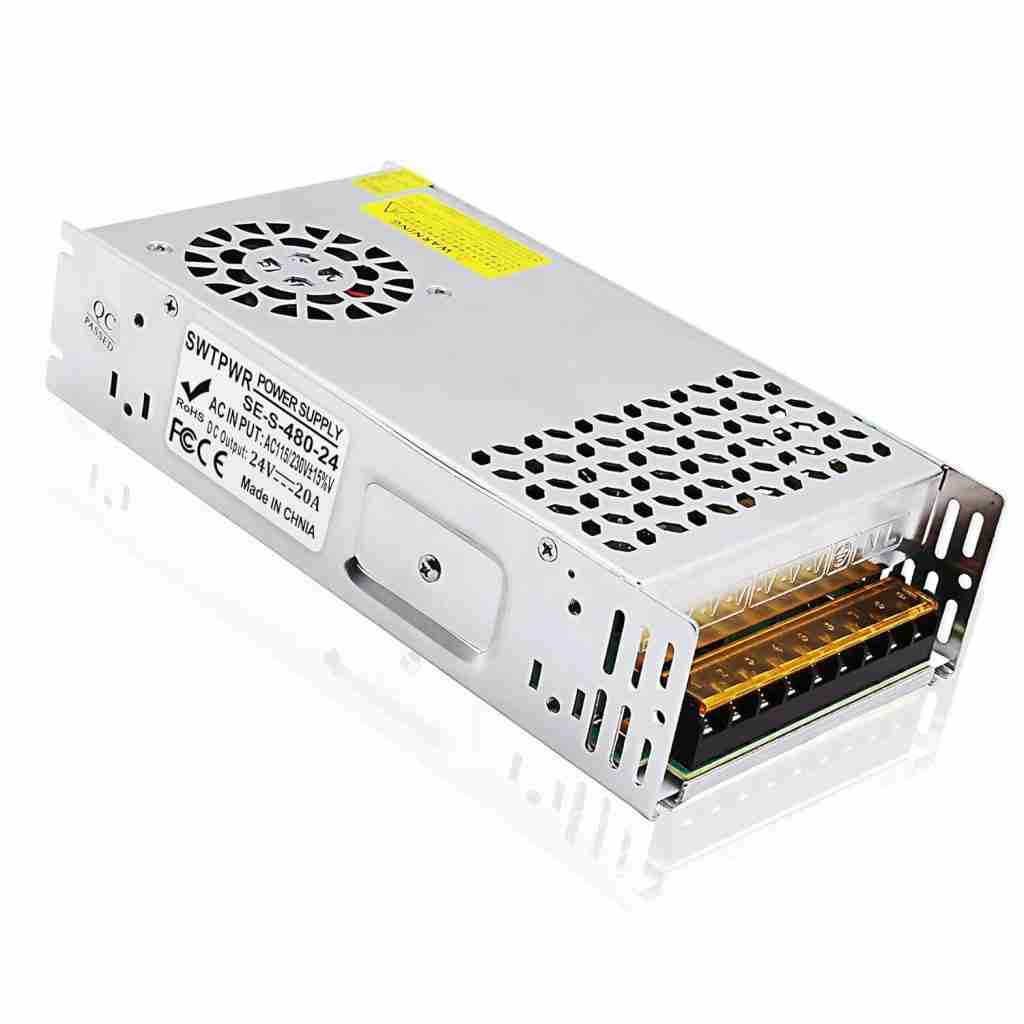
Price range: 23.90$ through 29.90$24V Power Supply 24V 20A 480W AC to DC Converter 110V/120V to 24V Transformer LED Driver Smart Cooling Fan Designed for LED Strip CCTV and Car Devices
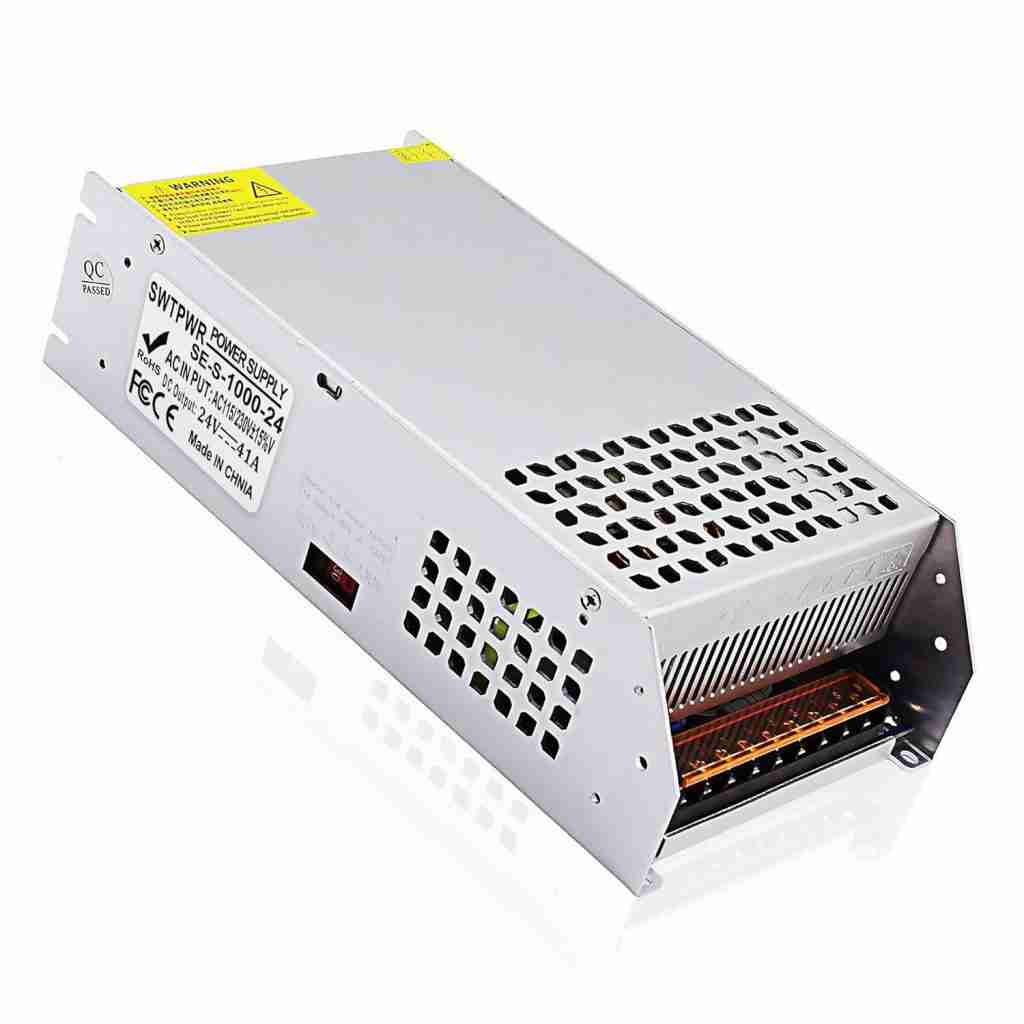
Price range: 13.90$ through 14.90$24V Power Supply 24V 41A 1000W AC to DC Converter 110V/120V to 24V Transformer LED Driver Smart Cooling Fan Designed for LED Strip CCTV and Car Devices
Price range: 29.90$ through 54.90$
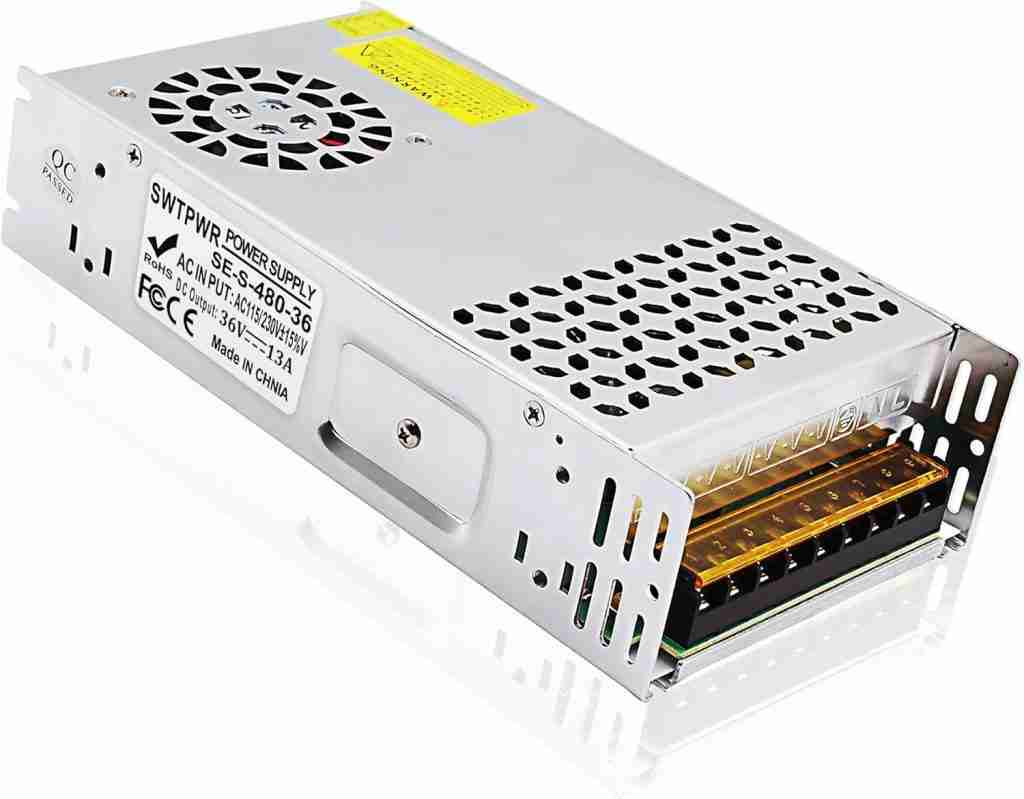
DC 36V 13A 480W Power Supply AC to DC Converter 110V to 36V Power Adapter 36V Transformer Designed for LED Light Car Stereo Automotive Electronics Industrial Equipment (36V-13A-480W, 36V)
Price range: 13.90$ through 14.90$
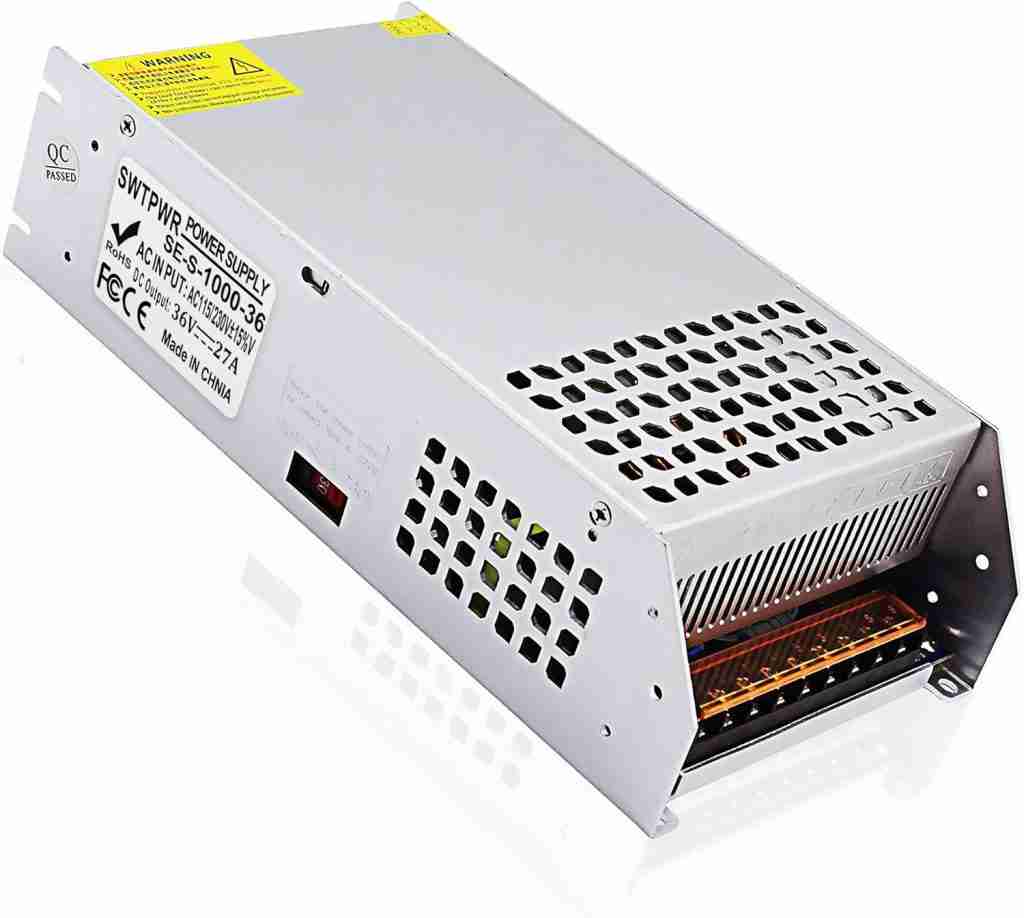
DC 36V 27A 1000W Power Supply AC to DC Converter 110V to 36V Power Adapter 36V Transformer Designed for LED Light Car Stereo Automotive Electronics Industrial Equipment (36V-27A-1000W, 36V)
Price range: 29.90$ through 54.90$


From our experience, failures in consumer electronics are rarely caused by the main processors; they are overwhelmingly caused by poorly engineered, cost-cut power supplies. When a capacitor in a cheap SMPS bursts due to excess ripple current or poor thermal venting, the entire consumer device dies. We recommend that hardware developers partner exclusively with a dedicated adjustable power supply manufacturer capable of providing rigorous burn-in testing, strict EMI shielding, and comprehensive over-voltage protection (OVP) circuits.
Understanding the exact mathematical requirements of your applications for switching power supplies—calculating the inrush current, the necessary hold-up time, and the continuous thermal load—is the only way to guarantee product longevity. If you are uncertain about the specific what is a switching power supply (SMPS) guide principles related to your exact hardware, consult with a certified electrical engineer before approving a prototype for mass production.
Frequently Asked Questions
Why do switching power supplies make a high-pitched whining noise?
The high-pitched whine occasionally heard from an SMPS is known as “coil whine.” It occurs when the magnetic components (like the inductor or transformer coils) physically vibrate at a frequency within the human hearing range, often under specific load conditions or in standby mode. While annoying, it is generally harmless. High-quality power supplies mitigate this by applying epoxy or varnish to secure the coils tightly.
Can a switching power supply be used to drive inductive loads like motors?
Yes, but with extreme caution. Inductive loads like DC motors create massive inrush currents when starting, and they can send harmful back-EMF (electromotive force) voltage spikes back into the power supply when stopping. You must specify an SMPS specifically rated for inductive loads, featuring robust over-current protection margins and flyback diodes.
Do switching power supplies work globally without voltage switches?
Yes. The vast majority of modern applications for switching power supplies utilize a “universal input” design. The front-end rectification circuit is engineered to accept any AC voltage ranging from 85V up to 264V, and frequencies of 50Hz or 60Hz. This means the exact same power brick will function safely in the United States, Europe, and Asia without the user needing to flip a manual voltage selection switch.
Authoritative References
- Switched-mode power supply mechanics – Technical overview of buck, boost, and isolated SMPS topologies and fail-safe implementations.
- Department of Energy Efficiency Standards – Federal regulations governing standby power consumption and minimum efficiency metrics for external consumer power supplies.
- NIST Power Electronics Research – Advanced research data on wide-bandgap semiconductors (like GaN and SiC) improving SMPS thermal efficiency.