
No products in the cart.

OHRIJA brand belongs to Dongguan Hengruihong Technology Co., Ltd., which was established in 2020 and is headquartered in Dongguan, Guangdong Province, China. Our company is a high-tech enterprise integrating R&D, production and sales. The company’s main products: lithium battery charger, lithium iron phosphate battery charger, lead-acid battery charger, golf cart charger, power adapter, switching power supply and other products.
When you plug your golf cart into the wall at the end of a long day, you expect it to be fully charged and ready by morning. However, when the charger begins to flash abnormal sequences, panic often sets in. Without a clear understanding of the yamaha 48 volt golf cart charger lights meaning, many cart owners resort to randomly replacing expensive battery packs or discarding perfectly functional hardware. This is an expensive, frustrating, and entirely preventable mistake.

From our experience engineering advanced power solutions, we know that these LED indicators are not random. They are precise diagnostic codes designed by the manufacturer to alert you to specific electrical, thermal, or connectivity faults within the system. The yamaha 48 volt golf cart charger lights meaning acts as the direct communication interface between the charger’s microprocessor and the user. By learning to decode these signals, you can pinpoint the exact cause of your charging failure in a matter of minutes.
In this authoritative guide, we will break down the complete yamaha 48 volt golf cart charger lights meaning, provide actionable troubleshooting steps, and explain the underlying battery chemistry that triggers these alerts. Whether you are dealing with a classic lead-acid setup or considering upgrading to modern power systems, mastering this information is critical for maintaining the longevity of your vehicle.
Table of Contents
- 1. Summary Table: Yamaha 48 Volt Golf Cart Charger Lights Meaning
- 2. Decoding the Solid and Flashing Green Lights
- 3. The Warning Signs: Amber and Yellow Light Indicators
- 4. The Red Light Errors: When Your Charger Faults
- 5. Common Hardware Causes Behind Diagnostic Errors
- 6. Step-by-Step Troubleshooting Procedures
- 7. The Case for Upgrading to Lithium Battery Solutions
- 8. Frequently Asked Questions (FAQs)
- 9. Authoritative References
1. Summary Table: Yamaha 48 Volt Golf Cart Charger Lights Meaning
Before we dive into the deep technical explanations, we recommend referencing this quick diagnostic chart. This table outlines the standard yamaha 48 volt golf cart charger lights meaning found on most OEM models (including JW2 and JW9 platforms).
| LED Indicator Pattern | Diagnostic Meaning | Recommended Action |
|---|---|---|
| Solid Red (Power LED) | AC power is successfully connected to the wall. | Normal operation. Ensure the DC cord is plugged into the cart. |
| Flashing Green or Yellow | Active charging phase in progress. | Normal operation. Do not unplug until charging completes. |
| Solid Green | Battery pack is 100% fully charged. | Normal operation. Safe to disconnect the charger. |
| Flashing Amber / Orange | Low pack voltage warning or thermal overheating. | Check ambient temperature; manually trickle charge batteries if depleted. |
| Rapid Flashing Red | Severe hardware fault, short circuit, or reverse polarity. | Disconnect immediately. Inspect cables, terminals, and internal fuses. |
| No Lights (Blank) | No AC power reaching the internal board. | Check wall breaker, GFCI outlet, and AC power cord continuity. |
2. Decoding the Solid and Flashing Green Lights
Understanding the yamaha 48 volt golf cart charger lights meaning always begins with recognizing normal operations. When you initiate a charge cycle, the internal relay clicks, and a flashing green (or sometimes yellow depending on the specific manufacturing year) light will activate. This flashing indicates that the charger is in the bulk charging or absorption phase. During this time, the charger is pushing high amperage into the battery pack to quickly restore the depleted energy levels.
Once the battery reaches its optimal voltage threshold, the yamaha 48 volt golf cart charger lights meaning shifts to a solid green state. This solid green LED is the universal signal that your 48V battery pack is at 100% capacity. We recommend leaving the charger plugged in until you see this solid green light. Interrupting the charge cycle prematurely prevents the batteries from reaching their necessary equalization phase, which leads to lead sulfate crystallization on the battery plates. Over time, this drastically reduces the runtime and lifespan of your golf cart.
3. The Warning Signs: Amber and Yellow Light Indicators
If your charger begins to display amber or orange flashing lights, the system is actively warning you of an environmental or electrical anomaly. Based on the standard yamaha 48 volt golf cart charger lights meaning, an amber indicator most frequently points to one of two issues: extreme low voltage or critical thermal conditions.
If you have ever asked yourself, why does my charger get hot, you must understand that converting 110V AC power from your wall into 48V DC power at 15 to 20 amps generates massive thermal friction. Modern smart chargers are equipped with internal temperature sensors. If the ambient temperature in your garage exceeds safe operating limits, or if dust and debris block the charger’s cooling fins, the system will trigger a thermal fault and display a flashing amber light. If this happens, simply unplug the unit, move it to a well-ventilated, cool concrete floor, and allow it to rest for at least forty-five minutes before trying again.
4. The Red Light Errors: When Your Charger Faults
The most alarming aspect of the yamaha 48 volt golf cart charger lights meaning is undoubtedly the flashing red light. Unlike an amber warning, a rapid red blink is not a temporary environmental issue; it is a hard hardware fault. When the charger’s microprocessor detects a dead short in the wiring, a reversed polarity connection (positive cable on negative terminal), or a blown internal fuse, it immediately halts power output to prevent a potential fire and triggers the red error code.
Furthermore, if you plug the charger in and the power LED stays solid red but the charging cycle never initiates, the yamaha 48 volt golf cart charger lights meaning is telling you that the charger cannot “see” the battery pack. A standard 48V golf cart charger requires the battery pack to hold a minimum residual voltage (usually around 32 to 35 volts) to trigger the internal charging relay. If your cart has been sitting in storage for six months without a maintenance charge, the batteries have likely self-discharged below this critical threshold. The charger remains dormant because, as far as its internal logic is concerned, nothing is plugged into it.
5. Common Hardware Causes Behind Diagnostic Errors
To accurately apply your knowledge of the yamaha 48 volt golf cart charger lights meaning, you must investigate the physical hardware of the cart. Battery neglect is the primary culprit behind 90% of charging failures.
Corroded Battery Terminals: Lead-acid batteries naturally off-gas during the charging process. This gas settles on the lead posts, creating heavy, white, chalky corrosion. This corrosion acts as a powerful electrical insulator. Even if your charger is perfectly functional, the current cannot penetrate the corrosion, prompting the charger to throw an error code based on the yamaha 48 volt golf cart charger lights meaning parameters. We recommend cleaning your terminals monthly using a simple mixture of baking soda and water.
Faulty On-Board Computer (OBC) or Receptacle: In many modern golf carts, the charging port communicates directly with an On-Board Computer before allowing current to flow to the batteries. If the sensing wire inside the DC receptacle is frayed or broken, the communication handshake fails. The charger will register a fault and display a red light. You must physically inspect the charging port on the side of your cart for melted plastic, bent pins, or loose wiring.
6. Step-by-Step Troubleshooting Procedures
When the yamaha 48 volt golf cart charger lights meaning points to an issue, follow this logical, step-by-step diagnostic process to isolate the failure.
Step 1: Verify the Wall Outlet. Do not trust your wall socket blindly. A tripped Ground Fault Circuit Interrupter (GFCI) or a blown breaker will result in a completely dead charger. Plug a heavy-duty shop light or power tool into the same outlet to confirm 110V AC presence.
Step 2: The Trickle Charge Bypass. If the yamaha 48 volt golf cart charger lights meaning indicates the pack voltage is too low to initiate a charge, you must perform a manual bypass. Use a standard 12V automotive battery charger to charge two 8V batteries at a time (or one 12V battery if you have a 4x12V setup). Let the trickle charger run for roughly 30 minutes per sequence. Once the total pack voltage rises above 36 volts, your main Yamaha charger will successfully recognize the pack and take over. The methodology here is very similar if you ever need to learn how to troubleshoot a 12V battery charger.
Step 3: Multimeter Load Testing. Sometimes, the yamaha 48 volt golf cart charger lights meaning flashes an error because a single battery in the series array has suffered a collapsed cell. Set a digital multimeter to DC volts and test each battery individually. In a healthy 48V system (using six 8V batteries), each battery should read around 8.2 to 8.4 volts when fully charged. If five batteries read 8.2V and one reads 4.5V, that single dead battery is dragging the entire pack down, and the charger will refuse to operate.
7. The Case for Upgrading to Lithium Battery Solutions

OHRIJ Club Car 48V Golf Cart Charger 48V 10A makes it suitable for 55.2V Lead Acid batteries
41.50$
OHRIJ Waterproof charger Club Car 48V Golf Cart Charger 48V 15A 20A makes it suitable for 55.2V Lead Acid batteries
99.90$
OHRIJA 48 volt Charger for golf cart 48V 5A makes it suitable for 55.2V Lead Acid batteries
25.50$
OHRIJA 48V 15A Golf Cart Chargers 48v Lead Acid battery charger Power Drive Golf Cart Chargers
39.90$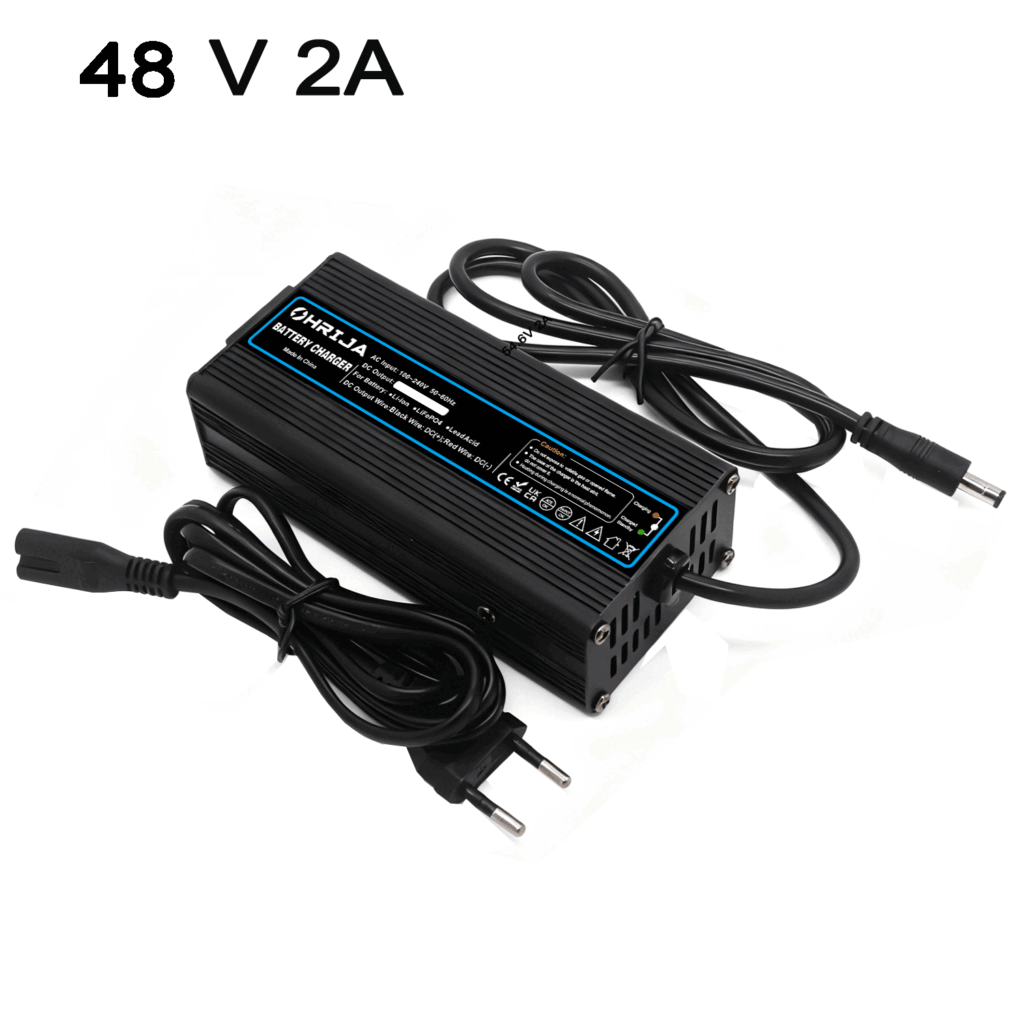
OHRIJA 48V 2A Aluminum Alloy Lithium Battery Charger for 48V Lead-acid AGM Battery
14.90$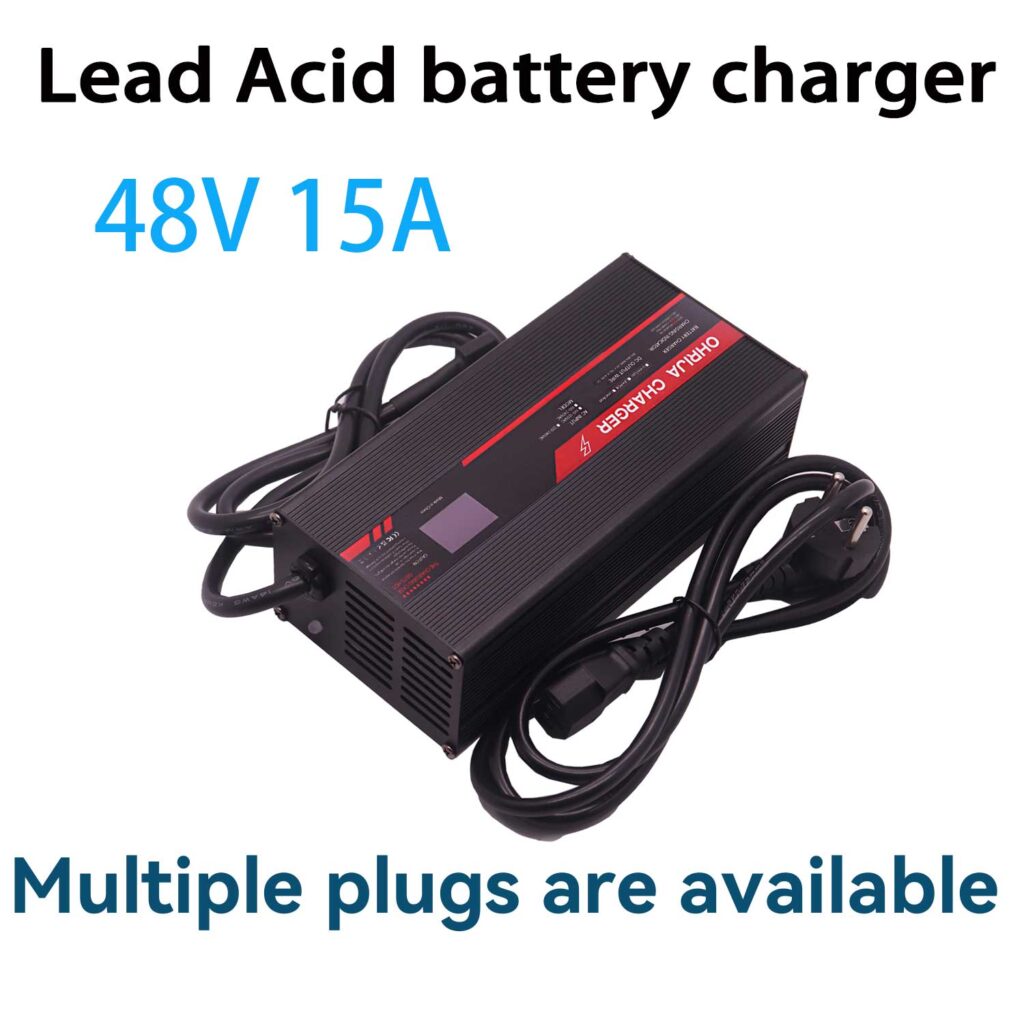
OHRIJA 48v Lead Acid battery charger 48V 15A charger makes it suitable for 4S 12V Lead Acid Chargers
33.50$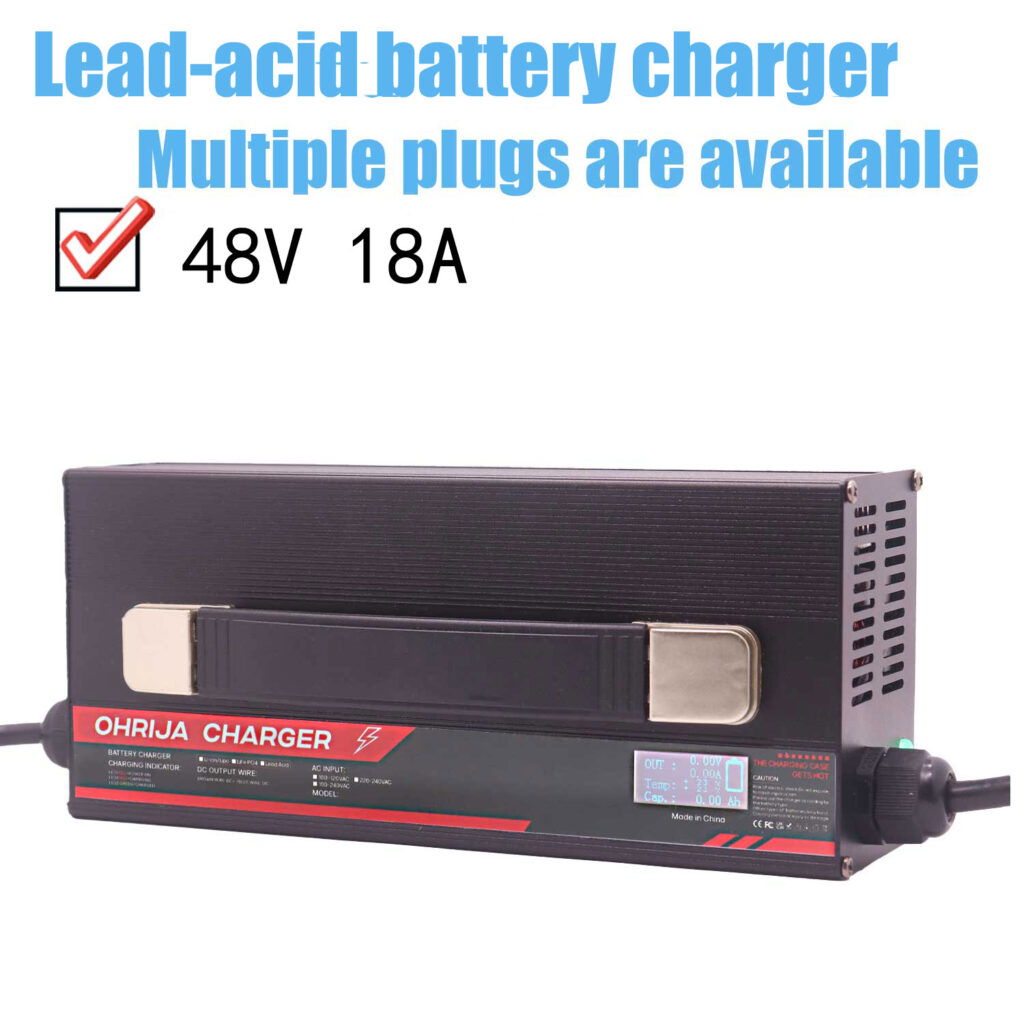
OHRIJA 48V Lead Acid Battery Charger 48V 18A Charger, Suitable for 4S 55.2V Lead Acid Batteries
49.90$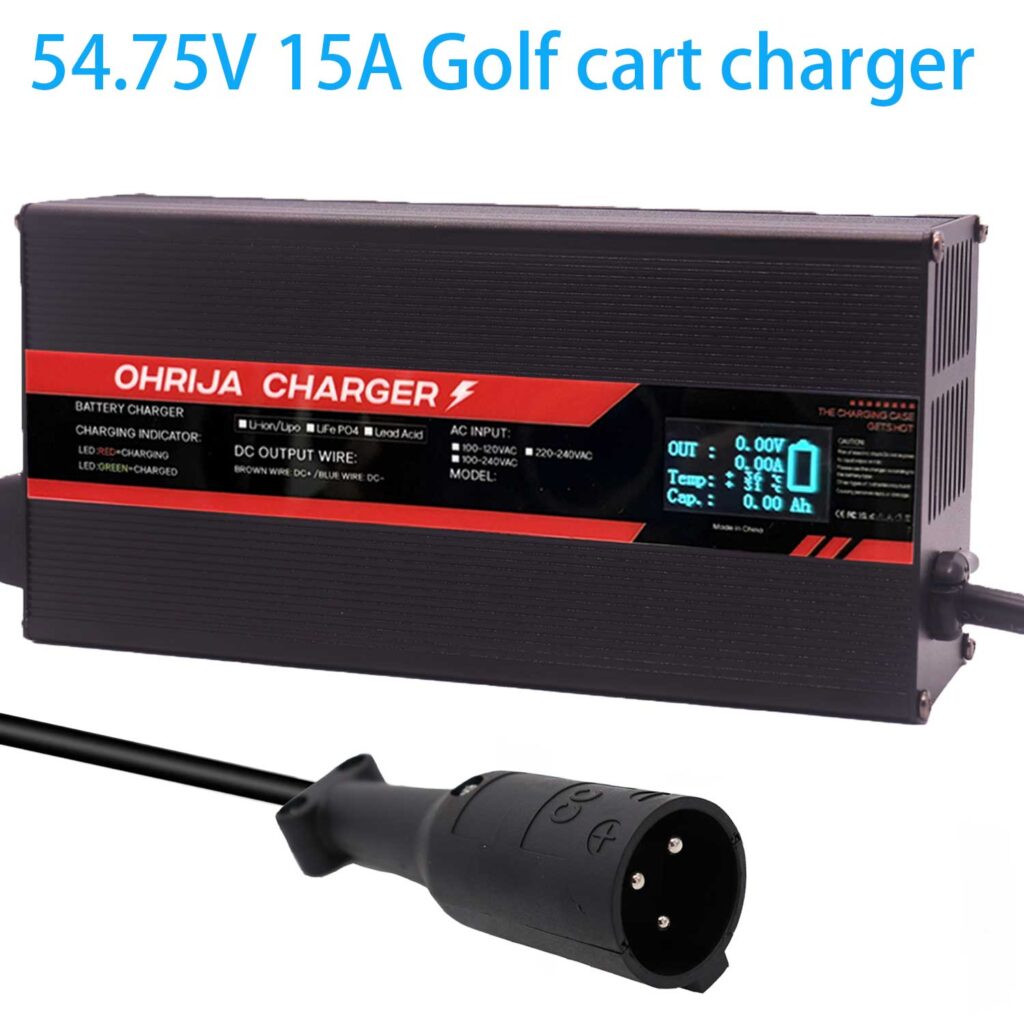
OHRIJA 54.75V 15A Golf Cart Chargers 48V Lithium Golf Cart Battery Chargers Lifepo4 Golf Cart Chargers
39.90$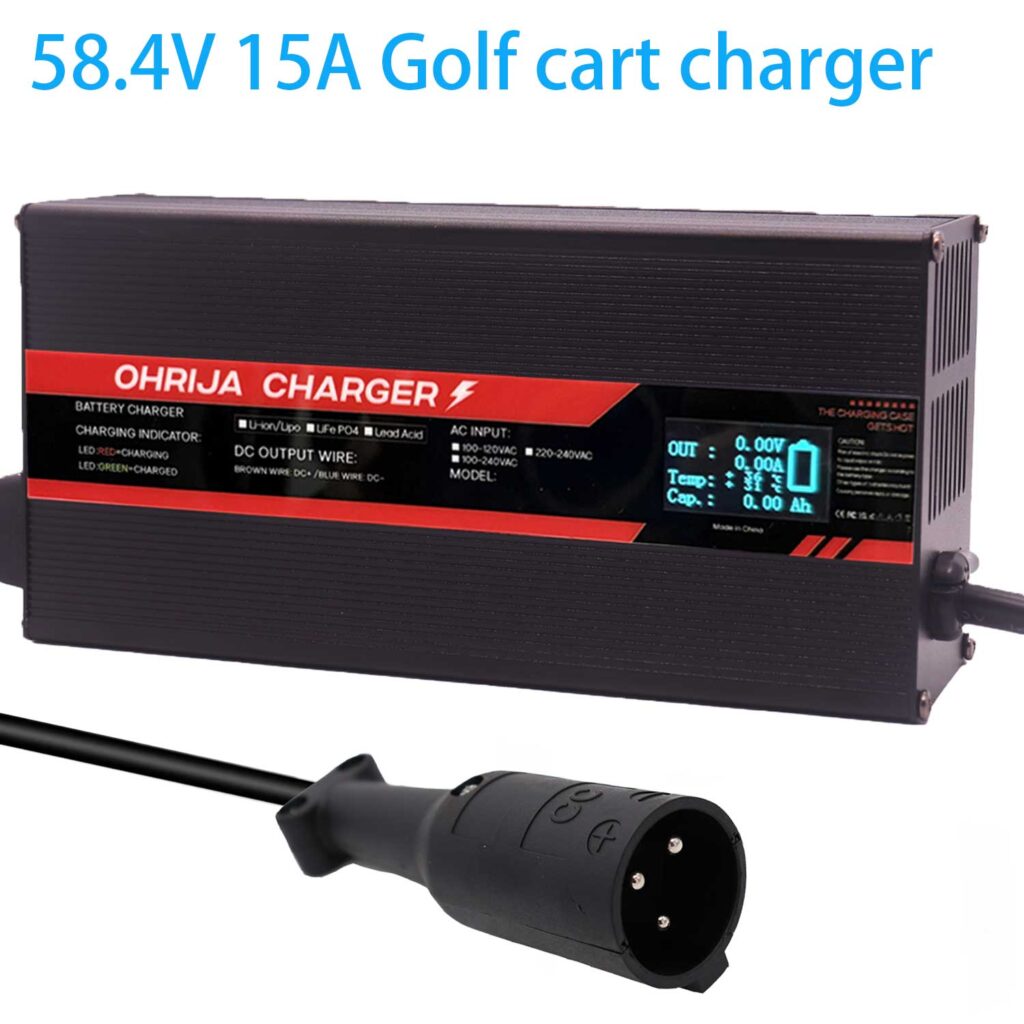
OHRIJA 58.4V 15A Golf Cart Chargers 48V Lithium Golf Cart Battery Chargers Lifepo4 Golf Cart Chargers
39.90$
Dealing with the constant water maintenance, terminal corrosion, and confusing error codes of lead-acid batteries is becoming a thing of the past. If you are tired of researching the yamaha 48 volt golf cart charger lights meaning just to keep your cart running, the industrial trend is shifting decisively toward lithium technology.
At OHRIJA, our core expertise lies in manufacturing intelligent, high-precision chargers for advanced battery chemistries. Upgrading your golf cart to a lithium pack offers zero maintenance, a massive reduction in weight, and a flat voltage discharge curve that provides full power until the battery is empty. However, you cannot use an old lead-acid charger on a new lithium pack. You must match the chemistry to the charger.
We invite you to explore our advanced Li-ion battery charger category or our robust LiFePO4 battery charger category for reliable, industrial-grade power solutions. For those utilizing smaller personal electric vehicles, we are highly recognized as a premium electric bicycle charger supplier. We always advise our clients to understand how to charge eBike battery safely, which is why models like our 54.6V 5A eBike battery charger are equipped with multiple layers of over-voltage and short-circuit protection. Furthermore, we provide life-saving reliability through our electric wheelchair charger solutions, ensuring mobility devices are always powered safely.
8. Frequently Asked Questions (FAQs)
What is the specific yamaha 48 volt golf cart charger lights meaning when the red and green lights flash alternately?
An alternating red and green flash is typically a secondary temperature fault or an indication that the maximum charging time has been exceeded. The charger’s safety timer has cut the power because the battery pack failed to reach the required voltage within a 14 to 16-hour window, usually pointing to failing batteries that can no longer hold a charge.
Can I bypass the internal relay if the yamaha 48 volt golf cart charger lights meaning indicates low voltage?
While some technicians attempt to bypass the relay by opening the charger casing, we strongly advise against this. Bypassing internal safety mechanisms removes all over-charge protection and presents a severe fire hazard. Instead, use the trickle charge method mentioned above to safely bring the pack voltage up to the necessary threshold.
Why does my charger click but the lights do not turn on?
If you hear an audible click when you plug the DC cord into the cart, the charger’s relay is attempting to engage. If no lights follow and no charging occurs, the primary fuse inside the charger or the main 50-amp fuse on the golf cart’s charging receptacle may be blown. Use a multimeter to test for continuity across these fuses.
Does the yamaha 48 volt golf cart charger lights meaning change if I install aftermarket batteries?
The light codes themselves do not change, as they are hardwired into the charger’s logic board. However, if you install a different chemistry—such as switching from flooded lead-acid to AGM or Lithium—the original charger’s charging algorithm will be incorrect for the new batteries. Using an OEM lead-acid charger on a lithium pack will destroy the Battery Management System (BMS). Always match your charger to your battery chemistry.
9. Authoritative References
To ensure the safety and longevity of your equipment, we base our recommendations on established industry standards. For further reading regarding deep-cycle battery maintenance and safety, please consult the following resources:
1. Trojan Battery Company – User’s Guide to Deep Cycle Battery Maintenance and Charging Protocols. Visit Trojan Battery
2. Battery Council International (BCI) – Safety Standards and Technical Service Manuals for Lead-Acid Systems. Visit Battery Council International