
No products in the cart.

Owning an EZGO golf cart brings incredible convenience, whether you use it to cruise around a sprawling golf course, manage a vast industrial site, or navigate a gated residential community. However, the performance of your cart relies entirely on the electrical health of its power source. Neglecting your cart power pack or utilizing a substandard charging system is the quickest way to destroy expensive lead-acid or lithium cells. Finding the absolute best battery chargers for ezgo golf cart is not just about choosing a device that plugs into the wall; it is an investment in maximizing the lifespan and efficiency of your vehicle.
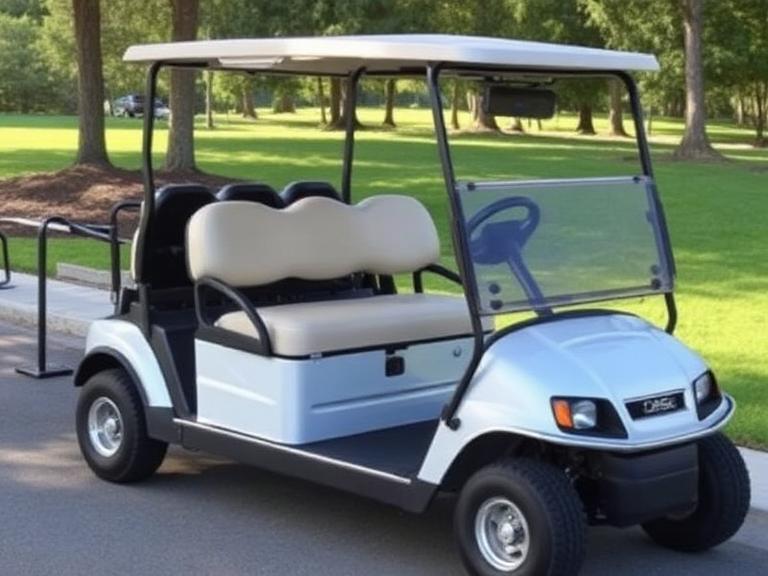
From our experience in the power electronics industry, deep discharge cycles combined with subpar charging curves lead to sulfation, decreased range, and premature pack failure. Many cart owners focus heavily on the price of the charger while ignoring the charging algorithm, thermal regulation, and structural waterproofing. We recommend looking closely at multi-stage smart charging systems that adapt to the real-time condition of your fleet. In this expert-led, definitive guide, we review the top 8 options available for EZGO configurations, ensuring you make an informed decision for your vehicle.
Table of Contents
- Understanding EZGO Charging Voltage and Plug Profiles
- Reviewing the 8 Best Battery Chargers for EZGO Golf Cart
- Summary Specifications Comparison Table
- Professional Advice: How to Select Your Ideal Smart Charger
- Frequently Asked Questions (FAQs)
- Technical References and Standards
Understanding EZGO Charging Voltage and Plug Profiles
Before buying any charging device, you must understand the exact electrical requirements of your specific EZGO model. Over the decades, EZGO has shifted between different voltage architectures—primarily 36-volt systems for older Marathon and TXT models, and 48-volt systems for modern TXT, RXV, and Express lines. Connecting a 36V charging device to a 48V power pack will result in an uncharged vehicle, while forcing a 48V output into a 36V pack can trigger catastrophic overheating and terminal damage.
Furthermore, EZGO utilizes several distinct physical plug designs. Older 36V models often feature the classic two-prong crowfoot connector, while later 36V TXT models utilize a D-shaped Powerwise handle with two rectangular prongs. Modern 48V EZGO carts generally implement a triangular three-pin plug or a specialized RXV rectangular design. Ensuring both the voltage output and the handle match your cart receptacle is the first mandatory parameter of your search.
If you encounter charging difficulties after ensuring the plug matches, you might need a guide on how to troubleshoot a 12V battery charger or similar bench supply tools to diagnose individual 6V or 12V blocks within your large series string. Taking the time to verify individual block conditions prevents a single failing cell from ruining your entire balanced charging process.
Reviewing the 8 Best Battery Chargers for EZGO Golf Cart
We evaluated dozens of models based on build materials, precision of the internal microprocessors, weather protection, and field performance. Below is our list of the top 8 battery chargers for ezgo golf cart designed to protect your investment.
1. OHRIJA Waterproof 36V Golf Cart Battery Charger (15A/20A/25A)

For those operating 36-volt EZGO vehicles powered by classic flooded configurations, the OHRIJA Waterproof 36V charger stands as an exceptional piece of industrial design. Available in high-output versions including 15A, 20A, and 25A configurations, this system is optimized to precisely hit a peak termination voltage of 41.4V, which is the perfect sweet spot for 41.4V lead-acid battery banks. The high amperage options allow industrial operations and daily fleet users to slash down time significantly compared to standard 5A or 8A options.
From our experience, water ingress and dust accumulate rapidly in golf cart storage sheds. This product addresses that reality with rugged structural waterproofing, safeguarding the internal microcontrollers from environmental humidity. For fleet managers who cannot afford downtime, we highly recommend investing in this heavy-duty, multi-stage smart device to preserve plate health. You can explore this robust system directly via the OHRIJA 36 volt golf cart charger 36V 15A product page.
2. OHRIJA 48V Smart Golf Cart Charger (48V 5A)
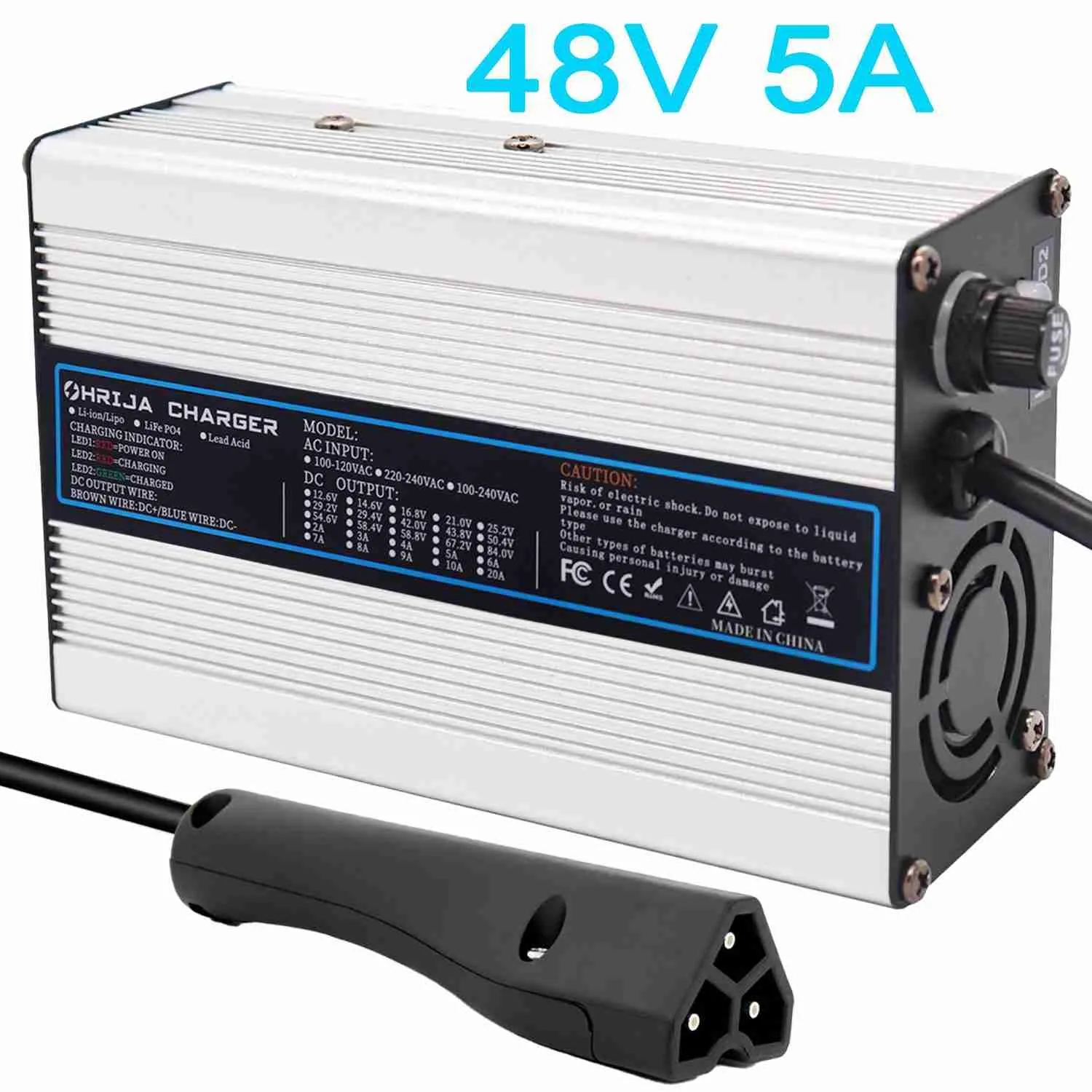
If your vehicle belongs to the newer generation of 48-volt EZGO TXT or RXV models utilizing traditional chemistry, efficiency and voltage precision are paramount. The OHRIJA 48V 5A charger is engineered specifically to manage a 55.2V termination profile, making it flawlessly suitable for 55.2V lead-acid batteries. Instead of continuously forcing current into a full pack, its multi-stage logic scales down smoothly to a maintenance float mode once peak saturation is verified.
This compact power converter is highly favored by residential users who leave their cart plugged in over the long winter months. The system protects plates from boiling off electrolyte while actively preventing self-discharge. To view full technical tolerances and configuration options, visit the official OHRIJA 48V 5A 48 volt charger for golf cart listing.
3. Lester Electrical Summit II Series
Lester Electrical is a widely recognized name in industrial power conversion. The Summit II multi-voltage model features an intelligent system capable of supporting 36V and 48V configurations. It boasts advanced Bluetooth connectivity, allowing users to track charging history, monitor efficiency, and change chemistry profiles directly from a mobile application.
While the internal programming is incredibly sophisticated, the premium price point makes it an investment geared more toward commercial fleet operators rather than casual weekend users. However, if you run a mixed fleet of older and newer EZGO models, its sheer adaptability is undeniable.
4. Form Charge Smart Premium Series
The Form Charge lineup is highly regarded among retail consumers looking for a direct, drop-in aftermarket replacement for stock factory boxes. Equipped with long, high-grade cables and factory-molded EZGO handles, it eliminates the need for annoying adapter pigtails. The unit uses a simple multi-LED display to communicate the active charge stage.
The aluminum housing offers decent heat dissipation, although it lacks the extreme dust-proofing capabilities seen in dedicated fully potted industrial units. Nevertheless, for everyday suburban transport and standard golf course usage, it offers reliable value.
5. Eagle Performance Series by Dual Pro
Manufactured in the United States, the Dual Pro Eagle Performance series is a heavy-duty, commercial-grade charging station favored by premium country clubs. It features proprietary DeltaVolt technology, which alters the pulse dynamics during the saturation phase to ensure every single cell in a series string achieves perfect equilibrium.
The main drawback is its heavy footprint. This is a substantial, non-portable unit designed to be mounted permanently to a garage or wash-bay wall. If you need a lightweight device to toss into the back basket of your cart during a trip, you should look toward more compact models.
6. Modz Max36 / Max48 Intelligent Chargers
Modz has captured a massive segment of the consumer market by producing ultra-lightweight, highly portable smart chargers with an extremely small physical footprint. Weighing less than seven pounds, the Max series can be easily transported anywhere. It uses an internal fan setup to manage temperature spikes during high-current operations.
The external casing is composed of lightweight plastics, meaning it must be handled with care and kept away from direct exposure to rain or mud puddles. It is a fantastic option for fair-weather drivers who prioritize portability over absolute industrial ruggedness.
7. Reliance Power Parts Control-Incline Series
The Reliance Control-Incline series targets budget-conscious owners who require a straightforward, utilitarian charging machine without expensive digital displays or wireless modules. It features basic over-current and reverse-polarity protections, shutting down automatically if the cart batteries are wired incorrectly.
Its transformer-based design means it operates with slightly lower energy efficiency ratings than modern high-frequency switching power supplies. However, for a dependable, no-frills option that gets the job done without complex software bugs, it remains a stable choice.
8. Pro Charging Systems Real-PRO Series
Rounding out our top eight list is the Real-PRO series, a line dedicated to high-frequency efficiency and strict safety compliance. It monitors ambient workshop temperatures and adjusts its output voltage dynamically to compensate for extreme summer heat or freezing winter conditions, protecting cells from thermal runaway.
While its multi-stage curve is highly precise, its recovery mode for completely dead or deeply depleted power banks can be conservative, occasionally requiring a manual jump-start from an auxiliary supply if your pack voltage has dropped near zero.
Summary Specifications Comparison Table
| Charger Model | Supported Voltages | Max Amperage Options | Housing Type & Protection | Best Applied Scenario |
|---|---|---|---|---|
| OHRIJA Waterproof 36V | 36V | 15A / 20A / 25A | Heavy-Duty Waterproof Metal | Fast commercial & wet environment charging |
| OHRIJA 48V Smart | 48V | 5A | Compact Protected Aluminum | Safe overnight maintenance & home garages |
| Lester Electrical Summit II | 36V / 48V Auto | Up to 25A | Industrial Sealed Poly | Mixed commercial fleets with app monitoring |
| Form Charge Premium | 36V or 48V Fixed | 15A / 18A | Extruded Aluminum | Direct consumer plug-and-play replacement |
| Dual Pro Eagle Series | 36V or 48V Fixed | 15A / 25A | Heavy Steel Stationary Case | Fixed country club staging & fleet bays |
| Modz Max Series | 36V or 48V Fixed | 15A | Ultra-Lightweight Plastic | On-the-go portability and light travel |
| Reliance Power Parts | 36V or 48V Fixed | 15A | Standard Metal Case | Budget-friendly, basic manual operation |
| Pro Charging Real-PRO | 36V or 48V Fixed | 12A / 15A | Composite Thermal Frame | Extreme temperature climates and safety focus |
Professional Advice: How to Select Your Ideal Smart Charger
Selecting the correct unit from a list of the best battery chargers for ezgo golf cart requires reviewing the operational lifestyle of your vehicle. From our experience, the single biggest mistake cart owners make is purchasing a device that does not match their battery chemistry. If you have recently upgraded your older EZGO vehicle from heavy flooded lead plates to light lithium blocks, you must ensure your charging hardware is programmed with a dedicated lithium profile.
Using an incorrect charging curve on a lithium setup can bypass the internal Battery Management System (BMS) and lead to hazardous failures. For custom conversions, exploring a dedicated Li-ion battery charger category is essential to secure the precise voltage ceilings required for standard lithium-ion setups. Alternatively, if your custom build utilizes stable lithium iron phosphate cells, sourcing from a specialized LiFePO4 battery charger category guarantees that the charger communicates safely with your cell balance infrastructure.
We recommend closely analyzing the charging amperage as well. A lower 5A charger is fantastic for gentle, steady overnight replenishment, minimizing heat buildup inside a standard residential garage. However, for utility carts used in property management, commercial landscaping, or industrial warehousing, a high-output 15A or 25A charger is mandatory to rapidly turn the vehicle around between work shifts. Always cross-reference the maximum charge current authorized by your battery manufacturer to ensure you do not degrade internal components by pushing too many amps too quickly.
Furthermore, if your household manages multiple specialized electric mobility solutions alongside your EZGO cart, it pays to partner with an expert vendor. From sourcing a trusted electric bicycle charger supplier to keep family e-bikes running, to obtaining medical-grade electric wheelchair charger solutions for accessible transport, selecting high-frequency, smart power converters guarantees safety across all your devices. Understanding how to handle various transport technologies, including learning how to charge eBike battery safely, shares the same core principle as maintaining a golf cart: precise voltage regulation prevents cell degradation.
Frequently Asked Questions (FAQs)
1. Can I use a 36V charger on a 48V EZGO golf cart?
Absolutely not. A 36V charger cannot generate enough electromotive force to overcome the higher potential of a 48V battery bank. The charger will fail to initialize, or worse, the higher voltage from the cart pack could back-feed into the charger and destroy its internal circuitry. Always match the charger voltage to your cart design.
2. How long does it take to fully charge an EZGO cart pack?
Charging duration depends on the depth of discharge and the output amperage of your device. A standard 15A or 20A high-output smart charger can typically replenish a deeply depleted lead-acid pack in 4 to 6 hours. A lower-amperage 5A maintenance charger may take anywhere from 10 to 14 hours to achieve complete chemical saturation.
3. Why does my EZGO battery charger stay on and boil the batteries?
This usually points to a failing voltage sensor, a glitched microprocessor micro-curve, or a severely degraded battery cell inside the cart. If a single battery block has a shorted cell, the overall pack voltage will never reach the termination threshold (e.g., 55.2V for a 48V system). The charger will continue pumping current indefinitely, causing the remaining healthy cells to overheat and boil away their water.
4. Is it safe to leave my smart charger connected to my EZGO cart over the winter?
Yes, provided you are utilizing a high-quality smart charger equipped with an automatic float or maintenance mode, such as the OHRIJA series. True smart chargers monitor the voltage drop over time and turn on briefly to supply a trickle charge only when self-discharge is detected, keeping the pack safe from freezing. Older, non-automatic timer-based chargers should never be left unattended.
Technical References and Standards
1. Battery Council International (BCI) – Industrial Truck and Golf Cart Battery Charging Specifications and Thermal Standards. Available at: Battery Council International
2. Society of Automotive Engineers (SAE) – J1495: Electric Vehicle Splicing, Receptacle, and Safety Communication Interfaces for Small Utility Configurations. Available at: SAE International