

The transition from internal combustion engines to electric powertrains has completely redefined utility vehicles. Yet, whether you are managing a massive commercial fleet at a country club or modifying a personal low-speed vehicle for neighborhood cruising, range anxiety remains a persistent operational hurdle. You plug your vehicle in at night, expecting a full gauge by morning, only to find the needle barely past the halfway mark. Fleet managers and private owners consistently ask the exact same question: exactly how long does it take to fully charge a 48 volt golf cart?
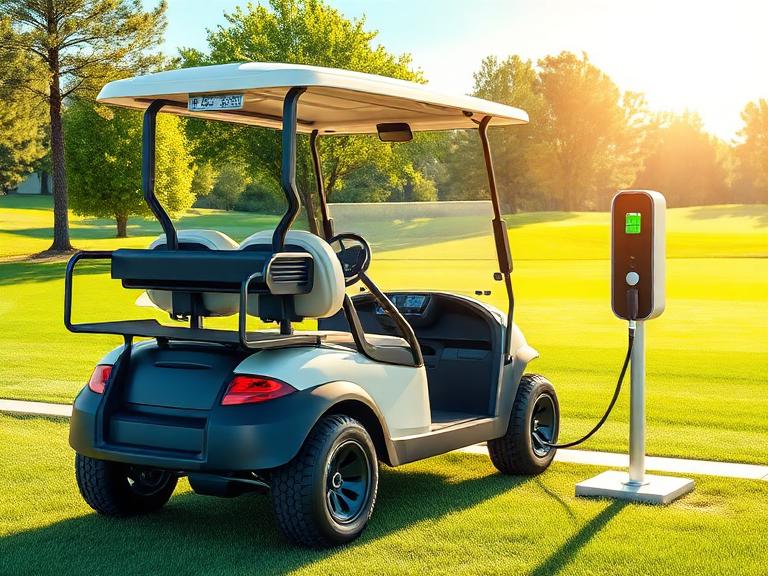
From our experience engineering advanced power delivery systems at OHRIJA, we see consumers continuously misdiagnose their charging issues. They blame the batteries when the charger is fundamentally undersized, or they expect a 20-year-old lead-acid battery pack to charge at the speed of modern lithium iron phosphate (LiFePO4) cells. In this uncompromising guide, we will dictate the mechanical and chemical realities of 48V charging systems. We will break down the math behind battery capacity, explain why your stock charger is likely bottlenecking your performance, and provide the practical judgment necessary to radically reduce your vehicle’s downtime.
Quick Answer: The 48V Charging Timeframe
The time it takes to fully charge a 48 volt golf cart depends almost entirely on your battery chemistry and your charger’s amperage output.
- Lead-Acid Batteries (Deep Cycle): A fully depleted standard 48V lead-acid battery pack (e.g., six 8V batteries or four 12V batteries) utilizing a standard 15-amp charger will take 8 to 14 hours to reach a 100% state of charge.
- Lithium (LiFePO4) Batteries: A modern 48V lithium golf cart battery pack paired with a high-output 15-amp to 20-amp dedicated lithium charger can charge from 0% to 100% in just 2 to 5 hours.
In most professional situations, you can roughly calculate charge time by taking your battery’s Amp-Hour (Ah) capacity, dividing it by your charger’s Amp rating, and adding 20% to account for thermal energy loss during the conversion process.
Table of Contents
- What Dictates Charging Speed?
- How the 48V Charging Process Works
- Benefits of Optimizing Your Charging System
- Limitations and Hard Truths of Lead-Acid
- Who Should Upgrade to High-Speed Charging
- Who Does Not Need to Upgrade
- Common Charging Mistakes
- Expert Buying Considerations
- Summary and Comparison Tables
- Expert Recommendation: OHRIJA Power Solutions
- Frequently Asked Questions (FAQ)
What Dictates Charging Speed?
To accurately determine how long it will take to fully charge a 48 volt golf cart, you must stop looking at the cart itself and start looking at the numbers printed on your battery bank and your charger. The speed of energy transfer is governed by a simple mathematical relationship between Amp-Hours (Ah) and Amps (A).
Your battery’s capacity is measured in Amp-Hours. Think of this as the size of the gas tank. A standard 48V lead-acid golf cart pack usually holds around 150Ah to 170Ah of usable energy. Your charger’s output is measured in Amps. Think of this as the size of the hose filling the tank. A standard OEM charger outputs between 13 to 18 amps.
If you have a 150Ah battery pack that is completely dead, and you push 15 Amps into it, basic math suggests it will take 10 hours (150 divided by 15). However, batteries are not perfect containers. Due to internal resistance, heat generation, and the specific charging phases required to safely saturate the cells, you must factor in an inefficiency penalty. This is why a mathematical 10-hour charge actually takes 12 to 14 hours in the real world.
How the 48V Charging Process Works
Chargers do not simply blast electricity into a battery at a flat rate until it is full. To prevent boiling the acid or triggering a thermal runaway event in a lithium pack, intelligent chargers utilize a Constant Current / Constant Voltage (CC/CV) algorithm. Understanding this curve explains why the last 10% of charging takes agonizingly long.
Phase 1: The Bulk Charge (Constant Current). The charger delivers its maximum rated amperage (e.g., 15 Amps) into the battery. The voltage of the battery slowly rises. During this phase, you will regain roughly 80% of your battery’s capacity in about 5 to 7 hours.
Phase 2: The Absorption Charge (Constant Voltage). Once the battery reaches its target voltage (typically around 58.4V for a 48V LiFePO4 pack, or higher for lead-acid equalization), the charger holds the voltage steady and begins to aggressively throttle the amperage down. The current drops from 15 Amps down to 5 Amps, then 2 Amps. For lead-acid batteries, this phase takes hours because pushing energy into a nearly full cell encounters massive internal resistance.
Phase 3: The Float Charge. Once the battery is saturated, a lead-acid charger drops to a low maintenance voltage to counteract natural self-discharge. A proper charger from our LiFePO4 battery charger category will physically shut off, as lithium chemistry does not require or tolerate continuous float charging.
Benefits of Optimizing Your Charging System
The commercial benefit of upgrading your charging infrastructure is absolute uptime. If you manage a golf course or a warehouse fleet, a vehicle tethered to a wall for 14 hours is a liability. By moving to lithium chemistry and pairing it with a high-output charger—such as upgrading to the modern equivalents found in our Li-ion battery charger category—you can effectively “opportunity charge.”
Opportunity charging means you can plug the vehicle in for just 45 minutes during a lunch break and rapidly blast 30% capacity back into the pack without damaging the cells. This is chemically impossible with lead-acid batteries, which suffer from the memory effect and require complete, uninterrupted 12-hour charge cycles to prevent sulfation.
Limitations and Hard Truths of Lead-Acid
Expert Insight: The harsh reality is that you cannot force a lead-acid battery to charge faster than its internal chemistry allows.
We see consumers buy massive 30-amp aftermarket chargers and hook them up to old lead-acid battery banks in an attempt to cut their 12-hour charge time in half. This is incredibly dangerous. Pushing too much current into lead plates causes the electrolyte to boil, venting explosive hydrogen gas and warping the internal lead plates. If you want to fully charge a 48 volt golf cart in under 4 hours, you have zero choice: you must rip out the lead-acid batteries and install lithium.
Who Should Upgrade to High-Speed Charging
For commercial users and heavy-duty applications: Resort maintenance crews, security patrols, and industrial burden carrier operators must upgrade to high-speed lithium setups. If your vehicle is subjected to multi-shift operations, relying on a 12-hour overnight charge cycle will completely paralyze your secondary shift.
Who Does Not Need to Upgrade
For beginners and casual users: If you only use your 48V golf cart to drive 2 miles to the community pool on Saturdays, dropping $2,000 on a lithium conversion and a new high-speed charger is a profound waste of capital. A standard lead-acid pack plugged into a reliable trickle charger overnight will perfectly satisfy your low-frequency usage demands.
Common Charging Mistakes
In our testing and customer support interactions, the most catastrophic mistake is cross-contaminating charger chemistries. You absolutely cannot use a legacy lead-acid charger on a modern lithium battery pack. Lead-acid chargers run “desulfation” or “equalization” modes that periodically pulse high voltage (often exceeding 60V on a 48V system) to burn sulfur off the lead plates. If you apply this high-voltage pulse to a lithium battery, the Battery Management System (BMS) will instantly trip and shut the battery down to prevent a fire.
If you have upgraded your cart’s batteries, you must procure a dedicated lithium charger with the exact corresponding voltage profile. This principle applies across all mobility platforms, which is why we engineer specific profiles for the best 48V eBike battery chargers and golf cart equivalents alike.
Expert Buying Considerations
When you sit down to procure a new charger for your 48V fleet, you must rigorously evaluate the physical connector and the environmental rating. Golf carts utilize a myriad of proprietary plugs—from the Club Car 3-Pin round plug to the EZGO RXV triangle plug, or the Yamaha 2-pin MAC. Do not buy a charger assuming adapters will work flawlessly; buy a charger hardwired with your specific OEM plug to prevent high-resistance melting.
Furthermore, if your cart is stored outdoors or in a humid coastal environment, you must demand an IP67 waterproof-rated charger encased in an aluminum heat sink. A cheap plastic charger with an internal cooling fan will suck in salt air and dust, destroying the internal capacitors within a single season.
Summary and Comparison Tables
Quick Summary Table: Estimated 48V Charge Times (0% to 100%)
| Battery Chemistry | Charger Output | Battery Capacity | Estimated Charge Time |
|---|---|---|---|
| Lead-Acid (Deep Cycle) | 15 Amps | 150Ah | 10 – 14 Hours |
| Lead-Acid (Deep Cycle) | 20 Amps | 150Ah | 8 – 10 Hours |
| Lithium (LiFePO4) | 15 Amps | 100Ah | 6.5 – 7.5 Hours |
| Lithium (LiFePO4) | 25 Amps | 100Ah | 4 – 4.5 Hours |
Comparison Table: Lead-Acid vs. Lithium Charging Dynamics
| Feature | Lead-Acid Battery System | Lithium (LiFePO4) System |
|---|---|---|
| Opportunity Charging | Highly Destructive (Causes memory effect) | Excellent (Charge anytime, any amount) |
| Charge Efficiency | Poor (~70-80% energy retained) | Superior (~95-99% energy retained) |
| Weight Impact | Adds 350+ lbs to the vehicle | Adds roughly 80 lbs to the vehicle |
| Maintenance During Charging | Requires frequent distilled water top-offs | Zero maintenance required |
Pros and Cons of Upgrading to a High-Amperage Lithium Charger
| Pros (Advantages) | Cons (Limitations) |
|---|---|
| Drastically reduces vehicle downtime to under 5 hours. | Requires a complete transition to lithium batteries to be effective. |
| Eliminates explosive off-gassing associated with lead-acid charging. | Higher initial capital expenditure for the charger unit. |
| Smart BMS communication prevents dangerous overcharging. | High amperage draw requires a dedicated 15A or 20A wall circuit. |
| Lighter charger weight makes it easily portable for on-the-go use. | Specific plug types must match the cart exactly; adapters are risky. |
Expert Recommendation: OHRIJA Power Solutions
In most professional situations, treating your charger as an afterthought is the fastest way to destroy a $2,000 battery pack. You must pair high-performance batteries with precision-engineered power delivery systems. Whether you are replacing a burnt-out golf cart charger or upgrading your warehouse fleet, we recommend sourcing your hardware from a dedicated power technology manufacturer rather than a generic dropshipper.
The OHRIJA Advantage in Power Technology
-
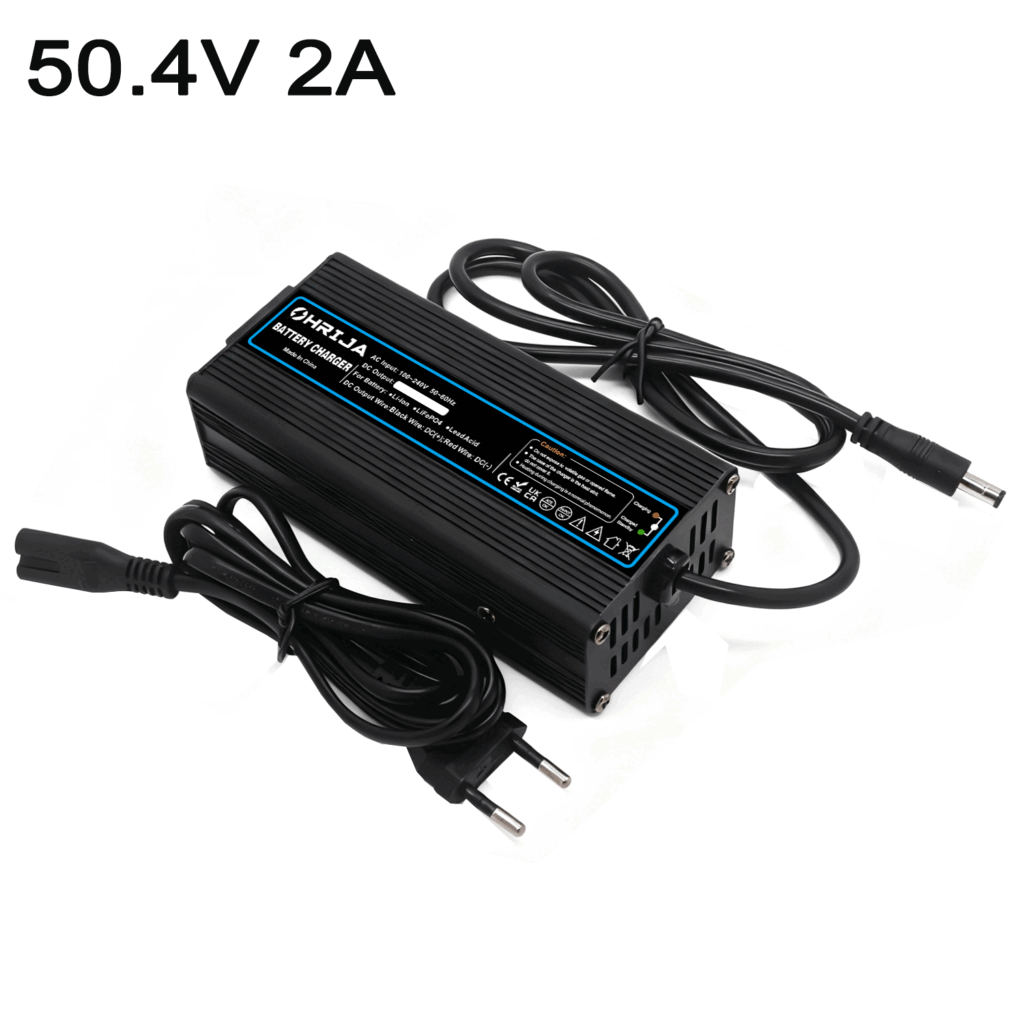
OHRIJA 50.4V 2A Aluminum Alloy Lithium Battery Charger for 44.4V Electric Scooter/Balancing Vehicle/Electric Vehicle (12 Series 44.4V Lithium Battery)
50.4V 2A charger is specially designed for 12-series (12S) 44.4V lithium battery packs. It is widely applicable to electric bicycles, electric scooters, balance bikes, elderly mobility vehicles, and various DIY lithium battery packs. It features an all-aluminum casing which combines heat dissipation and durability, making it an ideal power partner for your travel equipment
14.90$ -
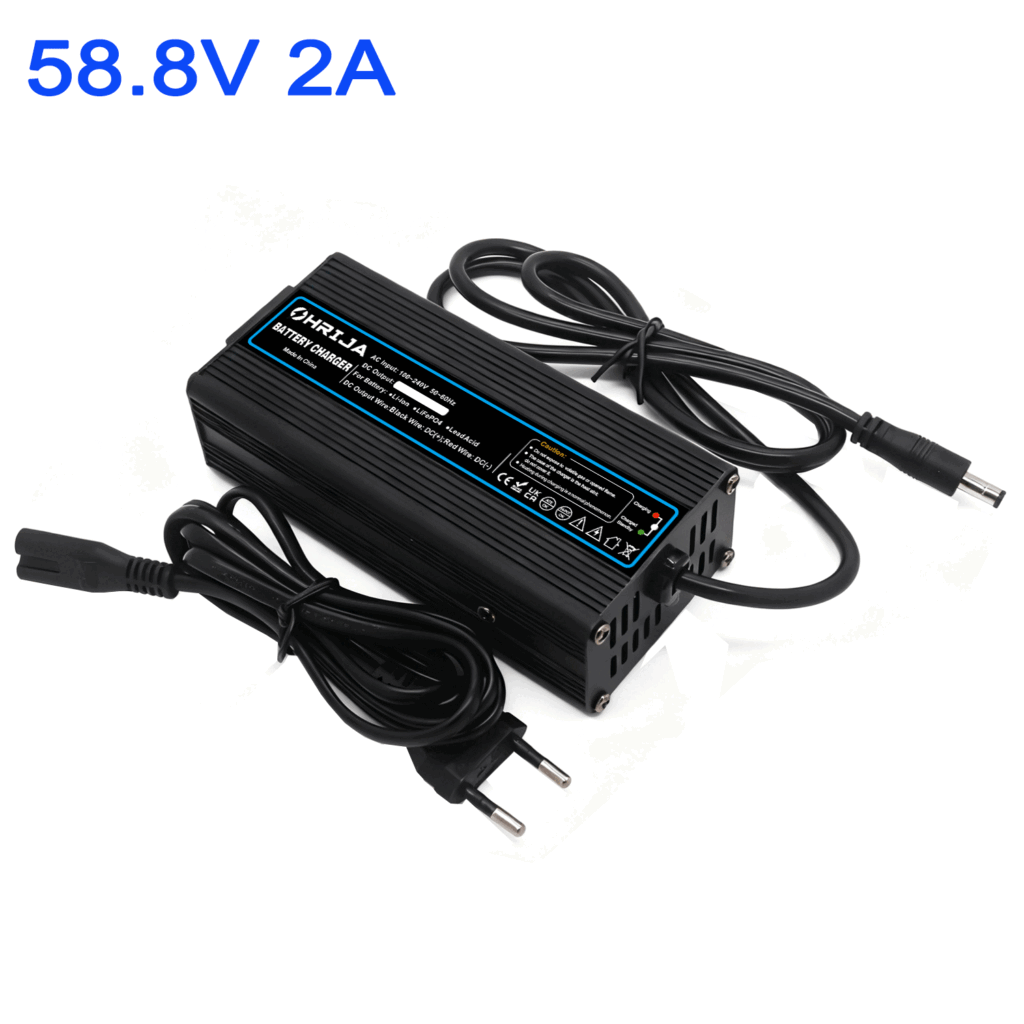
OHRIJA 58.8V 2A Aluminum Alloy Lithium Battery Charger for 48V Electric Scooter/Balancing Vehicle/Electric Vehicle (14 Series 48V Lithium Battery)
58.8V 2A charger is specially designed for 14-series (14S) 51.8V lithium battery packs. It is widely applicable to electric bicycles, electric scooters, balance bikes, elderly mobility vehicles, and various DIY lithium battery packs. It features an all-aluminum casing which combines heat dissipation and durability, making it an ideal power partner for your travel equipment
14.90$ -
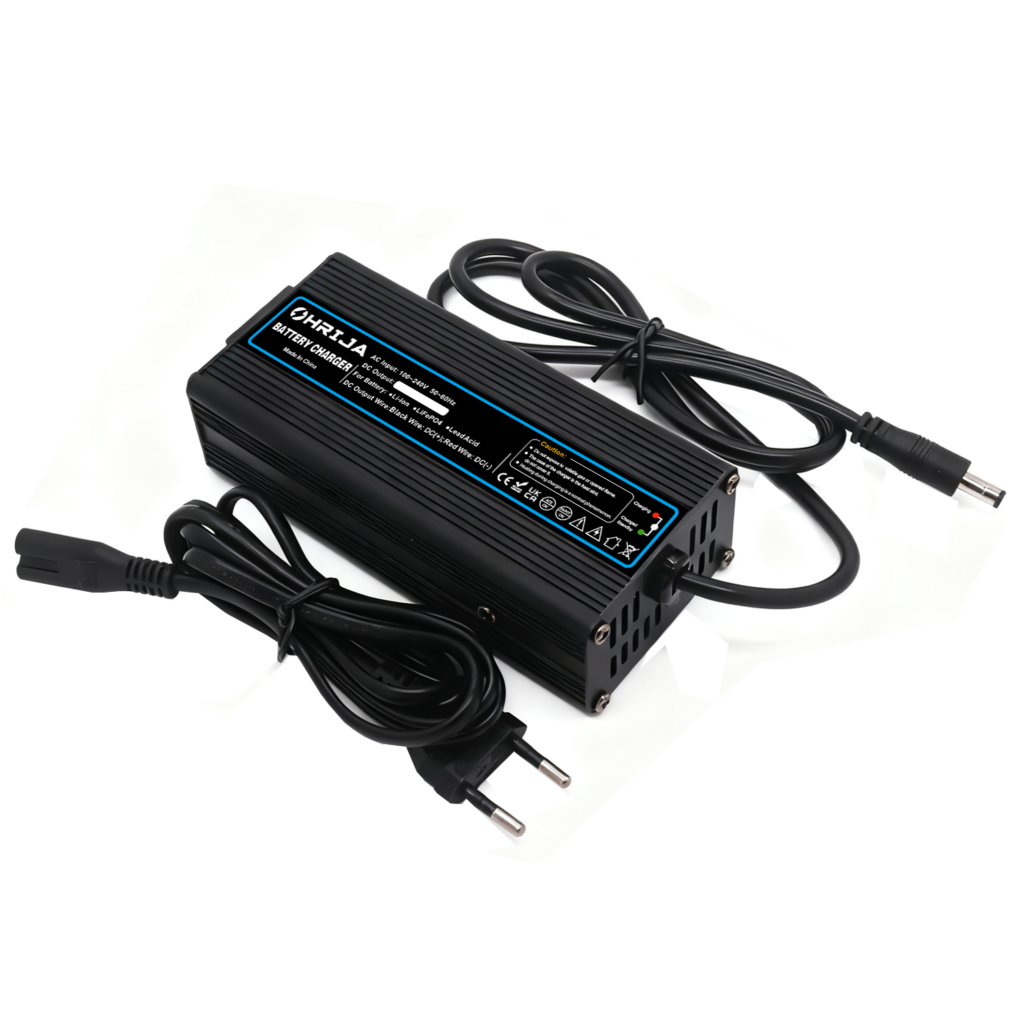
OHRIJA 54.6V 2A Aluminum Alloy Lithium Battery Charger for 48V Electric Scooter/Balancing Vehicle/Electric Vehicle (13 Series 48V Lithium Battery)
54.6V 2A charger is specially designed for 13-series (13S) 48V lithium battery packs. It is widely applicable to electric bicycles, electric scooters, balance bikes, elderly mobility vehicles, and various DIY lithium battery packs. It features an all-aluminum casing which combines heat dissipation and durability, making it an ideal power partner for your travel equipment
14.90$ -
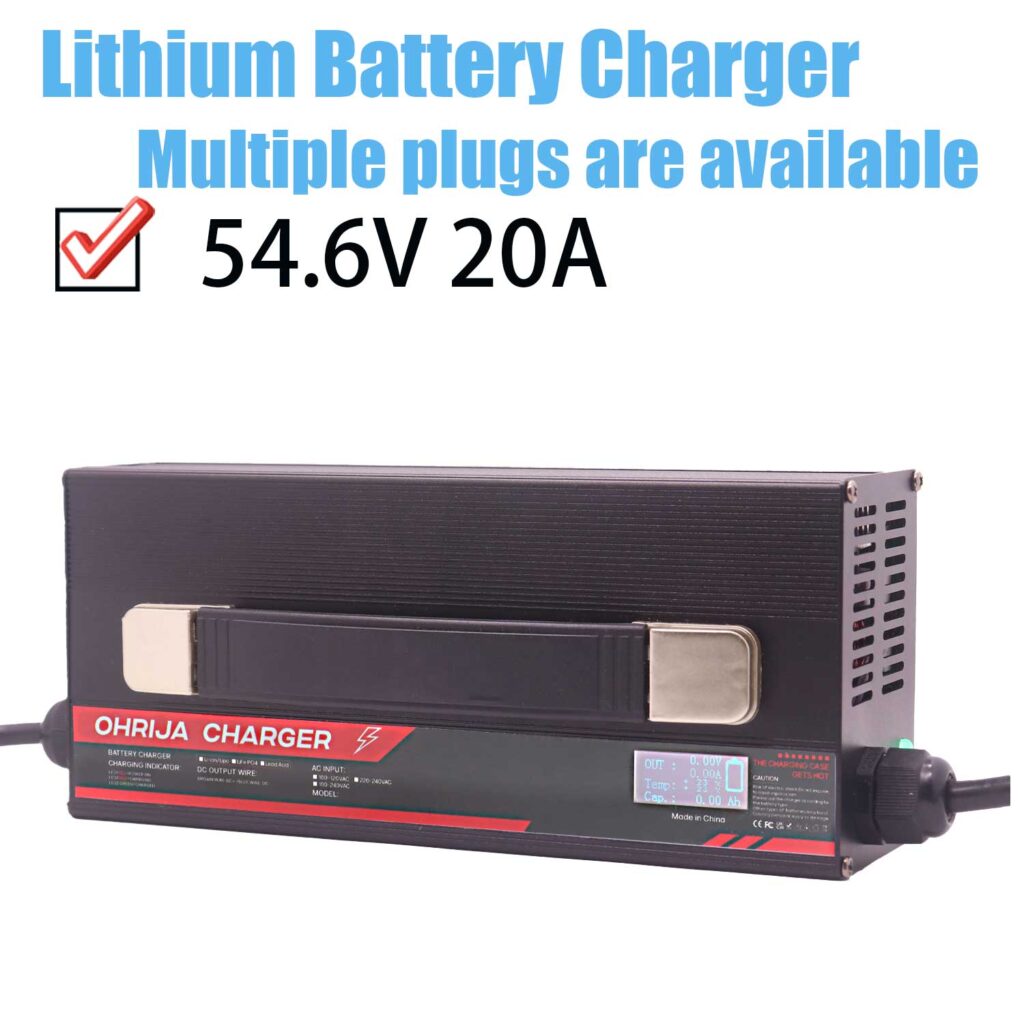
OHRIJA 48v lithium ion battery charger 54.6V 20A charger makes it suitable for 13S 48V Li-ion Battery Chargers
48v lithium ion battery charger,Li ion battery charger,aluminum alloy material, internal adjustable button, can calibrate voltage and current, can charge 143S 48V Li-ion Battery Chargers
39.90$ -
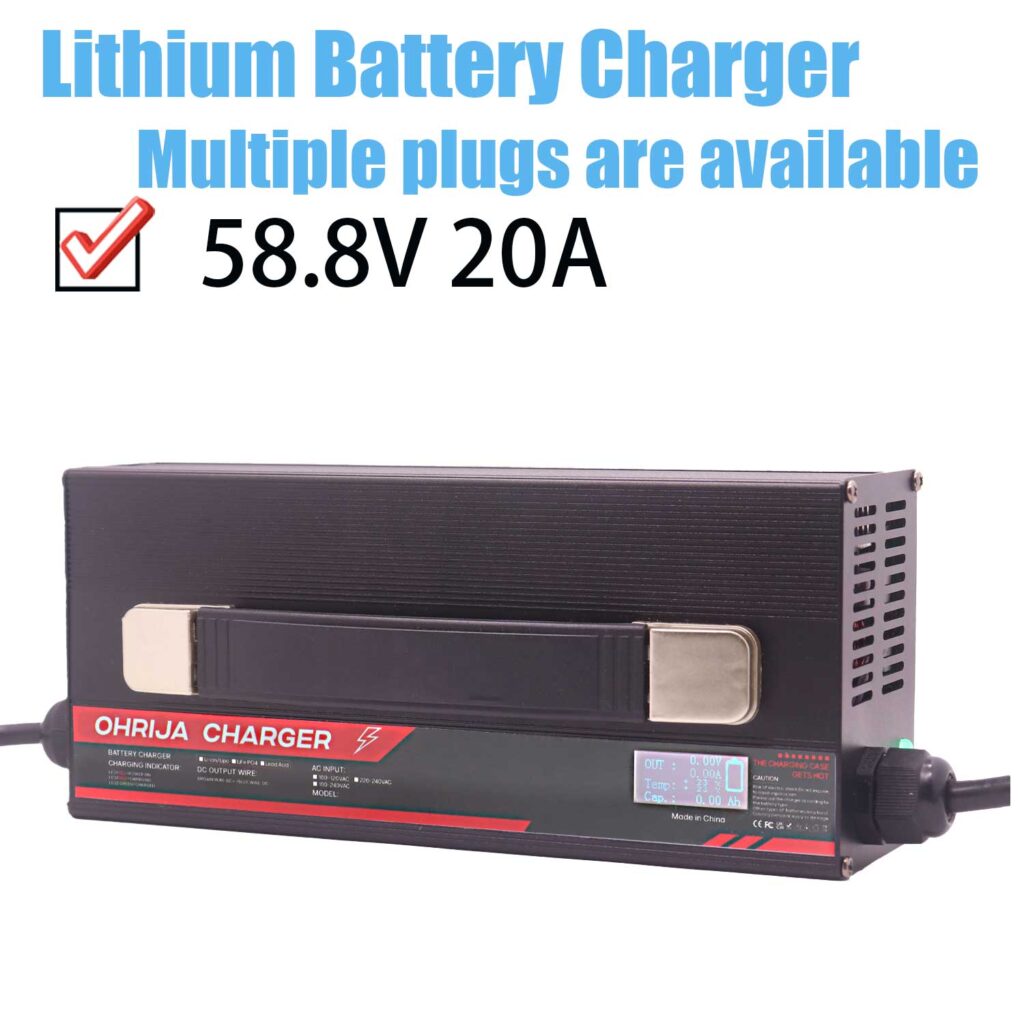
OHRIJA 48v lithium ion battery charger 58.8V 20A charger makes it suitable for 14S 51.8V Li-ion Battery Chargers
48v lithium ion battery charger,Li ion battery charger,aluminum alloy material, internal adjustable button, can calibrate voltage and current, can charge 14S 51.8V Li-ion Battery Chargers
39.90$
OHRIJA brand belongs to Dongguan Hengruihong Technology Co., Ltd., which was established in 2020 and is headquartered in Dongguan, Guangdong Province, China. Our company is a high-tech enterprise integrating R&D, production, and sales. We do not source generic electronics; we engineer the exact charging profiles required for absolute battery longevity.
The company’s main products include intelligent lithium battery chargers, lithium iron phosphate battery chargers, lead-acid battery chargers, heavy-duty golf cart chargers, power adapters, and switching power supplies. By controlling the manufacturing process, we guarantee that the CC/CV algorithms in our chargers flawlessly match the chemistry of your cells, preventing thermal degradation and maximizing your vehicle’s operational range.
If you are exploring upgrades beyond the golf course, apply the same rigorous standards to your personal mobility devices by reviewing the best eBike battery chargers 2026 and the best mobility scooter battery chargers to ensure all your assets are protected by certified power delivery systems.
Frequently Asked Questions (FAQ)
Why does my 48V golf cart charger shut off before the batteries are fully charged?
This is usually caused by a safety mechanism tripping within the charger or the battery. If your lead-acid batteries are severely depleted or have dry cells, the charger’s computer may not detect enough baseline voltage to initiate the charge, or it may detect massive internal resistance and shut down to prevent a fire. For lithium systems, the BMS will shut down the charge if the pack becomes too hot or if individual cells are severely out of balance.
Can I leave my 48V golf cart plugged in all the time?
If you have a modern, smart charger, yes. Smart chargers (like those from OHRIJA) will fully charge a 48 volt golf cart and then physically stop pushing current, entering a monitoring mode. If the voltage drops naturally over weeks of storage, the charger will briefly turn back on to top it off. However, if you are using an antiquated, “dumb” timer-based charger, leaving it plugged in will overcharge and destroy the batteries.
How do I know if I need a 15 Amp or 20 Amp charger?
You must look at the specifications of your battery pack. A good rule of thumb is that your charger’s amperage should be roughly 10% to 15% of your battery’s total Amp-Hour (Ah) capacity. If you have a massive 200Ah battery pack, a 20 Amp charger is perfect. If you have a smaller 100Ah lithium pack, pushing 20 Amps is acceptable, but a 15 Amp charger is often safer for the longevity of the cells and puts less strain on your garage wall outlet.
Authoritative Industry References
To ensure our electrical engineering guidelines and battery chemistry data meet the highest global standards, we base our analyses on intelligence from the following authoritative bodies:
- U.S. Department of Energy (DOE): Research and data regarding the efficiency, lifespan, and charging infrastructure requirements for electric vehicle battery systems. Visit the DOE
- IEEE (Institute of Electrical and Electronics Engineers): Peer-reviewed engineering standards for power conversion, smart charger algorithms, and battery management system (BMS) safety protocols. Visit IEEE
- Battery University (Cadex Electronics): The industry-standard educational resource for understanding the complex chemical reactions, CC/CV charging phases, and degradation metrics of both Lead-Acid and Lithium chemistries. Visit Battery University