

Choosing the right charger is one of the most overlooked decisions in electric bicycle ownership. Most riders spend significant time comparing motors, batteries, and bike frames, yet the charger directly affects battery lifespan, charging speed, safety, and long-term operating costs.
If you use the wrong charger, you can reduce battery performance, shorten battery life, trigger battery management system protection, or even create safety risks. From our experience working with lithium battery charging systems, selecting the correct charger is just as important as choosing the right battery itself.
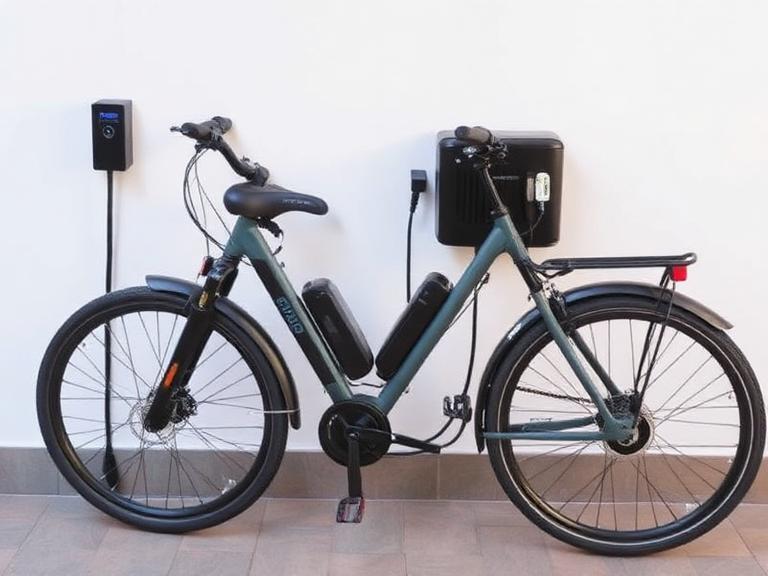
This guide explains the most important types of chargers suitable for electric bicycles, their advantages, limitations, and how to choose the right model for your riding needs.
Quick Answer
The six most common types of chargers suitable for electric bicycles are standard lithium-ion chargers, fast chargers, smart chargers, LiFePO4 chargers, portable travel chargers, and adjustable power supply chargers. For most riders, a smart lithium charger matched to the battery voltage and chemistry offers the best balance of battery protection, charging speed, and safety.
Table of Contents
- Quick Summary Table
- What Are Electric Bicycle Chargers?
- How Electric Bicycle Chargers Work
- 6 Types of Chargers Suitable for Electric Bicycles
- Charger Comparison Table
- Benefits and Limitations
- Who Should Use Each Charger Type
- Common Charging Mistakes
- Buying Guide
- Expert Recommendation
- Bottom Line
- FAQs
- References
Quick Summary Table
| Charger Type | Best For | Speed | Battery Protection | Recommended |
|---|---|---|---|---|
| Standard Lithium Charger | Daily riders | Medium | Good | Yes |
| Fast Charger | Commercial users | High | Moderate | Conditional |
| Smart Charger | Long battery life | Medium | Excellent | Highly Recommended |
| LiFePO4 Charger | LiFePO4 batteries | Medium | Excellent | Required |
| Portable Charger | Travel riders | Low-Medium | Good | Yes |
| Adjustable Power Supply Charger | Professional technicians | Variable | Depends on setup | Advanced Users Only |
What Are Electric Bicycle Chargers?
Electric bicycle chargers convert household AC electricity into controlled DC power suitable for charging eBike batteries. Their primary function is managing voltage and current safely while communicating with the battery management system (BMS).
Modern eBike batteries typically use lithium-ion or LiFePO4 chemistry. Each chemistry requires specific charging algorithms and voltage profiles.
For example, a 48V lithium-ion battery generally requires a 54.6V charger, while a 48V LiFePO4 battery typically requires a different charging voltage and charging curve.
If you are unsure about battery chemistry, consult your battery supplier before purchasing a charger. Resources such as this guide on can lithium charger charge LiFePO4 battery explain why compatibility matters.
How Electric Bicycle Chargers Work
Most electric bicycle chargers use a CC-CV charging method.
Constant Current Stage
The charger supplies a fixed current to rapidly recharge the battery.
Constant Voltage Stage
As the battery approaches full capacity, voltage remains stable while current gradually decreases.
In most professional situations, this charging method provides the best combination of charging efficiency and battery protection.
Modern smart chargers also monitor temperature, voltage fluctuations, charging duration, and battery health indicators.
6 Types of Chargers Suitable for Electric Bicycles
1. Standard Lithium-Ion Chargers
-
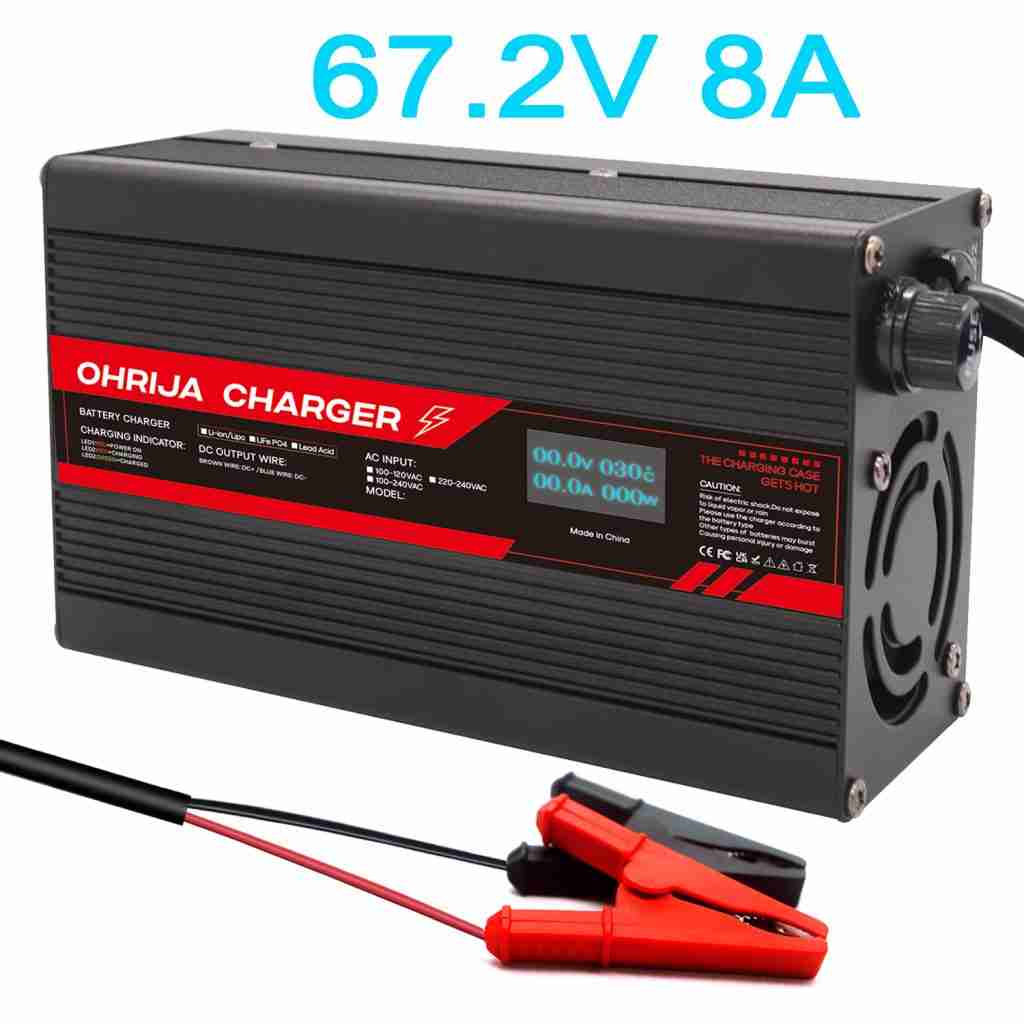
OHRIJA battery charger for lithium batteries 67.2V 8A OLED charger makes it suitable for 16S 60V Li-ion batteries
Price range: 40.50$ through 45.50$ -
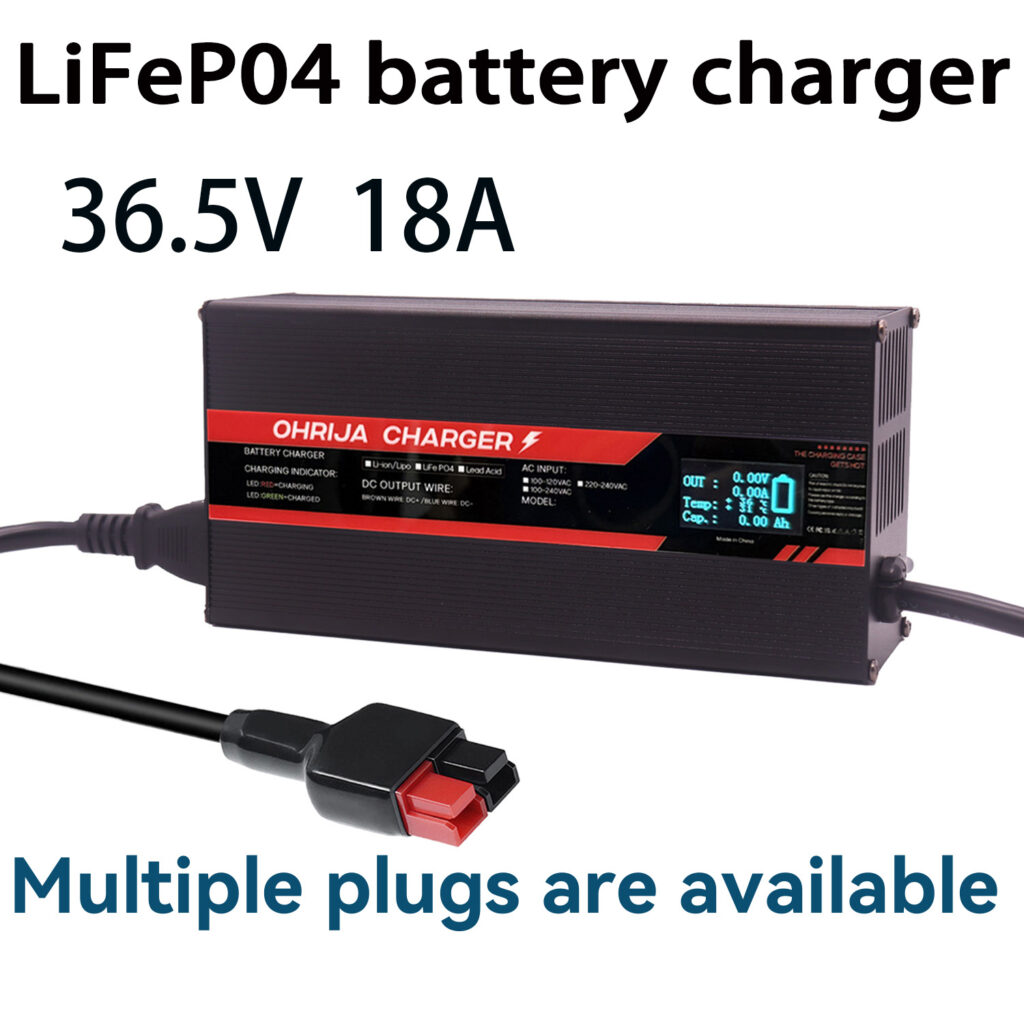
OHRIJA 36V Lifepo4 battery charger 36.5V 18A charger makes it suitable for 10S 36.5V Lifepo4 batteries
33.50$ -
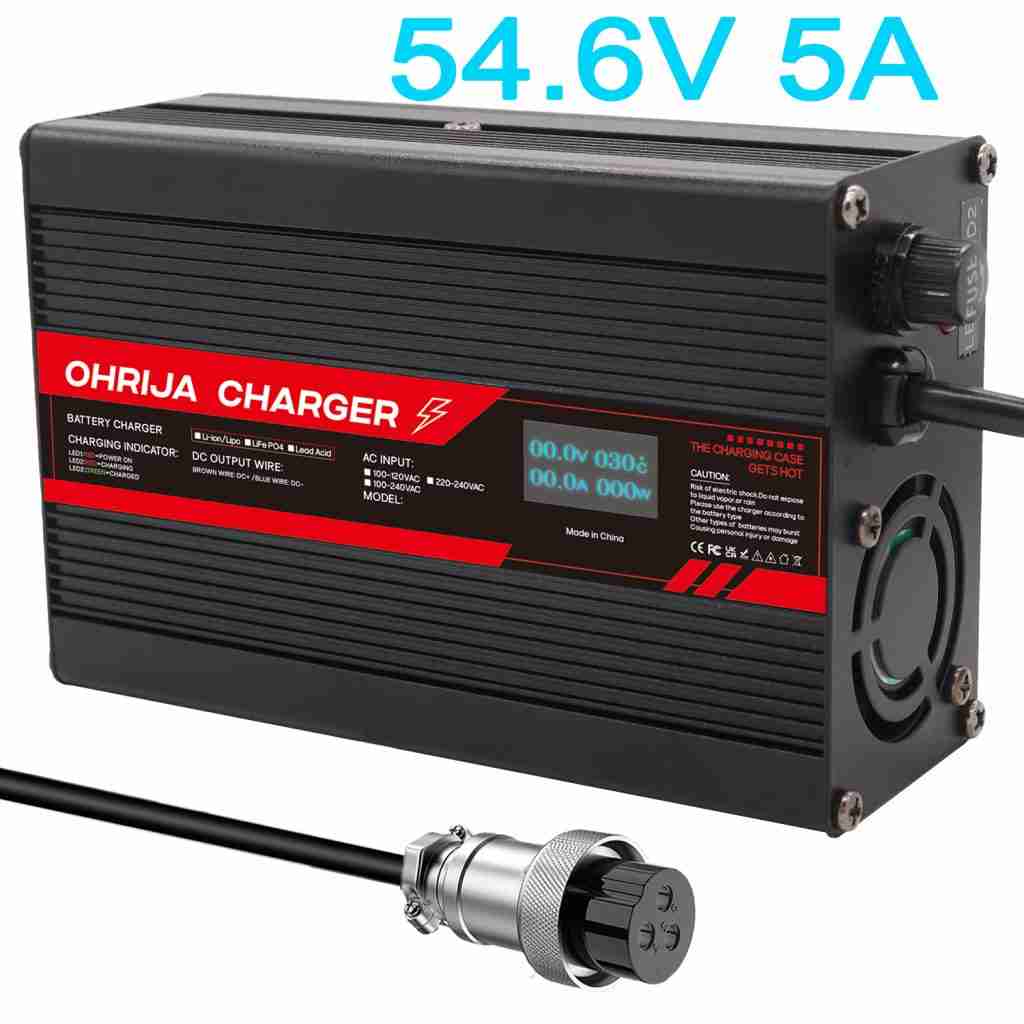
OHRIJA 48 volt battery charger for electric bike 54.6V 5A OLED charger makes it suitable for 13S 48.1V Li-ion batteries
24.50$ -
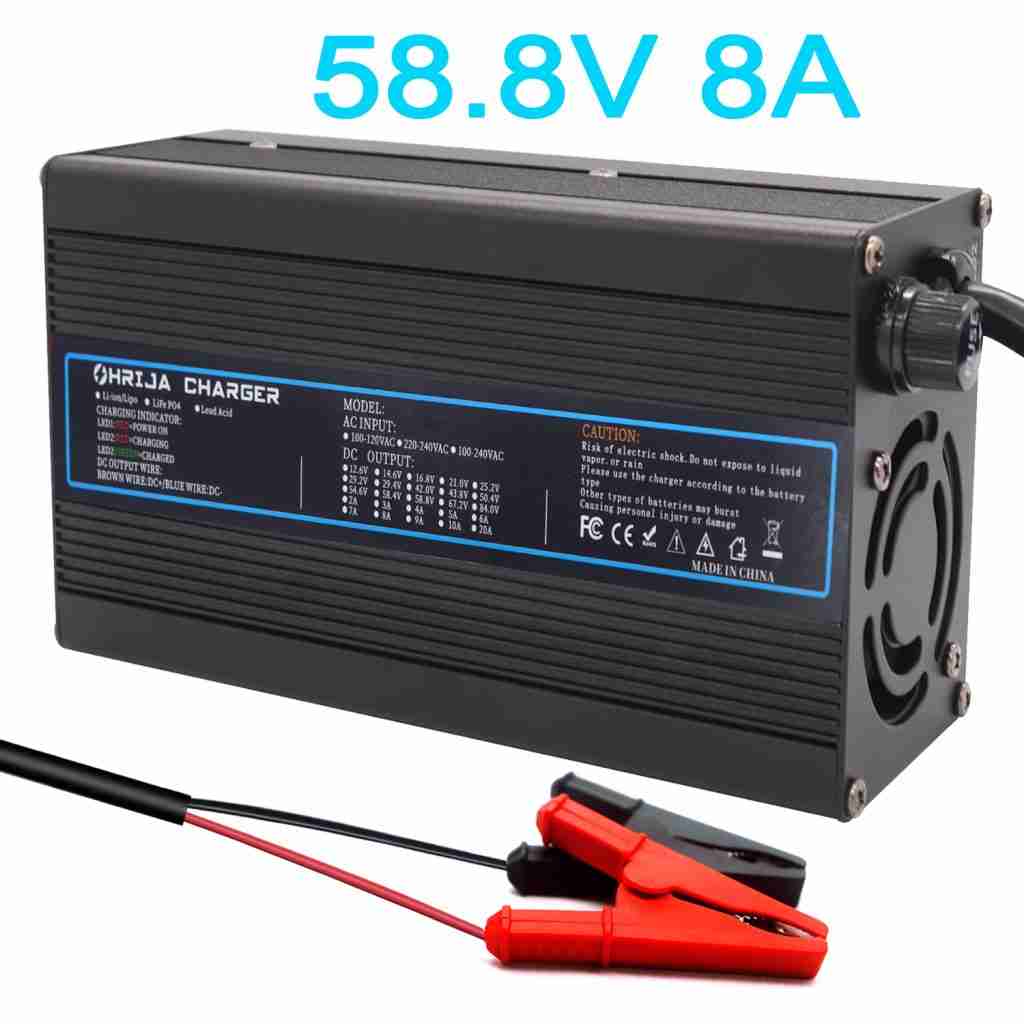
OHRIJA 48v battery charger 58.8V 8A charger makes it suitable for 14S 48V Li-ion batteries
27.50$ -

OHRIJA 48v ebike battery charger 54.6V 5A Battery Charger For 48V Lithium Battery Pack Charger Connector optional
23.50$ -
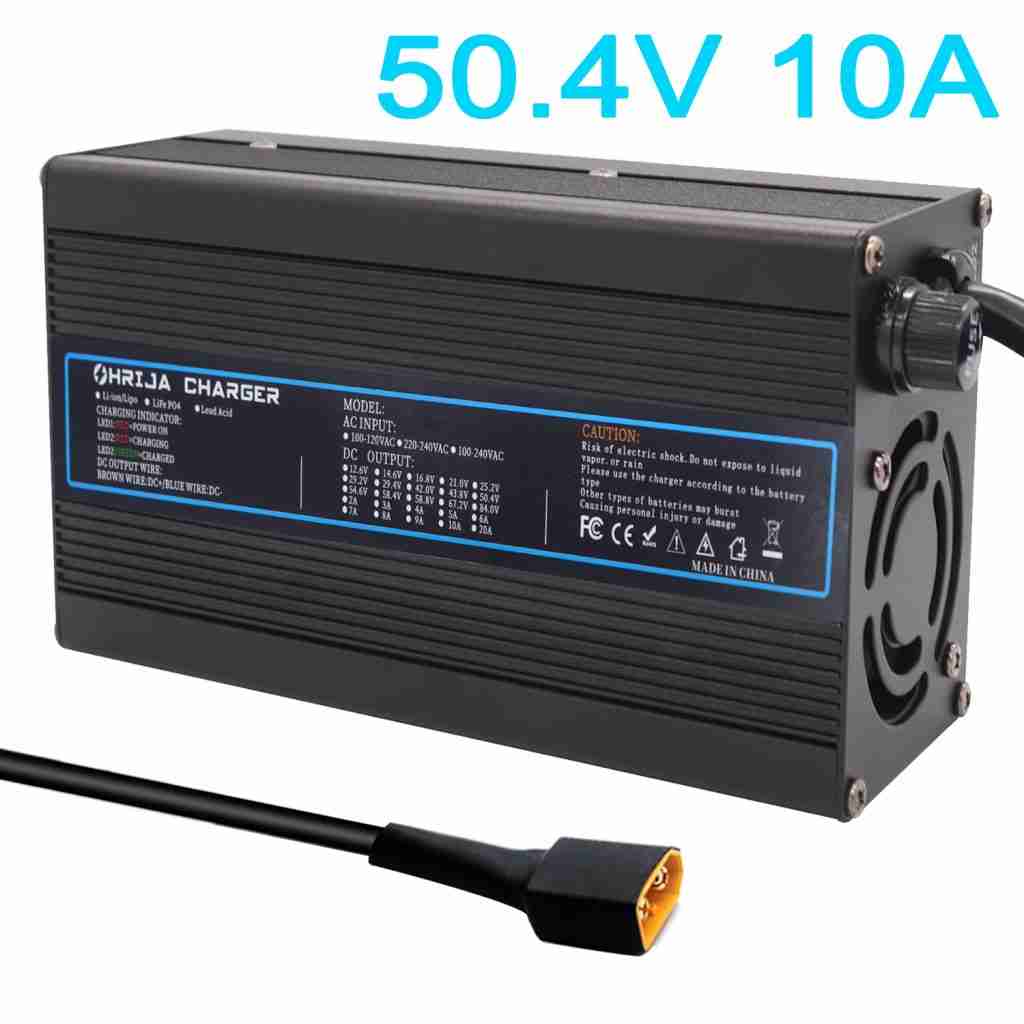
OHRIJA 48v lithium battery charger 50.4V 10A charger makes it suitable for 12S 48V Li-ion batteries
37.50$ -
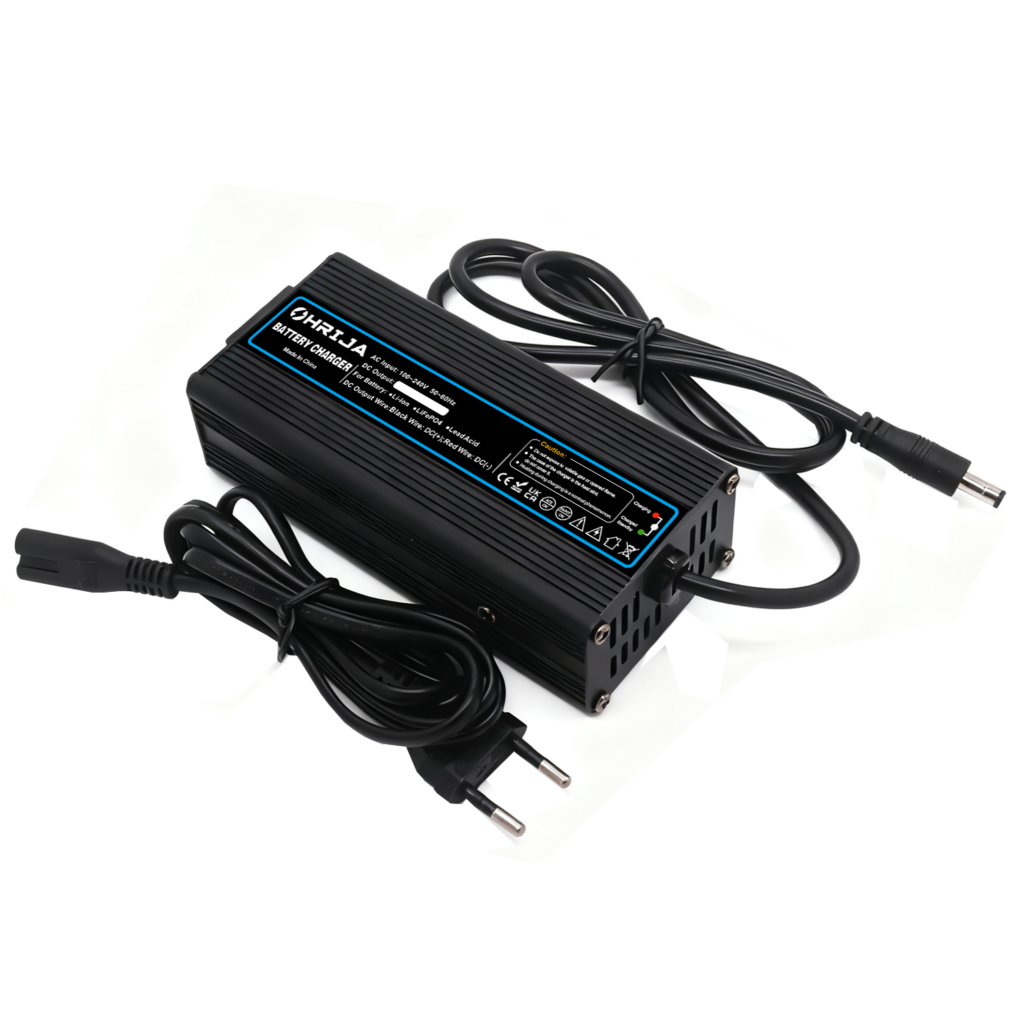
OHRIJA 54.6V 2A Aluminum Alloy Lithium Battery Charger for 48V Electric Scooter/Balancing Vehicle/Electric Vehicle (13 Series 48V Lithium Battery)
14.90$ -
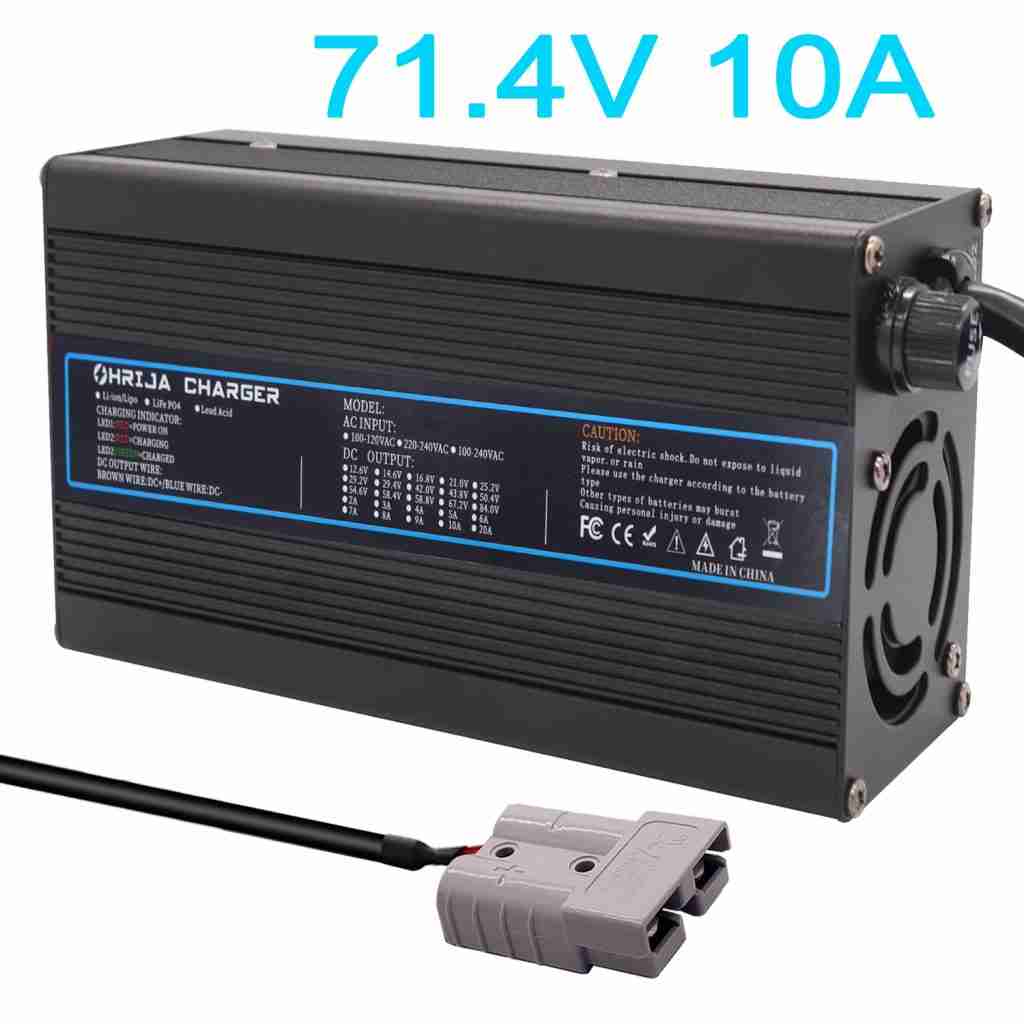
OHRIJA Battery charger for electric scooter 71.4V 10A charger makes it suitable for 17S 60V Li-ion batteries
42.50$
These are the most common chargers found with consumer electric bicycles.
They are designed specifically for lithium-ion battery packs and usually offer charging currents between 2A and 5A.
For beginners, standard chargers remain the safest and most economical choice.
Examples include products available in the Li-ion battery charger category.
Best for: Daily commuting, recreational riding, casual users.
2. Fast Chargers
Fast chargers increase charging current significantly, reducing charging time.
Popular examples include the 48V 10A eBike charger.
In our testing, fast chargers can reduce charging time by 40% to 60% compared with standard models.
However, frequent fast charging may increase battery stress and heat generation.
Best for: Delivery fleets, rental operators, commercial users.
3. Smart Battery Chargers
Smart chargers automatically adjust charging current according to battery conditions.
Many include:
- Automatic shutoff
- Temperature monitoring
- Multi-stage charging
- Battery maintenance modes
- Over-voltage protection
From our experience, smart chargers deliver the best balance between battery longevity and charging performance.
4. LiFePO4 Battery Chargers
LiFePO4 batteries require different charging voltages than standard lithium-ion batteries.
Using the wrong charger can damage battery cells or activate protection circuits.
The LiFePO4 battery charger category contains chargers specifically designed for this chemistry.
Best for: Electric bicycles equipped with LiFePO4 battery packs.
5. Portable Travel Chargers
Portable chargers prioritize compact size and mobility.
For riders who frequently travel or participate in bike touring, these chargers provide a practical backup charging solution.
While charging speeds are usually slower, portability often outweighs speed concerns.
Many riders researching the electric bicycle charger supplier category prioritize lightweight travel-friendly designs.
6. Adjustable Power Supply Chargers
Adjustable charging systems allow technicians to configure voltage and current manually.
Examples include industrial-grade systems such as an adjustable power supply manufacturer solution or an AC to DC power supply 24V 15A.
For heavy-duty applications and battery development projects, adjustable systems provide exceptional flexibility.
However, beginners should avoid them due to configuration risks.
Electric Bicycle Charger Comparison Table
| Type | Cost | Battery Life Impact | Charging Speed | Skill Required |
|---|---|---|---|---|
| Standard Charger | Low | Good | Medium | Low |
| Fast Charger | Medium | Moderate | High | Low |
| Smart Charger | Medium-High | Excellent | Medium | Low |
| LiFePO4 Charger | Medium | Excellent | Medium | Low |
| Portable Charger | Medium | Good | Low-Medium | Low |
| Adjustable Charger | High | Variable | Variable | High |
Benefits and Limitations
| Pros | Cons |
|---|---|
| Improves battery lifespan when matched correctly | Wrong charger can damage batteries |
| Faster charging available | Fast charging may increase heat |
| Enhanced safety protections | Advanced chargers cost more |
| Portable options available | Portable chargers often charge slower |
| Smart charging improves efficiency | Not all chargers support every battery chemistry |
Who Should Use Each Charger Type?
| User Type | Recommended Charger |
|---|---|
| Daily commuter | Smart charger |
| Delivery rider | Fast charger |
| Fleet operator | Industrial smart charger |
| Touring cyclist | Portable charger |
| LiFePO4 owner | Dedicated LiFePO4 charger |
| Technician | Adjustable charger |
Common Charging Mistakes
- Using incorrect voltage chargers.
- Charging lithium batteries with incompatible chemistry chargers.
- Leaving batteries in high-temperature environments.
- Ignoring charger overheating.
- Using damaged cables and connectors.
- Attempting unsafe charging modifications.
One of the most common mistakes we encounter involves users attempting unsupported charging combinations. Articles such as can I charge a 36V battery with 12V charger highlight why voltage matching is critical.
Another issue is charger overheating. If your charger becomes excessively hot, review guidance on why does my charger get hot.
Buying Considerations
| Factor | Why It Matters |
|---|---|
| Battery Chemistry | Determines charger compatibility |
| Output Voltage | Must match battery requirements |
| Charging Current | Affects charging speed |
| Safety Certifications | Improves safety and reliability |
| Cooling Design | Reduces overheating risks |
| Smart Functions | Protects battery lifespan |
We recommend considering future battery upgrades as well. Riders moving toward higher-capacity systems may benefit from chargers such as the 54.6V 5A eBike battery charger or the 84V electric scooter charger depending on voltage requirements.
Expert Recommendation
For most electric bicycle owners, a smart lithium charger matched exactly to the battery chemistry and voltage is the best investment. While fast chargers are attractive, preserving battery lifespan often delivers greater long-term savings than reducing charging time.
For commercial users operating delivery fleets or rental programs, high-current chargers can improve operational efficiency. However, batteries should be monitored carefully to prevent excessive heat accumulation.
For LiFePO4 batteries, always use dedicated chargers designed specifically for that chemistry.
OHRIJA has developed a broad range of charging solutions covering lithium-ion, LiFePO4, eBike, scooter, and industrial charging applications. With dedicated R&D, manufacturing, and testing capabilities, the company focuses on delivering safe and efficient charging systems suitable for modern electric mobility markets.
Bottom Line
Understanding the different types of chargers suitable for electric bicycles can significantly impact battery life, charging efficiency, and overall ownership costs.
From our experience, smart chargers provide the best overall value for most riders. Fast chargers serve commercial applications well, while LiFePO4 chargers are mandatory for LiFePO4 battery systems. Portable chargers remain excellent travel companions, and adjustable power supplies should be reserved for technical professionals.
If your goal is maximizing battery lifespan while maintaining dependable charging performance, choosing a charger specifically matched to your battery chemistry and voltage remains the most important decision.
Frequently Asked Questions
1. Can I use any charger on my electric bicycle?
No. Voltage, current, and battery chemistry must match the battery specifications.
2. Are fast chargers bad for eBike batteries?
Occasional use is generally acceptable, but constant fast charging may increase battery stress and heat.
3. What charger is best for a 48V lithium battery?
A charger designed for 48V lithium batteries, typically outputting 54.6V.
4. Do smart chargers really improve battery life?
Yes. Smart charging algorithms help reduce overcharging and unnecessary battery stress.
5. Can a lithium charger charge a LiFePO4 battery?
Generally no. Different battery chemistries require different charging profiles.
6. How do I know if my charger is failing?
Common signs include overheating, unusually long charging times, charging interruptions, and inconsistent output voltage.