
No products in the cart.

Let us confront a highly destructive reality in the energy storage industry: consumers are routinely destroying thousands of dollars worth of advanced Lithium Iron Phosphate (LiFePO4) batteries because they refuse to invest in the correct charging hardware. Slapping an outdated, multi-stage lead-acid charger onto a highly engineered lithium battery pack is an act of operational negligence. Lead-acid charging algorithms are fundamentally incompatible with lithium chemistry. They initiate unnecessary desulfation cycles, force equalization voltages that destroy internal cell structures, and utilize float charging metrics that continuously stress the battery’s active materials.
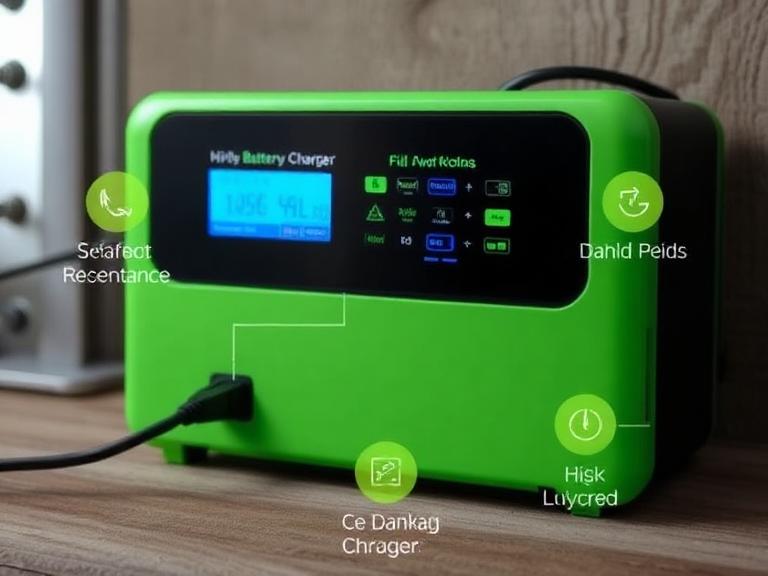
From our experience engineering advanced power architectures at OHRIJA, we know that an inferior charger will bypass your Battery Management System (BMS), trigger severe over-voltage faults, and ultimately cut the 4,000+ cycle lifespan of your lithium battery down to a fraction of its capability. If you want your power system to survive, you must understand the exact electro-chemical requirements of lithium cells. Identifying the key features of a LiFePO4 battery charger is not an optional exercise; it is a strict mechanical mandate.
In this relentlessly practical, expert-led guide, we will aggressively dissect the precise algorithmic requirements, the safety architectures, and the thermal management systems that separate a professional-grade lithium charger from a dangerous novelty device. Whether you are assembling a massive off-grid solar bank or hunting for the absolute best 12V LiFePO4 battery chargers 2026 has to offer, this is the uncompromising blueprint you need.
Table of Contents
- 1. The CC/CV (Constant Current / Constant Voltage) Algorithm
- 2. 0V BMS Wake-Up Capability
- 3. Complete Elimination of Float and Equalization Stages
- 4. Active Thermal Monitoring and Low-Temp Cutoff
- 5. Rugged Hardware Protections and Galvanic Isolation
- 6. Strict Output Voltage Precision
- The OHRIJA Engineering Standard
- Summary Matrix: LiFePO4 vs. Lead-Acid Chargers
- Frequently Asked Questions (FAQs)
- Authoritative Industry References
1. The CC/CV (Constant Current / Constant Voltage) Algorithm
The most critical of all the key features of a LiFePO4 battery charger is its core charging algorithm. Unlike lead-acid batteries, which possess a massive internal resistance that requires a slow, complex, three-stage charging profile, lithium iron phosphate batteries are highly efficient and demand a streamlined, two-stage protocol known as CC/CV.
In the first phase—Constant Current (CC) or Bulk Charging—the charger delivers its maximum rated amperage to the battery while the voltage gradually rises. LiFePO4 batteries have incredibly low internal resistance, meaning they can absorb massive amounts of current without generating dangerous levels of heat. During this stage, the charger will push the battery to roughly 90% of its total capacity in record time.
Once the battery reaches its predetermined voltage limit (typically 14.4V to 14.6V for a standard 12V system), the charger shifts immediately to the second phase: Constant Voltage (CV). Here, the charger locks the voltage precisely at that peak threshold while the current tapers off to a trickle. Once the current drops to roughly 2% of the battery’s total amp-hour capacity (for example, 2 Amps on a 100Ah battery), the charger terminates the cycle entirely. If you are researching the best lithium iron phosphate battery chargers on the market, you must demand absolute proof of a strict CC/CV logic circuit. Anything else will degrade the lithium cells.
2. 0V BMS Wake-Up Capability
Modern LiFePO4 batteries are equipped with an internal Battery Management System (BMS) that acts as the brain of the pack. One of the primary functions of a BMS is to prevent catastrophic over-discharge. If you accidentally leave an appliance running and drain the battery, the BMS will physically sever the connection to the external terminals to protect the lithium cells from dropping below 2.5V per cell. To a standard, outdated charger, this disconnected state reads as 0 volts. A generic charger will assume the battery is completely destroyed or absent, and it will refuse to output any power.
This creates a highly frustrating catch-22: the battery needs power to reset the BMS, but the charger refuses to provide power because the BMS is asleep. Therefore, one of the non-negotiable key features of a LiFePO4 battery charger is a dedicated “0V Wake-Up” or “Dead Battery Activation” function. The charger must be engineered to detect a sleeping BMS and send a specific, low-current activation pulse to reawaken the circuit, re-establish the connection, and safely initiate the Constant Current charging phase.
3. Complete Elimination of Float and Equalization Stages
Lead-acid batteries suffer from a massive natural self-discharge rate. To combat this, lead-acid chargers utilize a “float” or “trickle” charging stage, which continuously holds the battery at around 13.5V, feeding it low current indefinitely to keep it topped off. Furthermore, they periodically execute an “equalization” stage, blasting the battery with over 15 volts to boil the electrolyte and remove lead sulfate crystals from the plates.
We absolutely reject these practices for lithium. LiFePO4 batteries do not sulfate, and they possess a negligible self-discharge rate (often less than 3% per month). Applying a continuous float voltage to a lithium battery causes chronic stress, leading to the rapid oxidation of the internal electrolyte and a severe reduction in cycle life. Equalization voltages will trigger an immediate over-voltage shut-down from the BMS, or worse, cause permanent structural damage to the cells. Whether you are charging a stationary solar bank or sourcing the best 48V eBike battery chargers, the unit must definitively terminate the charge cycle once the battery is full. It must never trickle charge.
4. Active Thermal Monitoring and Low-Temp Cutoff
Lithium Iron Phosphate is an incredibly resilient chemistry, but it possesses one distinct Achilles’ heel: freezing temperatures. You cannot, under any circumstances, charge a LiFePO4 battery at high currents when the internal cell temperature drops below 0°C (32°F). Attempting to do so causes a phenomenon known as “lithium plating.” Because the cold temperature slows the intercalation process, the lithium ions cannot penetrate the graphite anode. Instead, they pile up on the surface, forming permanent, metallic lithium plating that destroys the battery capacity and drastically increases the risk of an internal short circuit.
A professional-grade charger must integrate actively with the environment. While the battery’s internal BMS should theoretically block a cold charge, relying entirely on the battery as a failsafe is bad engineering. The charger itself should feature internal thermal throttling to protect its own circuitry from overheating during the brutal Constant Current phase, and ideally, feature environmental temperature sensors to modify or halt the charge profile in sub-freezing environments. This is particularly vital for outdoor applications, which is why identifying the best mobility scooter battery chargers requires strict attention to thermal intelligence.
5. Rugged Hardware Protections and Galvanic Isolation
Software algorithms are useless if the physical hardware fails. The key features of a LiFePO4 battery charger must include an uncompromising suite of physical safety mechanisms. We demand the following baseline protections:
- Reverse Polarity Protection: If an operator accidentally connects the positive clamp to the negative terminal, the charger must instantly isolate the circuit without generating sparks or blowing internal, non-replaceable fuses.
- Over-Voltage Protection (OVP): The charger must physically cap its output to prevent voltage spikes from bypassing the battery’s BMS.
- Galvanic Isolation: In heavy industrial or marine environments, the AC input must be strictly isolated from the DC output to prevent lethal ground loops, chassis electrification, and massive surge damage.
- Spark-Proof Connectors: High-amperage lithium chargers can generate massive arc flashes if connected to a live terminal improperly. The charger should not initiate current flow until a solid, verified connection is established.
6. Strict Output Voltage Precision
The voltage window for lithium iron phosphate is exceptionally tight. A single LiFePO4 cell has a nominal voltage of 3.2V, with an absolute maximum charging voltage of 3.65V. In a standard “12V” battery (which is actually a 4-cell series configuration, or 4S), the absolute peak charging voltage is 14.6V (4 x 3.65V). If a charger pushes 14.8V or 15.0V, it relies entirely on the battery’s BMS to cut the circuit and save the cells from destruction.
We recommend sourcing chargers with a voltage accuracy of ±0.5% or better. The charger must reliably hit exactly 14.4V to 14.6V and hold it during the Constant Voltage phase without drifting. If you are operating light electric vehicles that demand high torque and frequent heavy charging, analyzing the best eBike battery chargers 2026 will reveal that precise voltage regulation is the singular factor determining whether your expensive electric drivetrain battery lasts one year or ten years.
The OHRIJA Engineering Standard
OHRIJA brand belongs to Dongguan Hengruihong Technology Co., Ltd., which was established in 2020 and is headquartered in Dongguan, Guangdong Province, China. Our company is a high-tech enterprise integrating R&D, production and sales. The company’s main products: lithium battery charger, lithium iron phosphate battery charger, lead-acid battery charger, golf cart charger, power adapter, switching power supply and other products.
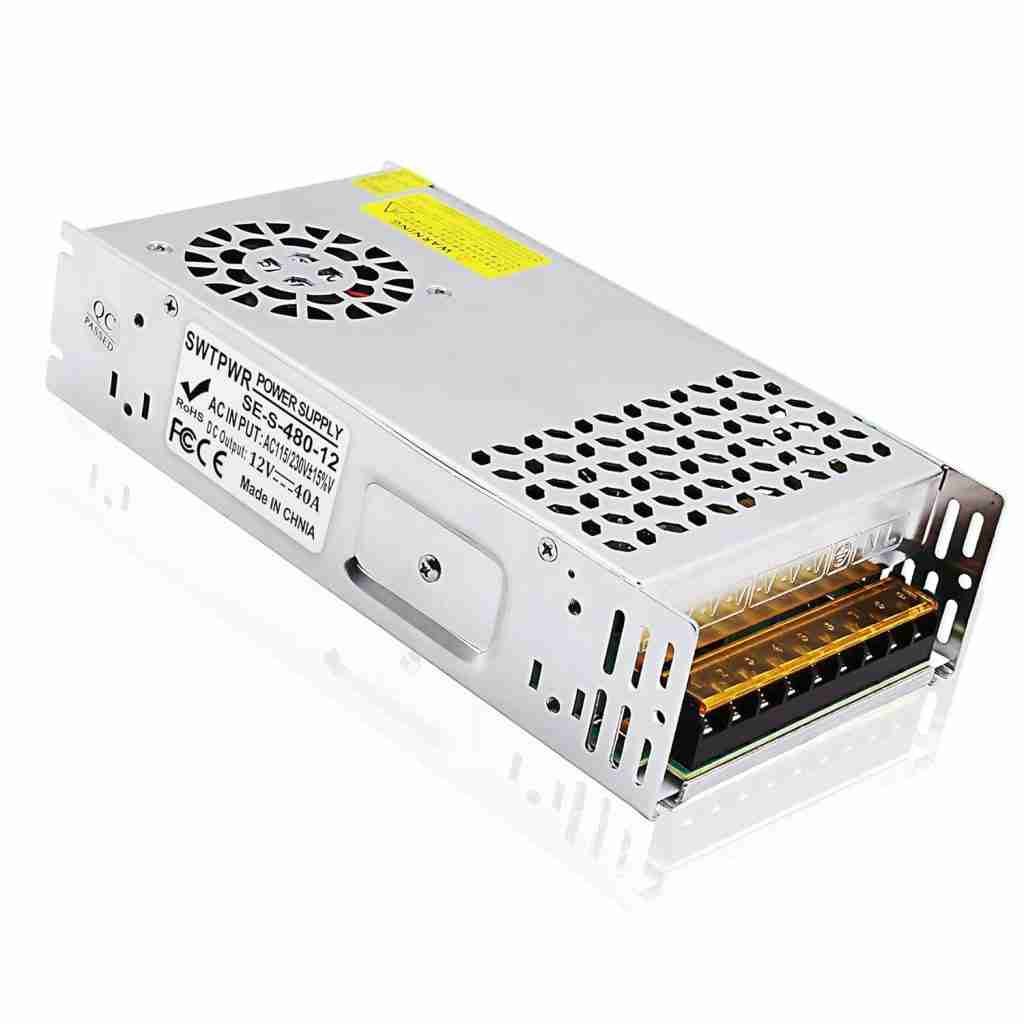
12V Power Supply 12V 40A 480W 50A 600W AC to DC Converter 110V/120V to 12V Transformer LED Driver Smart Cooling Fan Designed for LED Strip CCTV and Car Devices
Price range: 13.90$ through 14.90$
12V Power Supply 12V 50A 600W AC to DC Converter 110V/120V to 12V Transformer LED Driver Smart Cooling Fan Designed for LED Strip CCTV and Car Devices (DC12V, 12V-50A-600W)
Price range: 23.90$ through 29.90$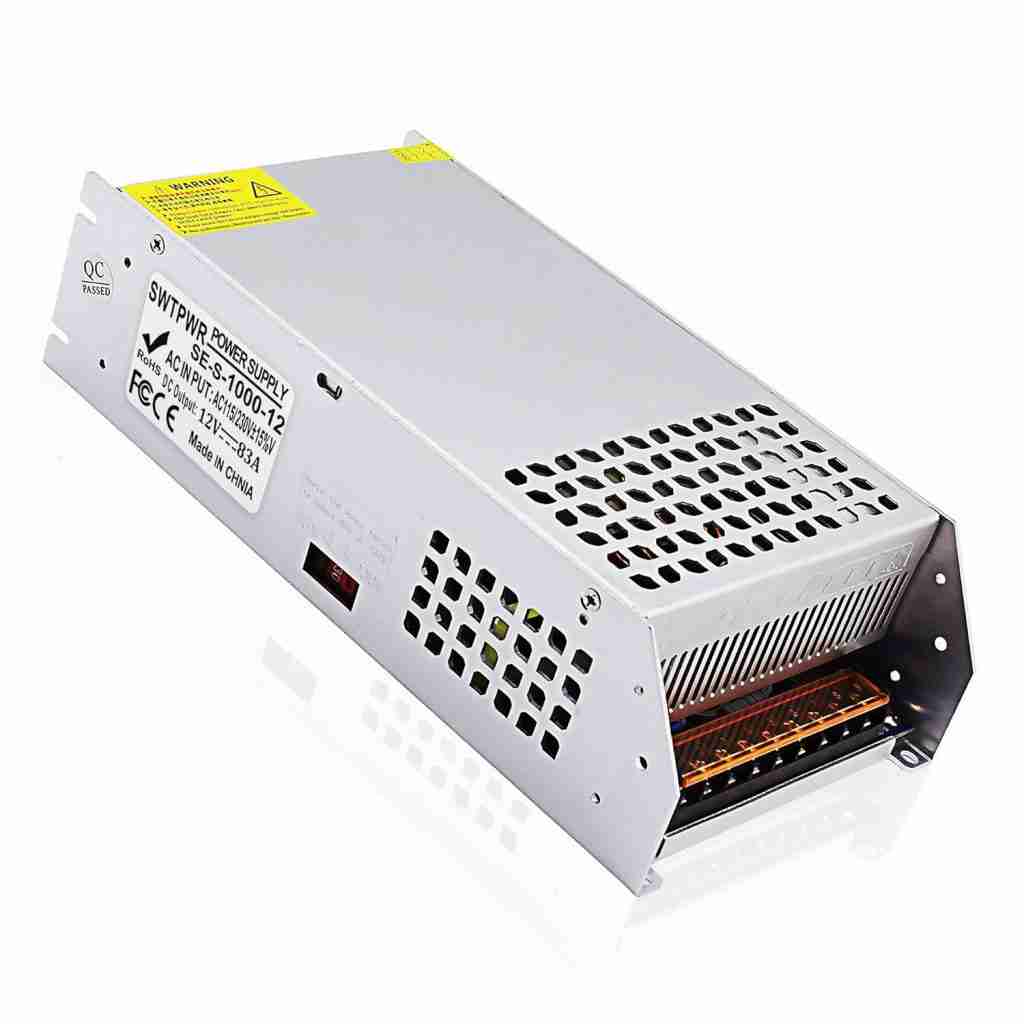
12V Power Supply 12V 83A 1000W AC to DC Converter 110V/120V to 12V Transformer LED Driver Smart Cooling Fan Designed for LED Strip CCTV and Car Devices
Price range: 29.90$ through 54.90$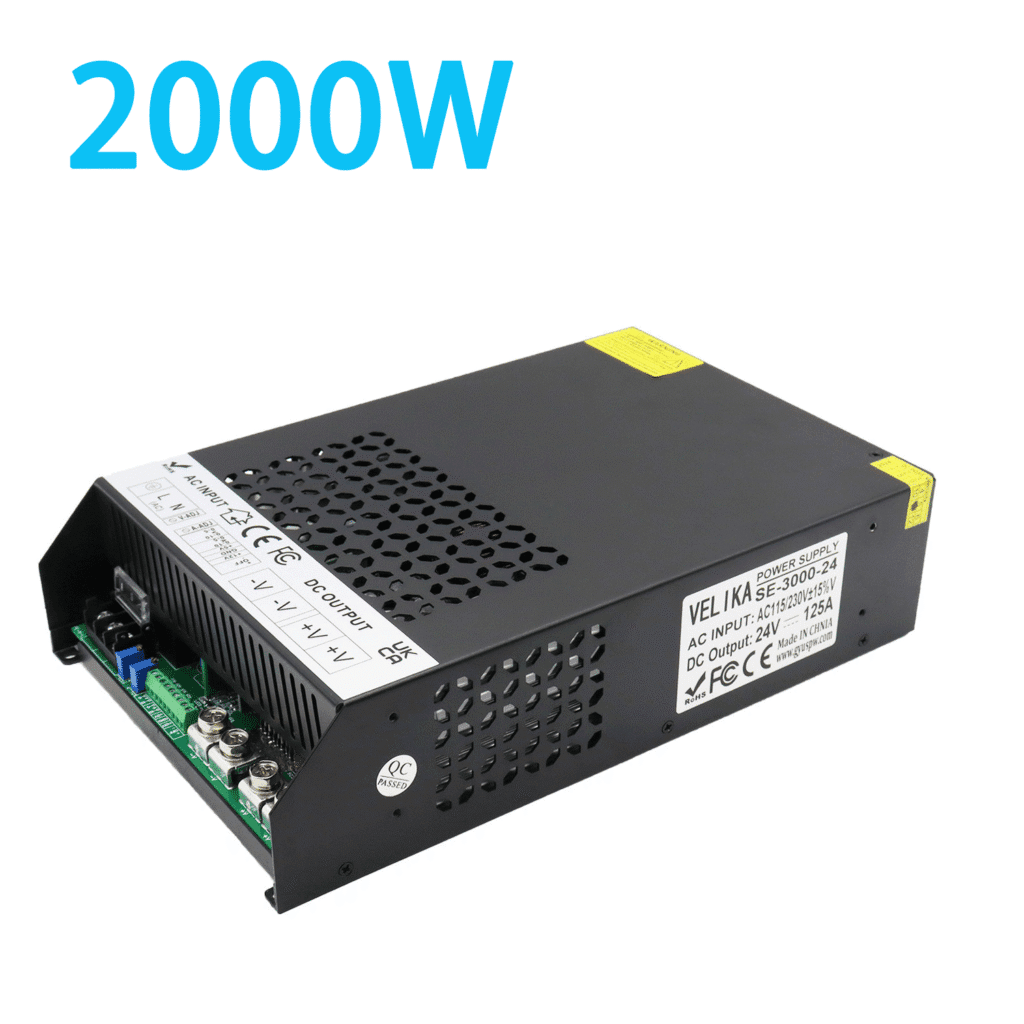
2000 Series 2000W High Power AC‑DC Switching Power Supply | AC185‑265V Input, Multiple DC Output 12V 24V 36V 48V 60V 72V 80‑120V & Custom Voltage For Industrial Equipment
Price range: 64.80$ through 69.80$
At OHRIJA, we do not compromise on power delivery. Our lithium iron phosphate battery chargers are engineered from the ground up to respect the exact chemical tolerances of modern LiFePO4 cells. By integrating advanced CC/CV algorithmic control, ruggedized thermal management, and zero-volt BMS wake-up capabilities, we ensure that your energy storage investments are protected. When you deploy an OHRIJA charger, you are utilizing technology developed by a dedicated R&D enterprise committed to the highest echelons of electronic manufacturing.
Summary Matrix: LiFePO4 vs. Lead-Acid Chargers
To assist procurement managers and DIY enthusiasts in identifying the correct hardware, we have synthesized the critical operational differences into this uncompromising reference matrix.
| Operational Feature | Proper LiFePO4 Charger | Standard Lead-Acid Charger | Consequence of Error |
|---|---|---|---|
| Charging Algorithm | 2-Stage (CC/CV) | 3 or 4-Stage (Bulk/Absorb/Float) | Slow charging; over-stressing lithium cells. |
| Float / Trickle Charge | None (Terminates upon full charge) | Continuous 13.5V – 13.8V | Rapid oxidation and degradation of lithium electrolyte. |
| Equalization Mode | None | Periodic 15.0V+ voltage spikes | Catastrophic over-voltage; BMS shutdown or cell damage. |
| BMS Wake-Up | Low-voltage pulse to activate 0V BMS | Requires minimum voltage to engage | Charger refuses to work on a depleted lithium battery. |
| Voltage Precision | Extremely tight (±0.5% at 14.4V-14.6V) | Loose (Often drifts up to 14.8V+) | Forces the BMS into emergency protection mode continuously. |
Frequently Asked Questions (FAQs)
Can I use my existing lead-acid charger on a new LiFePO4 battery?
From our strict engineering perspective, we adamantly advise against it. While a lead-acid charger will technically push energy into a lithium battery, it will never charge it to 100% capacity efficiently, and its automatic float/desulfation stages will actively damage your lithium cells. Furthermore, if your battery BMS goes into over-discharge protection (reading 0V), a lead-acid charger will not be able to wake it up, rendering your battery seemingly “dead.”
What size (Amperage) charger should I buy for my LiFePO4 battery?
The optimal charge rate for a LiFePO4 battery is generally between 0.2C and 0.5C (where “C” is the total amp-hour capacity of the battery). For example, if you have a 100Ah battery, an ideal charger would output between 20 Amps and 50 Amps. While lithium batteries can handle 1C (100A) charges in emergency scenarios, continuously fast-charging at maximum capacity generates excess heat and will marginally reduce the total cycle life of the battery. Stick to a 0.2C – 0.3C rate for maximum longevity.
Why does my LiFePO4 charger get so hot during the bulk phase?
This is a normal function of the Constant Current (CC) phase. Because LiFePO4 batteries have incredibly low internal resistance, they greedily accept the maximum amperage the charger can output. Your charger is operating at 100% load continuously until the battery reaches about 90% capacity. High-quality chargers are built with internal aluminum heat sinks and active cooling fans to dissipate this thermal load. Always ensure your charger is operated in a well-ventilated area.
Authoritative Industry References
To ensure your energy systems are designed according to verified, peer-reviewed engineering standards, we highly recommend consulting the following technical documentation regarding lithium charging topologies:
- Texas Instruments – LiFePO4 Design Considerations: A comprehensive engineering white paper detailing the exact voltage accuracy requirements, capacity loss parameters, and CC/CV algorithmic architectures necessary for safely charging Lithium Iron Phosphate cells.
- Battery University – Charging Lithium-ion: The definitive global resource explaining the physical chemistry of lithium intercalation, the dangers of float charging, and the precise mechanics of the constant-current, constant-voltage charging methodology.