
No products in the cart.

In the rapidly evolving world of personal mobility and renewable energy storage, the lithium battery is the beating heart of your equipment. Whether you are powering a high-speed electric mountain bike, a commercial fleet of mobility scooters, or a massive off-grid solar array, the battery represents a significant capital investment. Yet, we routinely see consumers and businesses destroy thousand-dollar battery packs by making fundamental operational errors. The irony is that the damage rarely comes from riding the vehicle too hard; it comes from how the battery is treated when it is parked against the wall.
From our experience engineering and manufacturing premium power supplies at OHRIJA, we know that lithium chemistry is incredibly robust when respected, but highly volatile when abused. The internet is flooded with generic advice, but protecting your investment requires commercial and practical judgment. You cannot treat a highly volatile lithium-ion pack the same way you treated the heavy lead-acid battery in your grandfather’s golf cart. In this comprehensive industry guide, we will brutally dissect the Common Lithium Battery Charging Mistakes, explain exactly why they destroy your cells at a molecular level, and provide actionable guidance to extend the lifespan of your power source by years.
Quick Answer: The 7 Charging Sins
To maximize battery life and prevent catastrophic failures, you must avoid these Common Lithium Battery Charging Mistakes: 1) Using the wrong charger chemistry (e.g., using a lead-acid charger on a lithium pack). 2) Charging immediately after a heavy, heat-generating ride. 3) Charging batteries in freezing temperatures (below 32°F / 0°C). 4) Leaving the battery on the charger 24/7, maintaining maximum voltage stress. 5) Using uncertified, ultra-cheap replacement chargers that lack proper safety cutoffs. 6) Constantly draining the battery to 0% before recharging. 7) Ignoring physical damage or water ingress on the charger housing or cables. To avoid these, always use a dedicated smart charger designed specifically for your battery’s voltage and chemistry.
Table of Contents
- What is Proper Lithium Charging?
- How Lithium Charging Works
- The 7 Common Lithium Battery Charging Mistakes
- Benefits of Correct Charging Habits
- Limitations of Lithium Chemistry
- Who Should Use Smart Chargers
- Strategic Buying Considerations
- Summary and Comparison Tables
- Expert Recommendation from OHRIJA
- Frequently Asked Questions
What is Proper Lithium Charging?
Proper lithium charging is a precisely orchestrated sequence of electrical current delivery designed to safely move lithium ions from the positive electrode (cathode) to the negative electrode (anode) without causing structural damage. Unlike older battery technologies that could tolerate crude “trickle” charging indefinitely, lithium requires a highly intelligent power supply. Understanding the Common Lithium Battery Charging Mistakes begins with understanding that your charger is not just a power cord; it is a critical safety device that must communicate with the battery’s internal computer, known as the Battery Management System (BMS).
How Lithium Charging Works
In most professional situations, high-quality chargers utilize a two-stage algorithm known as CC/CV (Constant Current / Constant Voltage). During the first phase (Constant Current), the charger pushes a steady, high amperage into the depleted battery, rapidly bringing the pack up to about 80% capacity. During this phase, the voltage steadily rises.
Once the battery hits its peak voltage, the charger switches to the second phase (Constant Voltage). The voltage is held firm, and the amperage slowly drops as the battery absorbs the final 20% of its capacity. This phase allows the BMS to balance the individual cell groups. Once the current drops to a near-zero threshold, a proper smart charger will physically cut off the power to prevent overcharging. A failure at any point in this algorithm is what leads to degraded performance or dangerous thermal events.
The 7 Common Lithium Battery Charging Mistakes
1. Using the Wrong Chemistry Charger
This is the most fatal error. A lead-acid charger operates on a multi-stage profile that often includes an “equalization” or “desulfation” phase. This phase pulses high-voltage spikes into the battery to break up sulfate crystals. If you hit a lithium battery with a high-voltage desulfation spike, you will instantly fry the BMS and push the cells into thermal runaway (fire). You must explicitly use chargers engineered for lithium. If you have a LiFePO4 battery, you must review the best LiFePO4 battery chargers 2025 to ensure chemistry matching.
2. Charging Immediately After a High-Drain Ride
When you ride an electric bike or scooter aggressively, the internal resistance of the battery generates significant heat. Lithium cells degrade rapidly when exposed to high temperatures. If you plug a charger into a hot battery, the charging process generates even more heat, compounding the thermal stress. In our testing, this habit slashes the total lifecycle of the battery by up to 30%. Always allow the battery to rest and cool to room temperature for 45 to 60 minutes before plugging it in.
3. Charging in Freezing Temperatures
While you can safely discharge (ride) a lithium battery in the cold, you must never charge it below freezing (32°F / 0°C). When charging in sub-zero temperatures, the lithium ions cannot intercalate (embed) into the graphite anode properly. Instead, they form solid metallic lithium on the surface of the anode—a phenomenon known as “lithium plating.” This plating is irreversible, permanently destroys capacity, and creates internal micro-shorts that can lead to catastrophic failure. Always bring cold batteries indoors and let them warm up before charging.
4. Leaving the Battery Plugged in 24/7
Many users treat their e-bikes like smartphones, leaving them plugged in all winter. Even though a high-quality best 48V eBike battery chargers unit will cut off automatically at 100%, holding a lithium battery at its absolute maximum voltage creates extreme chemical stress. If you are storing a battery for weeks or months, you should discharge it to approximately 50% to 60% capacity. Storing it at 100% capacity accelerates capacity fade.
5. Draining to 0% Every Time
The “memory effect” was a real problem for old Nickel-Cadmium (NiCd) batteries, requiring users to drain them completely before charging. This is a massive myth when applied to lithium. Lithium-ion batteries prefer shallow discharge cycles. Draining a pack to 0% continuously forces the cells to operate at dangerously low voltages, wearing out the cathode. It is far healthier for the battery to be charged from 30% to 80% regularly rather than completing full 0% to 100% cycles.
6. Voltage Mismatching
Plugging a 60V charger into a 48V battery is a recipe for disaster. While a robust BMS should technically block the overvoltage attempt, you are relying entirely on a fifty-cent microchip to prevent a massive fire. If the BMS fails, the cells will be overcharged to the point of explosion. Always verify the output voltage on the back of the charger matches the required peak charge voltage of your battery. For instance, a 60V scooter requires a specific 67.2V scooter battery charger.
7. Buying Cheap, Uncertified Replacement Chargers
For commercial users managing fleets, buying generic $15 replacement chargers from unvetted online marketplaces is a massive liability. These ultra-cheap units lack precision CC/CV algorithms, use inferior capacitors that generate excessive heat, and often do not have physical cut-off relays, meaning they continuously trickle-charge the battery past 100%. Always invest in chargers with global safety certifications (UL, CE, RoHS).
Benefits of Correct Charging Habits
By avoiding these Common Lithium Battery Charging Mistakes, you achieve two massive benefits: financial savings and safety. A high-quality lithium pack can easily last 800 to 1,000 charge cycles before degrading to 80% of its original capacity. By employing shallow charging, keeping temperatures moderate, and using an authenticated best eBike battery chargers 2026, you can effectively double the usable lifespan of your battery, saving hundreds or thousands of dollars in replacement costs.
Limitations of Lithium Chemistry
We recommend acknowledging the harsh reality of lithium chemistry: it is a consumable asset. No matter how perfectly you charge it, a lithium battery will degrade over time due to calendar aging. Even if it sits on a shelf at the perfect 50% storage voltage, it will slowly lose capacity over five to seven years. You cannot stop this degradation; you can only slow it down by avoiding abusive charging habits.
Who Should Use Smart Chargers (And Who Doesn’t Need Them)
For commercial users and heavy-duty applications: If you are managing golf carts, industrial floor scrubbers, or off-grid solar banks, you absolutely must use high-amperage, industrial-grade smart chargers. For example, a massive 12V storage bank requires a robust 12V LiFePO4 battery charger 30A to replenish the cells efficiently without overheating the power supply.
Who does not need it: For beginners using small consumer electronics (like smartphones or Bluetooth speakers), the internal circuitry of the device handles all the complex CC/CV algorithms. A standard 5V USB wall block is perfectly fine because the “smart” part of the charger is built into the device itself.
Strategic Buying Considerations
When purchasing a replacement charger, you must read the specification plate carefully. Check the Output Voltage (it must exactly match your battery’s peak requirement) and the Output Amperage. A higher amperage charges the battery faster, but pushing too many amps into a small battery generates destructive heat. As a general rule, do not charge a battery at an amperage higher than half its amp-hour (Ah) rating. For example, if you have a 20Ah battery, a 84V electric scooter charger pushing 10A is a perfectly safe, rapid charge rate.
Essential Comparison and Summary Tables
| Charging Mistake | The Damage Caused | The Professional Solution |
|---|---|---|
| Using a Lead-Acid Charger | High-voltage spikes destroy the BMS and risk fire. | Use only dedicated Lithium-Ion or LiFePO4 chargers. |
| Charging Below Freezing | Irreversible lithium plating and internal micro-shorts. | Bring battery indoors and warm to room temp before charging. |
| Charging Immediately Post-Ride | Thermal compounding degrades cell capacity rapidly. | Allow the battery to rest for 45-60 minutes before plugging in. |
| Storing at 100% Long-Term | Maximum voltage stress causes rapid calendar aging. | Discharge to 50%-60% for long-term seasonal storage. |
| Feature | Premium Smart Lithium Charger | Cheap Generic Adapter |
|---|---|---|
| Charge Profile | Precision CC/CV algorithm with automatic cutoff. | Basic voltage push; often fails to terminate charge. |
| Cooling System | Active aluminum heatsinks or integrated cooling fans. | Thin plastic casing; prone to dangerous overheating. |
| Safety Protections | Short-circuit, over-voltage, reverse polarity protection. | Minimal to no internal safety relays. |
| Certifications | UL, CE, RoHS, FCC verified. | Unverified or counterfeit certification stamps. |
| The Pros (Advantages) | The Cons (Disadvantages) |
|---|---|
| Drastically reduces vehicle downtime for commercial fleets. | Generates more heat, which can slightly reduce overall battery lifespan. |
| Ideal for massive capacity packs (e.g., 40Ah+). | Requires bulkier charger housings and louder cooling fans. |
| Allows for “opportunity charging” during short breaks. | Higher initial purchase cost compared to standard 2A chargers. |
Expert Recommendation from OHRIJA
In most professional situations, treating a lithium battery charger as an afterthought is an expensive gamble. You are trusting a plastic box to safely manage immense amounts of kinetic energy. When a generic charger fails to terminate a charge, the results are catastrophic. We highly recommend auditing your current charging hardware. If your charger gets uncomfortably hot to the touch, makes high-pitched whining noises, or lacks proper safety certifications, throw it away immediately.
To guarantee the safety of your home, business, and electric vehicle, you must partner with a verified manufacturer that engineers safety redundancies directly into the circuit board.
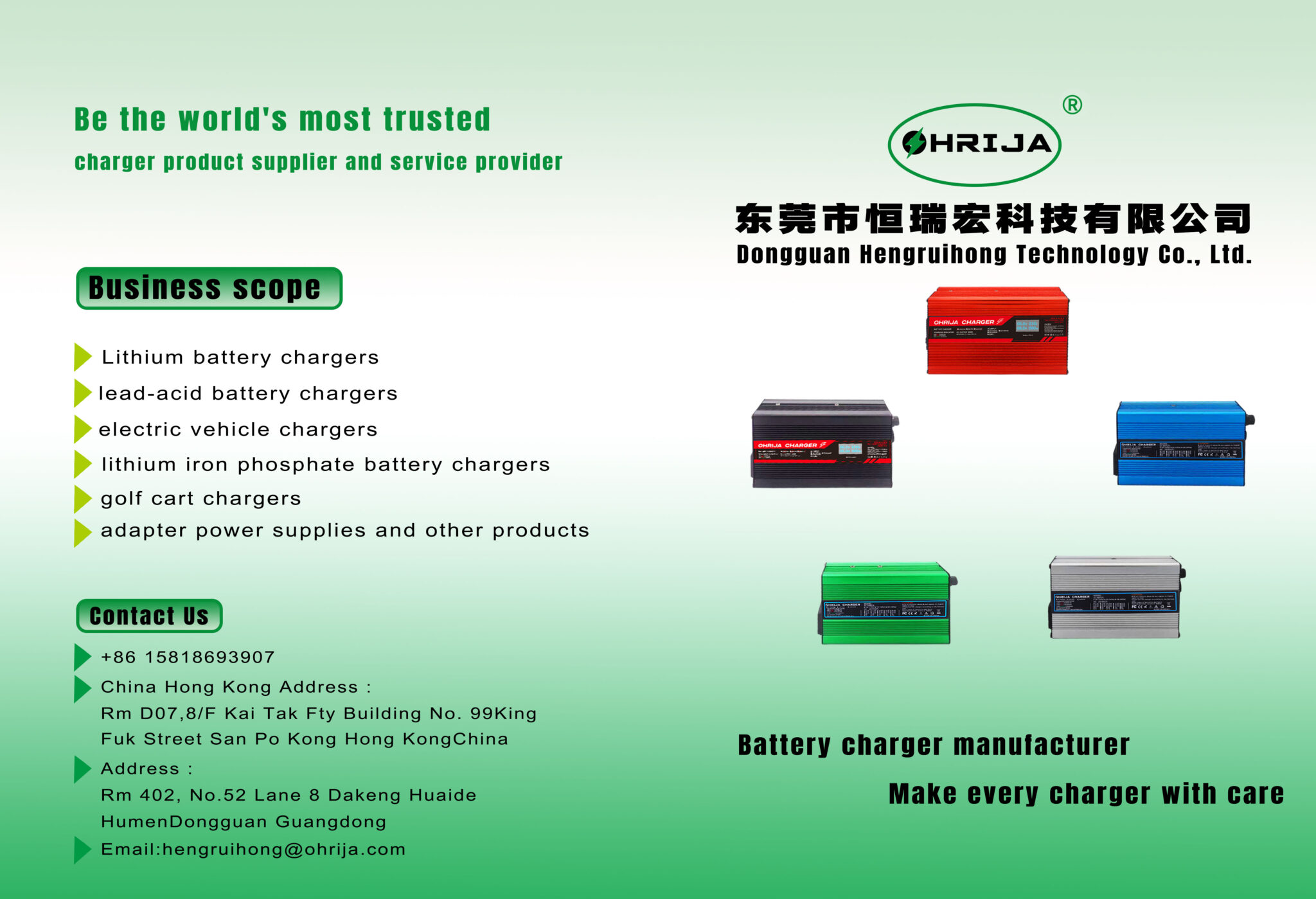
OHRIJA eBike battery charger manufacturer
OHRIJA brand belongs to Dongguan Hengruihong Technology Co., Ltd., which was established in 2020 and is headquartered in Dongguan, Guangdong Province, China. Our company is a high-tech enterprise integrating R&D, production, and sales.
The company’s main products include high-precision lithium battery chargers, lithium iron phosphate battery chargers, lead-acid battery chargers, golf cart chargers, power adapters, and commercial switching power supplies. By controlling the entire manufacturing pipeline, we ensure that every charger delivers a flawless CC/CV profile, protecting your battery assets from the common mistakes that destroy lesser packs.
Learn More About OHRIJA TechnologyWhether you need to review our battery charger FAQs to troubleshoot an issue, or you require a massive industrial upgrade, investing in OHRIJA’s certified power solutions is the ultimate safeguard for your lithium investments.
Frequently Asked Questions (FAQ)
Can I leave my lithium battery on the charger overnight?
While modern smart chargers have an automatic cut-off feature, leaving a lithium battery plugged in indefinitely holds the cells at their maximum voltage stress state. Over time, this accelerates capacity loss. We recommend unplugging the charger once the battery reaches 100%.
Is it safe to charge a lithium battery immediately after riding?
No. Charging a battery that is already hot from heavy discharge compounds thermal stress, which damages the internal cell chemistry. Always allow the battery to cool to room temperature for at least 30 to 60 minutes before initiating a charge cycle.
Can I use a lead-acid charger on a lithium battery?
Absolutely not. Lead-acid chargers often use a multi-stage profile that includes a high-voltage desulfation phase. This high-voltage spike can destroy the lithium Battery Management System (BMS) and potentially trigger a dangerous thermal runaway event.
Authoritative Industry References
To ensure your charging practices align with global safety standards and battery longevity metrics, we advise consulting the following authoritative organizations:
- National Fire Protection Association (NFPA) – Provides critical safety guidelines and standards for mitigating fire risks associated with lithium-ion battery charging and storage.
- Institute of Electrical and Electronics Engineers (IEEE) – Publishes peer-reviewed engineering standards outlining the exact electrical tolerances and CC/CV algorithmic requirements for safe lithium charging architectures.
- U.S. Department of Energy (DOE) – Offers foundational, government-backed research on how lithium-ion intercalation works and the environmental factors that contribute to cell degradation.