
No products in the cart.

The proliferation of personal electric vehicles, power stations, and lithium-based tools has fundamentally changed how we consume electricity in our residences. You likely have thousands of dollars invested in e-bikes, mobility scooters, and portable power banks. However, a startling number of consumers jeopardize these investments—and their physical safety—by utilizing cheap, substandard charging equipment. When Choosing a Battery Charger for Home Use, you are not merely buying a power cord; you are selecting a critical piece of power management infrastructure that dictates the lifespan and safety of highly volatile chemical energy storage.
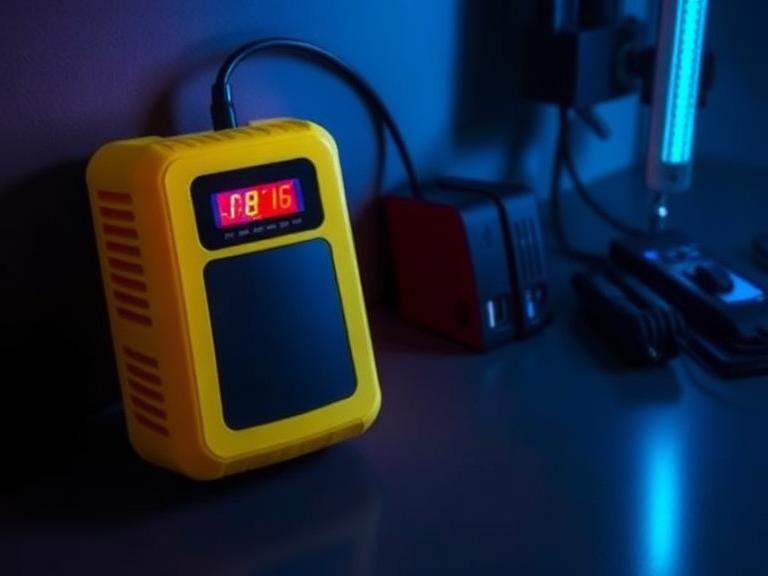
From our experience engineering and manufacturing commercial-grade power supplies at OHRIJA, we routinely witness the catastrophic aftermath of poor charger selection. Melted charging ports, degraded lithium cells, and residential thermal events (fires) are almost entirely preventable. The market is saturated with generic, uncertified plastic bricks that aggressively push voltage without monitoring thermal thresholds. In this comprehensive, practitioner-led guide, we will outline exactly what you must scrutinize before plugging a device into your wall. We will abandon neutral suggestions and provide the hard, commercial judgment necessary to protect your home and your hardware.
Quick Answer: What to Look For
When Choosing a Battery Charger for Home Use, the 10 non-negotiable checks are: 1) Chemistry Compatibility (Li-ion vs. LiFePO4 vs. Lead-Acid), 2) Exact Peak Voltage Matching (e.g., 54.6V for a 48V nominal Li-ion pack), 3) Appropriate Current/Amperage (safely matched to your battery’s Ah rating), 4) Cooling Mechanisms (aluminum casing and active fans over plastic), 5) Safety Certifications (UL, CE, RoHS), 6) Smart Cut-Off Features (CC/CV algorithms), 7) Connector Type Compatibility, 8) AC Input Voltage Range, 9) Build Quality and Materials, and 10) Manufacturer Reputation and Warranty. Never compromise on cooling and chemistry matching.
Table of Contents
- What is a Home Battery Charger?
- How Smart Charging Technology Works
- 10 Things to Check When Choosing a Battery Charger for Home Use
- The Benefits of Premium Charging Hardware
- Limitations to Be Aware Of
- Who Should Upgrade (And Who Shouldn’t)
- Common Charging Mistakes to Avoid
- Summary & Comparison Tables
- Expert Recommendation from OHRIJA
- Frequently Asked Questions (FAQ)
What is a Home Battery Charger?
A home battery charger is a specialized electronic device designed to convert standard residential alternating current (AC, typically 110V-240V) into direct current (DC) to safely replenish the chemical energy inside a battery pack. While older trickle chargers continuously pushed a low current indefinitely, modern smart chargers act as digital gatekeepers. They communicate with the battery’s internal Battery Management System (BMS) to deliver precise voltages and amperages based on the battery’s current state of charge, ambient temperature, and cell resistance.
How Smart Charging Technology Works
In most professional situations, safely charging a high-capacity lithium battery requires a strict CC/CV (Constant Current / Constant Voltage) algorithm. First, the charger enters the Constant Current phase, pushing a steady stream of amperage into the depleted battery, allowing it to rapidly absorb energy up to roughly 80% capacity. Once the battery hits its peak voltage threshold, the charger shifts into the Constant Voltage phase. Here, it holds the voltage firm while the amperage naturally tapers down to near zero. This critical second phase allows the internal cells to balance perfectly. Once the current drops below a designated threshold, the smart charger physically cuts the power, preventing overcharging and thermal runaway.
10 Things to Check When Choosing a Battery Charger for Home Use
1. Exact Chemistry Compatibility
You cannot use a generic charger across different battery chemistries. A 48V Lithium-Ion (NMC) battery operates differently than a 48V Lithium Iron Phosphate (LiFePO4) battery, and both operate vastly differently from a 48V Lead-Acid battery. Lead-acid chargers utilize high-voltage desulfation pulses that will instantly destroy a lithium BMS. When Choosing a Battery Charger for Home Use, you must verify the internal chemistry of your device. If you own an LFP system, you must select from the best LiFePO4 battery chargers 2025.
2. Peak Voltage Matching
A “48V” battery is merely a nominal designation. In reality, a standard 13-series (13S) 48V lithium-ion battery requires a peak charging voltage of exactly 54.6V (13 cells x 4.2V max per cell). If you purchase a generic charger that only outputs a flat 48.0V, your battery will never charge past 50% capacity. Conversely, applying a 60V charger to a 48V battery will result in catastrophic overvoltage and a potential fire. Always match the charger’s output voltage to your battery’s specified peak voltage.
3. Appropriate Current (Amperage) Output
Amperage dictates the speed of the charge. While fast charging is convenient, pushing too many amps into a small battery generates destructive heat, rapidly degrading the lithium cathode. In our testing, the optimal charge rate is between 0.2C and 0.5C (where C is the total amp-hour capacity of your battery). For a 20Ah eBike battery, a 4A to 10A charger is ideal. Seeking out the best lithium ion battery charger 48V requires balancing your desired charge time with the thermal limits of your pack.
4. Cooling Mechanisms (Active vs. Passive)
AC to DC conversion generates massive amounts of heat. Cheap chargers utilize sealed plastic shells, acting as thermal insulators that slowly cook the internal capacitors to death. For commercial users or anyone utilizing a charger over 3 Amps, we mandate chargers built with extruded aluminum shells and integrated, thermostatic cooling fans. Heat dissipation is the number one factor in charger longevity.
5. Verified Safety Certifications
Never plug uncertified electronics into your residential wall outlets. You must physically verify that the charger bears authentic certification marks from recognized global testing laboratories, such as UL (Underwriters Laboratories), CE, RoHS, and FCC. These certifications guarantee the unit has passed rigorous short-circuit, over-voltage, reverse-polarity, and high-temperature stress tests.
6. Smart Cut-Off and BMS Communication
A premium charger must possess a hard physical cut-off relay. When the battery reaches 100% capacity, the charger must stop sending current entirely. Inferior chargers will continue to push a micro-current (trickle charge) past 100%, causing continuous voltage stress on the lithium cells, which leads to swelling and premature failure. Choosing a Battery Charger for Home Use means prioritizing intelligent CC/CV termination.
7. Connector Type and Polarity
Do not assume that all 3-pin connectors are wired the same. Your device might use an XT60, XT90, Anderson 50A, XLR, or GX16 aviation plug. More importantly, you must verify the polarity (which pin is positive and which is negative). Reversing the polarity by jamming an incompatible plug into your battery will instantly blow the internal fuses and fry the BMS.
8. Input Voltage Flexibility
If you travel internationally or utilize generators during power outages, your charger must be capable of handling variable AC inputs. Look for wide-voltage chargers that accept 100V-240V AC. This ensures the internal switching power supply will operate safely whether plugged into a standard US 110V outlet or a European 220V grid.
9. Build Quality and Material Integrity
Hold the charger in your hand. If a high-amperage charger feels hollow and lightweight, the manufacturer has stripped out necessary copper coils, heavy-duty transformers, and heat sinks to cut costs. Professional-grade chargers, like those found when researching the best eBike battery chargers 2026, possess significant physical heft due to the robust internal copper winding and aluminum chassis.
10. Manufacturer Reputation and Warranty
Do not buy critical electrical hardware from anonymous, alphabet-soup brand names on discount marketplaces. Source your equipment from established, transparent manufacturers who specialize strictly in power conversion technology. A reputable manufacturer will offer a robust warranty and provide accessible customer support for technical inquiries.
The Benefits of Premium Charging Hardware
The primary benefit of rigorously evaluating your charging equipment is the drastic extension of your battery’s operational lifespan. Lithium cells are expensive; a replacement eBike battery often costs upwards of $500. By delivering clean, ripple-free current via a precise CC/CV algorithm, a premium charger ensures your cells remain perfectly balanced, extending their usable cycle life from an average of 500 cycles to over 1,000 cycles. Furthermore, high-quality aluminum-cased chargers eliminate the residential fire risks associated with cheap, overheating plastic adapters.
Limitations to Be Aware Of
We recommend approaching charging hardware with realistic expectations. The main limitation of high-quality, high-amperage smart chargers is their physical footprint and weight. An industrial-grade 12V 50A power supply 600W or a heavy-duty eBike charger is not something you easily toss into a small backpack for a quick ride. They require proper ventilation space during operation and represent a higher initial capital investment compared to basic trickle chargers.
Who Should Upgrade (And Who Shouldn’t)
For commercial users and heavy-duty applications: If you operate mobility scooter fleets, utilize off-grid solar storage, or ride high-performance 72V/84V eBikes, you must upgrade to premium, aluminum-cased smart chargers. The demands you place on your battery packs require the exact precision offered by a dedicated adjustable power supply manufacturer.
Who does not need it: For beginners utilizing extremely low-capacity, low-voltage consumer electronics (like small 5V flashlights or basic RC toys), the internal circuitry manages the charge rate sufficiently. The standard wall adapter provided by the manufacturer is usually adequate for these disposable-level devices.
Common Charging Mistakes to Avoid
The most catastrophic mistake users make is “charger sharing.” Just because the plug fits does not mean the charger is compatible. Using a 60V charger on a 48V battery or a lead-acid charger on a lithium pack will invariably cause critical failures. Always label your chargers with a sharpie to designate which specific vehicle or battery they belong to.
Another profound error is charging batteries immediately after a heavy discharge. When you finish a strenuous ride, the battery core is hot. Plugging the charger in immediately compounds this thermal stress, baking the lithium cells from the inside out. Always allow the battery to rest and cool to room temperature for 45 minutes before initiating a charge cycle.
Summary & Comparison Tables
| Specification | What to Look For | Why It Matters |
|---|---|---|
| Chemistry Match | Li-ion, LiFePO4, or Lead-Acid specific | Prevents destructive over-voltage or under-charging. |
| Peak Voltage | Must match battery max (e.g., 54.6V for 48V nominal) | Ensures the battery achieves a 100% full charge state. |
| Charge Rate (Amps) | 0.2C to 0.5C of battery capacity | Balances fast charging with thermal cell protection. |
| Casing Material | Extruded Aluminum with Fan | Dissipates AC/DC conversion heat to prevent fires. |
| Feature | Premium Smart Charger (OHRIJA) | Cheap Generic Marketplace Charger |
|---|---|---|
| Charging Algorithm | Strict CC/CV with physical auto-cutoff at 100% | Basic voltage push; often continuous trickle charge past 100% |
| Thermal Management | Aluminum shell acting as a heat sink + internal fan | Sealed plastic box acting as a thermal insulator |
| Safety Certifications | UL, CE, RoHS verified | Counterfeit or non-existent stamps |
| Component Quality | Heavy copper winding, robust capacitors | Minimal shielding, high risk of internal short-circuit |
| The Pros (Advantages) | The Cons (Disadvantages) |
|---|---|
| Drastically reduces vehicle downtime. | Generates more heat, which can stress smaller battery packs. |
| Ideal for large capacity (20Ah+) battery banks. | Requires bulkier charger housings and cooling fans (noise). |
| Allows for rapid “opportunity charging” mid-day. | Higher initial purchase price compared to standard 2A chargers. |
Expert Recommendation from OHRIJA
In most professional situations, the power supply dictates the survival of the equipment. Choosing a Battery Charger for Home Use is an exercise in risk mitigation. You cannot safely manage the dense chemical energy of modern lithium packs using cheap, plastic, uncertified adapters. We recommend completely avoiding third-party generic chargers and investing strictly in aluminum-cased, CC/CV validated equipment.
If you require reliable, safe, and efficient power management for your 48V mobility devices, the engineering team at OHRIJA provides the exact specifications required by premium lithium cells.

OHRIJA Li-ion Battery Charger 54.6V 5A
Engineered explicitly for 13S 48.1V Lithium-Ion batteries, this commercial-grade charger eliminates the thermal hazards associated with generic plastic chargers.
- Product Material: Heavy-duty aluminum alloy shell for superior heat dissipation.
- Output Voltage: Maximum 54.6V ±0.2v (Perfect peak match for 48V nominal packs).
- Output Current: Maximum 5Amp ±0.2a for safe, rapid charging.
- Working Power: Maximum 295W continuous load.
- Customizable Connectors: XT60, XT90, Anderson 50A, XLR, GX16, and more to perfectly match your specific battery port.
To understand more about our commitment to power supply safety, review the Ohrija charger company profile. For further troubleshooting regarding your specific vehicle, please consult our detailed battery charger FAQs.
Frequently Asked Questions (FAQ)
Can I use a higher amperage charger than my battery’s original specification?
Yes, but within strict limits. In most professional situations, lithium-ion batteries can safely handle a charge rate of 0.2C to 0.5C (C equals the battery’s amp-hour capacity). Using a 5A charger on a 15Ah battery is perfectly safe and faster, but using a 10A charger on a 10Ah battery will generate excessive heat and permanently degrade the cells.
Why does my plastic battery charger get so hot during use?
Plastic is a thermal insulator. Cheap generic chargers trap the heat generated by the internal AC-to-DC conversion process. We strongly advise replacing plastic chargers with aluminum-cased chargers equipped with internal cooling fans, as excessive heat leads to component failure and presents a severe residential fire risk.
What happens if I use a Li-ion charger on a LiFePO4 battery?
A standard Li-ion battery (like a 48V pack) requires a peak charge voltage of 54.6V. A 48V LiFePO4 battery requires a peak charge of 58.4V. If you use a Li-ion charger on a LiFePO4 battery, it will only charge the battery to about 80% capacity, resulting in drastically reduced range and poor cell balancing.
Authoritative Industry References
To ensure your charging protocols and hardware selections adhere to the strictest global safety and engineering standards, we strongly advise consulting the following technical resources:
- National Fire Protection Association (NFPA) – Provides critical safety guidelines, recall information, and consumer protection protocols regarding lithium-ion battery and charger safety to prevent thermal runaway incidents in residential settings.
- Battery University (by Cadex Electronics) – Comprehensive technical breakdowns regarding the CC/CV algorithms required for safely charging various lithium-ion chemistries.
- U.S. Consumer Product Safety Commission (CPSC) – Federal guidelines and safety alerts regarding the procurement and usage of certified charging equipment for e-bikes and micromobility devices.