
No products in the cart.

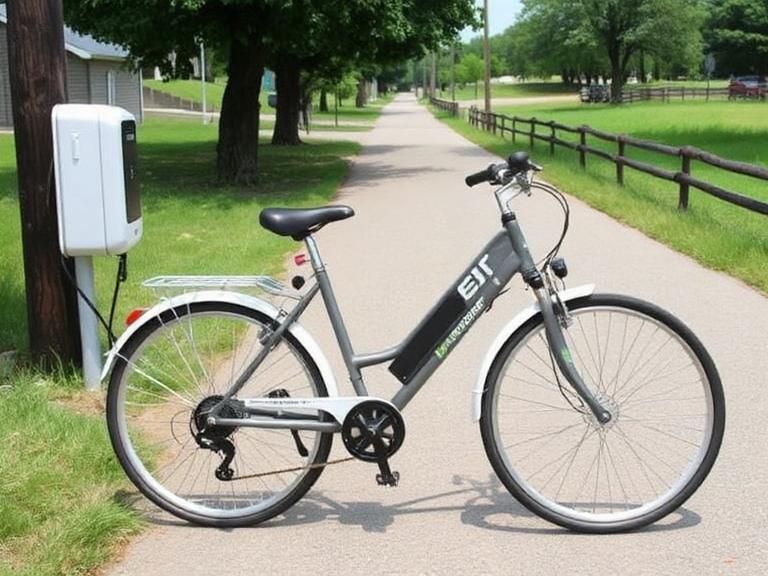
The cultural landscape of rural America is experiencing a quiet but profound technological shift. Observers driving through regions like Holmes County, Ohio, or Lancaster County, Pennsylvania, are increasingly witnessing members of the Amish community traveling not just by horse and buggy, but on high-powered electric bicycles. This rapid adoption of modern mobility raises an immediate technical paradox: the Amish strictly avoid connecting to the public electrical grid. Therefore, understanding exactly how Amish charge their e-bikes requires a deep look into off-grid energy architecture, solar power applications, and highly efficient battery charging technology.
OHRIJA is a premier brand belonging to Dongguan Hengruihong Technology Co., Ltd., established in 2020 and headquartered in Dongguan, Guangdong Province, China. As a high-tech enterprise integrating R&D, production, and sales, we specialize in high-efficiency power solutions. Our core product lineup includes lithium battery chargers, lithium iron phosphate battery chargers, lead-acid battery chargers, golf cart chargers, power adapters, and switching power supplies. We provide reliable charging infrastructure for off-grid and on-grid mobility applications worldwide.
From our experience engineering advanced lithium-ion charging solutions at OHRIJA, we know that off-grid power management is an exacting science. When energy is limited to what you can generate and store locally, the efficiency of your power adapters and chargers becomes the most critical factor in your transportation network. In this comprehensive technical guide, we will analyze the specific off-grid systems utilized by these communities, detail the electrical conversion processes involved, and explain the essential role that high-quality chargers play in ensuring these independent mobility networks remain functional year-round.
Table of Contents
- 1. Understanding Amish Grid Restrictions and E-Bike Adoption
- 2. Primary Methods: How Amish Charge Their E-Bikes
- 3. The Importance of Charger Efficiency in Off-Grid Systems
- 4. OHRIJA Charging Solutions for E-Bike Systems
- 5. Battery Chemistry and Off-Grid Maintenance Protocols
- 6. Summary Table: Amish E-Bike Charging Infrastructure
- 7. Frequently Asked Questions (FAQs)
- 8. Industry References
1. Understanding Amish Grid Restrictions and E-Bike Adoption
To understand how Amish charge their e-bikes, one must first understand the rules established by the church leadership, known as the Ordnung. The Amish do not reject technology outright; rather, they reject technologies that threaten community cohesion or foster dependence on the outside world. Connecting a home or barn to the public electrical grid is widely prohibited because it represents a literal and figurative tie to worldly infrastructure. However, generating independent, localized power—such as through solar panels or diesel generators—is often permitted because it maintains the community’s self-reliance.
Electric bicycles have been embraced by numerous Amish settlements because they offer drastically improved mobility for commuting to job sites, visiting relatives, or running errands, without requiring the feeding and care of a horse, or the acquisition of an automobile (which remains strictly forbidden). Because the e-bike itself is viewed as a tool, and the electricity used to power it is generated independently, the method by which Amish charge their e-bikes perfectly aligns with their core philosophy of off-grid independence.
2. Primary Methods: How Amish Charge Their E-Bikes
When investigating the infrastructure behind these transportation networks, we see highly sophisticated, self-contained microgrids. The way Amish charge their e-bikes relies on capturing, storing, and converting energy autonomously.
Solar Power Systems and Deep-Cycle Banks
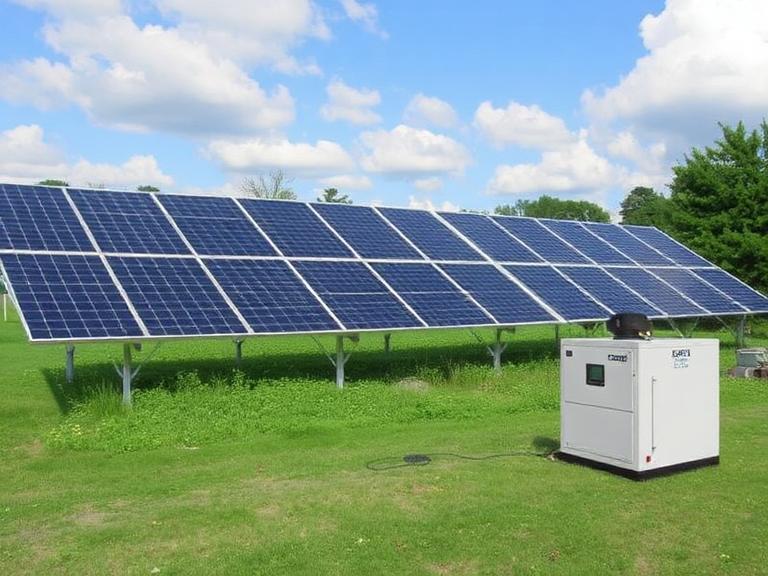
The most prominent method by which Amish charge their e-bikes is through localized solar power arrays. Many Amish barns and workshops are equipped with heavy-duty solar panels. During the day, these panels harvest solar energy and funnel it through a charge controller into a massive bank of deep-cycle batteries. Historically, these were flooded lead-acid or Absorbent Glass Mat (AGM) batteries, but modern setups are increasingly utilizing high-capacity Lithium Iron Phosphate (LiFePO4) banks due to their superior cycle life and depth of discharge capabilities. This stored solar energy is the primary reservoir used when Amish charge their e-bikes after a day of travel.
Diesel and Natural Gas Generators
While solar is the preferred energy source during the long, sunny days of summer, the winter months present a severe challenge in regions like Ohio and Pennsylvania. Snow cover and short daylight hours severely reduce solar yield. During these periods, Amish charge their e-bikes using heavy-duty diesel, propane, or natural gas generators. These generators are typically housed in dedicated outbuildings to mitigate noise. The generators are often run for a few hours a day to rapidly recharge the primary deep-cycle battery bank, ensuring that the e-bike chargers have a steady supply of power to draw from overnight.
The Critical Role of Inverter Technology
E-bike batteries cannot be plugged directly into a 12V or 24V solar battery bank. Standard e-bike chargers require 110V or 220V Alternating Current (AC) to function. Therefore, the off-grid system must utilize a pure sine wave inverter. The inverter pulls the 12V/24V Direct Current (DC) from the storage bank and converts it into clean 120V AC household power. The e-bike charger is then plugged into the inverter. From our experience at OHRIJA, the quality of the inverter is crucial; modified sine wave inverters can damage the sensitive switching power supplies found inside high-end lithium battery chargers.
3. The Importance of Charger Efficiency in Off-Grid Systems
When relying on a finite energy source like a solar battery bank, every watt of electricity is precious. If an e-bike charger is poorly designed, it will bleed energy as excess heat during the conversion process from 120V AC back down to the specific DC voltage required by the e-bike battery. When Amish charge their e-bikes, an inefficient charger will drain their solar storage bank unnecessarily, potentially leaving them without power for other essential tools or lighting.
We recommend utilizing switching power supply chargers with an efficiency rating of over 85 percent. High-quality chargers utilize advanced microprocessors to monitor the charging curve, entering a strict constant-current (CC) phase followed by a constant-voltage (CV) phase, and finally shutting off entirely when the battery is full. This automatic cutoff is vital for off-grid users, as it prevents parasitic power draw from draining the inverter overnight after the e-bike battery has reached 100 percent capacity.
4. OHRIJA Charging Solutions for E-Bike Systems
At Dongguan Hengruihong Technology Co., Ltd., our OHRIJA brand engineers chargers specifically designed to handle the rigorous demands of daily e-bike commuting. Different e-bikes require different voltages based on their motor size and payload capacity. Amish users, who often haul heavy cargo trailers or transport building materials, require robust electrical systems. We categorize our primary lithium-ion charging solutions to meet these distinct demands.
36V Systems for Standard Commuting
For standard commutes over relatively flat terrain, many e-bikes operate on a 36V system (which utilizes 10 lithium-ion cells in series). For these applications, we recommend the 10s 42V Lithium ion ELECTRIC BICYCLE CHARGER. This charger outputs the precise 42 volts required to safely top off a 36-volt nominal pack. Its efficient thermal management ensures stable operation even in non-climate-controlled barns or sheds.
48V Systems for Hauling and Cargo
When Amish charge their e-bikes used for hauling groceries, pulling child trailers, or navigating rolling hills, they typically rely on more powerful 48V e-bike systems. To properly service these batteries, the OHRIJA 13s 54.6V Lithium ion ELECTRIC BICYCLE CHARGER is required. Designed for 13-series battery packs, this charger delivers consistent, clean power, ensuring the battery cells remain perfectly balanced, which is critical for maximizing the range and lifespan of the e-bike.
60V Systems for Heavy-Duty Topography
In regions with steep topographies or for specialized heavy-duty electric cargo trikes, 60V systems are becoming the standard. These massive battery packs require specialized charging hardware to prevent thermal runaway. We supply the 16s 67.2V Lithium ion ELECTRIC BICYCLE CHARGER for these exact scenarios. When Amish charge their e-bikes that operate at these high voltages, our 67.2V charger provides rapid, safe energy transfer, allowing the rider to get back on the road quickly without overburdening the off-grid inverter system.
5. Battery Chemistry and Off-Grid Maintenance Protocols
A major challenge when Amish charge their e-bikes off the grid is environmental temperature control. Lithium-ion batteries are highly sensitive to extreme cold. Charging a lithium battery when its internal temperature drops below freezing (32 degrees Fahrenheit or 0 degrees Celsius) will cause irreversible lithium plating on the anode, permanently destroying the battery’s capacity and creating a severe fire hazard.
Our testing indicates that off-grid charging stations must be located in insulated areas. Many Amish users construct dedicated, insulated charging cabinets inside their barns, sometimes utilizing a small, low-wattage incandescent bulb to generate just enough ambient heat to keep the e-bike batteries above freezing during the winter months. Furthermore, we recommend unplugging the charger from the inverter once the charge cycle is complete to protect the charger from potential voltage spikes when heavy farm equipment is activated on the same off-grid circuit.
6. Summary Table: Amish E-Bike Charging Infrastructure
To summarize the complex microgrid architecture, the table below outlines the sequential flow of energy that illustrates how Amish charge their e-bikes without public grid access.
| Energy Stage | Equipment Utilized | Primary Function in the Off-Grid Network |
|---|---|---|
| Generation | Solar Panels / Diesel Generators | Harvests ambient sunlight or burns fuel to create raw, localized electrical power. |
| Storage | Deep-Cycle Battery Bank (LiFePO4 or AGM) | Stores generated DC power (12V, 24V, or 48V) for use during night or cloudy periods. |
| Conversion | Pure Sine Wave Inverter | Converts stored low-voltage DC power into 120V AC household power. |
| Charging | OHRIJA Lithium-ion Chargers | Steps 120V AC down to exact DC voltage (e.g., 42V, 54.6V, 67.2V) to safely charge the e-bike. |
| Mobility | E-Bike Lithium Battery Pack | Stores the final refined energy to propel the motor for off-grid transportation. |
7. Frequently Asked Questions (FAQs)
Are e-bikes universally accepted in all Amish communities?
No. The Amish are not a monolithic group. Each local church district establishes its own Ordnung (rules). While many progressive New Order and some Old Order communities permit e-bikes as necessary tools for labor and commuting, highly conservative groups (such as the Swartzentruber Amish) still strictly prohibit them.
Why don’t the Amish just charge their e-bikes using public electricity?
The core philosophy of Amish culture is separation from the world. Being physically tethered to public utility lines is viewed as becoming “yoked” to the outside world, creating an unacceptable level of dependence on secular society and government infrastructure.
Can I use a cheap modified sine wave inverter to run an OHRIJA e-bike charger?
From our experience, we strongly advise against it. Modified sine wave inverters produce a blocky, stepped electrical wave that can cause the sensitive transformers inside high-quality switching power supplies to overheat, buzz loudly, and eventually fail prematurely. Always use a pure sine wave inverter when Amish charge their e-bikes or when charging any lithium-ion battery off-grid.
What happens if you use the wrong voltage charger on an e-bike?
Using a charger with a voltage higher than the battery’s maximum rating will bypass the Battery Management System (BMS) protections, leading to severe overcharging, thermal runaway, and potential fire. You must match the charger exactly. For instance, a 48V battery requires our 13s 54.6V Lithium ion ELECTRIC BICYCLE CHARGER, nothing higher.