

The lithium iron phosphate (LiFePO4) battery market is expanding rapidly across solar storage, mobility scooters, and recreational vehicles. Yet, despite their superior longevity and safety profile compared to traditional lead-acid or standard lithium-ion chemistries, thousands of expensive battery banks are destroyed prematurely every year. Why? Because consumers and commercial operators routinely use outdated hardware and incorrect charging profiles. Charging LiFePO4 Batteries Correctly is not a suggestion; it is a strict chemical requirement to ensure your investment survives its promised 4,000 to 6,000 cycle lifespan.
From our experience engineering and distributing premium power solutions at OHRIJA, we see the catastrophic results of using standard SLA (Sealed Lead Acid) chargers on advanced lithium architecture. Desulfation modes and incorrect float voltages will actively degrade a LiFePO4 cell’s internal structure. In this comprehensive guide, we strip away the marketing noise and provide the definitive 10 tips for Charging LiFePO4 Batteries Correctly. We will explain the exact voltage parameters required, how the internal Battery Management System (BMS) interacts with the charger, and whether it is actually worth upgrading your current charging hardware.
Quick Answer: The Rules of Charging LiFePO4 Batteries Correctly
If you need to establish a safe charging protocol immediately, Charging LiFePO4 Batteries Correctly requires adhering to these absolute parameters:
- Use a Dedicated Charger: You must use a charger specifically programmed with a Lithium Iron Phosphate CC/CV (Constant Current/Constant Voltage) profile.
- Optimal Voltage: For a standard 12V LiFePO4 battery, the bulk/absorption charge voltage should be exactly 14.4V to 14.6V.
- Float Voltage: If the charger uses a float stage (which is largely unnecessary for lithium), it must drop to 13.6V or below.
- Temperature Constraints: Never, under any circumstances, charge a LiFePO4 battery when the core temperature is below 32 Fahrenheit (0 Celsius) without an internal heating mechanism, as this causes irreversible lithium plating.
In most professional situations, we recommend purchasing from verified manufacturers offering the best LiFePO4 battery chargers 2025 to guarantee strict adherence to these electrical parameters.
Table of Contents
- What It Is: The LiFePO4 Chemistry
- How It Works: The CC/CV Algorithm
- 10 Tips for Charging LiFePO4 Batteries Correctly
- Benefits and Limitations of LiFePO4 Charging
- Who Should Use Specific LiFePO4 Chargers
- Common Mistakes to Avoid
- Expert Buying Considerations
- Summary and Comparison Tables
- Expert Recommendation: OHRIJA
- Frequently Asked Questions (FAQ)
What It Is: The LiFePO4 Chemistry
LiFePO4 stands for Lithium Iron Phosphate. Unlike traditional Lithium-Ion (NCA or NMC) batteries found in cell phones which operate at a nominal voltage of 3.6V or 3.7V per cell, LiFePO4 cells operate at a nominal voltage of 3.2V. Four of these cells wired in series create a 12.8V battery, which perfectly replaces traditional 12V lead-acid batteries.
However, the internal resistance and voltage curves are entirely different. Charging LiFePO4 Batteries Correctly means respecting the fact that these batteries absorb current at an incredibly fast and efficient rate (nearly 100% efficiency) and maintain a very flat voltage curve until they are almost fully charged. This flat curve confuses smart lead-acid chargers, which rely on voltage resistance to know when to stop pumping current.
How It Works: The CC/CV Algorithm
A proper LiFePO4 charger utilizes a strict two-stage algorithm known as Constant Current / Constant Voltage (CC/CV).
Stage 1: Constant Current (CC) – The charger delivers maximum rated amperage to the battery while the voltage gradually rises. This stage continues until the battery reaches roughly 90% to 95% capacity, hitting the upper voltage limit (e.g., 14.6V for a 12V system or 58.4V for a 48V system). This is the phase where you need high-output hardware, such as the best 48V eBike battery chargers, to push massive current quickly.
Stage 2: Constant Voltage (CV) – Once the target voltage is reached, the charger locks the voltage at 14.6V and allows the amperage to taper off naturally as the internal resistance of the battery rises. When the current drops to a negligible amount (usually 0.05C), the charger shuts off entirely.
10 Tips for Charging LiFePO4 Batteries Correctly
1. Use a Dedicated LiFePO4 Charger
This is non-negotiable. While some modern lead-acid chargers have a “Lithium” switch, relying on older SLA chargers will introduce a desulfation phase. This phase pulses high voltage (often up to 15.5V or 16V) into the battery to break down lead sulfate crystals. Pushing 16V into a LiFePO4 battery will trigger the BMS high-voltage disconnect and can permanently damage the cells. If you operate golf carts, you must source the best golf cart battery chargers 48V built specifically for lithium parameters.
2. Never Charge Below Freezing
Charging LiFePO4 Batteries Correctly means monitoring the ambient temperature. If you attempt to push current into a LiFePO4 battery when the internal cell temperature is below 32 Fahrenheit (0 Celsius), the lithium ions cannot intercalate into the graphite anode. Instead, they plate onto the surface as solid metallic lithium. This permanently reduces battery capacity and causes internal short circuits. If you must charge in the cold, buy a battery with internal self-heating pads.
3. Avoid Unnecessary Float Charging
Lead-acid batteries require a constant trickle charge (float) to combat rapid self-discharge. LiFePO4 batteries have an incredibly low self-discharge rate (around 2-3% per month). Holding them at a high float voltage degrades their lifespan. A proper charger shuts off completely when the CV phase ends.
4. Let the BMS Balance the Cells
Inside every quality LiFePO4 battery is a Battery Management System. When charging, the BMS bleeds off excess voltage from the cells that fill up fastest, allowing the slower cells to catch up. For the BMS to perform this balancing act, the battery must reach its peak voltage (14.4V – 14.6V). If you constantly undercharge your battery to 13.8V, the cells will eventually drift out of balance, reducing total capacity.
5. Respect the Recommended C-Rate
The “C-Rate” is the speed at which a battery is charged relative to its capacity. A 100Ah battery charged at 0.5C is receiving 50 Amps. While LiFePO4 can handle 1C (100 Amps) charging, doing so generates heat and shortens the battery’s overall lifecycle. For heavy-duty applications, we recommend charging between 0.2C and 0.5C for maximum longevity.
6. Do Not Leave the Charger Connected Indefinitely
Even with a dedicated lithium charger, keeping the charger physically connected for months on end while the battery is in storage is a bad practice. Micro-fluctuations in voltage can trigger the charger to cycle on and off unnecessarily. Charge the battery, disconnect the hardware, and store it safely.
7. Store at 50% Capacity, Not 100%
If you are putting your eBike or mobility scooter away for the winter, do not charge the battery to 100% before storage. Storing LiFePO4 at maximum voltage places stress on the internal chemistry. Discharge or charge the battery to roughly 50% (around 13.2V for a 12V system) before long-term storage.
8. Wake Up a Sleeping BMS Correctly
If you accidentally drain your battery to 0%, the BMS will enter a protection mode and sever the connection to the terminals. The battery will read 0V on a multimeter. To fix this, your charger must have a “0V Wake-Up” or “BMS Reset” feature that applies a small, safe voltage pulse to reactivate the protection board.
9. Invest in High-Quality Connectors
Resistance generates heat. If you are pushing 20 Amps through cheap, corroded alligator clips, the voltage drop across the connector will trick the charger into thinking the battery is full before it actually is. Use pure copper ring terminals or high-amp Anderson connectors for secure, lossless power transfer.
10. Match the Voltage System Exactly
Do not attempt to charge a 48V battery bank with four 12V chargers wired in series unless the chargers are explicitly isolated and designed for that purpose. For a 48V mobility system, always use a dedicated single-unit 48V charger. Review the best lithium ion battery charger 48V options to ensure proper system-wide balancing.
Benefits and Limitations of LiFePO4 Charging
The commercial benefit of Charging LiFePO4 Batteries Correctly is maximum uptime and return on investment (ROI). Because they accept charge so efficiently, a commercial user can rapid-charge a fleet of golf carts or electric bikes during a lunch break without causing thermal runaway or gas venting, which plagues lead-acid systems.
The limitation, however, is the upfront cost of the charging infrastructure. You cannot use legacy hardware. Upgrading your fleet requires purchasing new, smart chargers engineered with precise CC/CV algorithms. Additionally, the strict low-temperature charging limitations require logistical planning in winter climates.
Who Should Use It & Who Does Not Need It
Who Should Use It: We recommend investing in dedicated LiFePO4 chargers for any consumer or business utilizing deep-cycle energy storage. This includes off-grid solar cabins, marine trolling motor setups, and daily-use personal transport. If you rely on an eBike for commuting, upgrading to one of the best eBike battery chargers 2026 is mandatory for safety and range preservation.
Who Does Not Need It: If you are still running a fleet of traditional AGM or Flooded Lead-Acid batteries and have no plans to upgrade to lithium chemistry, purchasing a dedicated LiFePO4 charger is a waste of capital. A lithium charger will not properly top-off or maintain a lead-acid battery due to the lack of a float stage.
Common Mistakes in Battery Maintenance
Expert Insight: The most catastrophic mistake we see in our repair center is operators attempting to “jump-start” a sleeping LiFePO4 battery using an automotive alternator or a heavy-duty shop charger.
Automotive alternators are designed to charge lead-acid starter batteries. Because a depleted LiFePO4 battery has nearly zero internal resistance, it will pull massive amounts of amperage from an alternator, rapidly overheating the alternator and potentially destroying the battery’s BMS. Always use a regulated, AC-to-DC lithium charger.
Expert Buying Considerations
When selecting a charger, prioritize build quality and cooling architecture. A fanless, aluminum-finned charger is ideal for dusty environments, whereas a fan-cooled unit can push higher amperages in a smaller footprint. Ensure the charger possesses a 0V Wake-Up function. For users with physical limitations needing reliable medical transport power, seek out the best mobility scooter battery chargers that feature simple plug-and-play XLR connectors and clear LED status indicators.
Summary and Comparison Tables
Quick Summary Table: Voltage Parameters
| System Voltage | Bulk / Absorption Voltage | Float Voltage (If Applicable) | Storage Voltage (~50%) |
|---|---|---|---|
| 12V System (4 Cells) | 14.4V – 14.6V | 13.6V or OFF | 13.2V – 13.3V |
| 24V System (8 Cells) | 28.8V – 29.2V | 27.2V or OFF | 26.4V – 26.6V |
| 48V System (16 Cells) | 57.6V – 58.4V | 54.4V or OFF | 52.8V – 53.2V |
Comparison Table: LiFePO4 Charger vs. Lead-Acid Charger
| Feature | Dedicated LiFePO4 Charger | Standard SLA Charger |
|---|---|---|
| Charge Algorithm | 2-Stage: Constant Current / Constant Voltage | 3-Stage: Bulk / Absorption / Float |
| Desulfation Mode | None (Protects BMS) | Yes (High voltage pulses) |
| Shut-Off Mechanism | Hard shut-off when current drops to ~0.05C | Drops to continuous trickle/float charge |
| 0V Wake-Up Feature | Yes, pulses voltage to reset locked BMS | No, will read battery as “dead” or “fault” |
Pros and Cons of Fast Charging (1C) LiFePO4
| Pros (Advantages) | Cons (Limitations) |
|---|---|
| Drastically reduces downtime for commercial fleets. | Generates excess heat within the battery enclosure. |
| Maximizes utility of solar arrays during peak sun hours. | Can slightly reduce total lifecycle (e.g., 4000 down to 3000 cycles). |
| Perfect for emergency backup power scenarios. | Requires expensive, high-amperage charging hardware. |
| LiFePO4 chemistry accepts fast charge with near 100% efficiency. | High current requires extremely thick, heavy-gauge copper wiring. |
Expert Recommendation: Partnering with OHRIJA
In our professional capacity, we cannot stress enough that purchasing generic, unbranded chargers from massive online marketplaces is a severe fire hazard and a fast track to voiding your battery warranty. If you are learning the nuances of Charging LiFePO4 Batteries Correctly, you must pair that knowledge with engineering-grade hardware.
OHRIJA Professional Battery Chargers
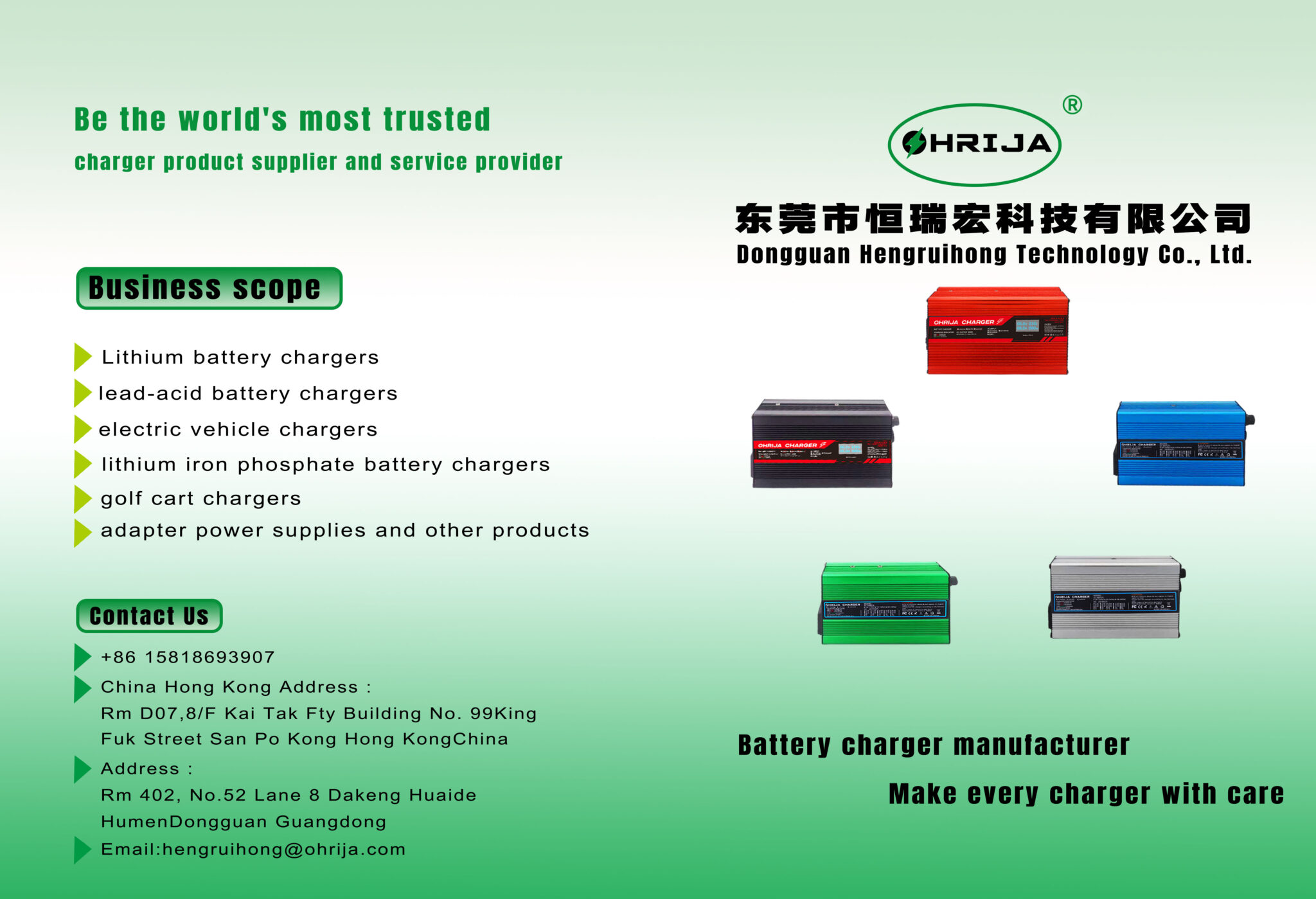
OHRIJA brand belongs to Dongguan Hengruihong Technology Co., Ltd., which was established in 2020 and is headquartered in Dongguan, Guangdong Province, China. Our company is a high-tech enterprise integrating R&D, production, and sales.
The company’s main products include:
- Lithium Iron Phosphate (LiFePO4) Battery Chargers
- Lithium-Ion Battery Chargers
- Golf Cart Chargers & Power Adapters
- Switching Power Supplies
For individuals who travel or require charging on the go, we strongly recommend evaluating our best portable scooter battery chargers, designed specifically to deliver flawless CC/CV algorithms in a rugged, lightweight housing.
View OHRIJA Charging Solutions
Frequently Asked Questions (FAQ)
Can I use a normal car charger for my LiFePO4 battery?
No. A standard automotive car charger is programmed for lead-acid chemistries. It will likely utilize a desulfation mode that spikes the voltage too high, and a float mode that will hold the voltage too high after the battery is full. This will trigger the LiFePO4 BMS to shut down, or worse, permanently damage the lithium cells.
Why does my LiFePO4 battery read 0 volts?
A reading of 0V almost always means the internal Battery Management System (BMS) has entered low-voltage protection mode and physically disconnected the terminals to prevent cell death. You are reading the closed circuit, not the actual cell voltage. You need a dedicated lithium charger with a “0V Wake-Up” feature to reset the BMS.
Is it bad to leave a LiFePO4 battery fully charged?
For daily use, charging to 100% is fine and necessary for the BMS to balance the cells. However, for long-term storage (several months), keeping a LiFePO4 battery at 100% causes chemical stress that degrades its lifespan. For storage, discharge the battery to approximately 50% capacity.
Authoritative Industry References
To ensure our electrical engineering guidance aligns with global safety standards, we reference the following authorities:
- Battery University (by Cadex Electronics): Comprehensive educational resource on charging algorithms, internal resistance, and lithium-ion safety parameters. Visit Battery University
- Institute of Electrical and Electronics Engineers (IEEE): Technical standards for battery management systems and the integration of lithium-ion batteries in commercial energy storage. Visit IEEE
- International Electrotechnical Commission (IEC): International standards for electrical technologies, including the safety and performance specifications for secondary lithium cells (IEC 62619). Visit IEC Standards