

It is a commercial tragedy that riders will spend a thousand dollars on a premium lithium-ion battery, only to plug it into a generic, fifteen-dollar plastic brick purchased from a nameless overseas vendor. From our experience as a dedicated electric bicycle charger supplier, using mismatched or substandard charging equipment is the number one cause of premature battery degradation, capacity loss, and catastrophic thermal runaway. You cannot afford to guess when it comes to power delivery.
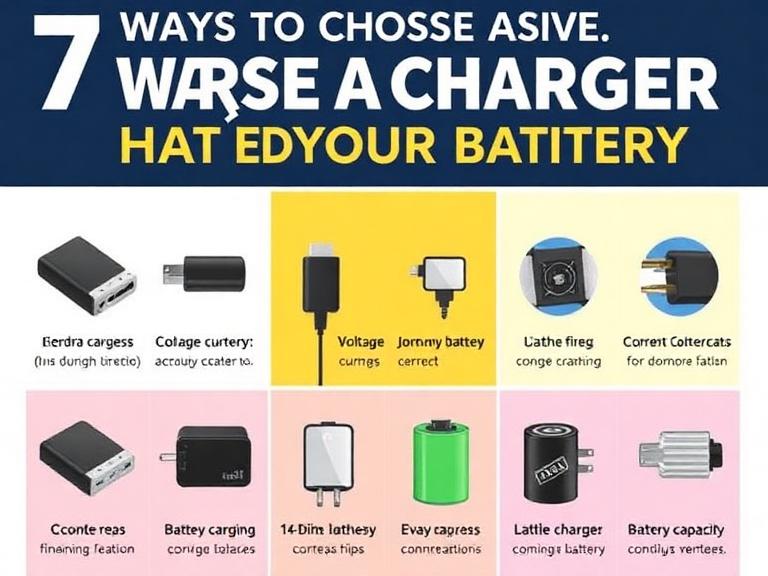
A battery charger is not a simple power cord. It is a highly calibrated piece of industrial equipment operating as the life support system for your battery pack. If you want to maximize the cycle life of your pack and prevent dangerous overcharging, you must learn how to seamlessly Choose a Charger That Matches Your Battery. In this comprehensive guide, we will break down exactly how to evaluate your battery’s specifications and select charging hardware that delivers precise, safe, and efficient power.
Quick Answer: How to Choose a Charger That Matches Your Battery
To safely and effectively Choose a Charger That Matches Your Battery, you must follow these non-negotiable rules:
- Match the Chemistry: Never use a lead-acid charger on a lithium battery, or a Li-ion charger on a LiFePO4 battery.
- Match the Maximum Voltage: Your charger’s output voltage must match the fully charged voltage of your pack (e.g., a nominal 48V Li-ion pack requires a 54.6V charger).
- Calculate the Current (Amperage): Keep your charge current between 0.2C and 0.5C to prevent thermal stress.
- Select the Correct Connector: Ensure your XT60, Anderson, or XLR plug matches perfectly without utilizing cheap adapters.
- Demand Certifications: Only utilize chargers with robust safety certifications (UL, CE) and active thermal management.
Table of Contents
- What It Is: The Anatomy of a Battery Charger
- How It Works: CC/CV Charging Phases
- The 7 Ways to Choose a Charger That Matches Your Battery
- Featured Product: Professional 48V Charging
- Benefits of Precise Charger Matching
- Limitations of Charging Hardware
- Who Should Use Professional Chargers
- Common Mistakes that Destroy Batteries
- Buying Considerations for Heavy-Duty Use
- Expert Recommendation
- Pros vs Cons and Comparison Tables
- Frequently Asked Questions
- Authoritative References
What It Is: The Anatomy of a Battery Charger
A battery charger is an intelligent power converter. It takes alternating current (AC) from your wall outlet and transforms it into direct current (DC) that your battery can store. However, unlike a basic adjustable power supply manufacturer output, a dedicated lithium charger possesses a logic board. This internal brain constantly monitors the resistance and voltage of the battery pack, actively altering the power delivery to prevent overvoltage and overheating.
How It Works: CC/CV Charging Phases
To understand why you must Choose a Charger That Matches Your Battery, you must understand the CC/CV (Constant Current / Constant Voltage) algorithm utilized by modern lithium chargers.
In the Constant Current (CC) phase, the charger pushes its maximum rated amperage (for example, 5A) into the battery while the voltage slowly rises. This is the bulk charging phase where the battery regains about 80% of its capacity. Once the battery reaches its maximum voltage limit, the charger switches to the Constant Voltage (CV) phase. Here, the charger locks the voltage at the absolute maximum limit and slowly tapers down the amperage until it reaches near zero, at which point the charger terminates the cycle. If your charger does not execute this specific algorithm, your battery is in extreme danger.
The 7 Ways to Choose a Charger That Matches Your Battery
1. Identify the Exact Battery Chemistry
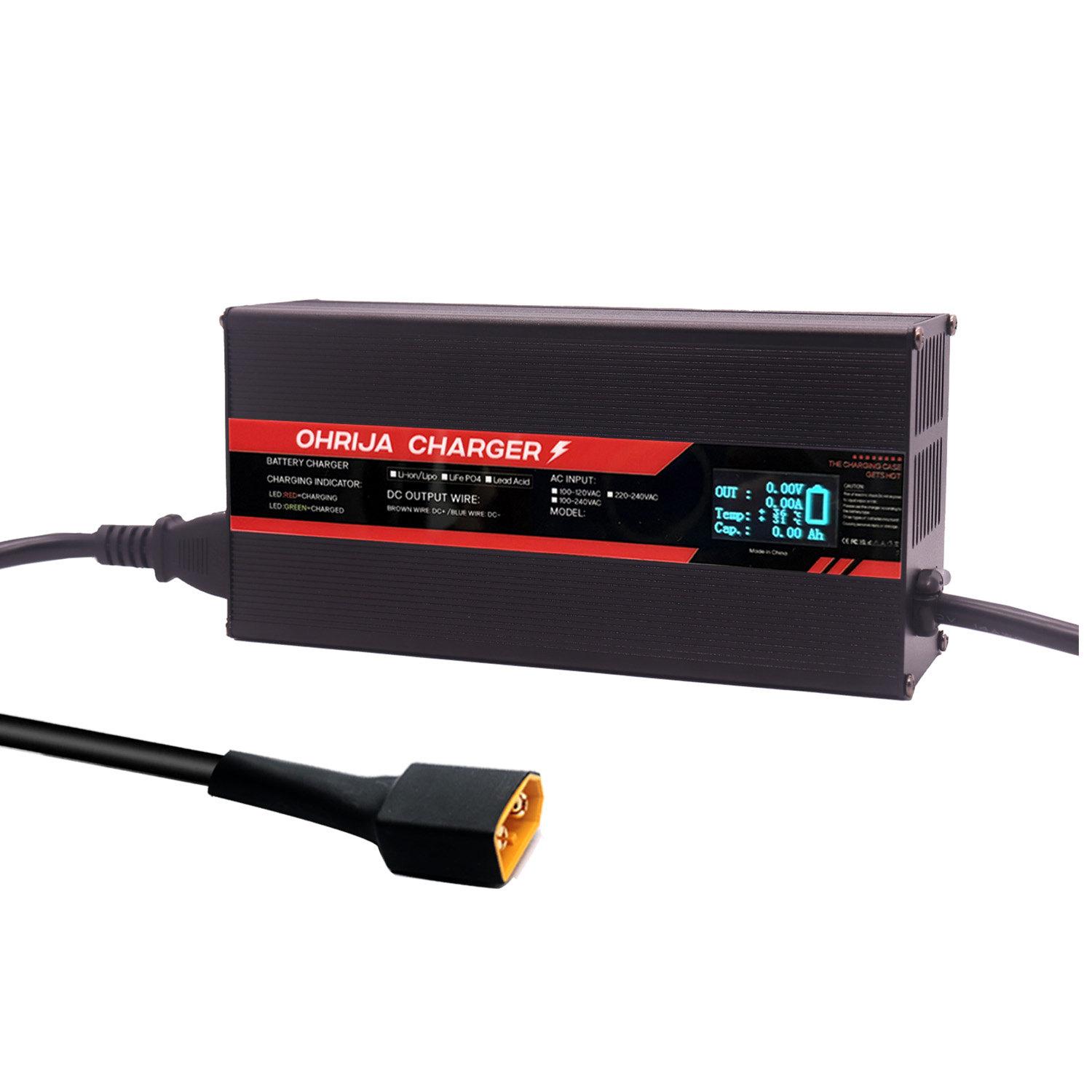
Chemistry is the absolute foundation of your choice. Lithium-ion (Li-ion), Lithium Iron Phosphate (LiFePO4), and Sealed Lead-Acid (SLA) batteries all require entirely different charging algorithms. A lead-acid charger utilizes a float charge phase that will overcharge and ignite a lithium-ion battery. Conversely, if you own a LiFePO4 pack, you need specialized equipment. For instance, a 12V LiFePO4 battery charger 30A is calibrated specifically to push the voltage to 14.6V and then shut off completely, honoring the unique chemistry of iron phosphate cells.
2. Align the Nominal and Maximum Voltages
In most professional situations, voltage mismatches destroy batteries instantly. When you Choose a Charger That Matches Your Battery, you cannot look at the “nominal” voltage; you must look at the “maximum” or “charge” voltage. A nominal 48V lithium-ion battery consists of 13 series cells (13S). Each cell charges to 4.2V. Therefore, 13 x 4.2V = 54.6V. You must purchase a 54.6V 5A eBike battery charger. If you plug a 54.6V charger into a 36V battery, the BMS will hopefully trip; if the BMS fails, the battery will catch fire.
3. Calculate the Safe Charging Current (Amperage)
Amperage determines the speed of your charge, but pushing too many amps creates internal heat that degrades cell chemistry. We recommend calculating your C-rate. The C-rate is the charge current divided by the battery’s amp-hour (Ah) capacity. A safe standard charge is between 0.2C and 0.5C. If you have a massive 20Ah battery, a 0.5C charge rate allows you to safely use a 48V 10A eBike charger. If you have a small 10Ah battery, pushing 10 amps (1C) will age the cells aggressively.
4. Specify the Correct Physical Connector
Do not hack together charging ports. Cutting, splicing, or using cheap aftermarket adapters introduces resistance, which generates heat and melts connectors. Whether your battery accepts an XT60, an Anderson 50A, an XLR, or a DC5.5×2.5 barrel jack, order the charger with that specific plug installed from the factory.
5. Require Aluminum Enclosures for Thermal Management
For heavy-duty applications, heat is the enemy of charging hardware. Cheap plastic chargers trap heat against the internal capacitors, leading to premature failure. You must select chargers built with extruded aluminum alloy shells. The aluminum acts as a giant heatsink. For high-amperage models, integrated cooling fans are mandatory to keep internal temperatures below degradation thresholds.
6. Verify Overcharge and Short-Circuit Protections
A professional charger must protect itself and the battery from user error. If you accidentally plug the charger in backward (reverse polarity), or if there is a surge from the wall, the charger must feature auto-shutoff relays. In our testing, quality chargers feature red/green LED indicators that accurately reflect the BMS termination signal, physically stopping current flow the second the battery reaches 100%.
7. Understand Series Configuration (The ‘S’ Count)
To accurately Choose a Charger That Matches Your Battery, you must know your series count. A 13S battery requires 54.6V. A 14S battery requires 58.8V. A 16S battery requires 67.2V. If you operate an electric scooter with a 60V nominal (16S) pack, you are strictly required to use a 67.2V scooter battery charger.
Featured Product: Professional 48V Charging
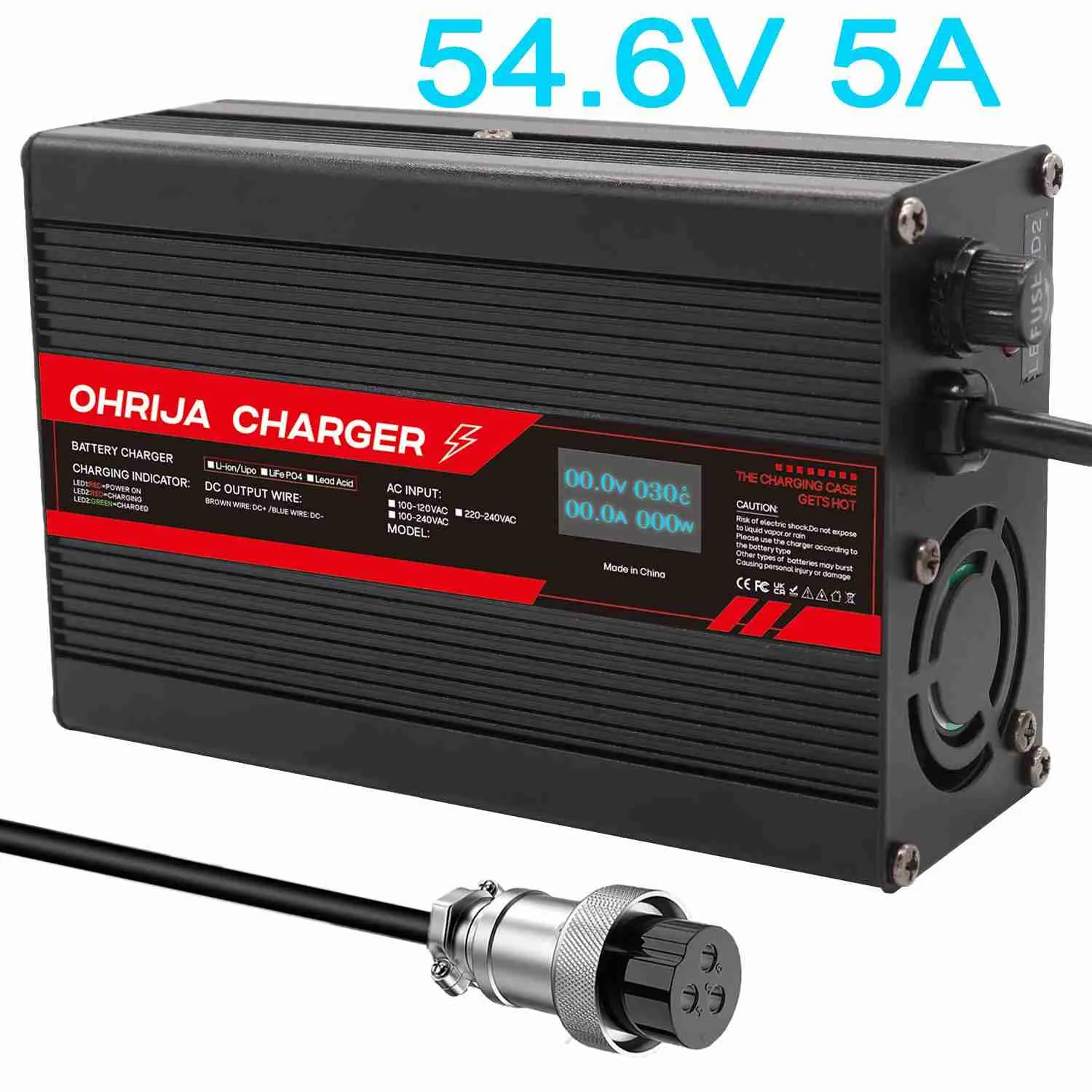
OHRIJA 48 volt battery charger for electric bike 54.6V 5A OLED charger
This industrial-grade charger is specifically engineered for 13S 48.1V Li-ion batteries. Built with a robust aluminum alloy shell, it delivers a precise 5Amp output to ensure efficient, safe charging without thermal stress.
- Output voltage: maximum 54.6V ±0.2v
- Output current: maximum 5Amp ±0.2a
- Working power: maximum 295W
- Applicable battery type: 13S 48.1V lithium-ion battery
- Output connector options: XT60 | XT90 | Crocodile Clip | Anderson 50A | DC5.5*2.5 | XLR | and more.
Benefits of Precise Charger Matching
When you Choose a Charger That Matches Your Battery perfectly, the financial and operational benefits are immediate. You effectively double the cycle life of your battery pack. A pack charged with cheap, unregulated voltage might degrade to 70% capacity in 300 cycles. A pack charged with a precision OHRIJA charger can easily surpass 800 cycles before showing significant degradation. Furthermore, proper charging eliminates the anxiety of leaving your vehicle plugged in overnight, as the smart termination protocols eliminate thermal runaway risks.
Limitations of Charging Hardware
It is vital to use commercial and practical judgment: a great charger cannot fix a dying battery. If your battery pack has severely unbalanced cells, a dead BMS (Battery Management System), or internal physical damage, a new charger will not revive it. The charger can only supply power; the battery’s internal BMS is responsible for distributing that power across the cell groups. If your charger’s LED instantly turns green despite a dead battery, your BMS has likely disconnected the charge port to prevent a fire.
Who Should Use It (And Who Does Not Need It)
Who should use this guidance: DIY electric bike builders, commercial scooter fleet operators, and individuals replacing a lost or damaged factory charger. If you manage heavy equipment or require massive power delivery, understanding how to pair an 12V 50A power supply 600W or similar hardware with your battery banks is mandatory.
Who does not need this: Consumers using proprietary, closed-ecosystem power tools (like brand-name drills). Those systems utilize DRM (Digital Rights Management) in their batteries that physically prevent third-party chargers from operating. Stick to the manufacturer’s proprietary charging docks.
Common Mistakes that Destroy Batteries
The most catastrophic mistake for beginners is ignoring the chemistry. We frequently see users attempting to charge lithium batteries with old automotive trickle chargers. Lead-acid chargers use a “desulfation” pulse that destroys lithium cells. The second most common mistake is buying by nominal voltage instead of peak voltage. A “24V” lithium battery needs 29.4V to charge; if you use a generic 24V power supply, the battery will never charge past 50%. You must use a dedicated 24V lithium battery charger 10A (which actually outputs 29.4V).
Buying Considerations for Heavy-Duty Use
For commercial users running rental fleets or delivery vehicles, durability is everything. You must evaluate the charger’s physical footprint, the gauge (AWG) of the output wiring, and the availability of replacement parts. If you are operating massive 72V or 84V systems, passive cooling is not enough. You must ensure your 84V electric scooter charger has high-RPM cooling fans and robust AC to DC rectification to handle constant, daily use without burning out internal mosfets.
Summary and Comparison Tables
Comparison Table: Charging Profiles by Chemistry
| Battery Chemistry | Nominal Voltage (Per Cell) | Max Charge Voltage (Per Cell) | Charging Algorithm | Trickle/Float Charge Allowed? |
|---|---|---|---|---|
| Lithium-Ion (Li-ion) | 3.6V / 3.7V | 4.2V | CC/CV (Constant Current / Constant Voltage) | NO (Will cause thermal runaway) |
| Lithium Iron Phosphate (LiFePO4) | 3.2V | 3.65V | CC/CV | NO |
| Sealed Lead-Acid (SLA) | 2.0V | 2.4V | Bulk, Absorption, Float | YES |
Pros and Cons Table: Fast Charging (High Amps) vs. Slow Charging (Low Amps)
| Charging Speed | Pros | Cons |
|---|---|---|
| Fast Charging (0.5C – 1.0C) e.g., 10A charger on a 15Ah battery | Dramatically reduces downtime. Excellent for commercial couriers and mid-day top-ups. | Generates significant heat. Can accelerate the degradation of battery cells, reducing overall lifespan (total cycles). |
| Standard/Slow Charging (0.2C) e.g., 3A charger on a 15Ah battery | Keeps cells cool. Maximizes total battery lifecycle and allows the BMS more time to accurately balance cell groups. | Takes 5-8 hours for a full charge, which is impractical for heavy daily commuters or fleet operations. |
Expert Recommendation
To definitively Choose a Charger That Matches Your Battery, stop looking at price tags and start looking at spec sheets. We recommend determining your exact cell count (e.g., 13S), identifying your chemistry (Li-ion), and calculating a 0.3C charge rate. Once you have those numbers, purchase an aluminum-bodied, fan-cooled charger from an established OHRIJA charger company profile. Investing $80 in a professional-grade charger today will save you from replacing a $600 battery pack next year.
Frequently Asked Questions
Can I use a higher amperage charger to charge my battery faster?
Yes, but only up to your battery manufacturer’s specified limit. Most lithium e-bike batteries can safely handle a charge rate up to 0.5C (half their amp-hour capacity). Using a 10A charger on a massive 20Ah battery is perfectly safe. However, using a 10A charger on a tiny 8Ah battery generates excessive heat and will permanently damage the cells.
Why does my 48V battery require a 54.6V charger?
“48V” is just the nominal (average) operating voltage. A standard 48V lithium-ion pack is made of 13 cell groups wired in series (13S). Each cell group reaches a maximum of 4.2 volts when 100% full. Therefore, 13 multiplied by 4.2V equals exactly 54.6V. The charger must match this peak voltage to fully charge the pack.
What happens if I use a Li-ion charger on a LiFePO4 battery?
You will undercharge or overcharge the battery depending on the specific series configuration, because Li-ion and LiFePO4 cells operate at different voltage parameters. A Li-ion cell charges to 4.2V, while a LiFePO4 cell charges to 3.65V. You must always use a charger specifically calibrated for your battery’s internal chemistry. For more details, consult our battery charger FAQs.
Authoritative References & Industry Standards
To ensure total compliance with electrical safety and battery health, the technical methodologies in this article align with the standards established by the following authorities:
- UL Standards & Engagement – Global safety science standards for battery charger electrical enclosures and thermal runaway prevention.
- Institute of Electrical and Electronics Engineers (IEEE) – Advanced technical guidelines on Constant Current/Constant Voltage (CC/CV) lithium-ion charging algorithms.
- U.S. Department of Energy – Consumer and industrial guidelines on the safe handling, charging, and lifecycle extension of Light Electric Vehicle (LEV) battery packs.