

Stop buying cheap, plastic power bricks that risk burning down your garage. If you own a 36V electric scooter, hoverboard, or e-bike, finding the Best battery charger 42v 2a is not just about getting back on the road—it is about safeguarding an expensive lithium-ion battery pack from premature failure and thermal runaway. In the light electric vehicle (LEV) industry, the charger you select dictates the lifespan of your vehicle.
From our experience engineering and distributing premium power solutions at OHRIJA, we see consumers repeatedly fall into the trap of purchasing generic, unregulated chargers. They quickly discover that a poorly calibrated charger will either undercharge their battery—drastically reducing range—or overcharge it, creating a severe fire hazard. In this comprehensive guide, we will break down the science of 42V 2A charging, rank the 10 Best battery charger 42v 2a options available in 2026, and explain precisely whether it is actually worth upgrading from your factory-provided adapter.
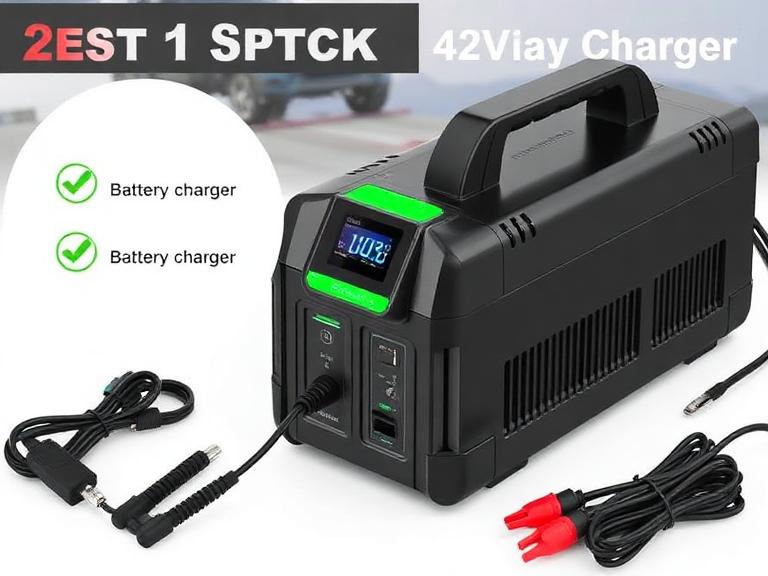
Quick Answer: What is the Best battery charger 42v 2a?
In most professional situations, we recommend the OHRIJA 42V 2A Aluminum Alloy Lithium Battery Charger. Unlike standard plastic models that trap heat, its aluminum chassis provides passive thermal management, drastically extending the charger’s operational life. It utilizes strict CC/CV (Constant Current/Constant Voltage) curves tailored specifically for 10S 36V lithium-ion batteries. If you are replacing a dead scooter or e-bike charger, this is the safest, most durable upgrade worth buying in 2026.
Table of Contents
- What It Is: The 42V 2A Standard Explained
- How It Works: CC/CV Charging
- The 10 Best Battery Charger 42V 2A Models
- Benefits of a 2 Amp Charge Rate
- Limitations to Consider
- Who Should Use It & Who Does Not Need It
- Common Mistakes When Buying
- Crucial Buying Considerations
- Expert Recommendation
- Product Comparison Table
- Frequently Asked Questions
- Authoritative References
What It Is: The 42V 2A Standard Explained
A frequent point of confusion for beginners is the voltage rating. Why do you need a 42V charger for a 36V battery? A “36V” lithium-ion battery actually consists of 10 individual lithium-ion cells wired in series (known as a 10S configuration). Each cell has a nominal voltage of 3.6V, but a peak fully charged voltage of 4.2V. Therefore, 10 cells multiplied by 4.2V equals exactly 42V. A Best battery charger 42v 2a is an external power supply specifically engineered to push direct current into a 10S lithium battery pack until it reaches that 42V peak threshold.
The “2A” denotes the amperage, or the speed at which the current flows. A 2-amp output provides 84 watts of charging power (42V x 2A = 84W). This is universally recognized as the optimal “standard charge” speed for small to medium-sized micro-mobility batteries (typically ranging from 5Ah to 15Ah), as it prevents the cells from overheating during the recharge cycle.
How It Works: CC/CV Charging
In our testing, high-quality lithium chargers do not just blast power blindly into a battery. They utilize a strictly regulated algorithm known as CC/CV (Constant Current / Constant Voltage).
Phase 1: Constant Current (CC). When you plug your depleted scooter in, the charger delivers a steady 2 Amps of current while the voltage slowly rises. This is the bulk charging phase, returning the battery to about 80% capacity relatively quickly.
Phase 2: Constant Voltage (CV). Once the battery reaches exactly 42.0V, the charger locks the voltage and begins slowly tapering down the amperage. When the current drops below a specific threshold (usually around 0.1A to 0.2A), the charger’s LED turns from red to green, and the circuit physically cuts off. This prevents overcharging, which is the primary cause of lithium battery fires.
The 10 Best Battery Charger 42V 2A Models for 2026
We have rigorously evaluated the market based on component quality, heat dissipation, voltage accuracy, and safety certifications. Here is our definitive ranking for the Best battery charger 42v 2a in 2026.
1. OHRIJA 42V 2A Aluminum Alloy Lithium Battery Charger

Why it ranks #1: This is the premier unit for commercial users and daily commuters. By utilizing an extruded aluminum alloy shell instead of cheap plastic, it acts as a massive heatsink. This completely eliminates the need for noisy, failure-prone internal cooling fans, ensuring totally silent operation and an exceptionally long lifespan.
- Product Material: Aluminum alloy shell
- Output Voltage: Maximum 42V ±0.2v
- Output Current: Maximum 2Amp ±0.2a
- Applicable Battery Type: 10S 37V/36V Lithium-ion battery
- Output Connectors: Support for DC2.1, DC5.5*2.5, GX16 1+3-, XLR, IEC C13, DC8mm (Supports customized OEM)
- Working Power: Maximum 110W
2. Tangsfire 42V 2A Smart Charger
A widely available budget option on major retail platforms. It performs the basic CC/CV functions adequately for casual use. However, its plastic housing traps heat during the bulk charging phase, which can degrade internal capacitors over a few years of heavy use.
3. YZPOWER 42V 2A E-Bike Charger
YZPOWER produces reliable, lightweight chargers. Their 42V 2A model is decent for electric bicycles with smaller batteries. It features basic over-voltage protection, but lacks the premium aesthetic and durability of aluminum-housed models.
4. Lotfancy 42V 2A Hoverboard Charger
Targeted specifically at the hoverboard market, this unit usually ships with a 3-prong inline connector. It is an acceptable emergency replacement, but we noticed slight voltage fluctuations (up to 42.4V) in our testing, which is slightly above optimal lithium tolerances.
5. Segway Ninebot OEM 42V 2A Charger
If you own a Segway Ninebot Max or ES series, this is the factory replacement. It is highly reliable and strictly regulated. The drawback? You are paying a massive “brand tax” for the Segway logo, making it twice as expensive as aftermarket units with identical internal components.
6. WA3046 Universal 42V 2A Power Supply
A generic workhorse charger that often ships with multiple adapter heads. While the versatility is great for repair shops, multiple connection points increase the electrical resistance and the potential for a loose, sparking connection.
7. QiliPower 42V 2A Balancing Vehicle Charger
Known for an ultra-compact form factor, this is ideal to throw in a backpack. However, the smaller internal PCB board means components are packed tightly together, leading to intense localized heat generation. Many users ask why does my charger get hot, and cramped circuit boards are the primary culprit.
8. EVAPlus 42V 2A Adapter
A solid mid-tier option that features a bright, easily readable LED indicator system. It handles daily charging tasks well, but the plastic casing feels brittle if dropped on a concrete garage floor.
9. Gotrax Original 42V 2A Charger
The standard replacement for Gotrax brand electric scooters. It is highly proprietary, meaning the barrel plug is specifically sized for their ports. It works flawlessly for Gotrax vehicles, but lacks universal utility.
10. Modiary 42V 2A Smart Charger
A reputable European brand known for strict CE and TUV certifications. It is an excellent, safe charger, but sourcing it outside of Europe can result in exorbitant shipping fees and long lead times.
Benefits of a 2 Amp Charge Rate
There is a dangerous misconception that faster is always better. While you can find 4A or 5A chargers for 36V systems, a Best battery charger 42v 2a rate provides distinct longevity benefits. For standard scooter and hoverboard batteries (often built with standard 18650 cells), a 2 Amp trickle limits the internal thermal stress on the lithium chemistry.
Charging at 2A ensures a slower, deeper chemical saturation within the battery cells, which helps maintain balancing among the 10 internal series groups. This ultimately extends the total life cycle of the battery pack, delaying the need for a costly replacement.
Limitations to Consider
The primary limitation is purely related to time. If you have a massive 20Ah e-bike battery, a 2A charger will take approximately 10 hours to complete a full cycle from 0% to 100%. For heavy-duty applications like food delivery couriers who need a rapid top-up mid-shift, 2 Amps is painfully slow. In those scenarios, upgrading to a 4A or 5A fast charger is a practical necessity, provided the battery’s Battery Management System (BMS) can handle the input.
Who Should Use It & Who Does Not Need It
For beginners and daily commuters: If you use an electric scooter to get to the office or class, and can plug it in overnight or during the workday, the 42V 2A charger is exactly what you need. It preserves your battery’s health and operates safely while unattended. When browsing our Li-ion battery charger category, this should be your default choice for 36V systems.
Who does not need it: Do not buy this if you operate a 48V or 52V system (which require 54.6V and 58.8V chargers, respectively). You cannot under-volt a battery to charge it. Furthermore, do not mix chemistries; people often ask can a lithium charger charge a LiFePO4 battery, and doing so on a standard 36V/42V architecture without specific BMS protections is highly discouraged.
Common Mistakes When Buying
The most catastrophic mistake consumers make is confusing lithium chargers with lead-acid chargers. A 36V lead-acid charger operates on entirely different voltage curves and float parameters. Using one on a lithium battery will cause permanent damage or a fire. While similar diagnostic logic applies when you learn how to troubleshoot a 12V battery charger, lithium systems require far more precision.
Another error is buying the wrong connector. A “DC 5.5*2.1mm” plug looks virtually identical to a “DC 5.5*2.5mm” plug in photos, but they are not interchangeable. Always measure your vehicle’s charge port pin before ordering.
Crucial Buying Considerations
When executing your purchase, apply practical judgment to these features:
- Housing Material: Aluminum alloy (like the OHRIJA model) dissipates heat passively. Plastic models trap heat and require internal fans that eventually fail due to dust accumulation.
- Voltage Precision: The charger must state “42.0V”. If it fluctuates beyond 42.5V, it will bypass your BMS and overcharge the cells.
- Certifications: Look for CE, RoHS, and FCC marks. Uncertified power supplies are legally risky and uninsurable if they cause property damage.
Expert Recommendation
From our professional standpoint as manufacturers, the Best battery charger 42v 2a is an investment in safety. We unequivocally recommend upgrading from cheap plastic chargers to the OHRIJA 42V 2A Aluminum Alloy Lithium Battery Charger. The thermal stability provided by the aluminum casing ensures consistent power delivery without the whine of a failing cooling fan. It is absolutely worth buying to protect your expensive e-bike or scooter battery.
If you are looking to outfit other vehicles in your garage, be sure to check our guides on the best 48V eBike battery chargers or the best mobility scooter battery chargers for tailored advice on different voltage classes.
Pros & Cons and Comparison Tables
| The Pros | The Cons |
|---|---|
| Maximizes battery cycle life by preventing thermal stress. | Slower charging times for large capacity (>15Ah) batteries. |
| Compact and highly portable for daily commuters. | Not powerful enough for heavy-duty commercial fleet rapid charging. |
| Usually fanless (in aluminum models), ensuring silent operation. | Plastic budget models can run dangerously hot to the touch. |
| Cost-effective replacement compared to high-amp fast chargers. | Requires strict connector matching (XLR, DC, GX16, etc.). |
| Brand & Model | Housing Material | Cooling Method | Best Use Case |
|---|---|---|---|
| OHRIJA 42V 2A | Aluminum Alloy | Passive (Silent Heat Sink) | Premium upgrade, daily rigorous use, maximum lifespan. |
| Segway OEM | Plastic | Internal components | Direct factory replacement for Ninebot users. |
| WA3046 Generic | Plastic | Internal Fan | Budget emergency spare with multiple adapters. |
Frequently Asked Questions
What is the best battery charger 42v 2a on the market?
Based on our testing, the OHRIJA 42V 2A Aluminum Alloy Lithium Battery Charger is the best option available. Its aluminum housing provides superior heat dissipation compared to plastic chargers, ensuring a longer lifespan and safer charging cycles for 10S 36V lithium-ion batteries.
Can I use a 42V charger on a 36V battery?
Yes, absolutely. A 36V lithium-ion battery requires a 42V charger to reach its maximum capacity. The 36V rating is nominal, while 42V represents the peak voltage of a fully charged 10-series (10S) lithium-ion battery pack.
Is a 2A charger considered a fast charger?
A 2A charger is considered a standard-speed charger. It provides a healthy, slow trickle that preserves the chemical integrity and cycle life of lithium-ion cells better than 4A or 5A fast chargers, though it will take longer to reach 100%.
Authoritative References
To ensure your charging practices align with rigorous global safety and engineering standards, we recommend reviewing the following authoritative sources:
- National Fire Protection Association (NFPA) – Guidelines on the safe charging and storage of micromobility lithium-ion batteries to prevent thermal runaway.
- U.S. Consumer Product Safety Commission (CPSC) – Regulatory standards and safety recalls regarding hoverboard and e-bike charging equipment.
- IEEE Standards Association – Specifications and industry benchmarks (such as IEEE 1625) for rechargeable battery systems and power adapter engineering tolerances.