

A staggering number of mobility scooter owners operate under a dangerous misconception: if the plug fits into the port, the charger must be correct. From our experience as industry professionals, this assumption is the leading cause of premature battery death, severely degraded scooter range, and in extreme cases, catastrophic thermal events. When your original charger breaks or goes missing, buying the cheapest replacement online is a massive gamble. We must address the search intent directly: absolutely not, are all mobility scooter battery chargers the same. They are highly specialized pieces of electronic equipment engineered to match specific voltage, amperage, and chemical algorithms.
In most professional situations, treating a mobility scooter charger like a generic laptop cable leads to expensive mechanical failures. The modern mobility sector utilizes a complex array of battery chemistries, ranging from traditional Sealed Lead Acid (SLA) and Absorbed Glass Mat (AGM) to advanced Lithium-ion and LiFePO4 structures. Applying the wrong charging profile to these batteries will either leave you stranded miles from home or permanently destroy a power cell that costs hundreds of dollars to replace. In this comprehensive technical guide, we will break down exactly why these devices differ, what specifications you must evaluate, and whether upgrading your current charging infrastructure is actually worth your money.
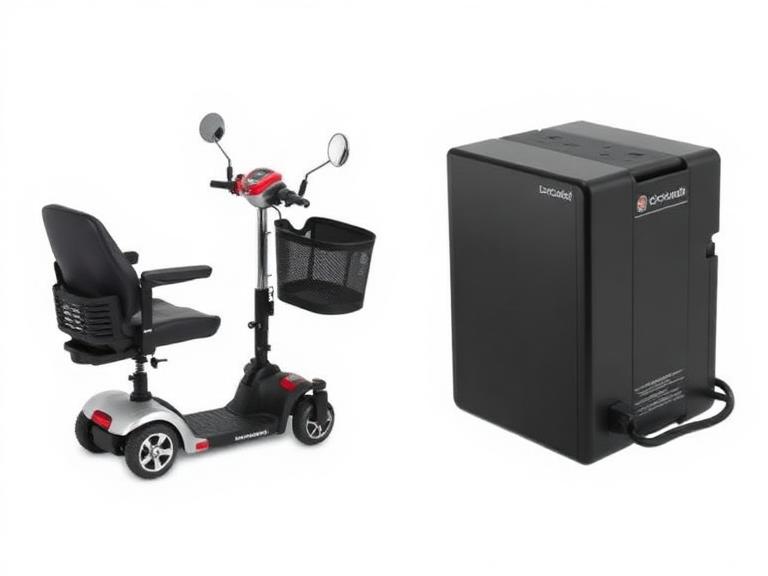
Quick Answer: Are All Mobility Scooter Battery Chargers The Same?
No, not all mobility scooter battery chargers the same. They differ significantly in four critical areas: Voltage (typically 24V or 36V), Amperage output (typically 2A to 8A), Connector type (such as 3-pin XLR or coaxial), and Battery Chemistry charging profiles (SLA, Gel, Lithium-ion, or LiFePO4). Using a charger with the incorrect voltage will destroy your battery or start a fire. Using a charger calibrated for SLA on a Lithium battery will result in severe undercharging and imbalance. Always verify your specific scooter’s voltage, chemistry, and pin configuration before purchasing a replacement to ensure safety and longevity.
Table of Contents
- What is a Mobility Scooter Battery Charger?
- How It Works: The Charging Algorithm
- Benefits of Using the Exact Manufacturer Spec
- Limitations of Generic Aftermarket Chargers
- Who Should Use OEM vs. Advanced Smart Chargers
- Who Does Not Need a Heavy-Duty Charger
- Common Mistakes Buyers Make
- Critical Buying Considerations
- Essential Reference Tables
- Expert Recommendation from OHRIJA
- Frequently Asked Questions
- Authoritative References
What is a Mobility Scooter Battery Charger?
A mobility scooter battery charger is not a simple power cord. It is an intelligent AC-to-DC power converter embedded with microprocessors designed to monitor and regulate electrical current. Its primary function is to take 110V or 220V alternating current from your household wall outlet and step it down to the exact direct current voltage required by your scooter—usually 24 volts (two 12V batteries in series).
Because people frequently ask if all mobility scooter battery chargers the same, they fail to recognize the internal electronics. A proper charger actively reads the resistance and internal temperature of the battery pack. Depending on the data it receives, the charger adjusts its output to safely replenish the chemical energy without causing sulfation (in lead-acid batteries) or dendrite formation (in lithium batteries). If you are looking for the best mobility scooter battery chargers, you are looking for devices that possess these advanced internal diagnostics.
How It Works: The Charging Algorithm
To understand why not all mobility scooter battery chargers the same, you must understand the charging phases. In our testing, high-quality smart chargers operate on a strict 3-stage or 4-stage algorithm, depending on the battery chemistry.
For traditional SLA or AGM batteries, the process involves:
- Bulk Charge Phase: The charger delivers its maximum rated current (e.g., 5 Amps) at a steadily increasing voltage to rapidly restore the battery to roughly 80% capacity.
- Absorption Phase: The charger holds the voltage at a constant peak (usually around 28.8V for a 24V system) while gradually reducing the current. This prevents the battery from overheating while topping off the final 20%.
- Float/Maintenance Phase: The voltage drops to a lower, safer level (around 27.6V) to maintain a 100% charge without overcooking the battery cells.
However, lithium profiles are entirely different. If you wonder, can lithium charger charge LiFePO4 battery architectures, the answer lies in specific voltage cut-offs. Standard Lithium-ion requires a precise Constant Current/Constant Voltage (CC/CV) profile that terminates immediately upon reaching full charge. Lithium batteries cannot tolerate a “float” charge; applying a lead-acid float charge to a lithium battery will cause rapid degradation and potential thermal failure.
Benefits of Using the Exact Manufacturer Spec
We recommend strictly adhering to your scooter’s precise charging specifications for several commercial and practical reasons. First, battery lifespan. Mobility scooter batteries are an expensive consumable. By utilizing a charger correctly matched to the chemistry and capacity, you can extend the operational life of an SLA battery from 12 months to over 24 months, or a lithium pack from 3 years to 5 years. Second, performance reliability. A properly calibrated charger ensures the battery achieves true 100% capacity, giving you the exact mileage range advertised by the manufacturer. Finally, safety. Specialized chargers feature short-circuit protection, reverse polarity protection, and thermal shutdowns. If you ever wonder why does my charger get hot, a high-quality smart charger is designed to dissipate heat safely without melting internal components.
Limitations of Generic Aftermarket Chargers
In most professional situations, purchasing a generic, bottom-dollar charger off a massive e-commerce marketplace is a dangerous false economy. The limitations are severe. Cheap chargers often lack the sophisticated microprocessors required to step down the current during the absorption phase. This results in the battery “boiling” dry if left plugged in overnight. Furthermore, generic chargers frequently feature low-grade wiring and uncertified transformers that pose a genuine fire hazard. If you rely on your scooter for daily medical mobility, the limitations of a generic charger—such as random shut-offs and inaccurate LED indicator lights—make them entirely unworthy of your purchase.
Who Should Use OEM vs. Advanced Smart Chargers
For beginners and elderly users: We recommend sticking to OEM (Original Equipment Manufacturer) replacements or high-quality certified exact-match replacements. The operation must remain plug-and-play. You need a reliable unit that displays a simple red light for charging and green light for complete.
For commercial users and heavy-duty applications: Fleet managers of theme parks or medical supply rental businesses should upgrade to heavy-duty, commercial-grade smart chargers. For example, if you manage heavy outdoor scooters, utilizing the best portable scooter battery chargers with active cooling fans and ruggedized aluminum casings will drastically reduce your long-term maintenance costs and vehicle downtime.
Who Does Not Need a Heavy-Duty Charger
If you own a small, foldable travel scooter with a 12Ah battery that you only use once a month for grocery shopping, you do not need to spend $150 on an 8-Amp rapid charger. In fact, pushing 8 Amps into a tiny 12Ah battery will overheat the cells and destroy them. A standard 2-Amp fanless charger is mathematically and practically the best choice for low-capacity usage.
Common Mistakes Buyers Make
Because so many consumers assume all mobility scooter battery chargers the same, the industry sees rampant purchasing errors. The most common mistake is mismatching the connector pinout. The 3-pin XLR connector is the industry standard for 24V scooters. However, Pin 1, Pin 2, and Pin 3 must be wired correctly (usually Pin 1 is Positive, Pin 2 is Negative). Some obscure brands reverse this wiring. Plugging a standard XLR charger into a reversed port will blow the scooter’s inline fuse immediately.
Another massive error is over-amping. The rule of thumb in battery charging is that the charger’s amperage should be roughly 10% to 15% of the battery’s total Amp-Hour (Ah) capacity. Putting a 5A charger on a 10Ah battery is feeding it energy too fast. Conversely, putting a 2A charger on a massive 75Ah battery means the scooter will take 40 hours to charge. If your system is failing to hold a charge, you must learn how to troubleshoot a 12V battery charger infrastructure before assuming the battery itself is dead.
Critical Buying Considerations
When selecting a replacement, apply strict commercial judgment based on these four pillars:
- System Voltage: 90% of mobility scooters are 24V. Do not attempt to use a 12V automotive trickle charger or a 36V eBike charger.
- Battery Chemistry: You must know if your battery is SLA, Gel, AGM, or Lithium. If you have upgraded your scooter to lithium, you must purchase from a dedicated Li-ion battery charger category or LiFePO4 battery charger category. Lead-acid chargers will not balance lithium cells correctly.
- Amperage Output: Match the output to your battery size. Use a 2A charger for 12Ah-20Ah batteries, a 5A charger for 35Ah-50Ah batteries, and an 8A charger for 75Ah+ heavy-duty batteries.
- Connector Type: Verify whether your port is a 3-pin XLR, a barrel connector, or a specialized proprietary plug.
Essential Reference Tables
Quick Summary Table: Charger Specifications
| Battery Size (Amp-Hours) | Recommended Charger Amperage | Estimated Charge Time (from empty) |
|---|---|---|
| 12Ah – 18Ah (Travel Scooters) | 2.0 Amps | 6 to 9 Hours |
| 35Ah – 40Ah (Mid-Size Scooters) | 4.0 to 5.0 Amps | 8 to 10 Hours |
| 55Ah – 75Ah+ (Heavy-Duty/Bariatric) | 8.0 Amps | 8 to 12 Hours |
Comparison Table: SLA/AGM vs. Lithium-Ion Chargers
| Feature | SLA / AGM Charger | Lithium / LiFePO4 Charger |
|---|---|---|
| Charging Algorithm | Bulk -> Absorption -> Float | Constant Current -> Constant Voltage -> OFF |
| Float Phase? | Yes (Requires continuous low voltage) | No (Float damages lithium cells) |
| Cell Balancing | No internal cell balancing required | Relies on BMS coordination to balance cells |
| Interchangeability | Cannot charge Lithium safely | Cannot charge SLA efficiently |
Pros and Cons Table: Smart Chargers vs. Cheap Generic Chargers
| Charger Type | Pros | Cons |
|---|---|---|
| Premium Smart Charger | Maximizes battery lifespan; Auto-shutoff prevents fires; Accurate diagnostics. | Higher initial purchase cost; slightly heavier internal components. |
| Cheap Generic Charger | Low upfront cost; easily accessible on massive online retail platforms. | High risk of overcharging; poor heat dissipation; voids battery warranties. |
Buying Guide Table: Connector Verification
| Connector Type | Visual Description | Common Application |
|---|---|---|
| 3-Pin XLR | Circular metal casing with three metal prongs. | 95% of standard 24V mobility scooters and power wheelchairs. |
| Coaxial / Barrel | Small round tube, similar to a laptop charger plug. | Ultra-lightweight travel scooters and some lithium variants. |
| RCA Plug | Looks similar to old audio/video cables (Lotus head). | Older models or highly specific lightweight mobility devices. |
Expert Recommendation
In most professional situations, cutting corners on power delivery infrastructure guarantees a shortened lifespan for your expensive mobility equipment. Because not all mobility scooter battery chargers the same, you must source your replacement from a dedicated, high-tech manufacturer that understands chemical power delivery.
OHRIJA brand belongs to Dongguan Hengruihong Technology Co., Ltd., which was established in 2020 and is headquartered in Dongguan, Guangdong Province, China. Our company is a high-tech enterprise integrating R&D, production and sales. The company’s main products: lithium battery charger, lithium iron phosphate battery charger, lead-acid battery charger, golf cart charger, power adapter, switching power supply and other products.
We recommend upgrading to an OHRIJA smart charger tailored exactly to your scooter’s voltage and chemistry. Our units feature advanced thermal management, precise CC/CV algorithms, and certified safety protections. Whether you are charging a heavy-duty SLA unit or utilizing a modern LiFePO4 upgrade, investing in an OHRIJA charger ensures maximum range, uncompromised safety, and peace of mind on every journey.
The Bottom Line
Are all mobility scooter battery chargers the same? The evidence dictates a resounding no. Attempting to force a mismatched charger to supply power to your scooter is a severe safety hazard and a financially disastrous decision. By understanding your specific voltage (24V vs. 36V), your exact battery chemistry (SLA vs. Lithium), and the appropriate amperage for your capacity, you can make an informed, confident purchase. Do not risk your mobility and safety on unverified electronics. Upgrade to a certified, chemistry-specific smart charger to protect your investment and maintain your independence.
Frequently Asked Questions
Can I use a 24V wheelchair charger on my 24V mobility scooter?
In most cases, yes, provided that the connector (usually 3-pin XLR) matches and the battery chemistry is identical. Power wheelchairs and mobility scooters often use the same 24V SLA battery architecture. However, you must verify that the amperage output of the charger is appropriate for the Ah rating of the scooter’s batteries to avoid overcharging.
What happens if I use a lead-acid charger on a lithium mobility scooter battery?
It is highly dangerous and damaging. Lead-acid chargers enter a “float” or trickle charge phase at the end of their cycle. Lithium batteries cannot tolerate continuous float charging; it degrades the cells and can bypass the Battery Management System (BMS), potentially leading to thermal runaway (fire). Always use a dedicated lithium charger for lithium batteries.
How do I know if my mobility scooter charger is bad or if the battery is dead?
If the charger’s LED light stays green immediately upon plugging it into a drained scooter, either the charger is failing to push current, or the battery voltage has dropped so low (below 18V on a 24V system) that the charger refuses to engage for safety reasons. To verify, use a multimeter to check the charger’s output prongs (it should read around 28-29V). If the charger outputs correct voltage, your batteries are likely dead and require replacement.
Authoritative References & Safety Standards
To ensure our operational advice aligns with global electrical safety and battery science protocols, we reference the following authoritative organizations: