
No products in the cart.

A golf cart battery does not necessarily need replacing just because its driving range starts declining. In many cases, inconsistent charging habits, excessive heat, incorrect charger settings, and repeated deep discharges are responsible for premature battery deterioration. Learning how to extend golf cart battery life with proper charging can help you reduce replacement costs, maintain reliable driving performance, and get more value from your battery investment.
From our experience in battery charging solutions, the biggest mistake golf cart owners make is treating every battery as if it follows the same charging rules. Flooded lead-acid, AGM, and lithium batteries have different charging requirements. The right routine depends on the battery chemistry, charger compatibility, operating conditions, and how frequently the cart is used.
This guide explains nine practical ways to extend golf cart battery life, including charging frequency, charger selection, temperature management, storage, and common mistakes to avoid.
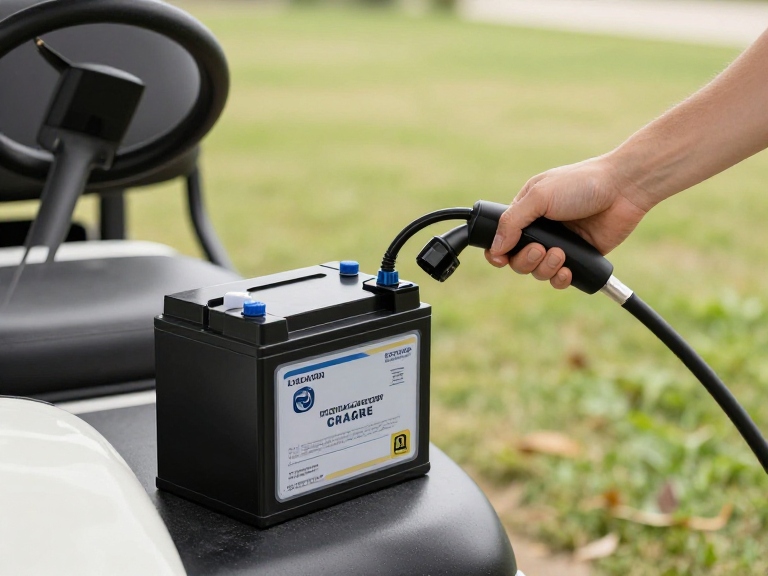
Quick Answer: How Do You Extend Golf Cart Battery Life?
The most effective way to extend golf cart battery life is to use a compatible automatic charger, recharge after regular use, avoid excessive deep discharges, prevent overcharging, and protect the battery from extreme temperatures.
For lead-acid batteries, maintain the electrolyte level where applicable and complete the recommended charging cycle. For lithium batteries, use a charger specifically designed for the battery’s voltage and chemistry, follow its temperature limits, and avoid leaving the battery completely discharged during storage.
Our recommendation: Match the charger to the battery first. A good charging routine cannot compensate for an incompatible charger or incorrect charging voltage.
Table of Contents
- Quick Summary: Battery Life Extension Tips
- Understanding Golf Cart Battery Life and Charging
- 9 Ways to Extend Golf Cart Battery Life
- Comparison of Golf Cart Battery Types
- Pros and Cons of Proper Charging
- Common Golf Cart Charging Mistakes
- How to Choose the Right Golf Cart Battery Charger
- When Should You Upgrade Your Charger?
- OHRIJA Expert Recommendation
- Frequently Asked Questions
- References
Quick Summary: 9 Ways to Extend Golf Cart Battery Life
| Method | What You Should Do | Expected Benefit |
|---|---|---|
| 1. Use the correct charger | Match voltage, battery chemistry, charging profile, and connector. | Prevents incompatible charging and unnecessary battery stress. |
| 2. Recharge consistently | Follow the manufacturer’s recommended charging routine after use. | Reduces prolonged low-charge conditions. |
| 3. Avoid deep discharges | Recharge before reaching the battery’s minimum recommended state of charge. | Reduces unnecessary cycling stress. |
| 4. Prevent overcharging | Use a properly configured automatic charger. | Reduces excessive charging and heat exposure. |
| 5. Control charging temperature | Charge within the battery manufacturer’s temperature limits. | Protects battery chemistry and charging performance. |
| 6. Maintain lead-acid batteries | Check electrolyte levels and use distilled water where required. | Prevents electrolyte-related deterioration. |
| 7. Inspect connections | Keep terminals clean and connections secure. | Reduces resistance, voltage drop, and overheating. |
| 8. Charge correctly during storage | Follow the battery-specific storage state-of-charge guidance. | Prevents damaging prolonged discharge. |
| 9. Monitor charging performance | Check charger indicators, charging time, and battery condition. | Helps identify problems before they become expensive failures. |
What Is Golf Cart Battery Life With Proper Charging?
Recommended products
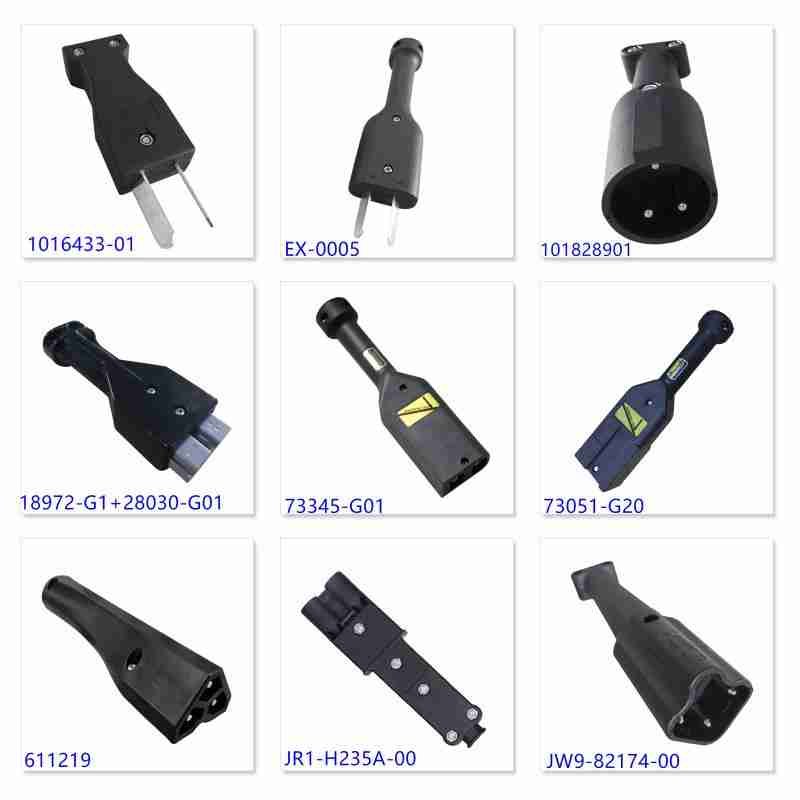
Golf Connector Accessories EZGO TXT EZGO RXV CLUB CAR EZGO DCS YAMAHA G19 Crowfoot
Price range: 6.50$ through 7.00$
OHRIJ Club Car 48V Golf Cart Charger 48V 10A makes it suitable for 55.2V Lead Acid batteries
41.50$
OHRIJ Waterproof charger Club Car 48V Golf Cart Charger 48V 15A 20A makes it suitable for 55.2V Lead Acid batteries
99.90$
OHRIJA 36 volt golf cart Battery Charger 36V 5A makes it suitable for 41.4V Lead Acid batteries
25.50$
Golf cart battery life refers to how long a battery can continue providing usable energy before its capacity deteriorates enough to require replacement. It is influenced by battery chemistry, discharge depth, charging behavior, temperature, maintenance, and operating conditions.
Proper charging means supplying the battery with the correct voltage and current through a charging profile designed for its chemistry. A suitable charger manages the charging stages, reduces the risk of excessive charging, and helps the battery reach its intended state of charge.
How Long Should Golf Cart Batteries Last?
There is no universal lifespan because battery construction and usage patterns differ. As a general planning estimate, traditional flooded lead-acid golf cart batteries may last around 3–6 years, AGM batteries often around 3–5 years, and quality LiFePO4 batteries can commonly provide 8–10 years or more under suitable conditions. These are approximate ranges, not guaranteed service lives.
Commercial golf carts used throughout the day may experience much more intensive cycling than privately owned carts used occasionally on weekends. A battery that is regularly discharged deeply, exposed to high temperatures, or charged incorrectly can deteriorate considerably faster.
How Does Proper Charging Work?
Most modern golf cart chargers use a controlled charging process. Depending on battery chemistry and charger design, this may involve bulk charging, absorption charging, and a maintenance or finishing stage.
Lead-acid chargers typically use staged charging to restore capacity and complete the charging process. Lithium chargers follow a different charging profile, generally using controlled constant-current and constant-voltage charging, with the battery management system providing additional protection where equipped.
The important point is that a charging profile designed for one battery chemistry should not automatically be used with another. A 48V lithium battery and a 48V lead-acid battery may share the same nominal system voltage but require different charging settings.
9 Ways to Extend Golf Cart Battery Life With Proper Charging
1. Always Use a Charger Compatible With Your Battery
This is the most important charging decision. A charger must match the battery’s nominal voltage, chemistry, charging voltage, current requirements, and connector configuration.
For example, a 48V golf cart battery system does not mean that every 48V charger is interchangeable. A charger designed for flooded lead-acid batteries may use a charging profile unsuitable for lithium batteries. Similarly, AGM and gel batteries can have different charging requirements.
For commercial users, charger compatibility should be verified before purchasing replacement batteries or chargers. Check the battery datasheet and the charger’s technical specifications rather than relying on the connector shape or nominal voltage alone.
We recommend choosing a charger with the correct chemistry-specific charging profile, appropriate output current, temperature protection, and automatic charging control where supported.
If you are comparing charger options, see our guide to choosing a suitable battery charger.
2. Recharge Batteries Consistently After Use
One of the most common causes of avoidable battery deterioration is leaving a golf cart battery in a low state of charge for extended periods.
For conventional deep-cycle lead-acid batteries, regular recharging after use is generally recommended. Trojan, for example, advises fully charging its deep-cycle batteries after use. Lithium batteries can generally be recharged before reaching a low state of charge, without needing a complete discharge cycle.
For beginners, a simple routine works well: finish using the cart, park it in a suitable charging location, connect the compatible charger, and allow the recommended charging cycle to complete.
Do not assume that waiting until the battery is almost empty will improve its performance. That approach is unnecessary for most modern golf cart battery systems.
3. Avoid Repeated Deep Discharges
Deep discharge means using a large proportion of the battery’s available capacity before recharging. Repeatedly operating a battery near its minimum permitted state of charge can accelerate deterioration, particularly in lead-acid systems.
For example, a golf cart used for an entire day on a hilly golf course may consume substantially more energy than one used for short trips around a residential community.
For lead-acid batteries, avoid routinely discharging beyond the manufacturer’s recommended depth of discharge. Trojan advises users not to discharge certain deep-cycle AGM batteries beyond 80%. Individual products may have different limits.
Lithium batteries generally tolerate deeper cycling better, but repeatedly reaching the battery management system’s low-voltage cutoff is not a good operating strategy.
Expert insight: A larger battery capacity can be more valuable than simply choosing a more powerful charger. If your golf cart regularly runs out of energy before the end of the day, evaluate your actual energy requirements rather than trying to solve every problem through charging speed.
4. Avoid Overcharging With an Automatic Charger
Overcharging can increase battery temperature, accelerate water loss in flooded batteries, and contribute to premature deterioration. Using a suitable automatic charger helps prevent unnecessary charging once the battery has completed its intended charging cycle.
However, automatic charging does not mean that every charger can be left connected indefinitely. Some chargers have storage or maintenance modes, while others are designed to disconnect after a completed cycle. Their behavior depends on the charger design and battery requirements.
For commercial applications, we recommend chargers with appropriate voltage regulation, over-temperature protection, short-circuit protection, and clearly specified charging termination behavior.
If your charger continues running unusually long or repeatedly restarts, investigate the problem rather than assuming that additional charging will improve battery performance.
5. Control Battery Temperature During Charging
Temperature has a direct effect on battery performance and aging. High temperatures accelerate many battery degradation processes, while low temperatures can restrict charging and reduce available capacity.
This is particularly important for lithium golf cart batteries. Many LiFePO4 batteries must not be charged below 0°C (32°F) unless the battery includes an approved low-temperature charging system. The exact limit must be confirmed in the manufacturer’s documentation.
Lead-acid batteries also have temperature-related charging requirements. Some chargers incorporate temperature compensation to adjust charging voltage based on battery temperature.
Practical recommendations include:
- Charge in a cool, dry, and appropriately ventilated location.
- Avoid placing batteries in direct sunlight during charging.
- Do not charge a battery that is frozen or outside its permitted temperature range.
- Allow an overheated battery to return to an acceptable temperature before charging, following manufacturer guidance.
- Ensure that the battery compartment has sufficient ventilation where required.
For heavy-duty applications, temperature management should be part of the charging system design rather than an occasional maintenance task.
6. Maintain Lead-Acid Battery Water Levels Correctly
This step applies specifically to serviceable flooded lead-acid golf cart batteries. AGM, gel, and sealed lithium batteries should not be opened or topped up with water.
Flooded batteries lose water during normal charging, particularly during gassing. When the electrolyte level becomes too low, the battery plates can become exposed, resulting in permanent damage.
We recommend the following maintenance routine:
- Inspect electrolyte levels regularly according to the battery manufacturer’s schedule.
- Use distilled or deionized water rather than ordinary tap water.
- Never add acid as part of routine water maintenance.
- Follow the manufacturer’s instructions about watering before or after charging.
- Avoid overfilling, which can cause electrolyte overflow during charging.
Trojan’s battery maintenance guidance recommends adding water after fully charging the battery, except when the plates are exposed, in which case enough water should be added to cover them before charging.
This is a simple but important maintenance habit. For fleets with multiple golf carts, a scheduled inspection process can help prevent individual batteries from being overlooked.
7. Keep Battery Terminals and Charging Connections Clean
Charging performance depends on more than the charger itself. Corroded terminals, loose connections, damaged cables, and worn connectors can create electrical resistance and unwanted heat.
Over time, these issues may result in slower charging, voltage drops, intermittent connections, or charging interruptions.
Inspect the following components regularly:
- Battery positive and negative terminals.
- Inter-battery cables in series-connected battery systems.
- Charger output connectors and receptacles.
- Insulation around charging cables.
- Terminal fasteners and cable connections.
Disconnect the charging equipment and follow appropriate electrical safety procedures before inspecting or cleaning connections. Use suitable cleaning methods and protective equipment. Do not allow cleaning solutions to enter battery cells.
If your golf cart uses a replaceable charging connector, choose a connector rated for the system’s voltage and current. OHRIJA provides golf cart battery charger output connectors for applications where compatible replacement components are required.
8. Follow the Correct Charging Routine During Long-Term Storage
Golf carts are not always used throughout the year. Seasonal storage, winter breaks, and extended periods without operation can create battery problems if charging is neglected.
The correct storage procedure depends on battery chemistry.
For flooded lead-acid batteries, fully charge the batteries before storage and periodically check their condition. Never leave them discharged for extended periods.
For lithium batteries, follow the manufacturer’s recommended storage state of charge. Some manufacturers recommend partial charging rather than storing the battery at 100% for an extended period. Disconnect parasitic electrical loads where appropriate and check the battery periodically.
Do not assume that every battery should remain continuously connected to a charger. Use a charger with a storage mode only if that mode is approved for your battery.
For seasonal golf cart owners, preparing the battery before storage is usually more effective than attempting to recover a severely discharged battery months later.
9. Monitor Charging Performance and Investigate Problems Early
A battery that takes significantly longer to charge than usual, loses range quickly, or frequently triggers charger warnings may have an underlying problem.
Monitoring charging performance helps identify problems before they lead to unexpected downtime.
Pay attention to these warning signs:
- Charging time increases without a corresponding change in usage.
- The charger repeatedly stops before completing a normal cycle.
- The battery becomes unusually hot during charging.
- The golf cart loses driving range despite a completed charging cycle.
- The charger displays abnormal fault indicators.
- Individual batteries in a lead-acid battery bank show significantly different performance.
Do not immediately replace the charger whenever a warning light appears. The problem may be related to battery condition, cable connections, connector compatibility, or a battery management system fault.
Our troubleshooting guides can help you investigate common problems, including a golf cart battery charger that is not working and Club Car battery charger light codes.
Golf Cart Battery Types: Which One Is Best for Long Battery Life?
Proper charging can improve the service life of any battery, but it cannot eliminate the differences between battery technologies. If you are deciding whether to keep your current battery or upgrade, consider the following comparison.
| Comparison | Flooded Lead-Acid | AGM Lead-Acid | LiFePO4 Lithium |
|---|---|---|---|
| Typical lifespan | Approximately 3–6 years | Approximately 3–5 years | Often 8–10 years or more |
| Maintenance | Regular water-level checks | Generally maintenance-free | Generally maintenance-free |
| Charging profile | Flooded lead-acid profile | AGM-specific profile | Lithium-specific profile |
| Deep discharge tolerance | Lower | Moderate | Generally higher |
| Charging efficiency | Generally lower | Generally higher than flooded | Generally high |
| Weight | Heavy | Heavy | Generally lighter |
| Initial purchase cost | Usually lowest | Usually moderate | Usually highest |
| Best application | Budget-conscious users | Users wanting sealed lead-acid batteries | Frequent users and commercial fleets |
These lifespan ranges are indicative rather than guaranteed. Actual performance depends on battery model, operating conditions, discharge depth, charging practices, and maintenance.
Is Lithium Worth the Upgrade?
For commercial users operating golf carts every day, lithium can offer meaningful long-term benefits. Lower maintenance requirements, reduced weight, and potentially longer service life can offset a higher initial purchase price.
However, replacing lead-acid batteries with lithium is not simply a matter of installing a different battery. The charger, battery management system, electrical compatibility, available space, and manufacturer installation requirements must all be considered.
For occasional recreational users with healthy lead-acid batteries, replacing the entire system may not provide enough financial benefit. Improving charging habits and maintaining the existing battery bank may be the more sensible decision.
Pros and Cons of Proper Golf Cart Battery Charging
| Advantages | Limitations |
|---|---|
| Can reduce avoidable battery deterioration. | Cannot restore permanently damaged battery cells. |
| Helps maintain more consistent driving range. | Requires consistent charging habits. |
| Reduces the risk of charging-related faults. | A compatible charger may require a higher initial investment. |
| Can reduce premature battery replacement costs. | Flooded lead-acid batteries still require regular maintenance. |
| Improves reliability for commercial golf cart fleets. | Different battery types require different charging procedures. |
From our experience, the biggest advantage is not necessarily achieving a specific additional number of battery cycles. It is avoiding preventable damage caused by incorrect voltage, inappropriate charging profiles, and neglected maintenance.
7 Common Golf Cart Battery Charging Mistakes to Avoid
1. Using a Charger With the Wrong Voltage
A charger with an incorrect output voltage can prevent proper charging or damage the battery. Always verify the complete battery system specification.
2. Using a Lead-Acid Charger for Lithium Batteries
Similar nominal voltage does not mean identical charging requirements. Use a lithium-compatible charger with the required charging profile.
3. Waiting Until the Battery Is Completely Empty
Regularly draining a battery to its cutoff point is unnecessary. Recharge according to the battery manufacturer’s recommendations.
4. Leaving a Flooded Battery Without Water Maintenance
Low electrolyte levels can expose the plates and cause irreversible capacity loss. Establish a regular inspection schedule.
5. Charging in Extremely Hot or Cold Conditions
Temperature restrictions are important, especially for lithium batteries. Never bypass low-temperature charging protection.
6. Assuming Every Automatic Charger Is Safe for Long-Term Connection
Automatic chargers have different charging and maintenance behaviors. Check whether continuous connection is approved for your specific battery and charger.
7. Ignoring Abnormal Charging Indicators
Repeated warning lights, interrupted charging, and excessive charging times should be investigated. For example, see our guide to why a Club Car charger flashes yellow and our Yamaha 48V golf cart charger light meanings.
How to Choose the Right Golf Cart Battery Charger
If your current charger is old, unreliable, or incompatible with an upgraded battery, choosing a replacement can be one of the most valuable improvements you make.
However, buying the charger with the highest amperage or lowest advertised price is not necessarily the right decision. We recommend evaluating the following factors.
1. Confirm the Battery System Voltage
Common golf cart electrical systems include 36V and 48V configurations, although other system designs exist. Confirm the battery manufacturer’s specified charging voltage rather than relying only on the golf cart model.
2. Match the Battery Chemistry
Confirm whether the battery is flooded lead-acid, AGM, gel, or LiFePO4. The charger must provide the charging profile approved for that battery.
3. Select an Appropriate Charging Current
Charging current affects charging time and battery operating conditions. A higher current may reduce charging time, but it must remain within the battery manufacturer’s recommended charging limits.
For commercial golf cart fleets, calculate the charging schedule based on daily operating hours, battery capacity, and available charging windows.
4. Check Protection and Safety Features
Look for appropriate protections such as overvoltage, overcurrent, short-circuit, and over-temperature protection. Reverse-polarity protection and temperature monitoring can also be valuable depending on the charger design.
5. Verify Connector Compatibility
The charging connector must fit the golf cart receptacle and meet the electrical requirements of the system. A physically compatible connector is not automatically electrically compatible.
6. Consider Charging Efficiency and Operating Cost
For a single privately owned golf cart, small differences in charger efficiency may have limited financial impact. For a fleet of 20, 50, or 100 carts, energy consumption and charging downtime become more important.
Compare the charger’s efficiency specifications, power consumption, operating temperature, warranty, and expected service requirements.
Buying recommendation: Prioritize battery compatibility, reliable charging control, protection features, and manufacturer support. Do not choose a charger based on amperage alone.
Explore OHRIJA’s battery charger solutions when evaluating charging equipment for different battery applications. The range of charging products includes lithium battery chargers, lithium iron phosphate battery chargers, lead-acid battery chargers, golf cart chargers, power adapters, and switching power supplies.
When Should You Upgrade Your Golf Cart Battery Charger?
Not every charging problem requires a new charger. Before purchasing a replacement, determine whether the issue comes from the charger, battery, wiring, or charging connector.
Signs That a Charger Upgrade May Be Worthwhile
- Your existing charger does not support your replacement battery chemistry.
- Charging repeatedly stops or fails despite healthy battery connections.
- The charger has damaged cables or a worn connector.
- The charging output does not match the battery manufacturer’s specifications.
- Your commercial operation needs a more suitable charging schedule.
- The charger lacks appropriate protection or monitoring features for the application.
When Should You Repair Instead of Replace?
If the charger has a simple connector issue, damaged output cable, or identifiable repairable fault, replacing the entire unit may be unnecessary.
However, internal electrical faults, overheating, unstable output, and failed protection circuits should be handled by qualified technicians. Do not open or modify a charger unless you have the necessary technical expertise and safety procedures.
Cost-Benefit Analysis: Is a Better Charger Worth Buying?
Consider the total cost of ownership rather than only the purchase price. A reliable compatible charger may cost more initially but can help avoid battery damage, charging interruptions, and unnecessary replacement expenses.
For example, a golf course operating multiple carts may benefit more from a reliable charging system than an individual owner using a cart for occasional weekend trips. The financial value increases with usage frequency and fleet size.
OHRIJA Expert Recommendation: The Best Charging Routine for Longer Battery Life
OHRIJA is a battery charger brand belonging to Dongguan Hengruihong Technology Co., Ltd., established in 2020 and headquartered in Dongguan, Guangdong Province, China. The company integrates research and development, production, and sales, focusing on lithium battery chargers, lithium iron phosphate battery chargers, lead-acid battery chargers, golf cart chargers, power adapters, and switching power supplies.
From our perspective as a battery charging solution provider, extending golf cart battery life is not about finding one special charging trick. It requires matching the battery, charger, operating environment, and maintenance schedule.
OHRIJA Battery Charger Solutions
OHRIJA develops battery charging products for different battery chemistries and applications, including golf cart charging systems.
When selecting a charger, confirm the required output voltage, charging current, battery chemistry, connector, and protection specifications.
Explore OHRIJA battery charger solutions
Our Recommended Routine for Different Users
| User Type | Recommended Charging Strategy | Priority |
|---|---|---|
| Occasional golf cart owners | Recharge after use, avoid prolonged low-charge storage, and inspect the battery periodically. | Simple consistent charging. |
| Residential golf cart owners | Use a compatible automatic charger and follow seasonal storage recommendations. | Charger compatibility and storage. |
| Golf course operators | Establish a fleet charging schedule, monitor battery condition, and standardize compatible chargers. | Reliability and downtime reduction. |
| Commercial fleet managers | Evaluate charging current, fleet capacity, charging windows, and total operating costs. | Charging efficiency and lifecycle cost. |
| Lithium battery users | Use a chemistry-specific charger and follow temperature and storage restrictions. | Battery management and temperature. |
Our Final Advice
If your existing golf cart batteries are still healthy, start by improving your charging routine before investing in an expensive battery upgrade. Check charger compatibility, avoid repeated deep discharges, control temperature, and maintain the battery according to its chemistry.
If you are replacing batteries, select the charger at the same time. This is particularly important when converting from lead-acid to lithium technology.
For manufacturers, distributors, and commercial users, selecting a dependable charger supplier is equally important. Look beyond product pricing and evaluate technical support, customization capability, charging specifications, quality control, and long-term product availability.
A properly matched charging system is a practical investment in battery performance, operating reliability, and long-term ownership cost.
Frequently Asked Questions About Golf Cart Battery Life and Charging
1. Should I charge my golf cart after every use?
Generally, yes. Deep-cycle lead-acid batteries should normally be fully recharged after use, while lithium batteries can also be recharged after partial use. Follow the battery manufacturer’s instructions, especially for very short operating periods and long-term storage.
2. Is it better to charge golf cart batteries overnight?
Charging overnight can be convenient if you use a compatible automatic charger designed for your battery. However, verify whether the charger supports continuous connection after charging is complete. Do not assume that every charger is suitable for indefinite connection.
3. Can I leave my golf cart plugged in all the time?
It depends on the charger and battery. Some manufacturer-approved systems support continuous connection or maintenance charging, while others recommend disconnecting after the charging cycle. Follow the specific instructions for your equipment.
4. How often should I charge a golf cart battery?
For regularly used golf carts, charging after use is a practical routine. For stored carts, the charging frequency depends on battery chemistry, self-discharge rate, temperature, and manufacturer recommendations. Monitor the battery rather than following an arbitrary universal schedule.
5. Can I use a lithium charger for lead-acid golf cart batteries?
Not automatically. Lithium and lead-acid batteries have different charging requirements. Use a charger only if its manufacturer explicitly supports the specific battery chemistry and charging parameters.
6. Does partially charging a golf cart battery damage it?
No, partial charging is generally acceptable for lithium batteries and does not create a memory effect in conventional lead-acid batteries. However, lead-acid batteries should not be left at a low state of charge for extended periods. Regularly completing the recommended charging cycle is important.
7. What is the best state of charge for storing golf cart batteries?
It depends on battery chemistry and model. Flooded lead-acid batteries should generally be stored fully charged and monitored periodically. Lithium batteries may require partial-charge storage, often around 50–80% depending on manufacturer guidance. Always check the battery manual.
8. Why does my golf cart battery lose charge so quickly?
Possible causes include battery aging, repeated deep discharges, excessive electrical loads, poor connections, temperature effects, and charging problems. Test the battery and charging system before purchasing replacement equipment.
9. Does a higher-amp golf cart charger charge faster?
Generally, a higher-current charger can reduce charging time, provided the battery supports that current. However, charging current must remain within the manufacturer’s recommended limits. Higher amperage is not automatically better for battery longevity.
10. How can I tell if my golf cart battery needs replacing?
Common warning signs include significantly reduced driving range, abnormal voltage readings, excessive self-discharge, inconsistent battery performance, and failure to hold a charge. For flooded batteries, professional testing may include specific gravity measurements. Battery age alone is not enough to confirm that replacement is necessary.
11. Can a completely dead golf cart lithium battery be recharged?
Sometimes, but it depends on the battery management system and the severity of the discharge. A battery that has entered low-voltage protection may require a manufacturer-approved recovery procedure. Do not bypass the battery management system or use an improvised power supply. See our guide to charging a completely dead lithium battery.
12. How much longer can proper charging make a golf cart battery last?
There is no reliable universal percentage because battery chemistry, usage, temperature, and initial condition vary. Proper charging helps avoid preventable deterioration, but it cannot guarantee a specific number of additional years or restore an already damaged battery.
References and Technical Resources
The following manufacturer resources provide additional technical information about battery charging, maintenance, and storage.
- Trojan Battery – Guides, Manuals and Warranties. Manufacturer documentation covering battery operation, charging requirements, and maintenance for different battery technologies. Read Trojan Battery Guides and Manuals.
- Trojan Battery – Battery Maintenance. Technical guidance on flooded lead-acid battery watering, electrolyte levels, cleaning, and maintenance. Read Trojan Battery Maintenance Guidance.
- Dakota Lithium – Lithium Battery FAQs. Manufacturer guidance on LiFePO4 charging compatibility, operating temperatures, battery storage, and long-term battery care. Read Dakota Lithium Battery FAQs.
About OHRIJA: OHRIJA specializes in battery charging products and power solutions, including golf cart chargers, lithium battery chargers, LiFePO4 chargers, lead-acid battery chargers, power adapters, and switching power supplies. For product specifications and charging solutions, visit OHRIJA.