
No products in the cart.

Millions of dollars in perfectly viable lithium batteries are discarded every year simply because users misunderstand the internal chemistry and safety mechanisms of modern power storage. When a lithium-ion or LiFePO4 battery reads zero volts on a multimeter, the instinct is to assume the internal cells have suffered catastrophic failure. From our experience at OHRIJA, engineering advanced power solutions and intelligent chargers, we know that in 90% of cases, the battery is not actually dead. It is simply asleep.
Modern lithium batteries are equipped with a Battery Management System (BMS). When the cell voltage drops below a critical safety threshold, the BMS intentionally severs the connection to the external terminals to prevent permanent chemical damage. Standard chargers cannot detect a battery with zero output voltage, resulting in a frustrating stalemate. If you want to know how to safely and effectively charge a lithium battery that is completely dead, you must learn how to bypass or reset the BMS. In this uncompromising, opinionated guide, we will break down the exact industrial procedures used by technicians to revive deep-discharged lithium batteries, helping you recover your investment and avoid premature replacements.
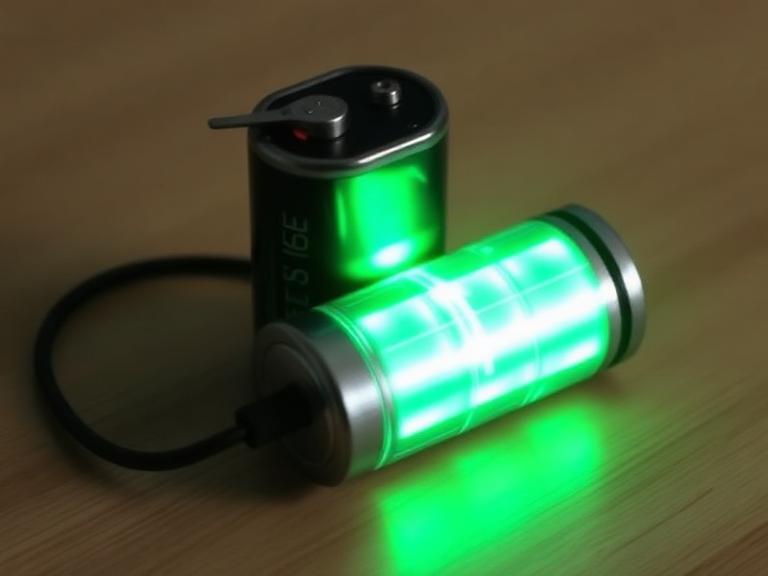
Quick Answer: How Do You Revive a Dead Lithium Battery?
To charge a lithium battery that is completely dead, you must “wake up” the Battery Management System (BMS) that has placed the battery into a protective deep-sleep mode. You can achieve this by following 5 strict steps: 1) Verify the 0V state with a multimeter. 2) Inspect the casing for physical damage or swelling. 3) Utilize a smart charger with a built-in “0V Wake-Up” function, or jump-start the BMS by connecting a healthy battery of the exact same voltage in parallel for 60 seconds. 4) Apply a low-current recovery charge. 5) Monitor the bulk charging phase. If the battery refuses to hold a charge after the BMS reset, the internal cells are permanently degraded and the unit must be recycled.
Table of Contents
- What It Is: Understanding the BMS Sleep Mode
- How It Works: 5 Steps to Charge a Lithium Battery That Is Completely Dead
- The Benefits of Recovering a Dead Battery
- Limitations: When a Battery is Truly Dead
- Who Should Attempt Recovery & Who Should Not
- Common Mistakes During Recovery
- Buying Considerations for Smart Chargers
- Expert Recommendation & OHRIJA Spotlight
- Data and Comparison Tables
- Frequently Asked Questions
What It Is: Understanding the BMS Sleep Mode
Before you attempt to charge a lithium battery that is completely dead, you must understand the opponent: the Battery Management System (BMS). Lithium chemistry is incredibly volatile. If a lithium-ion cell is discharged below 2.5V, the copper current collectors inside the cell can begin to dissolve, causing internal short circuits. To prevent this, the internal computer (the BMS) constantly monitors the voltage of every cell pack.
If you leave your eBike, golf cart, or mobility scooter sitting in a garage over the winter without a maintenance charge, the parasitic draw of the BMS will slowly drain the battery. Once it hits the critical low-voltage threshold, the BMS triggers “sleep mode.” It electronically disconnects the internal cells from the external positive and negative terminals. This is why your multimeter reads 0.00V. The battery isn’t dead; it has locked its doors from the inside. Therefore, your task is not to charge the cells immediately, but to supply a specific voltage to the terminals to convince the BMS that it is safe to open the doors again.
How It Works: 5 Steps to Charge a Lithium Battery That Is Completely Dead
In most professional situations, technicians use highly regulated power supplies to execute a recovery. However, you can achieve the same result in your workshop by strictly following these 5 steps.
Step 1: Verify the Battery Voltage with a Multimeter
Do not guess. Use a digital multimeter set to DC Voltage. Probe the positive and negative terminals. If the reading is between 1V and 8V on a 12V or 48V system, the BMS has not fully disconnected, but the cells are dangerously low. If the reading is exactly 0.00V or fluctuating wildly around 0.1V, the BMS is definitively in sleep mode. If you are struggling with standard chargers reading error codes at this stage, reviewing how to troubleshoot a 12V battery charger will save you hours of frustration.
Step 2: Inspect for Physical Swelling or Damage
This step is non-negotiable. Inspect the battery casing. Is it bloated? Is it emitting a sweet, chemical odor? Are the terminal posts scorched? If the answer to any of these is yes, stop immediately. A swollen lithium battery has off-gassed internally due to cell degradation. Attempting to force a charge into a bloated battery will result in a thermal runaway fire. Dispose of it safely.
Step 3: Choose a Charger with a BMS Wake-Up Function (or Parallel Jump)
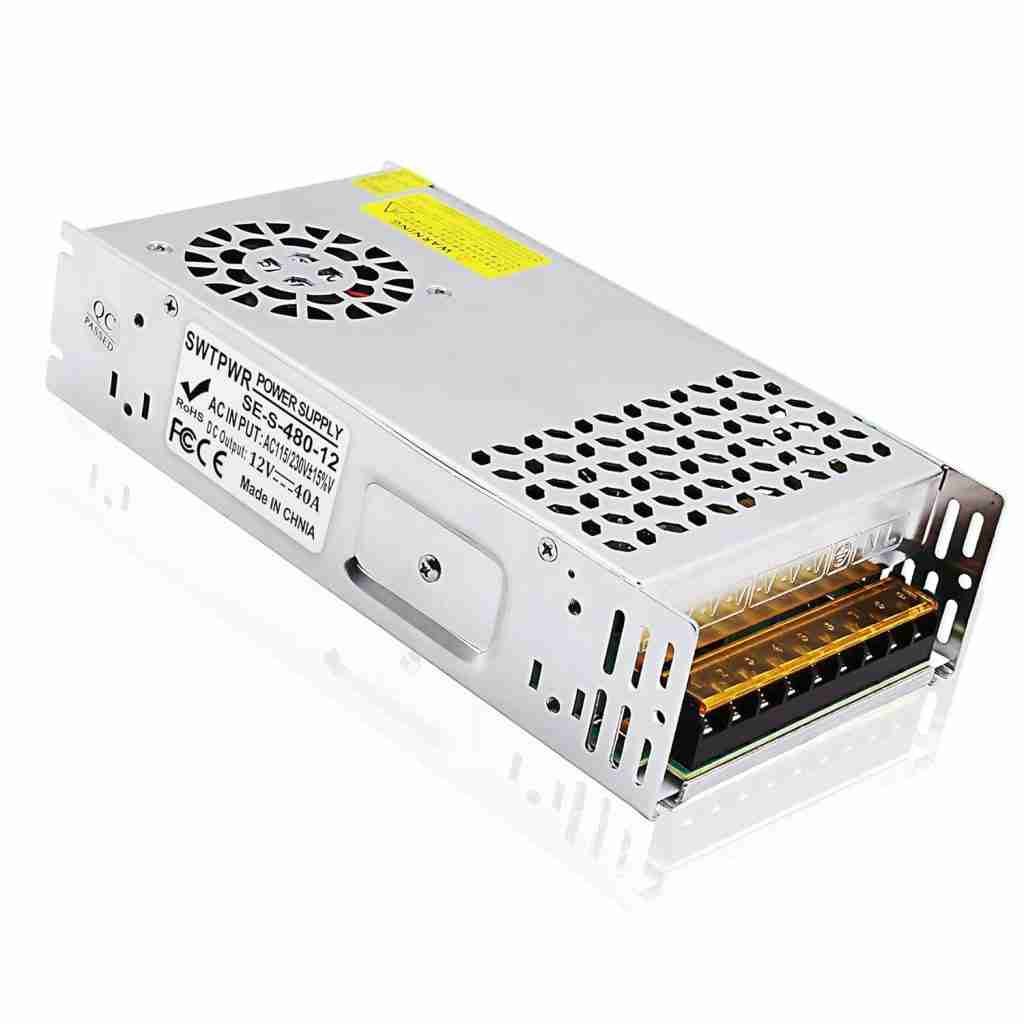
12V Power Supply 12V 40A 480W 50A 600W AC to DC Converter 110V/120V to 12V Transformer LED Driver Smart Cooling Fan Designed for LED Strip CCTV and Car Devices
Price range: 13.90$ through 14.90$
12V Power Supply 12V 50A 600W AC to DC Converter 110V/120V to 12V Transformer LED Driver Smart Cooling Fan Designed for LED Strip CCTV and Car Devices (DC12V, 12V-50A-600W)
Price range: 23.90$ through 29.90$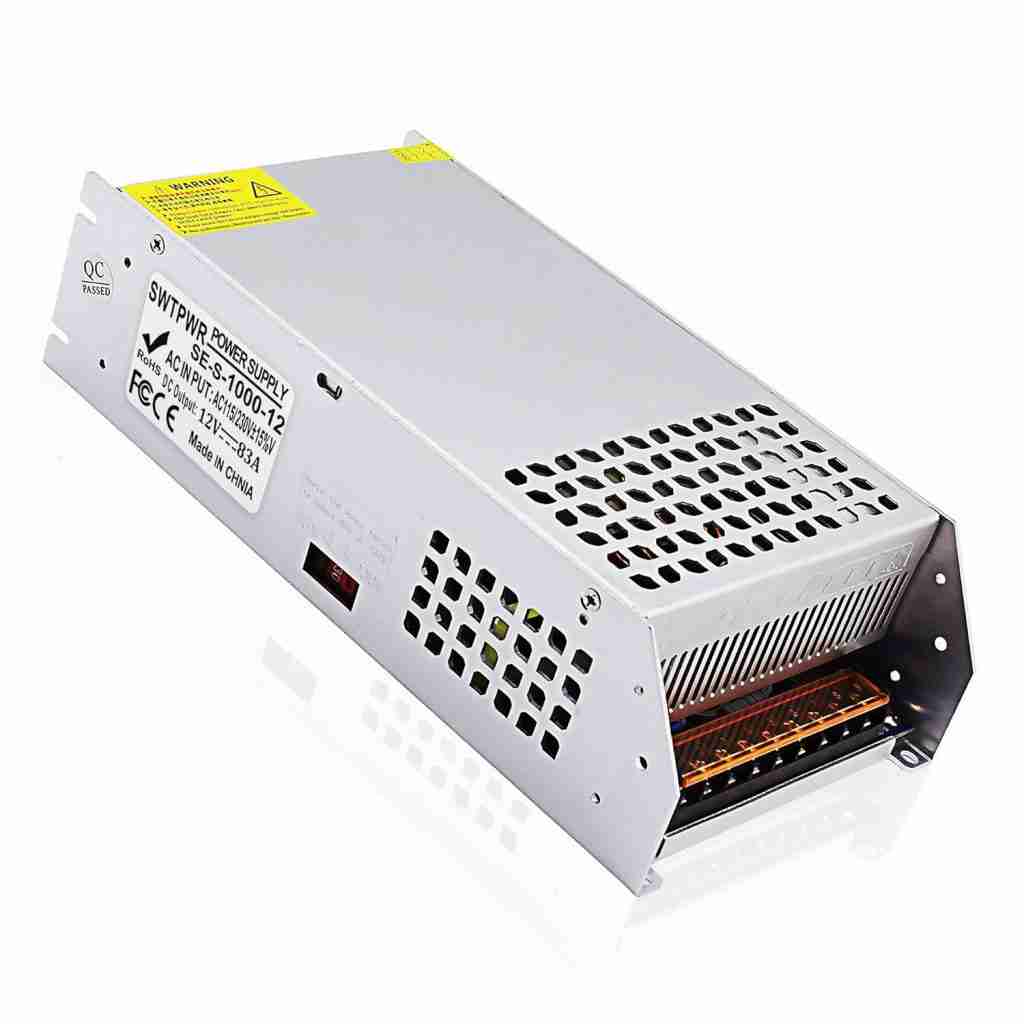
12V Power Supply 12V 83A 1000W AC to DC Converter 110V/120V to 12V Transformer LED Driver Smart Cooling Fan Designed for LED Strip CCTV and Car Devices
Price range: 29.90$ through 54.90$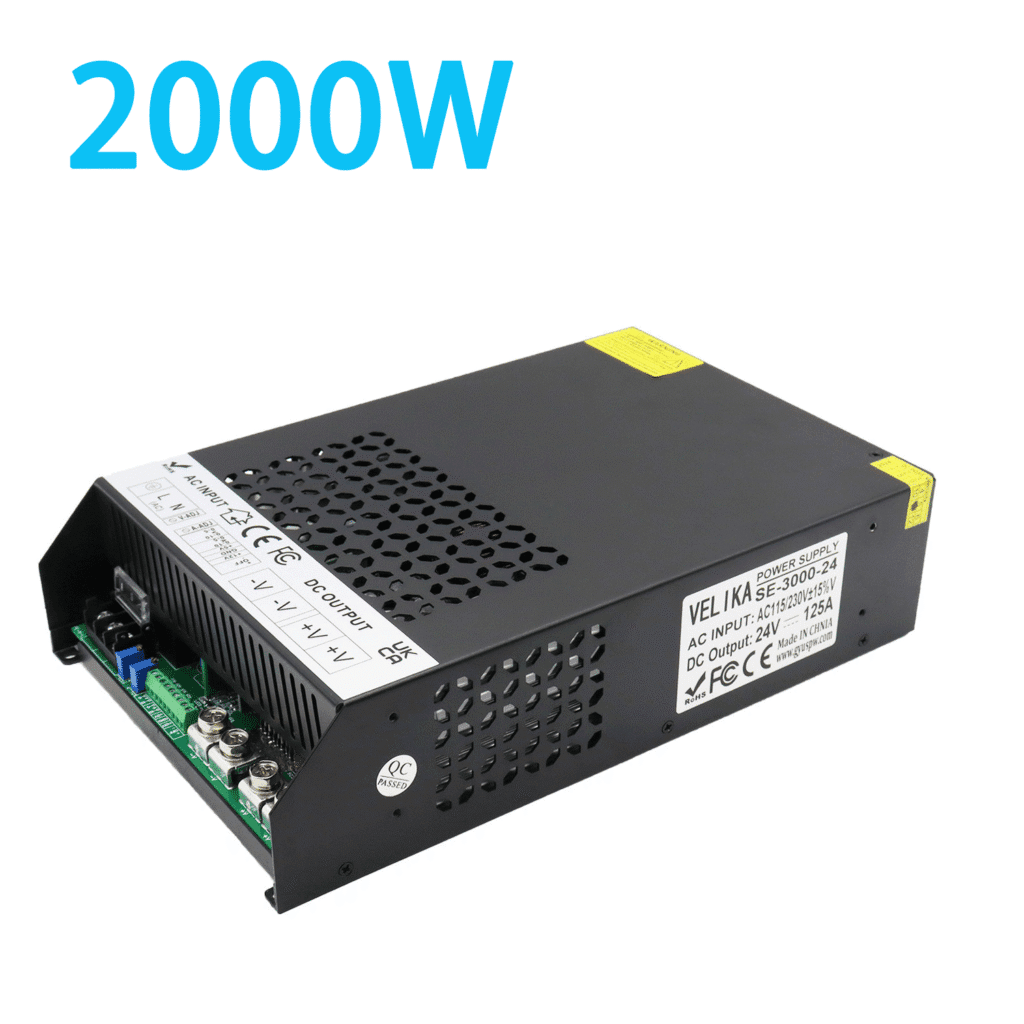
2000 Series 2000W High Power AC‑DC Switching Power Supply | AC185‑265V Input, Multiple DC Output 12V 24V 36V 48V 60V 72V 80‑120V & Custom Voltage For Industrial Equipment
Price range: 64.80$ through 69.80$
Standard lead-acid chargers or cheap lithium chargers require a base voltage to “detect” the battery before they output current. Because your battery reads 0V, a standard charger will do nothing. You have two options:
- The Professional Method: Connect a high-end smart charger equipped with a “0V Wake-Up” or “Force Charge” mode. These chargers output a low-amperage pulse specifically designed to reset the BMS relay. If you are operating a 48V system, you must ensure you have one of the best lithium ion battery charger 48V units equipped with this feature.
- The Parallel Jump Method: If you lack a smart charger, take a second, healthy lithium battery of the exact same voltage. Using jumper wires, connect Positive to Positive and Negative to Negative for 60 to 120 seconds. The healthy battery will instantly push voltage into the dead battery’s terminals, tricking the BMS into waking up. Disconnect the healthy battery immediately after the 2 minutes are up.
Step 4: Apply the Recovery Charge
Once the BMS clicks open (you can often hear a faint relay click, and your multimeter will instantly show a voltage reading above 9V), attach your dedicated lithium charger. For those managing deep-cycle marine or solar arrays, utilizing one of the best LiFePO4 battery chargers 2025 is critical, as the charging algorithm for LiFePO4 differs slightly from standard Lithium-Ion. The charger should begin in a “bulk phase,” pushing a steady, regulated current into the starved cells.
Step 5: Monitor the Standard Charging Cycle
Do not walk away from a battery undergoing a deep recovery. Monitor the temperature. It is normal for the charger to get warm, but if you find yourself asking why does my charger get hot to the point where it burns your hand, or if the battery casing exceeds 45°C (113°F), disconnect the power immediately. The internal resistance of the cells may be too high to safely recover. Allow the charger to complete its cycle until the indicator light turns green.
The Benefits of Recovering a Dead Battery
The commercial and practical benefits of knowing how to charge a lithium battery that is completely dead are massive. Lithium batteries represent a significant capital expenditure. A replacement 48V eBike battery or a 12V marine lithium bank can cost anywhere from $300 to $1,200. By investing in a high-quality smart charger with a wake-up function, you secure an immediate return on investment the first time you successfully revive a sleeping battery. Furthermore, reducing premature e-waste aligns with sustainable operational practices.
Limitations: When a Battery is Truly Dead
We believe in commercial realism; not every battery can be saved. If you successfully wake up the BMS, but the battery voltage drops rapidly the moment you remove the charger, the internal cells suffer from severe capacity fade. Additionally, if the battery was left in a 0V state for over six months, the copper dissolution inside the cells may be irreversible. Waking the BMS will not fix degraded lithium chemistry. In our testing, batteries left dead for less than 30 days have a 95% recovery rate, while those left for a year have less than a 10% chance of safe recovery.
Who Should Attempt Recovery & Who Should Not
For commercial users and heavy-duty applications: Fleet managers handling golf carts, automated guided vehicles (AGVs), or rental eBikes must equip their maintenance bays with advanced recovery chargers. Identifying the best 48V eBike battery chargers with zero-volt wake-up features is a mandatory operational requirement to minimize fleet downtime.
Who does not need it: For beginners dealing with visibly swollen smartphone batteries, punctured drone batteries, or compromised power tool packs. Do not attempt a BMS reset on physically damaged cells. The risk of thermal runaway far outweighs the cost of buying a replacement.
Common Mistakes During Recovery
The most dangerous mistake operators make is attempting to force a charge using an old, unregulated lead-acid battery charger. Lead-acid chargers feature a “desulfation” or “equalization” mode that pulses high voltage (often up to 16V on a 12V system). This high-voltage spike will instantly fry a lithium BMS and potentially ignite the cells. You must use a dedicated lithium charging algorithm. If you are unsure about cross-compatibility, research whether a can lithium charger charge LiFePO4 battery before making any connections.
Buying Considerations for Smart Chargers
When purchasing equipment to manage your lithium investments, prioritize features over cheap pricing. You need a charger with an OLED or LCD screen to monitor real-time voltage and amperage output. Look for aluminum alloy shells for superior heat dissipation. For specialized mobility hardware, ensure you are sourcing the best portable scooter battery chargers that explicitly list “0V Activation” or “BMS Wake-up” in their technical specifications.
Expert Recommendation & OHRIJA Spotlight
In most professional situations, the reliability of your charging infrastructure dictates the lifespan of your battery fleet. Relying on generic, plastic-housed chargers is a false economy. We recommend integrating industrial-grade charging solutions that provide both robust thermal management and intelligent BMS communication protocols.
If you are managing 3S 11.1V / 12V lithium-ion systems, the OHRIJA 12V Lithium Battery Charger (12.6V 10A OLED) is the definitive tool for the job. Engineered with an aerospace-grade aluminum alloy shell, it delivers a precise 10-amp output to efficiently wake up and bulk-charge depleted cells without triggering thermal safety limits.

OHRIJA 12.6V 10A OLED Lithium Charger
Designed for professional and heavy-duty applications, this charger provides unmatched real-time monitoring and durable construction.
- Output: Max 12.6V ±0.2V / 10Amp ±0.2A
- Material: Aluminum alloy shell for rapid cooling
- Applicable Battery: 3S 11.1V Lithium-ion batteries
- Working Power: 175W Maximum
- Connectors: Customizable (XT60, XT90, Anderson 50A, Crocodile Clip)
Data and Comparison Tables
| Step | Action | Purpose / Objective |
|---|---|---|
| 1. Diagnostic | Measure terminals with a digital multimeter. | Confirm 0.00V reading to verify the BMS is in sleep mode, not a soft discharge. |
| 2. Inspection | Check for swelling, heat, or chemical odor. | Ensure physical safety. Swollen batteries must be safely discarded, never charged. |
| 3. BMS Wake-Up | Use 0V Smart Charger OR Parallel Jump. | Supply external voltage to reset the BMS relay and open the terminal connection. |
| 4. Recovery Charge | Apply a dedicated lithium charge profile. | Safely inject low-amperage current into starved cells without causing thermal runaway. |
| 5. Cycle Monitor | Monitor temperature until the cycle completes. | Ensure internal resistance isn’t generating dangerous heat. Confirm battery holds charge. |
| Method | Safety Level | Equipment Required | Best Use Case |
|---|---|---|---|
| Smart Charger (0V Function) | Highest (Electronically regulated) | Advanced Lithium Charger (e.g., OHRIJA OLED) | Commercial workshops, daily maintenance, safest for beginners. |
| Parallel Jump Start | Moderate (Requires strict supervision) | Jumper cables, 2nd healthy battery of identical voltage | Emergency field recovery when a smart charger is unavailable. |
| Pros (Advantages) | Cons (Limitations) |
|---|---|
| Saves hundreds or thousands of dollars in replacement costs. | If cells were discharged for too long, capacity will be permanently reduced. |
| Reduces hazardous e-waste by extending the battery lifecycle. | Requires specific, high-quality charging equipment to execute safely. |
| Allows for rapid redeployment of fleet vehicles (eBikes, carts). | High risk of thermal runaway if physical damage goes unnoticed by the user. |
Frequently Asked Questions
Can you charge a lithium battery that is completely dead?
Yes, in most professional situations, what appears to be a completely dead lithium battery is actually just in a deep sleep mode triggered by its Battery Management System (BMS). By applying a specialized wake-up charge or jump-starting the BMS, the battery can often be recovered.
Why won’t my standard charger wake up a dead lithium battery?
A standard charger requires a minimum voltage reading from the battery to begin outputting current. When a lithium battery’s BMS goes into protection mode, it cuts off voltage to the terminals, reading as 0V. The standard charger assumes no battery is connected and refuses to charge.
Is it safe to jump-start a lithium battery with another battery?
Yes, provided you use a healthy battery of the exact same voltage and chemistry. You connect them in parallel (positive to positive, negative to negative) for 1 to 2 minutes. This provides the 0V battery with enough voltage to reset the BMS, allowing a smart charger to take over.
Authoritative References & Industry Standards
To ensure your battery maintenance procedures comply with the highest safety and engineering standards, we recommend reviewing guidelines from the following technical authorities:
- Battery University (Cadex Electronics) – Comprehensive engineering data regarding the behavior of lithium-ion protection circuits and the science of awakening sleeping cells.
- Institute of Electrical and Electronics Engineers (IEEE) – Providing rigorous international standards (IEEE 1625) for the safe design, charging algorithms, and management of rechargeable batteries in mobile and stationary applications.
- National Fire Protection Association (NFPA) – Establishing critical safety codes and operational limits to prevent thermal runaway and mitigate fire risks associated with damaged or improperly charged lithium-ion energy storage systems.