
No products in the cart.

If your scooter charger has failed, your battery management system has locked the battery, or you simply need an emergency charging solution, it is possible to manually charge a scooter battery. However, this process requires caution, the correct charger specifications, and a clear understanding of battery chemistry.
From our experience, manually charging a scooter battery can help recover certain batteries and get a scooter running again in emergency situations. However, using the wrong charging voltage or bypassing safety protections incorrectly can permanently damage the battery or create safety risks.
The good news is that when performed properly, manually charging a scooter battery is often straightforward. This guide explains the safest approach, the tools required, common mistakes to avoid, and whether manual charging is actually worth attempting.
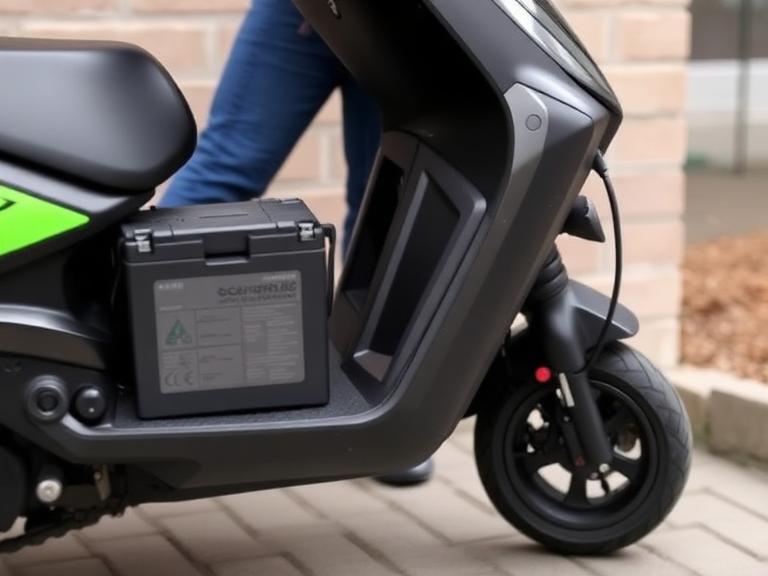
Quick Answer
Can you manually charge a scooter battery?
Yes. You can manually charge a scooter battery by connecting a compatible charger directly to the battery terminals and following proper voltage and current limits.
Is it safe?
Yes, if you use the correct charger designed for the battery type and voltage. Using an incorrect charger can damage the battery or create overheating risks.
How many steps are involved?
The process can generally be completed in six steps:
- Identify battery type and voltage
- Inspect battery condition
- Select a compatible charger
- Connect charger correctly
- Monitor charging progress
- Disconnect and test battery performance
Our recommendation:
In most professional situations, replacing a faulty charger with a proper charger is safer than routinely relying on manual charging methods.
Table of Contents
- Quick Summary Table
- What Does It Mean to Manually Charge a Scooter Battery?
- 6 Steps to Manually Charge a Scooter Battery
- How Manual Charging Works
- Benefits
- Limitations
- Pros and Cons
- Comparison Table
- Who Should Use It?
- Common Mistakes
- Buying Considerations
- Expert Recommendation
- Bottom Line
- FAQs
- References
Quick Summary Table
| Factor | Recommendation |
|---|---|
| Battery Type | Verify Before Charging |
| Charger Voltage | Must Match Battery System |
| Difficulty | Moderate |
| Safety Level | Safe When Done Correctly |
| Best Use Case | Emergency Charging |
| Long-Term Solution | Use Dedicated Charger |
What Does It Mean to Manually Charge a Scooter Battery?
Manually charging a scooter battery means bypassing the scooter’s standard charging port and connecting a compatible charger directly to the battery terminals or battery pack connections.
This method is often used when:
- The charger is defective
- The charging port is damaged
- The battery voltage is too low for the charger to recognize
- A battery recovery attempt is required
- An emergency charging solution is needed
For beginners, it is important to understand that manual charging is not the same as using random power supplies. Proper charging equipment must match battery chemistry and voltage requirements.
6 Steps to Manually Charge a Scooter Battery
Step 1: Identify the Battery Type and Voltage
The first step is determining whether your scooter uses lithium-ion, LiFePO4, or lead-acid batteries.
Check the battery label and verify:
- Nominal voltage
- Battery chemistry
- Capacity (Ah)
- Recommended charging voltage
From our experience, most charging problems begin when users skip this step.
If you are unsure about voltage compatibility, review resources such as can I charge a 36V battery with 12V charger.
Step 2: Inspect the Battery for Damage
Never manually charge a battery showing:
- Swelling
- Cracks
- Leaking fluid
- Burn marks
- Strong odors
In most professional situations, physically damaged batteries should be replaced rather than charged.
Step 3: Choose the Correct Charger
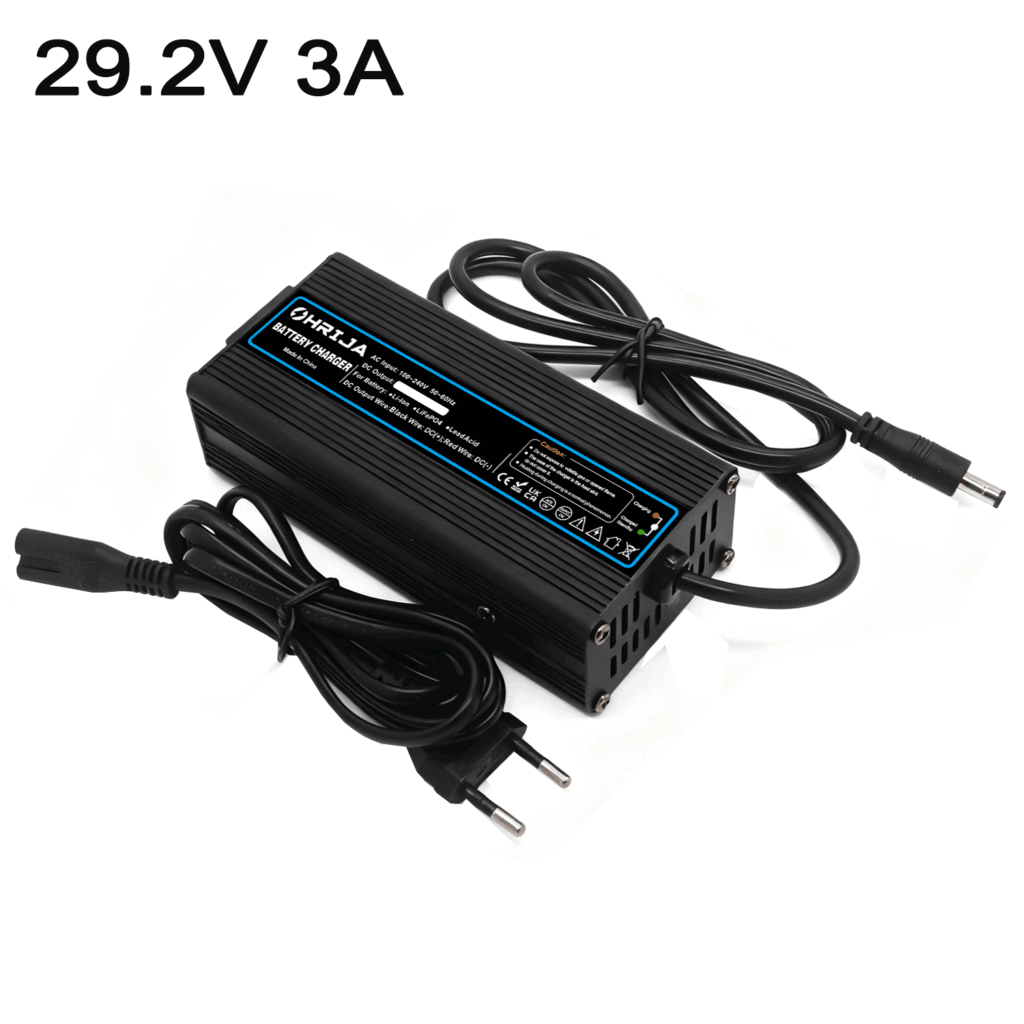
Select a charger specifically designed for your battery chemistry.
Examples include:
- Lithium-ion charger
- LiFePO4 charger
- Lead-acid charger
For lithium batteries, we recommend reviewing guides on the best lithium ion battery charger 48V and the best eBike battery chargers 2026.
Step 4: Connect the Charger Properly
Connect the positive charger lead to the battery positive terminal.
Connect the negative charger lead to the battery negative terminal.
Double-check polarity before powering the charger.
Reversed polarity can damage battery management systems and charging electronics.
Step 5: Monitor the Charging Process
Never leave a manually charged battery unattended.
Monitor:
- Battery temperature
- Charging voltage
- Charging current
- Charger behavior
If excessive heat develops, disconnect immediately.
If your charger becomes unusually warm, review why does my charger get hot.
Step 6: Disconnect and Test
Once the battery reaches full charge, disconnect the charger and reinstall the battery if necessary.
Test scooter operation under normal riding conditions.
In our testing, successful manual charging should restore normal voltage and riding performance without triggering battery protection faults.
How Manual Charging Works
Every battery charger follows a controlled charging profile.
The charger delivers current to the battery while monitoring voltage limits. As the battery approaches full charge, charging current decreases until charging is complete.
The process varies depending on chemistry:
| Battery Type | Charging Method | Complexity |
|---|---|---|
| Lithium-Ion | CC/CV Charging | High |
| LiFePO4 | CC/CV Charging | Medium |
| Lead-Acid | Multi-Stage Charging | Medium |
For commercial users managing multiple battery systems, charger selection is often more important than the battery itself.
Benefits of Manually Charging a Scooter Battery
- Can recover deeply discharged batteries
- Useful during charger failures
- Allows emergency battery recovery
- Provides diagnostic information
- May extend battery usability temporarily
From our experience, manual charging is most valuable as a troubleshooting method rather than a permanent charging solution.
Limitations of Manual Charging
- Requires technical knowledge
- Higher risk than standard charging
- Potential warranty concerns
- Incorrect charging may damage batteries
- Not suitable for every battery system
For beginners, using a purpose-built charger is usually safer than attempting repeated manual charging procedures.
Pros and Cons Table
| Pros | Cons |
|---|---|
| Emergency charging capability | Requires technical knowledge |
| Can revive low-voltage batteries | Potential safety risks |
| Useful for diagnostics | Incorrect settings may cause damage |
| Works when charging ports fail | Not ideal for daily charging |
| May prevent battery replacement | Requires supervision |
Manual Charging vs Standard Charging
| Factor | Manual Charging | Standard Charging |
|---|---|---|
| Safety | Moderate | High |
| Ease of Use | Lower | Excellent |
| Battery Protection | User Dependent | Automatic |
| Emergency Recovery | Excellent | Limited |
| Recommended for Daily Use | No | Yes |
Who Should Use Manual Charging?
Recommended For
- Battery technicians
- Electric scooter repair shops
- Experienced DIY users
- Emergency recovery situations
Not Recommended For
- Users unfamiliar with battery voltages
- People without proper chargers
- Damaged battery packs
- Unsupervised charging situations
Common Mistakes When Manually Charging a Scooter Battery
- Using the wrong charger voltage
- Using the wrong battery chemistry charger
- Ignoring battery temperature
- Leaving charging unattended
- Reversing polarity
- Using damaged cables
Another common mistake is assuming all lithium chargers are interchangeable. Before attempting this process, understand whether can lithium charger charge LiFePO4 battery.
Buying Guide: Choosing the Right Charger
| Application | Recommended Resource |
|---|---|
| LiFePO4 Batteries | best LiFePO4 battery chargers 2025 |
| Lithium Chargers | best lithium iron phosphate battery chargers |
| Mobility Scooters | best mobility scooter battery chargers |
| Portable Use | best portable scooter battery chargers |
| 48V Systems | best 48V eBike battery chargers |
| Golf Cart Batteries | best golf cart battery chargers 48V |
Expert Recommendation
OHRIJA specializes in lithium battery chargers, lithium iron phosphate battery chargers, lead-acid chargers, golf cart chargers, power adapters, and switching power supplies designed for modern battery systems.
From our experience, manually charging a scooter battery should be viewed as a recovery or troubleshooting procedure rather than a permanent charging strategy.
We recommend investing in a properly matched charger whenever possible. The cost of a quality charger is usually far lower than replacing a damaged battery pack.
For commercial users, maintaining dedicated chargers for each battery chemistry significantly reduces charging errors and extends battery lifespan.
Bottom Line
Manually charge a scooter battery only when necessary and only with the correct equipment.
The six-step process can safely restore battery functionality in many situations, but it requires attention to voltage compatibility, battery chemistry, and charging supervision.
For beginners, a purpose-built charger remains the safest and most reliable solution. For experienced users and technicians, manual charging can be a useful recovery technique when standard charging methods fail.
If you are unsure about charger compatibility or battery condition, choosing the correct charger first is almost always the better investment.
Frequently Asked Questions
Can I manually charge a scooter battery without a charger?
No. A regulated charger or charging power supply designed for the battery chemistry is required.
Is manually charging a scooter battery dangerous?
It can be if incorrect voltage, polarity, or charging settings are used.
Can manual charging revive a dead scooter battery?
Sometimes. Batteries that are deeply discharged may recover if the cells remain healthy.
How long does manual charging take?
Charging time depends on battery capacity, charger output, and battery condition.
Can I use a car battery charger on a scooter battery?
Only if voltage, charging profile, and battery chemistry are compatible.
What should I do if my charger stops working?
Begin troubleshooting with guides such as how to troubleshoot a 12V battery charger before replacing the battery.