
No products in the cart.

In the specialized world of battery maintenance and energy storage, encountering mismatched voltages is a common hurdle. Golf carts, vintage marine equipment, and specific industrial machinery frequently rely on 8-volt battery configurations. However, the vast majority of consumers and technicians only have standard 12-volt automotive chargers readily available in their garages or workshops. This presents a critical engineering dilemma: attempting to charge 8 volt battery with 12 volt charger without proper mitigation is highly dangerous and can lead to catastrophic battery failure.

OHRIJA, a brand belonging to Dongguan Hengruihong Technology Co., Ltd., was established in 2020 and is headquartered in Dongguan, Guangdong Province, China. As a high-tech enterprise integrating R&D, production, and sales, we specialize in advanced power solutions. From our experience designing professional-grade equipment like the GOLF CAR BATTERY CHARGER and ADJUSTABLE POWER SUPPLY units, we know that applying 12 to 14.4 volts directly to an 8-volt cell will boil the electrolyte, warp the internal lead plates, and create a severe explosion hazard due to off-gassing hydrogen. However, in an absolute emergency, there are highly specific, technically sound methods to achieve this. In this comprehensive guide, we will detail the exact, professional steps to charge 8 volt battery with 12 volt charger safely, while highlighting why utilizing purpose-built equipment remains the ultimate industry standard.
Table of Contents
- 1. Understanding the Physics: Why Voltage Mismatch is Dangerous
- 2. Essential Equipment Required for the Process
- 3. Step-by-Step: How to Charge 8 Volt Battery With 12 Volt Charger
- 4. Continuous Monitoring and Safety Protocols
- 5. Professional Alternatives: The OHRIJA Solution
- 6. Summary Table: Emergency vs. Professional Charging
- 7. Frequently Asked Questions (FAQs)
- 8. References
1. Understanding the Physics: Why Voltage Mismatch is Dangerous
Before executing any emergency procedures, you must understand the underlying chemistry and electrical physics of the task. A standard 8-volt lead-acid battery is composed of four 2-volt cells connected in series. When fully charged, an 8-volt battery should rest at approximately 8.4 to 8.5 volts. The optimal charging voltage for this battery is strictly between 9.3 volts and 9.8 volts.
A standard 12-volt charger outputs anywhere from 13.8 volts to 14.4 volts. If you directly connect these leads, the massive voltage differential will force an uncontrolled amount of amperage into the 8-volt battery. This excessive current causes the internal temperature to spike rapidly, boiling the sulfuric acid and water mixture. This process, known as thermal runaway, generates highly flammable hydrogen gas and permanently destroys the battery’s active material. Therefore, to safely charge 8 volt battery with 12 volt charger, you must introduce a resistive load in series to step down the voltage and limit the current flow.
2. Essential Equipment Required for the Process
We recommend treating this procedure with the utmost caution. You cannot simply use jumper cables and hope for the best. To correctly charge 8 volt battery with 12 volt charger, you must gather the following specific tools:
- A Standard 12V Charger: Preferable a manual charger, as modern “smart” chargers may refuse to activate if they detect a voltage anomaly (like seeing 8 volts on a 12-volt setting).
- A Voltage-Dropping Resistor: The most accessible and effective tool for this is a standard 12-volt halogen automotive headlight bulb (e.g., an H4 or H7 bulb). The filament in the bulb acts as a high-wattage resistor, absorbing the excess voltage and converting it into light and heat.
- Digital Multimeter: This is non-negotiable. You must have a calibrated multimeter to monitor the battery voltage in real-time.
- Heavy-Duty Alligator Clips and Wire: To create the series circuit with the headlight bulb.
- Safety Gear: Acid-resistant gloves and full-seal safety goggles to protect against potential electrolyte boiling.
3. Step-by-Step: How to Charge 8 Volt Battery With 12 Volt Charger
If you find yourself stranded without a dedicated GOLF CAR BATTERY CHARGER or an ADJUSTABLE POWER SUPPLY, you can use the headlight bulb method. Follow these precise steps to charge 8 volt battery with 12 volt charger.
Step 1: Environmental and Battery Preparation

Move the battery to a highly ventilated, open-air environment. Ensure there are no open flames or sparks nearby. Open the cell caps on the 8-volt battery and check the electrolyte levels. If the lead plates are exposed, add distilled water until they are submerged, but do not overfill, as the fluid will expand during the charging process. Leave the caps loosely resting on top of the holes to allow any generated gas to escape safely.
Step 2: Constructing the Series Circuit
Do not connect the charger directly to the battery. You must wire the headlight bulb in series with the positive charging lead. Take the positive (red) clamp from your 12-volt charger and connect it to one of the primary terminals on the 12-volt headlight bulb.
Step 3: Connecting to the Battery
Take a separate piece of heavy-duty wire with alligator clips. Connect one end to the other terminal of the headlight bulb. Connect the opposite end of this wire to the positive terminal of your 8-volt battery. The current must now travel from the charger, through the bulb, and then into the battery. Finally, connect the negative (black) clamp from the 12-volt charger directly to the negative terminal of the 8-volt battery.
Step 4: Initiating the Charge
Turn on the 12-volt charger. Immediately, the headlight bulb should illuminate. The brightness of the bulb is a visual indicator of the current flowing into the battery. The bulb acts as a bottleneck, dropping the 13.8V output from the charger down to a safer 9.5V to 10V range at the battery terminal. This is the only mechanically safe way to charge 8 volt battery with 12 volt charger in an emergency scenario.
4. Continuous Monitoring and Safety Protocols
When you charge 8 volt battery with 12 volt charger using this bypass method, you cannot walk away. This is not a “set it and forget it” process. You must employ continuous manual monitoring.
Set your digital multimeter to DC Volts and place the probes on the positive and negative terminals of the 8-volt battery. As the battery absorbs the charge, the voltage will slowly rise. You must monitor this closely. We recommend stopping the charging process the moment the multimeter reads 9.6 volts across the battery terminals while the charger is running. Allowing the voltage to push past 9.6V will instigate severe overcharging.
Furthermore, use an infrared thermometer or simply place a gloved hand on the side of the battery casing. If the battery becomes excessively hot to the touch, or if you hear aggressive boiling and bubbling from the cells, disconnect the charger immediately. The emergency charge is complete, and continuing will result in structural damage to the battery.
5. Professional Alternatives: The OHRIJA Solution
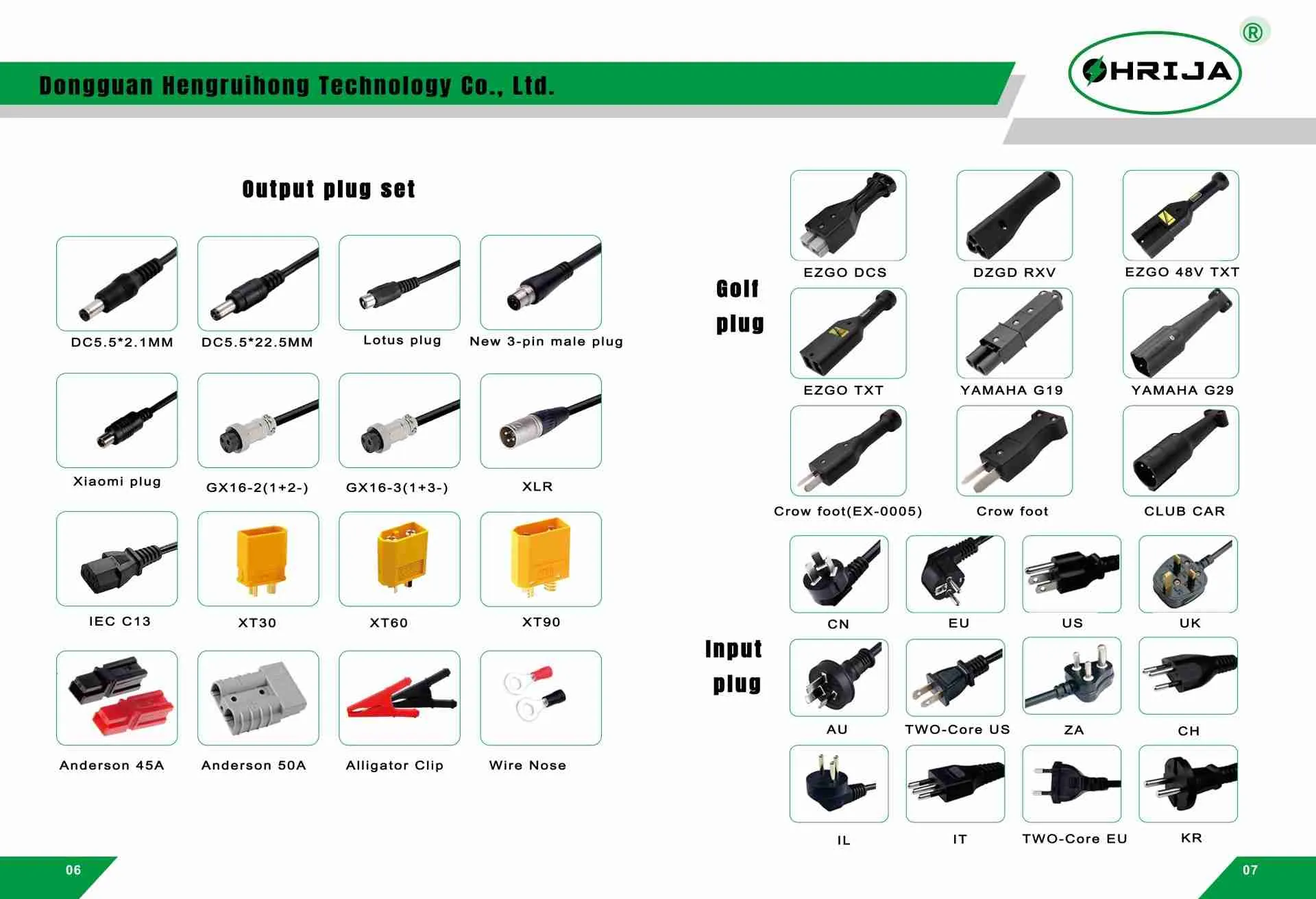
While understanding how to charge 8 volt battery with 12 volt charger using a resistor is a valuable diagnostic trick, it is strictly an emergency measure. Consistent use of this method will shorten the lifespan of your expensive deep-cycle batteries. From our experience at Dongguan Hengruihong Technology Co., Ltd., investing in appropriate, voltage-specific hardware is the only way to ensure the longevity and safety of your power systems.
OHRIJA offers a comprehensive suite of professional charging solutions tailored to specific chemistries and voltages. Rather than risking a dangerous workaround, we highly recommend utilizing our dedicated equipment:
- ADJUSTABLE POWER SUPPLY and DC POWER SUPPLY: For advanced users and technicians, an adjustable supply is the ultimate tool. You can manually dial the voltage to exactly 9.6V and restrict the amperage to a safe 10% of the battery’s amp-hour capacity. This allows you to safely charge any anomalous voltage battery without makeshift headlight bulbs.
- GOLF CAR BATTERY CHARGER: Golf carts predominantly use strings of 8-volt batteries to achieve 48-volt systems. Our intelligent golf car chargers are specifically programmed with the correct charging algorithms, bulk charge phases, and float voltages to maintain these heavy-duty arrays perfectly.
- LEAD ACID BATTERY CHARGER: Designed with multi-stage smart charging microprocessors, these units prevent sulfation and thermal runaway, offering plug-and-play safety.
- LI ION BATTERY CHARGER and LIFEPO4 BATTERY CHARGER: If you are upgrading your 8-volt lead-acid systems to modern lithium technology, you must use chemistry-specific chargers. Lithium batteries are incredibly sensitive to voltage miscalculations, making our precise OHRIJA lithium chargers mandatory for system health.
- switch power supply: Our high-efficiency switching power supplies provide stable, ripple-free current, serving as the backbone for custom industrial charging racks.
- CONNECTOR REMOVAL CHARGER: A specialized tool designed for quick, safe disconnection in high-turnover fleet environments.
6. Summary Table: Emergency vs. Professional Charging
To highlight the stark differences between the emergency workaround and professional methodology, we have compiled the following summary table.
| Parameter | Emergency 12V Charger (with Bulb) | OHRIJA Adjustable / Golf Car Charger |
|---|---|---|
| Voltage Control | Imprecise; relies on bulb resistance. | Microprocessor-controlled; exact to 0.1V. |
| Current Limiting | Fluctuates based on battery resistance. | Strictly regulated to prevent overheating. |
| Monitoring Required | Constant human oversight and multimeter checking. | Zero. Automatic shut-off upon full charge. |
| Safety Risk | High. Risk of acid boiling and hydrogen gas. | Negligible. Built-in thermal and over-voltage protection. |
| Battery Lifespan | Degrades active plate material over time. | Maximizes lifespan through multi-stage algorithms. |
7. Frequently Asked Questions (FAQs)
Can I charge 8 volt battery with 12 volt charger directly for just a few minutes?
No. We strongly advise against this. Even a few minutes of direct 14.4V application to an 8V battery will cause a massive inrush of current. This can warp the internal lead plates instantly and cause violent outgassing. Always use a voltage-dropping resistor like a halogen bulb if an emergency demands it.
What is the fully charged resting voltage of an 8-volt battery?
After removing the charger and allowing the battery to rest for 12 to 24 hours, a healthy, fully charged 8-volt lead-acid battery should read between 8.4 volts and 8.5 volts on a digital multimeter.
Why does OHRIJA recommend an Adjustable Power Supply for anomalous batteries?
An ADJUSTABLE POWER SUPPLY allows you to act as the “smart” charger. You can manually set the output to 9.6V and cap the current at 5 amps. This provides a perfectly safe, controlled charge curve for an 8-volt battery without the dangers of using an unregulated 12-volt automotive charger.
Can I use an OHRIJA Lead Acid charger on a Lithium Iron Phosphate (LiFePO4) battery?
Absolutely not. Lead-acid chargers feature desulfation and equalization phases that spike the voltage, which will permanently destroy the Battery Management System (BMS) and cells of a lithium battery. You must use a dedicated LIFEPO4 BATTERY CHARGER to safely handle lithium chemistries.
8. References
For further technical reading on battery chemistry, charging algorithms, and industrial electrical safety, please consult the following authoritative resources:
- Battery Council International (BCI) – Lead-Acid Battery Safety and Charging Guidelines
- Institute of Electrical and Electronics Engineers (IEEE) – Standards for DC Power Supplies and Charging Systems
- Occupational Safety and Health Administration (OSHA) – Powered Industrial Trucks and Battery Charging Station Regulations