
No products in the cart.

For fleet managers, golf course operators, and private vehicle owners, maintaining the battery health of a golf cart is the single most critical aspect of vehicle longevity. When a charging unit inevitably fails or becomes misplaced, consumers often rush to the internet to find a replacement. The most frequent and vital question we encounter during this procurement process is: Are all Club Car chargers the same? The definitive and professional answer is absolutely not. Attempting to use an incompatible charging unit can lead to severe battery degradation, catastrophic electrical failures, and significant safety hazards.

To understand why the answer to “Are all Club Car chargers the same” is a resounding no, one must examine the complex evolution of golf cart electrical systems. Over the past several decades, manufacturers have transitioned through multiple voltage standards, plug designs, battery chemistries, and internal computing architectures. A charger that perfectly maintains a 1998 DS model will completely fail to operate—and potentially damage—a 2026 Onward lithium-ion model.
The OHRIJA brand belongs to Dongguan Hengruihong Technology Co., Ltd., which was established in 2020 and is headquartered in Dongguan, Guangdong Province, China. Our company is a high-tech enterprise integrating R&D, production and sales. We possess deep engineering expertise in power management systems. The company’s main products include the lithium battery charger, lithium iron phosphate battery charger, lead-acid battery charger, golf cart charger, power adapter, and switching power supply. From our experience designing and manufacturing these critical components, we have developed this comprehensive guide to demystify the complexities of golf cart charging systems. By the end of this article, you will fully understand why asking “Are all Club Car chargers the same” is the first step toward protecting your electrical investment.
Table of Contents
- 1. Summary Table: Club Car System Variations
- 2. The Foundation: Voltage Differences (36V vs. 48V)
- 3. The OBC Factor: On-Board Computers vs. ERIC Systems
- 4. Battery Chemistry: Lead-Acid vs. Lithium
- 5. Identifying Plug Types and Receptacles
- 6. OHRIJA Solutions for Your Charging Needs
- 7. Expert Advice for Selecting a Replacement
- 8. Frequently Asked Questions (FAQs)
- 9. Industry References
1. Summary Table: Club Car System Variations
To quickly illustrate why the answer to “Are all Club Car chargers the same” is negative, we have compiled a summary table detailing the primary historical and modern architectures utilized by this specific manufacturer. This table serves as a quick-reference guide for identifying your specific system parameters.
| Era / Model Type | System Voltage | Charge Controller Location | Standard Plug Type | Battery Chemistry |
|---|---|---|---|---|
| Pre-1995 (Early DS) | 36 Volts | Inside the Charger (Timer based) | Crowfoot (2-prong) | Flooded Lead-Acid |
| 1995 – 2013 (DS, Precedent) | 48 Volts | Inside the Cart (OBC – On Board Computer) | Round 3-Pin | Flooded Lead-Acid |
| 2014 – Present (Precedent, Onward, Tempo) | 48 Volts | Inside the Charger (ERIC System / High-Frequency) | Round 3-Pin or Specialized | Lead-Acid or AGM |
| Modern Lithium Conversions & Factory Lithium | 48 Volts / 51.2 Volts | BMS (Battery Management System) Interfaced | Proprietary / Brand Specific | Lithium Iron Phosphate (LiFePO4) |
2. The Foundation: Voltage Differences (36V vs. 48V)
When consumers ask us, “Are all Club Car chargers the same?”, the first technical divergence we point out is system voltage. The total voltage of your golf cart’s battery bank dictates the required output of the charger. Applying a 48V charger to a 36V battery bank will aggressively overcharge and boil the batteries, leading to immediate destruction and a severe fire hazard. Conversely, a 36V charger connected to a 48V system will fail to reach the necessary electrical potential to push current into the batteries, resulting in a cart that simply will not charge.
36V Systems
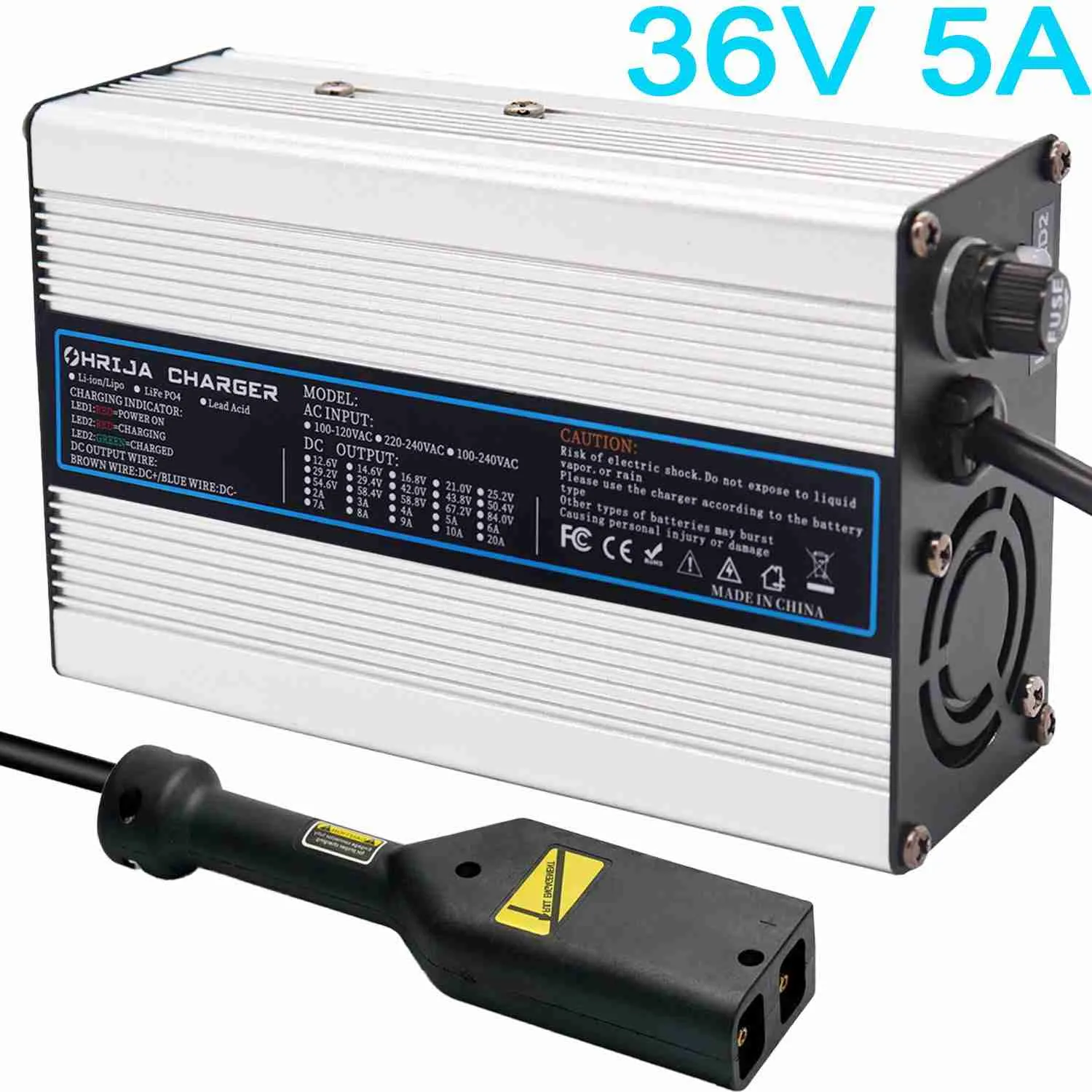
Older models, particularly those manufactured before the late 1990s, operate on a 36-volt architecture (typically utilizing six 6-volt batteries). For these legacy vehicles, we recommend utilizing a dedicated 36V GOLF CHARGER. These units are specifically calibrated to deliver the appropriate bulk, absorption, and float voltages required to maintain 36V lead-acid cells safely.
48V Systems
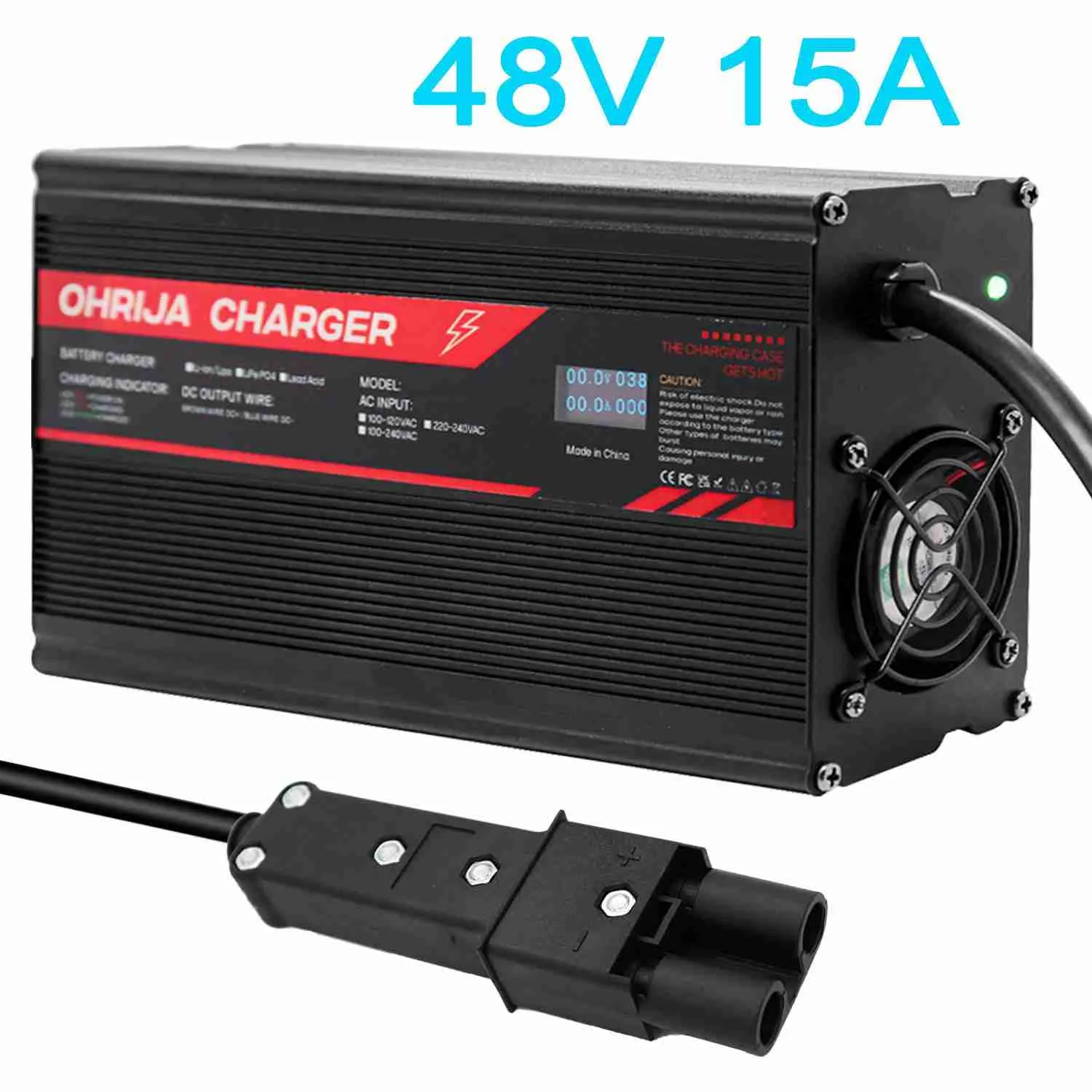
The vast majority of carts manufactured from 1995 onward utilize a 48-volt architecture (utilizing six 8-volt batteries, or four 12-volt batteries). This higher voltage configuration offers better efficiency and torque. To service these modern fleets, a highly regulated 48V GOLF CHARGER is mandatory. Understanding your voltage is the absolute first step in realizing that Are all Club Car chargers the same is a question with massive operational implications.
3. The OBC Factor: On-Board Computers vs. ERIC Systems
Even if you correctly identify your cart as a 48V system, you still cannot assume universal compatibility. This brings us to the most complex reason why Are all Club Car chargers the same is a critical inquiry: the location of the charge controller.
From 1995 to roughly 2013, the manufacturer utilized an On-Board Computer (OBC). In these models, the “charger” you plug into the wall is actually just a “dummy” transformer and rectifier. The actual intelligent control—the microchip deciding when to turn the charger on, how much current to allow, and when to shut it off—is located permanently inside the golf cart itself. If you attempt to use a modern “smart charger” on a cart with an active OBC, the two computer systems will conflict, and the batteries will not charge.
In 2014, the industry transitioned to the ERIC (Efficient, Reliable, Intelligent, Connected) charging system. In an ERIC-equipped cart, the OBC has been removed from the vehicle. The intelligence has been moved back inside the external charging unit. Therefore, you must use a smart, high-frequency charger. From our experience in power adapter and switching power supply manufacturing, bypassing a failed OBC to utilize a modern smart charger is a common and highly effective upgrade, provided the wiring modification is executed correctly.
4. Battery Chemistry: Lead-Acid vs. Lithium
As the automotive and leisure vehicle industries evolve, the question “Are all Club Car chargers the same?” extends into the realm of chemical engineering. Traditional deep-cycle flooded lead-acid batteries require a specific multi-stage charging algorithm. They need to be pushed to a higher voltage to cause deliberate “gassing” (equalization) to prevent sulfate stratification on the lead plates.
Conversely, modern lithium upgrades require an entirely different approach. A lithium iron phosphate (LiFePO4) battery pack does not tolerate over-voltage equalization. Applying a traditional lead-acid charger to a lithium battery pack will trigger the pack’s Battery Management System (BMS) to shut down to prevent cell damage, or worse, bypass the BMS and cause critical cell failure.
Because the OHRIJA brand belongs to Dongguan Hengruihong Technology Co., Ltd., a high-tech enterprise integrating R&D, production and sales, our company’s main products encompass the exact solutions required for this modern transition. We manufacture specific lithium battery charger and lithium iron phosphate battery charger lines engineered with precise Constant Current/Constant Voltage (CC/CV) profiles tailored exclusively for modern battery chemistries.
5. Identifying Plug Types and Receptacles
Physical connectivity is the most visible proof that Are all Club Car chargers the same is a fallacy. Over the decades, the physical interface between the charger and the vehicle has undergone several redesigns to accommodate different safety standards and communication pins.
The Crowfoot Plug
Utilized primarily on the older 36V models, this plug features two angled metal blades encased in a black rubber housing, resembling a bird’s foot. It is a simple, direct-current connection without any data communication.
The Round 3-Pin Plug
Introduced alongside the 48V OBC systems, this plug features a circular plastic housing with three distinct pins. Two pins carry the heavy DC charging current, while the third, smaller pin is a communication and safety lockout wire that speaks directly to the OBC, preventing the cart from being driven while plugged in.
The ERIC Plug
While looking visually similar to the older round 3-pin plug, the internal wiring and functionality of the receptacle on an ERIC system are entirely different, as it no longer routes through an OBC. We recommend carefully inspecting the physical shape and pin layout of your cart’s receptacle before purchasing a power adapter or replacement unit.
6. OHRIJA Solutions for Your Charging Needs
If you are still wondering “Are all Club Car chargers the same?”, we hope the technical nuances outlined above have clarified the matter. Providing the correct voltage, matching the algorithmic requirements of the battery chemistry, and interfacing correctly with the cart’s internal computing architecture requires precision manufacturing.
At OHRIJA, established in 2020 and headquartered in Dongguan, Guangdong Province, China, our high-tech enterprise produces premium power solutions. Whether you require a traditional 36V GOLF CHARGER for a vintage fleet, a robust 48V GOLF CHARGER for an OBC-bypassed system, or a highly specialized lithium iron phosphate battery charger for a custom upgrade, our R&D team has engineered a safe, efficient, and durable solution.
7. Expert Advice for Selecting a Replacement
From our experience consulting with golf course technicians and private owners, we recommend the following protocol when sourcing a new charging unit to avoid the pitfalls associated with assuming Are all Club Car chargers the same:
- Verify the Voltage: Count the water fill caps on your battery bank. Three caps equal a 6V battery, four caps equal an 8V battery, and six caps equal a 12V battery. Multiply the voltage of one battery by the total number of batteries to determine if you need a 36V or 48V unit.
- Check for an OBC: Look at your battery wiring. If the main negative cable routes through a black plastic box (the OBC) before attaching to the battery terminal, you must either purchase an OBC-compatible charger or permanently bypass the OBC to use a modern smart charger.
- Match the Chemistry: Never use a lead-acid charger on a lithium battery pack. Always source a dedicated lithium battery charger with the correct charge termination parameters.
8. Frequently Asked Questions (FAQs)
If Are all Club Car chargers the same is false, can I use a different brand’s charger on my cart?
Generally, no. Other brands like EZ-GO or Yamaha utilize different plug types, different voltages, and different charging algorithms. While aftermarket universal chargers exist, they must be meticulously programmed and fitted with the correct plug adapter for your specific cart model.
What happens if I plug a 48V charger into a 36V cart?
The 48V charger will force an excessively high voltage into the 36V battery bank. This will rapidly boil the battery acid, warp the internal lead plates, potentially cause a hydrogen gas explosion, and destroy the battery bank entirely.
Why does my new smart charger not work with my 2008 model?
A 2008 model utilizes an On-Board Computer (OBC). A modern smart charger also contains an internal computer. The two computers conflict, and the charger will not activate. To use a smart charger, you must execute an OBC bypass on the cart’s wiring harness.
Does OHRIJA manufacture chargers for lithium upgrades?
Yes. The company’s main products include a highly advanced lithium battery charger and lithium iron phosphate battery charger designed specifically to interface safely with modern Golf Cart Battery Management Systems (BMS).
9. Industry References
1. Battery Council International (BCI). (2025). Standards for Deep-Cycle Lead-Acid and Lithium-Ion Charging Profiles in Low-Speed Vehicles.
2. Institute of Electrical and Electronics Engineers (IEEE). (2024). Analysis of On-Board Computing Protocols in Light Electric Vehicle Infrastructure.