
No products in the cart.

No. A 48V charger should not be used on a 36V e-bike battery, and a 12V charger is not a suitable substitute either. The charger’s actual output voltage, battery chemistry, charging profile, connector polarity and battery management system must all match. Choosing a charger by plug fit or the voltage printed casually on its casing is a risky shortcut.
For e-bike owners, this is not a minor compatibility detail. The wrong charger can cause a battery to stop charging, trigger protection circuits, overheat, damage cells or create a fire hazard. The practical solution is to identify the battery’s chemistry and full-charge voltage, then use a charger specifically designed for that battery configuration.
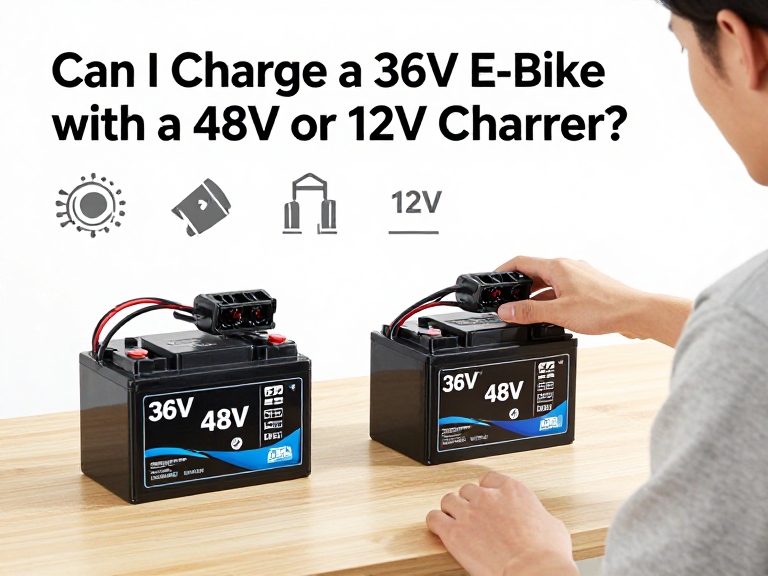
Quick Answer
Can you charge a 36V e-bike with a 48V charger? No. A typical 36V lithium-ion e-bike battery charges to 42.0V, while a typical 48V lithium-ion battery charger outputs 54.6V. That is too high for a standard 36V pack.
Can you use a 12V charger? No, not as a normal charger for a 36V e-bike battery. Its output is far below the required charging voltage and its charging algorithm may not be compatible.
What should you use? Use a charger whose output voltage, battery chemistry, charging current, connector and polarity are approved for your exact battery. A common 36V lithium-ion pack needs a 42.0V charger; a 36V LiFePO4 or lead-acid system may require a different charging specification.Table of Contents
- Direct answer: 36V, 48V and 12V
- What 36V means on an e-bike
- How e-bike charging works
- 36V vs 48V vs 12V charger comparison
- Benefits and limitations of correct charging
- Battery chemistry matters
- Common charging mistakes
- How to choose the right charger
- OHRIJA expert recommendation
- Frequently asked questions
- References
Can I Charge a 36V E-Bike with a 48V or 12V Charger?
In almost every normal e-bike charging situation, the answer is no. A charger is not simply a power supply that pushes electricity into a battery. It controls voltage and current according to a charging profile designed for a specific battery chemistry and cell configuration.
A typical 36V lithium-ion e-bike battery is built from 10 series-connected cell groups, commonly described as a 10S pack. With conventional lithium-ion cells charged to 4.2V per cell group, its full-charge voltage is 42.0V. A typical 48V lithium-ion e-bike battery uses 13 series-connected groups and reaches 54.6V when fully charged.
36V nominal lithium-ion battery: 10S × 4.2V = 42.0V full-charge voltage
That difference is decisive. A 54.6V charger is designed to reach a voltage substantially above the safe full-charge limit of a standard 36V lithium-ion pack. The battery management system (BMS) may interrupt charging, but you should never depend on the BMS to make an incompatible charger safe.
Safety rule: Do not connect a 48V charger to a 36V battery to see whether it works. Do not repeatedly test it, bypass the BMS, alter the connector or use an adapter to force compatibility. Disconnect the charger if you have already connected the wrong one and notice unusual heat, smell, noise, swelling or other abnormal behavior.
What Does 36V Mean on an E-Bike Battery?
The 36V marking normally describes the battery’s nominal voltage, not the voltage required from the charger. Nominal voltage is a practical rating used to classify the battery system. The battery voltage changes as it charges and discharges.
For a common 36V lithium-ion e-bike pack, the voltage rises toward 42.0V during charging. This is why a compatible charger is commonly labelled 42V output rather than 36V output. The same principle applies to many other battery systems: the charger’s required output is determined by the pack’s cell chemistry and series configuration, not just the nominal voltage printed on the battery.
Typical voltage labels you may see
| Battery label | Common configuration | Typical full-charge voltage | Important qualification |
|---|---|---|---|
| 36V lithium-ion | 10S | 42.0V | Common conventional e-bike lithium-ion configuration |
| 48V lithium-ion | 13S | 54.6V | Do not use this charger on a standard 36V lithium-ion pack |
| 36V LiFePO4 | Often 12S | Depends on the cell and pack specification; often around 43.8V | Confirm the manufacturer’s specified charge limit |
| 36V lead-acid | Three 12V batteries in series | Depends on battery type and charging stage | Requires a lead-acid charging profile, not a lithium profile |
These are common examples, not universal specifications. Some batteries use different cell chemistries, series counts or manufacturer-defined charge limits. Always treat the battery label and technical documentation as the final authority. If the label is missing, ask the battery or e-bike manufacturer to identify the pack before buying a replacement charger.
How Does an E-Bike Battery Charger Work?
Most lithium-ion e-bike chargers use a controlled constant-current/constant-voltage process, often shortened to CC/CV. During the constant-current stage, the charger supplies a controlled current while battery voltage rises. As the battery approaches its specified upper voltage, the charger transitions to constant-voltage control and current gradually decreases.
This is not interchangeable with simply applying a voltage source. The charger must stop at the correct voltage and manage current appropriately. The BMS provides another layer of battery protection, commonly monitoring cell-group voltage, current and temperature, depending on the design. It is a protection system, not a substitute for the correct charger.
Why a 48V charger is too high for a 36V lithium-ion pack
A typical 48V lithium-ion charger is designed for a 54.6V endpoint. A standard 36V lithium-ion battery is designed for a 42.0V endpoint. Connecting the higher-voltage charger can cause the BMS to reject the charge or, if protection is inadequate or a fault exists, expose the cells to dangerous overvoltage conditions.
Why a 12V charger is not the answer
A 12V charger generally cannot raise a 36V battery to its required charging voltage. It may not initiate charging at all. Some power supplies and specialist charging systems can be configured in series or used in engineered multi-stage arrangements, but that is not a safe consumer workaround. Do not connect multiple chargers in series unless the battery and charger manufacturers explicitly specify and approve that exact arrangement.
36V vs 48V vs 12V Charger: Comparison Table
The comparison below assumes common lithium-ion e-bike battery configurations. Actual specifications can differ, so verify the exact output printed on the charger label.
| Charger type | Typical output voltage | For a standard 36V lithium-ion e-bike? | Practical decision |
|---|---|---|---|
| 36V lithium-ion charger | 42.0V | Usually suitable | Use only when chemistry, current, connector and polarity also match. |
| 48V lithium-ion charger | 54.6V | Not suitable | Do not connect it to a standard 36V lithium-ion pack. |
| 12V charger | Often around 12–15V, depending on type | Not suitable | Insufficient voltage for normal charging of a 36V pack. |
| 36V lead-acid charger | Varies by charging stage and battery design | Not for lithium-ion | Only for a compatible 36V lead-acid battery system. |
| 36V LiFePO4 charger | Pack-specific; often around 43.8V for a 12S pack | Not automatically | Use only with a matching LiFePO4 battery and approved charge profile. |
Benefits and Limitations of Using the Correct 36V Charger
Buying the correct charger may look like a basic maintenance expense, but it protects a much more expensive component: the battery pack. In most professional situations, matching the charger to the battery specification is cheaper and safer than experimenting with a charger that happens to be available.
| Pros of a correctly matched charger | Cons and limitations to understand |
|---|---|
| Uses the intended voltage endpoint for the battery chemistry and cell configuration. | A replacement may cost more than a generic, unverified charger. |
| Supports the manufacturer’s intended charging profile and current limits. | You must verify connector, polarity and battery details before ordering. |
| Reduces avoidable stress caused by incorrect voltage or charging behavior. | A correct charger cannot repair damaged cells or a faulty BMS. |
| Can provide predictable charging performance when the battery is healthy. | Charging time still depends on battery capacity, charger current, temperature and battery condition. |
| Helps preserve the designed safety protections of the complete battery system. | Compatibility should not be assumed from a matching plug or nominal voltage alone. |
Battery Chemistry Matters: Lithium-Ion, LiFePO4 and Lead-Acid
One of the most common mistakes is assuming every battery labelled 36V can use the same charger. That is incorrect. Chemistry determines charging voltage limits and the charging method. A charger designed for one chemistry may be unsuitable for another even when the nominal battery voltage appears identical.
36V lithium-ion batteries
Recommended products

OHRIJA 36v lithium battery charger 42V 4A OLED charger makes it suitable for 10S 36V Li-ion batteries
20.50$OHRIJA 36v lithium battery charger 42V 5A OLED charger makes it suitable for 10S 36V Li-ion batteries
24.50$OHRIJA 36v lithium ion battery charger 42V 18A charger makes it suitable for 10S 36V Li-ion Battery Chargers
43.00$
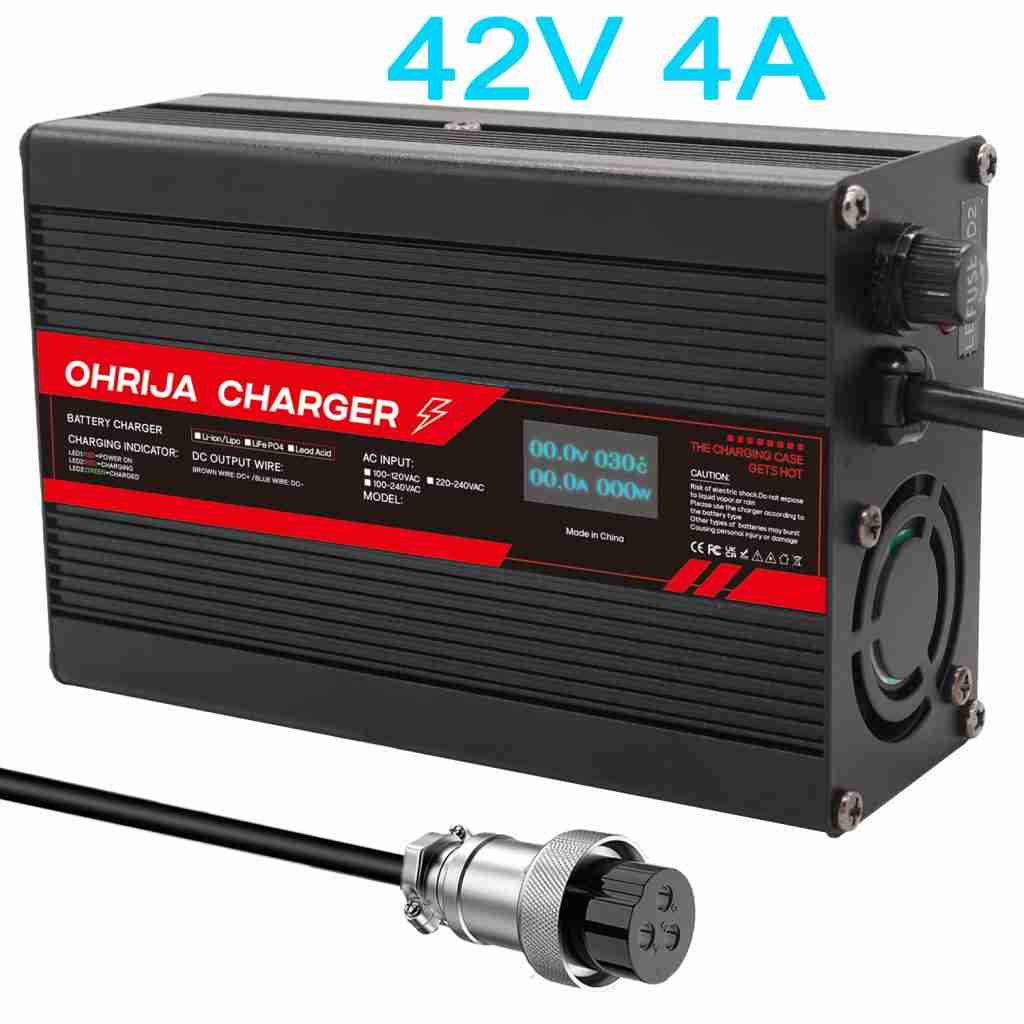
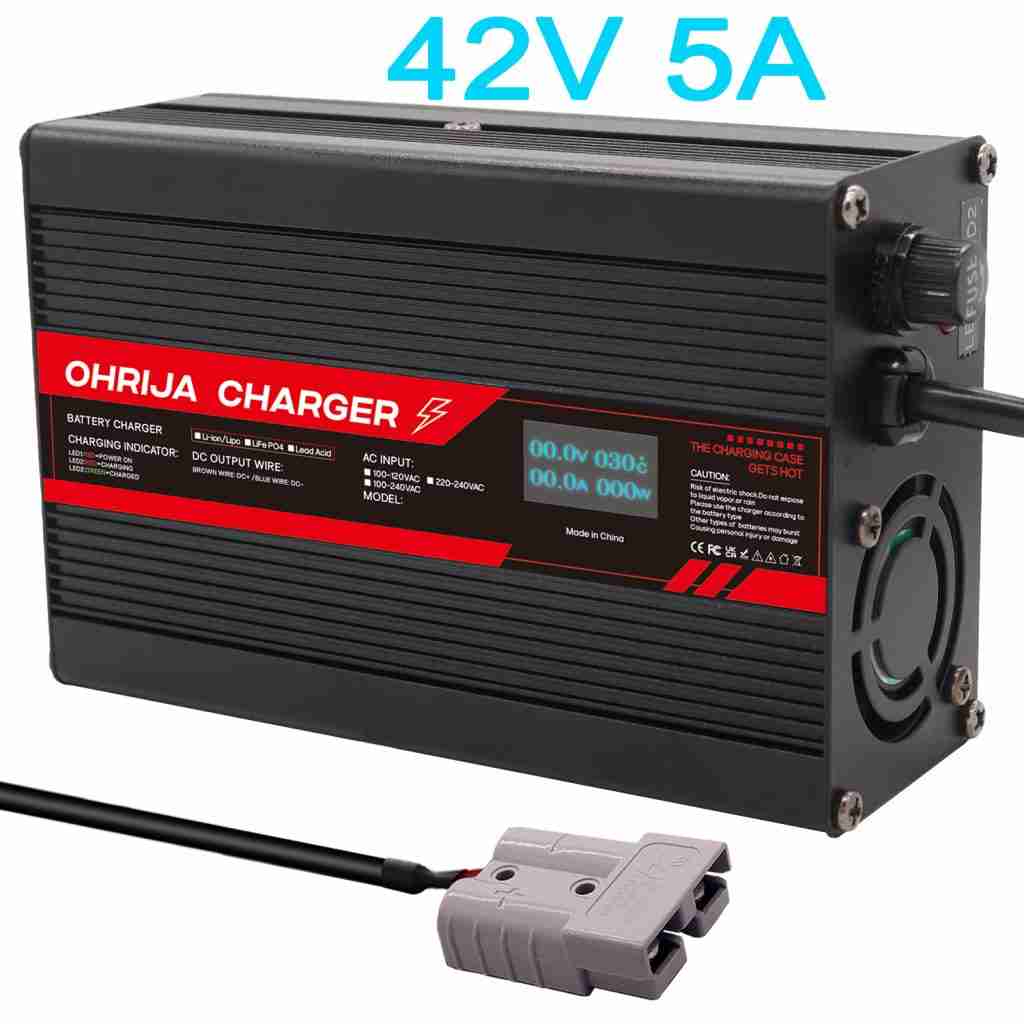
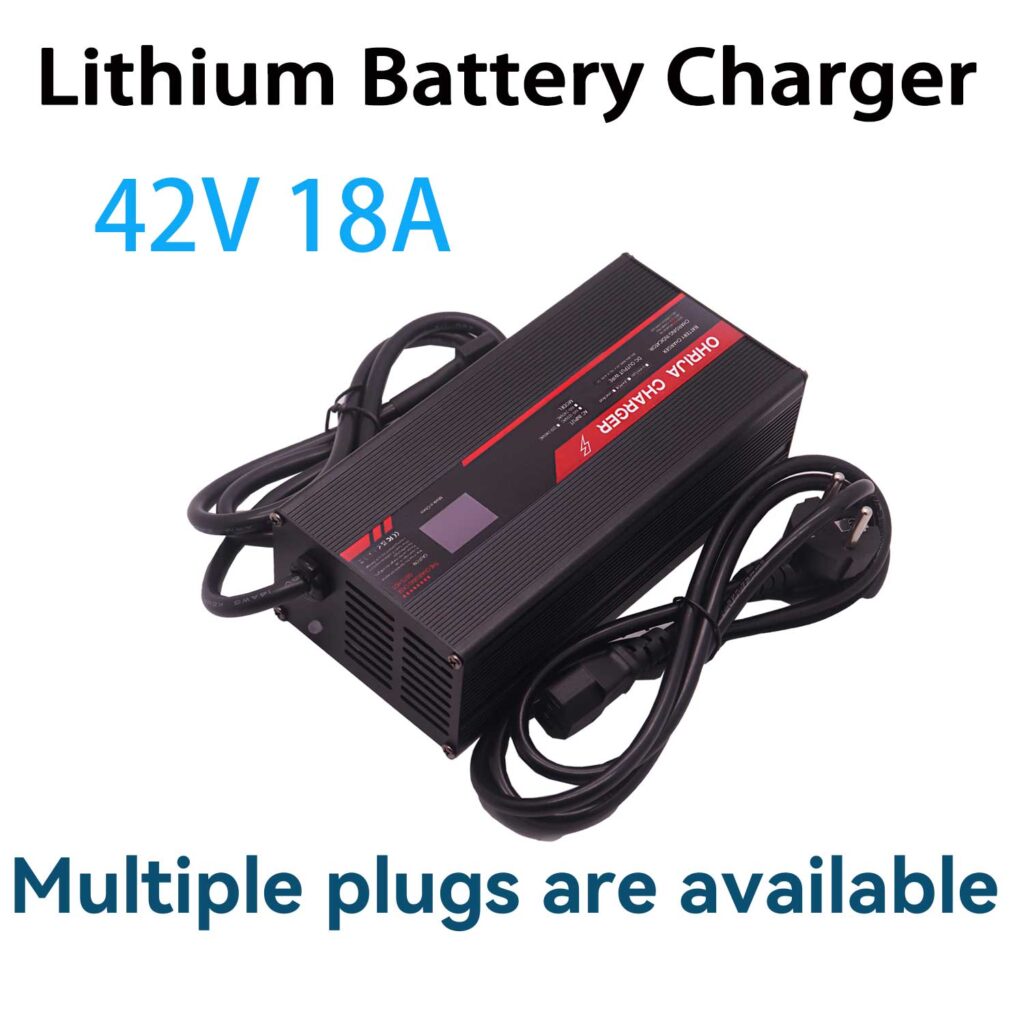
Many conventional 36V e-bike batteries use a 10S lithium-ion arrangement with a 42.0V full-charge voltage. For this type, a charger specifically rated for 42.0V lithium-ion charging is the normal choice. Check the battery maker’s recommended charging current as well. A charger with a higher current rating is not automatically better; it must remain within the battery’s permitted charge rate.
For compatible products, review OHRIJA’s Li-ion battery charger range and electric bicycle charger category. Select by the exact battery specification, not by category name alone.
36V LiFePO4 batteries
Recommended products
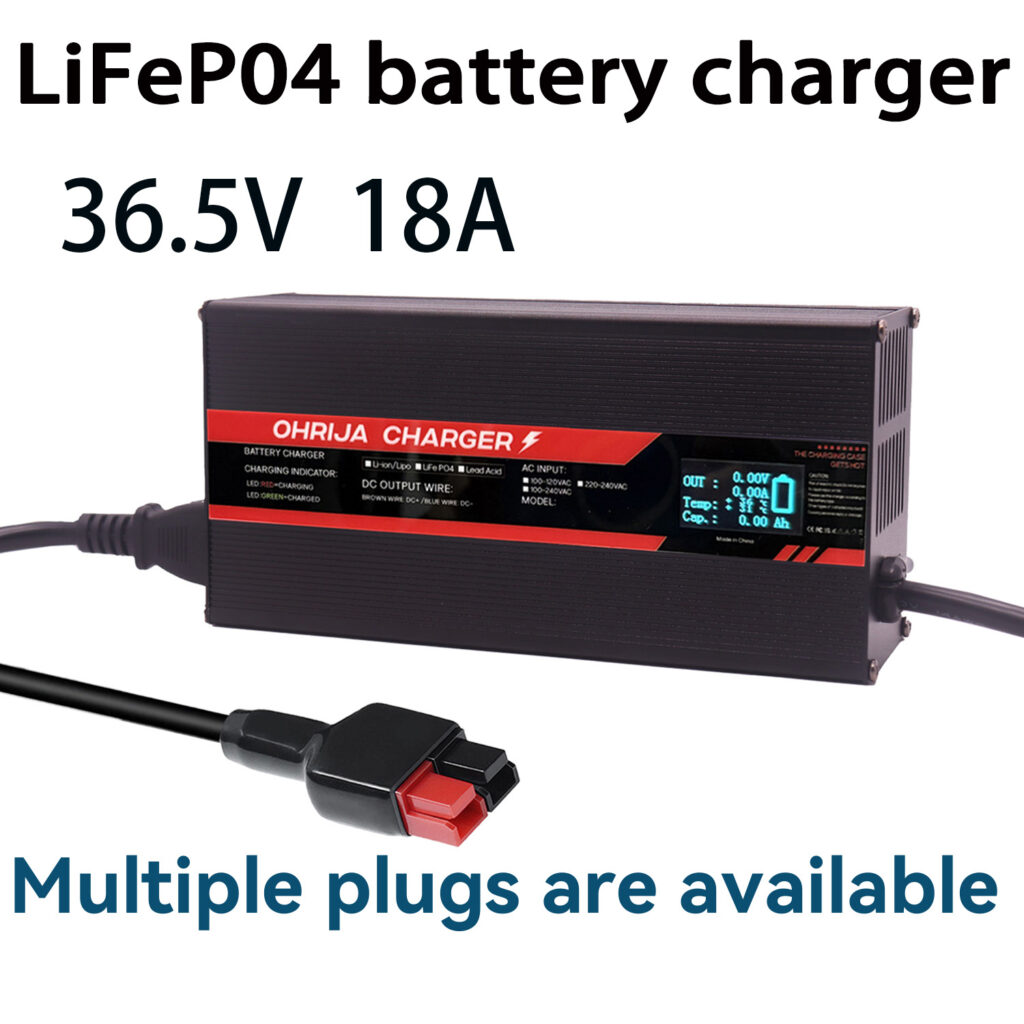
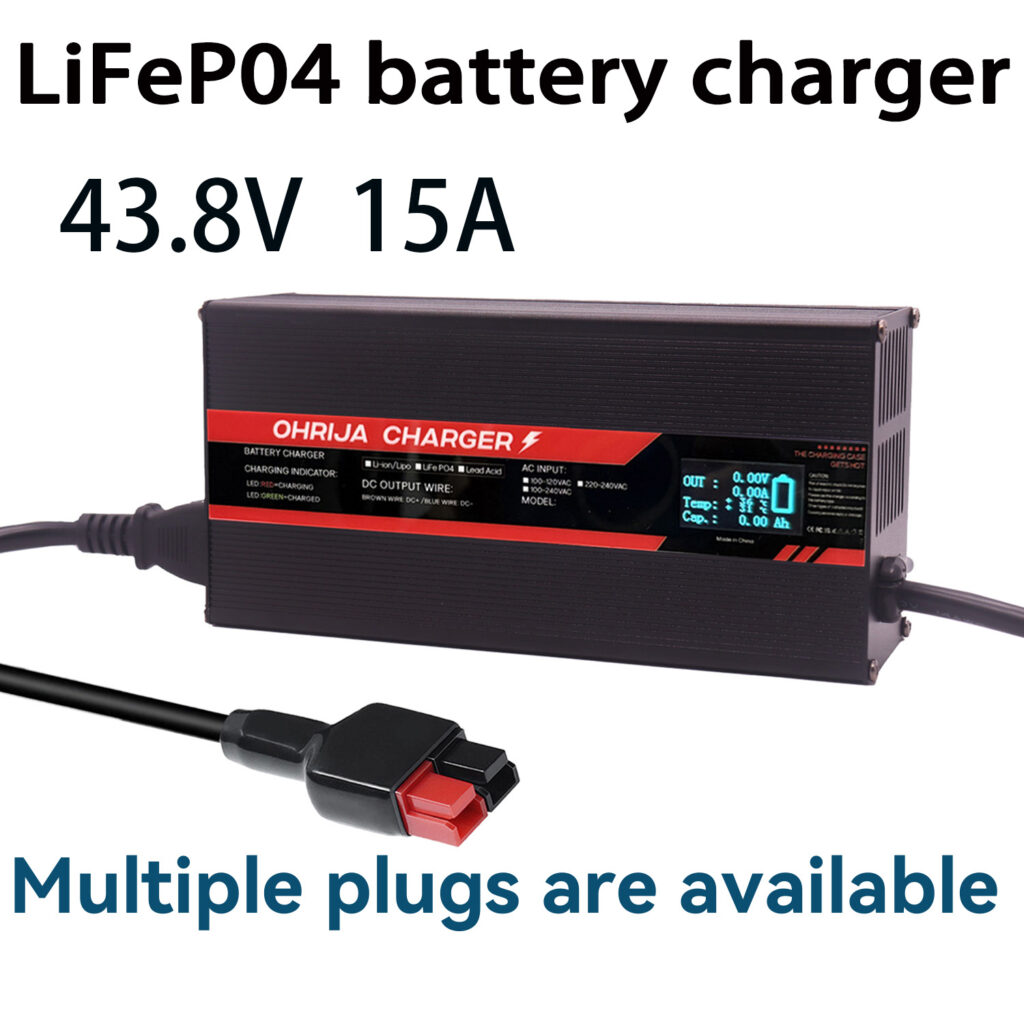
LiFePO4 batteries have a different cell voltage profile from conventional lithium-ion batteries. A 36V-class LiFePO4 pack may use 12 series-connected cells, but the correct charge endpoint and current must come from the pack manufacturer’s documentation. A standard 42.0V lithium-ion charger should not be assumed compatible with it.
See the LiFePO4 battery charger category when sourcing a charger for a confirmed LiFePO4 pack. The charger must be specified for the actual series count and approved charging voltage.
36V lead-acid batteries
Some older or specialist electric bikes and mobility systems use lead-acid batteries. A 36V lead-acid bank commonly consists of three 12V batteries connected in series. Its charging profile is different from that of lithium-ion and LiFePO4 packs. Lead-acid chargers may use bulk, absorption and float stages, depending on the battery type and charger design.
Do not use a lead-acid charger on a lithium battery simply because both systems are labelled 36V. If you have a lead-acid system, start with a charger made for that chemistry and the manufacturer’s specified charging regime. OHRIJA provides a dedicated lead-acid battery charger category for this type of application.
Common Mistakes When Charging a 36V E-Bike
1. Choosing a charger by nominal voltage only
“36V charger” is not enough information. Confirm the charger’s actual DC output voltage. For a common 36V lithium-ion battery, that is typically 42.0V. The correct output may be different for another chemistry or pack configuration.
2. Assuming a 48V charger is close enough
It is not. A typical 48V lithium-ion charger reaches 54.6V, which is far beyond the normal full-charge voltage of a standard 36V lithium-ion battery. Do not try it as a temporary solution.
3. Treating the BMS as a universal safety guarantee
The BMS is designed to protect the battery within its intended operating conditions. It is not permission to use an incompatible charger. Protection circuits can fail, be incorrectly specified or behave differently across battery designs.
4. Ignoring connector polarity
Two chargers may have identical-looking barrel connectors but different pin assignments or polarity. Reversed polarity can damage electronics. Verify the wiring diagram or manufacturer’s connector specification before connecting a replacement.
5. Increasing charging current to save time
A higher-amp charger may shorten charging time only if the battery is designed to accept that current. Exceeding the recommended charge current can increase heat and stress. For beginners, matching the original charger’s current rating is usually the most sensible starting point.
6. Leaving a damaged or abnormal battery charging unattended
Stop charging if the pack becomes unusually hot, swollen, emits an unusual odor, makes abnormal sounds or shows visible damage. Keep charging equipment away from combustible materials and follow the battery manufacturer’s storage and charging instructions. Never charge a visibly damaged battery.
How to Choose the Right 36V E-Bike Charger
Before purchasing, collect the information from the battery label, original charger and e-bike manual. If any specification conflicts, ask the battery manufacturer or an authorized service provider to confirm the correct replacement.
| What to check | What to verify | Why it matters |
|---|---|---|
| Battery nominal voltage | 36V, 48V or another rating | Identifies the battery system class, but not the complete charging specification. |
| Full-charge voltage | For example, 42.0V for a common 36V 10S lithium-ion pack | Prevents selecting a charger with an excessive or insufficient voltage endpoint. |
| Chemistry | Li-ion, LiFePO4 or lead-acid | Determines the required charging algorithm and voltage limits. |
| Output current | Amps (A), within the battery maker’s limit | Influences charging time and battery stress. |
| Connector | Exact connector type and pin configuration | A physically fitting connector may still be electrically incompatible. |
| Polarity | Positive and negative pin assignments | Incorrect polarity can damage the charger, BMS or battery electronics. |
| Protection and certification | Relevant safety documentation and product approvals for the destination market | Helps assess electrical safety and regulatory suitability. |
| Operating environment | Temperature, ventilation, moisture and indoor/outdoor use | Charging conditions affect safety, performance and service life. |
Estimate charging time realistically
A rough planning estimate is battery capacity in amp-hours divided by charger current in amps. For example, a 15Ah battery paired with a 3A charger has a simple arithmetic estimate of five hours. Actual charging generally takes longer because current may taper near full charge, and the battery management and charger control the process.
Basic estimate: Charging time ≈ Battery capacity (Ah) ÷ Charger current (A)
Do not choose a higher-current charger solely to reduce this estimate. Confirm the battery’s maximum permitted charge current first. For fleet operators or commercial users, compare the cost of shorter charging windows with battery replacement cost, charger reliability and the availability of spare chargers.
Is It Worth Buying a Dedicated Charger?
Yes. For most e-bike owners, buying the correct charger is a straightforward investment in battery protection. A generic charger may look cheaper, but a low purchase price does not compensate for unclear output specifications, poor connector documentation or an unsuitable charging profile.
For a single personal e-bike, the sensible choice is usually a replacement that matches the original manufacturer’s voltage, current, chemistry and connector specifications. For a rental operator, delivery fleet or repair workshop, standardize charger models by battery type and label them clearly. This reduces mix-ups when multiple 36V and 48V batteries are handled in the same location.
Upgrade only when there is a genuine operational reason. If the original charger is too slow, first confirm that the battery supports a higher charging current. If the battery does not, a faster charger is not a safe upgrade. If the battery is aging, charging problems may come from cell imbalance, high internal resistance or BMS faults rather than the charger itself.
Who Should Use a Matched 36V Charger—and Who Does Not Need a New One?
Who should use or buy a matched replacement
- E-bike owners whose original charger is lost, damaged or no longer functioning.
- Repair shops that need a documented charger for a known battery model.
- Commercial fleet operators who need consistent charging equipment and clear battery-to-charger identification.
- Users replacing a battery and needing to confirm whether the old charger remains compatible with the new pack.
Who does not need to buy another charger
- Owners whose existing charger is undamaged and its specifications match the battery manufacturer’s requirements.
- Users considering a replacement only because a charger has a different brand name, even though the original manufacturer confirms full electrical compatibility.
- Owners whose charging issue is caused by a damaged battery, loose charging port or faulty BMS. Replacing the charger without diagnosis may not solve the problem.
OHRIJA Expert Recommendation: Match the Charger to the Battery, Not the Plug
Our recommendation is simple: do not use a 48V or 12V charger on a standard 36V e-bike battery. Identify the battery chemistry, full-charge voltage and permitted charging current before selecting a replacement. Then confirm connector type and polarity. If you cannot verify those details, pause the purchase and request written confirmation from the battery supplier.
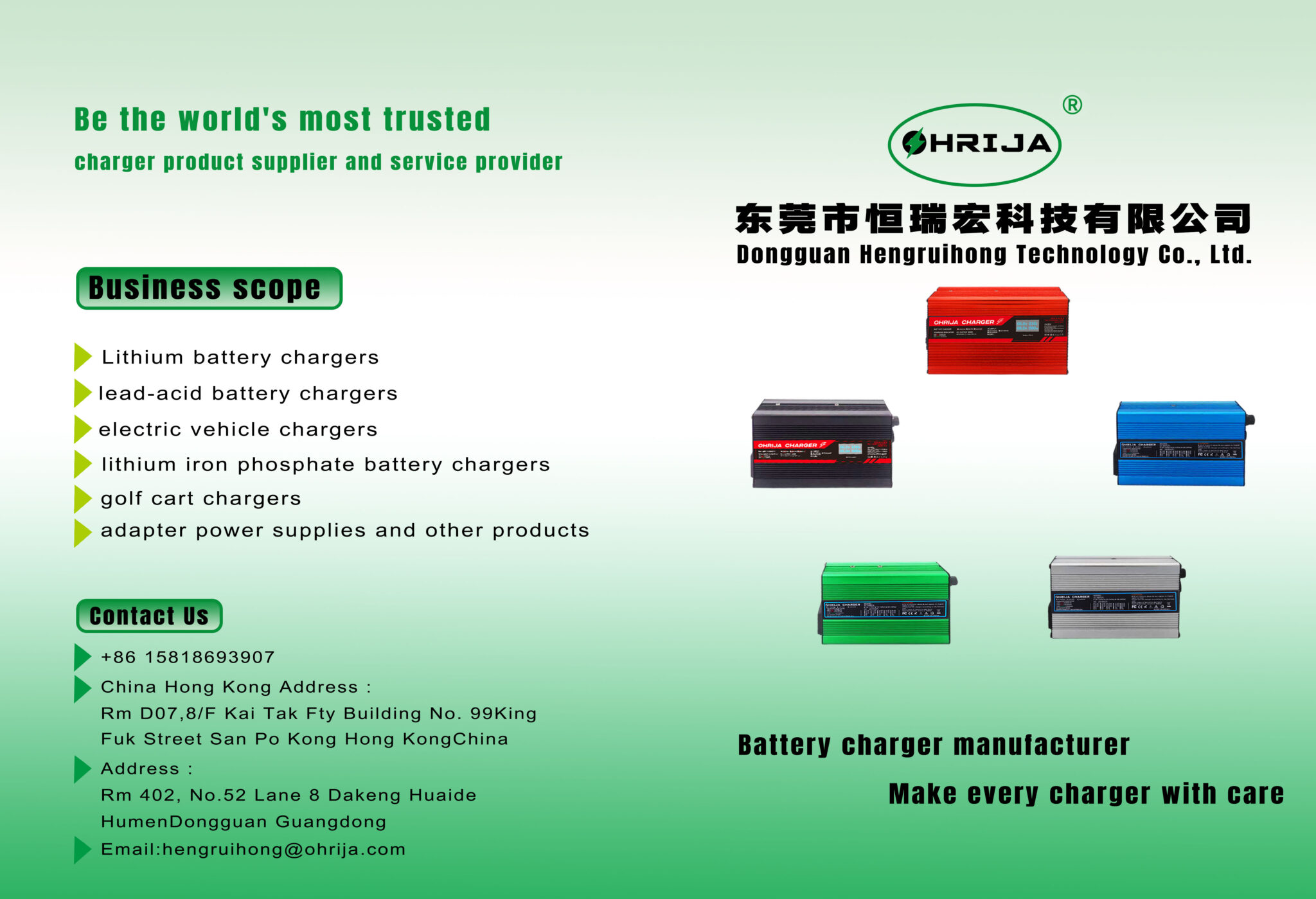
OHRIJA is a battery charger brand belonging to Dongguan Hengruihong Technology Co., Ltd., established in 2020 in Dongguan, Guangdong, China. The company integrates R&D, production and sales, with product lines covering lithium battery chargers, lithium iron phosphate battery chargers, lead-acid battery chargers, golf cart chargers, power adapters and switching power supplies.
OHRIJA Battery Charger Solutions
For e-bike and other battery-powered equipment projects, the key is specifying the correct output voltage, current, chemistry and connector before production or purchase. OHRIJA’s product range includes dedicated charger categories for different battery applications.
Explore OHRIJA battery charger solutions or review the electric bicycle charger range as a starting point for a compatible product inquiry.
For OEM buyers and distributors, we recommend providing the battery datasheet and connector drawing rather than requesting a charger based only on “36V.” A responsible charger specification should document the battery chemistry, series configuration, charging voltage, current limit, connector pinout, polarity, operating temperature and applicable safety requirements. That information makes it easier to assess compatibility before samples or production quantities are approved.
Quick Summary: Which Charger Should You Use?
| Your battery situation | Recommended action | Do not do this |
|---|---|---|
| 36V standard lithium-ion, 10S | Use a compatible 42.0V lithium-ion charger with approved current and connector. | Do not use a typical 54.6V 48V charger. |
| 36V LiFePO4 | Use the exact LiFePO4 charger specified for the pack. | Do not assume a 42.0V lithium-ion charger is correct. |
| 36V lead-acid bank | Use a 36V lead-acid charger with the correct charging stages. | Do not use a lithium charger unless the battery maker explicitly approves it. |
| Only a 12V charger available | Obtain the correct charger for the 36V battery. | Do not connect multiple chargers in series as a DIY workaround. |
| Battery label or chemistry unknown | Ask the battery/e-bike manufacturer to identify the pack and charger requirements. | Do not guess based on connector shape or nominal voltage. |
Frequently Asked Questions
1. Can I use a 48V charger on a 36V e-bike battery for a short time?
No. A typical 48V lithium-ion charger outputs 54.6V, while a common 36V lithium-ion battery reaches 42.0V when fully charged. Even a brief test is not recommended. Use the charger specified for the battery.
2. Can a 12V charger charge a 36V e-bike battery?
Not as a normal standalone charger. Its output voltage is too low for the charging requirements of a typical 36V e-bike battery. Do not attempt to combine chargers in series unless the complete system is explicitly designed and approved by the manufacturers.
3. Why does my 36V e-bike battery need a 42V charger?
A common 36V lithium-ion battery uses 10 series-connected cell groups. At 4.2V per group, the full-charge voltage is 42.0V. The 36V label is the nominal battery rating, not its full-charge voltage.
4. Will the BMS stop a 48V charger from overcharging my 36V battery?
The BMS may interrupt charging when it detects an unsafe condition, but its response should not be relied on to make an incompatible charger safe. Use the correct charger rather than treating the BMS as a voltage converter or universal protection device.
5. Can I use any 42V charger for my 36V e-bike?
No. The output voltage is only one requirement. You must also match battery chemistry, charging current, connector type, pinout and polarity. A 42V charger designed for a different battery configuration may still be unsuitable.
6. Can I charge a 36V LiFePO4 battery with a 42V lithium-ion charger?
Do not assume compatibility. LiFePO4 has a different cell voltage profile and charging specification. Check the battery manufacturer’s required charge voltage and use a charger specifically approved for that pack.
7. Does a higher-amp charger charge an e-bike battery faster?
It can reduce charging time only when the battery supports the higher current. Exceeding the battery’s permitted charge current can create excess heat and stress. Follow the battery manufacturer’s maximum charging-current specification.
8. What should I do if I accidentally plugged a 48V charger into my 36V battery?
Disconnect it safely and do not reconnect it. Check for unusual heat, odor, swelling, noise or visible damage. If anything abnormal occurs, keep the battery away from combustible materials and contact the battery manufacturer or a qualified technician before using or charging it again.
9. Can I use a golf cart charger for a 36V e-bike?
Not unless the charger manufacturer explicitly specifies compatibility with the exact e-bike battery chemistry, voltage, current and connector. A 36V golf cart charger may be designed for a different battery type or charging profile. Review the golf car battery charger category only when selecting equipment for a compatible golf cart battery system.
10. Is the connector the most important part when choosing a replacement charger?
No. Connector fit is only one compatibility check. Output voltage, battery chemistry, current rating and polarity are more fundamental. A connector adapter cannot make an electrically incompatible charger safe.
References
- IEC 60335-2-29: Particular requirements for battery chargers — International Electrotechnical Commission. This standard addresses safety requirements for battery chargers within its stated scope; it does not cover every industrial charger application.
- IEC 62477-1: Safety requirements for power electronic converter systems and equipment — International Electrotechnical Commission. Relevant to the broader safety framework for power-electronic converter equipment.
- Battery Charger Test Procedure — U.S. Department of Energy. Provides a government reference for battery-charger testing and energy-performance procedures.
Charging specifications vary by battery manufacturer, chemistry and pack configuration. The battery label and manufacturer documentation take precedence over general examples in this article.