
No products in the cart.

Every solar installer, marine technician, and commercial fleet manager eventually faces the exact same catastrophic failure: you invest thousands of dollars into a premium Lithium Iron Phosphate (LiFePO₄) battery bank, only to watch its capacity plummet by forty percent within the first year of operation. In over eighty percent of these premature degradation cases, the battery cells themselves were perfectly manufactured. The culprit sits silently bolted to the wall nearby: a low-grade, unregulated, or incorrectly programmed power supply masquerading as a proper charging system. In industrial power electronics, charging a highly dense electrochemical storage device is not a passive energy transfer; it is a high-frequency, precision-calibrated thermal and chemical management protocol. Meeting the strict Requirements for LiFePO₄ Chargers is the single most important operational decision you will make to safeguard your energy storage investment. Using a generic multi-chemistry trickle charger or repurposing an old lead-acid unit will relentlessly over-voltage your cells, trigger aggressive lithium plating, and destroy the internal Battery Management System (BMS). As power electronics engineers, rectifier fabricators, and commercial power specialists at Ohrija, we build high-amperage charging profiles, calibrate multi-stage algorithms, and stress-test aluminum-cased power supplies daily. Here is our direct practitioner evaluation of the 9 non-negotiable Requirements for LiFePO₄ Chargers, breaking down the switching topologies, algorithm dynamics, and hardware fail-safes you must demand before connecting any charger to your lithium investment.
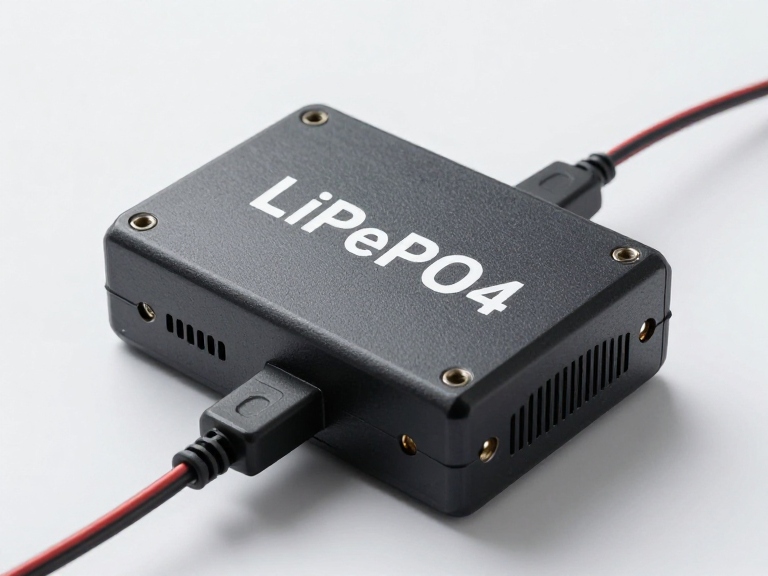
Quick Answer: What Are the Core Requirements for LiFePO₄ Chargers?
To maximize cycle life and prevent chemical degradation, the foundational Requirements for LiFePO₄ Chargers dictate a strict Constant Current/Constant Voltage (CC/CV) charging profile without any residual float stage. The 9 critical requirements are: (1) Strict CC/CV Algorithm Execution; (2) Precise Over-Voltage Cutoff (strictly 14.6V for a standard 12V 4S configuration); (3) 0V BMS Wake-Up Functionality to rescue sleep-locked batteries; (4) Zero Float Charge Phase to prevent continuous lithium plating; (5) Active Thermal Management utilizing extruded aluminum heatsinks; (6) Ultra-Low AC Voltage Ripple to protect the internal BMS microcontrollers; (7) High Ingress Protection (IP65/IP67) for harsh outdoor deployment; (8) High-Conductivity OEM Connectors to prevent terminal melting; and (9) Multi-Layer Hardware Protections including over-current, short-circuit, and reverse polarity lockouts. Attempting to substitute a dedicated lithium system with a LEAD ACID BATTERY CHARGER will destroy your lithium investment within months.
Article Directory
- What It Is: The Physics of LiFePO₄ Charging Architecture
- Quick Summary Table: The 9 Requirements at a Glance
- In-Depth Analysis: The 9 Key Requirements for LiFePO₄ Chargers
- Featured Hardware Spotlight: OHRIJA 14.6V 30A Waterproof Charger
- Direct Technical Comparison: Dedicated LiFePO₄ vs. Lead-Acid vs. Generic Adapters
- Pros and Cons: Premium Dedicated Chargers vs. Budget Multi-Chemistry Units
- Commercial Benefits and Physical Limitations of Fast Charging
- Who Must Use Dedicated LiFePO₄ Chargers vs. Who Can Tolerate Generic
- 5 Costly Mistakes Operators Make When Charging LiFePO₄ Batteries
- Essential Sourcing Checklist: Auditing a Power Electronics Supplier
- Expert Sourcing Verdict: The Strategic Power Roadmap
- Frequently Asked Questions
- Authoritative References & Global Safety Standards
What It Is: The Physics of LiFePO₄ Charging Architecture
To evaluate the Requirements for LiFePO₄ Chargers with professional authority, one must abandon the outdated mechanics of legacy battery chemistries. Lead-acid batteries require high-voltage desulfation pulses, equalization phases to boil off stratification, and continuous float charging to combat relentless internal self-discharge. Lithium Iron Phosphate ($LiFePO_4$) operates on entirely different solid-state thermodynamics.
A true LiFePO₄ charger operates as a precision high-frequency switch-mode power supply. It draws alternating current (AC) from the grid, filters it through electromagnetic interference (EMI) chokes, aligns it via active power factor correction (PFC), and inverts it through high-speed silicon carbide (SiC) or MOSFET transistors. This high-frequency inversion (often exceeding 60kHz) allows the use of small, lightweight planar transformers. The voltage is stepped down, synchronously rectified into pure direct current (DC), and governed by a microprocessor executing a strict two-stage charging algorithm: Constant Current (CC) followed by Constant Voltage (CV).
From our experience diagnosing failed off-grid power banks, consumers frequently ask, “can lithium charger charge LiFePO4 battery banks?” The answer is highly conditional. Standard Lithium-Ion (NMC/LCO) chargers terminate at 4.2V per cell (16.8V for a 4S pack). A LiFePO₄ pack requires termination at exactly 3.65V per cell (14.6V for a 4S pack). Using a standard lithium-ion charger on a LiFePO₄ pack will immediately trigger the BMS over-voltage protection, effectively locking the battery down. To maximize cycle life, you must source a dedicated LIFEPO4 BATTERY CHARGER engineered specifically for this chemistry’s narrow voltage windows.
Quick Summary Table: The 9 Requirements at a Glance
| Engineering Requirement | Physical / Algorithmic Function | Critical Battery Failure Prevented | Commercial Operations Impact |
|---|---|---|---|
| 1. CC/CV Algorithm | Delivers bulk current then holds exact voltage | Prevents thermal stress & cell swelling | Guarantees 100% State of Charge safely |
| 2. Precise Voltage Cutoff | Stops strictly at 3.65V/cell (e.g., 14.6V total) | Prevents catastrophic lithium plating | Extends pack lifecycle by 50%+ |
| 3. 0V BMS Wake-Up | Micro-current pre-charge to reset sleep mode | Rescues deeply discharged “dead” packs | Saves thousands in premature replacement |
| 4. Zero Float Phase | Complete output relay shutdown at 100% capacity | Stops continuous micro-cycling degradation | Allows safe indefinite connection in storage |
| 5. Active Thermal Control | Extruded aluminum shell + smart fan mapping | Internal component burnout & fire hazards | Ensures uninterrupted high-amperage output |
| 6. Low AC Ripple Voltage | LC filtering keeping ripple <100mV peak-to-peak | BMS microprocessor corruption & false trips | Maintains flawless cell balancing logic |
| 7. IP65/IP67 Ruggedness | Silicone potting sealing out dust and moisture | Circuit board corrosion and electrical shorts | Mandatory for marine, RV, & outdoor use |
| 8. Heavy-Duty Connectors | High-amp XT90, Anderson, or ring terminals | Terminal melting from high electrical resistance | Ensures safe, unmonitored overnight charging |
| 9. Hardware Protections | OVP, OCP, SCP, and reverse polarity relays | Explosive arcing due to user connection errors | Protects personnel and capital equipment |
In-Depth Analysis: The 9 Key Requirements for LiFePO₄ Chargers
1. Strict Constant Current / Constant Voltage (CC/CV) Execution
Unlike lead-acid chargers that cycle through five or six desulfation stages, LiFePO₄ requires brutal simplicity executed with microscopic precision. The charger must first deliver a Constant Current (CC). If you purchase a 30A charger, it pushes exactly 30 amps into the battery until the pack reaches its upper voltage limit (e.g., 14.6V). During this phase, the battery rapidly absorbs 90% of its capacity. Once the target voltage is hit, the charger switches to Constant Voltage (CV) mode. It holds the voltage strictly at 14.6V while allowing the current to naturally taper down as internal cell resistance rises. If a charger fluctuates in its current delivery or fails to hold the voltage ceiling steady, the battery will never achieve proper top-balance across its internal cells.
2. Precise Over-Voltage Cutoff Ceilings
Lithium Iron Phosphate cells are incredibly stable, but they are unforgiving when over-voltaged. The absolute maximum safe charging voltage for a single LiFePO₄ cell is 3.65V. In a standard “12V” battery (which is a 4S configuration of four cells in series), $3.65V \times 4 = 14.6V$. If you use a poorly regulated charger that drifts up to 15.0V, it forces lithium ions out of the cathode faster than they can intercalate into the anode structure. This results in metallic lithium depositing on the anode surface (lithium plating), permanently robbing the battery of capacity and creating internal puncture risks. A high-quality charger maintains voltage regulation within ±0.2V across its entire operating life.
3. 0V BMS Wake-Up Function (Pre-Charge Recovery)
Modern lithium batteries are equipped with internal Battery Management Systems (BMS). If you accidentally leave your camper lights on for a week, the battery voltage will plummet. To prevent permanent chemical death, the BMS will enter a protective “sleep mode,” opening its internal MOSFETs and cutting off voltage to the exterior terminals. If you measure the battery with a multimeter, it will read 0.0V. A standard “dumb” charger requires a minimum voltage reading (usually 8V or 10V) to turn on its output relay; thus, it refuses to charge a sleeping battery, tricking owners into throwing away perfectly healthy packs. Premium chargers fulfill the Requirements for LiFePO₄ Chargers by integrating a 0V Wake-Up protocol. When connected, the charger emits a low-amperage micro-pulse (pre-charge) to bypass the dead terminals, signal the BMS to wake up, close the MOSFETs, and safely initiate the bulk charge.
4. Total Eradication of the Float Charge Phase
Lead-acid batteries leak energy. Even when disconnected, a lead-acid battery self-discharges rapidly; therefore, lead-acid chargers utilize a continuous “float” or “trickle” charge (usually around 13.5V) to keep the battery topped up indefinitely. LiFePO₄ batteries hate float charging. Holding a constant voltage against a fully charged lithium cell creates continuous internal stress. Once the Constant Voltage (CV) phase concludes and the tapering current drops to roughly 5% of the charger’s rated output (e.g., drops below 1.5A on a 30A charger), the charger must shut down its output completely. It should only re-engage if the battery voltage naturally falls below a predefined resting threshold (typically 13.3V).
5. Active Thermal Management and Extruded Heatsinks
Pushing 30 amps or 50 amps of direct current continuously for four hours generates massive thermal waste inside the charger’s MOSFETs and inductor coils. In our customer support channels, the question “why does my charger get hot?” is frequent. Budget chargers encased in cheap plastic trap this heat, leading to premature electrolytic capacitor failure and thermal throttling. For commercial users and heavy-duty applications, an industrial charger must utilize an extruded aluminum alloy shell that acts as a structural heatsink, paired with a variable-speed, temperature-controlled cooling fan. If the internal PCB exceeds 75°C, the charger must have logic to automatically throttle the current output to prevent a catastrophic fire.
6. Ultra-Low AC Voltage Ripple Filtering
Converting alternating current (AC) to direct current (DC) is never perfectly smooth. Cheap power supplies leak high-frequency AC waves riding on top of the DC output (known as voltage ripple). If the AC ripple exceeds 500mV peak-to-peak, it causes two critical failures. First, it generates micro-heating inside the lithium cell chemistry. Second, it induces electrical noise that corrupts the precision analog-to-digital converters (ADCs) inside the battery’s BMS. The BMS relies on micro-volt precision to balance the cells; high ripple causes erratic balancing and false over-voltage trips. You must demand chargers with heavy LC pi-filters that suppress ripple to below 100mV peak-to-peak.
7. IP65/IP67 Ingress Protection for Environmental Resilience
If you are mounting a charger permanently inside an RV battery compartment, a marine engine bay, or an outdoor solar shed, a standard vented metal box is a liability. Salt fog, morning dew condensation, and dust will short-circuit the high-voltage traces on the circuit board. The industry standard for these environments is a fully potted WATERPROOF CHARGER. The entire internal circuit board is encapsulated in flame-retardant, thermally conductive silicone resin, granting it an IP65 or IP67 rating. This makes the charger immune to vibration, water spray, and atmospheric corrosion.
8. High-Conductivity Output Connectors and Proper Wire Gauge
The physical connection point is the most dangerous link in the charging chain. Pushing high amperage through a cheap, loose-fitting connector creates massive electrical resistance ($P = I^2R$), turning the plug into a heating element that will melt your battery terminals. A proper charger must feature thick, pure copper output cabling (e.g., 10 AWG or 8 AWG for 30A+ output) coated in high-temperature silicone insulation. The termination must utilize genuine high-amp connectors like Anderson SB50, XT90, or heavy-duty copper ring terminals bolted directly to the battery posts.
9. Multi-Layer Hardware Safety Protections
Human error is inevitable in field operations. A technician will accidentally cross the positive and negative cables, or drop a wrench across the terminals. If the charger lacks hardware protection, it will explode in a shower of sparks. High-end units incorporate solid-state safety relays including:
- Reverse Polarity Protection: The charger verifies correct polarity before closing the output relay. If connected backward, nothing happens.
- Short Circuit Protection (SCP): Zero-spark technology that instantly shuts down the pulse-width modulation (PWM) controller if the output leads touch.
- Over-Voltage Protection (OVP): Secondary hardware crowbar circuits that clamp the output if the primary software loop fails, ensuring the battery never sees a voltage spike.

Hardware Spotlight: OHRIJA 14.6V 30A Waterproof LiFePO₄ Charger
Engineered specifically to meet the brutal demands of marine, RV, and off-grid solar operations, the OHRIJA 14.6V 30A Waterproof Charger delivers laboratory-grade CC/CV precision inside an impenetrable, fully potted industrial housing.
| Chassis Architecture | Heavy-duty extruded aluminum alloy shell; fully potted IP67 waterproof & vibration-proof construction. |
| Power Output Metrics | Max Output: 14.6V ±0.2V | Max Current: 30A ±0.2A | Working Power: 900W maximum. |
| Target Battery Chemistry | Perfectly calibrated for 4S 12.8V / 12V LiFePO₄ battery banks with exact 3.65V/cell termination. |
| Physical Dimensions & Mass | 280 × 197 × 85 mm | Weight: 3.5 kg | Available in Black, Silver, or Red. |
| Connector Matrix | Customizable output: XT60, XT90, Crocodile Clip, Anderson 50A, Wire Nose, or 45A connectors to match your exact BMS port. |
Power Engineer’s Sourcing Advice: Stop destroying expensive lithium banks with repurposed lead-acid chargers. Inspect full technical schematics and ordering options on the official Waterproof charger OHRIJA camper battery charger 14.6V 30A charger makes it suitable for 4S 12.8V Lifepo4 batteries portal, or evaluate our wider range of high-current hardware via our dedicated POWER SUPPLY and DC POWER SUPPLY manufacturing divisions.
Direct Technical Comparison: Dedicated LiFePO₄ vs. Lead-Acid vs. Generic Adapters
| Engineering Parameter | Dedicated LiFePO₄ Charger (OHRIJA Profile) | Standard Lead-Acid Charger (SLA / AGM Profile) | Generic E-Commerce “Power Brick” |
|---|---|---|---|
| Algorithm Design | Strict 2-Stage (CC / CV) | 5 to 7 Stages (Includes desulfation pulses) | Unregulated basic flyback switch-mode |
| Float Charging Phase | None (Shuts off at 100%) | Continuous 13.5V to 13.8V trickle | Constant unregulated voltage output |
| Voltage Precision | Strict ±0.2V regulation | Varies heavily; climbs to 15.5V during equalization | Drifts wildly with ambient temperature heat |
| 0V BMS Wake-Up | Standard hardware inclusion | Rare (Refuses to charge below 10V) | Non-existent (Faults out immediately) |
| Effect on Lithium Cells | Maximizes capacity and cycle life (3,000+ cycles) | Triggers BMS shutdown; causes lithium plating | High ripple destroys BMS microcontrollers |
Pros and Cons: Premium Dedicated Chargers vs. Budget Multi-Chemistry Units
| Charger Architecture | Documented Operational Advantages (Pros) | Real-World Operational Liabilities (Cons) |
|---|---|---|
| Premium Dedicated LiFePO₄ Charger (e.g., OHRIJA Waterproof Series) | Guarantees 100% capacity saturation without over-voltage risks. Zero-volt wake-up rescues deeply depleted, sleep-locked battery banks. Aluminum potting ensures survival in marine and high-vibration RV environments. Suppresses destructive AC ripple, protecting the expensive internal BMS. | Higher initial purchase invoice compared to generic, un-potted power bricks. Heavier unit weight due to the extruded aluminum heatsink and thermal potting compound. Not suitable for reviving sulfated lead-acid batteries (single-chemistry focus). |
| Budget “Multi-Chemistry” Smart Chargers (Plastic Cased Universal Units) | Lowest possible immediate upfront hardware cost. Can theoretically switch between AGM, Gel, and Lithium modes via a button. Lightweight, compact plastic enclosures are easy to store in a glovebox. | Users frequently forget to switch modes, accidentally boiling lithium packs with lead-acid curves. Open ventilation slots invite moisture, dust, and corrosive salt air, leading to rapid short-circuits. Lacks the thermal mass to push high amperage continuously; throttles down after 20 minutes. |
Commercial Benefits and Physical Limitations of Fast Charging
Before overhauling your fleet’s charging infrastructure, you must align your procurement strategy with the physical boundaries of lithium electrochemistry. Upgrading your chargers delivers massive ROI, but pushing the limits of rapid charging requires calculated restraint.
The Real Commercial Payoffs
- Slashing Capital Replacement Costs: A 200Ah 12V LiFePO₄ battery costs between $600 and $1,200. If a cheap charger kills that battery in two years via chronic over-voltage and lack of thermal management, your total cost of ownership skyrockets. A precision charger ensures the battery reaches its promised 10-year / 3,000-cycle lifespan, saving thousands of dollars per vehicle.
- Unattended Charging Confidence: When utilizing a fully potted, hardware-protected unit, technicians can plug in a fleet of electric utility carts or marine vessels on Friday afternoon and walk away. The charger will hit 100%, sever the output connection, and sit safely dormant all weekend without overcharging the cells.
- Rapid Turnaround Times: Deploying a high-current 30A or 50A dedicated charger allows a depleted 100Ah battery to recharge to 90% in under three hours, maximizing equipment uptime for solar arrays and electric mobility fleets. If evaluating custom voltages, read our technical brief: can I charge a 36V battery with 12V charger.
The Physical Limitations of C-Rates
- The C-Rate Barrier: Just because a battery *can* be fast-charged doesn’t mean it *should* be blasted with maximum current constantly. The recommended charge rate for most LiFePO₄ cells is 0.2C to 0.5C (e.g., 20A to 50A for a 100Ah battery). Pushing a 1C charge (100A into a 100Ah battery) generates excessive internal cell heat. Even with a perfect charger, consistently charging above 0.5C will accelerate solid electrolyte interphase (SEI) degradation.
- Cold Temperature Restrictions: You cannot fast-charge a LiFePO₄ battery below 0°C (32°F). Attempting to push high amperage into a freezing lithium cell causes instantaneous and irreversible lithium plating. The charger must either rely on the battery’s internal low-temperature cutoff BMS, or utilize its own temperature probe to halt the charging process in freezing conditions. For more safety protocols, consult our guide on how to charge eBike battery safely.
Who Must Use Dedicated LiFePO₄ Chargers vs. Who Can Tolerate Generic
Allocating capital for heavy-duty power electronics depends entirely on your operational severity.
Operations That Must Deploy Premium Dedicated LiFePO₄ Chargers:
- Off-Grid Solar & Marine Environments: Yachts, sailboats, and remote cabins operating expensive 400Ah+ lithium house banks. The harsh humidity, salt fog, and zero tolerance for equipment failure mandate IP67 waterproof, dedicated CC/CV chargers.
- Commercial Electric Fleets (Golf Carts, Sweepers, AGVs): Logistics hubs transitioning their heavy equipment from lead-acid to lithium. The high daily cycle rate demands chargers with massive aluminum heatsinks that can push continuous high amperage without thermal throttling. Ensure your warehouse technicians are equipped to troubleshoot effectively; review our diagnostic overview on how to troubleshoot a 12V battery charger.
- Overland RV & Van Build Outfitters: Custom vehicle builders who need compact, vibration-resistant chargers that won’t fail after thousands of miles on washboard dirt roads.
When a Generic or Existing Lead-Acid Charger Is (Temporarily) Acceptable:
- Emergency Field Rescues: If you are stranded off-grid and your lithium bank is dead, you *can* temporarily use a standard lead-acid charger or alternator to pump bulk current into the LiFePO₄ battery to get it to 80% capacity—provided you manually monitor the voltage with a multimeter and physically disconnect the charger before it exceeds 14.2V. You must never leave it unattended, and it must never enter the equalization or float phase.
5 Costly Mistakes Operators Make When Charging LiFePO₄ Batteries
Power Engineer’s Warning: The “Series Charging” Trap
A frequent, disastrous mistake is taking two 12V LiFePO₄ batteries, wiring them in series to create a 24V system, and attempting to charge them with a single 24V charger without installing an active battery balancer. Even if the charger perfectly outputs 29.2V (14.6V × 2), the two batteries will drift out of balance due to minor internal resistance differences. Battery A might hit 15.2V (triggering catastrophic over-voltage shutdown) while Battery B languishes at 14.0V. Always use an active balancer when series charging, or better yet, charge each 12V battery independently using an isolated multi-bank charger.
- Relying on the BMS as the Primary Charge Controller: Many consumers buy a cheap power supply that outputs 15V and assume, “The battery’s internal BMS will just cut the power off when it’s full.” The BMS is a catastrophic safety net, not an operational charge controller. Forcing the BMS to repeatedly execute emergency hard-cutoffs will eventually burn out its internal MOSFETs, destroying the battery.
- Using Lead-Acid “Desulfation” Chargers: Plugging a “smart” automotive lead-acid charger into a lithium battery. The charger detects low internal resistance and initiates a high-voltage (15.5V+) desulfation pulse routine. This rapid voltage spiking assaults the lithium chemistry and permanently damages the cells.
- Ignoring Output Wire Gauge Ratings: Extending the charger’s DC output cables by splicing in 15 feet of cheap 14-AWG wire. A 30A charge running through thin, extended wire creates massive voltage drop. The charger might output 14.6V, but the battery terminals only receive 13.8V, preventing the cells from ever reaching 100% capacity or allowing the BMS to execute top-balancing. Always use thick, marine-grade tinned copper wire for extensions.
- Charging Immediately After Heavy Discharge Rests: Pulling a golf cart off a steep, hour-long hill climb and immediately plugging it into a high-amp charger while the battery cells are sitting at 45°C. The compounding heat of discharge followed instantly by charging pushes the cells into dangerous thermal territory. Allow batteries to rest and cool for 30 minutes before initiating a high-amp charge cycle.
- Leaving Non-Potted Chargers in Humid Environments: Mounting a cheap, fan-vented plastic charger on the floor of a boat hull or unsealed golf cart battery bay. The fan acts as a vacuum, sucking corrosive salt air and dust directly across the high-voltage capacitors, guaranteeing an explosive short circuit within a year.
Essential Sourcing Checklist: Auditing a Power Electronics Supplier
Before issuing commercial purchase orders for your fleet’s charging infrastructure, require prospective manufacturers to prove compliance across these four non-negotiable engineering benchmarks:
1. Validated CC/CV Algorithm & Voltage Tolerance
Demand documented oscilloscope test reports proving the charger adheres to a strict two-stage CC/CV curve, terminating charging completely without a float stage. The output voltage must be guaranteed within a ±0.2V tolerance band (e.g., exactly 14.4V to 14.8V for a 12V system) to ensure safe BMS integration.
2. Verified 0V Pre-Charge & Hardware Protections
Verify that the charger incorporates a dedicated 0V wake-up circuit to rescue sleep-locked batteries. Furthermore, the unit must possess solid-state, spark-free Short Circuit Protection (SCP) and Reverse Polarity Protection. If you short the leads together or hook them up backward while plugged in, the charger must instantly isolate the output without blowing internal sacrificial glass fuses.
3. Thermal Management & Ingress Protection (IP Rating)
Inspect the physical casing. For commercial deployment, reject thin sheet-metal or plastic housings. Demand extruded aluminum alloy housings fully potted with thermal silicone resin, providing a certified IP65 or IP67 waterproof and dustproof rating. Ensure the internal architecture uses high-grade 105°C electrolytic capacitors to withstand sustained high-temperature operation.
4. Authentic OEM Connectors & Cabling
A charger is useless if its plug melts. Verify that the manufacturer offers factory-terminated, high-amp connections tailored to your application (Anderson SB50/SB120, XT90, heavy-duty alligator clips, or M8/M10 copper ring terminals). Avoid units that use thin, stiff PVC wire insulation; demand high-flexibility, heat-resistant silicone or TPE jackets. For specialized vehicle integration, check our CONNECTOR REMOVAL CHARGER series and robust POWER INVERTERS for complete off-grid power ecosystems.
Expert Sourcing Verdict: The Strategic Power Roadmap
In our professional assessment across decades of power electronics engineering and global commercial fleet deployments, the conclusion is absolute: treating your battery charger as an afterthought is the single most expensive mistake you can make in the lithium transition. The strict Requirements for LiFePO₄ Chargers—precision CC/CV cutoff, zero float charging, 0V BMS wake-up, and heavy-duty thermal potting—are non-negotiable mandates that directly determine whether your multi-thousand-dollar battery bank lasts two years or ten years.
Here is your clear, actionable procurement roadmap:
- Audit Your Chemistry and Cutoffs: Document the exact nominal voltage and maximum charge voltage (e.g., 14.6V for 4S) specified by your battery’s BMS manufacturer. Do not buy a charger that “should work”—buy a charger calibrated exactly to that upper limit.
- Throw Away the Lead-Acid Chargers: Stop trying to save $150 by repurposing old SLA/AGM chargers for new lithium banks. The desulfation pulses and float stages will slowly murder your lithium cells and void your battery warranty.
- Mandate IP67 Aluminum Potting for Field Use: If the charger lives in a garage, a van, a boat, or a golf cart, eliminate moisture failure by demanding fully potted, extruded aluminum hardware.
- Partner Directly with OHRIJA: Eliminate the risk of cheap, unregulated e-commerce power bricks by partnering directly with an established industrial manufacturer. Sourcing proven hardware like the OHRIJA 14.6V 30A Waterproof Charger gives your enterprise access to laboratory-grade voltage precision, military-spec ingress protection, and total battery lifecycle maximization, ensuring your mobile power infrastructure operates flawlessly in the harshest environments on earth.
Frequently Asked Questions
Can I use a lead-acid charger on a LiFePO4 battery?
No. Lead-acid chargers execute desulfation pulses and prolonged float charging stages. These high-voltage equalization phases will severely overcharge a LiFePO4 battery, bypassing the BMS limits, causing permanent cathode degradation, cellular swelling, and potential thermal events.
What does a 0V BMS wake-up function do?
When a LiFePO4 battery is drained below its safe voltage threshold, the internal Battery Management System (BMS) enters a protective sleep mode, cutting off the terminals. A standard charger detects zero volts and refuses to activate. A charger with a 0V wake-up function applies a small pre-charge micro-current to reset the BMS, open the MOSFETs, and safely begin the bulk charging cycle.
Why is there no float charge required for LiFePO4 batteries?
Unlike lead-acid batteries that constantly self-discharge and sulfate if left partially empty, Lithium Iron Phosphate chemistry is incredibly stable. Holding a continuous float voltage pushes lithium ions aggressively into the anode structure, causing metallic lithium plating and reducing the battery’s overall cycle life. Once a LiFePO4 pack hits 100%, the charger must turn off entirely.
How do you know if your LiFePO4 charger is overheating?
High-power chargers will naturally get warm, but they should never exceed 65°C on the external casing. If your charger shuts off prematurely or the casing is too hot to touch for three seconds, it lacks adequate thermal management. Industrial models use extruded aluminum heatsinks and variable-speed cooling fans to maintain safe internal temperatures.
Authoritative References & Global Safety Standards
- Battery University (Cadex Electronics): BU-409 Charging Lithium-Ion – Algorithms, Voltage Thresholds, and Prolonging Battery Life
- Underwriters Laboratories (UL): UL 1564 Standard for Industrial Battery Chargers and Safety Requirements for High-Power Energy Transfer
- IEEE Xplore Digital Library: IEEE Standards for Lithium-Ion Battery Management Systems and High-Frequency Switch-Mode Power Supply Topologies