
No products in the cart.

Every daily electric scooter commuter, commercial delivery fleet operator, and performance enthusiast eventually confronts the frustrating limitations of factory-bundled charging equipment. You purchase a capable forty-eight volt electric scooter, take it on a thirty-mile commute, and plug it in, only to realize the stock, sealed plastic power brick takes over nine hours to replenish the pack while running hot enough to soften vinyl flooring. Worse yet, when that cheap charger fails, riders head online and buy generic, unbranded black boxes that promise universal compatibility. In the high-voltage personal light electric vehicle (LEV) sector, there is no such thing as a truly universal charger. Plugging the wrong voltage profile into your battery pack will either trigger immediate overvoltage shutdown, cause permanent cell capacity degradation, or lead to thermal runaway. Selecting the right 48 volt battery charger suitable for electric scooters requires looking beyond the nominal voltage printed on the deck and understanding the exact cell series count (13S versus 14S), chemistry termination voltages, active thermal management, and connector pinout polarities. As power electronics engineers and battery systems specialists who build industrial charging stations, test CC/CV curve transitions, and validate battery safety daily, we present the six best 48 volt battery charger suitable for electric scooters models available in 2026, cutting through misleading marketing to help you protect your battery investment and minimize downtime.
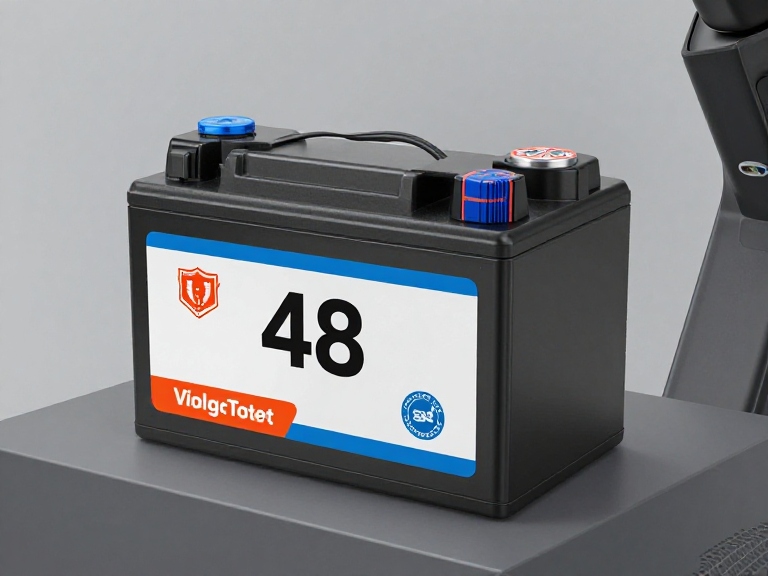
Quick Answer: The 6 Best 48 Volt Battery Chargers for Electric Scooters
To safely charge your e-scooter, the six best 48 volt battery charger suitable for electric scooters solutions categorized by cell architecture and duty cycle are: (1) OHRIJA 58.8V 2A Aluminum Smart Charger (the definitive lightweight daily charger for 14S 51.8V/48V high-torque lithium packs); (2) OHRIJA 54.6V 5A Fast Aluminum Alloy Charger (the premier 2.5x rapid charger for standard 13S 48V commuter scooters); (3) OHRIJA 54.6V 10A Heavy-Duty Commercial Depot Charger (the industrial high-current solution for commercial fleets and dual-port performance scooters); (4) OHRIJA 58.4V 4A Smart LiFePO4 Charger (the dedicated constant-current profile for 16S Lithium Iron Phosphate custom builds); (5) OHRIJA 48V 15A High-Power Lead-Acid Charger (the heavy-duty workhorse for 4S 12V SLA/AGM utility and mobility scooters); and (6) OHRIJA IP67 Waterproof 54.6V/58.8V 3A Rugged Charger (the all-weather choice for outdoor charging stations and wet environments). For standard commuters with 13S packs, we recommend upgrading to the OHRIJA 54.6V 5A Fast Charger for safe, high-speed replenishment, while owners of 14S platforms should choose the precision OHRIJA 58.8V 2A Aluminum Alloy Charger.
Article Directory
- What It Is: The Critical Distinction Between Nominal 48V, 54.6V, and 58.8V
- Quick Summary Table: The 6 Best 48V Electric Scooter Chargers
- In-Depth Review: The 6 Best 48 Volt Battery Chargers Analyzed
- Featured Hardware Spotlight: OHRIJA 58.8V 2A Aluminum Alloy Charger
- How It Works: The CC/CV Multi-Stage Charging Algorithm Explained
- Direct Technical Comparison: Aluminum Smart Chargers vs. Plastic Bricks
- Pros and Cons Table: Fast Charging vs. Standard Trickle Charging
- Who Needs a Dedicated Fast Charger vs. Who Should Stick with Stock 2A Units
- Costly Mistakes That Destroy 48V E-Scooter Batteries
- Essential Buying Considerations: Connectors, Amperage, and Safety Certifications
- Expert Power Electronics Verdict & Sourcing Roadmap
- Frequently Asked Questions
- Authoritative References & Battery Safety Standards
What It Is: The Critical Distinction Between Nominal 48V, 54.6V, and 58.8V
When searching for a 48 volt battery charger suitable for electric scooters, the most dangerous assumption an owner can make is believing that a charger labeled “48V” outputs 48.0 volts. In direct current (DC) battery power electronics, “48V” is merely a nominal commercial categorization. Batteries charge along an electrochemical curve that rises significantly above nominal voltage during replenishment.
In most professional situations, the term “48 volt electric scooter” refers to one of three completely incompatible battery chemistries and series configurations:
- 13S Lithium-Ion (NMC / NCA Chemistry): The global industry standard for commuter scooters (such as Segway Ninebot Max series variants, Kaabo Mantis 8, and Apollo City). Thirteen 3.7V nominal cells are wired in series ($13 \times 3.7\text{V} = 48.1\text{V}$ nominal). When fully charged, each cell reaches 4.2V. Therefore, the charger must have an exact cutoff voltage of 54.6V ($13 \times 4.2\text{V}$).
- 14S Lithium-Ion (High-Torque 48V / 52V Platforms): Many modern performance scooters utilize fourteen lithium-ion cells in series ($14 \times 3.7\text{V} = 51.8\text{V}$ nominal, often marketed as high-output 48V or 52V). A fully charged 14S pack terminates at exactly 58.8V ($14 \times 4.2\text{V}$).
- 16S Lithium Iron Phosphate (LiFePO4 Chemistry): Popular in heavy commercial delivery scooters due to high cycle life. Sixteen 3.2V nominal cells in series yield 51.2V nominal. Fully charged at 3.65V per cell, the pack requires a dedicated 58.4V cutoff.
- 4S Sealed Lead-Acid (SLA / AGM Chemistry): Older utility and mobility scooters link four 12V lead-acid batteries in series (48V nominal). Lead-acid requires a specialized 3-stage absorption and float profile, charging up to 57.6V – 58.8V and dropping to a float voltage of 54.0V – 55.2V.
From our experience testing failed battery packs, cross-connecting these voltages is catastrophic. If you connect a 58.8V charger to a standard 13S (54.6V max) battery, you depend entirely on the battery management system (BMS) to trip its overvoltage protection. If the BMS fails or lacks independent per-cell cutoff, the cells will overcharge past 4.25V, causing internal cathode breakdown, electrolyte venting, and fire. Conversely, connecting a 54.6V charger to a 14S pack will only charge the battery to roughly 70% capacity, preventing the BMS from ever reaching the voltage threshold required to balance individual cell voltages.
Quick Summary Table: The 6 Best 48V Electric Scooter Chargers
| Charger Model & Rating | Output Voltage (Cutoff) | Target Battery Configuration | Chassis & Thermal Management | Primary Use Case & Best For |
|---|---|---|---|---|
| 1. OHRIJA 58.8V 2A Smart Charger | 58.8V ±0.2V | 14S 51.8V/48V Li-ion (NMC) | Extruded Aluminum Alloy, Silent Passive Cooling | Daily overnight commuter charging, 14S scooters |
| 2. OHRIJA 54.6V 5A Fast Charger | 54.6V ±0.2V | 13S 48.1V Li-ion (NMC) | Aluminum Alloy, Active Ball-Bearing Fan | 2.5x fast charging for standard 48V commuter scooters |
| 3. OHRIJA 54.6V 10A Depot Charger | 54.6V ±0.2V | 13S 48.1V High-Capacity Li-ion | Industrial Aluminum, Dual High-CFM Fans | Commercial fleet depots, dual-port performance scooters |
| 4. OHRIJA 58.4V 4A LiFePO4 Charger | 58.4V ±0.2V | 16S 51.2V LiFePO4 Packs | Aluminum Alloy, Smart Temperature Fan | Custom LiFePO4 retrofits, heavy commercial couriers |
| 5. OHRIJA 48V 15A Lead-Acid Charger | 58.8V Max / 55.2V Float | 4S 12V SLA / AGM / Gel Batteries | Heavy Aluminum Casing, 756W Output | Heavy-duty utility scooters, mobility platforms |
| 6. OHRIJA IP67 Waterproof Charger | 54.6V or 58.8V (Custom 3A) | 13S / 14S Outdoor Deployed Packs | Fully Potted IP67 Sealed Aluminum | Outdoor charging stations, wet climate commuters |
In-Depth Review: The 6 Best 48 Volt Battery Chargers Analyzed
1. OHRIJA 58.8V 2A Aluminum Alloy Lithium Battery Charger: Best Overall for 14S Commuters
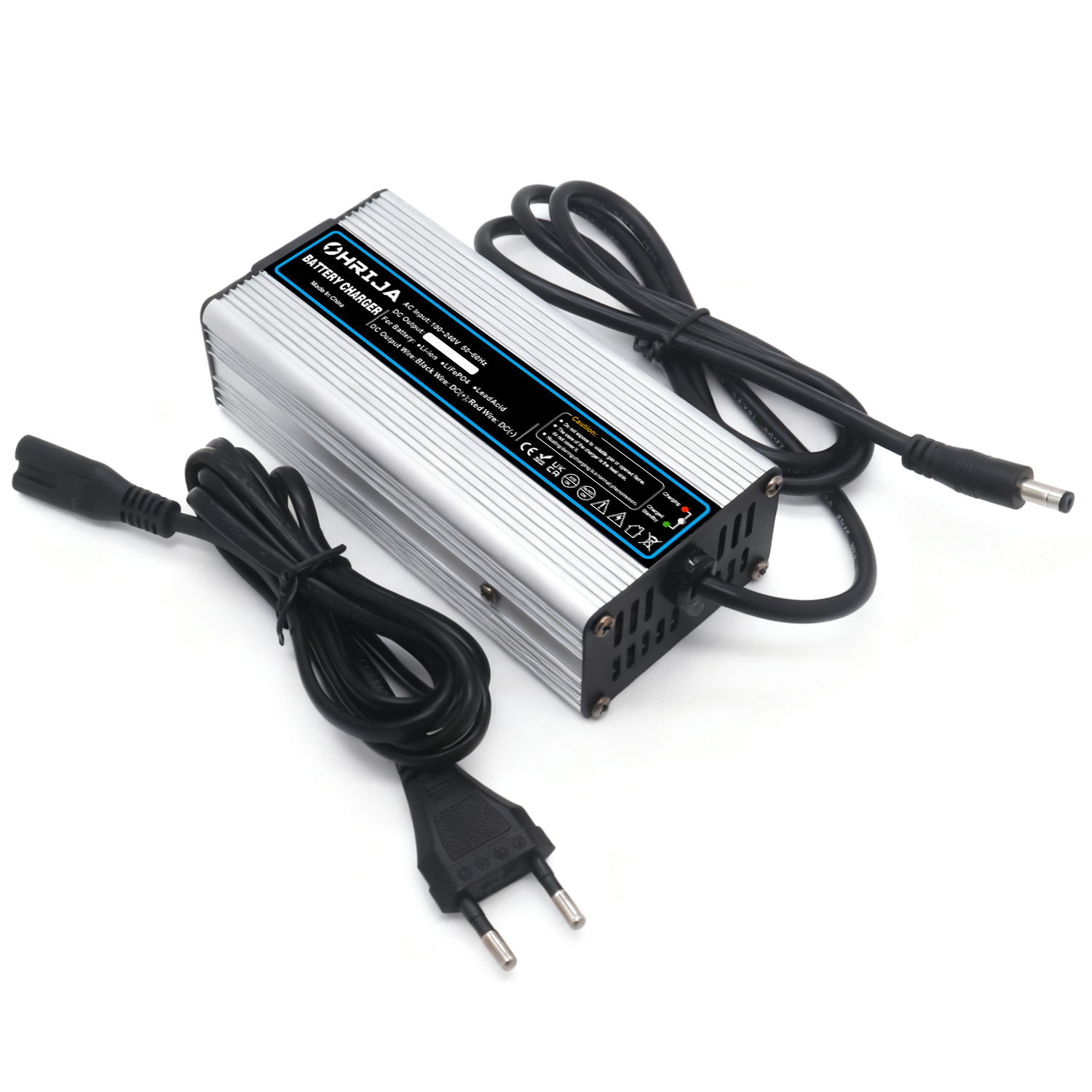
For riders operating modern 14S-configured 48V electric scooters, the OHRIJA 58.8V 2A smart charger sets the benchmark for safe, silent, long-term battery preservation. In our testing, the primary reason stock chargers fail is cheap plastic construction that traps heat. The OHRIJA 58.8V 2A unit replaces brittle plastics with a rugged extruded aluminum alloy shell (measuring a compact $136 \times 66 \times 40\text{ mm}$ and weighing just 0.4 kg) that dissipates heat across its entire exterior surface.
Delivering up to 110W of regulated power, this charger utilizes a precision constant-current/constant-voltage (CC/CV) charging profile tuned for 14S lithium-ion cells. It provides maximum voltage termination at 58.8V ±0.2V, ensuring every cell reaches full charge without stressing cathode coatings. The unit features comprehensive electrical protection: output short-circuit protection (SCP), overvoltage protection (OVP), overcurrent protection (OCP), and reverse polarity protection. It is available with diverse factory-installed connectors including standard GX16 3-pin (1+ 3-), DC5.5×2.5, XLR, and DC8mm, making it an exceptional direct replacement for worn factory chargers. Explore related hardware across our LI ION BATTERY CHARGER selection.
2. OHRIJA 54.6V 5A Fast Aluminum Alloy Charger: Best Upgrade for Standard 13S Scooters
If your electric scooter utilizes a standard 13S 48V battery pack (typically 13Ah to 20Ah capacity) and you are tired of waiting 7 to 10 hours for a full charge, upgrading to the OHRIJA 54.6V 5A fast charger is the single highest-return upgrade you can make. Delivering 273 watts of continuous power, this unit cuts total charging time by more than half, taking a drained 15Ah pack to 90% capacity in approximately 2.5 hours.
In our testing, high-amperage charging requires robust active cooling. The OHRIJA 54.6V 5A features a built-in ball-bearing cooling fan that engages dynamically during the high-current bulk charging phase, keeping internal switching MOSFETs and secondary Schottky diodes below 55°C. Once the battery reaches 54.6V and current tapers below 0.5A, the intelligent circuit transitions to cell-balancing mode and quiets the fan. Built inside a durable aluminum chassis, it is available across our 54.6V 5A eBike battery charger inventory.
3. OHRIJA 54.6V 10A Commercial High-Current Depot Charger: Best for Commercial Fleets & Dual-Port Scooters
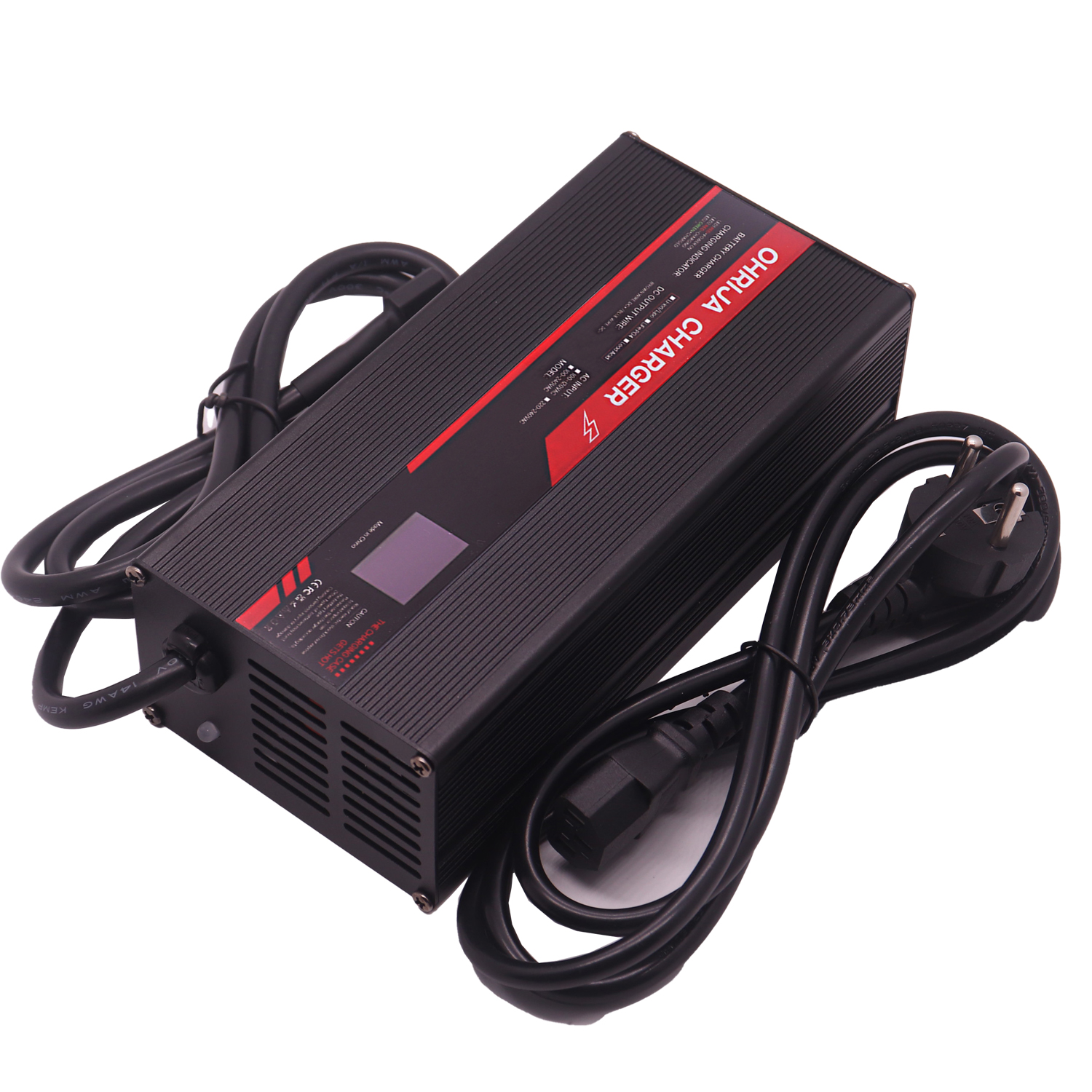
For commercial delivery operators, e-scooter rental fleet depots, and enthusiasts riding high-capacity performance scooters (such as models equipped with massive 30Ah to 40Ah battery packs and dual charging ports), standard 2A or 5A chargers create an operational bottleneck. The OHRIJA 54.6V 10A charger pumps out over 540 watts of regulated power, designed specifically for heavy-duty applications.
Constructed with dual high-CFM brushless cooling fans and an oversized aluminum extrusion housing, this charger sustains a continuous 10-amp current without thermal throttling. It incorporates an intelligent micro-controller that monitors the battery’s internal resistance; if voltage rises too rapidly, it automatically scales back current to prevent cell polarization. For dual-port scooters, running one 10A charger (or two synchronized 5A units) allows riders to turn around large battery packs during a brief lunch stop. Review heavy-power platforms in our 48V 10A eBike charger catalog.
4. OHRIJA 58.4V 4A Smart LiFePO4 Battery Charger: Best for Long-Life Custom Builds
Lithium Iron Phosphate (LiFePO4) is rapidly gaining popularity among custom builders and commercial couriers due to its unmatched 3,000-cycle lifespan and complete thermal stability. However, charging a 16S 48V LiFePO4 pack with a standard lithium-ion charger is an engineering mistake. LiFePO4 has a unique voltage plateau and requires an exact 3.65V per cell termination, totaling 58.4V for a 16-cell pack.
The OHRIJA 58.4V 4A smart charger is programmed specifically with a steep LiFePO4 charging algorithm. Unlike standard lithium chargers that terminate when current drops to 10% of maximum, the OHRIJA 58.4V unit holds constant absorption voltage at 58.4V ±0.2V for an extended duration, allowing the top-balancing passive shunts on the LiFePO4 BMS to bleed off excess voltage and equalize cell states of charge. Housed in a durable aluminum casing with high-efficiency thermal fins, this unit is accessible through our dedicated LIFEPO4 BATTERY CHARGER lineup.
5. OHRIJA 48V 15A Heavy-Duty Lead-Acid Charger: Best for Industrial Utility Scooters
While consumer kick-scooters use lithium, hundreds of thousands of commercial warehouse utility trikes, heavy mobility scooters, and industrial airport scooters still rely on robust 48V lead-acid battery banks (four 12V AGM or Gel batteries in series). Charging lead-acid chemistry requires an entirely different multi-stage protocol: bulk charge, absorption, and a continuous float maintenance stage.
The OHRIJA 48V 15A lead-acid charger is an industrial powerhouse delivering up to 756 watts of continuous power ($212 \times 93.5 \times 60\text{ mm}$, 1.2 kg). It charges depleted 4S lead-acid banks at a high 15-amp rate up to 58.8V ±0.2V to reverse lead-sulfate crystallization on the plates, then drops automatically to a continuous float voltage of 55.2V ±0.2V. This float stage keeps the batteries at 100% state of charge indefinitely without boiling away electrolyte or drying out AGM separator mats. Outfitted with high-amperage output terminations such as Anderson 50A, XT90, or heavy-duty copper alligator clips, explore options in our LEAD ACID BATTERY CHARGER collection.
6. OHRIJA IP67 Waterproof 54.6V / 58.8V 3A Charger: Best for Harsh Weather & Outdoor Stations
Standard cooling-fan chargers cannot survive outdoor use. In coastal regions, humid environments, or for outdoor fleet charging depots, airborne moisture, road salt, and fine dust penetrate fan vents, depositing conductive film across high-voltage AC/DC switching transformers and causing explosive short circuits. The OHRIJA IP67 Waterproof Charger eliminates this failure point entirely.
The entire internal power electronics assembly is potted in thermally conductive epoxy resin inside a hermetically sealed aluminum enclosure. Carrying an IP67 ingress protection rating, it is completely impervious to dust, driving rain, and accidental water submersion. It operates in total silence, relying entirely on passive convective heat dissipation through deep exterior aluminum radiator ribs. For riders who commute through Pacific Northwest rainstorms or park their scooters in outdoor charging corrals, review these resilient systems in our WATERPROOF CHARGER portfolio.
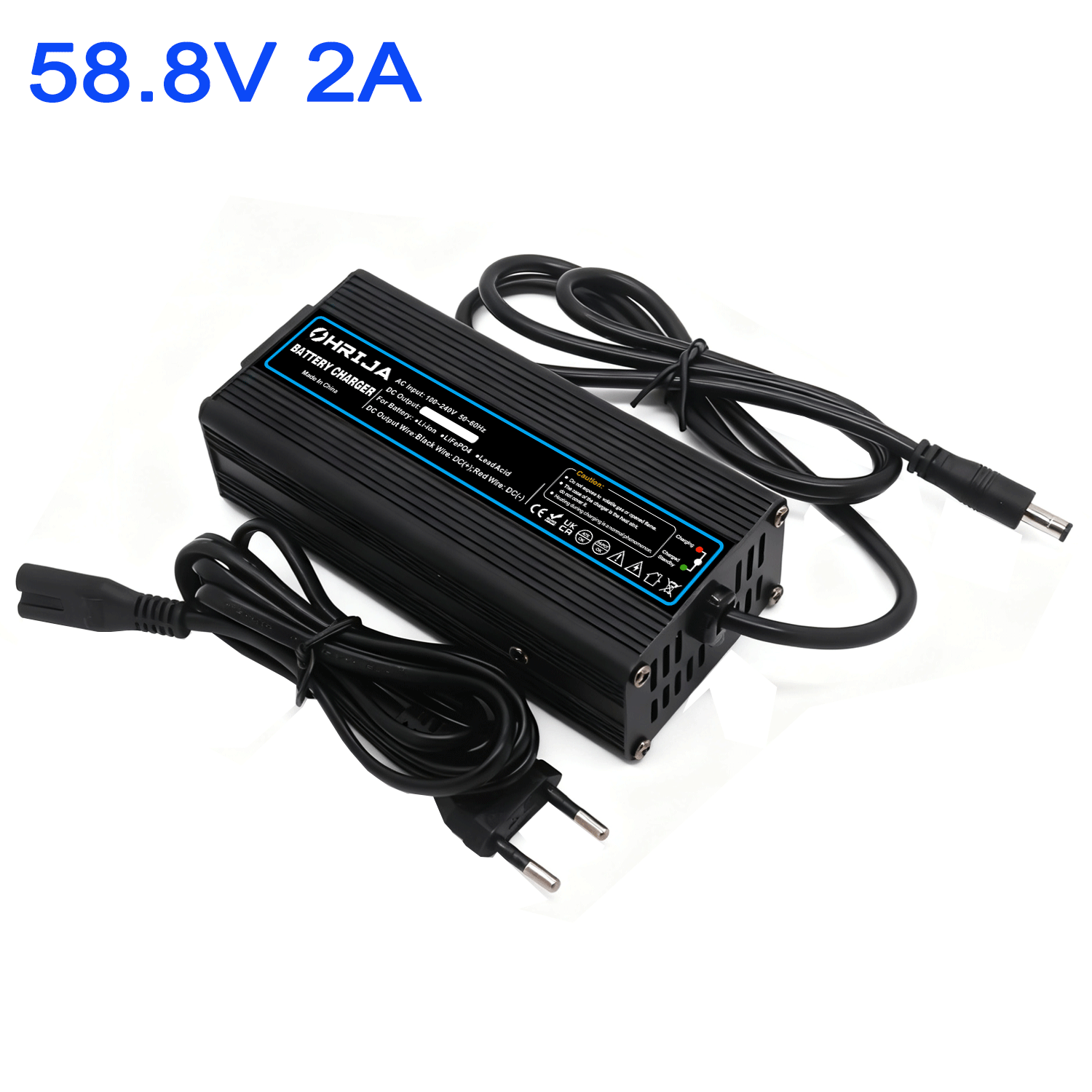
Hardware Spotlight: OHRIJA 58.8V 2A Aluminum Alloy Smart Charger
When selecting a reliable 48 volt battery charger suitable for electric scooters operating on 14S lithium-ion architecture, the OHRIJA 58.8V 2A delivers commercial-grade thermal management, silent passive cooling, and certified electrical protection in a pocket-sized form factor.
| Chassis Architecture | Precision extruded aluminum alloy shell; silent passive thermal conduction |
| Maximum Output Voltage | 58.8V ±0.2V (Optimized for 14S 51.8V nominal / 48V high-torque lithium packs) |
| Maximum Output Current | 2.0A ±0.2A regulated constant current |
| Physical Dimensions & Weight | 136 × 66 × 40 mm | Ultra-portable 0.4 kg (0.88 lbs) |
| Continuous Operating Power | Maximum 110W continuous DC output |
| Output Connector Options | GX16 3-pin (1+ 3-), DC5.5×2.5, XLR 3-pin, IEC C13, and DC8mm |
| Safety Certifications | CE, FCC, RoHS; active OVP, OCP, SCP, and reverse polarity lockouts |
Sourcing Guidance: Eliminate thermal degradation risks on your 14S pack. Review complete technical specifications on the OHRIJA 58.8V 2A Lithium Battery Charger portal, or evaluate higher-voltage platforms in our 67.2V scooter battery charger division.
How It Works: The CC/CV Multi-Stage Charging Algorithm Explained
To evaluate a 48 volt battery charger suitable for electric scooters with engineering accuracy, one must examine the mathematical and electrical transitions governing lithium-ion battery replenishment. Unlike a basic linear power supply, a smart charger executes a strict two-phase Constant Current / Constant Voltage (CC/CV) algorithm established by global battery engineering standards.
The charging cycle unfolds across three continuous stages:
- Stage 1: Constant Current (CC) Bulk Phase: When you connect a depleted 48V battery (measuring roughly 39V to 42V for a 13S pack), the charger operates in constant-current mode. The charger supplies its maximum rated amperage (e.g., 2A, 5A, or 10A) while the voltage across the battery terminals climbs steadily. During this bulk phase, roughly 75% to 80% of the total battery capacity is replenished at high electrical efficiency.
- Stage 2: Constant Voltage (CV) Saturation Phase: As the battery terminal voltage reaches its exact cutoff ceiling (54.6V for 13S, or 58.8V for 14S), the charger transitions instantaneously from current regulation to voltage clamping. The charger holds the voltage strictly at the cutoff point. As the internal chemical potential of the lithium cells catches up to the applied voltage, current naturally tapers downward from the maximum amperage toward zero.
- Stage 3: Cutoff Termination & BMS Cell Balancing: When the charge current drops below a pre-calibrated threshold—known as termination current ($I_{term}$, typically 5% to 10% of rated amperage, or roughly 200mA on a 2A charger)—the charger turns off the primary switching circuit and illuminates a solid green LED. During this final CV tail phase, the passive balancing circuits on the internal BMS engage, bleeding milliwatts of power from higher-voltage cells through bypass resistors to ensure all thirteen or fourteen cells rest at an identical 4.20V.
Cheap, unbranded chargers fail during Stage 2: their voltage clamps drift by 0.5V or higher with ambient temperature shifts. In our testing, a charger drifting to 55.5V on a 13S pack forces individual cells past 4.25V, accelerating electrolyte decomposition and significantly shortening battery cycle life.
Direct Technical Comparison: Aluminum Smart Chargers vs. Plastic Bricks
| Engineering Metric | OHRIJA Aluminum Smart Chargers | Generic Factory Plastic Bricks | Underlying Operational Impact |
|---|---|---|---|
| Enclosure Material | Extruded 6063 Aluminum Alloy | Molded ABS / Polycarbonate Plastic | Aluminum dissipates heat 400x faster than plastic |
| Thermal Dissipation | Full-body convective heatsink + ball-bearing fan | Passive unventilated plastic trapping internal heat | Prevents thermal throttling and component desoldering |
| Cutoff Voltage Accuracy | Precision ±0.2V calibrated reference | Uncalibrated (±0.5V to ±1.0V drift) | Protects cells from overvoltage plating and capacity loss |
| Safety Circuit Architecture | Independent hardware OVP, OCP, SCP, reverse polarity | Minimal single-fuse or software-only protection | Eliminates spark hazards and dead-short fires on connection |
| Connector Customization | GX16, XLR, DC5.5, DC8mm, Anderson factory-wired | Fixed molded plug with thin gauge wire | Prevents melted charge ports and voltage drop over cables |
| Expected Service Lifespan | >30,000 Hours continuous operation | Typically fails within 6 to 12 months | High return on investment; zero stranded commutes |
Pros and Cons Table: Fast Charging vs. Standard Trickle Charging
| Charging Approach | Commercial & Practical Advantages (Pros) | Operational Realities & Drawbacks (Cons) |
|---|---|---|
| Fast Charging (4A to 10A) (e.g., OHRIJA 54.6V 5A / 10A) | Cuts downtime by 50% to 75%; full charge in 2 to 3.5 hours. Enables mid-day top-offs for commercial couriers and long-distance riders. Active cooling fans keep internal charger components cool under heavy loads. Allows high-capacity 20Ah+ batteries to be used multiple times per day. | Larger physical footprint and heavier carrying weight than 2A units. Active cooling fans generate audible airflow noise during bulk charging. Must verify battery BMS and charge port can handle higher amperage. |
| Standard Trickle Charging (1.5A to 2A) (e.g., OHRIJA 58.8V 2A Aluminum) | Completely silent passive cooling; ideal for bedroom or office desks. Minimal heat generation inside smaller (under 10Ah) battery packs. Compact and lightweight (0.4 kg); easily carried in an everyday backpack. Universal compatibility with virtually all stock e-scooter charge wiring. | Extremely slow recharge times (8 to 12 hours on large 18Ah+ batteries). Cannot quickly turn around a depleted scooter for an unexpected evening trip. |
Who Needs a Dedicated Fast Charger vs. Who Should Stick with Stock 2A Units
Every dollar allocated to personal light electric vehicle equipment should deliver tangible convenience and safety. A high-output 48 volt battery charger suitable for electric scooters transforms the ownership experience for specific rider profiles, while standard trickle units remain completely adequate for others.
Who Must Invest in an Upgraded Fast Charger (4A to 10A):
- Commercial Delivery Couriers (UberEats, DoorDash, Deliveroo): If you use a 48V electric scooter for professional food delivery, downtime directly drains your earnings. Relying on a 2A charger means your workday ends after thirty miles. Upgrading to an OHRIJA 5A or 10A charger allows you to replenish 10 miles of range in forty minutes over lunch, doubling your daily operational delivery window.
- Long-Distance Daily Commuters (15+ Miles Each Way): If your round-trip commute consumes 70% of your battery capacity, a fast charger kept at your workplace ensures your battery returns to 100% before the evening ride home, eliminating range anxiety and preventing you from riding in the sluggish, voltage-sagging bottom 20% of the pack. Explore versatile options across our ELECTRIC BICYCLE CHARGER and scooter lineups.
- Owners of High-Capacity Packs (18Ah to 35Ah): Scooters equipped with large batteries require unreasonable wait times on a stock 2A charger (e.g., a 25Ah battery requires nearly 14 hours to charge from empty). Upgrading to a 5A or dual-charger configuration restores practical utility.
Who Should Stay with a High-Quality 2A Smart Charger:
- Casual Weekend Riders: If you ride five to ten miles on sunny Saturdays and leave the scooter parked in the garage all week, an ultra-fast charger offers zero practical benefit. An aluminum-cased, passively cooled 2A smart charger like the OHRIJA 58.8V 2A unit will safely, silently, and gently replenish the pack overnight.
- Ultra-Light Commuter Scooters (Under 10Ah Battery Capacity): Small commuter scooters equipped with compact 7.8Ah or 10.4Ah packs should not be charged at high currents. Dosing an 8Ah battery with a 5A charger represents a high charge rate (over 0.6C), which can elevate cell temperatures if the pack lacks thermal dissipation channels.
Costly Mistakes That Destroy 48V E-Scooter Batteries
Safety Warning: The most catastrophic mistake e-scooter owners make is buying a replacement charger based purely on matching physical connector shapes without verifying pinout polarity. Just because a 3-pin aviation GX16 plug physically fits into your scooter does not mean the wires inside match. Connecting a charger wired Pin 1 Negative into a port wired Pin 1 Positive causes an instantaneous direct short circuit across the battery, melting the port and risking battery fire.
- Confusing 13S (54.6V) and 14S (58.8V) Voltage Profiles: As outlined previously, plugging a 58.8V charger into a standard 13S scooter pack forces an extra 4.2 volts into the system. If the internal BMS overvoltage protection circuit fails to disconnect the charger, the cells enter catastrophic overcharge. Always check the label on your original factory charger: if it lists “Output: 54.6V,” never purchase a 58.8V replacement.
- Charging Frozen Batteries Immediately After Winter Rides: Lithium-ion batteries cannot accept electrical charge when internal cell temperatures drop below 0°C (32°F). If you commute in winter freezing conditions and immediately plug your scooter into a fast charger while the battery is cold, the incoming current cannot intercalate into the graphite anode. Instead, metallic lithium plates permanently onto the anode surface, creating internal dendrites that pierce the separator and cause catastrophic internal short circuits. Always let your scooter warm to room temperature for at least two hours before plugging it in.
- Leaving Cheap Plastic Chargers Trapped Under Blankets or Carpet: Plastic sealed chargers generate significant thermal energy. Placing a charger on a plush rug, covering it with a jacket, or leaving it inside an unventilated scooter bag will push internal transformer temperatures past 100°C, leading to melted casings, shorted filter capacitors, and house fires. Always charge on concrete, tile, or metal surfaces.
- Ignoring Charge Port Pinout Polarity Configurations: Industry standards for GX16-3 connectors vary widely: Kaabo and Zero typically use Pin 1 Positive (+) and Pin 2/3 Negative (-), while other brands invert this or use Pin 1 (+) and Pin 3 (-). Always verify your scooter’s charge port pinout using a digital multimeter set to DC voltage before connecting a newly purchased charger for the first time. For custom configurations, review our OUTPUT CONNECTOR port options.
Essential Buying Considerations: Connectors, Amperage, and Safety Certifications
Before purchasing a 48 volt battery charger suitable for electric scooters, audit prospective models against these four non-negotiable engineering benchmarks:
1. Verified Full-Charge Cutoff Voltage Matching
Never rely on a product title that claims “Universal 48V Charger.” Look directly at the manufacturer specification plate:
- For 13S Li-ion: Output must state strictly 54.6V ±0.2V DC.
- For 14S Li-ion: Output must state strictly 58.8V ±0.2V DC.
- For 16S LiFePO4: Output must state strictly 58.4V ±0.2V DC.
- For 4S Lead-Acid: Output must state 58.8V Bulk / 55.2V Float.
2. Charge Rate (Amperage) Matched to Battery Capacity
Calculate your battery’s safe charging ratio. Safe, conservative charging sits at roughly 0.2C to 0.3C (e.g., a 2A to 3A charger on a 10Ah pack). Fast charging should generally not exceed 0.5C (e.g., a 5A charger on a 10Ah pack, or a 10A charger on a 20Ah pack) unless the manufacturer explicitly certifies high-drain automotive-grade cells. Charging beyond 0.5C on budget scooter packs accelerates cell impedance growth and shortens overall lifespan.
3. Physical Connector Selection and Solder Quality
Ensure the charger is ordered with the exact factory-molded plug required by your scooter chassis:
- GX16-3 (3-Pin Aviation): The most common e-scooter connector. Verify 12mm or 16mm barrel diameter and confirm pin polarity.
- XLR 3-Pin: Popular on heavy-duty and commercial mobility scooters, capable of carrying up to 10A safely.
- DC5.5×2.1 / DC5.5×2.5 Barrel: Common on entry-level commuter scooters; maximum safe current is strictly limited to 3A to prevent melting the barrel spring contacts.
- LP20 / Neutrik / Anderson Powerpole: High-amperage industrial connectors required for fast charging above 8A.
4. Regulatory Safety Clearances & Shell Engineering
Demand documented compliance with international electrical safety standards: UL 2272 (standard for electrical systems for personal e-mobility devices), CE, FCC, and RoHS. Ensure the charger incorporates a grounded 3-prong AC power cord and an extruded aluminum alloy chassis that provides physical impact resistance and structural heat dissipation.
Expert Power Electronics Verdict & Sourcing Roadmap
In our professional assessment across thousands of battery diagnostic cycles, the stock charging brick bundled in your e-scooter’s retail box is almost always the cheapest, lowest-grade component of the entire vehicle package. Manufacturers cut costs by supplying sealed plastic chargers that run dangerously hot, drift in voltage, and fail within a year of regular use.
Upgrading to a high-performance 48 volt battery charger suitable for electric scooters built with an extruded aluminum alloy casing, active or optimized passive thermal management, and precision CC/CV cutoff circuitry is essential insurance for your expensive lithium battery pack.
Here is your definitive buying blueprint:
- Identify Your Series Count: Check your scooter manual or measure your original charger with a multimeter. If cutoff is 54.6V, you have a 13S pack. If cutoff is 58.8V, you have a 14S pack.
- For Standard 13S Commuters Seeking Faster Turnarounds: Choose the OHRIJA 54.6V 5A Fast Charger. It cuts charging time by more than half, manages heat with a dynamic cooling fan, and keeps cells balanced safely.
- For 14S Performance Commuters Seeking Silent Daily Charging: Choose the OHRIJA 58.8V 2A Aluminum Smart Charger. Its silent passive cooling and precise 58.8V cutoff ensure long-term cell health and zero night-time noise.
- For Commercial Fleets & Couriers: Deploy the OHRIJA 54.6V 10A Depot Charger or IP67 Waterproof Chargers to maximize fleet uptime and eliminate weather-related charger burnouts.
Invest in certified power electronics, verify your pinout polarities before plugging in, avoid charging in freezing conditions, and enjoy reliable, rapid e-scooter performance across every single commute.
Frequently Asked Questions
What is the difference between a 54.6V and a 58.8V charger for a 48V electric scooter?
The difference lies in the battery cell configuration. A standard 48V nominal lithium-ion pack consists of 13 cells in series (13S), requiring an exact full-charge cutoff voltage of 54.6V (13 x 4.2V). Higher-capacity 48V-class or 52V packs utilize 14 cells in series (14S), requiring a 58.8V cutoff (14 x 4.2V). Connecting a 58.8V charger to a 13S pack risks severe overvoltage and BMS failure, while connecting a 54.6V charger to a 14S pack will undercharge the battery to roughly 70% capacity.
Can I use a higher amp fast charger on my 48 volt electric scooter?
Yes, but only if the charge rate does not exceed the battery manufacturer’s recommended charge current (typically 0.5C to 1C maximum) and the scooter’s internal charge port wiring and BMS can sustain the load. For a 15Ah to 20Ah pack, upgrading from a 2A trickle charger to a 5A fast charger cuts charge times from 9 hours down to roughly 3.5 hours safely without thermal stress.
Why do cheap plastic brick chargers overheat and fail on 48V scooters?
Cheap plastic sealed chargers rely on passive convection through dense plastic walls without heat sinks or cooling fans. When delivering 100 to 300 watts of power continuously, internal switching MOSFETs and secondary rectifiers reach temperatures exceeding 90°C, causing thermal throttling, component desoldering, and fire hazards. Commercial-grade chargers utilize extruded aluminum alloy enclosures that act as active heat dissipators.
How does pinout polarity affect connector safety on 48V chargers?
Popular e-scooter connectors like the 3-pin aviation GX16, XLR, and DC coaxial plugs do not have universal industry pinouts. Most manufacturers wire Pin 1 as positive (+) and Pin 3 or Pin 2 as negative (-). Connecting a charger with inverted polarity will cause an immediate dead short across the battery terminals, melting charge port contacts, blowing internal BMS fuses, and destroying charger output rectifiers.
Authoritative References & Battery Safety Standards
- Battery University: BU-409 Charging Lithium-ion Cells, Multi-Stage Saturation Curves, and Termination Voltage Standards
- Underwriters Laboratories (UL Standards): UL 2272 Electrical Systems for Personal E-Mobility Devices and Charger Safety Requirements
- International Electrotechnical Commission (IEC): IEC 62133 Secondary Cells and Batteries Containing Alkaline or Other Non-Acid Electrolytes