
No products in the cart.

Every seasoned overlander, marine engineer, and fleet manager understands that an electrical storage bank is only as dependable as the charging system behind it. You can invest thousands of dollars outfitting an off-grid expedition rig, luxury cruising yacht, or commercial utility fleet with the newest lithium iron phosphate or high-rate AGM batteries, yet if you connect those cells to an uncalibrated, generic power source, you are actively destroying your investment on every charge cycle. Battery electrochemistry has evolved dramatically beyond the era of crude, unregulated transformer boxes that boil electrolyte, warp lead plates, and trigger early thermal failure. Modern mobile, marine, and powersports equipment demands multi-stage microprocessor algorithms, precise millivolt-level cutoffs, and active thermal compensation. Understanding the diverse range of battery charger applications across recreational vehicles, maritime vessels, and outdoor mobile machinery is essential for eliminating roadside battery failures, avoiding dead-in-the-water emergencies, and protecting long-term capital assets. As power electronics specialists who design charging curves, test potted circuit boards against saltwater immersion, and evaluate direct-current output stability under extreme field conditions, we deliver an authoritative technical breakdown of the ten critical battery charger applications powering today’s outdoor, marine, and mobile sectors.
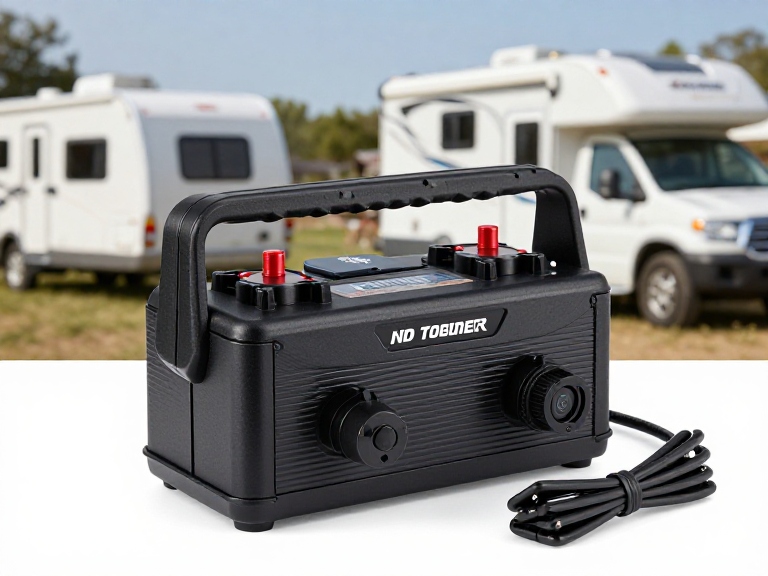
Quick Answer: Core Battery Charger Applications & Selection Criteria
The primary battery charger applications across modern recreational, marine, and outdoor sectors include: (1) RV House Battery Banks (high-efficiency CC/CV bulk replenishment for 12V/24V LiFePO4 banks); (2) Marine Trolling Motor Systems (isolated multi-bank 24V and 36V series balancing); (3) Marine Cranking and House Dual-Bank Isolation (independent dual-chemistry starting and auxiliary charging); (4) Commercial & Neighborhood Golf Carts (high-duty 48V/72V turnaround with automated cutoff); (5) Overland 4×4 Rigs & Adventure Camper Vans (high-vibration compact shore-to-DC integration); (6) Off-Road Powersports, ATVs & UTVs (shock-resistant charging with 0V BMS wake-up capability); (7) Marine Bilge & Emergency Navigation Backup (IP67 submersible waterproof float charging); (8) High-Power Electric Scooters & Commuter e-Bikes (54.6V to 84V precision lithium regulation); (9) Agricultural Utility Machinery & Yard Buggies (sealed dust-proof and chemical-resistant charging); and (10) Seasonal Fleet Winterization Storage (smart float and pulse desulfation maintenance). Matching the exact charging algorithm to your battery chemistry while confirming true environmental ingress sealing is non-negotiable. Sourcing certified power hardware through proven industrial manufacturers like OHRIJA guarantees the efficiency, thermal stability, and mechanical durability required across every mission-critical installation.
Article Directory
- Electrical Mechanics: How Modern Micro-Controlled Battery Chargers Function
- Quick Summary Table: 10 Battery Charger Applications at a Glance
- The 10 Critical Battery Charger Applications Analyzed
- Featured Power Electronics Spotlight: OHRIJA Advanced Charging Platforms
- Direct Technical Comparison: Charging Topologies & Form Factors
- Pros and Cons: Dedicated Smart Chargers vs. All-in-One Inverter-Chargers
- Who Needs Industrial Multi-Stage Chargers vs. Basic Maintainers
- Catastrophic Field Mistakes That Destroy Batteries and Hardware
- Essential Sourcing Checklist: Voltage Tolerance, Thermal Throttling & Ingress
- Expert Power Electronics Practitioner’s Final Verdict
- Frequently Asked Questions
- Authoritative References & Electrical Standards
Electrical Mechanics: How Modern Micro-Controlled Battery Chargers Function
To grasp the technical diversity across modern battery charger applications, one must eliminate the dangerous misconception that a battery charger is merely a generic direct-current power supply. An unregulated DC supply outputs a static voltage irrespective of internal cell resistance or chemical state of charge. When you connect an unregulated supply to a depleted battery, the initial current inrush is massive, generating violent internal heat, boiling electrolyte in flooded cells, and warping lead grids. In lithium-ion and lithium iron phosphate packs, uncontrolled charging causes severe local cell degradation and can induce metallic lithium plating on the graphite anode, permanently compromising safety.
High-performance charging systems deploy specialized, microprocessor-driven multi-stage profiles designed around the precise electrochemistry of the storage medium:
- Constant Current / Constant Voltage (CC/CV) for Lithium Systems: Advanced LIFEPO4 BATTERY CHARGER and LI ION BATTERY CHARGER units utilize a strict two-phase CC/CV architecture. During the bulk phase, the charger outputs its full rated amperage while battery voltage steadily rises. Once the cells reach their target absorption threshold (typically 14.4V to 14.6V for a 12V LiFePO4 pack, or 3.65V per cell), the controller locks that voltage precisely. Current naturally tapers downward as the cells reach 100% capacity. Once current drops below a calibrated threshold (typically C/20 to C/50), the charger terminates output completely, eliminating the destructive float voltages that degrade lithium cathode structures.
- Multi-Stage Algorithms for Lead-Acid Chemistry: Flooded, AGM, and gel batteries require a dynamic three- or four-stage profile delivered by an intelligent LEAD ACID BATTERY CHARGER. The bulk stage replaces approximately 80% of spent energy; the absorption stage holds a higher saturation voltage (14.4V to 14.8V) to drive chemical recombination without excessive gassing; the float stage drops potential down to a safe holding level (13.2V to 13.6V) to offset internal self-discharge; and an automated equalization stage periodically applies high-voltage pulses to break down stubborn lead sulfate crystallization.
- Dynamic Temperature Compensation: Electrochemical reaction rates vary with ambient temperature. In cold weather, internal chemical resistance rises, requiring higher charging voltages to achieve full saturation. In hot desert or engine bay environments, high voltage risks electrolyte boil-off and thermal runaway. Commercial-grade chargers utilize internal or external temperature thermistors to adjust output voltage by -3 to -5 mV/°C per cell, safeguarding battery health across fluctuating outdoor seasons.
From our experience on laboratory load banks, matching the specific charging algorithm to the exact battery chemistry is the single most critical factor in achieving the full cycle life promised on the battery’s specification sheet.
Quick Summary Table: 10 Battery Charger Applications at a Glance
| Application Profile | Vehicle / Operating Domain | Voltage & Target Chemistry | Recommended Charging Current | Critical Engineering Feature |
|---|---|---|---|---|
| 1. RV House Battery Banks | Class A/B/C Motorhomes, Fifth Wheels | 12V / 24V LiFePO4 or AGM Deep-Cycle | 30A to 60A high-rate continuous | High continuous CC output; power factor correction |
| 2. Marine Trolling Motors | Bass Boats, Inshore Flats Skiffs | 24V / 36V LiFePO4 or Deep-Cycle Strings | 10A to 20A per isolated bank | Electrically isolated multi-bank outputs; 100% waterproof potting |
| 3. Marine Cranking & House Dual-Banks | Center Consoles, Express Cruisers | 12V Lead-Acid (Start) + 12V LiFePO4 (House) | 20A to 50A dual-isolated | Dual-chemistry independent bank logic; zero cross-drain |
| 4. Commercial & Golf Cart Fleets | Golf Courses, Industrial Warehouses, Resorts | 36V / 48V / 72V Lead-Acid or Li-Ion | 15A to 35A high-frequency | Heavy-duty vehicle-specific plugs; automatic shutoff |
| 5. Overland Rigs & Adventure Vans | 4×4 Sprinters, Off-Road Expedition Rigs | 12V / 24V LiFePO4 Auxiliary Banks | 20A to 40A compact footprint | Vibration-resistant chassis; tight thermal airflow management |
| 6. Off-Road Powersports, ATVs & UTVs | Side-by-Sides, Quads, Snowmobiles | 12V AGM or Lithium Starter Packs | 5A to 15A rugged portable | 0V BMS wake-up pulse; sealed dustproof enclosure |
| 7. Marine Bilge & Safety Backup | Moored Vessels, Commercial Workboats | 12V Sealed Marine AGM / Gel | 10A to 25A continuous float | IP67 submersion rating; ignition protection (ISO 8846) |
| 8. High-Power e-Bikes & Scooters | Urban Delivery Fleets, Commuter Scooters | 48V (54.6V), 60V (67.2V), 72V (84V) Li-Ion | 5A to 10A fast charge | Precise balance-voltage cutoff; quiet thermal dissipation |
| 9. Agricultural & Utility Machinery | Farm Tractors, Utility Buggies, Floor Scrubbers | 24V / 48V Deep-Cycle Industrial Banks | 15A to 30A industrial shop | Heavy-gauge oil-resistant cabling; corrosion-proof casing |
| 10. Off-Season Fleet Winter Storage | Seasonal Watercraft, Classic RVs, Stored ATVs | Universal 12V / 24V Multi-Chemistry | 2A to 5A maintenance float | Automated pulse desulfation; micro-amp float monitoring |
The 10 Critical Battery Charger Applications Analyzed
1. RV House Battery Bank Replenishment
Modern recreational vehicles are high-draw mobile residences featuring residential induction cooktops, dual inverter air conditioning, satellite communication links, and large 12V compressor refrigerators. In most professional situations, the industry has transitioned away from heavy lead-acid batteries toward high-capacity lithium iron phosphate banks ranging from 200Ah to 800Ah. The primary challenge in this battery charger application is recharge velocity when connected to shore power or an onboard generator. A standard 15-amp converter takes upwards of twenty hours to recharge a depleted 400Ah lithium bank, forcing excessive generator run times that waste fuel and violate campground noise rules.
Deploying a dedicated high-amperage smart charger, such as the 12V LiFePO4 battery charger 30A, completely resolves this bottleneck. Pushing a steady 14.6V at 30 amps directly into the battery bank during the bulk phase restores 80% capacity in a fraction of the time. High-grade chargers engineered for RV applications incorporate Power Factor Correction (PFC) circuitry, allowing them to operate stably on fluctuating, dirty AC power from portable generators without overheating internal switching transistors.
2. Marine Electric Trolling Motor Systems
Tournament bass anglers and coastal flats fishermen rely heavily on high-thrust bow trolling motors operating on 24-volt or 36-volt series banks. These brushless motors draw continuous currents of 40A to 55A when holding position against rough tidal surges and heavy river currents. At the end of an eight-hour tournament day, the battery bank is deeply depleted.
In our testing, the dominant requirement for marine trolling motor battery charger applications is multi-bank electrical isolation. If you connect a single-output 36V charger across three 12V batteries wired in series, slight differences in internal resistance cause cell voltage drift: one battery overcharges while another remains chronically undercharged. Specialized marine chargers feature three completely isolated 12V output channels, monitoring and charging each battery independently to ensure perfect voltage balance across the entire propulsion circuit.
3. Marine Cranking and House Dual-Bank Isolation
Few mechanical failures are as dangerous as running navigation electronics, livewell aerators, and radar at anchor, only to discover that your starting battery has drained and cannot crank the main outboard engine. Marine vessels solve this by utilizing an isolated split-bank system: a dedicated high-CCA starting battery and a deep-cycle house battery bank.
Modern marine chargers provide multi-bank charging with independent chemistry logic. When connected to marina shore power, the charger monitors both banks simultaneously, prioritizes topping off the engine cranking battery, and diverts remaining current to the depleted house bank. High-end marine units incorporate ignition protection complying with marine safety standards, ensuring no internal electrical switching sparks can ignite fuel vapors in the engine compartment.
4. Commercial and Fleet Golf Cart Turnarounds
Electric golf carts and low-speed vehicles (LSVs) form the mobility backbone of golf courses, gated residential communities, holiday resorts, and massive industrial warehouse facilities. Operating on 36V, 48V, or 72V architectures, these utility vehicles endure rigorous daily use and must be fully recharged overnight within an eight-hour window.
Commercial operators require maximum energy efficiency. Outdated ferroresonant transformer chargers lose up to 35% of input energy as waste heat. Transitioning to high-frequency switch-mode units sourced from a specialized GOLF CAR BATTERY CHARGER catalog delivers over 92% electrical efficiency. They feature vehicle-specific heavy-duty connectors (such as Anderson SB50, Club Car 3-pin, or EZ-GO round plugs) and automated shutoff logic that eliminates the electrolyte boil-off that routinely ruins expensive lead-acid cart batteries.
5. Overland 4×4 Expedition Rigs and Custom Camper Vans
Overland 4×4 trucks and off-road camper vans travel remote routes across deserts, washboard tracks, and mountain passes where utility grid connections do not exist. While alternator DC-to-DC chargers and rooftop solar panels provide ongoing power while driving, expedition vehicles need a robust AC-to-DC charging solution whenever they access shore power or portable inverter-generators.
The defining constraint in overland battery charger applications is compact physical volume combined with high vibration resistance. Standard open-frame chargers fail quickly when exposed to hundreds of miles of washboard gravel roads. Commercial-grade overland chargers feature shock-mounted, silicone-potted internal circuit boards that prevent components from shearing under heavy trail vibrations, while compact extruded aluminum heat sinks ensure cool operation inside unventilated electrical cabinets.
6. Off-Road Powersports, ATVs, and UTVs
High-performance side-by-sides (UTVs) and all-terrain vehicles (ATVs) carry heavy auxiliary electrical loads, including 12,000-pound recovery winches, high-intensity LED light bars, communication radios, and powered sound systems. When an off-road vehicle sits parked for weeks or drains its battery completely on the trail, the internal Battery Management System (BMS) of modern lithium powersports batteries will trip its low-voltage disconnect, showing 0V at the terminals.
Standard consumer battery chargers detect zero volts and refuse to initiate a charge cycle, falsely identifying the battery as dead. Ruggedized powersports chargers incorporate an automated 0V BMS wake-up feature. The charger delivers a controlled low-current excitation pulse that resets the protection circuit, gently raises cell voltage above safety thresholds, and transitions smoothly into full-rate bulk charging.
7. Marine Bilge and Critical Navigational Backup Banks
Certain battery charger applications involve direct vessel safety. Unattended moored boats rely on automatic float-switch bilge pumps to evacuate rain runoff and shaft log packing seepage. If the auxiliary bilge battery fails while the boat sits at a mooring, the vessel will founder.
This mission demands an industrial-grade WATERPROOF CHARGER engineered to an IP67 or IP68 environmental standard. The internal electronics are completely encapsulated in thermally conductive polyurethane resin within a sealed, anodized aluminum chassis. This design prevents salt air from contacting internal electronic traces, eliminating corrosion and ensuring reliable continuous float charging throughout harsh marine seasons.
8. High-Power Electric Scooters and Commuter e-Bikes
Urban micromobility has evolved from lightweight recreational toys into heavy-duty commercial commuter and delivery tools. Modern high-performance electric scooters and utility cargo e-bikes run high-voltage lithium battery packs: 48V (54.6V full charge), 60V (67.2V full charge), and 72V (84V full charge). Commercial delivery couriers cannot afford six-hour charging turnarounds using low-amp plastic-brick chargers that run dangerously hot.
Deploying a robust, high-current platform like a dedicated 67.2V scooter battery charger or an 84V electric scooter charger delivering 10 amps cuts charging times down to under two hours. These industrial chargers feature exact voltage calibration (within ±0.05V) to ensure cell groups achieve full charge balance without stressing the battery pack.
9. Agricultural Machinery and Industrial Utility Buggies
Farms, commercial nurseries, and industrial manufacturing plants rely on electric utility buggies, autonomous field sprayers, and specialized electric yard tractors. These vehicles operate in environments laden with airborne soil dust, fertilizer mist, and routine pressure washdowns. A standard retail charger with open ventilation louvers will ingest conductive dust and short out within months.
In heavy-duty agricultural applications, chargers must utilize sealed fanless aluminum heatsinks or IP-rated forced-air cooling with filtered intakes. Heavy-gauge rubberized cabling resists chemical rot, and high-amp Anderson connectors ensure reliable physical connections through hundreds of plug-unplug cycles in muddy conditions.
10. Off-Season Fleet Storage, Winterization, and Float Maintenance
For seasonal operations—such as commercial boat rental liveries, snowmobile resorts, and RV dealerships—the off-season is when the most battery value is lost. When lead-acid or AGM batteries sit disconnected in sub-freezing winter storage for five months, self-discharge causes lead sulfate crystals to harden on the negative plates. By spring, the battery bank has lost half its reserve capacity.
Multi-channel maintenance chargers solve this across entire vehicle fleets. A single commercial charging station provides continuous, micro-amp pulse maintenance across multiple stored vehicles. The charger monitors ambient temperature, delivers periodic high-frequency desulfation pulses to prevent crystal buildup, and maintains optimal float voltages without evaporating battery electrolyte.
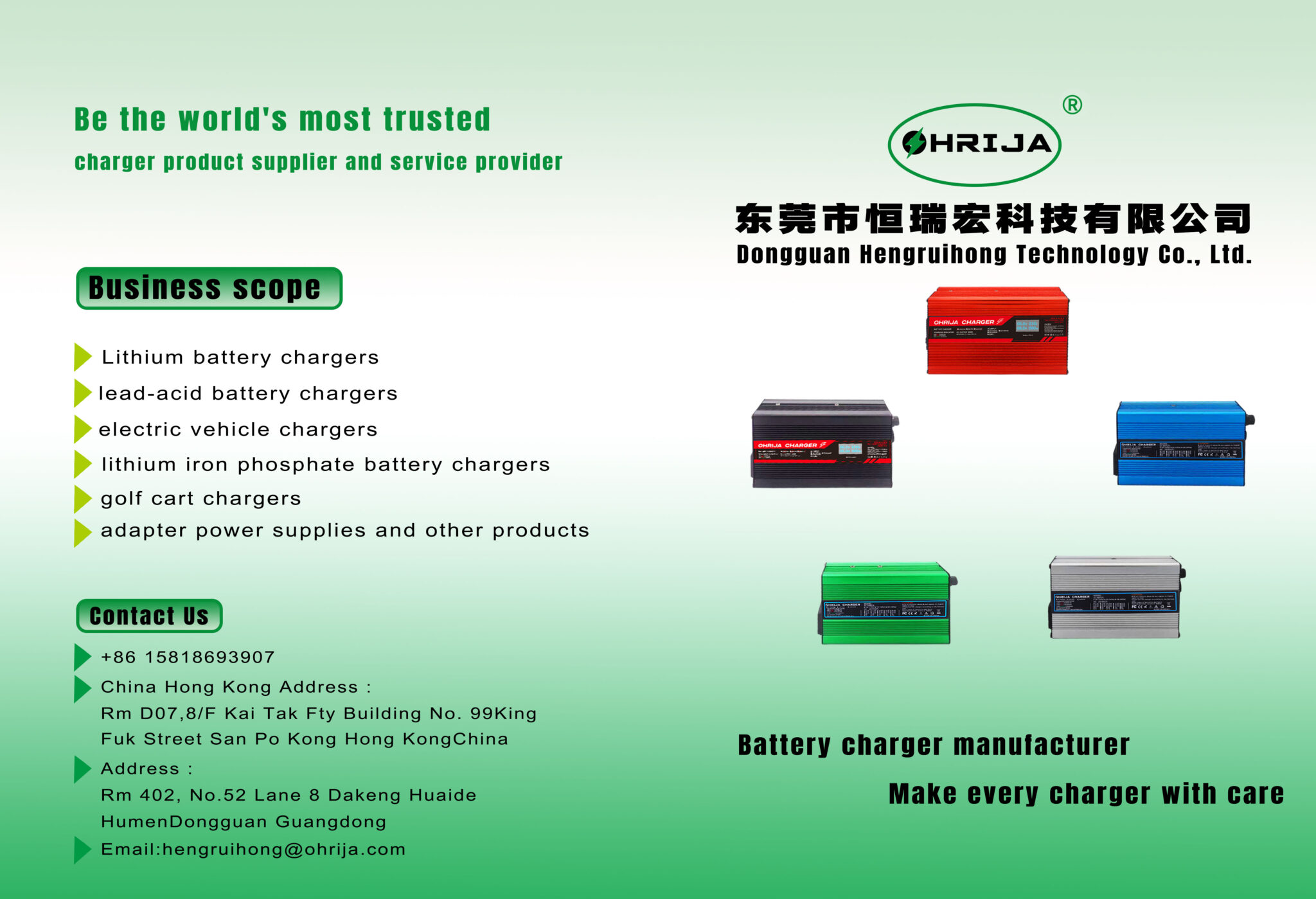
Manufacturer Spotlight: OHRIJA Advanced Charging Solutions
Navigating the complex technical demands across diverse battery charger applications requires a proven, vertically integrated manufacturing partner. The OHRIJA brand, operated by Dongguan Hengruihong Technology Co., Ltd. (established in 2020), represents an engineering-focused high-tech enterprise integrating proprietary R&D, high-volume production, and global technical sales.
| Manufacturing Core | High-performance lithium-ion, LiFePO4, lead-acid, and specialized golf cart chargers |
| Power Systems | Industrial switching power supplies, regulated power adapters, and custom DC charging platforms |
| Engineering Standards | Closed-loop CC/CV micro-controllers, multi-stage lead profiles, and high-efficiency thermal architectures |
| Product Scope | Sealed waterproof marine units, heavy-duty mobile chargers, and multi-voltage urban mobility platforms |
| Commercial Service | OEM/ODM contract manufacturing, custom connector configurations, and international compliance |
Procurement Recommendation: Whether outfitting commercial fleets, engineering custom RV electrical systems, or sourcing ruggedized charging hardware, explore the complete catalog on the OHRIJA BATTERY CHARGER Shop or configure specialized off-grid platforms using our POWER INVERTERS and regulated DC POWER SUPPLY divisions.
Direct Technical Comparison: Charging Topologies & Form Factors
| Charger Architecture | Typical Efficiency | Ingress Protection (IP) | Chemistry Suitability | Vibration / Shock Rating | Best Operational Use Case |
|---|---|---|---|---|---|
| High-Frequency Switch-Mode (Bench / Wall) | 88% – 94% | IP20 – IP30 (Vented) | LiFePO4, Li-Ion, AGM, Flooded | Low (Stationary use only) | Indoor garages, e-bike charging, workshop benches |
| Resin-Potted Waterproof (Onboard) | 90% – 95% | IP67 – IP68 (Fully sealed) | LiFePO4, Marine AGM, Gel | Extreme (Resists continuous pounding) | Marine trolling systems, boat bilges, outdoor UTVs |
| Integrated Inverter-Charger (RV Core) | 85% – 90% | IP21 (Drip-proof internal) | Multi-bank LiFePO4, Lead-Acid | Moderate (Cabin chassis mounted) | Large motorhomes, off-grid cabins, luxury expedition vans |
| High-Voltage Fleet Station (Golf / Utility) | 92% – 96% | IP54 – IP65 (Heavy industrial) | 36V / 48V / 72V Lithium & Lead-Acid | High (Commercial cart handling) | Golf course fleet sheds, warehouse mobility, resort buggies |
| Legacy Linear / Ferroresonant (Vintage) | 60% – 72% | IP10 (Open steel louvers) | Flooded Lead-Acid only | Moderate (Heavy iron transformer) | Obsolete; avoid on modern sealed or lithium banks |
Pros and Cons: Dedicated Smart Chargers vs. All-in-One Inverter-Chargers
| System Architecture | Operational & Technical Advantages (Pros) | Practical Limitations & Drawbacks (Cons) |
|---|---|---|
| Dedicated High-Efficiency Smart Chargers (Standalone Units e.g., OHRIJA) | Highly optimized charging profiles engineered for specific chemistries. Compact footprint; can be placed directly adjacent to battery banks. Available in fully waterproof, submersible IP67 form factors. Independent failure isolation: if your inverter fails, you can still charge. Substantially lower cost to replace or upgrade than combined units. | Requires separate AC wiring and physical mounting space. Does not provide AC output inversion for 120V household appliances. |
| Combined Inverter-Chargers (All-in-One Large Box Units) | Single centralized unit handles both AC battery charging and DC-to-AC inversion. Includes automated internal transfer switches for seamless grid-to-battery handoff. | Massive physical bulk and weight (often 35 to 60+ pounds). Zero water resistance; cannot be mounted in bilges or damp bays. Single point of failure: an inverter breakdown disables your charging system. Higher purchase price and expensive diagnostic repair labor. |
Who Needs Industrial Multi-Stage Chargers vs. Basic Maintainers
Every dollar invested in power equipment should match your operating environment, battery value, and risk profile. Understanding your operational footprint prevents overspending on industrial hardware where simple units suffice, and prevents catastrophic failures caused by deploying under-engineered chargers in demanding environments.
Who Must Invest in Industrial-Grade Multi-Stage Chargers:
- Offshore Boaters and Tournament Anglers: Saltwater spray, high humidity, and wave pounding destroy consumer electronics within weeks. Marine operators need IP67 waterproof construction, ignition-protected enclosures complying with safety codes, and multi-bank isolation.
- Commercial Fleet Managers (Golf, Delivery, Resorts): When your business revenue relies on dozens of electric carts or delivery scooters turning around daily, you cannot afford thermal shutdowns or slow charge rates. High-efficiency commercial chargers with rugged Anderson connectors pay for themselves in reduced downtime and preserved battery life.
- RV Owners with Modern LiFePO4 Banks: If you have invested several thousand dollars in premium lithium iron phosphate house batteries, running an old factory converter will leave the cells chronically undercharged, preventing the internal BMS from balancing cell voltages. A dedicated 30A to 50A lithium charger is mandatory to reach true 100% saturation.
Who Can Rely on Standard Consumer Maintainers:
- Casual Fair-Weather Weekend Campers: If you take a small pop-up camper to an electrical-hookup campsite twice a summer with a single lead-acid marine battery, a basic multi-stage 10A bench charger stored in a plastic tub is adequate for seasonal top-offs.
- Homeowners Maintaining a Single Lawn Tractor: Maintaining a small starting battery in a clean, dry home garage during the winter does not require an IP67 marine charger; a standard 2-amp smart trickle maintainer plugged into a wall outlet does the job safely.
Catastrophic Field Mistakes That Destroy Batteries and Hardware
Field Engineering Warning: The most catastrophic mistake made in battery charging is attempting to charge a LiFePO4 battery in sub-freezing temperatures using an unmonitored charger. Forcing charge current into lithium cells below 0°C (32°F) causes irreversible metallic lithium plating on the anodes, permanently destroying cell capacity and creating an internal short-circuit fire hazard. Always ensure your lithium charger features low-temperature thermal cutoff sensors.
- Leaving Lead-Acid Desulfation / Equalization Modes Active on Lithium: High-end lead-acid chargers incorporate an equalization mode that pulses voltages up to 15.8V or 16.0V to break up lead sulfate crystals. If you connect this mode to a modern lithium battery, that voltage spike will trigger the BMS over-voltage protection circuit, cutting power instantly, or fry the BMS entirely if the electronics cannot handle high voltages.
- Undersizing Wire Gauge Over Long DC Cable Runs: Charging current generates substantial voltage drop over long wire runs. Running 30 amps through a 10-foot run of thin 10 AWG wire can cause a 0.6V drop. The charger reads 14.6V at its output terminals, while the battery actually receives only 14.0V, prematurely terminating the bulk phase and leaving the battery at 80% capacity. Always size DC charging cables based on total round-trip wire length and maximum continuous amperage.
- Mounting Vented Chargers Inside Damp, Unventilated Compartments: Non-waterproof chargers rely on internal fans sucking ambient air across open circuit boards. Mounting a vented charger inside an enclosed boat bilge, an unvented RV battery compartment containing off-gassing lead-acid batteries, or a damp outdoor locker will coat the circuit board in corrosive moisture and battery acid vapor, causing catastrophic component arcing.
- Ignoring Parasitic Loads During Absorption Charging: If you leave high DC loads (such as an RV inverter or a 12V marine refrigerator) running while a multi-stage smart charger is attempting to complete its absorption phase, the charger will never see the current taper to the required threshold. The charger remains stuck in absorption mode indefinitely, pushing continuous high voltage and overcharging the battery bank. Turn off heavy loads or ensure your charger utilizes smart charge-termination timers.
Essential Sourcing Checklist: Voltage Accuracy, Thermal Throttling & Ingress
Before issuing a purchase order or upgrading your vehicle power architecture, verify these four technical criteria with your equipment supplier:
1. Chemistry-Specific Voltage Calibration & Cutoff Accuracy
Demand documented voltage regulation accuracy within ±0.05V of target specifications. For a 4-cell LiFePO4 pack, the bulk absorption voltage must hold firmly at 14.4V to 14.6V and terminate cleanly when current drops below 2% to 3% of rated capacity. For high-voltage lithium scooter systems, verify that the charger cuts off accurately at full charge (e.g., exactly 84.0V for a 20S pack) to prevent cell degradation.
2. Active Thermal Management and Fold-Back Protection
Quality chargers do not simply shut off when they get hot; they employ progressive thermal fold-back circuitry. When operating inside a hot engine compartment or desert camper bay reaching 50°C (122°F), the internal microcontroller gradually scales back charging amperage (e.g., from 30A down to 20A) to keep components within safe thermal envelopes while continuing to charge your battery safely.
3. Physical Ingress and Environmental Sealing Verification
For any marine, outdoor vehicle, or agricultural installation, inspect the chassis construction. True environmental durability requires heavy-duty extruded aluminum housings with silicone-potted electronics, stainless steel hardware, and IP65 to IP67 sealing that resists direct high-pressure hose spray, salt vapor, and conductive industrial dust.
4. Total Electrical Ecosystem Compatibility
A battery charger works within an integrated system. Ensure your charger aligns with your secondary electrical components: verify that your wiring connectors (Anderson, XLR, or aviation plugs) match your battery terminals, confirm that shore power inputs match regional grids, and ensure your charging system works in harmony with installed power inverters and distribution panels.
Expert Power Electronics Practitioner’s Final Verdict
In our professional assessment across decades of power systems integration, your battery bank is only as capable, reliable, and durable as the charging hardware that replenishes it. Squeezing procurement budgets by buying cheap, unbranded, unregulated chargers to power expensive lithium or deep-cycle battery banks is a recipe for premature capacity loss and field failure.
For marine trolling setups, boat bilges, and exposed off-road vehicles, invest in fully sealed, resin-potted IP67 waterproof multi-stage chargers. The protection against saltwater intrusion and road vibration delivers immediate returns in reliability. For RV conversions, overland adventure vans, and high-turnover golf cart fleets, prioritize dedicated high-amperage CC/CV smart chargers equipped with thermal fold-back and exact chemistry voltage curves. Partnering with proven high-tech manufacturing leaders like OHRIJA ensures your charging infrastructure delivers verified electrical efficiency, robust safety protections, and rock-solid reliability across every outdoor, marine, and mobile application.
Frequently Asked Questions
Can a standard lead-acid battery charger safely charge a modern LiFePO4 battery?
In most professional situations, we strongly advise against using a standard lead-acid charger on lithium iron phosphate cells. Lead-acid algorithms feature multi-stage profiles with desulfation equalization spikes (often exceeding 15.5V) and continuous trickle-float voltages that degrade lithium cell chemistry and trigger premature Battery Management System (BMS) high-voltage disconnects. A dedicated LiFePO4 battery charger applies a clean, two-stage Constant Current and Constant Voltage (CC/CV) profile without damaging parasitic float voltages.
What environmental ingress protection rating is required for marine battery charger applications?
For marine engine compartments, center console lockers, and exposed bilges, chargers must carry a verified Ingress Protection rating of at least IP65, with IP67 or fully resin-potted waterproof enclosures representing the commercial standard. This level of sealing prevents catastrophic short circuits caused by direct water spray, condensation, and airborne saltwater vapor.
How do you calculate the correct charger amperage for an RV battery bank?
Sizing depends entirely on internal cell chemistry. For traditional flooded or AGM deep-cycle lead-acid banks, calculate charging current at 10% to 20% of the total amp-hour (Ah) capacity to prevent overheating and water boil-off. For modern LiFePO4 banks, you can charge safely at 30% to 50% of rated capacity (for instance, a 30A to 50A charger for a 100Ah battery), dramatically cutting generator run times without stressing the cells.
Why is an isolated multi-bank charger necessary for 24V and 36V marine trolling motor setups?
When individual 12V batteries are wired in series to create 24V or 36V strings, single-output chargers charge across the combined string, causing severe cell voltage drift where weaker batteries overcharge while stronger batteries remain undercharged. An isolated multi-bank charger provides dedicated, electrically isolated leads to each 12V battery, maintaining perfect voltage balance across the entire propulsion circuit.
Authoritative References & Electrical Standards
- American Boat & Yacht Council (ABYC): Standard E-11 AC & DC Electrical Systems on Boats and Marine Battery Charger Installation Guidelines
- Battery Council International (BCI): Technical Manual on Industrial Battery Chemistry Charging Profiles and Maintenance Procedures
- Underwriters Laboratories (UL): UL 1236 Standard for Battery Chargers for Engine-Starter and Auxiliary Outdoor Equipment