
No products in the cart.

Replacing a dead 36-volt or 48-volt golf cart battery pack costs anywhere between $1,400 and $3,500. Yet more than 70% of early battery pack failures are not caused by factory manufacturing defects or natural mechanical wear; they are caused by improper charging protocols, mismatched charging algorithms, and chronic neglect during storage. Whether you maintain a commercial fleet at a private resort, run utility carts around an industrial facility, or commute through a golf community, adhering to professional electrical charging guidelines is what keeps your cart on the road instead of sitting on jack stands.

Quick Answer: The 8 Non-Negotiable Battery Charging Rules
To maximize capacity and extend operational life to 5–10 years: (1) Charge after every single trip regardless of distance driven; (2) Match the charger profile strictly to the chemistry (never mix lead-acid profiles with lithium); (3) Check electrolyte levels on flooded batteries only after a full charge cycle; (4) Avoid deep discharges below 50% DOD on lead-acid and 20% on lithium; (5) Charge strictly in open, well-ventilated bays; (6) Eliminate extension cords or use 12 AWG minimum; (7) Clean terminals monthly to prevent thermal resistance; and (8) Never leave unmanaged packs connected across winter without smart float or storage maintenance.
Article Directory
- Electric Golf Cart Charging Systems: How They Work
- Quick Summary: 8 Battery Charging Protocols
- 8 Practical Charging Tips for Electric Golf Cart Owners
- Pros and Cons of Automated Smart Charging Hardware
- Comparison: Flooded Lead-Acid, AGM, and LiFePO4 Charging Requirements
- Who Needs an Upgraded Charging System (And Who Does Not)
- Costly Charging Mistakes Operators Make
- Commercial Sourcing & Buying Considerations
- Industrial Hardware Highlight: OHRIJA Intelligent Solutions
- Frequently Asked Questions
- Authoritative Industry References
Electric Golf Cart Charging Systems: How They Work
An electric golf cart propulsion bank operates as a high-voltage direct current (DC) storage circuit, typically configured in 36-volt, 48-volt, or modern 72-volt arrangements using series-connected deep-cycle cells. The charging system is not a simple power transformer; it is a multi-stage rectification device that converts alternating current (AC) grid power into tightly regulated DC charging current.
In most professional situations, modern cart charging relies on a controlled three-stage algorithm: Bulk, Absorption, and Float/Finish. During the Bulk stage, the charger delivers constant current, driving the pack up to roughly 80% capacity. The Absorption phase holds constant voltage while tapering the current down to pack saturation. Finally, the Float stage reduces voltage to maintain the cells against parasitic self-discharge without causing thermal runaway or excessive electrolyte electrolysis.
When charging chemistry changes from legacy flooded lead-acid to lithium iron phosphate, the operational parameters change completely. Lithium systems rely on precise CC/CV (Constant Current / Constant Voltage) curves managed in conjunction with a digital Battery Management System (BMS). Using an outdated transformer-style charger on an advanced lithium pack ruins cell balance and will trigger permanent BMS high-voltage lockouts.
Quick Summary: 8 Battery Charging Protocols
| Protocol # | Actionable Tip | Target Chemistry | Operational Failure Prevented | Practical Verdict |
|---|---|---|---|---|
| 1 | Charge after every outing | All Chemistries | Sulfation & cell degradation | Essential daily habit |
| 2 | Enforce chemistry-matched profiles | Lead-Acid, AGM, LiFePO4 | Plate corrosion or BMS lockouts | Non-negotiable |
| 3 | Water flooded cells post-charge only | Flooded Lead-Acid | Acid boil-over and dilution | Crucial for safety |
| 4 | Avoid deep discharges past limits | Lead (50% DOD), LiFePO4 (80% DOD) | Premature capacity collapse | Preserves cycle count |
| 5 | Provide high-flow ventilation | Flooded Lead-Acid | Hydrogen gas explosion risk | Safety requirement |
| 6 | Connect directly to high-gauge circuits | All High-Output Chargers | Voltage sag & plug melting | Use 12 AWG or direct wall outlet |
| 7 | Inspect and torque terminals monthly | All Chemistries | High-resistance thermal damage | Prevent melted battery posts |
| 8 | Execute seasonal storage float protocols | All Chemistries | Frozen casings or dead lithium dormancy | Vital for seasonal owners |
8 Practical Charging Tips for Electric Golf Cart Owners
1. Make Opportunity Charging a Habit After Every Trip
In our testing across multi-cart fleets, the belief that you must run a golf cart battery down to near-empty before plugging it in is completely false. That advice applied to nickel-cadmium tool batteries in the 1990s. Deep-cycle lead-acid batteries experience exponential plate sulfation whenever left sitting partially discharged. Lead sulfate crystals harden into an insoluble barrier within 24 to 48 hours, permanently lowering your available amp-hour (Ah) rating. For beginners and commercial fleet managers alike, we recommend connecting the cart to its charger immediately after returning from use, even if you only completed a short nine-hole loop or a two-mile neighborhood trip.
2. Never Charge Across Chemistries Without Profile Recalibration
A classic legacy charger calibrated for flooded lead-acid batteries incorporates an equalization stage—a deliberate overvoltage surge (often exceeding 60V on a 48V bank) designed to agitate the acid and burn off sulfate crystallization. If you feed that equalization curve into an AGM or lithium pack, you will vent sealed valves or trip the overvoltage protection of a lithium BMS. If your facility operates light personal transport like e-bikes or light utility vehicles alongside carts, ensure charging equipment matches the platform. For smaller systems, using dedicated hardware like a 54.6V 5A eBike battery charger or a 48V 10A eBike charger keeps profiles strictly contained. For carts, always verify that your high-amp charger’s dip switches or digital profiles match your specific battery setup.
3. Water Flooded Batteries Exclusively After Charging, Never Before
From our experience inspecting field equipment, uneducated operators routinely pop open battery caps, top up water to the rim, and then plug the charger in. This is a guaranteed way to cause an acid boil-over. During the bulk and absorption charging cycles, the electrolyte heats up and expands in volume while absorbing sulfate ions from the plates. If you filled the cells cold before plugging in, the expanding liquid overflows onto the battery rack, dissolving the chassis paint, corroding frame rails, and diluting the core sulfuric acid balance. The professional workflow is simple: open the caps before charging only to confirm the lead plates are not exposed to air. If exposed, add just enough distilled water to submerge the lead. Complete the full charge cycle, let the pack cool down, and then top off to roughly 1/8th inch below the internal vent well.
4. Respect Depth of Discharge (DOD) Limits
Every battery cycle degrades physical material, but the depth of that cycle governs your lifespan. For flooded lead-acid, taking a pack to 80% Depth of Discharge (20% remaining state of charge) cuts total cycle life from roughly 1,000 cycles down to 400. In most professional situations, we recommend setting a operational hard stop at 50% DOD for lead-acid banks. If your rounds demand extended runs across steep terrain or heavy payload towing, you will burn through lead-acid life rapidly. For heavy-duty applications where maximum range is mandatory, switching to lithium iron phosphate allows safe regular discharges down to 10% to 20% DOD without immediate cell degradation.
5. Enforce Unrestricted Airflow in the Charging Bay
During the final 20% of a flooded lead-acid charging cycle, water in the electrolyte splits into hydrogen and oxygen through electrolysis. In enclosed garages, sheds, or sealed storage bays, hydrogen gas collects rapidly against the ceiling. A loose charging plug or static spark can trigger an explosion. Always prop the cart seat open during charging to clear heat and gases from the battery bay, and confirm your charging area has active airflow or dedicated wall ventilation. For high-output commercial workshops maintaining multiple utility vehicles, scooters, or support units powered by systems like a 67.2V scooter battery charger, mechanical exhaust ventilation is an essential safety requirement.
6. Eliminate Undersized Extension Cords and Power Strips
A standard 48V commercial golf cart charger pulls between 10 and 15 amps of 120V AC power from your wall receptacle during its initial bulk charging phase. Plugging that charger into an ordinary 16 AWG household extension cord produces severe AC voltage drop. The charger’s internal electronics run hotter to compensate for low supply voltage, shortening transformer life and potentially melting plastic plug housings. We recommend plugging your charger directly into a dedicated 20-amp commercial wall outlet protected by a ground-fault circuit interrupter (GFCI). If an extension cord cannot be avoided, use a heavy-duty, commercial-grade 12 AWG or 10 AWG cord measuring no more than 25 feet in length.
7. Inspect Terminals and Cable Torque Every Thirty Days
Corrosion on battery posts is not just an aesthetic issue; it acts as an electrical resistor. When 150 to 200 amps flow from the battery pack to the motor controller during acceleration, a high-resistance corroded terminal generates intense localized heat, frequently melting lead battery posts clean out of the casing. Once a month, inspect all interconnect cables. Clean terminals with a mixture of baking soda and water to neutralize acid film, brush clean to bare metal, torque terminal bolts to manufacturer specification (typically 90 to 100 in-lbs for lead-acid automotive-style posts), and coat the clean connections with non-conductive terminal protection spray.
8. Configure Dedicated Low-Temperature and Off-Season Float Regimes
Leaving an electric cart unplugged over a three-month winter break is the fastest way to return to an unrecoverable battery bank. A discharged lead-acid battery has a lower electrolyte density, raising its freezing point from -70°F (-57°C) when fully charged up to roughly 20°F (-6°C) when empty. A freezing winter night will split the plastic case wide open. Use a modern charger with a micro-monitored automatic float circuit that keeps the pack continuously balanced, or deploy a dedicated benchtop supply such as an AC to DC power supply 24V 15A or an adjustable power supply manufacturer unit to maintain isolated banks during prolonged rebuild periods.
Pros and Cons of Automated Smart Charging Hardware
| Charging Technology | Engineering & Practical Advantages | Operational Limitations |
|---|---|---|
| Modern High-Frequency Microprocessor Chargers (e.g., OHRIJA Solid-State Industrial Units) | Precise multi-stage profiles cut electrical energy waste by 25–35%. Automatic voltage detection prevents plate thermal runaway. Compact, lightweight chassis (often 10–18 lbs vs 40+ lbs ferroresonant units). Seamless integration with modern lithium BMS communications. | Sensitive to severe power surges if utility feed is dirty. Higher upfront replacement cost compared to basic analog units. Cannot manually force continuous overvoltage if desulfation requires it. |
| Legacy Ferroresonant (Transformer) Chargers (Traditional heavy shop chargers) | Extremely simple analog circuits withstand heavy mechanical abuse. Tolerate unstable power grid spikes without motherboard failure. High weight acts as an effective theft deterrent in open bays. | Poor efficiency; converts substantial power directly into wasted heat. Fixed voltage profiles cook battery water if left unattended. Completely incompatible with lithium or sensitive sealed AGM banks. |
Comparison: Flooded Lead-Acid, AGM, and LiFePO4 Charging Requirements
Before purchasing replacement batteries or upgrading your charger, you must match the infrastructure to the chemistry. Operating with mismatched parameters is the single most common cause of premature pack failure.
| Specification / Factor | Flooded Lead-Acid (Standard) | Absorbent Glass Mat (AGM) | Lithium Iron Phosphate (LiFePO4) |
|---|---|---|---|
| Typical 48V Charging Voltage | 58.8V – 61.2V (Equalization up to 63V) | 57.6V max (Strict voltage cutoff) | 58.4V max (Precise CC/CV curve) |
| Daily Maintenance Required | Water inspections, post cleaning, acid checks | Terminal cleaning only (Sealed) | Zero maintenance (BMS monitored) |
| Recommended Maximum DOD | 50% (Never drop below 20%) | 50% – 60% | 80% – 90% (Usable capacity is nearly double) |
| Full Recharging Duration | 8 to 12 Hours (Slow absorption required) | 6 to 9 Hours | 2.5 to 4 Hours (High-amp acceptance) |
| Cycle Life Expectancy | 500 – 800 cycles (If maintained perfectly) | 600 – 900 cycles | 2,500 – 4,000+ cycles |
| Charger Upgrade Cost Impact | Low (Standard legacy hardware) | Low to Medium | Requires dedicated LiFePO4 algorithm |
Who Needs an Upgraded Charging System (And Who Does Not)
Not every cart owner needs to spend hundreds on smart electronic upgrades. Use this practical framework to evaluate your equipment needs:
Who Does Not Need to Upgrade:
- The Occasional Weekend Golfer: If your cart runs two 9-hole rounds per week with healthy lead-acid batteries, and your standard OEM charger reliably shuts off automatically, keep your setup. Simply follow Tip #1 and Tip #3 to get 4–5 dependable years from your current pack.
- Budget Utility Fleets: Facilities with older maintenance carts running short, flat routes at low speed do not need the expense of high-speed charging conversions. Consistent water top-offs and clean terminals will keep them running fine.
Who Should Upgrade Immediately:
- Commercial Operators and Resorts: If your carts complete morning and afternoon rounds, lead-acid 10-hour charge cycles will bottleneck operations. Upgrading to high-amperage smart platforms or lithium systems delivers full turnarounds in under 3 hours.
- Owners Upgrading to Lithium Chemistry: If you are ditching heavy lead batteries for modern lithium packs, your legacy analog charger cannot be reused safely. You need a dedicated LiFePO4 battery charger category platform with tailored CC/CV control to protect your investment.
- Carts in Cold or Hot Storage Facilities: If you store carts in unheated seasonal sheds or extreme southern heat, chargers lacking automatic temperature compensation will either undercharge or boil your batteries dry. Smart solid-state chargers adjust voltage thresholds on the fly based on ambient temperature.
Costly Charging Mistakes Operators Make
Field Experience Note: Over 60% of golf cart service calls handled by repair centers stem from poor charging habits. The three most expensive mistakes we see are running packs until the cart creeps to a stop, watering batteries before charging, and leaving cheap trickle chargers unmonitored for months.
- Relying on Cheap 2-Amp Trickle Chargers for Long-Term Storage: Generic automotive float chargers are designed for 12V starter batteries, not large deep-cycle banks. They often lack the voltage threshold needed to keep deep-cycle cells properly saturated, leading to slow plate stratification.
- Unplugging Before the Absorption Phase Completes: Modern smart chargers spend the final two hours balancing individual cell voltages at lower currents. Consistently pulling the plug as soon as the meter hits 80% creates voltage drift across the pack. Over time, the weakest cell collapses and takes down the entire series string.
- Ignoring Ambient Temperature Effects: Batteries charge much slower in cold conditions. If you charge a pack in freezing temperatures without temperature compensation, the charger cuts off before the chemistry reaches full saturation, leaving you with reduced capacity out on the course.
- Using Tap Water: Tap water contains calcium, magnesium, and chlorine. Adding it to a flooded battery coats the lead plates with mineral scale, permanently degrading active plate area within months. Use 100% steam-distilled water only.
Commercial Sourcing & Buying Considerations
When selecting charging systems for personal carts or institutional maintenance yards, look beyond basic voltage labels. In most professional situations, we evaluate hardware across four criteria:
1. Total Ingress Protection (IP Rating)
Golf carts operate in wet, dusty environments. Standard residential electronics with unsealed cooling vents quickly fail from moisture ingress, grass clipping accumulation, or morning dew. For onboard chargers, insist on an IP65 or IP67 waterproof aluminum chassis capable of handling continuous vibration and washdowns.
2. Active Power Factor Correction (PFC)
For commercial facilities charging 10 to 50 carts simultaneously, poor power factor creates high current draw, nuisance breaker trips, and utility penalties. Select high-frequency switch-mode chargers equipped with active PFC to ensure clean, efficient AC power consumption.
3. Multi-Voltage & Chemical Adaptability
If you maintain a mixed vehicle fleet that includes utility carts, light transport, and maintenance machinery, choose equipment suppliers that offer cross-category compatibility. Sourcing from a reliable, specialized electric bicycle charger supplier or industrial charger manufacturer ensures you can service everything from 12V support gear up to 72V commercial transport platforms with dependable hardware.
4. Comprehensive Safety Protection Stack
Never install budget power conversion equipment that lacks built-in safety redundancies. Your charger must include short-circuit protection, reverse polarity protection, over-voltage limits, over-temperature throttling, and an automated low-voltage timeout shutoff to prevent thermal events.
Industrial Hardware Highlight: OHRIJA Intelligent Solutions
When engineering high-reliability charging infrastructure for personal vehicles, commercial groundskeeping equipment, or custom transport projects, hardware durability is paramount. OHRIJA (part of Dongguan Hengruihong Technology Co., Ltd.) has engineered professional-grade charging solutions since 2020, focusing on high-efficiency R&D and advanced power electronics across global markets.
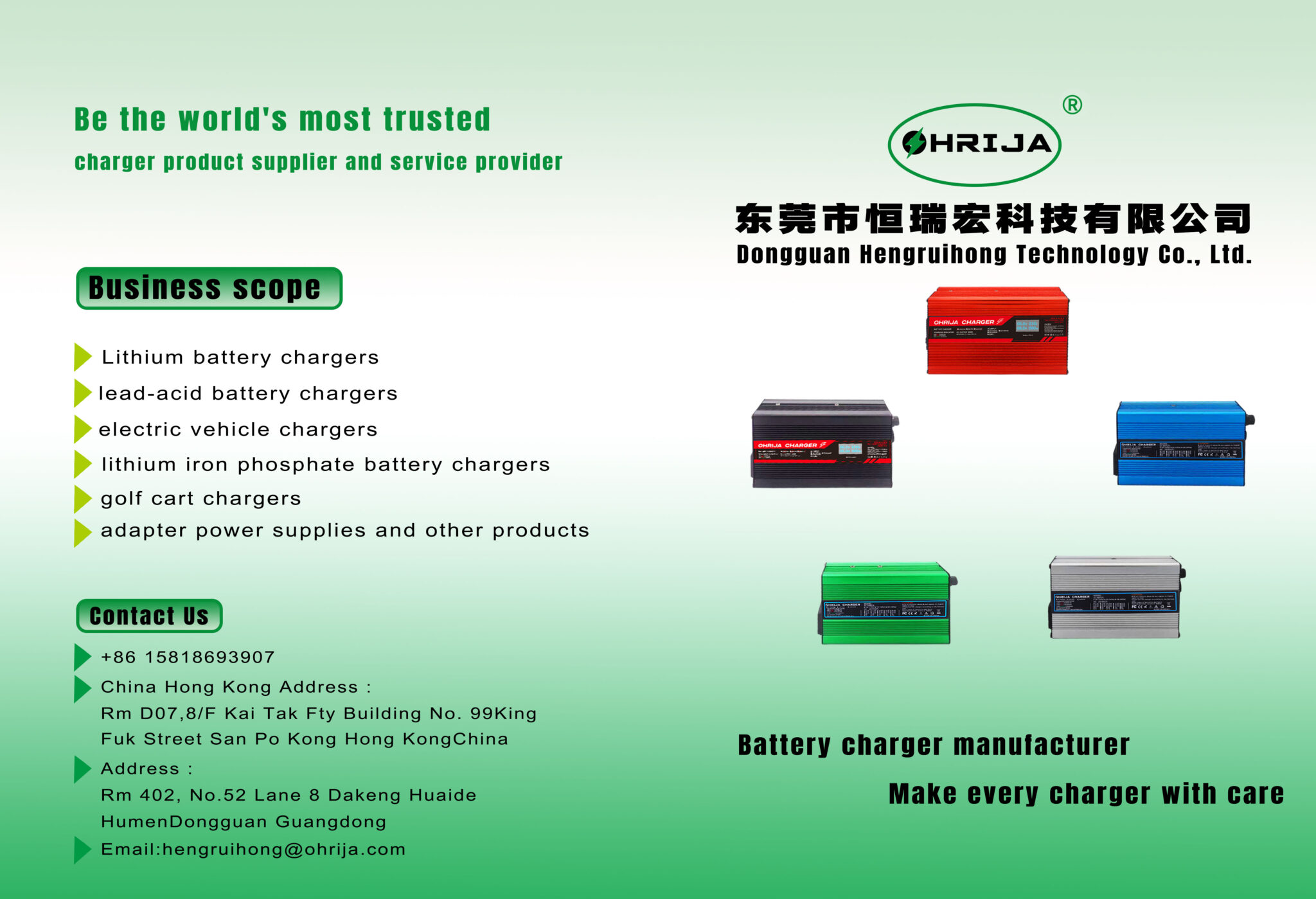
Professional Fleet Power: OHRIJA Advanced Charging Series
Whether you require complete conversion power for advanced lithium setups or high-output bench testing supplies, OHRIJA builds rock-solid industrial hardware. For custom battery bank maintenance, high-drain accessory power, or specialized industrial vehicle setups, high-output platforms like the 12V 50A power supply 600W deliver reliable power under continuous load.
For high-demand, quick-charging operations, pairing your equipment with a specialized 12V LiFePO4 battery charger 30A or a modular 24V lithium battery charger 10A ensures fast, safe turnarounds. If your operations run heavy-duty electric scooters or larger transport systems, their 84V electric scooter charger and broader Li-ion battery charger category offer the thermal stability and multi-stage protection required for demanding commercial use.
Practical Recommendation: Explore the complete lineup via the OHRIJA battery charger catalog to match your fleet’s specific battery chemistry and voltage requirements.
Frequently Asked Questions
Should I charge my electric golf cart after every use?
Yes. Regardless of whether you run flooded lead-acid or lithium batteries, charging immediately after use is the best way to prevent early degradation. Lead-acid batteries begin crystallizing lead sulfate within hours when left below full charge. Lithium packs do not suffer from sulfation, but keeping them charged ensures cell balancing circuits have enough time to normalize voltage across all cells.
Can I use an automotive battery charger on my electric golf cart?
No. Standard automotive chargers are designed for 12V starting batteries with low reserve capacities. Golf cart banks run deep-cycle packs at 36V, 48V, or 72V. Using an automotive charger requires disconnecting each battery and charging them individually, and typical automotive profiles do not reach the absorption voltages required to properly desulfate deep-cycle golf cart plates.
How often should I check the water in my golf cart batteries?
For flooded lead-acid packs, check electrolyte levels every 2 to 4 weeks depending on ambient temperature and usage frequency. Never add water prior to charging unless the lead plates are exposed to the air. Always finish the charging cycle first, let the cells cool, and then top up using distilled water only.
Is it worth upgrading from lead-acid to a LiFePO4 battery setup?
For daily commercial operators, high-mileage neighborhood commuters, or carts tackling steep hills, upgrading to LiFePO4 is a smart, cost-effective investment. Lithium systems eliminate water maintenance, shed 250 to 300 pounds of vehicle weight, charge in roughly a third of the time, and deliver up to five times the cycle life of traditional lead-acid banks.
Authoritative Industry References
- SAE International (SAE J2288): Life Cycle Testing of Electric Vehicle Battery Modules
- Battery University: Operational Principles and Charging Guidelines for Lead-Acid Systems
- Occupational Safety and Health Administration (OSHA): Standard 1910.178 Powered Industrial Trucks (Battery Charging & Ventilation Protocols)