
No products in the cart.

When a vehicle dies on the back nine or stalls in the middle of a commercial warehouse, the immediate instinct is to grab the nearest power cord available. People frequently ask us, do all golf carts use the same charger? The definitive, uncompromising answer is absolutely not. Attempting to force a Yamaha charger into a Club Car receptacle, or assuming that any 48-volt power supply will safely maintain a high-capacity deep-cycle battery bank, is a catastrophic operational error. From our experience at OHRIJA, engineering industrial-grade power supplies and charging architecture, treating golf cart chargers as universal accessories is the leading cause of premature battery death, acid boil-overs, and electrical fires.
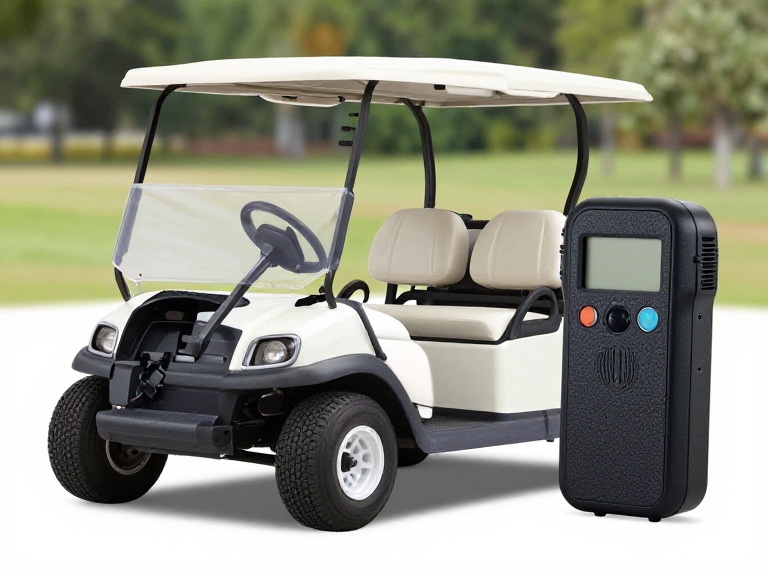
In most professional situations, a golf cart charger is not merely a power cord; it is a highly sophisticated, algorithmic power converter designed specifically for a unique chemical and electrical environment. The market is currently undergoing a massive transitional phase, moving from archaic, heavy transformer-based chargers to high-frequency smart chargers, alongside a massive shift from traditional flooded lead-acid batteries to advanced lithium-ion packs. You must use commercial and practical judgment before you plug anything into your cart. In this comprehensive guide, we will break down the precise electrical mechanics of cart charging, expose the dangers of cross-contamination, and provide you with the exact technical blueprint to procure the correct hardware for your specific vehicle.
Quick Answer: Why Chargers Are Not Universal
If you are asking the primary question, do all golf carts use the same charger, you must understand that compatibility is dictated by three uncompromising variables:
- System Voltage: Carts run on 36V, 48V, or 72V systems. A charger must perfectly match the nominal voltage of the battery bank. Connecting a 48V charger to a 36V cart will destroy the batteries.
- Receptacle (Plug) Type: Manufacturers use proprietary connectors. EZGO uses a triangle plug (RXV) or a D-plug (TXT). Club Car uses a round 3-pin. Yamaha uses a 2-pin MAC or a 3-pin Nabson. They are physically incompatible by design.
- Battery Chemistry: Flooded lead-acid batteries require a completely different charging algorithm (incorporating a float stage) than modern lithium batteries (which require a strict Constant Current/Constant Voltage profile).
We recommend entirely abandoning the idea of a universal charger. You must match the voltage, plug, and chemistry exactly to ensure the safety and longevity of your vehicle’s power system.
Table of Contents
- What It Is: The Anatomy of a Golf Cart Charger
- How It Works: The Algorithmic Charging Cycle
- The Three Pillars of Charger Compatibility
- Benefits of Upgrading to a Smart Charger
- Limitations and Hidden Risks of Mismatching
- Who Should Upgrade Their Charger
- Who Does Not Need a New Charger
- Common Procurement Mistakes
- Expert Buying Considerations
- Summary and Comparison Tables
- Expert Recommendation & Hardware Spotlight
- Frequently Asked Questions
What It Is: The Anatomy of a Golf Cart Charger
A golf cart charger is a heavy-duty, high-amperage AC to DC power converter. It takes standard 110V or 220V alternating current from your wall outlet and rectifies it into the specific direct current voltage required to replenish a massive deep-cycle battery bank. Historically, these devices were heavy, analog machines utilizing massive copper transformers. Today, a modern charger acts more like a computer. It contains an internal microprocessor that reads the exact resistance and voltage of the battery pack, adjusting the amperage output in real-time to prevent overheating.
How It Works: The Algorithmic Charging Cycle
How it works depends entirely on the chemistry of the batteries inside your cart. If you examine our dedicated battery charger FAQs, you will see that charging is not a linear process; it is algorithmic.
For standard flooded lead-acid batteries, the charger executes a three-stage profile. First is the Bulk Phase, where the charger dumps maximum amperage into the pack to reach 80% capacity quickly. Second is the Absorption Phase, where the voltage is held high but the amperage tapers off to carefully fill the remaining 20% without boiling the battery acid. Finally, the charger enters a Float Phase (trickle charge), delivering a tiny current to counteract the natural self-discharge of lead-acid chemistry.
Conversely, lithium technology operates under a completely different paradigm. Whether you are dealing with an electric bicycle charger supplier or a golf cart manufacturer, lithium requires a strict Constant Current / Constant Voltage (CC/CV) profile. Once a lithium battery hits 100%, the charger must shut off completely. If a charger attempts to apply a float phase to a lithium pack, it will severely degrade the cells. This is why you must source hardware specifically from a LiFePO4 battery charger category or a Li-ion battery charger category when upgrading your cart’s power plant.
The Three Pillars of Charger Compatibility
To definitively answer “do all golf carts use the same charger”, we must examine the three variables that dictate compatibility.
1. System Voltage
The vast majority of modern golf carts operate on a 48V system (typically utilizing six 8V batteries or four 12V batteries). Older carts operate on 36V systems (six 6V batteries). High-performance or heavy-utility carts may utilize 72V systems. The charger’s output voltage must match this perfectly. A 48V charger outputs around 55V to 58V to push current into a 48V pack. If you attach that to a 36V cart, the excess voltage will literally cook the internal battery plates and risk a catastrophic explosion.
2. The Receptacle (Plug Type)
Cart manufacturers deliberately use proprietary plugs to prevent consumers from cross-contaminating chargers. EZGO has historically used a rectangular “D-Plug” for their TXT models, and later switched to a triangular plug for their RXV models. Club Car is famous for their round, 3-pin connector. Yamaha has utilized a 2-pin MAC connector and a 3-pin Nabson connector. You cannot physically plug an EZGO charger into a Club Car without splicing and replacing the physical connector head.
3. The On-Board Computer (OBC)
This is a specific limitation for Club Car owners. For decades, Club Car placed the “brain” of the charging operation inside the cart itself (the OBC), rather than inside the charger. The external charger was essentially a dumb power supply. If you buy a modern, aftermarket smart charger and attempt to plug it into an older Club Car, the two computers will fight each other, resulting in a failure to charge. You must either bypass the OBC or buy a charger specifically programmed for an OBC-equipped vehicle.
Benefits of Upgrading to a Smart Charger
If your OEM charger recently died, the primary benefit of upgrading to a modern High-Frequency (HF) smart charger is battery preservation. Old transformer chargers rely on rudimentary timers. They often overcharge batteries, causing the water inside flooded lead-acid batteries to boil off, requiring you to constantly refill them with distilled water. A modern smart charger monitors the exact voltage curve and shuts off the millisecond the pack is full, extending the total lifespan of your battery bank by years.
Limitations and Hidden Risks of Mismatching
We must use commercial and practical judgment: do not attempt to hack a charger to fit your cart. If you cut the plug off a 48V EZGO charger and splice a Club Car plug onto it, you are bypassing critical safety pins. Many 3-pin connectors use the third pin as a data wire or an interlock wire (which prevents the cart from being driven while plugged into the wall). Bypassing these safety mechanisms can lead to a user driving away with the cord still attached, ripping the receptacle out of the chassis and causing a massive electrical short.
Who Should Upgrade Their Charger
For Commercial Fleets and Lithium Upgraders: If you manage a fleet of carts at a country club or industrial facility, upgrading to modern smart chargers that feature auto-voltage detection and maintenance modes is crucial for minimizing fleet downtime. Furthermore, if you recently retrofitted your cart with drop-in lithium batteries, your old lead-acid charger is now a severe liability. You must procure a dedicated lithium charger to communicate safely with the battery’s BMS (Battery Management System).
Who Does Not Need a New Charger
For Owners with Healthy OEM Equipment: If you own a standard 48V cart, your factory charger is functioning flawlessly, and your batteries hold a solid charge, do not waste capital upgrading your charger just to get a lighter unit. Let the OEM charger fulfill its operational lifespan.
Common Procurement Mistakes
From our experience auditing failed electrical systems, the most catastrophic mistake consumers make is buying ultra-cheap, unbranded chargers from massive online marketplaces. These units falsely advertise “universal compatibility.” They lack the heavy-duty copper heat sinks required to dissipate heat during a 10-hour charge cycle. They routinely melt at the plug or catch fire in residential garages. You must procure power supplies from verified manufacturers with legitimate company profiles, such as reading our Ohrija charger company profile to understand professional manufacturing standards.
Expert Buying Considerations
When preparing to execute a purchase order for a new charger, you must verify the maximum amperage output. A 5-Amp charger will take roughly 12 to 14 hours to charge a depleted 48V golf cart. This is fine for occasional residential use. However, for heavy-duty applications, you require a 10-Amp or 15-Amp charger to ensure the cart is fully replenished overnight. Always verify that the charger possesses an aluminum alloy shell for passive cooling, rather than a cheap plastic housing that traps thermal energy.
Summary and Comparison Tables
Comparison Table: Major Golf Cart Charger Plugs & Voltages
| Cart Manufacturer | Standard System Voltage | Primary Connector Type | OBC Presence (Historical) |
|---|---|---|---|
| EZGO (TXT Models) | 36V / 48V | D-Plug (Rectangular) | No (Charger handles logic) |
| EZGO (RXV Models) | 48V | Triangle 3-Pin | No (Charger handles logic) |
| Club Car (DS & Precedent) | 48V | Round 3-Pin | Yes (Historically required bypass for aftermarket) |
| Yamaha (G19 / G22) | 48V | 2-Pin MAC | No |
| Yamaha (Drive / G29) | 48V | 3-Pin Nabson | No |
Pros and Cons of Upgrading to a High-Frequency Smart Charger
| Pros (Why you must upgrade) | Cons (The operational reality) |
|---|---|
| Significantly lighter and highly portable compared to old transformer models. | Higher initial capital expenditure for premium branded models. |
| Advanced algorithms prevent battery boiling and extend pack lifespan. | Some models require manual OBC bypass wiring on older Club Cars. |
| Auto-shutoff and maintenance modes allow for safe winter storage. | Lower amperage models (5A) will charge slower than heavy 15A OEM chargers. |
| Aluminum housings provide excellent passive thermal management. | Not field-repairable; if the internal microprocessor fails, the unit is replaced. |
Expert Recommendation & Hardware Spotlight
So, do all golf carts use the same charger? Emphatically, no. Understanding the strict compatibility requirements of your vehicle is the only way to protect your investment. We recommend that commercial users and private owners alike stop guessing with generic hardware. At OHRIJA, we engineer specific power solutions tailored to the exact chemistry and plug requirements of the world’s leading golf cart platforms.
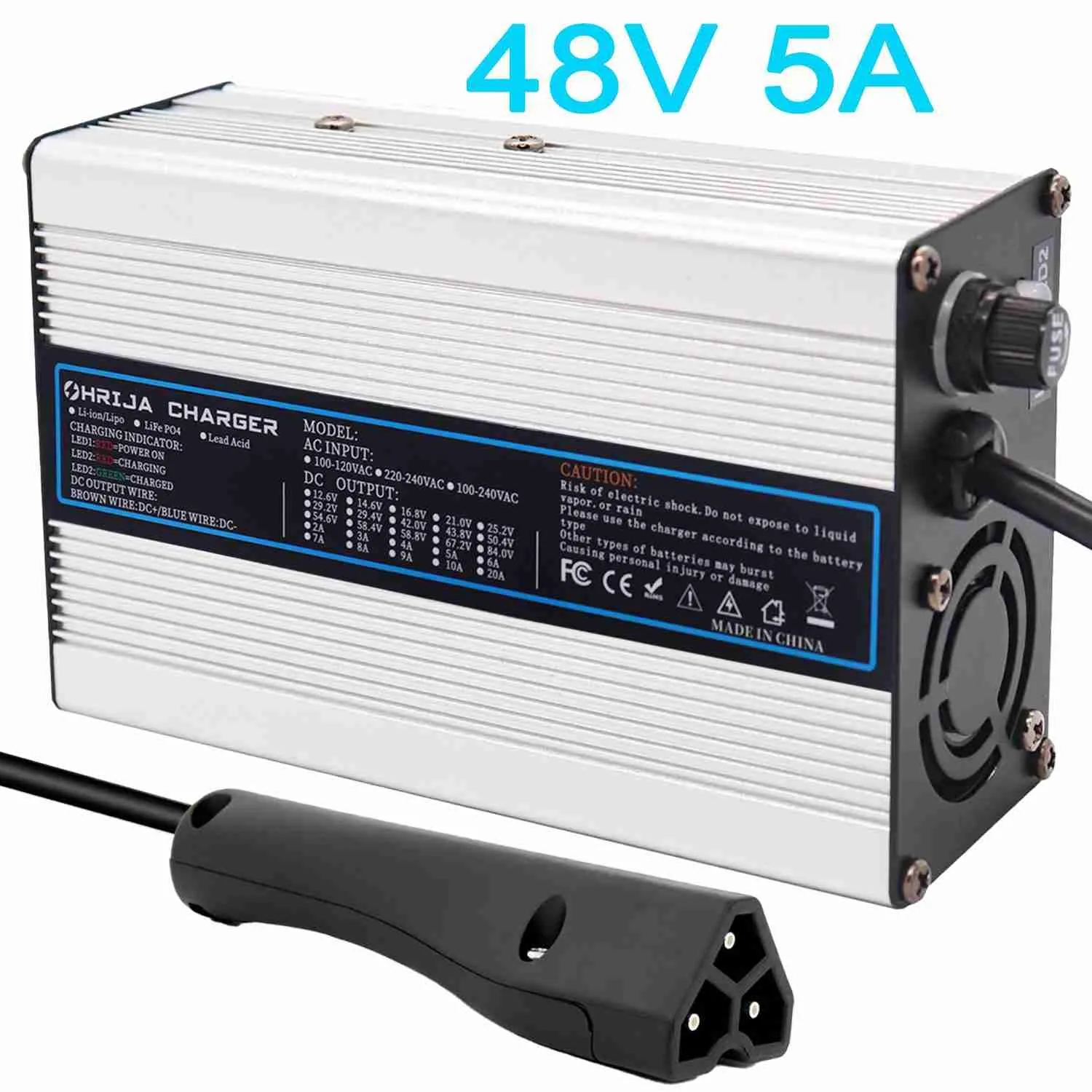
OHRIJA 48 Volt 5A Smart Charger for Golf Carts
Do not trust your expensive battery bank to an unverified power supply. The OHRIJA 48V 5A charger is specifically engineered to safely push a maximum of 55.2V to 58.8V, the exact algorithmic requirement for fully replenishing a 48V Lead-Acid battery pack without inducing thermal stress.
- Housing: Heavy-duty aluminum alloy shell for maximum heat dissipation (weighs only 0.9kg).
- Output Specifications: Max 58.8V±0.2v at a steady 5Amp ±0.2a (Maximum 290W working power).
- Chemistry Matching: Exclusively calibrated for 48V Lead Acid deep-cycle battery banks.
- Selectable Connectors: Available with exact-fit connectors for EZGO RXV (Triangle), Club Car (Round 3-Pin), Yamaha G19 (2-Pin), Yamaha G29 (3-Pin), and traditional Crowfoot.
Explore the OHRIJA 48V Smart Charger
Frequently Asked Questions
Do all golf carts use the same charger?
No, they absolutely do not. Golf cart chargers vary based on three critical factors: the system voltage (typically 36V, 48V, or 72V), the physical connector plug type (which varies by brand like EZGO, Club Car, or Yamaha), and the battery chemistry (Lead-Acid vs. Lithium). Using an incompatible charger will result in a failure to charge and can cause catastrophic damage to your battery bank.
Can I use a lead-acid charger on my new lithium golf cart batteries?
In most professional situations, we strongly advise against this. Lead-acid chargers utilize a multi-stage algorithm that concludes with a continuous float charge to prevent self-discharge. Lithium batteries do not tolerate float charging; applying a continuous trickle charge to a lithium pack will severely degrade the cells and can trigger the Battery Management System (BMS) to shut down the pack permanently for safety.
Why won’t my new smart charger work on my Club Car?
Many older Club Car models are equipped with an On-Board Computer (OBC) that physically regulates the charging current. If you purchase a modern aftermarket smart charger that relies on its own internal microprocessor, it will conflict with the cart’s OBC. You must either bypass the OBC entirely or purchase a charger specifically programmed to communicate with a Club Car OBC.
Can I leave my smart charger plugged in all winter?
If you are using a modern, high-frequency smart charger with a dedicated maintenance or float mode, yes. The microprocessor will automatically monitor the voltage and only apply a charge when the battery dips below a certain threshold. However, if you are using an older analog transformer charger, leaving it plugged in unattended for months can lead to severe overcharging and boiled batteries.
Industry References & Authoritative Safety Guidelines
To ensure our electrical engineering advice adheres to the highest global safety protocols, OHRIJA references the standards established by the following authoritative organizations:
- Battery Council International (BCI): The definitive trade association providing strict technical guidelines on deep-cycle energy storage, charging algorithms, and the safe handling of lead-acid and lithium battery chemistries. Review BCI Battery Standards
- Institute of Electrical and Electronics Engineers (IEEE): The world’s largest technical professional organization, offering peer-reviewed operational standards for high-frequency AC to DC power conversion and smart charging infrastructure. Review IEEE Engineering Standards
- National Fire Protection Association (NFPA): Providing rigorous safety codes (such as NFPA 70: National Electrical Code) regarding the safe installation and operation of high-amperage charging equipment to prevent thermal runaway and electrical fires. Review NFPA Electrical Safety Codes