

The single most expensive maintenance failure in the light electric vehicle industry is premature battery death. Fleet managers, golf course superintendents, and residential owners routinely spend thousands of dollars replacing power banks that should have lasted five to ten years. In our forensic teardowns of failed battery packs at OHRIJ, we consistently trace the root cause back to a fundamental misunderstanding of charging protocols. The debate over whether golf cart batteries be charged every day is not a matter of personal preference; it is a matter of hard electrochemistry. Treating your deep-cycle batteries like a smartphone—waiting until they drop below 20% before plugging them in—is the fastest way to destroy them.
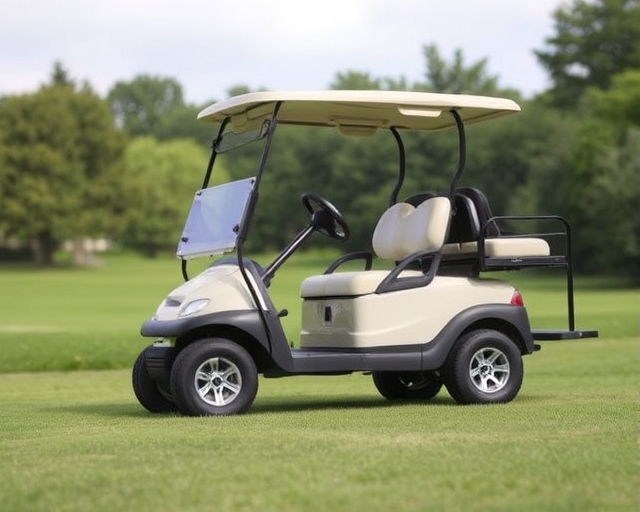
In most professional situations, treating power management with apathy leads to stranded vehicles and financial losses. You must use commercial and practical judgment when establishing your charging habits. Whether you are operating a traditional flooded lead-acid system or a modern lithium-ion array, the physics of energy storage demands discipline. In this definitive guide, we take a clear, uncompromising position on the question: should golf cart batteries be charged every day? We will break down exactly how modern smart chargers operate, expose the devastating effects of sulfation, and provide you with the exact technical criteria required to maximize the lifespan of your investment.
Quick Answer: The Daily Charging Rule
If you are wondering whether golf cart batteries be charged every day, the answer is an unequivocal YES—provided the cart was driven that day.
- If you drove the cart: Plug it in. Even if you only drove it for 10 minutes and the battery is at 95%, you must return it to a 100% State of Charge (SoC). Leaving a battery partially discharged invites irreversible sulfation.
- If the cart sat idle: You do not need to initiate a new manual charge every single day. However, it should remain plugged into a modern, microprocessor-controlled smart charger that will automatically maintain the voltage via “float” mode.
We recommend entirely abandoning the outdated advice of “running the battery down to drain the memory.” Deep-cycle batteries do not have a memory effect, and deep discharging actively destroys them.
Table of Contents
- What It Is: The State of Charge (SoC) Metric
- How It Works: The Chemistry of Charging
- The Direct Answer: The Daily Protocol
- Benefits of Daily Charging
- Limitations and Overcharging Risks
- Who Should Charge Daily
- Who Does Not Need Daily Charging
- Common Procurement and Charging Mistakes
- Expert Buying Considerations
- Summary and Comparison Tables
- Expert Recommendation & Hardware Spotlight
- Frequently Asked Questions
What It Is: The State of Charge (SoC) Metric
To understand why golf cart batteries be charged every day, you must understand the concept of Depth of Discharge (DoD) and State of Charge (SoC). A golf cart battery is not a fuel tank. You do not run it until it is empty and then fill it back up. It is a chemical reactor. The State of Charge represents the exact percentage of available energy remaining in the pack. For deep-cycle batteries, discharging the pack below 50% SoC causes immense physical stress to the internal lead plates. The shallower your daily discharges, the more total cycles the battery will survive.
How It Works: The Chemistry of Charging
How it works depends heavily on the battery chemistry you are operating. When you use a LEAD ACID BATTERY CHARGER, you are reversing a chemical reaction. As a lead-acid battery discharges, sulfuric acid reacts with the lead plates to form lead sulfate crystals. If you recharge the battery immediately, those soft crystals dissolve back into the electrolyte. If you leave the battery sitting at an 80% charge overnight without plugging it in, those soft crystals begin to harden. This is called sulfation. Once hardened, they permanently insulate the plates, permanently reducing the battery’s capacity.
If you are running modern lithium technology, the rules differ slightly, but the daily charging mandate remains. Utilizing a LIFEPO4 BATTERY CHARGER guarantees that the internal BMS (Battery Management System) receives the correct voltage parameters to balance the individual cell voltages. Lithium cells naturally drift out of balance during use; daily charging gives the BMS the opportunity to equalize the pack, ensuring maximum range and preventing individual cell failure.
The Direct Answer: The Daily Protocol
There is no ambiguity in the commercial sector: golf cart batteries be charged every day they are used. If you drive to the community mailbox and back—a trip that consumes perhaps 3% of the battery’s capacity—you must plug the cart back in when you park it. You are not “wasting electricity” by topping off a nearly full battery. You are performing critical maintenance. A premium GOLF CAR BATTERY CHARGER utilizes a multi-stage algorithm (Bulk, Absorption, Float) that knows exactly how much current to deliver. It will quickly top off the 3% you used and automatically shut down, transitioning into a safe monitoring mode.
Benefits of Daily Charging
The commercial benefit of strict daily charging is exponential lifespan extension. A high-quality lead-acid battery pack that is discharged to 20% before recharging might survive 300 to 400 cycles. That same exact battery pack, if only discharged to 80% (shallow discharge) and charged daily, can easily survive 1,000 to 1,200 cycles. You are effectively tripling the life of a $1,500 investment simply by plugging a cable into the wall. Furthermore, daily charging ensures you always have maximum range available for unexpected long trips, eliminating range anxiety.
Limitations and Overcharging Risks
We must use commercial and practical judgment: the mandate that golf cart batteries be charged every day comes with one massive caveat. You must be using a modern, microprocessor-controlled “smart” charger. If you are using a 20-year-old analog “timer” charger, plugging the cart in every day will force a predetermined high-voltage charge into an already full battery. This will boil the electrolyte, severely warp the lead plates, and destroy the pack within months. If you do not have an automatic charger that shuts off, you cannot leave it plugged in unattended.
Who Should Charge Daily
For Commercial Users and Daily Commuters: Golf course fleet managers, security patrols, and residential owners who use their carts for daily neighborhood transportation must adhere strictly to the daily charging rule. Every night, the fleet must be plugged into a reliable DC POWER SUPPLY or dedicated smart charger to ensure operational readiness for the next morning.
Who Does Not Need Daily Charging
For Seasonal Storage Applications: If you are leaving your winter home and parking the golf cart in a garage for six months, you do not need someone to come over and initiate a new charge cycle every day. Instead, you fully charge the batteries, check the water levels, and leave the cart plugged into a high-quality smart charger with a dedicated “maintenance” or “float” mode. The charger will monitor the natural self-discharge rate and pulse a tiny amount of current only when necessary.
Common Procurement and Charging Mistakes
From our experience, the most catastrophic mistake owners make is purchasing a mismatched charger. If you buy a 48V cart, you must ensure your GOLF CAR BATTERY CHARGER OUTPUT CONNECTOR and voltage algorithm match your specific battery chemistry. Using a standard lead-acid charger on a lithium-ion pack is dangerous, as the lead-acid charger will attempt to run a high-voltage desulfation phase that can bypass the lithium BMS and cause a thermal event. Always source the exact LI ION BATTERY CHARGER specified for your pack.
Expert Buying Considerations
When upgrading your charging infrastructure, prioritize environmental resilience. Golf carts are inherently outdoor vehicles. If you park under a carport or in a damp environment, you cannot rely on a fragile indoor power supply. You must procure a WATERPROOF CHARGER engineered with an IP67 rating and a heavy-duty aluminum alloy heat sink. Furthermore, inspect your OUTPUT CONNECTOR regularly for signs of melting or carbon buildup, which indicates high resistance and impending failure.
Summary and Comparison Tables
Comparison Table: Lead-Acid vs. Lithium-Ion Daily Charging
| Metric | Deep Cycle Lead-Acid | LiFePO4 / Lithium-Ion |
|---|---|---|
| Should it be charged daily? | Yes. Absolutely critical. | Yes. Highly recommended. |
| Consequence of skipping a charge | Rapid sulfation, permanent capacity loss. | BMS fails to balance cells, eventual voltage drift. |
| Effect of partial state of charge | Destroys the battery over time. | Tolerates it well, but balancing requires 100%. |
| Charging Speed | Slow (8-12 hours for full saturation). | Fast (2-4 hours). |
Pros and Cons of Daily Smart Charging
| Pros (Why you must do it) | Cons (The operational reality) |
|---|---|
| Prevents irreversible sulfation on lead plates. | Requires access to a dedicated electrical outlet where parked. |
| Maximizes total cycle life (years of service). | Requires the purchase of a modern, automatic smart charger. |
| Ensures the vehicle is always ready for maximum range. | Older timer-chargers cannot be used for this protocol safely. |
| Allows lithium BMS systems to top-balance cell groups. | Exposes the charger to potential power grid surges overnight. |
Expert Recommendation & Hardware Spotlight
Is the strict mandate that golf cart batteries be charged every day actually worth the habit adjustment? Emphatically, yes. The financial mathematics are indisputable. You cannot afford to replace a heavy-duty battery bank every two years because of lazy charging habits. We recommend that commercial users and private owners immediately audit their charging hardware. Throw away the archaic timer-based buzz boxes and invest in intelligent, weather-resistant charging infrastructure.

OHRIJ Waterproof 48V Golf Cart Charger (15A/20A)
Do not gamble your expensive battery bank on cheap, unsealed chargers that fail at the first sign of humidity. The OHRIJ Waterproof charger is engineered for heavy-duty applications. Delivering a precise 55.2V float algorithm, it is the ultimate solution for leaving your lead-acid batteries plugged in daily without the risk of overcharging or boiling.
Construction: Heavy-duty aluminum alloy shell
Output: Max 55.2/58.8V±0.2V @ 15-20Amp ±0.2A
Power Delivery: 900-1200W (Rapid saturation)
Compatibility: 48V Lead Acid systems
Connector Options: EZGO RXV, Crowfoot, CLUB CAR, YAMAHA G19/G29, EZGO 48V TXT
Durability: Fully sealed waterproof design
Upgrade Your Charging Hardware
If you are managing other light electric vehicles, applying this same daily charging logic with the correct ELECTRIC BICYCLE CHARGER or ELECTRIC WHEELCHAIR CHARGER will yield identical lifespan extensions.
Frequently Asked Questions
Should golf cart batteries be charged every day?
Yes. If the golf cart was driven that day, it must be plugged into a smart charger overnight. Lead-acid batteries suffer from permanent sulfation if left partially discharged, and lithium batteries require daily top-offs for their Battery Management System (BMS) to balance the internal cell voltages effectively.
What happens if I forget to charge my golf cart after a short ride?
For lead-acid models, leaving the battery sitting at a 90% or 80% state of charge allows lead sulfate crystals to begin hardening on the internal plates. Over time, this permanently reduces the battery’s capacity and lifespan. It is always best practice to recharge immediately after any use.
Can I leave my golf cart charger plugged in all winter?
Only if you are using an advanced, microprocessor-controlled smart charger that features a dedicated float or maintenance mode (like those manufactured by OHRIJ). Older, analog timer-based chargers will continuously force high voltage, which will overcharge and boil the electrolyte, destroying the battery.
Does daily charging cause a memory effect in golf cart batteries?
No. Neither deep-cycle lead-acid nor lithium-ion batteries suffer from the “memory effect” that plagued old NiCd (Nickel-Cadmium) batteries in the 1990s. Discharging a modern golf cart battery to zero to “clear the memory” is a myth that will actively destroy your battery pack.
Industry References & Authoritative Guidelines
To ensure our charging protocols meet the strictest global engineering standards, OHRIJ references the scientific data established by the following authoritative organizations:
- Battery Council International (BCI): The definitive trade association for the lead battery industry, providing strict technical guidelines on sulfation prevention, depth of discharge metrics, and proper multi-stage charging algorithms. Review BCI Battery Standards
- Battery University (by Cadex Electronics): The premier educational resource for battery chemistry, offering peer-reviewed data proving that shallow discharges coupled with daily charging drastically extends the cycle life of both lead-acid and lithium systems. Review Battery University Charging Data
- IEEE Xplore Digital Library: Publishing rigorous engineering and technical papers on Battery Management Systems (BMS) and the necessity of top-balancing lithium cells via daily saturation charges. Review IEEE Battery Management Research