

Battery intelligence from OHRIJA – certified golf cart charger manufacturer
Quick Answer: How do you charge an EZGO golf cart battery?
Charging an EZGO golf cart battery involves five steps: (1) park the cart in a well-ventilated area and set the parking brake, (2) turn off the key and all accessories, (3) connect the charger plug to the cart’s charging receptacle, (4) plug the charger into a grounded wall outlet, and (5) allow the charger to complete its full cycle until it automatically shuts off. In our experience, the most critical step is allowing the charger to finish its full cycle – disconnecting early is the leading cause of premature battery failure.
Contents
Understanding EZGO Battery Charging5 Steps to Charge Your EZGOComparison TablePros and ConsBuying GuideFAQ
If you own an EZGO golf cart, you know that proper battery charging is the single most important factor in determining battery life and performance. A well-maintained set of batteries can last 5–7 years, while neglect can kill them in 18 months. From our experience at OHRIJA, where we manufacture golf cart chargers and other battery charging solutions, the difference between a long-lasting battery and a costly replacement often comes down to charging habits.
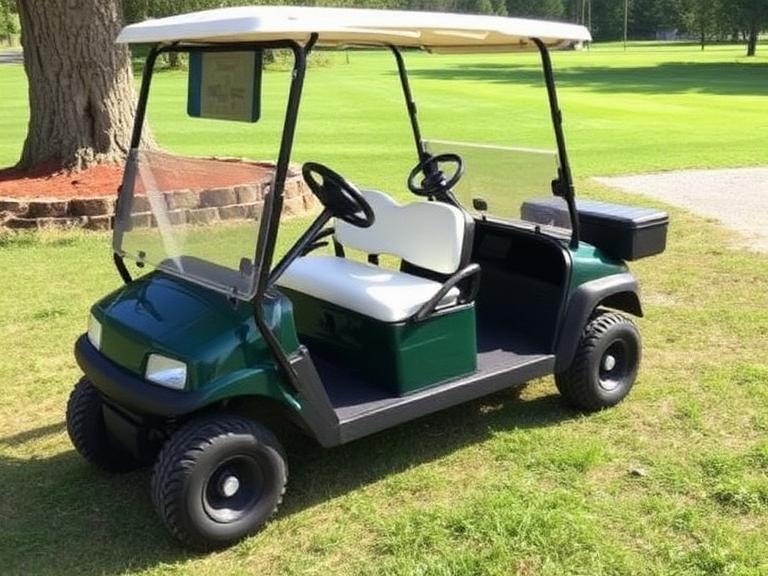
In this guide, we will walk you through the 5 essential steps to charge an EZGO golf cart battery correctly – and explain why each step matters.
For a range of compatible charging solutions, explore our electric bicycle charger category, which also includes golf cart charging technology.
Understanding EZGO Battery Charging
EZGO golf carts typically use either 36-volt or 48-volt battery systems. Older models use six 6-volt batteries (36V total), while newer models use four 12-volt or six 8-volt batteries (48V total). Some newer lithium models use a single 48V lithium battery pack.
How It Works
The charger converts AC power from your wall outlet into DC power that charges the batteries. The charger’s algorithm monitors voltage and current, adjusting the charge rate to safely fill the batteries without overcharging. Most modern EZGO chargers are “automatic” – they shut off when the batteries are fully charged.
Who Should Use These Steps?
- Golf cart owners – For daily or weekly charging.
- Fleet managers – For charging multiple carts in a commercial setting.
- Beginners – Anyone new to golf cart ownership who wants to avoid costly mistakes.
Who does not need this guide? If you have a brand-new lithium EZGO with a dedicated smart charger, the process is largely automated. However, the general principles still apply.
5 Steps to Charge Your EZGO Golf Cart Battery
Step 1: Prepare the Cart and Environment
Park the cart on a level surface in a well-ventilated area. Set the parking brake and turn off the key. Remove any accessories from the 12V outlet. This prevents any electrical load during charging and ensures safety.
Why it matters: Charging produces hydrogen gas, which is explosive. Ventilation is non-negotiable. Also, any load on the batteries during charging can interfere with the charger’s voltage sensing.
Step 2: Inspect the Batteries and Charger
-
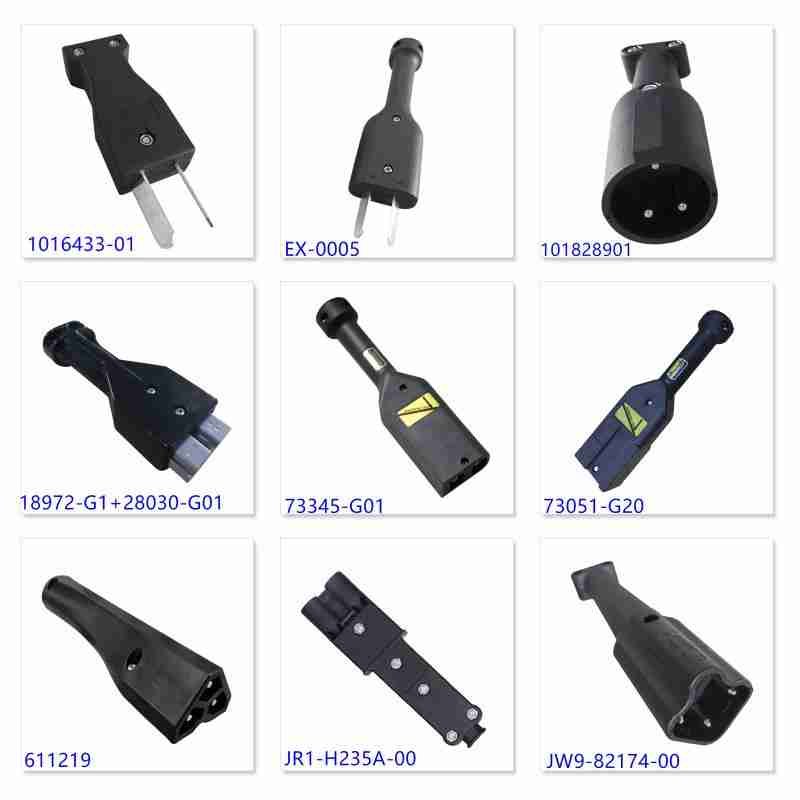
Golf Connector Accessories EZGO TXT EZGO RXV CLUB CAR EZGO DCS YAMAHA G19 Crowfoot
Price range: 6.50$ through 7.00$ -

OHRIJ Club Car 48V Golf Cart Charger 48V 10A makes it suitable for 55.2V Lead Acid batteries
41.50$ -

OHRIJ Waterproof charger Club Car 48V Golf Cart Charger 48V 15A 20A makes it suitable for 55.2V Lead Acid batteries
99.90$ -

OHRIJA 36 volt golf cart Battery Charger 36V 5A makes it suitable for 41.4V Lead Acid batteries
25.50$
Check the battery terminals for corrosion or loose connections. Clean any corrosion with a wire brush and baking soda solution. Inspect the charger plug and cable for damage. Ensure the charger is compatible with your cart’s voltage (36V or 48V).
From our experience, corrosion is the number one reason for charging problems. A poor connection can cause the charger to read incorrect voltage and overcharge or undercharge the batteries.
Step 3: Connect the Charger Plug
Insert the charger’s DC plug into the cart’s charging receptacle. You should hear a click when it’s fully engaged. On most EZGO models, the receptacle is located on the front or side of the seat support.
Why it matters: A loose connection can cause arcing, overheating, and damage to the receptacle or charger. Always push the plug in firmly and ensure it’s seated correctly.
Step 4: Connect to AC Power
Plug the charger into a grounded 110V or 220V outlet (depending on your charger). The charger should start automatically. Most EZGO chargers have a delay of 3–5 seconds before charging begins.
Never plug the charger into an ungrounded outlet or an extension cord that is not rated for the charger’s amperage. This is a common fire risk.
Step 5: Allow the Full Charge Cycle
Let the charger run until it automatically shuts off. Do not disconnect it early. A full charge cycle typically takes 6–10 hours, depending on the depth of discharge and charger amperage.
From our experience, disconnecting a charger early is the most common and costly mistake. It leads to “stratification” – acid settles at the bottom of the battery – and premature sulfation, which permanently reduces capacity.
Important: Never leave a charger connected indefinitely after it shuts off. While modern chargers are “smart,” leaving them connected for days can still cause issues. Once charging is complete, unplug the charger.
For high-performance charging solutions, see our 54.6V 5A eBike battery charger, which shares similar charging principles.
Comparison Table: Charging by Battery Type
| Battery Type | Typical Voltage | Charger Type | Charge Time | Key Consideration |
|---|---|---|---|---|
| Flooded Lead-Acid | 36V or 48V | Smart (automatic) | 6–10 hours | Check water levels monthly |
| AGM (Absorbent Glass Mat) | 36V or 48V | Smart (AGM profile) | 5–8 hours | No water maintenance |
| Gel | 36V or 48V | Smart (Gel profile) | 6–9 hours | Requires specific charger profile |
| Lithium (LiFePO4) | 48V (nominal) | Smart (Lithium profile) | 2–4 hours | Must use lithium-specific charger |
Pros and Cons of Different Charging Approaches
- Automatic chargers prevent overcharging
- Smart chargers extend battery life
- Lithium charges much faster
- Proper charging reduces maintenance costs
- Poor charging habits kill batteries early
- Cheap chargers can damage batteries
- Flooded batteries require water checks
- Lithium requires specific charger profiles
Buying Guide: How to Choose a Replacement Charger
From our experience, here is a practical framework for selecting a charger for your EZGO.
Match Voltage – Ensure the charger is designed for 36V or 48V systems. Using the wrong voltage will damage batteries.
Check Battery Type – Lead-acid, AGM, and lithium chargers are not interchangeable. Choose a charger that matches your battery chemistry.
Amperage – Higher amperage charges faster. For flooded batteries, 15–18A is typical. For lithium, 25A or more is safe.
Smart Features – Look for automatic shutoff, temperature compensation, and desulfation modes.
Certifications – Choose chargers with UL or CE certification for safety.
OHRIJA offers a range of chargers suitable for golf cart applications, including 12V LiFePO4 battery charger 30A and other high-capacity options.
Expert Recommendation: The Best Charging Strategy
After years of working with golf cart batteries, here is our practical guidance:
- Charge after every use. This prevents deep discharge and sulfation.
- For flooded batteries, check water levels monthly and top up with distilled water after charging.
- Use an automatic smart charger that matches your battery type. OHRIJA’s golf cart chargers are designed for this purpose.
- For lithium conversions, replace your charger with a lithium-specific model. Do not use a lead-acid charger on lithium batteries.
Common Mistakes When Charging EZGO Batteries
- Disconnecting the charger before it finishes its full cycle
- Charging in a confined, unventilated space
- Using an extension cord that is under-rated for the charger’s amperage
- Charging a flooded battery that is low on water
- Using a charger that does not match the battery type (e.g., lithium charger on lead-acid)
About OHRIJA – OHRIJA is a high-tech enterprise integrating R&D, production, and sales of lithium battery chargers, LiFePO4 battery chargers, lead-acid battery chargers, golf cart chargers, power adapters, and switching power supplies. Based in Dongguan, China, we are committed to providing safe, certified charging solutions for golf carts and other electric vehicles globally.
Frequently Asked Questions
How long does it take to charge an EZGO golf cart?
Typically 6–10 hours for a full charge, depending on the battery type and depth of discharge. Lithium batteries charge faster, usually 2–4 hours.
Can I leave my EZGO charger plugged in overnight?
Yes, modern automatic chargers will shut off when the batteries are full. However, do not leave it connected for days at a time.
What voltage charger does my EZGO need?
Check your cart’s battery configuration. 36V systems need a 36V charger; 48V systems need a 48V charger. Never mismatch voltage.
Is it OK to use a car battery charger on a golf cart?
No. Car chargers are not designed for deep-cycle golf cart batteries and will damage them. Always use a charger designed for golf cart batteries.
References and Trusted Sources
- 1. OHRIJA – Internal Testing and Charging Guidelines (2026).
- 2. EZGO – Owner’s Manual and Battery Care Recommendations.
- 3. Battery Council International – Deep-Cycle Battery Charging Standards.
Explore more: 67.2V scooter battery charger | 24V lithium battery charger 10A | 84V electric scooter charger | 24V 15A AC to DC power supply