

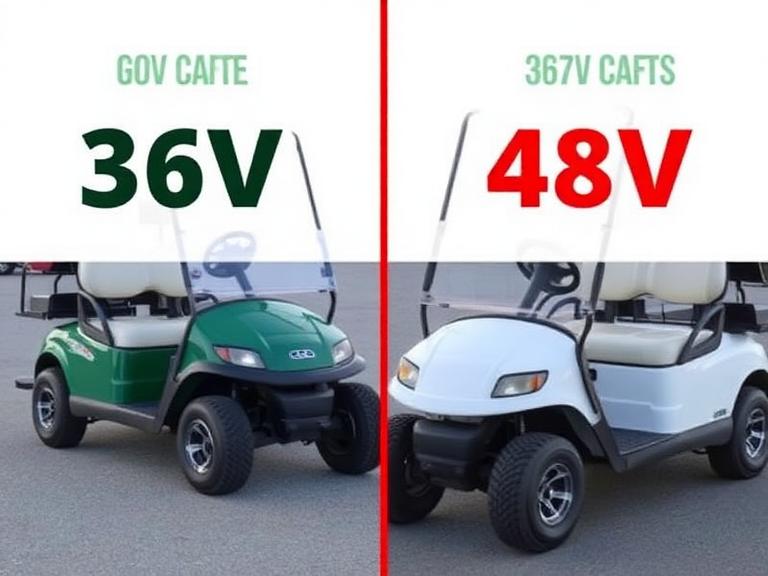
Understanding the Differences Between 36V and 48V Golf Cart Chargers is critical if you want better battery performance, longer charger lifespan, and safer charging efficiency. From our experience, many golf cart owners mistakenly assume all chargers work similarly as long as the plug fits. That assumption causes battery damage, reduced range, overheating, and expensive replacement costs.
At Ohrija, we strongly recommend choosing a charger based on your battery voltage system, charging profile, current output, and battery chemistry compatibility instead of simply buying the cheapest option online. The Differences Between 36V and 48V Golf Cart Chargers directly affect charging speed, battery health, energy efficiency, and long-term operating costs.
OHRIJA belongs to Dongguan Hengruihong Technology Co., Ltd., a high-tech enterprise established in 2020 in Dongguan, Guangdong Province, China. Our company integrates R&D, manufacturing, and sales across lithium battery chargers, LiFePO4 battery chargers, golf cart chargers, switching power supplies, and power adapters. From our experience supplying charging systems globally, incorrect voltage selection remains one of the most common mistakes among golf cart owners.
Table of Contents
- 1. Voltage Compatibility
- 2. Charging Speed and Efficiency
- 3. Battery Configuration Differences
- 4. Connector and Plug Variations
- 5. Energy Consumption and Heat Output
- 6. Cost and Upgrade Potential
- 36V vs 48V Golf Cart Charger Comparison Table
- FAQs
- Summary
- References
1. Voltage Compatibility
The most obvious Differences Between 36V and 48V Golf Cart Chargers involve voltage compatibility. A 36V charger is engineered specifically for 36V battery systems, while a 48V charger is designed exclusively for 48V battery packs.
Using the wrong charger voltage is one of the fastest ways to damage batteries. A 36V charger cannot fully charge a 48V battery system, while a 48V charger may overcharge or permanently damage a 36V setup.
From our experience, golf cart owners upgrading older lead-acid systems to lithium batteries often overlook charger voltage requirements during conversion projects. We recommend verifying the total battery pack voltage before purchasing any charger.
Many users who already operate electric mobility equipment understand how important voltage matching is. For example, owners using a 48V 10A eBike charger already know that even small voltage mismatches reduce charging performance and battery longevity.
Typical Battery Configurations
| System Voltage | Common Battery Setup | Typical Application |
|---|---|---|
| 36V | 6 x 6V Batteries | Older Golf Carts |
| 48V | 8 x 6V or 4 x 12V Batteries | Modern Golf Carts |
2. Charging Speed and Efficiency
One of the biggest Differences Between 36V and 48V Golf Cart Chargers is charging efficiency. In modern golf cart systems, 48V chargers generally support faster charging and improved energy transfer compared to older 36V systems.
A properly designed 48V charger usually delivers better torque support and longer driving range because the electrical system itself operates more efficiently. From our experience, 48V systems waste less energy under load and maintain more stable performance on hills and longer routes.
We recommend 48V charging systems for users who frequently drive extended distances, use upgraded motors, or carry heavier passenger loads.
Charging technology has improved dramatically across multiple electric mobility industries. Products like the 84V electric scooter charger and 67.2V scooter battery charger demonstrate how higher-voltage charging platforms now dominate high-performance electric transportation markets.
Products by Category
-

OHRIJ Club Car 48V Golf Cart Charger 48V 10A makes it suitable for 55.2V Lead Acid batteries
41.50$ -

OHRIJ Waterproof charger Club Car 48V Golf Cart Charger 48V 15A 20A makes it suitable for 55.2V Lead Acid batteries
99.90$ -

OHRIJA 48 volt Charger for golf cart 48V 5A makes it suitable for 55.2V Lead Acid batteries
25.50$ -

OHRIJA 48V 15A Golf Cart Chargers 48v Lead Acid battery charger Power Drive Golf Cart Chargers
39.90$ -
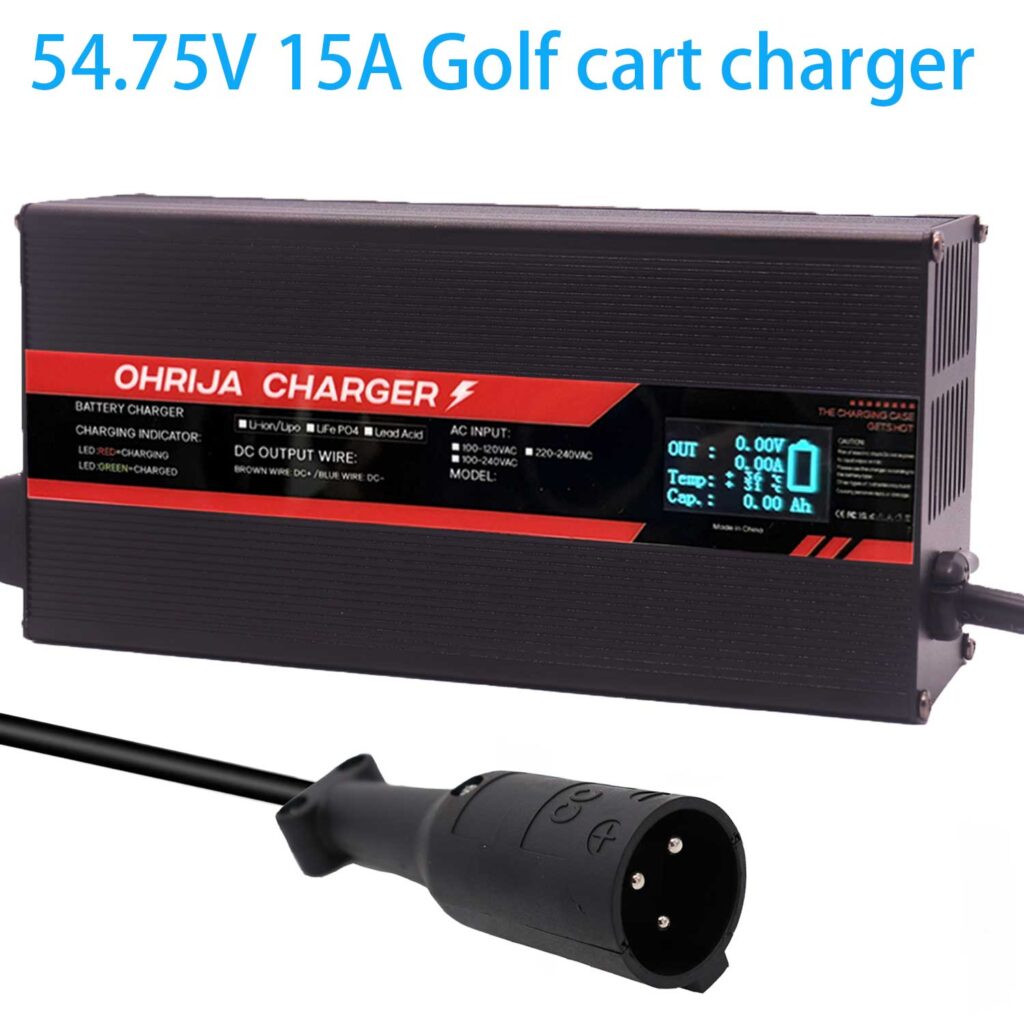
OHRIJA 54.75V 15A Golf Cart Chargers 48V Lithium Golf Cart Battery Chargers Lifepo4 Golf Cart Chargers
39.90$ -
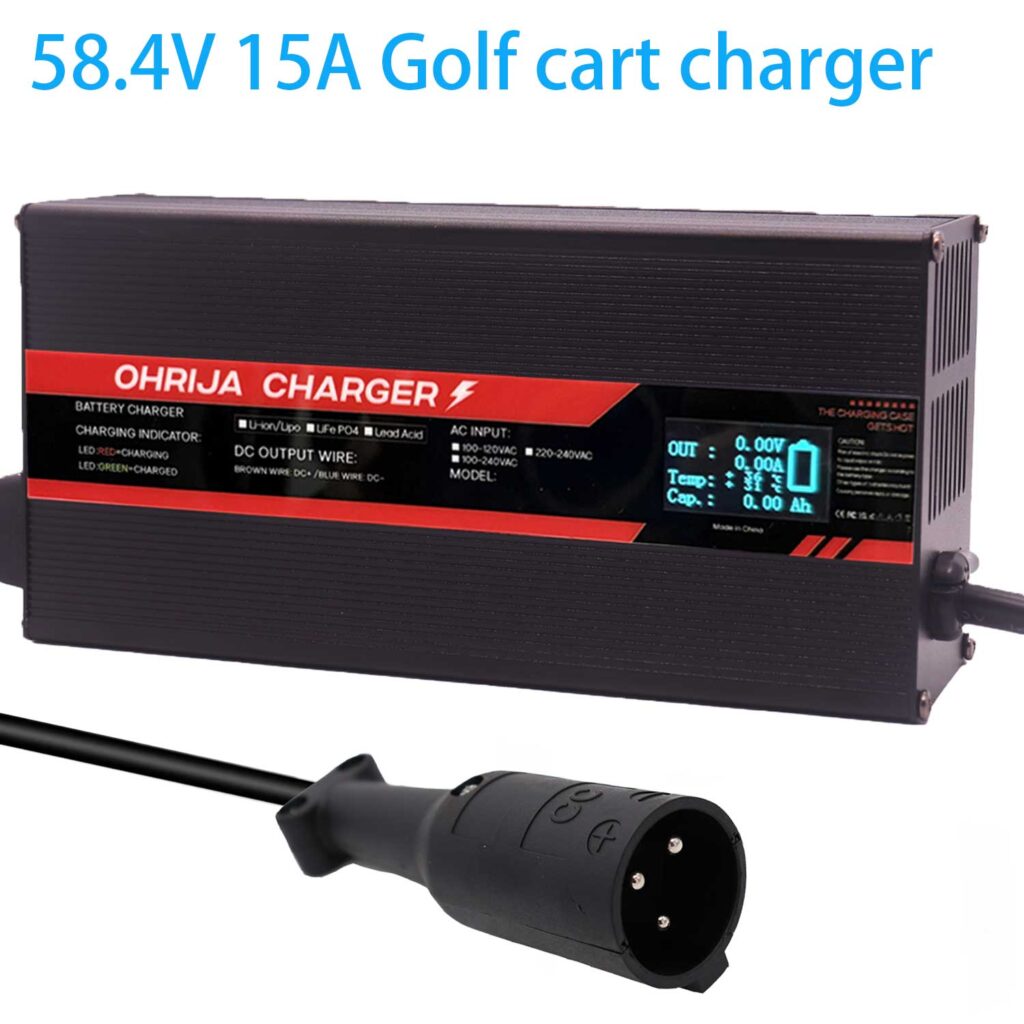
OHRIJA 58.4V 15A Golf Cart Chargers 48V Lithium Golf Cart Battery Chargers Lifepo4 Golf Cart Chargers
39.90$ -
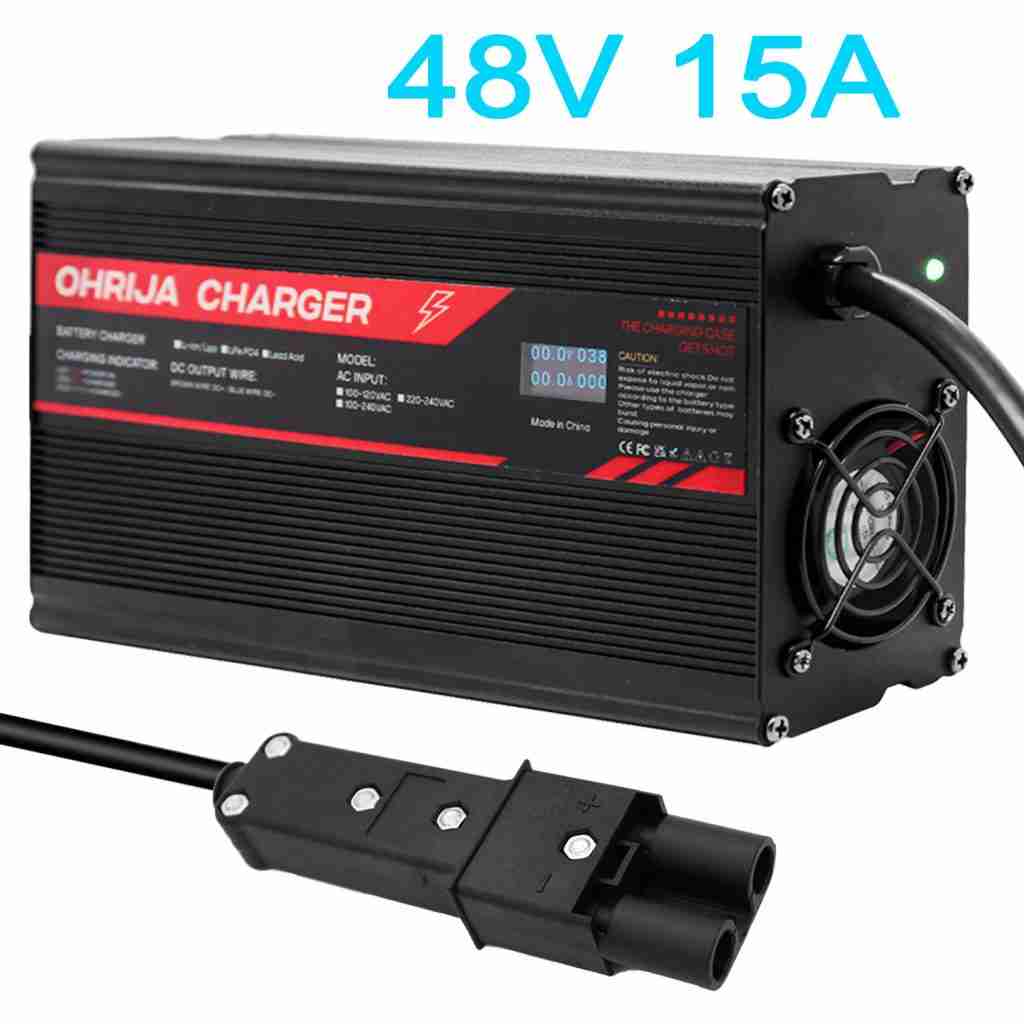
OHRIJA club car golf cart Battery Charger 48V 15A makes it suitable for 55.2V Lead Acid batteries OLED display
65.50$
Why 48V Systems Often Charge Faster
- Higher energy transfer efficiency
- Reduced current draw
- Lower heat generation
- Better compatibility with lithium battery upgrades
- Improved charging stability
3. Battery Configuration Differences
Another critical point in the Differences Between 36V and 48V Golf Cart Chargers involves battery pack configuration. The charger must communicate correctly with the battery system’s voltage architecture and charging profile.
Most older golf carts use 36V lead-acid battery configurations. These systems remain common in legacy fleets and entry-level golf carts. However, 48V systems increasingly dominate modern golf cart platforms because they provide stronger acceleration and improved efficiency.
From our experience, 48V lithium conversions are now one of the smartest long-term upgrades for golf cart owners. Lithium batteries charge faster, weigh less, and typically last longer than lead-acid systems.
Battery chemistry compatibility matters just as much as voltage. Users transitioning to lithium setups often explore solutions like the 12V LiFePO4 battery charger 30A to better understand lithium charging behavior before upgrading larger battery systems.
| Feature | 36V Systems | 48V Systems |
|---|---|---|
| Common Battery Type | Lead-acid | Lithium or Lead-acid |
| Performance Level | Moderate | Higher |
| Weight | Heavier setups | More efficient designs |
| Upgrade Flexibility | Limited | Excellent |
4. Connector and Plug Variations
The Differences Between 36V and 48V Golf Cart Chargers also include connector compatibility. Different golf cart manufacturers use various charging plugs and communication protocols.
Many older 36V systems use legacy plug styles that are incompatible with modern smart chargers. Meanwhile, 48V chargers increasingly support upgraded connectors and intelligent battery management integration.
From our experience, plug compatibility issues cause unnecessary returns and installation confusion. We recommend verifying both voltage and connector type before ordering any charger.
Modern charger manufacturers are now applying smarter charging technology across many electric transportation products, including 24V lithium battery charger 10A solutions and advanced scooter charging systems.
Common Golf Cart Charger Plug Types
- Crowfoot plugs
- Powerwise connectors
- Anderson plugs
- Round 3-pin connectors
- Smart lithium communication ports
5. Energy Consumption and Heat Output
Energy efficiency is another major factor when analyzing the Differences Between 36V and 48V Golf Cart Chargers. Lower-voltage systems often require higher current to achieve similar performance levels, which increases heat generation.
Heat is one of the biggest enemies of battery longevity. Excessive charging heat accelerates battery degradation and reduces charger lifespan.
From our experience, 48V charging systems generally operate cooler and more efficiently because they reduce current stress during charging cycles.
We recommend smart chargers with temperature protection, automatic shutoff functions, and cooling optimization. Higher-quality chargers may cost more initially, but they dramatically reduce long-term battery replacement expenses.
Users searching for broader electric charging applications can also explore the complete Battery charger for e scooter collection for compatible charging technologies across mobility categories.
6. Cost and Upgrade Potential
The final major point in the Differences Between 36V and 48V Golf Cart Chargers is long-term upgrade potential. Although 36V systems are typically cheaper upfront, 48V systems often provide better long-term value.
Modern golf cart upgrades increasingly focus on lithium conversion kits, higher-speed controllers, upgraded motors, and smart charging systems. Most of these advanced upgrades perform better within 48V platforms.
From our experience, users planning long-term golf cart ownership should strongly consider transitioning to 48V systems because future component compatibility is significantly better.
The broader electric vehicle industry is moving toward higher-voltage platforms because they improve energy efficiency and charging scalability. This trend is visible across electric bikes, scooters, industrial mobility equipment, and energy storage systems.
For example, many commercial charging environments now integrate technologies similar to modern Battery Energy Storage Systems to support stable high-efficiency power delivery.
36V vs 48V Golf Cart Charger Comparison Table
| Category | 36V Charger | 48V Charger |
|---|---|---|
| Charging Speed | Moderate | Faster |
| Energy Efficiency | Lower | Higher |
| Heat Output | Higher | Lower |
| Battery Compatibility | Mainly older lead-acid systems | Modern lithium and lead-acid systems |
| Upgrade Potential | Limited | Excellent |
| Performance Support | Basic | Advanced |
| Typical User | Legacy golf cart owners | Modern performance-focused users |
Summary Table
| Key Difference | 36V Charger | 48V Charger |
|---|---|---|
| Voltage Output | 36V systems only | 48V systems only |
| Charging Efficiency | Lower | Higher |
| Future Upgrades | Limited flexibility | Better scalability |
| Battery Health Support | Moderate | Stronger charging control |
| Overall Recommendation | Suitable for older carts | Best for modern systems |
The Differences Between 36V and 48V Golf Cart Chargers go far beyond simple voltage ratings. Charging efficiency, connector compatibility, thermal performance, battery chemistry support, and future upgrade flexibility all matter when selecting the correct charger.
From our experience, 48V systems are increasingly becoming the industry standard because they provide better energy efficiency, stronger performance, and improved compatibility with modern lithium battery technology.
FAQs
Can I use a 48V charger on a 36V golf cart?
No. Using a 48V charger on a 36V battery system can damage batteries and create serious charging safety risks.
Why are 48V golf cart systems more popular now?
48V systems offer better efficiency, longer range, improved hill-climbing power, and stronger compatibility with lithium battery upgrades.
Do 48V golf cart chargers charge faster?
In most cases, yes. 48V systems generally deliver more efficient energy transfer and reduced current loss during charging.
Can I upgrade a 36V golf cart to 48V?
Yes, but the upgrade requires compatible batteries, controllers, motors, and a properly matched 48V charger.
What charger type is best for lithium golf cart batteries?
Smart lithium-compatible chargers with automatic protection features and proper voltage matching are strongly recommended.