
No products in the cart.

Choosing the correct switching power supply is not just about matching the voltage printed on your device. You also need to consider current demand, wattage, input voltage, output stability, protection functions, and the environment in which the equipment operates. A supply that looks suitable on paper can still cause random shutdowns, overheating, electrical noise, or premature equipment failure if one important specification is overlooked.
From our experience in power conversion and battery charging applications, most selection problems start with incomplete specifications. Buyers often compare only output voltage and price, then discover that the selected unit cannot handle startup current, operates poorly at high temperature, or does not provide the protection their equipment needs.
This guide explains seven practical ways to choose the correct switching power supply for your device. Whether you are powering a small electronic product, an industrial controller, LED equipment, or a battery-related system, the objective is the same: select a supply that delivers the required power safely and consistently without paying for unnecessary capacity.
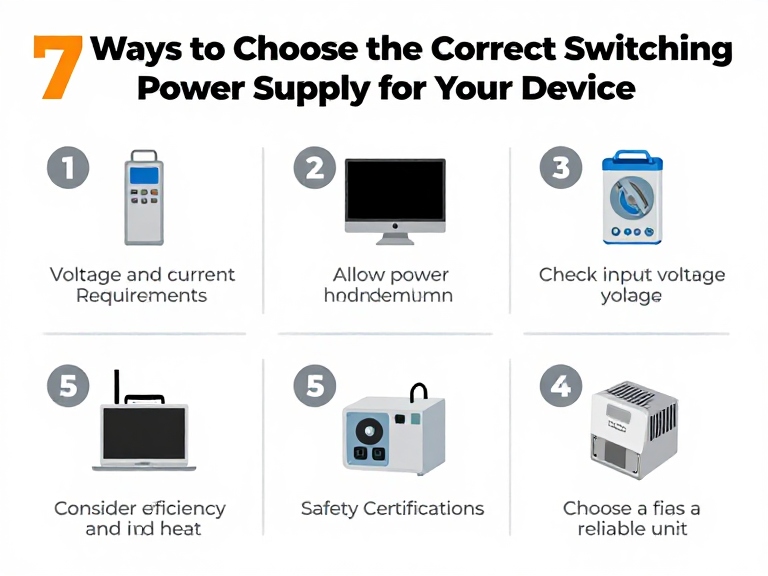
Quick Answer: How Do You Choose the Correct Switching Power Supply?
To choose the correct switching power supply, confirm these seven specifications: output voltage, output current, total wattage, input voltage range, output regulation and ripple, protection functions, and operating environment.
Our recommendation: Match the output voltage exactly to the device’s requirements, calculate the maximum load current, allow suitable power headroom, and select a supply with documented protection and thermal performance. For industrial or continuous-use equipment, do not choose a power supply solely because its rated wattage appears sufficient.
Direct Answer: The Seven Checks That Prevent Power Supply Selection Errors
A switching power supply converts electrical power from an input source into a regulated output suitable for electronic equipment. The correct model must meet the electrical requirements of the load while remaining within its own rated operating limits.
Before buying, check the device datasheet and answer these questions:
- What output voltage does the device require?
- How much continuous and peak current does it draw?
- What is the total wattage, including startup demand?
- Does the supply accept the available AC or DC input voltage?
- Are output regulation, ripple, and noise suitable for the device?
- Which safety and protection functions are necessary?
- Can the supply operate reliably in the actual temperature, humidity, and installation conditions?
If you cannot answer these questions, do not guess. Obtain the equipment manufacturer’s electrical specifications or ask a qualified power supply engineer to review the application.
Quick Summary Table: Seven Factors for Selecting a Switching Power Supply
| Selection Factor | What to Check | Why It Matters | Our Recommendation |
|---|---|---|---|
| 1. Output voltage | Rated DC voltage and permitted tolerance | Incorrect voltage can prevent operation or damage equipment | Match the device’s specified input voltage |
| 2. Output current | Continuous current and peak demand | Insufficient current can cause shutdowns or overheating | Size for the maximum expected load |
| 3. Output wattage | Voltage multiplied by current | Determines the supply’s available power capacity | Include suitable headroom and startup demand |
| 4. Input range | AC or DC input voltage and frequency | Ensures compatibility with the available source | Check the full input range, not just nominal voltage |
| 5. Regulation and ripple | Voltage tolerance, ripple, and noise | Affects sensitive electronics and system stability | Use specifications appropriate to the load |
| 6. Protection | Overvoltage, overcurrent, short-circuit, and thermal protection | Reduces risk during faults and abnormal operation | Verify documented protection behavior |
| 7. Environment | Temperature, ventilation, mounting, dust, and moisture | Influences thermal performance and service life | Choose the correct enclosure and derating |
Table of Contents
- What is a switching power supply?
- How does a switching power supply work?
- Seven ways to choose the correct switching power supply
- Switching power supply comparison table
- Choosing a power supply for different applications
- Pros and cons of switching power supplies
- Common selection mistakes
- Buying considerations and cost-benefit analysis
- OHRIJA power supply solutions
- Expert recommendation
- Frequently asked questions
- References
1. What Is a Switching Power Supply?
A switching power supply, also known as a switch-mode power supply (SMPS), is an electronic device that converts electrical energy from one voltage or current form into another using high-frequency switching circuits.
For example, an AC-to-DC switching power supply can convert mains electricity into a regulated DC output such as 12V, 24V, 48V, or 60V. DC-to-DC switching converters perform a similar conversion between DC voltage levels.
Switching power supplies are widely used in industrial control equipment, telecommunications, LED lighting, computers, battery-related equipment, electric vehicles, and consumer electronics.
What Makes a Switching Power Supply Different?
A traditional linear power supply regulates voltage by dissipating excess energy through a regulating component. A switching power supply controls energy transfer by rapidly switching electronic components, then filtering the output to produce the required voltage.
This approach generally allows a switching power supply to achieve higher efficiency and smaller size than a comparable linear supply. However, switching circuits can generate electrical noise, so filtering, layout, shielding, and electromagnetic compatibility matter.
2. How Does a Switching Power Supply Work?
The exact circuit depends on whether the product is an AC-to-DC or DC-to-DC design. A typical isolated AC-to-DC switching power supply works through several stages.
- Input filtering: The incoming AC power passes through filtering and protection components that help control conducted interference and input disturbances.
- Rectification: The AC input is converted into DC using a rectifier and associated circuitry.
- High-frequency switching: Power semiconductor devices switch at high frequency to control the energy transferred through the conversion stage.
- Voltage transformation: Depending on the topology, a high-frequency transformer provides voltage conversion and electrical isolation.
- Output rectification and filtering: The converted energy is rectified and filtered to produce the required DC output.
- Feedback regulation: A control circuit monitors the output and adjusts switching operation to maintain the target voltage within the specified operating range.
Protection circuits may also monitor current, voltage, and temperature. Their function is to help the power supply respond safely to abnormal operating conditions.
Practical point: A switching power supply is not automatically suitable for every electronic device. The output voltage, current capacity, ripple, isolation, transient response, and protection design must match the application.
3. Seven Ways to Choose the Correct Switching Power Supply for Your Device
Way 1: Match the Output Voltage to the Device
Output voltage is the first specification to confirm. A device designed for 12V DC should normally receive a regulated 12V DC supply within the voltage tolerance stated by its manufacturer.
Do not assume that a higher voltage is acceptable simply because the power supply has a larger wattage rating. Applying 24V to a device designed only for 12V can damage its input circuitry. Similarly, a lower voltage may cause unstable operation, failed startup, or reduced performance.
Some devices accept a defined voltage range rather than one fixed value. In that situation, choose a supply whose output remains inside the permitted range during normal operation and expected load changes.
Our recommendation: Read the equipment label and datasheet before comparing products. If the device requires 48V DC, begin with a correctly rated 48V 20A 1000W power supply or another model whose verified output matches the application’s actual requirements.
Way 2: Calculate the Required Output Current
Output current determines how much electrical load the supply can support. A supply with insufficient current capacity may enter current limiting, shut down, overheat, or cause the connected equipment to reset.
Check both continuous operating current and peak current. Devices containing motors, pumps, solenoids, capacitors, or other inductive and capacitive loads can draw significantly more current during startup than during steady operation.
For example, if an electronic system normally draws 6A at 12V but briefly requires 9A during startup, a supply rated for only 6A may not be suitable. The correct choice depends on the supply’s peak-load capability and the duration of the startup demand.
We recommend using the maximum documented load current rather than estimating from average consumption. For multiple devices connected to one supply, add their simultaneous current requirements and consider the distribution wiring and connector ratings.
Way 3: Calculate Wattage and Allow Suitable Headroom
Output power is calculated by multiplying voltage by current:
Power (W) = Voltage (V) × Current (A)
For example, a 24V device drawing 5A requires 120W of output power. A supply rated at 24V and 5A provides 120W at its nominal rating, assuming the stated operating conditions are met.
In practice, selecting a supply that operates continuously at its absolute maximum rating may leave little margin for temperature, startup demand, or future load changes. A suitable power margin can improve operating flexibility, but the correct amount depends on the load profile and manufacturer derating guidance.
For a stable electronic load, a modest design margin may be sufficient. For heavy-duty applications involving motors, high ambient temperatures, or frequent load transients, engineers should assess the actual peak profile and thermal conditions rather than applying one universal percentage.
For example, OHRIJA’s 12V 30A 360W power supply illustrates the relationship between output voltage, current, and wattage. Whether it is suitable for a particular device still depends on the device’s voltage tolerance, current demand, input requirements, and installation conditions.
Way 4: Check the Input Voltage Range and Power Source
Confirm whether the power supply accepts AC input, DC input, or both. Then check the permitted voltage range and frequency against the available electrical source.
An AC-to-DC power supply designed for a wide mains input range may be suitable for installations where the AC voltage varies within that specified range. A DC-to-DC converter is more appropriate when the input comes from a battery or another DC bus.
Do not confuse input voltage with output voltage. A product may accept 100–240V AC at its input while providing 12V DC at its output. Both ratings matter, but they describe different parts of the system.
For equipment powered from a vehicle or battery system, check the full input voltage range, transient conditions, and polarity. A nominal 48V battery system does not necessarily remain at exactly 48V during charging or discharge.
Way 5: Evaluate Voltage Regulation, Ripple, and Electrical Noise
Two switching power supplies with identical voltage and wattage ratings may perform differently under changing loads. Output regulation describes how closely the supply maintains its output voltage as input voltage and load conditions change.
Ripple and noise describe unwanted variations present on the DC output. Sensitive electronics, communication equipment, measurement devices, and audio circuits may require tighter ripple limits than basic resistive loads.
For professional applications, compare the actual datasheet specifications for:
- Line regulation across the rated input range.
- Load regulation from minimum to maximum load.
- Output ripple and noise, including the stated measurement method.
- Transient response when the load changes suddenly.
- Startup time and output overshoot.
Do not rely on vague descriptions such as “stable output” or “low noise.” Ask for measurable specifications and test conditions. In our view, this is particularly important when the supply powers sensors, control boards, communication modules, or other sensitive equipment.
Way 6: Check Protection Functions and Electrical Safety
A switching power supply should be selected for the risks present in its application. Protection functions help the unit respond to abnormal conditions, but the exact behavior varies by design.
Common functions include:
- Overvoltage protection (OVP): Helps prevent the output from exceeding a defined voltage limit.
- Overcurrent protection (OCP): Limits or interrupts output current when the load exceeds a specified threshold.
- Short-circuit protection: Responds when the output terminals are shorted.
- Overtemperature protection (OTP): Reduces or stops operation when internal temperature exceeds a defined limit.
- Input protection: May include protection against specified input surges, overvoltage, or undervoltage conditions.
- Electrical isolation: Required in many AC-to-DC applications to separate input and output circuits according to the product’s safety design.
For commercial users, request the manufacturer’s protection specifications and relevant test documentation. A statement that a product has “full protection” is not enough. You need to know the operating thresholds, recovery behavior, and applicable safety approvals.
Way 7: Match the Enclosure, Cooling, and Environment
The final selection factor is often overlooked: where the power supply will operate. A supply installed in a cool, ventilated office has different thermal demands from one installed inside a sealed industrial cabinet, vehicle, or outdoor enclosure.
Check the rated operating temperature, storage temperature, cooling method, airflow requirements, mounting orientation, and derating curve. A power supply may need to deliver less than its headline rated wattage at high ambient temperatures.
Also consider dust, moisture, vibration, corrosion, and access for maintenance. If an enclosure has an IP rating, verify that the rating applies to the complete assembled product and suits the actual installation.
For heavy-duty applications, we recommend choosing the enclosure and thermal design before finalizing the model. Do not assume that adding a fan or placing a supply inside a sealed cabinet will improve cooling. Poor airflow can make the problem worse.
4. Switching Power Supply Comparison: Which Type Should You Choose?

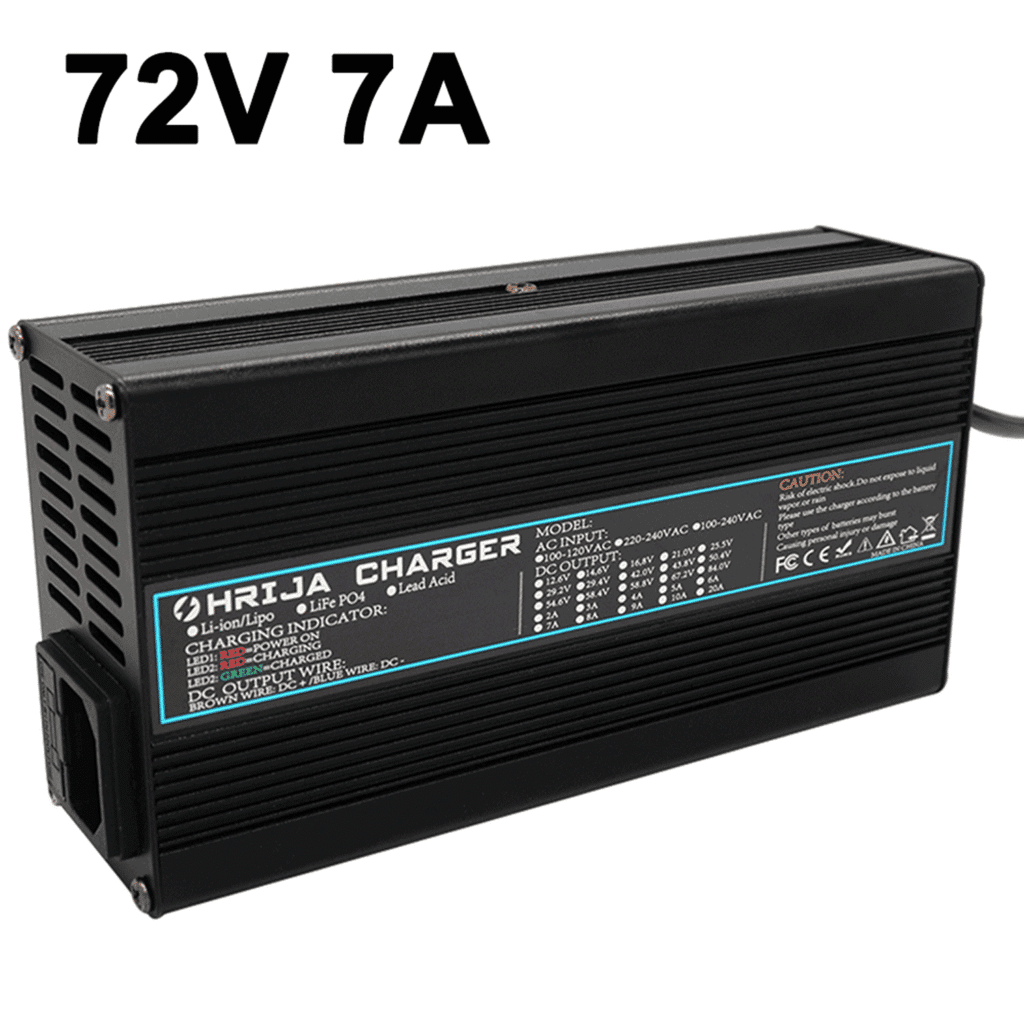
72V 7A Smart Lead Acid Battery Charger 88.2V Fast Smart Charger Safety Protection for Electric Bike Scooter Tricycle
37.50$Intelligent adjustable voltage and current charger 9.6 – 88.2V 2 – 20A high-power DC adjustable power supply charger with digital display, constant current and constant voltage automatic switching. Suitable for lithium batteries / lead-acid batteries / batteries.
49.90$OHRIJ Club Car 48V Golf Cart Charger 48V 10A makes it suitable for 55.2V Lead Acid batteries
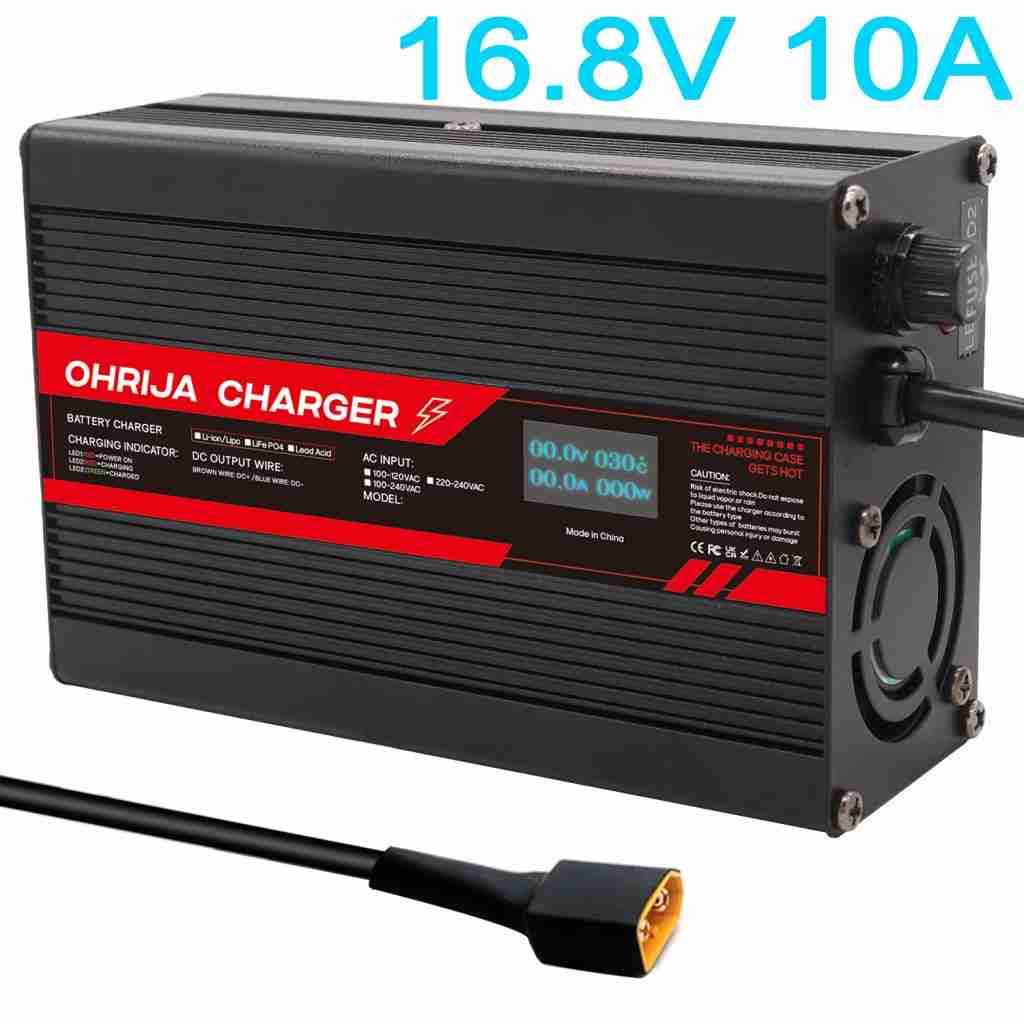
41.50$OHRIJA 12 volt lithium battery charger 16.8V 10A OLED charger makes it suitable for 4S 14.8V Li-ion batteries
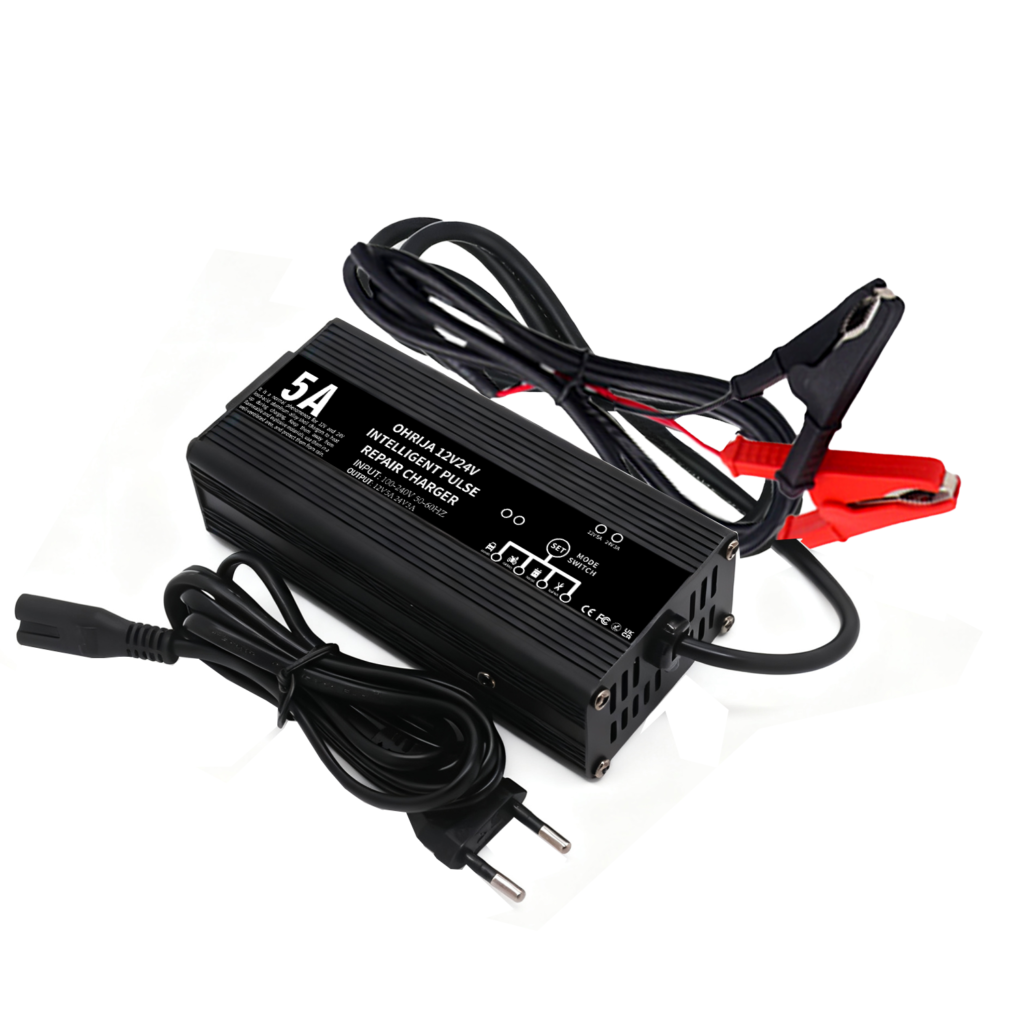
20.50$OHRIJA 12V 5A 24V 2A Intelligent Charging Unit for Motorcycles and Cars | Lead-Acid Battery Restorer | Pulse Restoration with Indicator Light
14.90$OHRIJA 12v Lifepo4 battery charger 14.6V 20A OLED charger makes it suitable for 4S 12.8V Lifepo4 batteries
30.50$OHRIJA 12v lithium ion battery charger 12.6V 20A charger makes it suitable for 3S 11.6V Li-ion batteries
27.50$OHRIJA 14.6V 5A Aluminum Alloy Lithium Battery Charger for 4 Series 12V Lifepo4 Battery
14.90$
-1024x1024.jpg "7 Ways to Choose the Correct Switching Power Supply for Your Device 3")

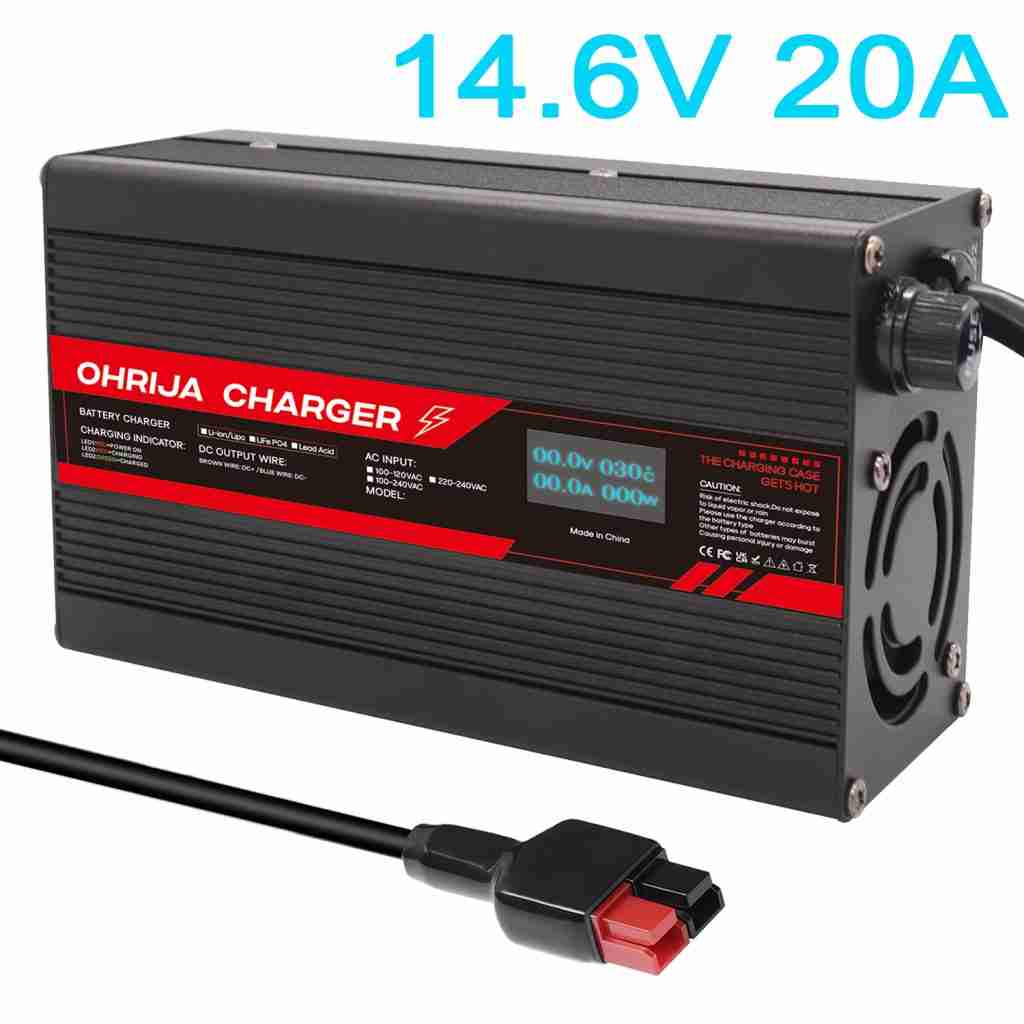
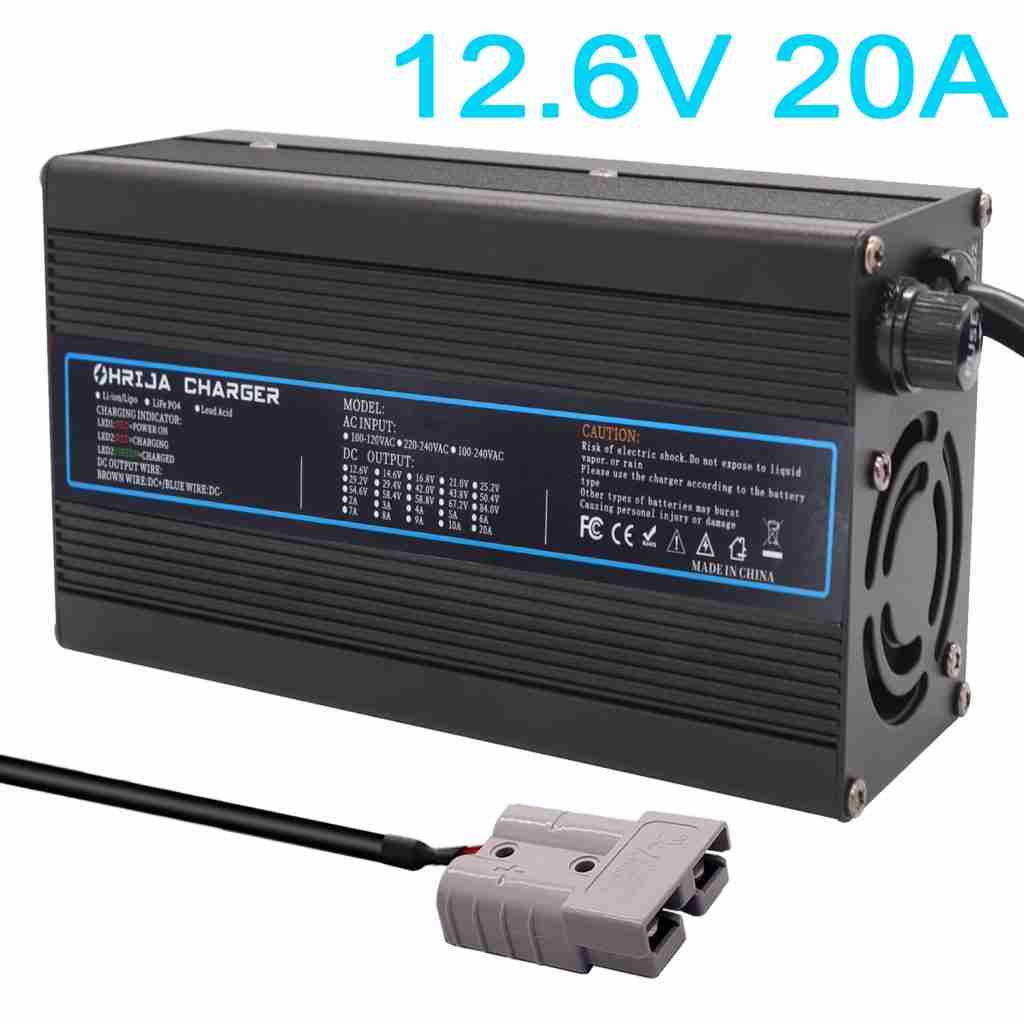
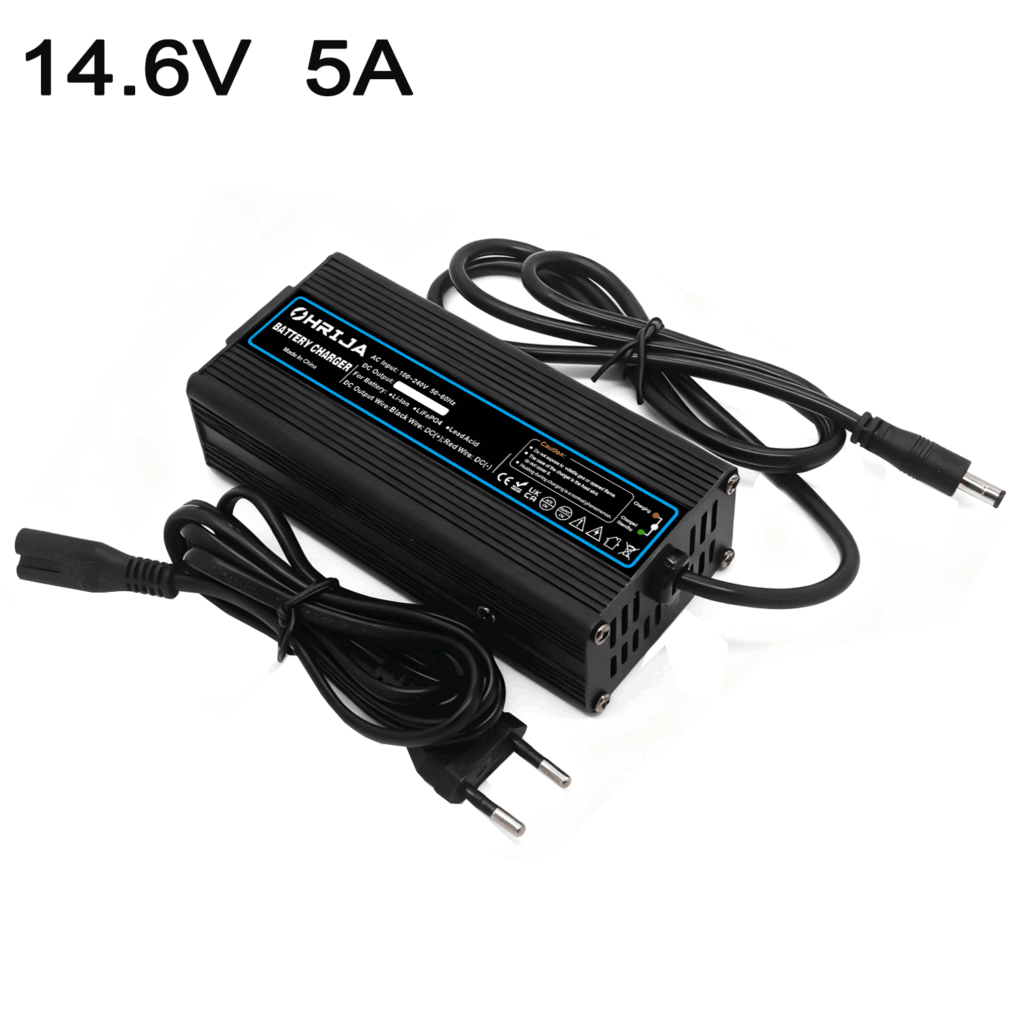
Not every application requires the same power supply format. The following comparison helps narrow the product type before you evaluate individual models.
| Power Supply Type | Typical Application | Main Advantage | Limitation | Best Choice When |
|---|---|---|---|---|
| Enclosed AC-to-DC switching supply | Industrial equipment, control systems, LED systems | Compact regulated DC output with enclosed construction | Requires suitable mounting and ventilation | You need a fixed DC output from mains AC |
| Open-frame switching supply | OEM electronics and equipment integration | Can fit into a custom product enclosure | Needs appropriate system-level protection and enclosure design | You control the complete equipment design |
| DIN rail power supply | Control cabinets and automation systems | Convenient panel mounting and wiring | Must match cabinet temperature and load requirements | You need organized industrial cabinet installation |
| DC-to-DC converter | Vehicle systems, battery-powered equipment | Converts one DC voltage to another | Input range and transient protection are critical | Your available source is a battery or DC bus |
| Adjustable bench supply | Testing, repair, laboratory work | Adjustable voltage and often current limiting | Not always designed for permanent equipment installation | You need controlled testing or prototyping |
| Battery charger | Li-ion, LiFePO4, lead-acid battery systems | Uses a chemistry-specific charging profile | Not interchangeable with a generic DC power supply | You need to recharge a battery safely |
One critical distinction: a battery charger is not simply a switching power supply with a different label. A charger must manage the battery’s charging process and comply with its chemistry-specific voltage and current limits. A generic DC supply should not be used as a battery charger unless the battery manufacturer’s charging requirements and the supply’s control functions make that arrangement explicitly suitable.
5. How to Choose a Switching Power Supply for Different Applications
Industrial Control Equipment
Industrial controllers, PLCs, sensors, relays, and automation equipment often require stable DC power. Select the supply based on the combined load, transient demand, cabinet temperature, and required output quality.
For control cabinets, installation format and wiring access matter. A dedicated industrial power supply is usually preferable to a consumer wall adapter because it is designed for a more structured installation environment.
LED Lighting Systems
Check whether the LED product requires constant voltage or constant current. These are different power architectures. A 24V constant-voltage LED strip generally needs a suitable 24V supply, while a high-power LED module may require a constant-current driver with a specified current and voltage range.
For long cable runs, account for voltage drop and conductor sizing. A supply with a higher current rating cannot compensate for undersized wiring or poor connections.
Battery-Powered Equipment
Battery-powered systems may require a DC-to-DC converter to create a stable output from a battery whose voltage changes during charge and discharge. The converter must accept the battery’s complete operating voltage range and handle transient conditions.
If the actual requirement is to recharge a battery, choose a dedicated charger. OHRIJA offers chemistry-specific categories such as Li-ion battery chargers, LiFePO4 battery chargers, and lead-acid battery chargers. These product types should be selected according to the battery chemistry and pack specification.
Electric Bikes and Golf Carts
Electric mobility systems combine battery packs, BMS electronics, motors, controllers, and chargers. The charger must match the battery’s chemistry, series-cell configuration, charging voltage, and current limit.
For example, a 54.6V lithium-ion charger may be appropriate for a compatible battery configuration, but it should not be selected solely because the battery is described as a “48V battery.” Review the pack specification and charger datasheet together. OHRIJA’s 54.6V 5A Li-ion battery charger is an example of a product with a defined output voltage and current that must be matched to the intended battery.
Golf cart systems may use different battery voltages and chemistries. Buyers should review the dedicated golf car battery charger range and confirm compatibility with the specific vehicle battery.
High-Power DC Equipment
Equipment requiring higher DC voltages and power levels needs careful consideration of output current, insulation, thermal design, and cable selection. For example, a 60V 16A supply has a nominal output power of 960W, while a product marketed as 1000W may have additional model-specific ratings and operating conditions.
Review the actual output specifications of a 60V 16A 1000W AC-to-DC power supply before using it in a system. Confirm that the connected equipment accepts the output voltage and that the supply’s rated current, thermal limits, and protection functions meet the application.
6. Pros and Cons of Switching Power Supplies
Switching power supplies are the preferred choice for many modern electronic and industrial applications, but they are not perfect for every situation. The design should be evaluated against the load’s requirements.
| Advantages | Limitations |
|---|---|
| Generally higher efficiency than comparable linear supplies | Switching circuits can generate electromagnetic interference |
| Compact size and lower weight for many power levels | Design and troubleshooting can be more complex |
| Wide range of input and output voltage options | Not every model supports a wide input range or adjustable output |
| Suitable for many industrial, commercial, and consumer applications | Thermal performance depends on installation and derating |
| Can provide regulated output under changing load conditions | Output ripple and transient response vary between models |
| Protection functions can improve system resilience | Protection behavior must be verified for the actual application |
For most modern equipment, a well-designed switching power supply is worth using because of its efficiency, size, and flexibility. The important buying decision is not whether switching technology is good in general; it is whether the specific model meets the electrical and environmental demands of your device.
7. Common Mistakes When Choosing a Switching Power Supply
Mistake 1: Matching Voltage but Ignoring Current
A 12V supply with insufficient current capacity may fail even though its voltage is correct. Always check the maximum load and startup demand.
Mistake 2: Selecting Wattage Without Checking the Load Profile
Wattage alone does not reveal whether a supply can handle short current peaks. Motors, capacitive loads, and other dynamic devices may require a higher peak rating.
Mistake 3: Assuming All Power Supplies Are Regulated Equally
Output tolerance, ripple, noise, and transient response differ. Sensitive electronics may require better output quality than basic lighting or resistive loads.
Mistake 4: Using a Generic Power Supply to Charge a Battery
A battery charger must follow the battery’s chemistry-specific charging requirements. A generic regulated DC supply may lack the required charging control and safety behavior.
Mistake 5: Ignoring Heat and Derating
A supply that can deliver its rated power in a cool test environment may need to be derated in a hot enclosure. Read the manufacturer’s temperature and installation guidance.
Mistake 6: Overlooking Electrical Noise
Switching noise can interfere with sensitive circuits if the supply, grounding, cable routing, and filtering are poorly matched. Review EMC information and test the complete system where necessary.
Mistake 7: Buying Only on Price
A cheaper product may have an attractive headline rating but inadequate documentation, protection, thermal design, or warranty support. For equipment used commercially, these omissions can become expensive.
8. Buying Considerations: How Much Should You Spend on a Switching Power Supply?
The right price depends on output power, topology, efficiency, component quality, enclosure, cooling, protection, certifications, and production volume. A small adapter and a high-power industrial supply should not be compared using price per watt alone.
| Buying Priority | What It Usually Adds | When It Is Worth Paying More |
|---|---|---|
| Higher power capacity | Higher-rated components and thermal design | When the load or startup current requires it |
| Better output regulation | More controlled output under changing conditions | For sensitive electronics and control equipment |
| Lower ripple and noise | Improved filtering and design optimization | For measurement, communication, and precision circuits |
| Advanced protection | Additional sensing and control functions | For unattended, commercial, or higher-risk installations |
| Industrial enclosure | Mounting, protection, and thermal design features | For cabinets, machinery, and demanding environments |
| Certification and documentation | Testing and compliance evidence | When required by regulation, customers, or export markets |
Is It Worth Upgrading an Existing Power Supply?
Upgrade when the existing supply repeatedly enters protection mode, overheats, causes voltage instability, cannot handle the equipment’s peak demand, or lacks the required safety and environmental rating.
Do not upgrade simply because a higher-wattage product is available. If the existing supply meets the load requirements and operates reliably within its rated conditions, replacing it may not provide meaningful value.
For commercial equipment, calculate the cost of failure. Downtime, field service, product returns, and damaged downstream equipment can cost more than the difference between a basic supply and a properly engineered model.
9. OHRIJA: Switching Power Supplies and Battery Charging Solutions
When sourcing a switching power supply or battery charger, buyers should look for a supplier that understands both power conversion and the requirements of the connected equipment. OHRIJA is a power electronics brand with products covering switching power supplies, battery chargers, and related DC power applications.
OHRIJA Power Electronics
OHRIJA belongs to Dongguan Hengruihong Technology Co., Ltd., established in 2020 and headquartered in Dongguan, Guangdong Province, China. The company integrates research and development, production, and sales.
Its main products include lithium battery chargers, lithium iron phosphate battery chargers, lead-acid battery chargers, golf cart battery chargers, power adapters, and switching power supplies.
OHRIJA’s product range supports applications where the correct output voltage, current capacity, charging profile, and power conversion design must be matched to the equipment.
Explore the OHRIJA battery charger and power solution range to review available products and discuss application requirements.
How to Select an OHRIJA Product for Your Application
First determine whether you need a regulated DC power supply or a battery charger. If the objective is to power electronic equipment, compare the required voltage, current, wattage, input range, and installation conditions with the relevant power supply model.
If the objective is to recharge a battery, identify the chemistry and battery configuration first. A lithium-ion battery charger is not automatically suitable for LiFePO4 or lead-acid batteries. Review the corresponding golf cart charger or chemistry-specific charger category only after confirming the battery requirements.
For OEM and bulk purchasing, provide the supplier with a complete electrical specification. Ask for model-specific datasheets, sample validation, protection details, warranty terms, and any required customization. This makes the quotation more accurate and reduces the risk of ordering a product that is unsuitable for the application.
10. Who Needs a Carefully Selected Switching Power Supply?
Almost every electronic product needs a suitable power source, but some applications require more detailed engineering review than others.
- For beginners: Match the device’s specified voltage, current, connector, and polarity. Choose a regulated supply from a traceable manufacturer.
- For DIY electronics: Use an adjustable bench supply for testing and a properly rated fixed supply for the final installation.
- For commercial users: Prioritize documented specifications, protection functions, warranty, and consistent supply availability.
- For industrial equipment: Evaluate thermal derating, output quality, installation format, electrical safety, and EMC performance.
- For heavy-duty applications: Check startup current, transient response, cooling, vibration, and the actual operating environment.
- For battery systems: Distinguish between a DC power supply and a dedicated battery charger. Select the charger according to battery chemistry and BMS requirements.
You may not need an industrial-grade supply for a low-risk consumer device. Equally, a basic wall adapter is rarely the right choice for a machine controller or equipment expected to operate continuously in a demanding environment.
11. Expert Recommendation: A Practical Checklist Before You Order
We recommend using the following checklist for every new power supply purchase. It is especially useful when comparing multiple models or requesting a quotation from a manufacturer.
- Confirm the device’s required output voltage and tolerance.
- Calculate continuous current and identify startup or peak demand.
- Calculate output wattage and verify the supply’s rated capacity.
- Confirm AC or DC input requirements and the available input range.
- Review output regulation, ripple, noise, and transient response.
- Check protection functions and their documented operating behavior.
- Confirm cooling, temperature rating, mounting, and enclosure suitability.
- Verify applicable safety and EMC compliance for the target market.
- Check connector, cable size, polarity, and grounding requirements.
- Review warranty, technical support, product traceability, and supply continuity.
Final verdict: The best way to choose the correct switching power supply for your device is to work from the load specifications, not the product catalogue. Match voltage first, calculate current and wattage second, then evaluate regulation, protection, and installation conditions. For simple electronics, a correctly rated regulated supply is usually enough. For industrial and commercial equipment, prioritize documented performance, thermal capability, and long-term reliability. For battery charging, use a dedicated charger designed for the exact battery chemistry rather than treating a generic switching power supply as a substitute.
12. Frequently Asked Questions About Choosing a Switching Power Supply
1. How do I choose the correct switching power supply for my device?
Check the device’s required output voltage, continuous and peak current, wattage, input source, output tolerance, and environmental conditions. Then select a supply with appropriate protection and thermal ratings. Always confirm connector and polarity before connecting the equipment.
2. Can I use a power supply with a higher amp rating?
Generally, yes, if the output voltage and all other specifications are correct. The connected device draws the current it requires; the supply’s ampere rating indicates its available capacity. A higher current rating does not automatically force more current into the device.
3. What happens if the switching power supply has too little wattage?
The supply may enter current limiting, shut down, overheat, or produce unstable output. The connected equipment may reset, fail to start, or operate intermittently. Select a supply that can support both continuous load and expected peak demand.
4. Is a switching power supply better than a linear power supply?
For most modern applications, switching power supplies offer better efficiency and a smaller size for comparable power levels. Linear supplies can still be useful in applications where very low noise or simple regulation is a priority. The best choice depends on the load’s electrical requirements.
5. What is the difference between an AC-to-DC and a DC-to-DC switching power supply?
An AC-to-DC supply converts alternating current from a mains source into regulated direct current. A DC-to-DC converter changes one DC voltage level into another. Choose according to the source available to your equipment.
6. How much power margin should I allow?
There is no universal percentage for every application. The required margin depends on startup current, load transients, ambient temperature, cooling, and manufacturer derating guidance. Calculate the real load profile rather than applying a fixed margin blindly.
7. What is output ripple in a switching power supply?
Output ripple is the residual periodic variation in the DC output voltage. Excessive ripple can affect sensitive electronics, sensors, communication equipment, and measurement circuits. Compare ripple specifications using the same measurement bandwidth and test conditions.
8. Can I use a switching power supply as a battery charger?
Not automatically. A battery charger must follow the battery’s required charging profile, voltage limits, current limits, and safety requirements. Use a dedicated charger unless the complete system is specifically designed and approved for the battery application.
9. Why does a switching power supply overheat?
Common causes include excessive load, high ambient temperature, restricted airflow, incorrect installation orientation, poor ventilation, or a failing component. Check the rated load and temperature derating information before assuming the supply itself is defective.
10. What certifications should I check when buying a switching power supply?
Requirements depend on the product category and destination market. Check applicable electrical safety and EMC standards, relevant product approvals, and the scope of the certificates. Confirm that documentation applies to the exact model rather than relying only on a manufacturer’s general quality-system certificate.
13. References and Technical Resources
Use recognized standards and technical guidance when evaluating switching power supply safety, performance, and electromagnetic compatibility.
- International Electrotechnical Commission (IEC) — International standards and technical resources covering electrical equipment, power conversion, and safety.
- UL Solutions — Product safety testing, certification, and technical resources for electrical and electronic products.
- U.S. Department of Energy — Standby Power — Guidance on power consumption and energy use in electrical and electronic equipment.
Always consult the latest applicable standards, the exact product datasheet, and the equipment manufacturer’s instructions before finalizing a power supply selection.
