
No products in the cart.

A battery charger is not just an accessory. It directly affects charging time, day-to-day equipment availability, and how safely you maintain an expensive battery. Whether you own an electric bike, electric scooter, mobility device, golf cart, or lithium battery system, choosing a reliable battery charger brand is a practical investment—not simply a branding decision.
The cheapest charger can look attractive until it charges too slowly, develops a fault, proves incompatible with your battery management system, or needs replacing sooner than expected. The better approach is to compare electrical compatibility, protection features, documentation, warranty support, and long-term operating cost before buying.
Why Choose a Reliable Battery Charger Brand?
A reliable battery charger brand is worth choosing because it gives you a better basis for verifying battery compatibility, charging performance, safety protections, and after-sales support. A reputable manufacturer should provide clear specifications and explain which battery chemistry, voltage, charging current, and connector configuration a product supports.
For long-term use, those details matter more than a low advertised price or a large current rating. A charger with the wrong output voltage is not a bargain, and a high-amperage model is not automatically better. The right charger is the one designed for your exact battery system and normal charging requirements.
OHRIJA, a brand belonging to Dongguan Hengruihong Technology Co., Ltd., focuses on battery chargers and related power products, including lithium-ion battery chargers, LiFePO4 chargers, lead-acid chargers, golf cart chargers, power adapters, and switching power supplies. Buyers evaluating OHRIJA or any alternative should compare the specifications of the individual model with their battery manufacturer’s requirements.
Quick Answer
Should you choose a reliable battery charger brand? Yes, particularly when you depend on the battery for daily transportation, work, mobility, or other equipment that is expensive to replace.
- What it is: A charger supplied by a manufacturer that provides identifiable product specifications, compatibility information, and a support process.
- How it works: The charger converts input power into a controlled charging output suited to a specified battery chemistry and voltage.
- Main benefits: Better compatibility verification, more predictable charging, documented protection features, and clearer support options.
- Limitations: A recognizable brand alone cannot guarantee quality, and a premium charger may not offer meaningful benefits if it exceeds your actual needs.
- Who should use one: eBike and scooter owners, mobility-device users, golf cart operators, battery-system integrators, and commercial equipment buyers.
- Who may not need an upgrade: Someone whose existing charger is correctly matched, operates normally, and is supported by the battery manufacturer.
- Common mistake: Selecting by voltage label or amperage alone without confirming chemistry, full-charge voltage, connector polarity, and battery manufacturer requirements.
Our recommendation: Verify the battery specifications first, then compare chargers by compatibility, safety documentation, thermal management, warranty, and total ownership cost. Do not pay extra for features you cannot use, but do not compromise on essential electrical compatibility.
Table of Contents
- Quick Summary Table
- Reason 1: Better Battery Compatibility
- Reason 2: More Predictable Charging Performance
- Reason 3: Protection Features Matter
- Reason 4: Better Long-Term Battery Care
- Reason 5: Clearer Specifications and Documentation
- Reason 6: Thermal Management and Build Quality
- Reason 7: Warranty and Technical Support
- Reason 8: Better Choices for Different Applications
- Reason 9: Lower Total Cost of Ownership
- Reason 10: Easier Purchasing for Commercial Users
- Battery Charger Comparison Table
- Pros and Cons
- Buying Guide and Common Mistakes
- OHRIJA Charger Options
- Frequently Asked Questions
- References
Quick Summary Table: What Should You Look For?
| Decision Factor | Why It Matters | What to Verify | Our Recommendation |
|---|---|---|---|
| Battery compatibility | Incorrect charging parameters can create a safety risk or prevent proper charging. | Chemistry, nominal voltage, full-charge voltage, and manufacturer requirements. | Make this your first filter. |
| Charging current | Current affects charging time and must suit the battery’s permitted charge rate. | Charger output amperage and battery charge-current limits. | Choose a suitable rate, not the highest number. |
| Protection features | Protection design helps manage electrical faults and abnormal operating conditions. | Documented overvoltage, overcurrent, short-circuit, and thermal protection where applicable. | Verify features for the exact model. |
| Thermal performance | Heat affects operating conditions and can contribute to component stress. | Cooling design, rated operating temperature, and ventilation requirements. | Prioritize for frequent or high-power charging. |
| Warranty and support | Support is important if the charger fails or compatibility questions arise. | Warranty period, exclusions, service contact, and replacement procedure. | Check before ordering. |
| Cost of ownership | Purchase price alone does not reflect replacement, downtime, or service costs. | Price, expected usage, warranty, and replacement availability. | Compare the full cost over the intended service period. |
1. A Reliable Battery Charger Brand Makes Compatibility Easier to Verify
Battery compatibility is the most important reason to choose a dependable charger supplier. A charger can fit the connector and still be electrically unsuitable for the battery. The critical details include battery chemistry, nominal voltage, required charging profile, full-charge voltage, maximum permitted charge current, and connector polarity.
Lithium-ion, lithium iron phosphate (LiFePO4), and lead-acid batteries do not all use the same charging parameters. Even two battery packs described with the same nominal voltage can require different charging settings. For example, a 48V-class lithium-ion eBike battery commonly uses a charger with a higher output voltage than its nominal label, but the correct value must be confirmed against the pack’s specification rather than assumed from the name alone.
A responsible manufacturer should identify the intended battery type and electrical output clearly. If a product page uses vague descriptions such as “universal lithium charger” without listing charging voltage, current, or supported chemistries, ask for clarification before purchase.
For owners comparing different eBike systems, our guide to the best eBike battery chargers is a useful starting point for understanding the factors that distinguish charger options.
Practical advice: Never choose a charger solely because its connector fits. Confirm the complete charging specification with the battery or equipment manufacturer.
2. Consistent Charging Performance Helps Reduce Downtime
A charger should deliver its specified output under its stated operating conditions. In practical terms, that means predictable charging behavior, clear status indicators where provided, and a charging process that follows the battery’s required profile.
Charging time depends on more than the charger’s advertised amperage. Battery capacity, starting state of charge, battery temperature, charging limits, conversion efficiency, and the final charging stage all affect the time required. A higher-current charger may reduce charging time only when the battery is designed to accept that current.
For an eBike commuter, reliable charging helps make the next day’s journey more predictable. For a scooter rental operator, a charger fault can leave equipment unavailable during a busy period. For a workshop maintaining several battery-powered devices, inconsistent charging performance creates extra troubleshooting work.
We recommend comparing stated output specifications and operating conditions rather than trusting vague claims such as “fastest charging” or “ultra-high efficiency.” Ask whether the rated output is continuous, which input conditions apply, and what the charger does when charging is complete.
3. Documented Protection Features Are Worth Prioritizing
Electrical protection is not an optional luxury. A well-designed charger should incorporate safeguards appropriate to its intended application and applicable product requirements. Depending on the model, these may include overvoltage protection, overcurrent protection, short-circuit protection, overtemperature protection, or other fault-management functions.
However, a feature list is only the beginning. A protection claim should be supported by product documentation, appropriate test information, and a clear description of the conditions under which the protection operates. Do not assume every charger from a particular brand includes identical safeguards.
For long-term use, inspect the exact model’s manual and technical documentation. Check input-voltage range, rated output, operating temperature, ventilation instructions, and any warnings about moisture or use in enclosed spaces.
Never use a damaged charger, exposed cable, loose connector, or visibly overheated unit. Keep charging equipment away from water and combustible clutter, follow the battery manufacturer’s instructions, and stop using equipment that produces unusual heat, odor, sound, or visible damage.
For additional background, the U.S. Consumer Product Safety Commission provides general guidance on product safety and consumer safety guidance. Follow the specific safety instructions supplied with your battery and charger as well.
4. The Correct Charger Supports Better Long-Term Battery Care
A reliable charger cannot make a battery last forever, but the correct charging profile helps avoid preventable charging errors. Battery life depends on chemistry, temperature, charge and discharge rates, storage conditions, depth of discharge, and the battery management system, among other factors.
One common misconception is that a higher-amperage charger is always an upgrade. It is not. If the battery manufacturer specifies a maximum charging current, using a charger above that limit may be inappropriate even if the connector and nominal voltage appear correct. A faster charger is useful only when the complete battery system supports it.
Another mistake is assuming all lithium batteries should use the same charger. LiFePO4 and other lithium-ion chemistries have different charging requirements. A charger intended for one chemistry should not be substituted for another unless the manufacturer explicitly confirms compatibility.
For users with LiFePO4 battery systems, review the battery documentation and compare it with a specialized product category such as lithium iron phosphate battery chargers. For 12V applications, the guide to 12V LiFePO4 battery chargers can help frame the specifications to compare.
Our recommendation: Use the charging profile specified for your battery, avoid unnecessary high-current upgrades, and follow the manufacturer’s instructions for storage and charging temperature.
5. Clear Specifications Make the Purchase Decision More Reliable
A dependable charger manufacturer should make it possible to evaluate the product before money changes hands. At minimum, look for input voltage and frequency, output voltage, output current, compatible battery chemistry, connector information, rated power, operating temperature, and relevant safety warnings.
For business purchases, documentation becomes even more important. Buyers may need drawings, labels, manuals, test reports, packaging details, or model-specific declarations to support internal approval and product integration. If the seller cannot provide basic specifications, procurement teams have little basis for evaluating suitability or tracing the product later.
Be careful with broad claims such as “works with all batteries,” “100% safe,” or “extends battery life.” These statements are not a substitute for technical evidence. Reliable suppliers should distinguish verified specifications from general marketing language.
For a practical comparison of 48V-class eBike charging options, see our guide to 48V eBike battery chargers. Use the guide as a shortlist aid, then verify the exact full-charge voltage and current required by your own battery.
6. Build Quality and Thermal Management Matter Over Time
Chargers convert electrical energy and generate heat during operation. Component quality, circuit design, cooling arrangements, enclosure design, and rated operating conditions all influence how a unit behaves during repeated charging cycles.
For occasional household use, a compact charger with suitable ratings may be sufficient. For frequent charging, high-output applications, or environments with elevated ambient temperatures, thermal performance deserves more attention. A charger that operates in a poorly ventilated cupboard or is covered during use may not remain within its intended operating conditions.
Inspect the manufacturer’s guidance for ventilation, placement, and operating temperature. Look for a sturdy enclosure, strain relief around cables, secure connectors, and clear labeling. These are useful inspection points, but external appearance alone cannot prove internal component quality or electrical safety.
For heavy-duty applications, request technical documentation that matches the exact model and intended operating conditions. Where equipment will run continuously or be used in a commercial environment, confirm whether the charger is rated for that duty cycle instead of assuming a consumer model is suitable.
7. Warranty and Technical Support Can Save Time and Money
A charger is often purchased to keep another piece of equipment operational. If it fails, the cost is not limited to replacing the charger. An eBike owner may lose access to transportation, a service business may have to take equipment out of use, and a distributor may need to handle customer complaints.
Before choosing a brand, find out how to contact support, how warranty claims are handled, which failures are covered, and whether replacement units or spare cables are available. Confirm whether the warranty applies in your country and whether shipping or diagnostic costs fall to the buyer.
For importers and OEM buyers, ask how the supplier identifies models, manages product revisions, and communicates changes in specifications. A clear process helps reduce confusion when repeat orders are placed months or years apart.
Do not assume that every supplier with a polished website provides strong after-sales support. Verify the written warranty and service process before committing to a large order.
8. A Specialist Brand Can Offer Chargers for Different Applications
Battery-powered products have different charging needs. An eBike charger is not automatically suitable for a mobility scooter, a golf cart, or a stationary LiFePO4 battery bank. Even within one product category, voltage, current, connector, and charging requirements can vary.
A manufacturer with a range of charger types can be useful when a household or business operates several different battery-powered systems. The benefit is not that one charger fits everything; it is that you can compare products from a supplier that understands multiple application categories while still selecting the correct model for each battery.
OHRIJA’s stated product range includes lithium-ion and LiFePO4 chargers, lead-acid chargers, golf cart chargers, power adapters, and switching power supplies. Buyers should still evaluate every model independently and confirm its intended battery type and electrical specifications.
For scooter owners, our guide to mobility scooter battery chargers can help identify the practical questions to ask before replacing a charger. If you are comparing chargers for a higher-voltage electric scooter, make sure the product’s stated output matches the battery manufacturer’s specification.
9. The Right Charger Can Reduce Total Cost of Ownership
Purchase price is easy to compare; long-term cost is more complicated. A low-cost charger may be perfectly adequate when it meets the required specification and has appropriate documentation. However, an unverified charger with unclear support may create extra expense if it fails, causes downtime, or has to be replaced quickly.
To assess value, consider the charger price, shipping, warranty coverage, expected usage frequency, replacement availability, and the cost of equipment downtime. Commercial buyers should also account for staff time spent troubleshooting and the consequences of keeping a device out of service.
A Simple Cost Comparison
Suppose two chargers meet the battery’s required specifications. Charger A costs less but has limited documentation and no clear replacement process. Charger B costs more but has verified specifications, accessible support, and a warranty that suits your use. The second option may be more economical for a business that cannot afford unexpected downtime. For an occasional-use household device, the price difference may not be justified if both products have equivalent verified performance and support.
This is why we recommend comparing actual evidence rather than automatically choosing the most expensive brand. Reliability is a combination of appropriate design, verified performance, support, and suitability—not a price tag.
10. Reliable Suppliers Make Commercial Purchasing More Predictable
For distributors, repair centers, fleet operators, and equipment manufacturers, a battery charger is part of a wider supply chain. Consistent specifications, traceable model numbers, repeat-order availability, and responsive technical communication can be as important as the unit price.
Before choosing a supplier for commercial use, confirm the following:
- Whether the supplier can provide complete specifications and manuals for each model.
- Whether the product’s electrical ratings and connectors remain consistent between orders.
- Whether applicable compliance documentation can be supplied and verified for the target market.
- Whether minimum order quantities, production lead times, packaging, and shipping terms are clear.
- Whether the supplier can explain its quality-control and product-change procedures.
- Whether warranty claims and technical questions have a documented handling process.
For OEM projects, do not approve a charger based only on a sample’s appearance. Confirm electrical performance, mechanical fit, connector configuration, labeling, and applicable market requirements before placing a production order. If a product will be integrated into a finished device, the equipment manufacturer should assess the complete system rather than treating the charger as an isolated component.
OHRIJA’s parent company, Dongguan Hengruihong Technology Co., Ltd., was established in 2020 and is based in Dongguan, Guangdong Province, China. The company describes itself as a high-tech enterprise integrating research and development, production, and sales. Buyers considering the brand for recurring or OEM orders should request current, model-specific technical and commercial documentation to determine whether a particular charger fits their project.
Battery Charger Comparison Table: What Is Worth Paying For?
The table below compares common purchasing options by their typical trade-offs. Actual quality varies by model and supplier, so these categories should be treated as evaluation starting points rather than guarantees.
| Evaluation Factor | Unverified Low-Cost Charger | Documented Branded Charger | Application-Specific Charger |
|---|---|---|---|
| Compatibility information | May be incomplete or unclear | Should provide model specifications | Should identify the intended battery system |
| Charging profile | Needs independent verification | Must be checked against the product documentation | Designed for a defined use, but still requires confirmation |
| Protection features | Do not assume features are present | Verify the exact model’s stated protections | Verify protection and system requirements for the application |
| Technical support | May be difficult to establish | Depends on supplier and warranty terms | Can be valuable for specialized equipment and integration |
| Initial price | Often the main attraction | May be higher or similar | Varies by output and application |
| Best use case | Only when specifications and safety are independently established | Everyday users who want clear documentation | Commercial, specialized, or repeat-use systems |
| Our verdict | Do not buy on price alone | Strong general starting point | Best when the application requires specific features |
A branded charger is not automatically superior to every generic alternative. A generic model with verified specifications, appropriate safety compliance, and dependable support may be a sound choice. Conversely, a familiar brand name cannot compensate for an incompatible charging voltage. Evaluate the actual product rather than relying on either label alone.
Pros and Cons of Choosing a Reliable Battery Charger Brand
| Pros | Cons and Limitations |
|---|---|
| Clearer product specifications can make compatibility checks easier. | Documentation quality varies; every model still needs verification. |
| Established support channels can simplify warranty or technical questions. | Support quality depends on the supplier, region, and specific warranty. |
| Application-specific products can simplify selection for different battery systems. | Specialized chargers may cost more and cannot necessarily be used across systems. |
| Verified protection features and ratings help buyers evaluate electrical suitability. | Marketing claims alone do not prove that protections have been tested or certified. |
| Repeatable specifications can help commercial users manage purchasing and maintenance. | A brand name by itself does not guarantee consistent stock or product revisions. |
| A suitable charger can reduce avoidable compatibility problems and replacement uncertainty. | It cannot eliminate battery aging, misuse, poor storage, or faults elsewhere in the system. |
The strongest reason to choose a reliable battery charger brand is not prestige. It is the ability to make a better-informed purchase, verify the product’s suitability, and know where to turn if a technical issue occurs.
How to Choose a Reliable Battery Charger Brand: A Practical Buying Guide
Step 1: Identify the Battery Chemistry
Check whether the battery uses lithium-ion, LiFePO4, lead-acid, or another chemistry. Do not assume that a charger described simply as “lithium” supports every lithium-based battery.
Step 2: Confirm the Required Voltage
Record both the battery’s nominal voltage and the charging voltage specified by its manufacturer. The charger’s output must match the required charging profile. Nominal battery voltage and full-charge voltage are not necessarily the same.
Step 3: Choose a Suitable Current Rating
Check the maximum charging current permitted by the battery manufacturer. Higher current can shorten charging time in a compatible system, but it may be inappropriate for a battery that supports a lower rate. The charger must also be rated for the intended operating conditions.
Step 4: Confirm the Connector and Polarity
Check the connector type, pin arrangement, polarity, and physical fit. Never modify a connector or assume two visually similar connectors have the same wiring. For a replacement charger, matching the original part number or receiving written compatibility confirmation is often the safest route.
Step 5: Review Protection and Safety Documentation
Check which protection features the exact model provides and what compliance documentation is available for your market. Certification requirements differ by product category and jurisdiction. If compliance is essential to your purchase, verify the relevant document or certification against the issuing body rather than relying on a logo in a listing.
Step 6: Compare Warranty, Support, and Final Cost
Review the warranty, return process, replacement availability, shipping cost, and supplier responsiveness. For business purchases, confirm whether the manufacturer can provide consistent model identification and support for repeat orders.
Common Mistakes to Avoid
- Buying by nominal voltage alone.
- Using a charger with a different lithium battery chemistry without explicit approval.
- Assuming higher amperage always means better charging.
- Ignoring connector polarity and pin configuration.
- Believing a brand label automatically proves safety or certification.
- Charging with damaged cables or in a location that conflicts with the manufacturer’s instructions.
- Using a charger in wet, poorly ventilated, or otherwise unsuitable conditions.
- Failing to check the return policy before ordering a replacement charger.
Decision rule: If a seller cannot confirm chemistry, output voltage, current, connector configuration, and applicable safety information, do not buy the charger until those questions are resolved. A short pre-purchase check is far cheaper than an avoidable compatibility problem.
OHRIJA Battery Chargers: Options for Different Applications
OHRIJA supplies charger products for several battery-powered applications. The best model depends on the battery’s required charging voltage, allowable current, connector, and chemistry. The following products illustrate how the product category should be matched to a defined use; confirm the current specifications and compatibility on each product page before purchase.
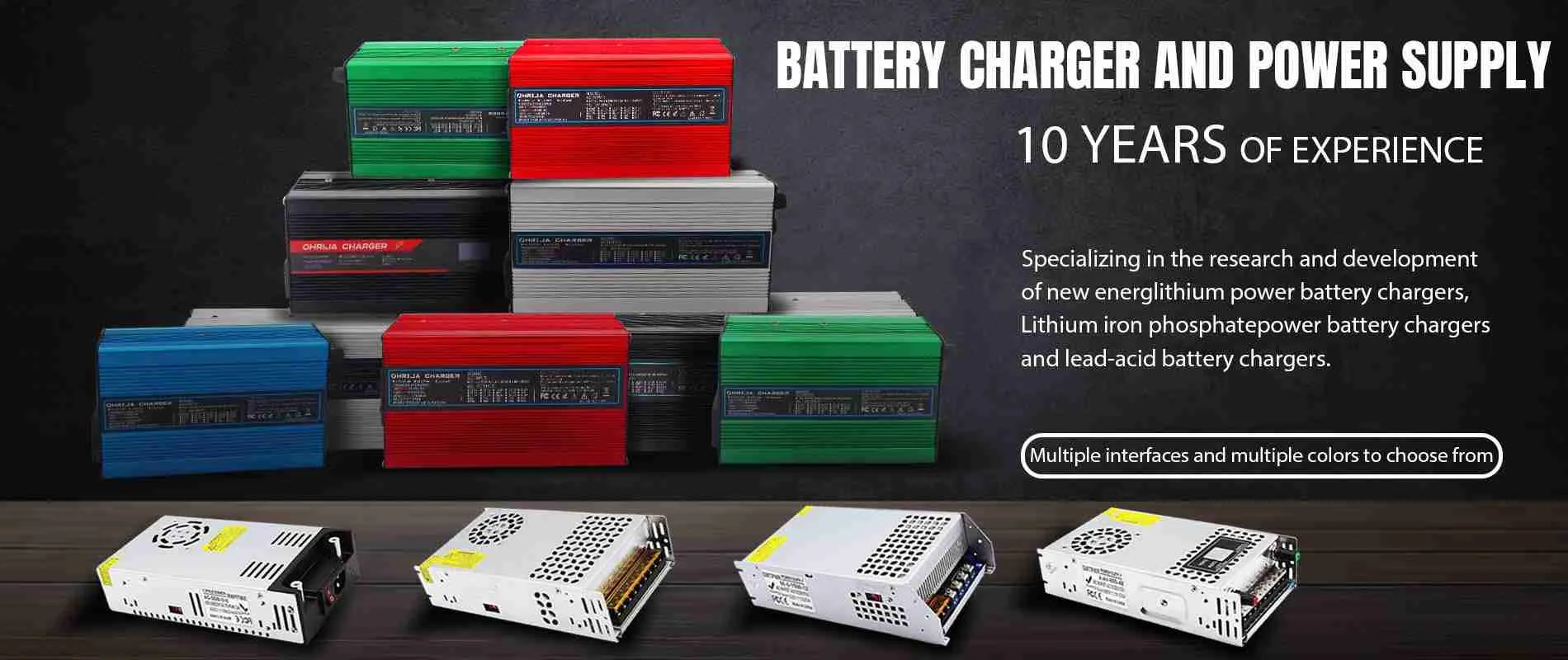
OHRIJA Charger Range
OHRIJA’s stated product portfolio includes lithium battery chargers, lithium iron phosphate battery chargers, lead-acid battery chargers, golf cart chargers, power adapters, and switching power supplies.
For buyers, the useful starting point is not the broad product range itself but whether the selected model matches the intended battery system and use conditions.
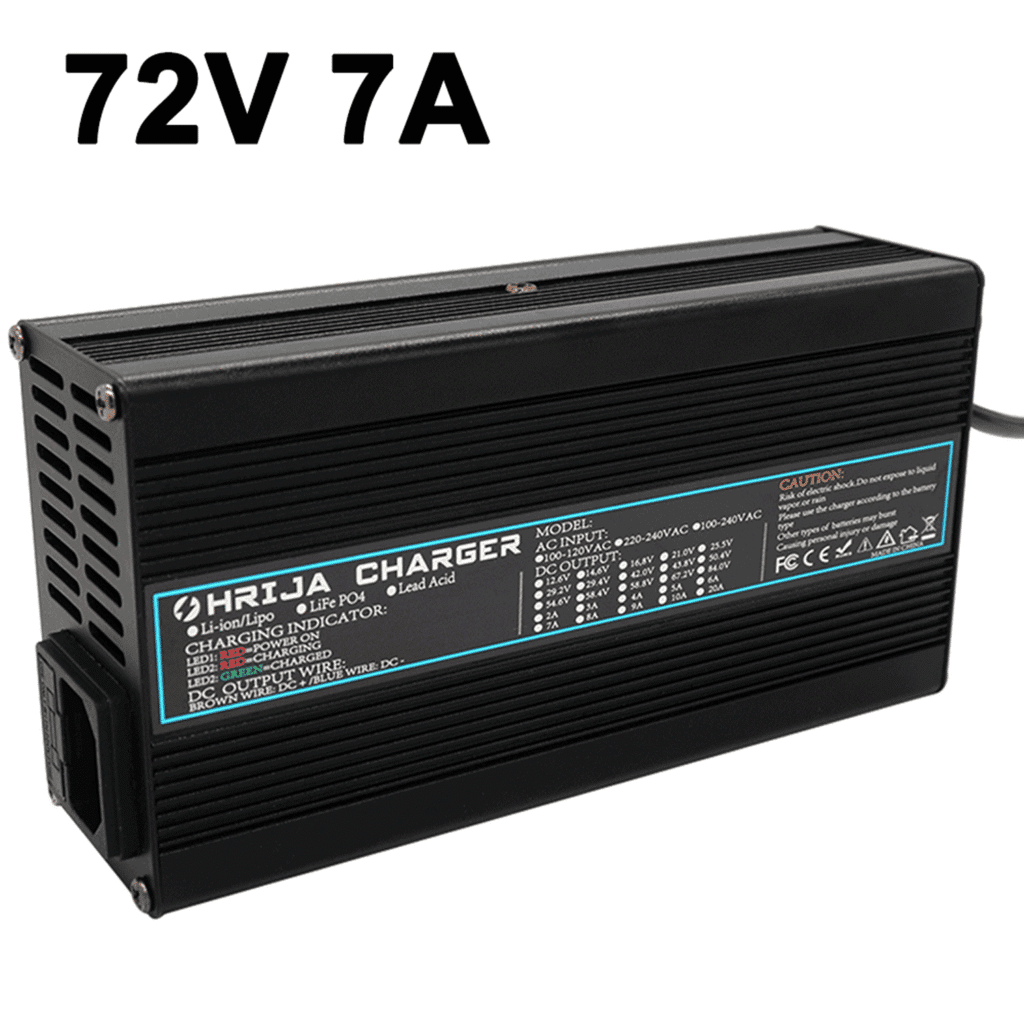
72V 7A Smart Lead Acid Battery Charger 88.2V Fast Smart Charger Safety Protection for Electric Bike Scooter Tricycle
37.50$
OHRIJ Waterproof charger Club Car 48V Golf Cart Charger 48V 15A 20A makes it suitable for 55.2V Lead Acid batteries
99.90$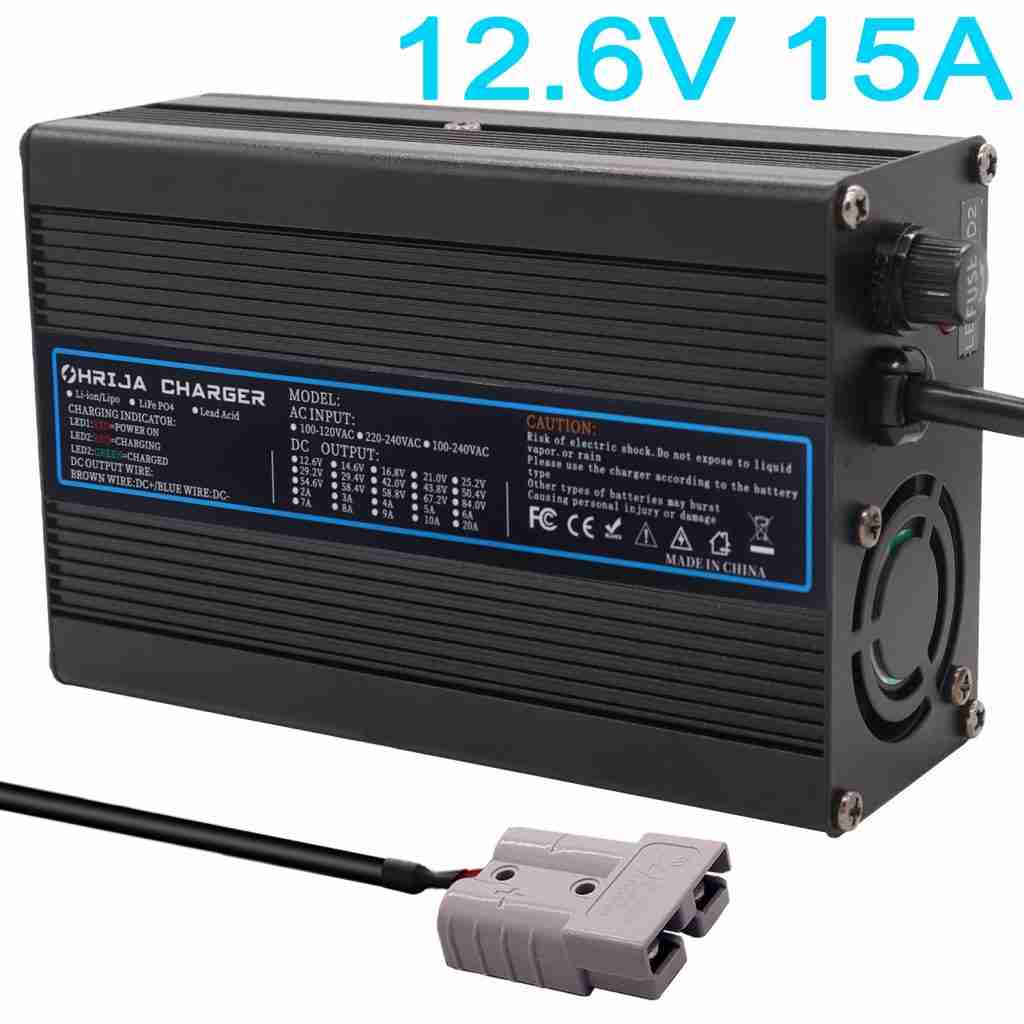
OHRIJA 12 volt lithium ion battery charger 12.6V 15A charger makes it suitable for 3S 12V Li-ion batteries
21.50$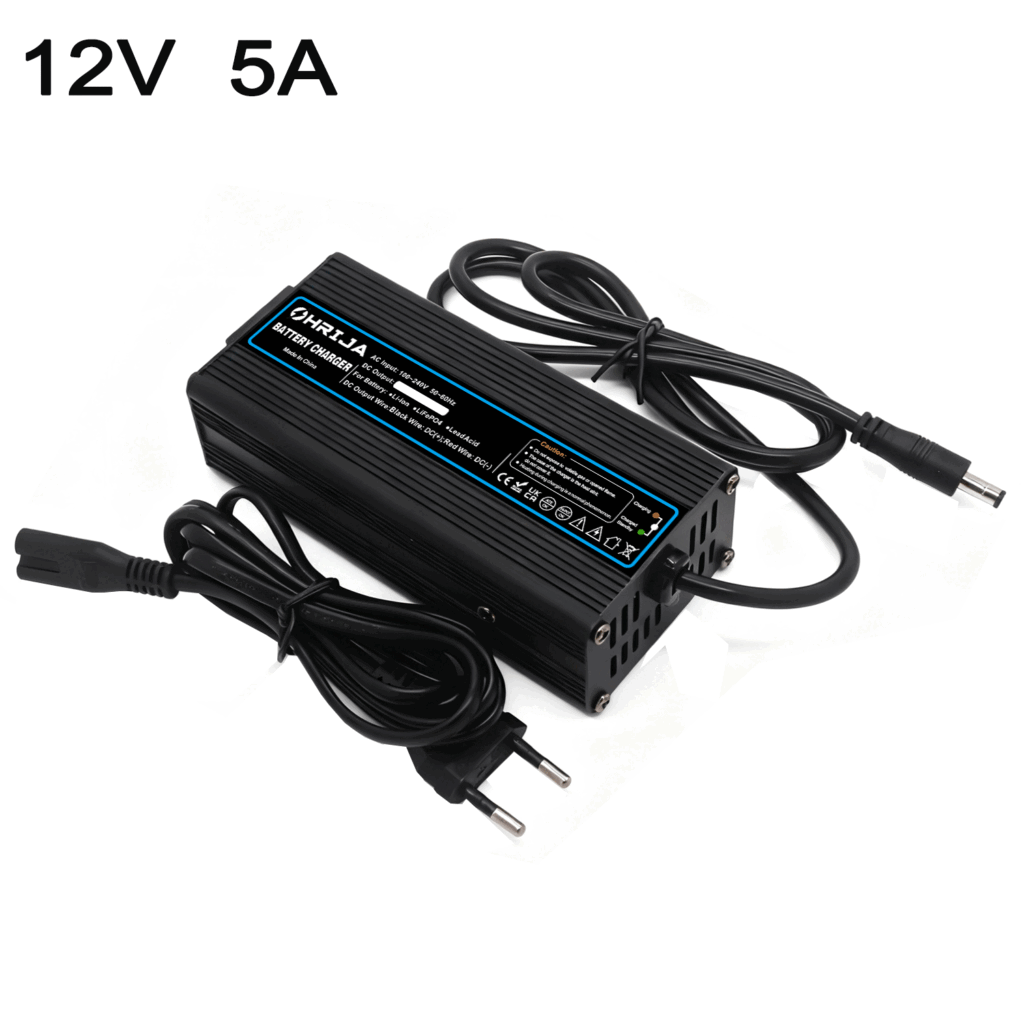
OHRIJA 12V 5A Aluminum Alloy Lithium Battery Charger for 4 Series 12V Lead-acid AGM Battery
14.90$
For 54.6V eBike Battery Systems
For a battery system that specifically requires a 54.6V charging output, review the OHRIJA 54.6V 5A lithium-ion battery charger. Confirm the battery chemistry, permitted charge current, connector, and original equipment specifications before ordering. A 54.6V label is not sufficient proof of compatibility on its own.
For Higher-Current eBike Charging
The OHRIJA 54.6V 10A charger listing is relevant to buyers comparing higher-current options for compatible systems. Do not choose a 10A charger simply because it promises a faster charge; first confirm that the battery pack and its management system permit that charging current.
For 12V LiFePO4 Battery Applications
Users with a 12V-class LiFePO4 battery system can review the OHRIJA 14.6V 30A LiFePO4 charger. Its suitability depends on the battery manufacturer’s specified charging voltage and maximum current, along with the system’s wiring, connectors, and intended use.
These examples are not interchangeable. Each is relevant only to a compatible battery system. For long-term use, verify the model-specific specifications and ask OHRIJA or the battery manufacturer to confirm compatibility if any detail is uncertain.
Expert Recommendation: Is a Reliable Battery Charger Brand Worth It?
Yes—provided you judge reliability by verifiable product details rather than by brand recognition alone. A charger should match the battery’s chemistry and charging voltage, provide an appropriate current rating, include clearly documented protection features, and come with usable instructions and support terms.
For an occasional-use household device, a correctly specified charger with adequate documentation may be all you need. For an eBike or scooter used every day, dependable charging and replacement support become more valuable. For commercial fleets, repair businesses, and OEM projects, consistent specifications, traceability, compliance documentation, and a clear technical-support process should be part of supplier selection.
OHRIJA is one option to evaluate for lithium-ion, LiFePO4, lead-acid, golf cart, and related power products. Compare the exact product you need against the battery manufacturer’s requirements and the terms offered by competing suppliers. The right choice is the model that meets your electrical requirements reliably at a reasonable total cost—not automatically the cheapest or most expensive one.
Final verdict: A reliable battery charger brand is worth considering because compatibility, charging performance, protection, and support matter throughout the life of your equipment. Verify the specifications first, buy for your actual application, and treat unsupported performance claims as a reason to ask more questions.
Frequently Asked Questions
1. What makes a battery charger brand reliable?
A reliable brand should provide clear model-specific specifications, battery compatibility information, safety instructions, warranty terms, and a way to obtain technical support. Claims should be backed by appropriate documentation rather than brand reputation alone.
2. Is it worth paying more for a branded battery charger?
It can be worth paying more when the product offers verified compatibility, useful documentation, suitable protection features, warranty coverage, and dependable support. A more expensive charger is not automatically better; compare the exact specifications and total cost.
3. Can I use one charger for different lithium batteries?
Not unless the charger is explicitly designed and approved for those battery chemistries and charging specifications. Lithium-ion and LiFePO4 batteries can require different charging profiles. Confirm compatibility with the battery manufacturer before connecting a charger.
4. Does a higher-amp charger charge a battery faster?
It may reduce charging time if the battery and its management system support the higher current. The battery’s permitted charge rate, charging profile, temperature, state of charge, and other factors also affect charging time. Do not exceed the manufacturer’s specified current limit.
5. How do I choose the right charger for a 48V eBike?
Check the battery manufacturer’s required charging voltage, battery chemistry, maximum charging current, connector type, and polarity. The nominal 48V label alone is not enough to select a compatible charger. Verify the exact charger model before purchase.
6. Are OHRIJA battery chargers suitable for long-term use?
Suitability depends on the individual model and the application. Review the charger’s specifications, compatibility, protection features, operating conditions, warranty, and support arrangements. Confirm that its charging output matches the battery manufacturer’s requirements before using it.
7. What protection features should a battery charger have?
Depending on the application, useful features may include overvoltage, overcurrent, short-circuit, and overtemperature protection. Verify which features the exact model provides and review the manufacturer’s instructions. Do not assume every model includes the same protections.
8. How can I reduce the total cost of owning a battery charger?
Choose a charger that matches the battery, follow operating instructions, keep it in suitable conditions, inspect cables and connectors, and review warranty and replacement availability. For commercial use, also account for downtime and the cost of troubleshooting or replacing incompatible equipment.
9. Should I replace a charger that still works?
Not necessarily. If the charger is correctly specified, undamaged, operates normally, and remains approved for your battery, an upgrade may provide little benefit. Replace it if it shows damage, behaves abnormally, no longer meets the manufacturer’s requirements, or cannot be verified as compatible.
10. What should commercial buyers ask a battery charger manufacturer?
Ask for model-specific specifications, manuals, relevant compliance documents, connector and wiring details, warranty terms, lead times, repeat-order consistency, and technical-support procedures. For OEM projects, verify the complete product and system requirements before approving production.
References
The following authoritative resources provide additional information about battery safety and product compliance. Always use the exact battery and charger manufacturer’s documentation for model-specific operating requirements.
- U.S. Consumer Product Safety Commission — Safety Guides. General consumer product safety information.
- National Institute of Standards and Technology (NIST). Reference information on measurement, standards, and technical assurance.
- UL Solutions. Product safety testing and certification information relevant to electrical products and applicable standards.
Bottom line: Choosing a reliable battery charger brand is a long-term decision about compatibility, safety, charging performance, and support. Start with your battery specifications, verify the exact model, compare the documentation and warranty, and consider total ownership cost. For everyday users and commercial buyers alike, that approach is more dependable than selecting a charger by price or amperage alone.