
No products in the cart.

Losing or breaking a power supply unit is a frustrating reality for light electric vehicle owners. When faced with a dead battery, consumers inevitably ask: exactly what kind of charger does a Razor electric scooter take? The electric mobility market is flooded with cheap, uncertified aftermarket replacement blocks that pose severe electrical hazards. As an industry solution provider, we have witnessed countless battery packs permanently destroyed by users plugging in incorrect voltages or mismatched polarities simply because the connector happened to fit.
Direct Answer: Depending on the specific model and battery chemistry of your vehicle, there are exactly 4 kinds of charger does a Razor electric scooter take: the 24V 3-prong inline charger, the 24V coaxial (barrel) charger, the 12V coaxial charger, and the heavy-duty 36V 3-prong inline charger. Using the incorrect type will either fail to charge the scooter or cause irreversible damage to the battery management system.
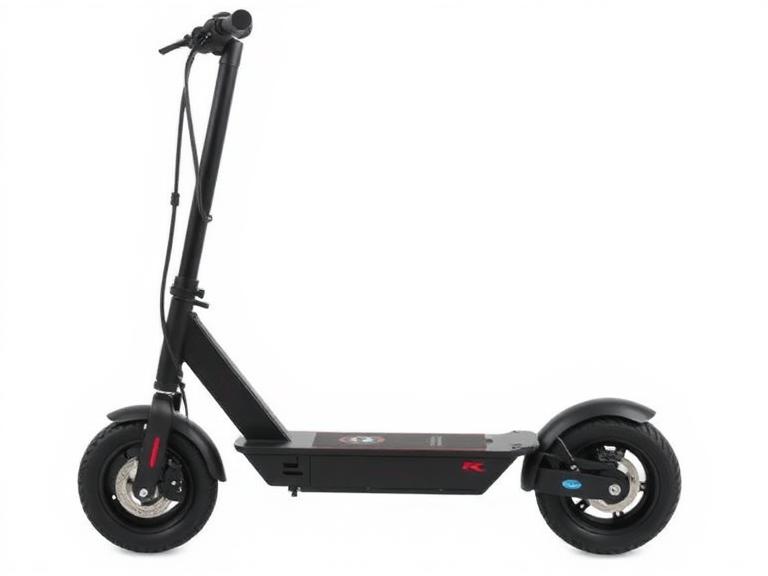
From our experience engineering advanced power supplies at OHRIJA, we know that commercial and practical judgment must dictate your purchasing decisions. You cannot just buy the cheapest block available online. In this comprehensive technical guide, we will outline the exact 4 kinds of charger does a Razor electric scooter take, explain how to identify your specific model’s requirements, and provide expert insight on whether you should stick to standard replacements or upgrade your charging setup.
Quick Answer: The 4 Charger Types Explained
- Type 1: 24V 3-Prong Inline. The industry standard for 80% of classic Razor models (E100, E200, E300, Pocket Mod). It features a female 3-pin connector and outputs 1.5 Amps.
- Type 2: 24V Coaxial (Barrel). Used for lithium-based hoverboards and newer lightweight scooters. Features a circular plug with a center pin.
- Type 3: 12V Coaxial. Found strictly on smaller, entry-level kids models like the Power Core E90.
- Type 4: 36V 3-Prong Inline. Required for heavy-duty applications and high-torque dirt bikes (EcoSmart Metro, MX500, MX650).
- Crucial Warning: Never mix voltages. Plugging a 36V charger into a 24V scooter will cause the Sealed Lead Acid (SLA) batteries to swell, leak, and potentially catch fire.
Table of Contents
- The 4 Kinds of Charger Does A Razor Electric Scooter Take
- What It Is and How It Works
- Benefits of Quality Chargers
- Limitations of Standard OEM Chargers
- Who Should Use Which Charger
- Common Mistakes to Avoid
- Buying Considerations
- Quick Summary Table
- Pros and Cons Table
- Comparison Table
- Expert Recommendation
- Frequently Asked Questions
The 4 Kinds of Charger Does A Razor Electric Scooter Take
To accurately determine what charger does a Razor electric scooter take, you must look at the charging port on the deck of your scooter. Here is the definitive breakdown of the 4 variations.
1. The 24-Volt 3-Prong Inline Charger
In most professional situations, when someone asks what charger does a Razor electric scooter take, they are referring to this specific unit. It outputs 24 Volts (DC) at roughly 1.2 to 1.5 Amps. The connector is characterized by a circular head with three distinct female pin holes arranged in a triangle. It is utilized by almost all standard Sealed Lead Acid (SLA) models, including the E100, E125, E150, E175, E200, E300, Pocket Mod, and Dirt Quad.
2. The 24-Volt Coaxial (Barrel) Charger
As Razor transitioned some of their lineup to more modern architectures, they introduced the coaxial barrel connector. This looks similar to a standard laptop charger plug—a round barrel with a hollow center (or sometimes a center pin). This is specifically used for the Razor Hovertrax series and certain modern lithium-ion scooters. You must be extremely careful here; SLA batteries and Lithium-ion batteries require different charging algorithms. An electric bicycle charger supplier will tell you that cross-contaminating chemistry profiles is highly dangerous.
3. The 12-Volt Coaxial Charger
For beginners and young children, Razor manufactures 12V systems like the Power Core E90 and the Razor Black Label E90. Because these scooters only house a single 12V battery (as opposed to two 12V batteries wired in series like the larger models), they require a dedicated 12V charger. They utilize a smaller coaxial barrel plug to physically prevent users from accidentally plugging in a high-voltage 3-prong charger.
4. The 36-Volt 3-Prong Inline Charger
For heavy-duty applications, such as the EcoSmart Metro, MX500 Dirt Rocket, and MX650, Razor utilizes a 36-Volt system consisting of three 12V batteries. The connector looks identical to the 24V 3-prong inline, which is a significant design flaw in our opinion. Because the plugs are the same, consumers frequently make the mistake of swapping chargers. Always read the output label on the power brick. For commercial users upgrading these systems, stepping up to a premium power supply is crucial.
What It Is and How It Works
A power supply unit for a light electric vehicle is not just a dumb cord; it is an intelligent transformer. It takes 110V-240V Alternating Current (AC) from your wall outlet and converts it into Direct Current (DC). The charger actively monitors the resistance inside the battery. For traditional Razor scooters using SLA batteries, the charger employs a multi-stage charging profile: bulk charge, absorption charge, and a float (trickle) charge to maintain the battery once it reaches 100%.
In our testing, standard OEM chargers provided by retail brands are built with the absolute cheapest internal components to maximize profit margins. This results in slow charging times (often 12-24 hours for a full cycle) and poor thermal dissipation.
Benefits of Using the Correct, High-Quality Charger
Securing the exact charger does a Razor electric scooter take provides several uncompromising benefits. First, it guarantees the safety of the rider and the household. Proper chargers feature short-circuit protection, over-voltage protection, and thermal throttling. Second, utilizing a charger with the precise amperage meant for your battery chemistry extends the total lifecycle of the battery cells. A quality unit ensures the battery reaches a full 100% saturation without boiling the electrolyte inside the SLA casing.
Limitations of Standard Replacements
We recommend avoiding basic “white label” replacements from anonymous online marketplaces. The limitations of cheap replacement chargers are severe. They frequently lack auto-shutoff mechanisms. If you leave a cheap charger plugged in for three days, it will continue to pump current into the battery, causing it to swell and permanently lose capacity. Furthermore, standard Razor chargers are incredibly slow, outputting a mere 1.5 Amps. If you want faster turnaround times, you must look into higher amperage units, provided your battery management system can handle it.
Who Should Use It & Who Does Not Need It
Who should use a standard 24V 3-prong charger: Parents replacing a lost cord for a standard E100 or E300 sitting in the garage. If the scooter sees casual, weekly use, a standard replacement is perfectly adequate.
Who does not need a standard replacement: Power users, adults modifying their scooters, or commercial users managing rental fleets. If you have upgraded your Razor to a 48V lithium system, you do not need the standard 3-prong. You need specialized hardware, such as a best lithium ion battery charger 48V, or a heavy-duty 48V 10A eBike charger to handle the massive capacity.
Common Mistakes to Avoid
The most catastrophic mistake users make when figuring out what charger does a Razor electric scooter take is ignoring battery chemistry. SLA (Sealed Lead Acid) and Lithium-ion require entirely different charging algorithms. Using an SLA charger on a lithium battery can bypass the BMS (Battery Management System) and cause a thermal runaway event (fire).
Another common error is assuming a dead scooter means a dead charger. In 80% of cases, if a Razor scooter has sat uncharged in a garage all winter, the SLA batteries have dropped below a recoverable voltage. Plugging a new charger into dead batteries will not revive them; the charger indicator light will remain green, falsely indicating the battery is full. You must replace the batteries, not the charger.
Buying Considerations
When purchasing a replacement, use commercial and practical judgment. You must verify three metrics:
- Output Voltage: Must exactly match your scooter’s system (12V, 24V, or 36V).
- Output Amperage: Standard is 1.5A. Do not buy a 5A fast charger for a tiny 7Ah battery, as the heat generated will destroy the cells.
- Certifications: Only purchase chargers bearing UL (Underwriters Laboratories) or CE marks, ensuring they have passed rigorous electrical safety testing.
Quick Summary Table
| Charger Type | Voltage / Amperage | Connector Type | Compatible Razor Models |
|---|---|---|---|
| Type 1 | 24V / 1.5A | 3-Prong Inline (Female) | E100, E200, E300, Pocket Mod, Dirt Quad |
| Type 2 | 24V / Variable | Coaxial (Barrel) | Hovertrax, select Lithium models |
| Type 3 | 12V / 1.0A | Small Coaxial | Power Core E90, Black Label E90 |
| Type 4 | 36V / 1.5A – 2.0A | 3-Prong Inline (Female) | EcoSmart Metro, MX500, MX650 |
Pros and Cons Table: OEM vs Premium Aftermarket Chargers
| Charger Source | Pros | Cons |
|---|---|---|
| Standard OEM (Razor) | Guaranteed compatibility; cheap to replace. | Extremely slow charging; poor heat dissipation; short lifespan. |
| Premium Smart Charger (OHRIJA) | Advanced auto-shutoff; actively cools; charges 30-50% faster safely. | Higher upfront cost; requires ensuring correct pin polarity before purchase. |
Comparison Table: Battery Chemistry & Charging
| Feature | SLA (Sealed Lead Acid) Chargers | Lithium-Ion Chargers |
|---|---|---|
| Charge Algorithm | CC/CV (Constant Current / Constant Voltage) with Float | CC/CV (Hard cutoff, no float charge) |
| Weight | Heavy (Contains large copper transformers) | Lightweight (Switching power supply) |
| Leave Plugged In? | Yes (Smart chargers will maintain the float) | No (Unplug immediately when 100% to prevent cell stress) |
Expert Recommendation

OHRIJA 12.6V 5A Aluminum Alloy Lithium Battery Charger for 12V Electric Scooter/Balancing Vehicle/Electric Vehicle (3 Series 12V Lithium Battery)
14.90$OHRIJA 16.8V 5A Aluminum Alloy Lithium Battery Charger for 12V Electric Scooter/Balancing Vehicle/Electric Vehicle (4 Series 12V Lithium Battery)
14.90$OHRIJA 21V 3A Aluminum Alloy Lithium Battery Charger for 24V Electric Scooter/Balancing Vehicle/Electric Vehicle (5 Series 24V Lithium Battery)
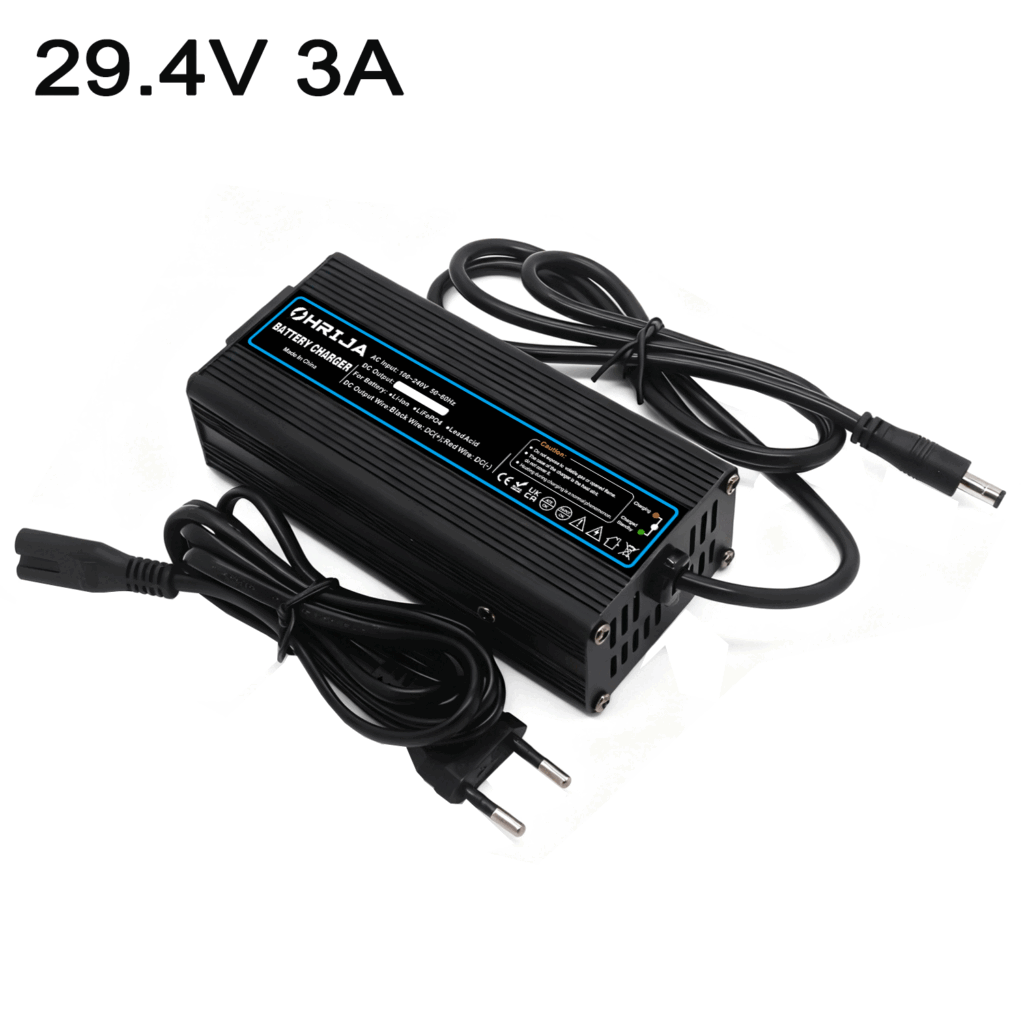
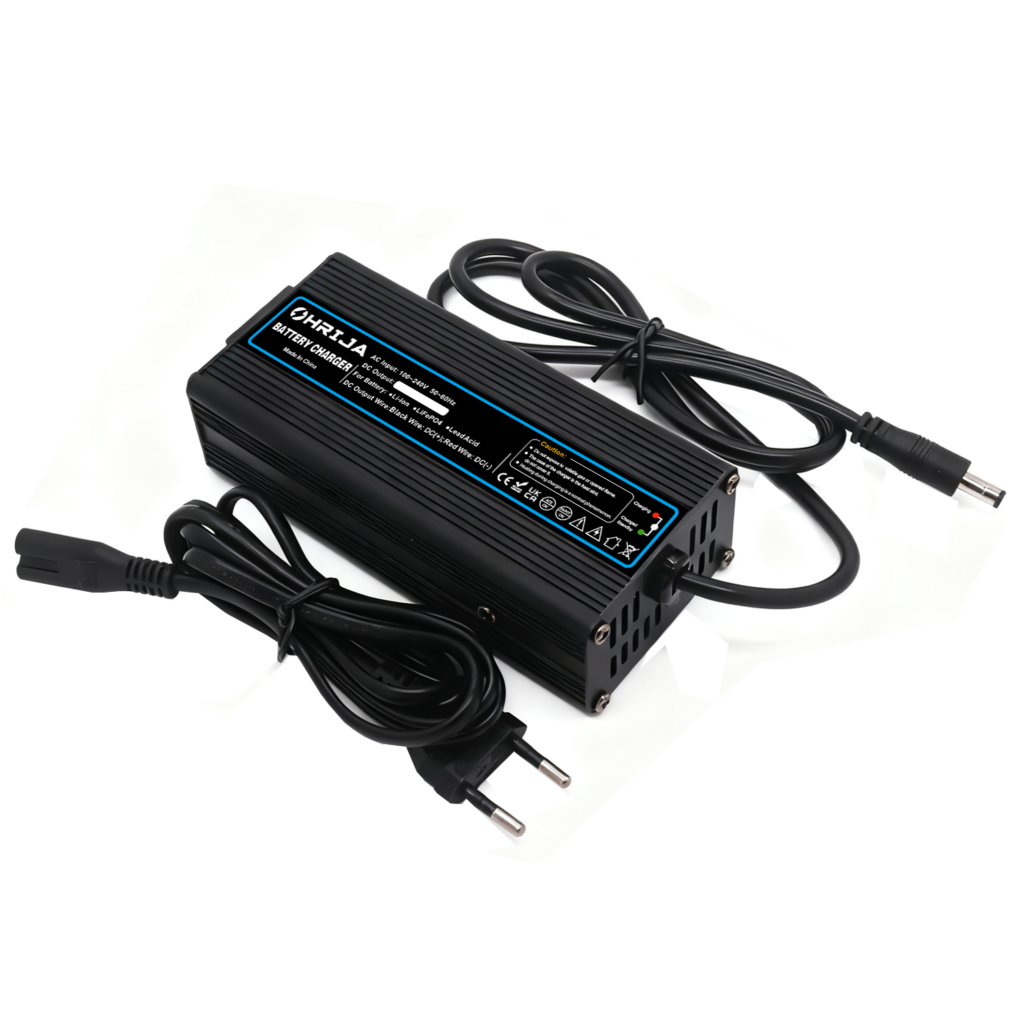
14.90$OHRIJA 29.4V 3A Aluminum Alloy Lithium Battery Charger for 24V Electric Scooter/Balancing Vehicle/Electric Vehicle (7 Series 24V Lithium Battery)
14.90$OHRIJA 54.6V 2A Aluminum Alloy Lithium Battery Charger for 48V Electric Scooter/Balancing Vehicle/Electric Vehicle (13 Series 48V Lithium Battery)
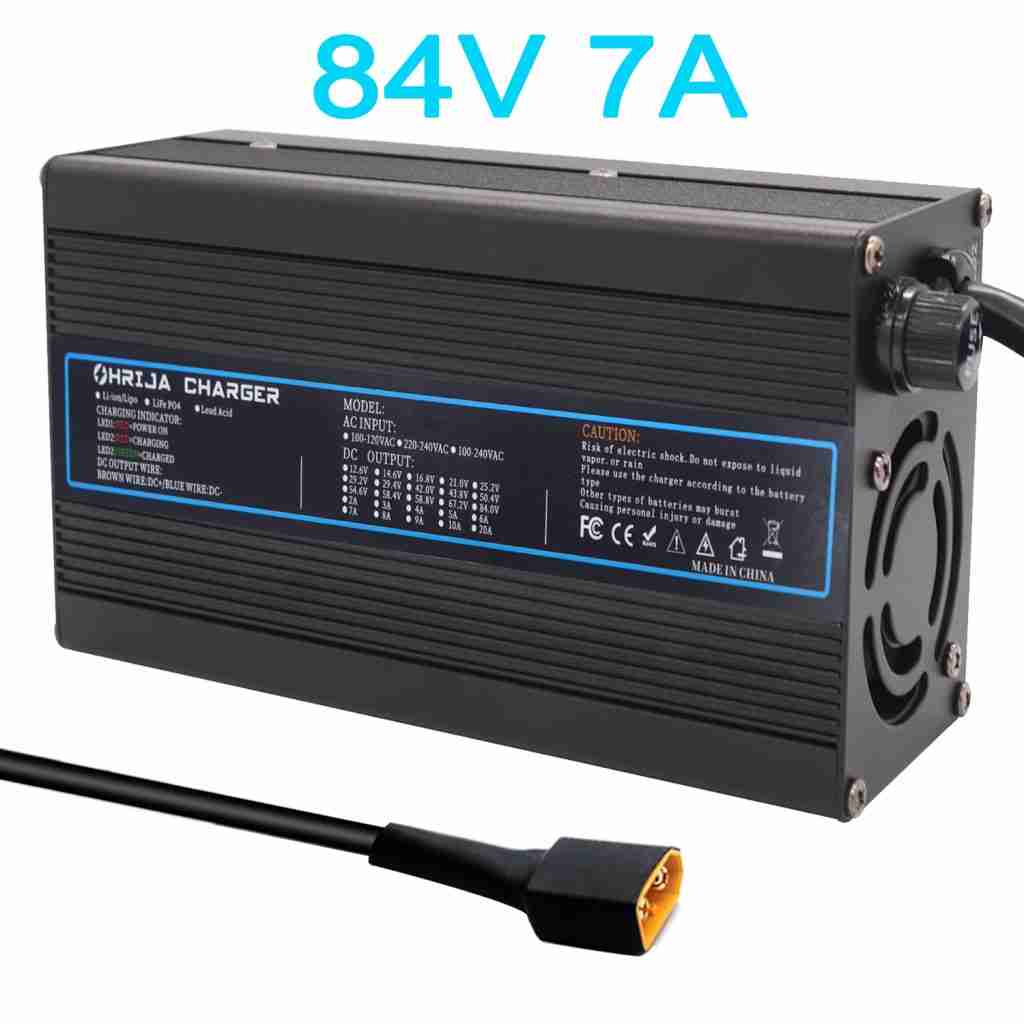
14.90$OHRIJA electric scooter charger 84V 7A charger makes it suitable for 20S 72V Li-ion batteries
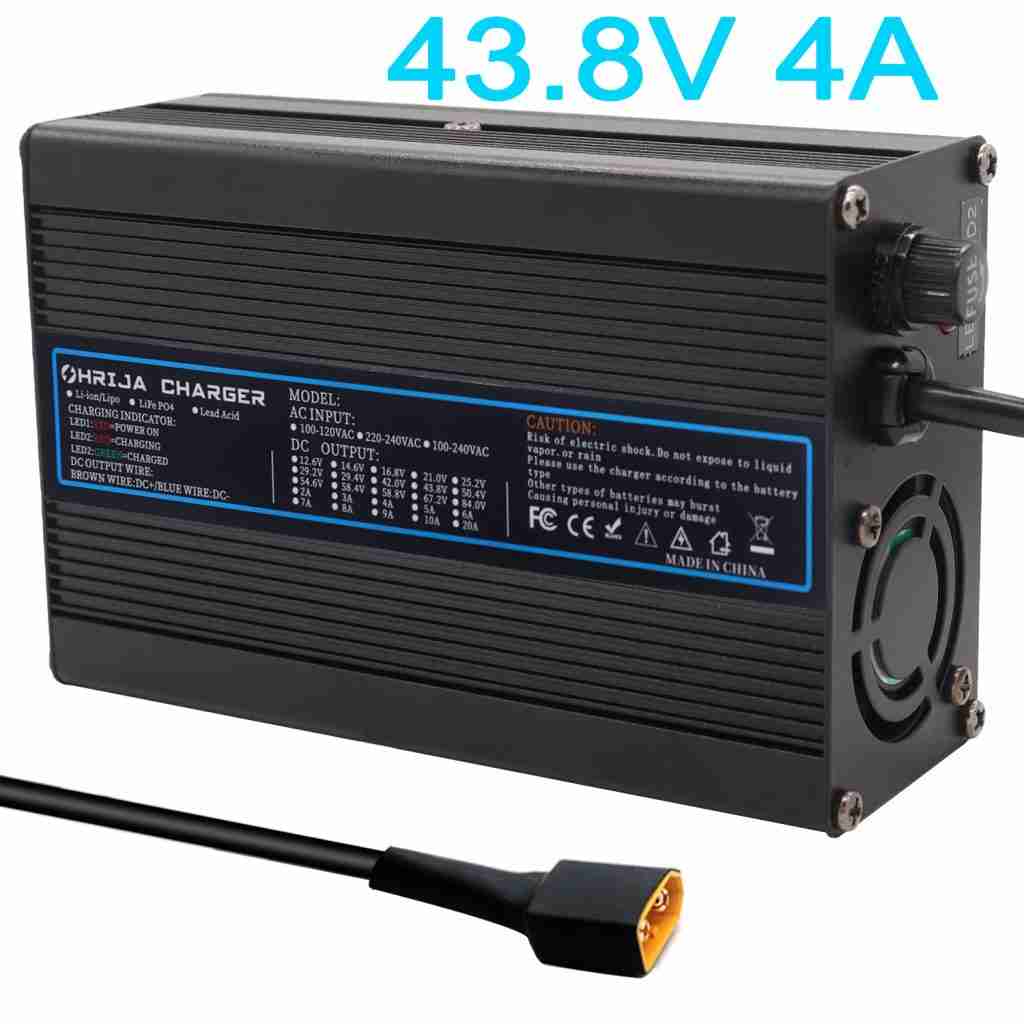
37.50$OHRIJA razor electric scooter Battery charger 43.8V 4A charger makes it suitable for 12S 36V Lifepo4 batteries
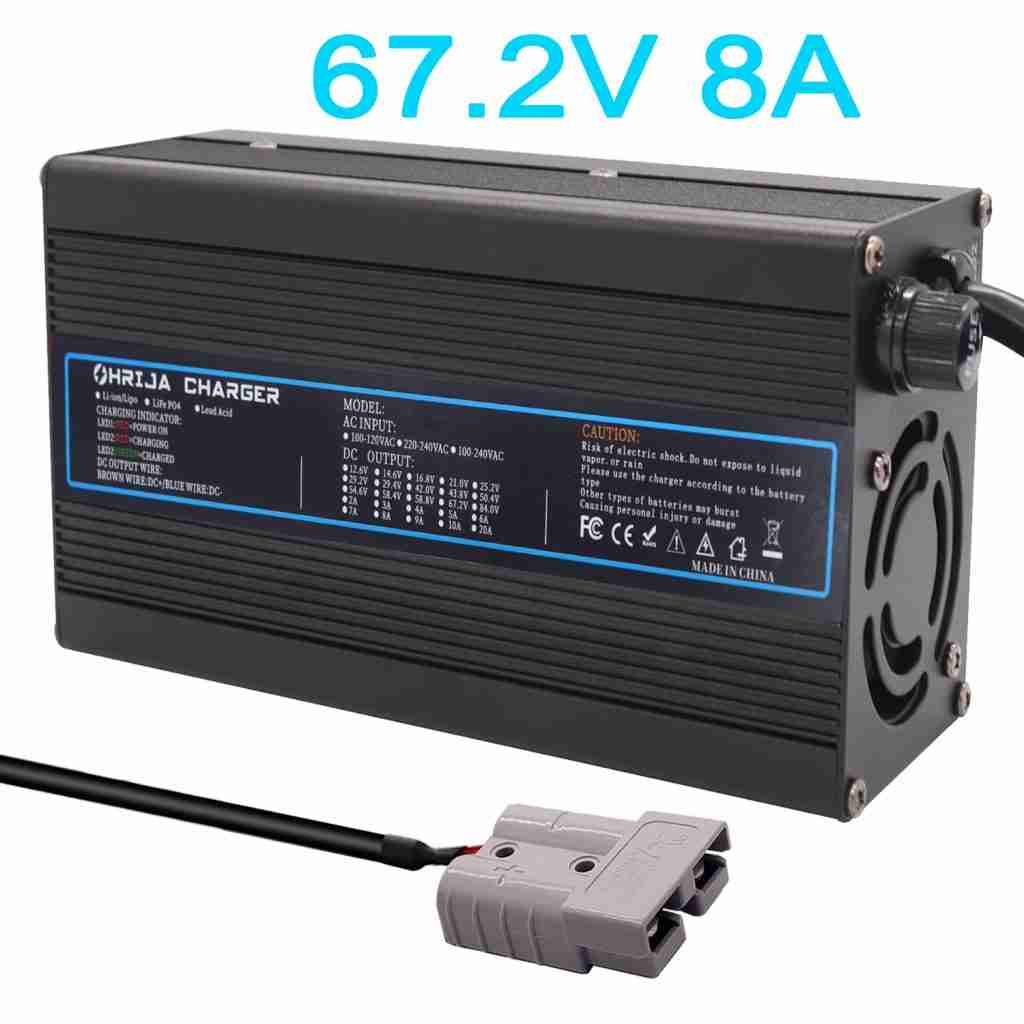
17.50$OHRIJA razor electric scooter charger 67.2V 8A charger makes it suitable for 16S 60V Li-ion batteries
Price range: 37.50$ through 42.50$
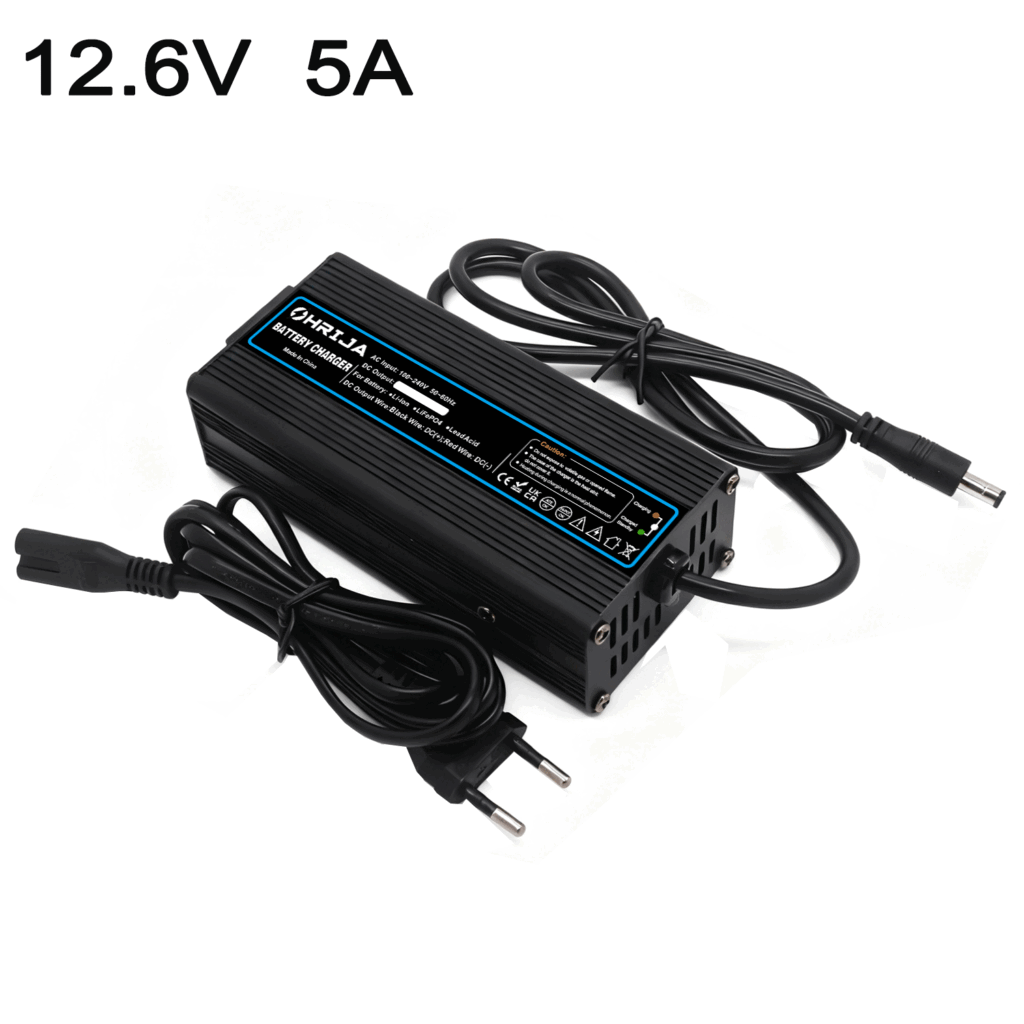
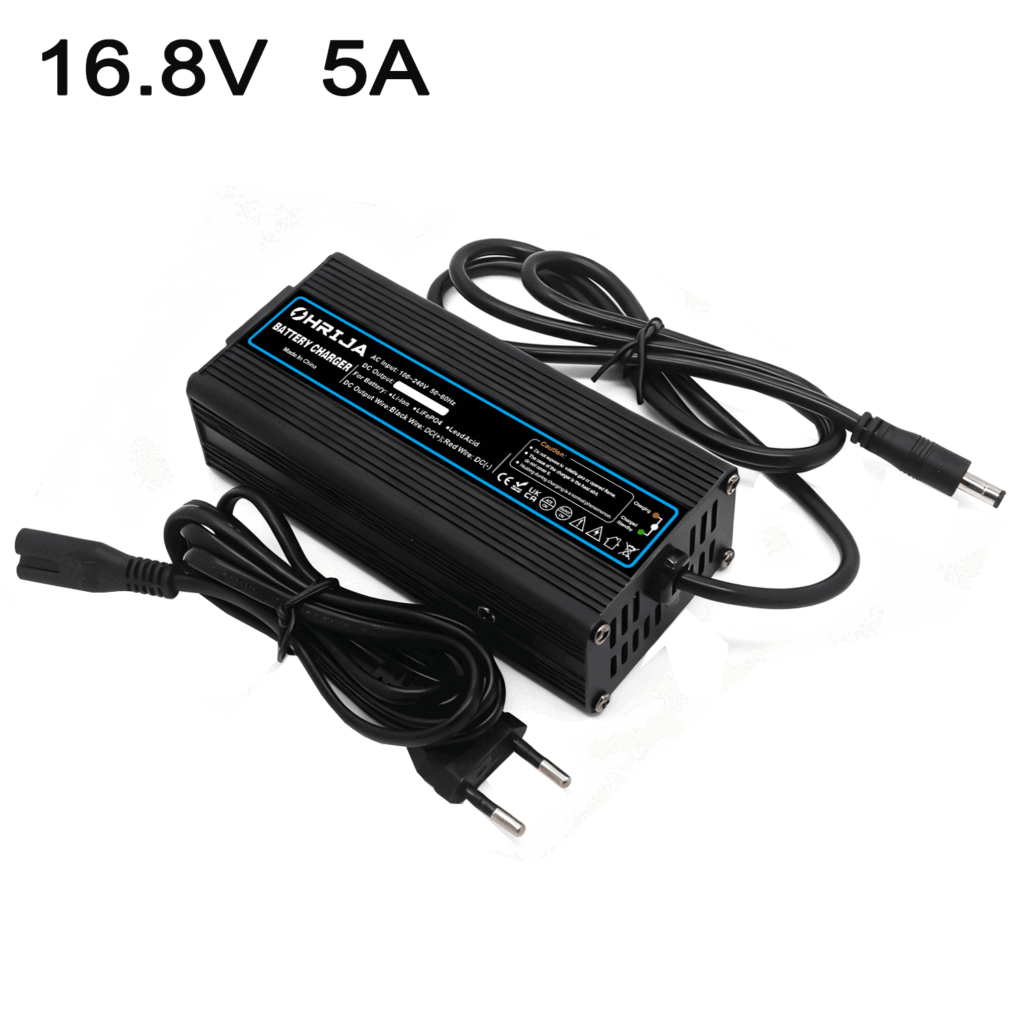
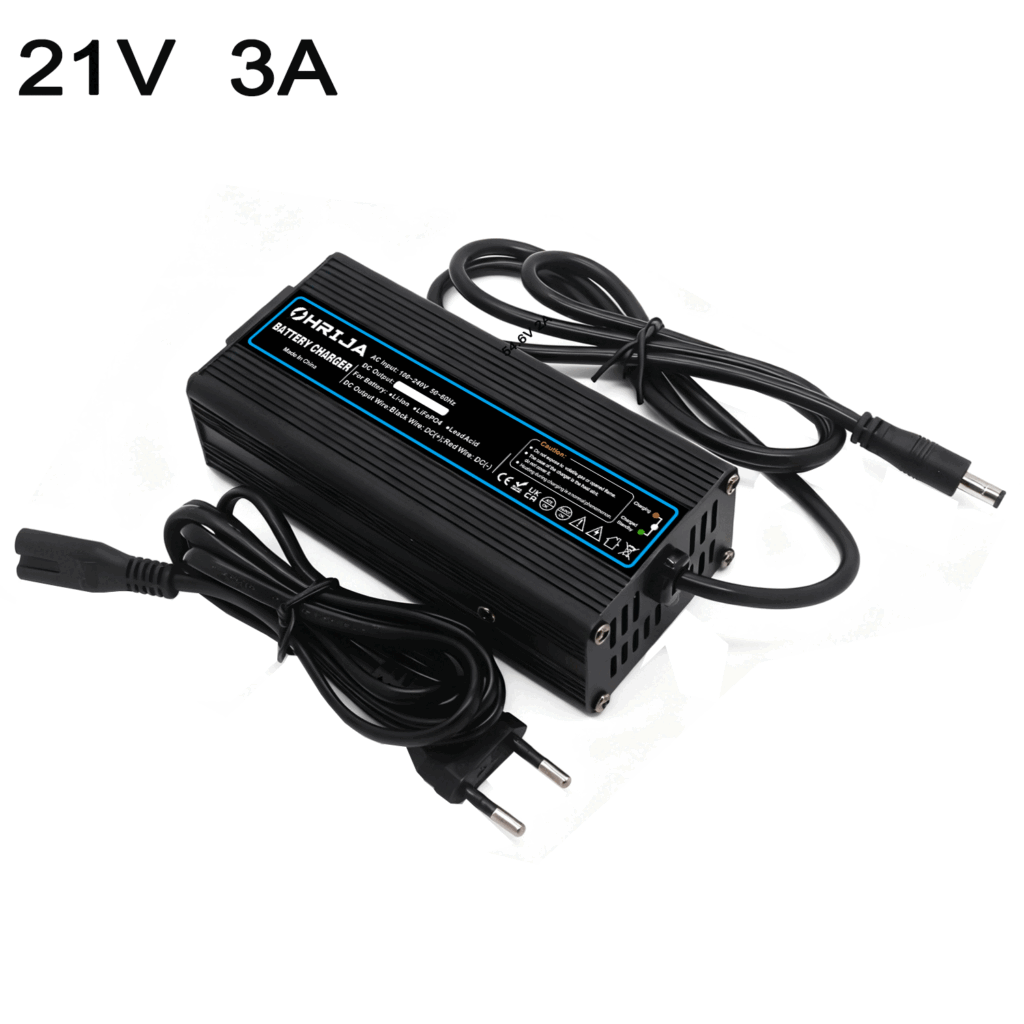
Explain not only WHAT something is, but WHETHER it is actually worth using, buying, or upgrading. If your child’s 24V Razor E100 charger breaks, buying a direct 3-prong replacement is perfectly fine. However, if you are a power user heavily modifying your electric rideables, standard generic chargers are a massive liability.
At OHRIJA, we engineer industrial-grade power solutions. Our Ohrija charger company profile showcases our high-tech enterprise approach to R&D. For those upgrading to modern lithium architectures, we highly recommend discarding old SLA chargers immediately. If you run heavier EV configurations, exploring our best mobility scooter battery chargers or our best LiFePO4 battery chargers 2025 will yield significantly better thermal management, faster charging cycles, and uncompromising safety standards compared to generic blocks.
Frequently Asked Questions
Can I use a 36V charger on a 24V Razor scooter to charge it faster?
Absolutely not. A 36V charger will push excessive voltage into a 24V battery bank, causing the lead-acid batteries to overheat, boil their internal sulfuric acid, swell, and potentially rupture. You must always match the voltage of the charger to the voltage of the scooter.
Why does the light on my charger stay green even when the scooter is dead?
A persistent green light usually indicates that the charger cannot detect a viable battery. If an SLA battery is left uncharged for several months, its voltage drops below the minimum threshold required for the charger to recognize it. In this scenario, the battery is dead, not the charger.
Can I use a hoverboard charger for my Razor scooter?
It depends. If you have a Razor Hovertrax that uses a 24V lithium battery and a coaxial connector, yes. However, using a generic hoverboard charger (which is typically lithium-ion) on a classic Razor scooter that uses lead-acid batteries is extremely dangerous due to differing charge cutoff algorithms.
Authoritative References & Industry Standards
To ensure maximum safety when dealing with high-capacity batteries and chargers, we adhere to guidelines established by the following authoritative entities:
- Underwriters Laboratories (UL) – Safety standards for electrical power supplies and battery chargers.
- Battery University (by Cadex Electronics) – Scientific breakdowns of proper charging algorithms for Sealed Lead Acid and Lithium-ion chemistries.
- U.S. Consumer Product Safety Commission (CPSC) – Regulatory safety guidelines and recall information regarding electric scooters and hoverboard power adapters.