

⚡ Charging intelligence from OHRIJA – certified battery charger manufacturer
⚡ Quick Answer: Do all e-bikes use the same charger?
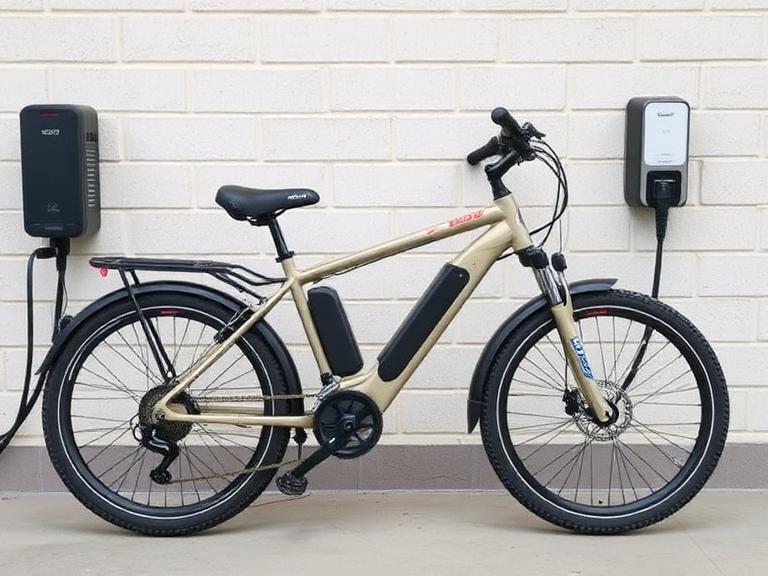
No. E-bike chargers are not universal. They vary by voltage, connector type, amperage, and charging protocol. In most professional situations, you must match the charger’s output voltage to your battery’s nominal voltage (e.g., 36V, 48V, 52V). The connector must also be compatible – common types include DC barrel (5.5mm x 2.1mm), XLR, and proprietary connectors from brands like Bosch, Yamaha, and Shimano. Using an incompatible charger can damage your battery, reduce its lifespan, or create a fire hazard.
📑 Contents
Why E-Bike Chargers Are Not UniversalVoltage CompatibilityConnector TypesComparison TablePros & ConsBuying GuideFAQ
If you’re an e-bike owner, you’ve probably wondered: “Can I use my friend’s charger? What about a universal adapter?” The short answer is no – and the longer answer is that you really, really shouldn’t try.
From our experience at OHRIJA, where we manufacture lithium battery chargers for e-bikes and other light electric vehicles, the question of charger compatibility is one of the most common and most misunderstood topics. A mismatch can not only damage your battery but also void your warranty and potentially cause a fire. In this guide, we’ll break down everything you need to know about whether all electric bikes use the same charger – and how to choose the right one.
Browse our electric bicycle charger range for compatible options.
Why E-Bike Chargers Are Not Universal
E-bike chargers appear simple, but they are actually sophisticated devices that must match the battery’s specific chemistry, voltage, and management system. Unlike USB-C for phones, there’s no standardised e-bike charging ecosystem.
How an E-Bike Charger Works
A charger takes AC power from your wall outlet and converts it to DC voltage to charge the battery. The charger communicates with the Battery Management System (BMS) to ensure safe charging parameters: correct voltage, current, and charge termination. This communication protocol is often proprietary.
Who Should Care About Charger Compatibility?
- Beginners – New e-bike owners who may assume all chargers are interchangeable.
- Commercial users – Fleet operators or bike rental services need to manage multiple charger types.
- Heavy-duty applications – For high-capacity batteries or fast-charging needs, you need a charger that matches the battery’s specifications precisely.
Who does not need to worry? If you only ever use the charger that came with your e-bike and never borrow or buy third-party chargers, you can simply use the original and not think about it.
⚠️ Important: Using the wrong charger is the number one cause of e-bike battery failures. It can overcharge, undercharge, or damage the BMS. Always use a charger that matches your battery’s voltage and chemistry.
For LiFePO4 battery users, see our LiFePO4 battery charger category.
Voltage Compatibility: The Most Critical Factor
E-bike batteries are typically 36V, 48V, 52V, or 72V. The charger’s output voltage must match the battery’s nominal voltage. However, there’s a nuance: the charger’s actual output voltage is slightly higher than the nominal voltage to push current into the battery.
| Battery Nominal Voltage | Charger Output Voltage | Number of Cells in Series |
|---|---|---|
| 36V | 42V | 10S (10 cells in series) |
| 48V | 54.6V | 13S |
| 52V | 58.8V | 14S |
| 72V | 84V | 20S |
From our experience, the most common mistake is assuming a 48V battery can use a 36V charger – it cannot. Conversely, using a 54.6V charger on a 36V battery will overcharge and potentially destroy it.
💡 Pro Tip: Always check the label on your battery and your charger. The output voltage should match. For example, a 48V battery requires a 54.6V charger.
Find the right voltage with our 54.6V 5A eBike battery charger.
Connector Types: Physical Incompatibility
Even if the voltage matches, the physical connector must fit. Common connector types include:
- DC Barrel (5.5mm x 2.1mm) – Common on generic e-bikes. Easy to use and replace.
- XLR (3-pin) – Often used on higher-end bikes; they are locking and robust.
- Proprietary Connectors – Bosch, Yamaha, Shimano, and other major brands use their own connectors. These are not interchangeable with other brands.
- Waterproof Aviation Connectors – Used on some fat-tire or all-weather bikes.
In most professional situations, you can identify the connector type by looking at the charging port on your battery. Some chargers come with interchangeable tips, but this is still not universal.
For high-current applications, see our 48V 10A eBike charger.
Comparison Table: E-Bike Charger Types
-

OHRIJ Club Car 48V Golf Cart Charger 48V 10A makes it suitable for 55.2V Lead Acid batteries
41.50$ -
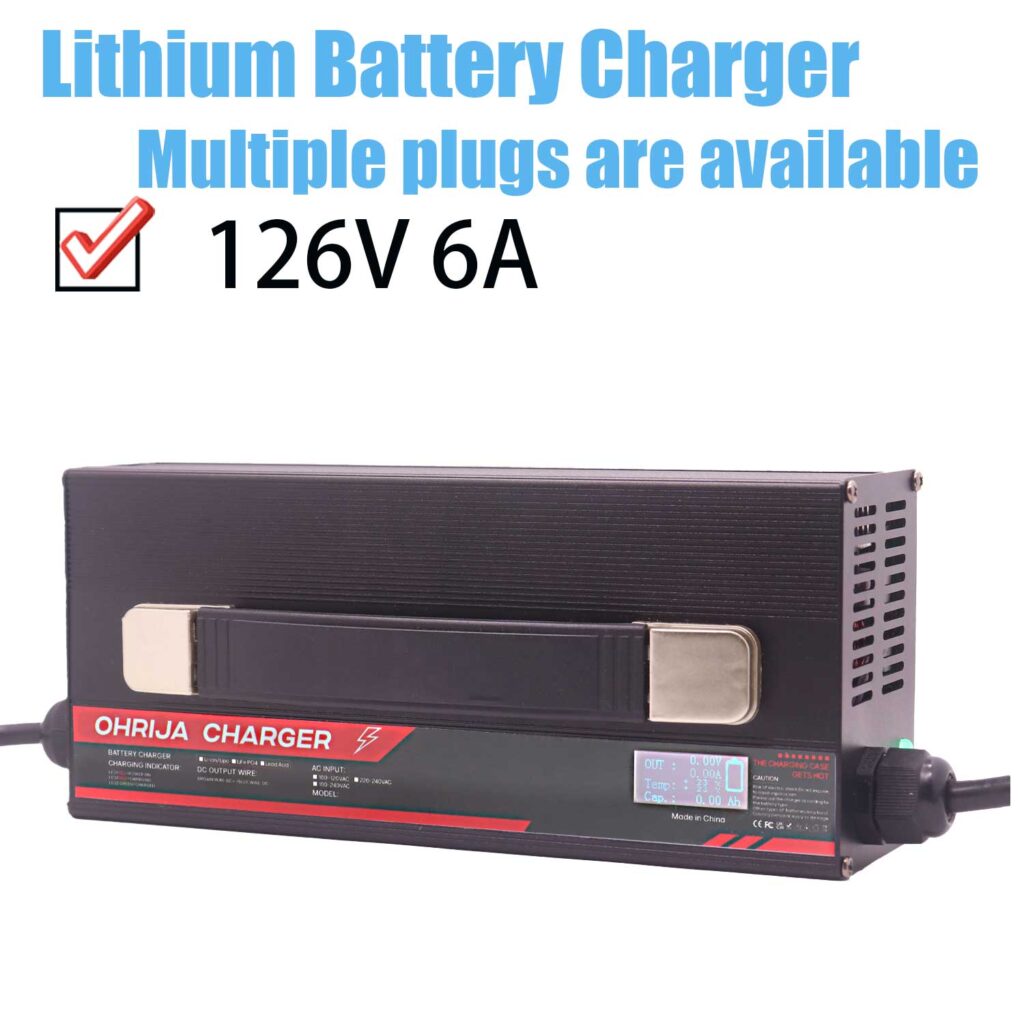
OHRIJA 126v lithium ion battery charger 126V 6A charger makes it suitable for 30S 111V Li-ion Battery Chargers
49.90$ -
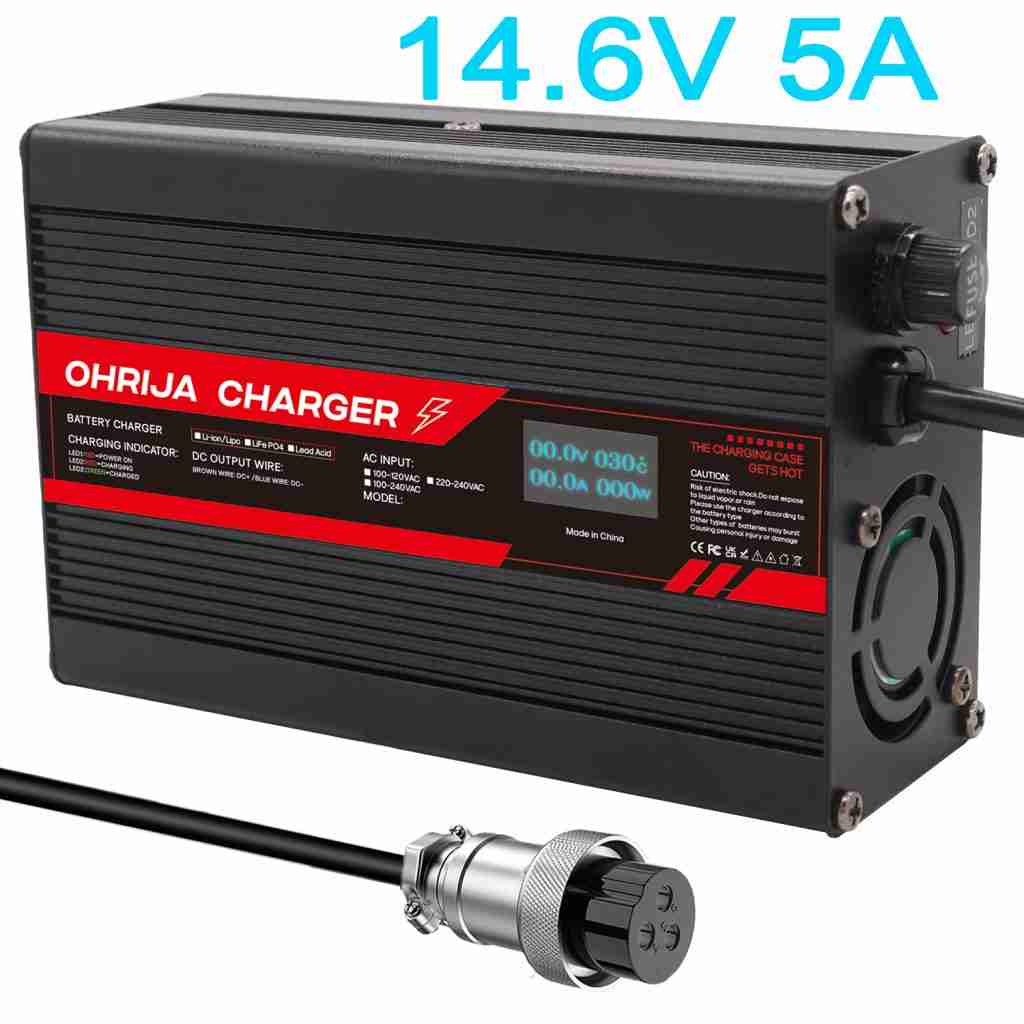
OHRIJA 12v Lifepo4 battery charger 14.6V 5A charger makes it suitable for 4S 12.8V Lifepo4 batteries
20.50$ -
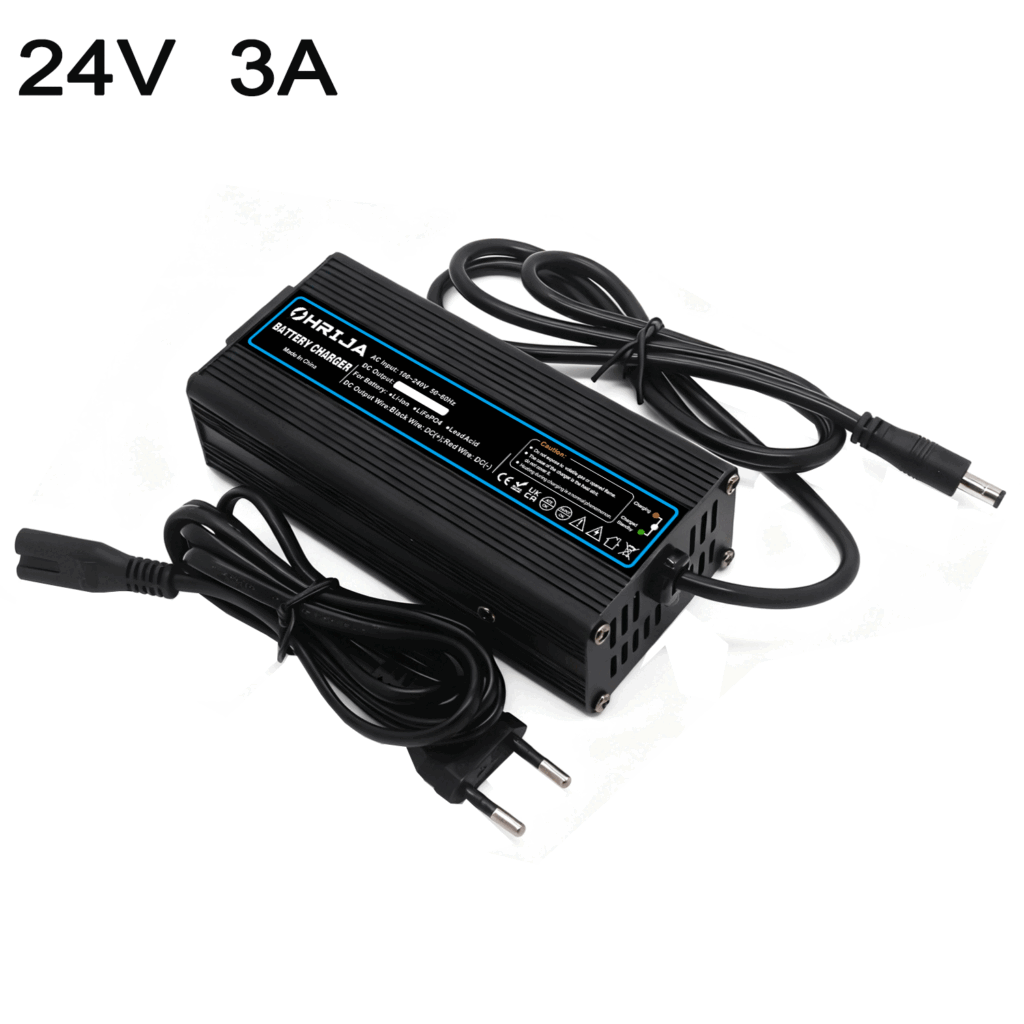
OHRIJA 24V 3A Aluminum Alloy Lithium Battery Charger for 24V Lead-acid AGM Battery
14.90$
| Battery Voltage | Charger Output | Common Connector | Brand Examples | Notes |
|---|---|---|---|---|
| 36V | 42V | DC barrel (5.5×2.1) | Generic, Bafang | Entry-level e-bikes |
| 48V | 54.6V | XLR, DC barrel | Bafang, Bosch (with adapter) | Most common standard |
| 52V | 58.8V | XLR | Custom builds, high-end | Requires compatible BMS |
| 72V | 84V | Waterproof aviation | Stealth, high-power | Heavy-duty applications |
| Bosch (various) | Varies (e.g., 36V, 48V) | Bosch proprietary | Bosch | Only with Bosch batteries |
| Shimano Steps | Varies | Shimano proprietary | Shimano | Only with Shimano batteries |
Pros & Cons: Using a Third-Party or Universal Charger
- Cost savings – Third-party chargers are often cheaper than OEM replacements.
- Availability – Easier to find in stock.
- Compatibility – Some universal chargers support multiple voltage settings (e.g., 36V/48V/52V).
- Quality variability – Not all third-party chargers meet safety or performance standards.
- Potential damage – An incorrect voltage or poor BMS communication can damage your battery.
- Warranty void – Using a non-OEM charger may void the warranty of your battery.
Buying Guide: How to Choose the Right E-Bike Charger
From our experience, here’s a practical checklist for selecting an e-bike charger.
Match Voltage – Always match the charger’s output voltage to your battery’s nominal voltage (e.g., 48V battery = 54.6V charger).
Check Amperage – Higher amperage charges faster. For example, 5A vs 3A. But ensure your BMS can handle it. Most batteries support up to 5A safely.
Verify Connector – Ensure the connector fits your battery’s charging port.
Chemistry Compatibility – Lithium-ion chargers are not compatible with lead-acid or LiFePO4 without adjustment. Use the correct charger type.
Safety Certifications – Look for UL, CE, or UKCA certifications. These indicate the charger has passed safety testing.
Brand & OEM – While OEM chargers are safest, reputable third-party brands like OHRIJA offer certified quality at a lower price.
For LiFePO4 systems, see our 12V LiFePO4 battery charger 30A.
Our Expert Recommendation: The Best E-Bike Charger Strategy
Here’s what we recommend based on your situation:
- For most users: Stick with the charger that came with your e-bike. It is specifically tuned to your battery’s BMS and chemistry.
- For a backup or replacement: Buy a certified third-party charger from a reputable brand like OHRIJA. Ensure the voltage, connector, and amperage are a perfect match. Check for UL or CE certification.
- For fleet operators: Standardise your battery and charger types across your fleet. This simplifies inventory and reduces the risk of mismatches.
If you need a third-party charger, we recommend OHRIJA chargers because they are manufactured to strict quality standards, offer safety certifications, and provide a range of voltages and connectors. They are a reliable alternative to OEM chargers at a competitive price.
For universal DC power needs, see our 24V 15A AC to DC power supply.
Common Mistakes When Choosing an E-Bike Charger
- Assuming voltage is the only factor – Even with the right voltage, the connector and BMS communication must match.
- Using a charger with a different amperage – A charger with too high an amperage can overheat the battery or BMS. Stick with the recommended amperage or slightly lower.
- Buying the cheapest option – Uncertified chargers are a fire risk. Always check for safety marks.
- Mixing chargers for different battery chemistries – A LiFePO4 charger has a different charging profile than a Li-ion charger. Never mix them.
About OHRIJA – OHRIJA is a high-tech enterprise integrating R&D, production, and sales of lithium battery chargers, LiFePO4 battery chargers, lead-acid battery chargers, golf cart chargers, power adapters, and switching power supplies. Based in Dongguan, China, we are committed to providing safe, certified charging solutions for e-bikes and other electric vehicles globally.
Frequently Asked Questions
Can I use a 48V charger on a 36V battery?
No – this will overcharge the battery and can cause a fire. Always match the charger’s output voltage to your battery’s nominal voltage.
Can I use a universal charger for my e-bike?
Some universal chargers allow you to select the voltage and come with interchangeable tips. However, they are not truly “universal” – you still need to match voltage, connector, and ensure compatibility with your BMS.
Is it safe to use a third-party charger?
Yes, if it is certified (UL, CE, etc.) and matches your battery’s voltage and connector. Always buy from a reputable brand.
Why does my e-bike charger have a different output voltage than my battery?
This is normal. The charger outputs a slightly higher voltage than the battery’s nominal voltage to push current into the battery. For example, a 48V battery requires a 54.6V charger.
📚 References & Trusted Sources
- 1. OHRIJA – Internal Product Specifications and Safety Testing (2026).
- 2. UL Standards – Charger Safety Standards for Lithium Battery Chargers (UL 1236).
- 3. CE Marking – Guidelines for Electrical Equipment Safety.
Explore more: 67.2V scooter battery charger | 24V lithium battery charger 10A | 84V electric scooter charger | adjustable power supply manufacturer | 12V 50A power supply