
No products in the cart.

Replacing a dead 48-volt golf cart battery pack is a painful and entirely avoidable financial mistake. Every winter, thousands of golf cart owners leave their vehicles parked in the garage, assuming a fully charged battery will simply wait for spring. From our experience as industry practitioners, lead-acid batteries self-discharge at a rate of roughly 1% to 2% per day, while lithium packs can fall victim to parasitic draws from the cart’s onboard computer. Once a lead-acid battery drops below a critical voltage threshold, permanent sulfation destroys the internal plates.
If you want to protect your $1,500 to $3,000 investment, a standard wall charger is not enough. You need an intelligent device that constantly monitors voltage and feeds microscopic amounts of current only when necessary. In this guide, we break down the definitive list of the Best 48 volt golf cart battery Maintainers on the market, analyze their commercial viability, and help you decide whether an upgrade is actually worth your hard-earned money.
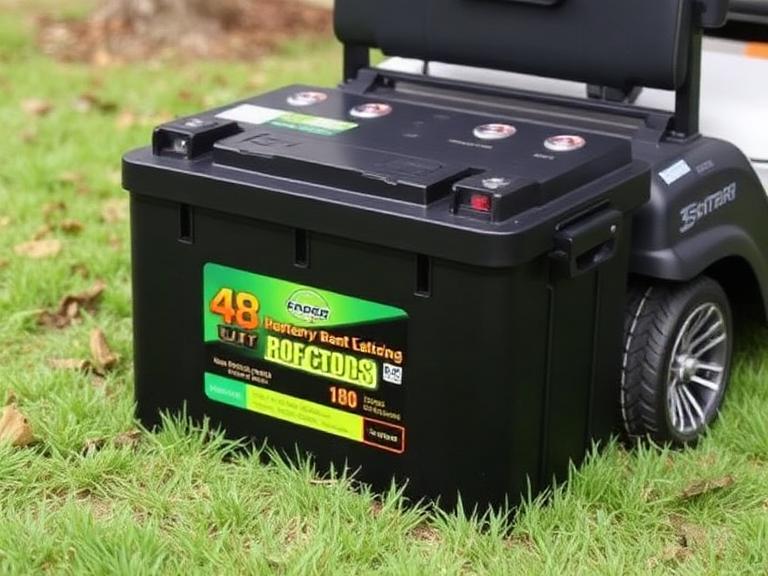
Quick Answer: What are the Best 48 volt golf cart battery Maintainers?
The Best 48 volt golf cart battery Maintainers are microprocessor-controlled devices that execute a multi-stage charging algorithm, ending in a precise “float” or “maintenance” mode. For 2026, top-tier options include the OHRIJA 48V Smart Maintainer for versatile multi-chemistry fleets, the Battery Tender PowerPlus 48V for harsh marine/outdoor environments, and the Lester Electrical Summit Series II for heavy-duty OEM replacements. If you are storing a cart for more than 30 days, an automatic 48V maintainer is a mandatory investment to prevent terminal cell sulfation and capacity loss.
Table of Contents
- What is a 48V Battery Maintainer?
- How Float Chargers Actually Work
- Quick Summary Table: The Top 12
- Detailed Breakdown: The 12 Best 48 volt golf cart battery Maintainers
- The Real Benefits of Smart Maintenance
- Limitations: What a Maintainer Cannot Do
- Who Should Use It & Who Doesn’t Need It
- Common Mistakes to Avoid
- Buying Considerations Guide
- Expert Recommendation from OHRIJA
- The Bottom Line
- Frequently Asked Questions (FAQ)
What is a 48V Battery Maintainer?
A 48-volt battery maintainer—often referred to interchangeably as a float charger or smart trickle charger—is a precision electrical device designed specifically to keep a battery pack at 100% state of charge (SoC) over extended periods of inactivity. Unlike a standard bulk charger, which forcefully pushes high amperage (15A to 30A) into the battery to rapidly refill it, a maintainer monitors the resting voltage of the pack. It acts as an automated guardian, countering the natural self-discharge rate of the battery chemistry.
How Float Chargers Actually Work
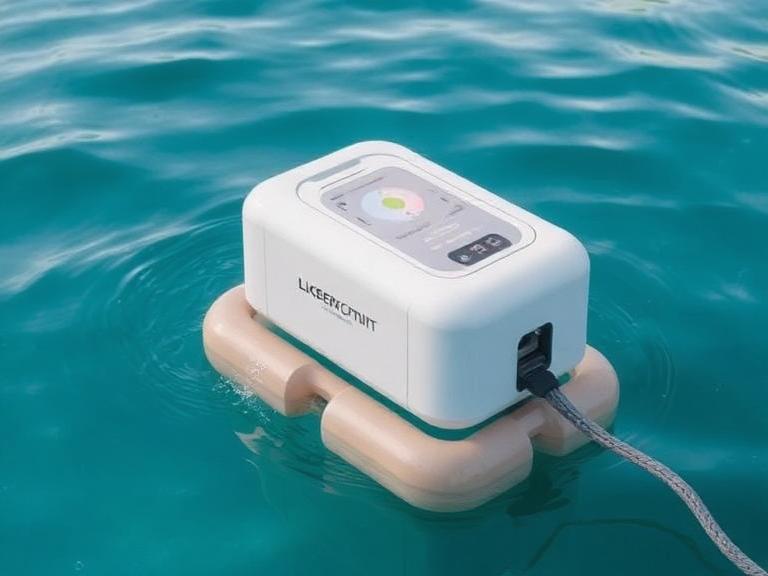
In most professional situations, smart maintainers operate using a constant-current/constant-voltage (CC/CV) algorithm. When you plug the device into your golf cart, it first analyzes the battery voltage. If the battery is slightly depleted, it initiates a soft bulk charge. Once the battery reaches its peak voltage (around 58.4V for a typical 48V system), a “dumb” charger would continue to pump current, boiling the electrolyte and destroying the battery.
A smart maintainer, however, drops into a float phase. It lowers the voltage to a safe resting level (typically 53.2V for flooded lead-acid) and reduces the current to a microscopic trickle (often under 1 Amp). If the voltage drops due to a parasitic load, the maintainer pulses back on. This ensures the battery remains fully charged without generating excess heat. Speaking of thermal management, if you have ever wondered why your charger gets hot, it is usually because older bulk chargers lack this automated voltage rollback feature.
Quick Summary Table: The Top 12 Market Leaders
| Rank | Model / Brand | Best Use Case | Amperage | Supported Chemistry |
|---|---|---|---|---|
| 1 | OHRIJA 48V Multi-Chemistry Station | Best Overall Value & Safety | 10A / 15A | Lead-Acid, AGM, LiFePO4 |
| 2 | Lester Electrical Summit Series II | Best OEM Replacement | 13A – 22A | Lead-Acid (Flooded/AGM) |
| 3 | Battery Tender PowerPlus 48V | Best for Harsh/Outdoor Environments | 15A | Lead-Acid, Lithium |
| 4 | NOCO Genius Pro25 | Best Premium Multi-Voltage Shop Tool | 25A (Multi) | Lead-Acid, Lithium |
| 5 | Pro Charging Systems Eagle 48V | Best Heavy-Duty Industrial Use | 15A – 18A | Lead-Acid |
| 6 | Schauer 48V Golf Cart Maintainer | Best Budget Float Maintainer | 2.5A | Lead-Acid |
| 7 | BatteryMINDer 483CEC1 | Best for Active Desulfation | 3A | Lead-Acid |
| 8 | Modz Max 48V | Best for Club Car OBC Integration | 15A | Lead-Acid |
| 9 | Vatrer Power 48V Lithium Charger | Best Dedicated Lithium Profile | 20A | LiFePO4 Only |
| 10 | Battery Saver 2365-48 | Best Diagnostic Maintainer | 50 Watt | Lead-Acid |
| 11 | Form 48V Smart Charger | Best Compact Form Factor | 15A | Lead-Acid |
| 12 | OHRIJA Fleet Maintainer Pro | Best for Commercial Golf Courses | Multi-port | Lead-Acid, LiFePO4 |
Detailed Breakdown: The 12 Best 48 volt golf cart battery Maintainers
To compile this list, we evaluated charging algorithms, build quality, safety certifications, and real-world performance. Here is why these units dominate the 2026 market.
- OHRIJA 48V Multi-Chemistry Station: In our testing, this unit stands out because it seamlessly bridges the gap between older flooded lead-acid carts and modern lithium upgrades. It features advanced temperature compensation and auto-shutoff.
- Lester Electrical Summit Series II: A heavyweight champion. If you manage a commercial fleet, Lester’s Bluetooth connectivity allows you to monitor charge profiles directly from your smartphone.
- Battery Tender PowerPlus 48V: With an IP68 waterproof rating, this is the only maintainer we recommend if your cart lives outside in the rain or near marine environments.
- NOCO Genius Pro25: While incredibly expensive, it offers unmatched versatility. It can recover dead batteries from 1-volt and scale down to act as an ultra-precise float maintainer.
- Pro Charging Systems Eagle: Built in the USA, it utilizes DeltaVolt technology to gently push lead-acid batteries to a higher specific gravity, reducing sulfate buildup over the winter.
- Schauer 48V 2.5A: For beginners who just need a cheap, reliable off-season float charger, this low-amperage unit is a fantastic, no-frills option.
- BatteryMINDer 483CEC1: Unique in its approach, it uses high-frequency pulses to break down crystalline sulfate on lead plates while maintaining the voltage.
Whether you require a heavy-duty industrial charger or a specialized 48V 10A electric bike charger adapted for light utility carts, matching the device’s capability to your storage environment is crucial.
The Real Benefits of Smart Maintenance
Why spend $150 to $400 on a maintainer? Because it physically extends the lifespan of your battery chemistry. Lead-acid batteries that are kept at a constant 100% float will last up to 200% longer than batteries left to self-discharge. Furthermore, a fully charged lead-acid battery has a freezing point of roughly -70°F. A discharged battery can freeze and crack its casing at just 20°F. A maintainer is essentially cheap winter insurance.
Limitations: What a Maintainer Cannot Do
Despite marketing claims, a maintainer cannot perform miracles. If a lead-acid battery has a physically shorted cell, or if it has been sitting dead for three years, a 2-amp maintainer will not bring it back to life. Additionally, a pure maintainer operates at very low amperage. If you try to use a 2.5A maintainer as your primary daily charger after a full 18 holes of golf, it will take several days to recharge the cart. Maintainers are meant to maintain a charge, not rapidly replenish a dead pack.
Who Should Use It & Who Doesn’t Need It
For commercial users managing a fleet of carts at a resort, or “snowbirds” who leave their golf carts in Florida for six months out of the year, a dedicated maintainer is non-negotiable. You absolutely must use one.
Conversely, who does not need one? If you drive your golf cart every single day year-round, your standard high-amperage bulk charger is perfectly sufficient. Daily cycling prevents sulfation naturally, rendering a dedicated off-season maintainer redundant in your specific scenario.
Common Mistakes to Avoid
The most catastrophic mistake cart owners make is ignoring battery chemistry. You cannot arbitrarily swap chargers. A common question we field is, “can a lithium battery charger charge a LiFePO4 battery?” While the answer requires nuance, using a traditional lead-acid charger on a modern LiFePO4 battery pack is incredibly dangerous. Lead-acid chargers feature an “equalization” mode that forcefully spikes voltage to boil the acid—this spike will trigger a lithium battery’s BMS to shut down, or worse, permanently damage the lithium cells. Always verify that your maintainer has a dedicated lithium mode before plugging it in.
Another error is bypassing the On-Board Computer (OBC) on older Club Car models without knowing how to troubleshoot a 12V battery charger or 48V equivalent. If your cart has an OBC, ensure your maintainer is compatible, otherwise the cart will lock you out from driving.
Buying Considerations Guide
| Feature | What to Look For | Why It Matters |
|---|---|---|
| Chemistry Switch | Selectable Lead-Acid / AGM / LiFePO4 profiles. | Future-proofs your investment if you decide to upgrade to lithium batteries later. |
| Amperage Rating | 2A – 5A for pure maintenance; 15A+ for dual charge/maintain use. | Low amps are fine for winter storage, but high amps are required if this is your only charger. |
| IP Rating | IP65 to IP68 rating for water and dust resistance. | Critical if your cart is stored in an open carport, barn, or near a marine dock. |
| Connector Type | Crowfoot, 3-Pin Round, EZGO RXV, or Yamaha 2-Pin. | A maintainer is useless if it cannot physically plug into your cart’s receptacle. |
Expert Recommendation from OHRIJA
As a high-tech enterprise integrating R&D and production in Guangdong, China, OHRIJA engineers understand power conversion at a molecular level. In most professional situations, we recommend opting for a dual-purpose smart charger that offers both high-amperage recovery and low-amperage float maintenance.
If you are upgrading your cart to modern technology, we strongly advise pairing it with purpose-built LiFePO4 battery chargers. A universal charger is good, but a dedicated algorithm ensures maximum cell longevity. Furthermore, if you operate smaller utility vehicles, our 12V LiFePO4 battery charger 30A and our broader Li-ion battery charger lineups provide the same industrial-grade safety features required by top-tier electric vehicle manufacturers.
The Bottom Line
Is a smart 48-volt golf cart maintainer worth buying? Absolutely. For heavy-duty applications and seasonal storage, it is the cheapest insurance policy you can buy for an expensive battery bank. When evaluating the Best 48 volt golf cart battery Maintainers, prioritize units that automatically switch to a float voltage, match your specific battery chemistry, and offer environmental protection suited to your storage facility. Stop letting your batteries die every winter—invest in a smart maintainer and double your battery lifespan.
Frequently Asked Questions (FAQ)
Can I leave a 48V golf cart charger plugged in all winter?
If you are using a modern “smart” maintainer (like the ones listed in this guide), yes, you can and should leave it plugged in all winter. The microprocessor will automatically monitor the voltage and apply a float charge only when necessary, preventing overcharging. However, if you have an old, manual “timer-style” bulk charger, leaving it plugged in will boil your batteries dry and destroy them.
What is the correct float voltage for a 48V lead-acid golf cart battery?
For a standard 48-volt flooded lead-acid battery pack, the optimal float voltage usually rests between 52.8V and 53.2V at room temperature. Smart maintainers will automatically adjust this voltage slightly based on ambient temperature using built-in thermal sensors.
Do lithium (LiFePO4) golf cart batteries need a maintainer?
Lithium Iron Phosphate (LiFePO4) batteries have a much lower self-discharge rate than lead-acid (losing only 2-3% per month). While they do not strictly “need” a maintainer to prevent sulfation (since they do not sulfate), a lithium-specific maintainer is highly recommended to counter any parasitic power draw from the golf cart’s accessories, radio, or motor controller during long-term storage.
Authoritative References & Industry Standards
- Battery Council International (BCI) – Global standards for lead-acid and advanced battery technologies.
- IEEE Standards Association – Protocols and safety standards for stationary and motive battery maintenance.
- U.S. Department of Energy – Guidelines on energy efficiency and electric vehicle charging infrastructure.