
No products in the cart.

As urban transportation shifts toward sustainable energy, the electric bicycle has emerged as the primary choice for commuters and adventure seekers alike. However, the longevity and performance of these vehicles depend entirely on one critical component: the power source. Many new riders find themselves asking, “How do I charge my e-bike battery correctly to ensure it lasts for years?” This comprehensive guide covers everything from basic plug-in procedures to advanced chemical maintenance and the role of high-quality charging hardware.

Table of Contents
- Step-by-Step: How Do I Charge My E-bike Battery?
- Advanced Charging Solutions: OHRIJA and Hengruihong Technology
- Understanding Voltage and Battery Chemistry
- Critical Safety Precautions for E-bike Charging
- How to Extend Your Battery Lifespan
- Common Charging Issues and Troubleshooting
- Charging Voltage Quick Reference Table
- Frequently Asked Questions
- Scientific and Industry References
Step-by-Step: How Do I Charge My E-bike Battery?
The process of powering up your electric bike might seem straightforward, but following a specific sequence protects the delicate internal circuitry of both the battery and the charger. When riders ask, “How do I charge my e-bike battery,” they should follow these professional steps:
1. Inspect the Equipment
Before connecting any cables, check the charging port for debris, moisture, or corrosion. Ensure the charger cable is not frayed. Using a damaged cable is a significant fire risk and can lead to short circuits.
2. Connection Sequence
The safest way to connect your charger is to plug the charger into the battery first, and then plug the charger into the wall outlet. This prevents a sudden surge of electricity (arcing) at the battery port, which can degrade the connectors over time.
3. Monitoring the Charge
Most modern chargers feature an LED indicator. A red light usually signifies active charging, while a green light indicates the cycle is complete. Once the green light appears, it is best practice to unplug the system to avoid “trickle charge” stress on the lithium cells.
Industrial Excellence: OHRIJA brand by Dongguan Hengruihong Technology
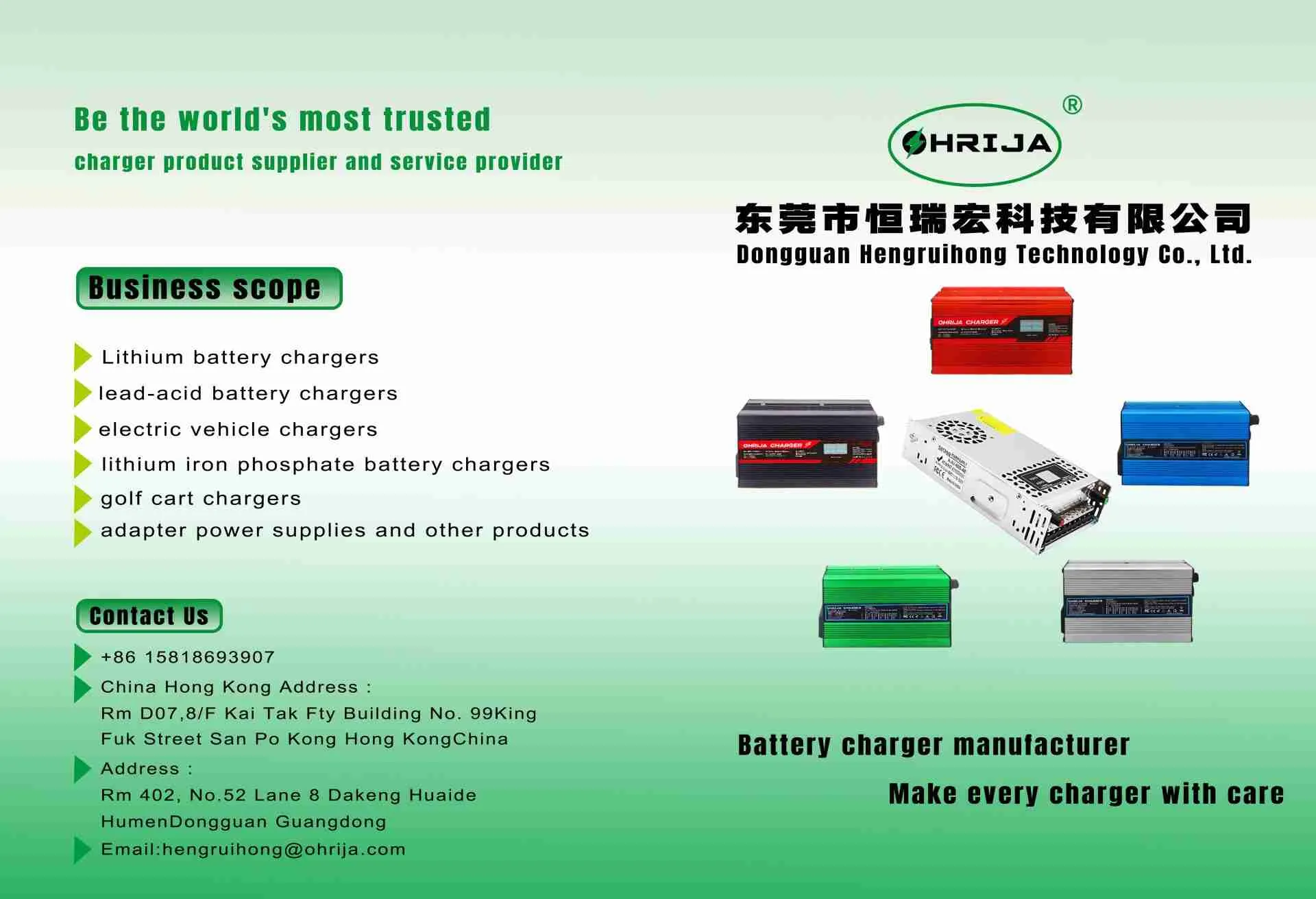
Reliable charging begins with the hardware. The OHRIJA brand belongs to Dongguan Hengruihong Technology Co., Ltd., which was established in 2020 and is headquartered in Dongguan, Guangdong Province, China. As a high-tech enterprise integrating R&D, production, and sales, the company ensures that every “How do I charge my e-bike battery” query is met with peak electrical performance.
OHRIJA’s main products include lithium battery chargers, lithium iron phosphate battery chargers, lead-acid battery chargers, golf cart chargers, power adapters, and switching power supplies. Their focus on precision voltage regulation is vital for the safety of modern e-mobility.
Featured OHRIJA E-Bicycle Chargers:
- 10s 42V Lithium ion ELECTRIC BICYCLE charger – Ideal for 36V battery systems.
- 13s 54.6V Lithium ion ELECTRIC BICYCLE charger – The standard for 48V e-bike configurations.
- 16S 67.2V Lithium ion ELECTRIC BICYCLE charger – High-performance power for 60V systems.
Understanding Voltage and Battery Chemistry
To answer “How do I charge my e-bike battery,” one must understand the relationship between the charger’s output and the battery’s internal configuration. Lithium-ion batteries are organized in “series” (indicated by ‘S’). For instance, a 10S battery pack has a nominal voltage of 36V but requires a 42V charger to reach full capacity.
Using the wrong voltage charger is catastrophic. If you apply a 54.6V charger to a 36V battery, you risk a thermal runaway event (fire). Conversely, using a 42V charger on a 48V battery will result in the battery never reaching a usable state. High-quality chargers from OHRIJA are designed with specific cut-off voltages to prevent these dangerous mismatches.
Critical Safety Precautions for E-bike Charging
When considering “How do I charge my e-bike battery safely,” environment is everything. Lithium batteries are sensitive to temperature and humidity.
- Temperature Control: Never charge a battery that is below 0°C (32°F) or above 45°C (113°F). Charging in freezing temperatures can cause permanent lithium plating, which ruins the battery.
- Ventilation: Always charge on a hard, flat surface in a well-ventilated area. Never charge a battery on a carpet or bed, as these materials trap heat.
- Supervision: While you don’t need to stare at the charger, it is unwise to charge your e-bike overnight while everyone is asleep. Modern smart chargers reduce risk, but physical supervision is the ultimate safety net.
How to Extend Your Battery Lifespan
How do I charge my e-bike battery to make it last five years instead of two? The secret lies in the 20-80 rule. Lithium-ion cells are most “relaxed” when they are between 20% and 80% capacity. While you should occasionally charge to 100% to allow the Battery Management System (BMS) to balance the cells, keeping the battery topped off at 100% all the time accelerates chemical degradation.
If you are not planning to ride for several weeks, store the battery at roughly 50% to 60% charge. Storing a battery at 0% can lead to “deep discharge,” where the voltage drops so low that the BMS permanently locks the battery for safety reasons.
Common Charging Issues and Troubleshooting
Sometimes the answer to “How do I charge my e-bike battery” is hindered by technical faults. If your charger light stays green even when the battery is empty, check the fuse in the battery (if accessible) or the connection pins. Often, a loose vibrating connection during a ride can bend the pins, preventing the charger from “seeing” the battery.
Charging Voltage Quick Reference Table
| System Nominal Voltage | Battery Configuration | Required Charger Voltage | OHRIJA Compatible Model |
|---|---|---|---|
| 36V | 10S | 42V | 10s 42V Lithium Ion Charger |
| 48V | 13S | 54.6V | 13s 54.6V Lithium Ion Charger |
| 60V | 16S | 67.2V | 16S 67.2V Lithium Ion Charger |
Frequently Asked Questions
Can I use a different brand’s charger for my e-bike?
Only if the voltage, amperage, and connector polarity match exactly. However, it is always safer to use a certified high-tech charger like those from OHRIJA to ensure the charging profile matches your lithium chemistry.
How long does it take to charge an e-bike battery?
Typically 4 to 7 hours. This depends on the battery capacity (Ah) and the charger’s output (A). For example, a 10Ah battery with a 2A charger takes roughly 5 hours.
Is it okay to charge my battery after every short ride?
Yes. Lithium batteries do not have a “memory effect” like older nickel-cadmium batteries. Short charges are actually better for the battery than full discharges.
Scientific and Industry References
“`