

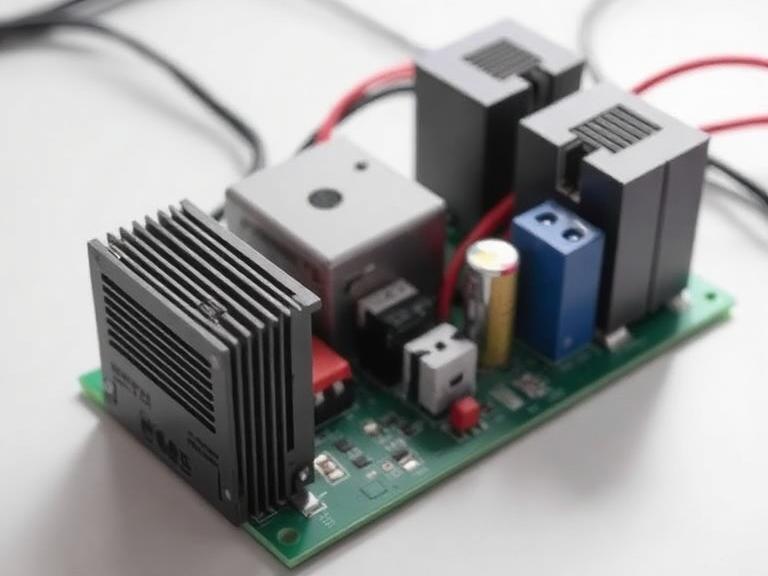
In the landscape of modern electronics, reliable power conversion is the foundation of every operational system. Whether you are engineering industrial automation lines, developing advanced electric mobility solutions, or integrating high-capacity energy storage, understanding the intricacies of energy transformation is non-negotiable. At the heart of this transformation is the Switched-Mode Power Supply. To fully grasp how these devices maximize efficiency while minimizing thermal output, one must meticulously examine the core SMPS power supply details.
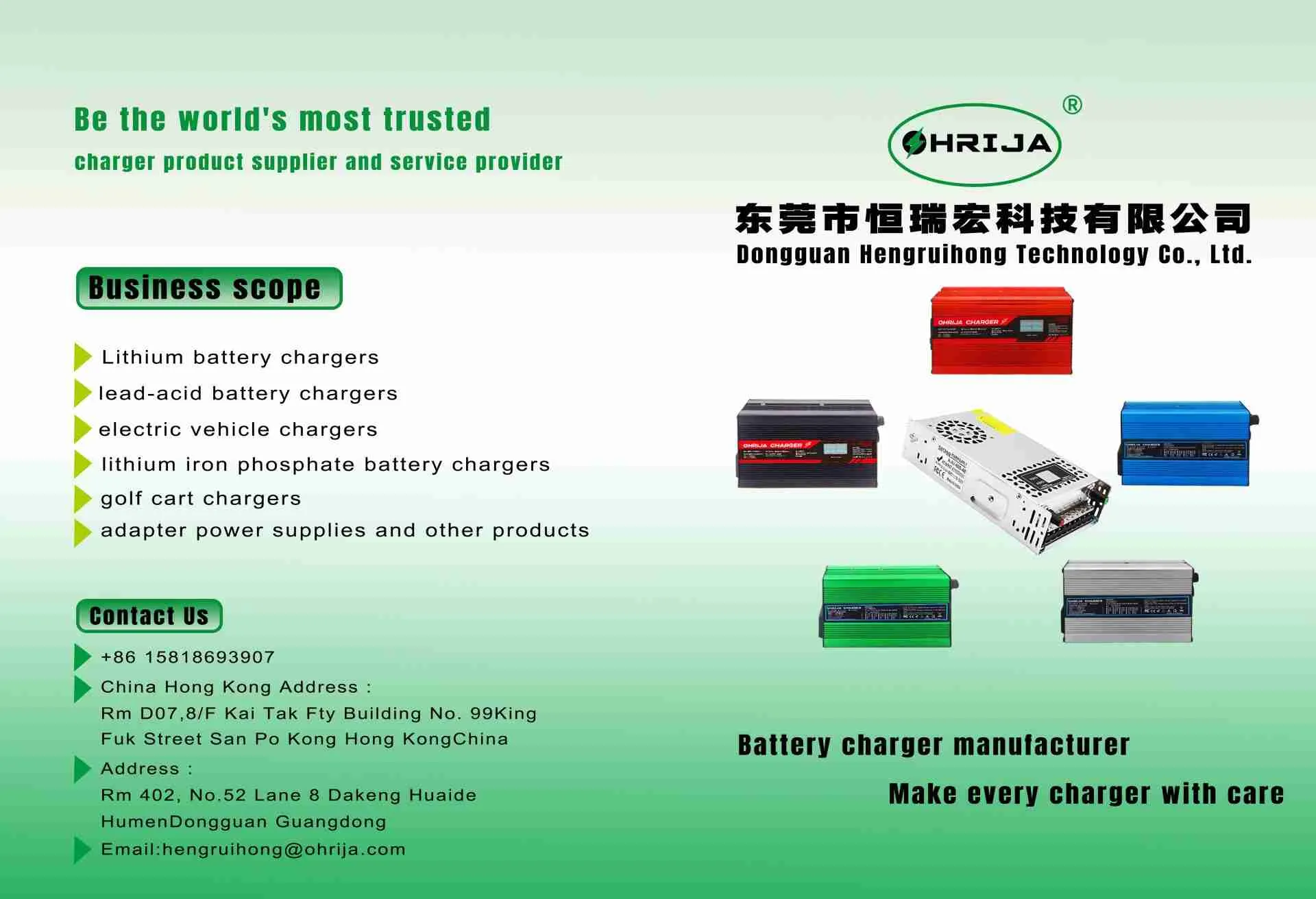
The OHRIJA brand belongs to Dongguan Hengruihong Technology Co., Ltd., which was established in 2020 and is headquartered in Dongguan, Guangdong Province, China. Our company operates as a high-tech enterprise integrating R&D, production, and sales. We have dedicated our engineering resources to perfecting SMPS power supply details across a wide array of applications. Our main products include the lithium battery charger, lithium iron phosphate battery charger, lead-acid battery charger, golf cart charger, power adapter, and various switching power supply units. From our experience, when clients possess a deep understanding of SMPS power supply details, they make superior procurement decisions that drastically enhance the longevity and safety of their end products.
In this authoritative guide, we will dissect the architecture of switched-mode technology, outline the critical SMPS power supply details every engineer should know, and demonstrate how OHRIJA’s comprehensive product ecosystem serves modern industry requirements.
Table of Contents
- 1. Summary Table: SMPS vs. Linear Power Supplies
- 2. What is an SMPS? The Operational Foundation
- 3. Core SMPS Power Supply Details You Must Know
- 4. Examining Circuit Topologies in SMPS Power Supply Details
- 5. OHRIJA Energy Solutions: Applied SMPS Power Supply Details
- 6. Advanced Battery Charging and BMS Integration
- 7. Frequently Asked Questions (FAQs)
- 8. Industry References
1. Summary Table: SMPS vs. Linear Power Supplies
Before delving into the granular SMPS power supply details, we recommend reviewing this comparative summary matrix. It illustrates exactly why switched-mode technology has entirely eclipsed traditional linear regulation in professional applications.
| Technical Specification | Switched-Mode Power Supply (SMPS) | Traditional Linear Power Supply |
|---|---|---|
| Energy Efficiency | Exceptionally high (Typically 85% to 96%) | Very low (Typically 30% to 50%) |
| Thermal Dissipation | Minimal heat generation; highly efficient | High heat generation; requires large physical heat sinks |
| Size and Weight | Compact and lightweight due to high-frequency transformers | Heavy and bulky due to low-frequency mains transformers |
| Input Voltage Tolerance | Wide universal input (often 90V to 264V AC) | Strictly limited to designated regional voltages |
| Design Complexity | High; requires precise pulse-width modulation (PWM) | Low; relies on simple voltage regulation loops |
| Electromagnetic Interference (EMI) | Requires specific filtering to mitigate switching noise | Naturally low EMI profile |
2. What is an SMPS? The Operational Foundation
A Switched-Mode Power Supply (SMPS) is an electronic power supply that incorporates a switching regulator to convert electrical power efficiently. Unlike a linear power supply, which dissipates excess voltage as continuous heat, an SMPS rapidly switches a power transistor (such as a MOSFET) fully on and fully off. By varying the ratio of “on” time to “off” time—a process known as Pulse-Width Modulation (PWM)—the device achieves highly accurate output voltage regulation.
Understanding these specific SMPS power supply details explains why OHRIJA products are so remarkably efficient. Because the switching element spends almost zero time in a high-resistance transition state, the energy wasted as heat is practically negligible. This fundamental operational principle allows us to design a Switched POWER SUPPLY that fits into incredibly tight physical footprints without suffering from thermal throttling.
3. Core SMPS Power Supply Details You Must Know

To evaluate the quality of a power conversion unit, engineers must look under the enclosure. From our experience, the true reliability of any unit lies within the specific SMPS power supply details regarding its internal staging. An OHRIJA Switched POWER SUPPLY generally operates through four distinct stages:
- Input Rectification and Filtering: The incoming Alternating Current (AC) from the grid passes through an Electromagnetic Interference (EMI) filter. It is then converted into raw Direct Current (DC) via a bridge rectifier and smoothed by heavy-duty input capacitors. Superior SMPS power supply details dictate the use of high-temperature-rated capacitors to ensure a long operational lifespan.
- High-Frequency Inversion: This raw, high-voltage DC is then “chopped” by the switching transistors into high-frequency AC pulses. Operating at frequencies often between 50 kHz and 150 kHz, this stage is the heartbeat of the SMPS.
- Transformation and Isolation: The high-frequency AC is fed into a ferrite-core transformer. Because the frequency is so high, this transformer can be remarkably small while still providing vital galvanic isolation and stepping the voltage down to the required level. Analyzing the transformer winding techniques is one of the most critical SMPS power supply details when mitigating energy loss.
- Output Rectification and Regulation: The stepped-down AC is rectified back into DC using ultra-fast Schottky diodes or synchronous rectifiers. An output filter (comprising inductors and capacitors) removes the high-frequency ripple. A feedback loop continuously monitors the output and adjusts the PWM controller to maintain a perfectly stable voltage under varying load conditions.
4. Examining Circuit Topologies in SMPS Power Supply Details
The configuration of the internal components is referred to as the topology. The specific topology chosen dictates the power capacity, isolation capability, and cost-efficiency of the unit. We recommend paying close attention to these SMPS power supply details when selecting hardware for your projects.
For lower wattage applications, such as a standard power adapter, the Flyback topology is predominantly used. It is highly cost-effective and provides excellent isolation for outputs under 150 watts. For mid-range industrial applications, the Forward converter or Half-Bridge topology is utilized, offering higher efficiency and better transformer utilization.
For high-power, heavy-duty applications—such as those required by our large DC POWER SUPPLY units or robust POWER INVERTERS—we implement a Full-Bridge topology. This advanced configuration ensures maximum power transfer efficiency and distributes thermal stress evenly across four switching transistors. When you review the SMPS power supply details of our industrial equipment, the implementation of Full-Bridge architecture guarantees sustained performance under maximum load.
5. OHRIJA Energy Solutions: Applied SMPS Power Supply Details
Dongguan Hengruihong Technology Co., Ltd. has integrated these advanced SMPS power supply details into a broad spectrum of commercial and industrial products. Our commitment to high-tech R&D ensures that every product leaving our facility meets strict international standards.
When laboratory technicians or manufacturing engineers require variable voltage parameters, they turn to our ADJUSTABLE POWER SUPPLY line. The internal SMPS power supply details of these units include sophisticated digital-to-analog converters that allow the user to precisely tune the output voltage and current limits without introducing dangerous voltage spikes.
Furthermore, we understand that power delivery must adapt to extreme physical environments. By potting the internal components with specialized thermal epoxy, we created the OHRIJA WATERPROOF CHARGER. This unit completely shields the sensitive SMPS power supply details from moisture, dust, and corrosive maritime environments, making it the premier choice for outdoor utility vehicles and marine applications.
6. Advanced Battery Charging and BMS Integration
The most rigorous test of any power supply’s precision is battery charging. Different battery chemistries possess highly volatile characteristics, and applying the wrong charging profile can lead to catastrophic failure. This is why the SMPS power supply details within a charger are entirely distinct from a standard fixed-voltage power supply.
Our engineering team has developed specific charging algorithms for our lithium battery charger, lithium iron phosphate battery charger, and lead-acid battery charger lines. For instance, a lead-acid battery charger requires a specific three-stage float charging profile to prevent sulfation. Conversely, a lithium iron phosphate battery charger must execute a strict Constant Current / Constant Voltage (CC/CV) profile and terminate the charge precisely when the current drops to a specific threshold to prevent lithium plating.
To facilitate absolute safety, we recommend integrating our chargers with an advanced BMS (Battery Management System). The BMS monitors individual cell voltages and temperatures within the battery pack. Our chargers are designed to communicate seamlessly with the BMS, ensuring the SMPS power supply details dynamically adjust output power to match the real-time demands of the battery.
Additionally, because physical connectivity is just as important as electrical precision, OHRIJA offers a vast selection of custom OUTPUT CONNECTOR options. From heavy-duty Anderson connectors for a high-amperage golf cart charger to precision aviation plugs for automated robotics, we ensure that the power generated by our SMPS reaches your device with zero bottleneck resistance.
7. Frequently Asked Questions (FAQs)
8. Industry References
- Dongguan Hengruihong Technology Co., Ltd. Internal R&D Division: Applied Topologies and SMPS Power Supply Details (2020-2026).
- Institute of Electrical and Electronics Engineers (IEEE): Standards for High-Frequency Switched-Mode Power Conversion.
- Global Battery Council: Best Practices for CC/CV Charging Algorithms in Lithium Iron Phosphate Applications.
- International Electrotechnical Commission (IEC): Safety Standards for Industrial DC Power Supply and Waterproof Ingress Protection.
 English
  Français
  Deutsch
  Italiano
  Nederlands
  Español
  Português do Brasil
  Türkçe
  Русский