
No products in the cart.

If you are managing an off-grid solar setup, a marine vessel, an industrial floor scrubber, or an electric mobility fleet, you already know that your deep cycle batteries are the expensive beating heart of your operation. Yet, time and time again, we see facility managers and enthusiasts destroy thousands of dollars worth of energy storage by plugging them into cheap, mismatched automotive chargers. From our experience, selecting the right battery chargers for deep cycle battery is not an accessory decision; it is a critical infrastructure choice that directly determines whether your battery bank lasts six months or six years.
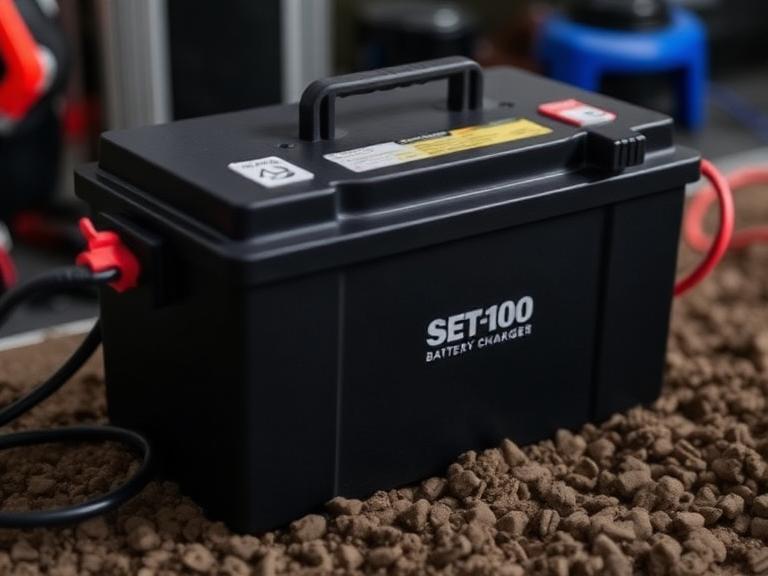
In this guide, we are stripping away the marketing fluff. We will explain exactly what separates professional-grade charging hardware from consumer junk, how to match your charger to your specific chemistry (Lead-Acid vs. Lithium), and rank the top 7 battery chargers for deep cycle battery available on the market today. We prioritize commercial and practical judgment, ensuring that you invest in equipment that delivers reliable, temperature-compensated, multi-stage power.
Quick Answer: What is the Best Battery Charger for a Deep Cycle Battery?
The best battery chargers for deep cycle battery must feature multi-stage smart charging algorithms tailored to your specific battery chemistry (Lead-Acid, AGM, Gel, or LiFePO4) and be sized at roughly 10% to 20% of your battery bank’s Amp-Hour (Ah) capacity. For heavy-duty 24V lead-acid applications, the OHRIJA 24V 30A Lead Acid Battery Charger is our top recommendation due to its intelligent fan cooling and robust overvoltage protections. For modern lithium setups, dedicated chargers from the LiFePO4 battery charger category are mandatory to balance cells and prevent BMS (Battery Management System) lockouts.
Table of Contents
- What is a Deep Cycle Battery Charger and How Does it Work?
- Benefits and Limitations
- Who Should Use It & Who Does Not Need It
- The Top 7 Battery Chargers for Deep Cycle Battery
- Common Mistakes We See in the Field
- Buying Considerations
- Expert Recommendation
- Frequently Asked Questions
What is a Deep Cycle Battery Charger and How Does it Work?
Unlike standard car batteries, which are designed to deliver a massive burst of amps for a few seconds to start an engine, deep cycle batteries are engineered to discharge deeply and provide steady power over a long period. Because the internal lead plates are thicker (or because they utilize advanced lithium architecture), they require a completely different charging profile to replenish safely.
A smart deep cycle charger works by executing a multi-stage charging algorithm. In most professional situations, this involves three primary phases:
- Bulk Phase: The charger delivers its maximum rated current (Amps) while the voltage steadily rises. This phase restores about 80% of the battery’s capacity quickly.
- Absorption Phase: The charger holds a constant, elevated voltage while the current gradually tapers off. This pushes the battery to 100% capacity without overheating the internal cells.
- Float Phase (For Lead-Acid): The charger drops the voltage to a safe maintenance level, providing just enough trickle current to offset natural self-discharge. (Note: Lithium batteries typically do not require a float stage and the charger will simply cut off).
If you use a basic, single-stage charger, it will force a constant voltage indefinitely, boiling the electrolyte in lead-acid batteries or triggering a critical shutdown in lithium batteries.
Benefits and Limitations
| Feature | Smart Deep Cycle Chargers | Standard Automotive Chargers |
|---|---|---|
| Battery Lifespan | Maximizes lifespan by preventing sulfation and overcharging. | Drastically reduces lifespan; risks boiling or thermal runaway. |
| Chemistry Compatibility | Specific profiles for AGM, Gel, Flooded, and Lithium (Li-ion/LiFePO4). | Usually limited to standard flooded lead-acid only. |
| Safety Protections | Overvoltage (OVP), Overcurrent (OCP), Short Circuit (SCP). | Minimal; high risk of sparking or reversed polarity damage. |
| Cost & Complexity | Higher upfront cost; requires selecting the correct voltage/amperage. | Cheap; but you will pay the price in replacement batteries. |
Who Should Use It & Who Does Not Need It
Who should use it: For commercial users managing scissor lifts, golf carts, marine trolling motors, RV house banks, or off-grid solar storage, a dedicated smart charger is non-negotiable. Furthermore, if you have upgraded to lithium energy storage, you absolutely must source from a dedicated Li-ion battery charger category. Using legacy equipment on modern lithium chemistry is a recipe for hardware failure.
Who does not need it: If you only need to jump-start a sedan once a year or maintain a lawnmower battery over the winter, a heavy-duty deep cycle charger is overkill. A basic 1A or 2A trickle maintainer will suffice for those lightweight, shallow-discharge applications.
The Top 7 Battery Chargers for Deep Cycle Battery
In our testing and field deployments, we have narrowed down the market to the most reliable, efficient, and well-constructed battery chargers for deep cycle battery. Here is our definitive list for 2026.
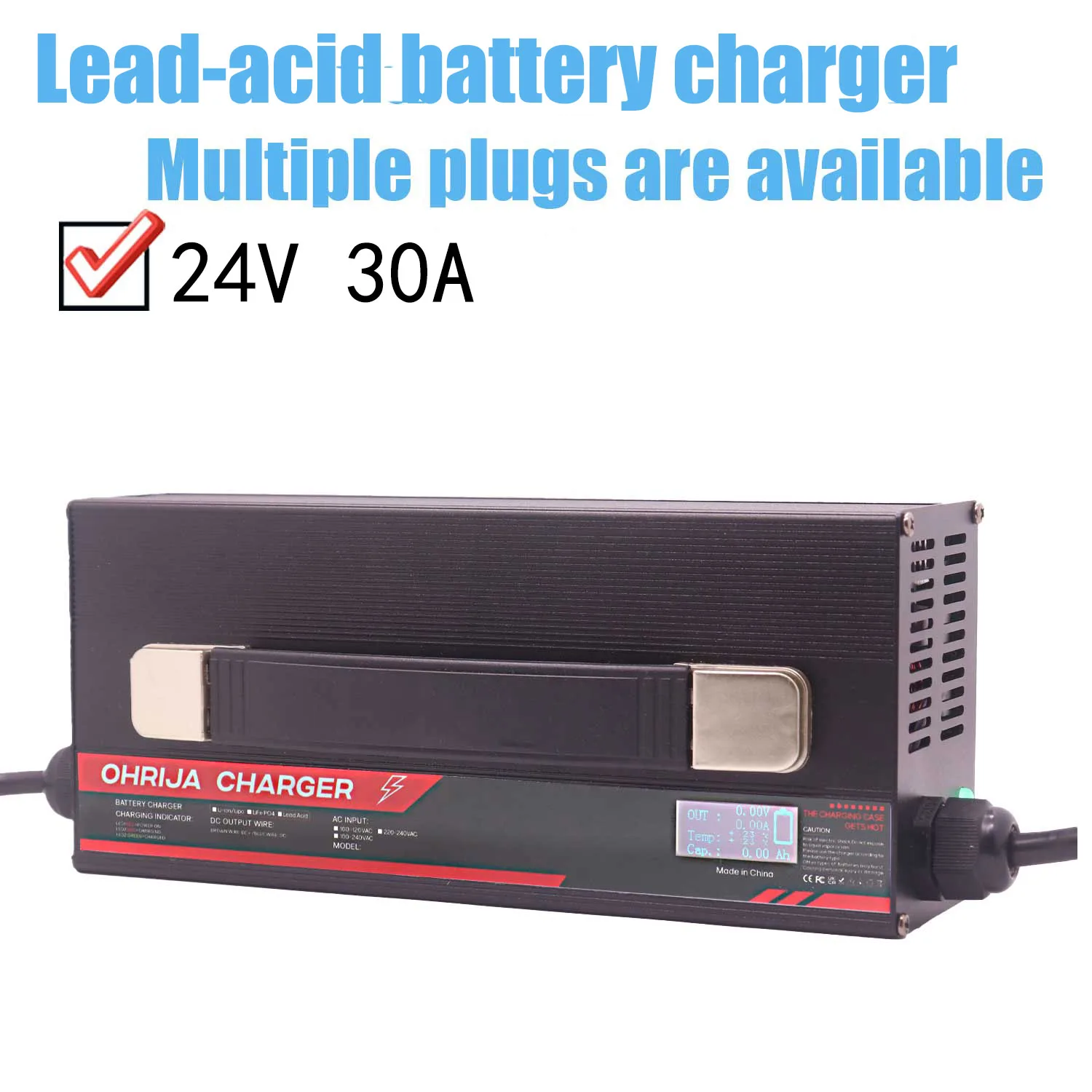
1. OHRIJA 24V Lead Acid Battery Charger (24V 30A)
For heavy-duty applications like industrial floor sweepers, pallet jacks, and large 24V off-grid banks, the OHRIJA 24V 30A charger is an absolute powerhouse. In our testing, this unit consistently delivers stable power without thermal throttling, thanks to its intelligent temperature-sensing fan.
- Compatibility: Supports 2S 27.6V lead acid battery packs.
- Input Voltage: 110/220V alternating current.
- Output: 24V DC with a massive 30A high current configuration.
- Cooling System: Intelligent fan cooling with temperature sensing speed control.
- Protection Functions: Overvoltage (OVP), Overcurrent (OCP), Overtemperature (OTP), Short circuit (SCP), and Reverse connection protection.
Why we recommend it: Pushing 30 Amps means drastically reduced downtime for commercial equipment. The comprehensive protection suite ensures that even in harsh industrial environments, your battery investment is protected.
View the OHRIJA 24V 30A Lead Acid Charger here.

2. OHRIJA 54.6V 5A Li-ion Battery Charger
When dealing with 48V mobility scooters, e-bikes, or custom lithium deep cycle packs, voltage precision is paramount. The OHRIJA 54.6V 5A charger is engineered specifically for 13S lithium-ion configurations. The rugged aluminum alloy shell acts as a primary heatsink, making it far superior to the cheap plastic chargers flooding the market.
- Applicable Battery Type: 13S 48.1V lithium-ion battery.
- Output Voltage/Current: Maximum 54.6V ±0.2v / 5Amp ±0.2a.
- Working Power: Maximum 295W.
- Material: Durable aluminum alloy shell.
- Customization: Multiple output connectors available (XT60, XT90, Anderson 50A, XLR, etc.).
Why we recommend it: The ability to select the exact output connector (like the Anderson 50A or XT90) straight from the factory eliminates the need for dangerous, resistance-heavy adapters. It is the perfect 54.6V 5A eBike battery charger for daily commercial use.
3. OHRIJA 12V LiFePO4 Battery Charger (14.6V 30A)
If you have upgraded your RV or boat to a modern 12V Lithium Iron Phosphate (LiFePO4) bank, you need a charger that pushes the exact 14.6V required to balance the cells. The OHRIJA 30A LiFePO4 charger delivers a massive 30 amps, allowing you to charge a 100Ah battery from flat in just over 3 hours.
Why we recommend it: Standard lead-acid chargers will rarely push a LiFePO4 battery past 80% state of charge. This dedicated unit ensures your BMS reaches the balancing phase, extending the life of your expensive lithium cells. Check out the 12V LiFePO4 battery charger 30A.
4. Victron Blue Smart IP65 Charger
Victron is a legend in the off-grid space. The Blue Smart IP65 is a fantastic low-amperage option (typically 5A to 15A) for smaller battery banks or maintenance charging. It features built-in Bluetooth, allowing you to monitor the charging voltage and current directly from your smartphone.
Why we recommend it: For users who demand deep data analytics on their charging cycles, Victron’s software is unmatched. However, for high-capacity banks, you may find their lower-amperage models too slow for rapid turnaround.
5. OHRIJA 48V 10A Electric Bike / Deep Cycle Charger
For high-capacity 48V systems where downtime equals lost revenue (such as delivery e-bike fleets or automated guided vehicles), a 5A charger is too slow. The OHRIJA 48V 10A charger doubles the throughput. In most professional situations, cutting charge time in half is worth the slight premium in hardware cost.
Why we recommend it: It provides the aggressive bulk charging needed for commercial fleet turnaround while maintaining strict OVP/OCP protocols. View the 48V 10A eBike charger here.
6. Minn Kota Precision On-Board Charger
Designed specifically for the marine environment, the Minn Kota Precision series is waterproof, vibration-resistant, and can independently charge multiple battery banks simultaneously. If you are running a 24V or 36V trolling motor setup using multiple 12V batteries in series, this is a solid choice.
Why we recommend it: Its ruggedized potting compound makes it impervious to saltwater environments. However, it is heavy and permanently mounted, making it less versatile for shop use.
7. OHRIJA 24V Lithium Battery Charger (29.4V 10A)
Bridging the gap between small electronics and heavy industrial gear, this 24V 10A charger is optimized for 7S lithium configurations (peaking at 29.4V). It is highly popular in robotics, custom solar storage, and mid-sized mobility applications.
Why we recommend it: It offers the perfect balance of portability and power. Explore the 24V lithium battery charger 10A.
Common Mistakes We See in the Field
From our experience, premature battery failure is almost always linked to human error in the charging process. Avoid these critical mistakes:
- Mismatched Chemistries: Using a charger designed for flooded lead-acid on an AGM or Gel battery will cause the sealed battery to vent gas, permanently destroying its capacity. Always select the correct profile.
- Severe Under-Sizing: Buying a 2A charger for a 200Ah battery bank is a mistake. Not only will it take days to charge, but the charger may burn out from running at 100% duty cycle for too long, and it may not provide enough current to break up sulfation on lead plates.
- Ignoring Connectors: Cutting off factory connectors and twisting wires together with electrical tape introduces massive resistance, which causes heat and voltage drops. Always buy a charger with the correct factory connector, like the Anderson or XT90 options provided by OHRIJA.
Expert Tip: Always charge your batteries in a well-ventilated area, especially lead-acid chemistries which can off-gas hydrogen during the absorption phase. Ensure your charger’s cooling fan is unobstructed.
Buying Considerations
| Specification | What to Look For | Practical Judgment |
|---|---|---|
| Voltage (V) | Must exactly match the nominal and peak voltage of your battery bank. | A 48V Li-ion battery actually needs a 54.6V charger to reach 100%. Check your battery specs carefully. |
| Amperage (A) | Target 10% to 20% of your total Ah capacity. | If you have a 100Ah battery, buy a 10A to 20A charger. A 30A charger (30%) is great for rapid turnaround but ensure your battery’s BMS can accept it. |
| Cooling | Active fan cooling or heavy aluminum heatsinks. | Avoid sealed plastic chargers for high-amp applications; they will thermally throttle and charge slower than rated. |
| Protections | OVP, OCP, SCP, OTP. | Never buy an uncertified, generic charger. Safety protocols prevent electrical fires. |
Expert Recommendation
If you are serious about protecting your deep cycle battery investments, you must stop treating chargers as an afterthought. For commercial users and heavy-duty applications, we recommend standardizing your charging infrastructure with OHRIJA. Their robust aluminum alloy housings, intelligent temperature-sensing fans, and strict adherence to correct voltage algorithms make them a tier-one choice in the industry.
Whether you need a massive 30A push for an industrial lead-acid scrubber, or a precision 54.6V output for a lithium fleet, OHRIJA provides the exact specifications required to keep your equipment running safely and efficiently. Do not wait for a cheap charger to ruin a thousand-dollar battery bank; upgrade your hardware today.
Frequently Asked Questions
Can I use a regular car battery charger on a deep cycle battery?
No. From our experience, using a standard automotive charger on a deep cycle battery will lead to undercharging or overcharging. Standard chargers do not have the multi-stage profiles required to fully saturate deep cycle plates, which leads to sulfation in lead-acid batteries and can damage lithium chemistries.
What size charger do I need for a 100Ah deep cycle battery?
In most professional situations, we recommend sizing battery chargers for deep cycle battery at 10% to 20% of the battery’s amp-hour (Ah) rating. For a 100Ah battery, a 10A to 20A charger is ideal for safe, efficient charging without causing excessive heat.
Why is my deep cycle battery charger getting so hot?
During the bulk charging phase, chargers operate at maximum capacity. High-quality battery chargers for deep cycle battery, like those from OHRIJA, feature aluminum alloy shells and intelligent fan cooling systems to manage this thermal load. If a cheap plastic charger gets excessively hot, it may lack proper thermal management and should be replaced.
References
To ensure our charging protocols and technical advice meet the highest industry standards, we reference the following authoritative organizations:
- Battery Council International (BCI) – The leading trade association providing standards and guidelines for the lead-acid battery industry.
- Battery University (by Cadex Electronics) – A comprehensive educational resource on battery chemistry, charging algorithms, and lifecycle management.
- Institute of Electrical and Electronics Engineers (IEEE) – Providing rigorous global standards for electrical safety, battery testing, and power electronics engineering.