
No products in the cart.

Lithium Iron Phosphate (LiFePO4) technology has revolutionized energy storage for RVs, off-grid cabins, and marine applications. However, the transition from traditional lead-acid systems to lithium requires a fundamental shift in how we handle energy input. Understanding the synergy between Charging LiFePO4 batteries with solar and the integrated Battery Management System (BMS) is the key to unlocking a 10-year lifespan for your power bank. In this comprehensive guide, we will break down the technical barriers into six actionable steps to ensure your solar setup is efficient, safe, and durable.

Article Contents
- Understanding LiFePO4 Chemistry and the BMS
- Step 1: Selecting a LiFePO4-Compatible Solar Charge Controller
- Step 2: Configuring Voltage Parameters for Charging LiFePO4 Batteries with Solar
- Step 3: Correct Wiring Sequence for BMS Protection
- Step 4: Monitoring Charge Rates and C-Rating Limits
- Step 5: Managing Temperature for Safe Solar Charging
- Step 6: Final Balancing and State of Charge (SOC) Calibration
- OHRIJA: Your Professional Power Solutions Partner
- Summary Table: Optimal Charging Parameters
- Frequently Asked Questions
- Technical References
Understanding LiFePO4 Chemistry and the BMS
Unlike lead-acid batteries, LiFePO4 batteries have a very flat discharge curve. This means the voltage stays consistent throughout most of the discharge cycle, which is great for your appliances but makes it harder to determine remaining capacity based on voltage alone. This is where Charging LiFePO4 batteries with solar becomes a precise science rather than an estimate.
The Battery Management System (BMS) is the brain of the operation. It acts as a safety gatekeeper, monitoring cell voltages, temperature, and current flow. If you are Charging LiFePO4 batteries with solar without a BMS, you risk overcharging individual cells, which leads to permanent damage or fire. The BMS communicates with the charger—or simply cuts the connection—if parameters exceed safe limits. Choosing a high-quality charger from a reliable manufacturer like OHRIJA ensures your BMS isn’t working overtime to correct charging errors.
Step 1: Selecting a LiFePO4-Compatible Solar Charge Controller

The first and most critical step in Charging LiFePO4 batteries with solar is choosing the right intermediary. You cannot simply plug a solar panel into a lithium battery. You need a solar charge controller, preferably an MPPT (Maximum Power Point Tracking) model.
Why MPPT? While PWM (Pulse Width Modulation) controllers are cheaper, MPPT controllers are up to 30% more efficient at converting the high voltage from your solar panels into the specific current needed for LiFePO4. Ensure the controller has a dedicated Lithium or LiFePO4 profile. Traditional lead-acid profiles often include an equalization stage (high voltage pulse to stir acid), which can trigger a BMS high-voltage disconnect or even destroy lithium cells.
Step 2: Configuring Voltage Parameters for Charging LiFePO4 Batteries with Solar

Precision is everything when Charging LiFePO4 batteries with solar. Most 12V LiFePO4 batteries consist of four cells in series, each with a nominal voltage of 3.2V. To fully charge them, you need to reach a specific saturation point.
- Bulk/Absorption Voltage: For a 12V system, this is typically between 14.2V and 14.6V. Setting it to 14.4V is often considered the “sweet spot” for longevity.
- Float Voltage: Lithium batteries do not need to be “floated” like lead-acid batteries. Set your float voltage to roughly 13.5V or 13.6V to keep the battery topped off without applying constant stress.
- Termination Current: Charging should stop when the current drops to about 2% to 5% of the battery’s capacity (e.g., 2A for a 100Ah battery).
Step 3: Correct Wiring Sequence for BMS Protection
When setting up your solar array, the order of operations matters. Always connect the battery to the solar charge controller first. This allows the controller’s internal computer to boot up, recognize the battery voltage (12V, 24V, or 48V), and activate the correct LiFePO4 charging profile before it receives any power from the sun.
Once the battery and BMS are communicating with the controller, then connect your solar panels. This prevents the controller from sending unregulated high-voltage spikes toward the battery, which could cause the BMS to enter protection mode. High-quality connectors are essential here to prevent resistance and heat buildup. OHRIJA offers a wide range of output connectors and golf car battery charger output connectors designed for high-current solar and industrial applications.
OHRIJA – Your Trusted Partner in High-Tech Charging
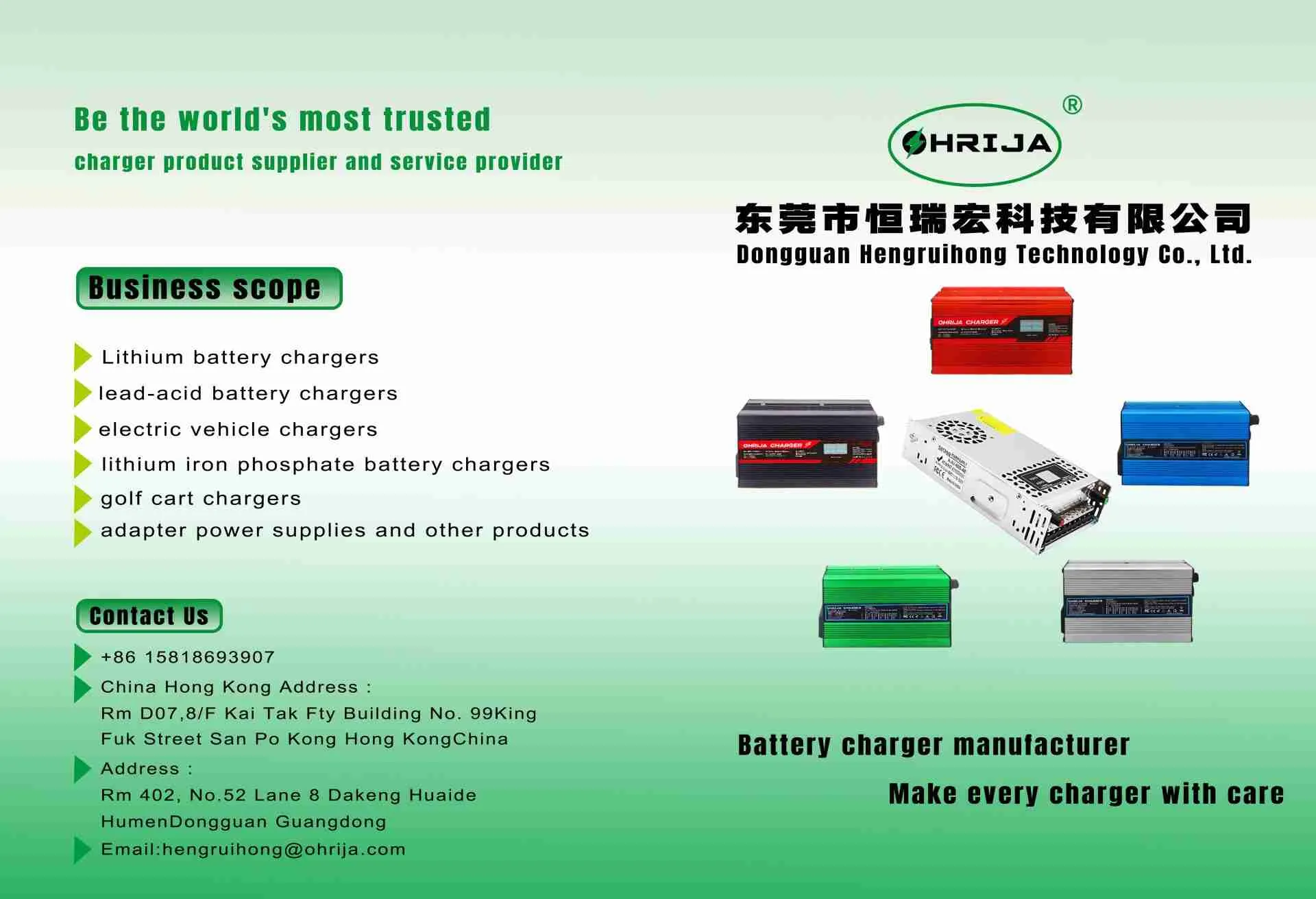
OHRIJA brand belongs to Dongguan Hengruihong Technology Co., Ltd., which was established in 2020 and is headquartered in Dongguan, Guangdong Province, China. Our company is a high-tech enterprise integrating R&D, production and sales of advanced power solutions.
We specialize in manufacturing high-performance charging equipment that meets the rigorous demands of modern lithium technology. Our products are engineered with the latest safety certifications (CE, 3C) and utilize aluminum alloy shells for superior heat dissipation, making them ideal for Charging LiFePO4 batteries with solar or grid power.
Our Comprehensive Product Range Includes:
- LI ION BATTERY CHARGER
- LIFEPO4 BATTERY CHARGER
- LEAD ACID BATTERY CHARGER
- GOLF CAR BATTERY CHARGER
- CONNECTOR REMOVAL CHARGER
- POWER SUPPLY
- ADJUSTABLE POWER SUPPLY
- DC POWER SUPPLY
- POWER INVERTERS
- WATERPROOF CHARGER
- BMS
Whether you need a robust charger for your RV or a customized power supply for industrial robotics, OHRIJA provides the reliability your energy system deserves.
Step 4: Monitoring Charge Rates and C-Rating Limits
Every LiFePO4 battery has a recommended C-rate for charging. Most manufacturers suggest a 0.2C to 0.5C rate for maximum cycle life. For a 100Ah battery, 0.2C means charging at 20 Amps. While many lithium batteries can handle 1C (100A for a 100Ah battery), doing so consistently when Charging LiFePO4 batteries with solar can generate internal heat that degrades the electrolyte over time.
Calculate your solar array’s maximum output. If you have 400W of solar panels on a 12V system, you can expect roughly 25A to 30A of peak current. Ensure your BMS is rated to handle this input current. A common mistake is using a small 20A BMS with a large solar array, causing the BMS to overheat and shut down the entire system during peak noon hours.
Step 5: Managing Temperature for Safe Solar Charging
LiFePO4 batteries are chemically superior in many ways, but they have one major weakness: they cannot be charged below freezing (0°C / 32°F). Charging in sub-zero temperatures causes lithium plating on the anode, which leads to internal shorts and permanent capacity loss.
A smart BMS will have a low-temperature charge cut-off. If you are Charging LiFePO4 batteries with solar in cold climates, ensure your charge controller or BMS has a temperature sensor. Some advanced batteries include internal heating blankets that use solar energy to warm the cells before allowing the charge to flow. Conversely, at the high end, ensure the battery remains below 45°C (113°F) for optimal health.
Step 6: Final Balancing and State of Charge (SOC) Calibration
The final step in Charging LiFePO4 batteries with solar is allowing the BMS to balance the cells. This usually happens at the very end of the charge cycle (during the Constant Voltage or Absorption phase). As the battery reaches 14.4V, the BMS will bleed off energy from the highest-voltage cells to allow the lower cells to catch up.
For the first few cycles, it is recommended to charge your battery to 100% and let it rest. This “top-balancing” ensures that the BMS can accurately report the State of Charge (SOC) to your monitor. In the long run, LiFePO4 batteries prefer to live in the 20% to 80% range, but an occasional full charge is necessary for the BMS to maintain cell equilibrium.
Summary Table: Optimal Charging Parameters
| Parameter | 12V System (4S) | 24V System (8S) | 48V System (16S) |
|---|---|---|---|
| Max Charge Voltage | 14.6V | 29.2V | 58.4V |
| Recommended Bulk/Absorb | 14.2V – 14.4V | 28.4V – 28.8V | 56.8V – 57.6V |
| Float Voltage | 13.5V – 13.6V | 27.0V – 27.2V | 54.0V – 54.4V |
| Low Temp Cut-off | 0°C (32°F) | 0°C (32°F) | 0°C (32°F) |
| Recommended Charge Rate | 0.2C – 0.5C | 0.2C – 0.5C | 0.2C – 0.5C |
Frequently Asked Questions
Can I use a standard lead-acid charger for Charging LiFePO4 batteries with solar?
It is not recommended. Lead-acid chargers often have an “Equalization” mode and a “Desulfation” mode that use high voltages (15V+) which can damage LiFePO4 cells or trigger the BMS to shut down. Always use a charger with a specific LiFePO4 setting.
Why does my BMS stop the charging process before the battery is at 100%?
This usually happens due to “Cell Imbalance.” If one cell reaches its maximum voltage (3.65V) before the others, the BMS will cut the charge to protect that cell. Top-balancing or a slow absorption charge can help fix this.
Does Charging LiFePO4 batteries with solar require a special inverter?
While the charging is handled by the solar controller, your inverter should be compatible with lithium voltage ranges. Some older inverters may have low-voltage cut-offs that are too high for the lithium discharge curve.
Is it safe to leave LiFePO4 batteries on solar charging all year?
Yes, provided your charge controller is set correctly. Lithium batteries do not suffer from the “memory effect.” However, if storing for the winter, it is better to leave them at a 50% state of charge rather than keeping them at 100% indefinitely.
Technical References
1. “Lithium Iron Phosphate Battery Charging Basics,” Battery University, 2025.
2. “MPPT vs PWM: Efficiency in Solar Charging Lithium Systems,” Solar Energy Reports, 2024.
Maximize your energy independence today. By following these 6 easy steps, you ensure that your solar investment lasts for thousands of cycles.