

As we transition further into the era of renewable energy and electric mobility, the demand for reliable energy storage has skyrocketed. At the heart of this revolution is the LiFePO4 chemistry. However, investing in a high-quality battery bank is only half the battle; maintaining it requires the best lithium iron phosphate battery chargers available on the market. In 2026, charger technology has evolved to include smarter BMS integration, higher efficiency ratings, and robust safety profiles that extend the lifespan of your investment.
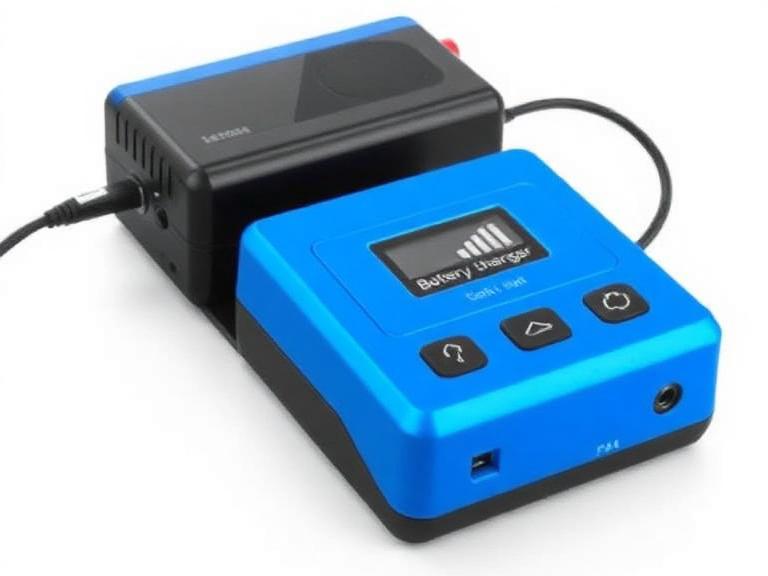
Using a standard lead-acid charger on a modern lithium battery can lead to undercharging or, worse, damaging the sensitive cells. A dedicated lithium charger ensures the correct voltage profile (typically 14.6V for 12V systems) and cuts off current at the precise moment to prevent overcharging. This guide reviews the top 7 chargers for 2026, ranging from portable units for camping to heavy-duty 48V systems for golf carts and solar storage.
- 1. Victron Blue Smart IP65 Charger (Best Smart Features)
- 2. OHRIJA HRH180 12.8V 10A Charger (Best Portable 12V)
- 3. NOCO Genius GEN5X1 (Best Onboard Marine)
- 4. OHRIJA HRH900N 48V 15A Charger (Best for Golf Carts)
- 5. Renogy 20A AC-to-DC LFP Charger (Best Value)
- 6. AIMS Power AC Converter/Charger (Best Heavy Duty)
- 7. LiTime 14.6V 20A Smart Charger (Best Budget Dedicated)
- Buying Guide: Choosing the Right LFP Charger
- Summary Comparison Table
- Frequently Asked Questions
- References
1. Victron Blue Smart IP65 Charger
When discussing the absolute pinnacle of charging technology, Victron Energy consistently leads the pack. The Victron Blue Smart IP65 remains a top contender in 2026 due to its unmatched connectivity and build quality. Unlike cheaper alternatives, this charger is fully programmable via Bluetooth, allowing users to tailor the charging profile to the exact specifications of their battery manufacturer.
Why It Stands Out
The standout feature is the VictronConnect app integration. Users can monitor voltage and current in real-time and view historical data. For lithium iron phosphate battery chargers, having a dedicated “Lithium” mode that disables the desulfation and equalization stages (which can damage LFP cells) is critical. The IP65 rating means it is dust-tight and protected against water jets, making it suitable for workshop or garage environments.
Furthermore, it features a “storage” mode that kicks in if the battery has not been used for 24 hours, reducing voltage to minimize corrosion of the positive plates. While this is more relevant to lead-acid, the customizable nature means you can set a specific float voltage that is safe for lithium, or disable float entirely to prevent micro-cycling.
2. OHRIJA HRH180 12.8V 10A Charger

Cargador de scooter Bird
For users seeking a highly specialized, portable solution for 4S battery configurations, the OHRIJA HRH180 is a standout performer in 2026. Designed specifically for 12.8V LiFePO4 batteries, this unit prioritizes safety and ease of connection.
OHRIJA Battery Charger for RV Battery
The OHRIJA battery charger (Model HRH180) is an excellent choice for RV owners and outdoor enthusiasts. Its 14.6V 10A output is perfectly calibrated for 4S 12.8V LiFePO4 batteries, ensuring a full charge without the risk of over-voltage.
Product Parameters:
- Product Model: HRH180
- Material: Durable aluminum alloy shell for heat dissipation
- Output Voltage: Maximum 14.6V ±0.2V
- Output Current: Maximum 10Amp ±0.2A
- Dimensions: 135 x 90 x 50 MM | Weight: 0.9kg
- Applicable Battery: 4S 12.8V Lifepo4 battery
- Working Power: Maximum 175W
- Color Options: Black, Silver, Red, Blue, Green
- Input Plug: US, EU, UK, AU (selectable based on region)
- Output Connector Options: XT60, XT90, Crocodile Clip, Anderson 50A, Wire Nose, GX16 1+3-, XLR, IEC C13, 45A
- Package Includes: Charger, 1m DC output cable, 1m AC input cable, Instruction manual
The versatility in connector options (from Anderson plugs to XT60s) makes this one of the most adaptable lithium iron phosphate battery chargers for hobbyists and RV DIYers who use different port standards.
3. NOCO Genius GEN5X1 Onboard Charger
For marine applications where moisture is a constant threat, the NOCO Genius GEN5X1 is the industry standard. As an onboard charger, it is designed to be permanently mounted inside a boat or vehicle engine bay. In 2026, NOCO continues to refine its “Genius” algorithm to better handle the unique discharge curves of lithium batteries.
Rugged Durability
The GEN5X1 is fully sealed and waterproof (IP68 rated). This is crucial for bass boats and saltwater applications. Unlike portable chargers, this unit is vibration-resistant and can withstand the pounding of choppy waters. It features a specific “12V Lithium” mode that optimizes the charging cycle for LiFePO4 chemistry, ensuring the battery management system (BMS) is reset if it has tripped due to low voltage.
With a 5-amp output per bank, it is not the fastest charger on this list, but it acts as a perfect maintainer for starter batteries or smaller trolling motor banks. Its ability to charge batteries down to 0 volts (using Force Mode) is a lifesaver when a BMS has cut off power completely.
4. OHRIJA HRH900N 48V 15A Charger

Moving up to high-voltage systems, the OHRIJA HRH900N is a powerhouse designed for 48V applications. This is the ideal charger for golf carts, large solar energy storage banks, and electric utility vehicles that utilize a 16S LiFePO4 configuration.
OHRIJA 48V Lifepo4 Battery Charger
The HRH900N model delivers a robust 58.4V output at 15 Amps. This high voltage is necessary to fully saturate a 48V nominal lithium battery, which typically requires a charge voltage of around 58.4V to balance the cells effectively.
Product Parameters:
- Product Model: HRH900N
- Material: Aluminum alloy shell
- Output Voltage: Maximum 58.4V ±0.2V
- Output Current: Maximum 15A ±0.2A
- Dimensions: 212 x 93.5 x 60 MM | Weight: 1.2kg
- Applicable Battery: 16S 58.4V Lifepo4 battery
- Working Power: Maximum 890W
- Color: Black
- Input Plug: US, EU, UK, AU (Region selectable)
- Output Connector Options: XT60, XT90, Crocodile Clip, Anderson 50A, Wire Nose, 45A
- Package Includes: Charger, 1m DC output cable, 1m AC input cable, Instruction manual
With a power output approaching 900W, this charger significantly reduces downtime for golf fleet operators. The aluminum alloy shell ensures that the unit stays cool even during long, high-amperage charging sessions.
5. Renogy 20A AC-to-DC LFP Charger
Renogy has made a name for itself by providing accessible solar and battery solutions, and their 20A AC-to-DC portable charger is no exception. This unit is specifically engineered for LFP chemistry, removing the guesswork often associated with “universal” chargers.
Plug-and-Play Simplicity
The Renogy 20A model is a favorite among the van-life community. It is simple, effective, and delivers a substantial 20 amps of current, which can recharge a standard 100Ah lithium battery in roughly 5 hours. It features a wide AC input voltage range, making it reliable even if the shore power source at a campground is fluctuating.
Crucially, this charger includes “Lithium Activation” technology. If a LiFePO4 battery is discharged too deeply, the BMS will enter a protection mode, reading 0 volts. Many standard chargers will not recognize the battery and refuse to charge. The Renogy unit sends a wake-up signal to reactivate the BMS and begin the charging process safely.
6. AIMS Power AC Converter/Charger
For those needing a permanent installation with high power capabilities, the AIMS Power AC Converter series is a top-tier choice. While often used as an RV converter to power DC loads while plugged into shore power, its battery charging capability is formidable.
Adjustable and Powerful
The AIMS charger stands out because it offers user-adjustable voltage settings. This is vital for advanced users who want to slightly undercharge their lithium batteries (e.g., to 14.4V instead of 14.6V) to prolong cycle life. With models capable of outputting 75 Amps or more, this is the heavy artillery of lithium iron phosphate battery chargers.
It is compatible with 12V and 24V systems (depending on the model) and is built to UL standards, ensuring it meets the rigorous safety codes required for RV and marine installations. The thermal cooling fan is load-based, meaning it stays quiet during trickle charging and only ramps up when delivering maximum current.
7. LiTime 14.6V 20A Smart Charger
Rounding out our list for 2026 is the LiTime (formerly Ampere Time) dedicated LFP charger. As Chinese lithium battery manufacturers have improved in quality, their accompanying chargers have also become highly reliable and cost-effective options.
Budget-Friendly Performance
The LiTime 20A charger is a no-nonsense device. It lacks the Bluetooth connectivity of the Victron, but it excels at doing exactly what it is designed for: charging a 12V LiFePO4 battery efficiently. It utilizes a 2-stage charging profile (Constant Current / Constant Voltage) which is the preferred method for lithium chemistries, avoiding the unnecessary “float” stages used for lead-acid batteries.
The unit is compact, lightweight, and features an LED indicator to show charging status. For users who have purchased a drop-in lithium replacement battery and simply need a dedicated wall charger to keep it topped up, this represents the best value for money in the 2026 market.
Buying Guide: Choosing the Right LFP Charger
Selecting the correct charger is essential for safety and performance. Here are the key factors to consider in 2026:
1. Voltage Matching (S-Count)
LiFePO4 batteries are built using cells in series. A standard “12V” battery is actually 4 cells in series (4S), requiring a charging voltage of 14.6V. A “48V” battery is typically 16 cells in series (16S), requiring 58.4V. Ensure your charger matches this exact voltage. Using a 48V charger on a 12V battery is dangerous.
2. Amperage and C-Rating
Check your battery’s recommended charge current. Most LiFePO4 batteries can handle a charge rate of 0.5C (half their capacity). For a 100Ah battery, a 50A charger is the maximum safe limit, but a 20A or 10A charger (like the OHRIJA HRH180) is often better for longevity and produces less heat.
3. BMS Wake-Up Function
This is a critical feature for lithium iron phosphate battery chargers. If you accidentally leave a load on and drain the battery, the BMS will cut power. A charger without a “0V Activation” or “Wake Up” feature will not detect the battery and will not charge it. Always look for this feature.
4. Connector Type
Lithium batteries are used in diverse applications, from solar banks to RC hobbies. Ensure the charger has the correct output connector (Anderson, XT60, Ring Terminals) or comes with adapters, as seen in the OHRIJA models.
Summary Comparison Table
| Charger Model | Voltage / Current | Best Application | Key Feature |
|---|---|---|---|
| Victron Blue Smart IP65 | 12V / 15A (Var.) | Smart DIY / Marine | Bluetooth App Control |
| OHRIJA HRH180 | 14.6V / 10A | Portable / RV | Wide Connector Selection |
| NOCO Genius GEN5X1 | 12V / 5A | Onboard Marine | Waterproof (IP68) |
| OHRIJA HRH900N | 58.4V / 15A | Golf Carts / Solar | High Voltage (16S) Power |
| Renogy 20A AC-to-DC | 14.6V / 20A | Van Life | Lithium Activation Mode |
| AIMS Power Converter | Adjustable | Heavy RV / Off-Grid | High Amperage Output |
| LiTime Smart Charger | 14.6V / 20A | Budget / Dedicated | Cost-Effective Reliability |
Frequently Asked Questions
Can I use a regular lead-acid charger for LiFePO4 batteries?
It is generally not recommended. Lead-acid chargers often have a “desulfation” or “equalization” mode that pulses high voltage, which can damage the BMS or cells of a lithium battery. Furthermore, lead-acid chargers float at a lower voltage (13.2V-13.8V), which may not charge a lithium battery to 100% capacity.
What is the ideal charging voltage for a 12V LiFePO4 battery?
The ideal charging voltage is typically between 14.4V and 14.6V. This ensures the cells are fully saturated and balanced without exceeding the breakdown voltage of the electrolyte.
How long does it take to charge a 100Ah battery with a 10A charger?
Mathematically, 100Ah divided by 10A equals 10 hours. However, due to efficiency losses and the slowing down of charging at the very end of the cycle (saturation), it will likely take around 10.5 to 11 hours.
Do I need to charge my LiFePO4 battery to 100% every time?
No. Unlike lead-acid batteries, LiFePO4 batteries do not suffer from “memory effect” and actually last longer if they are not kept at 100% state of charge constantly. However, it is recommended to charge to 100% periodically (e.g., once a month) to allow the BMS to balance the cells.
 English
  Français
  Deutsch
  Italiano
  Nederlands
  Español
  Português do Brasil
  Türkçe
  Русский